Indonesia & Raja Ampat
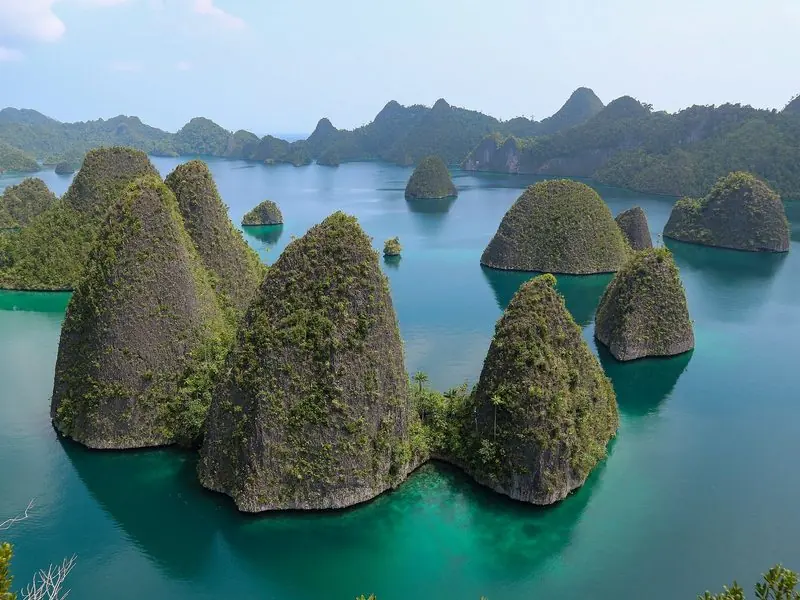
| Regione | l'arcipelago indonesiano, da Bali verso est attraverso Komodo e il Mare di Banda fino a Raja Ampat, nella Papua Occidentale |
|---|---|
| Dimensioni | circa 17.000 isole distribuite su più di 5.000 km |
| Stagioni | Komodo in genere da aprile a ottobre, Raja Ampat in genere da ottobre ad aprile |
| Parco nazionale di Komodo | 1.733 chilometri quadrati di cui 603 di terra, patrimonio mondiale dell'UNESCO dal 1991 |
| Draghi di Komodo | circa 1.700 sull'isola di Komodo e 1.300 su Rinca, estinti su Padar |
| Raja Ampat | oltre 1.500 tra isole, isolotti e secche attorno a Misool, Salawati, Batanta e Waigeo, con 8.034 chilometri quadrati di terra |
| Biodiversità di Raja Ampat | più di 600 specie di corallo duro, circa il 75 per cento di tutte quelle note al mondo, più 1.508 specie di pesci |
| Status di Raja Ampat | parco marino ricreativo istituito nel 2009, riserva della biosfera UNESCO nel 2025 |
| Distanza | da Labuan Bajo a Sorong ci sono circa 800 miglia nautiche in linea diretta |
| Formalità | un sistema online di dichiarazione delle unità, con porti di ingresso tra cui Benoa a Bali, Kupang, Ambon, Sorong e Biak |
| Permesso di navigazione | gli yacht devono elencare in anticipo ogni porto previsto, e molti porti richiedono un agente registrato |
| Aeroporti | Komodo International a Labuan Bajo, pista di 2.750 metri, e Domine Eduard Osok a Sorong, 2.500 metri |
| Komodo fees | IDR 150,000 on a weekday and IDR 250,000 at the weekend for international visitors, plus IDR 50,000 for snorkelling and IDR 100,000 for diving, and roughly IDR 150,000 to 200,000 per group for a ranger |
| Raja Ampat permit | IDR 1,000,000 per person for international visitors, about USD 67, valid twelve months and bought by bank transfer through the SIPARI portal |
| Charter | a foreign-flagged yacht may not charter in Indonesia, under the cabotage principle in Law 17 of 2008 on Shipping as amended by Law 66 of 2024 |
| Cruising | the online vessel declaration and e-clearance system that replaced the CAIT covers recreational use only, with no commercial carriage |
| Comparison | Turkey sells a foreign flag a charter licence at EUR 74,423.36 for 39 to 59 m since 19 June 2026 and St Vincent sells one over a customs counter, while Indonesia offers no equivalent |
| Discharge | Indonesian waters are not a MARPOL Special Area on the IMO list and reception facilities east of Benoa are effectively absent, so the standard is the operator's own |
| Berthing | there is no marina berthing for a large yacht east of Bali and no rate card to quote, checked 28 July 2026 |
La forma dell'area
L'Indonesia non è un'area di crociera nel senso in cui lo è il Mediterraneo. È un Paese largo quanto l'Atlantico, e uno yacht qui ne lavora due o tre zone definite. Bali è la porta occidentale e il posto con qualcosa che somiglia a un'infrastruttura. Komodo, nelle Piccole Isole della Sonda, sta circa 250 miglia nautiche più a est. Raja Ampat, davanti alla punta occidentale della Nuova Guinea, è circa 800 miglia più in là in linea retta e di più per qualunque rotta uno yacht faccia davvero.
In mezzo stanno il Mare di Banda e le isole delle spezie, acqua profonda, vulcani attivi e villaggi che vedono una manciata di yacht all'anno. Quella traversata centrale è la parte che gli armatori o amano o saltano del tutto. La decisione pratica è se la barca stia impegnando una stagione all'Indonesia o stia semplicemente passando dentro un programma asiatico più lungo.
Komodo
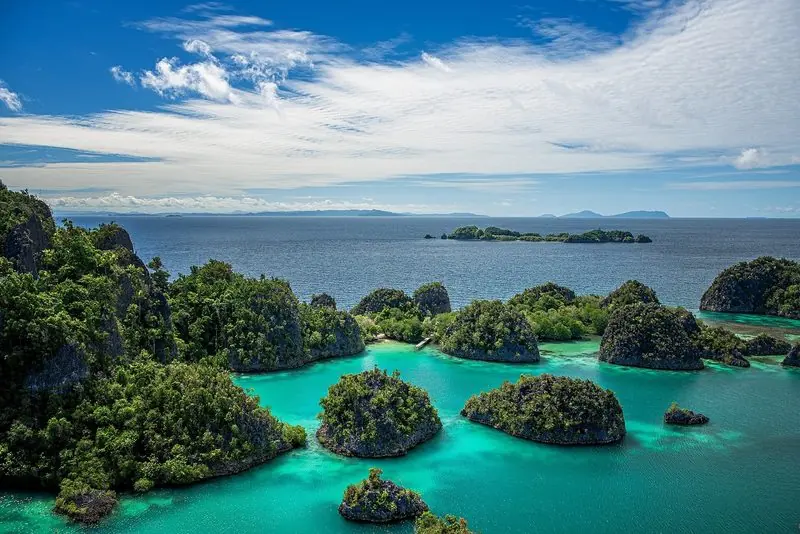
Il parco nazionale di Komodo copre 1.733 chilometri quadrati, di cui solo 603 di terra, tra le tre isole principali di Komodo, Padar e Rinca e altre 26 più piccole. È patrimonio mondiale dell'UNESCO dal 1991. Sull'isola di Komodo vivono circa 1.700 draghi e su Rinca 1.300, e le camminate guidate dai ranger sono l'escursione che tutti gli ospiti prenotano. La camminata sul crinale di Padar, con tre baie sotto, è la fotografia.
La vera ragione per portare qui una barca sono le immersioni. Manta Alley, Crystal Rock, Castle Rock, Batu Bolong, il Cauldron e Tatawa Besar sono i siti con un nome, e quasi tutti vivono di corrente, che è ciò che li rende così ricchi e ciò che li rende impegnativi. L'acqua sul lato sud del parco è nettamente più fredda che a nord. Labuan Bajo, su Flores, è la cittadina base ed è cresciuta in fretta.
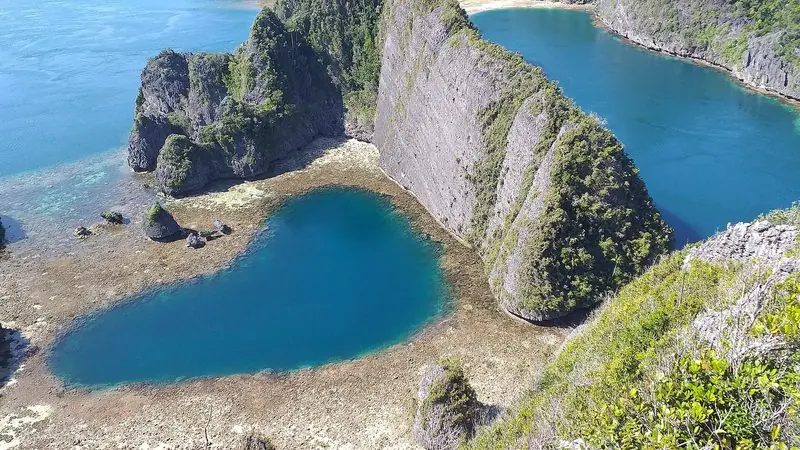
Komodo va da aprile a ottobre e Raja Ampat da ottobre ad aprile, ed è per questo che una barca che arriva qui resta.
Raja Ampat
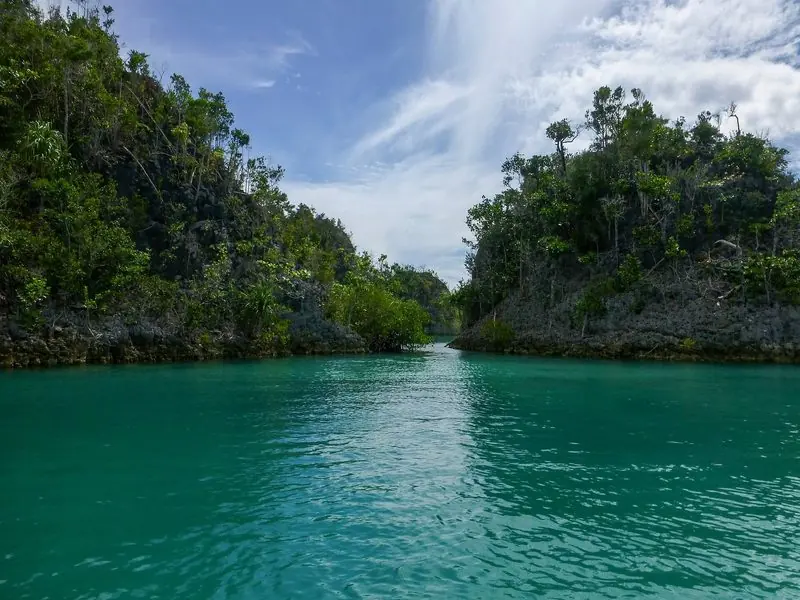
Raja Ampat sono oltre 1.500 tra isole, isolotti e secche attorno alle quattro grandi, Misool, Salawati, Batanta e Waigeo, con 8.034 chilometri quadrati di terra in totale. Ospita più di 600 specie di corallo duro, circa il 75 per cento di tutte quelle conosciute, insieme a 1.508 specie di pesci. È diventata parco marino ricreativo nel 2009 e riserva della biosfera UNESCO nel 2025. Queste barriere non sono semplicemente buone. Sono il riferimento mondiale con cui si misurano le altre.
Le quattro zone operative sono le acque attorno a Salawati settentrionale, Batanta e Waigeo sudoccidentale, la baia di Mayalibit nel centro di Waigeo, il sudest di Misool e le isole Sembilan. Wayag, all'estremo nordovest, è la laguna carsica delle cartoline ed è lontana da tutto. Lo Stretto di Dampier tra Waigeo e Batanta ha correnti forti, e lì tutto si fa in immersione in corrente programmata sulla marea. Gli ospiti che fanno immersioni non vorranno andarsene.
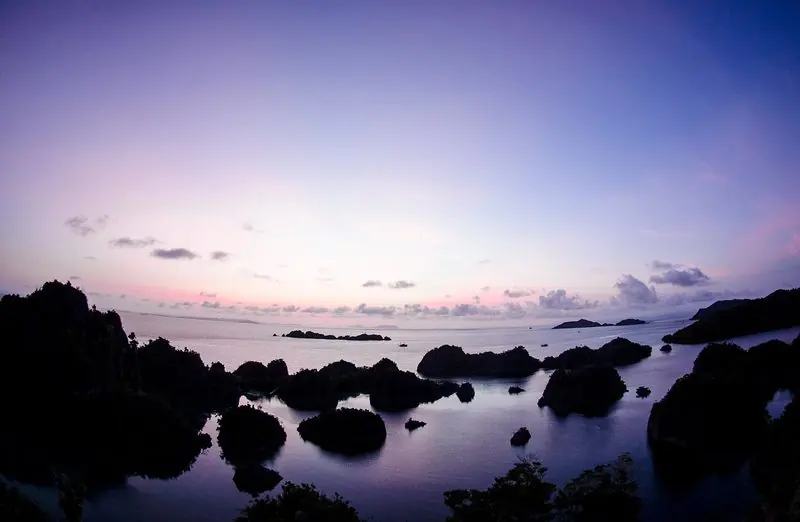
Due settimane, e una stagione
Due settimane a Komodo partendo da Labuan Bajo sono il programma standard e funzionano bene. Gli ospiti volano al Komodo International, la barca copre il parco in una settimana, e la seconda settimana va a est nel Mare di Flores o a sud attorno a Sumba. Tutto sta a poche ore dall'ancoraggio precedente e l'aeroporto è sulla porta di casa.
Due settimane a Raja Ampat partendo da Sorong sono l'altra metà. Quello che non funziona è provare a fare entrambe in un solo viaggio con ospiti, perché le 800 miglia che le separano sono un trasferimento di diversi giorni in mare aperto. Gli armatori che vogliono entrambe portano la barca a est nella seconda metà dell'anno, lavorano Komodo per tutta la stagione secca, poi corrono a Raja Ampat per l'inverno boreale. È un impegno di sei mesi ed è così che opera la flotta residente.
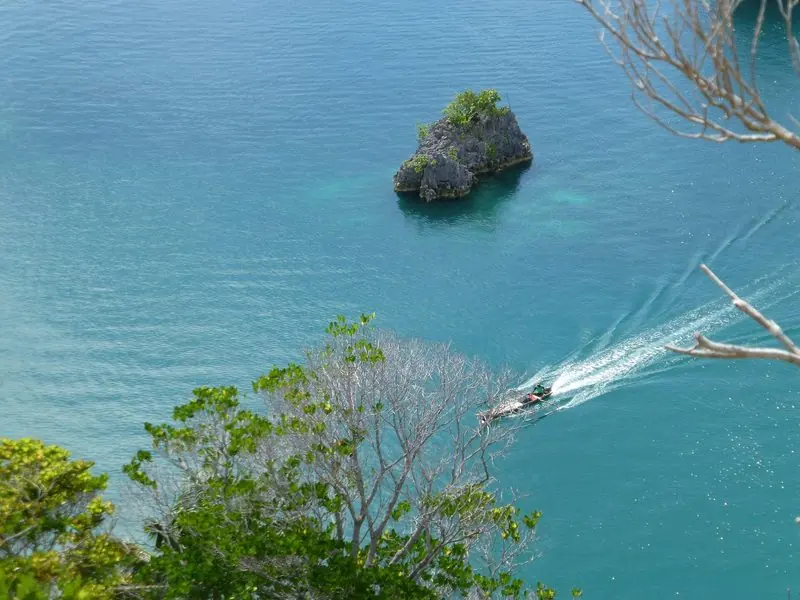
Dove ci sta una barca di 50 metri
In quest'area di crociera non esiste di fatto ormeggio in marina per un grande yacht in nessun punto. Benoa a Bali è il porto di ingresso e la cosa più simile a una base, e tutto quello che sta a est è ancoraggio. Non è il problema che sembra, perché gli ancoraggi sono profondi, riparati e deserti, ma significa che la barca è completamente autosufficiente dal momento in cui lascia Bali.
Il vincolo vero è la cartografia. Gran parte dell'Indonesia orientale è rilevata su standard ottocenteschi o non lo è affatto, le barriere salgono ripide dall'acqua profonda, e le immagini satellitari si usano accanto alla carta come prassi normale. Uno yacht di 50 metri si muove con buona luce, con un uomo di vedetta e un tender davanti nei passaggi più stretti. Le profondità sono spesso troppo grandi per ancorare sotto costa, quindi molta catena filata e verifiche accurate della tenuta sono la norma.
Meteo e le due stagioni
L'arcipelago sta a cavallo dell'equatore e vive di monsoni invece che di un'estate e un inverno. Komodo è considerata in genere al suo meglio da aprile a ottobre, nel monsone secco da sudest, con condizioni stabili e acqua limpida. Raja Ampat va al contrario, e lì la finestra più calma è da ottobre ad aprile. Quell'opposizione è il fatto più utile in assoluto per programmare un anno in acque indonesiane.
La pioggia, quando arriva, arriva forte e breve. I groppi si formano in fretta e con loro cala la visibilità. La temperatura del mare è calda ovunque tranne che sul lato sud di Komodo, dove la risalita di acqua fredda la abbassa nettamente e gli ospiti vorranno una muta che non si aspettavano. L'Indonesia sta fuori dalle principali fasce dei cicloni tropicali per via della vicinanza all'equatore, anche se le isole meridionali sono abbastanza vicine al sistema australiano da meritare attenzione.
Portare gli ospiti a bordo
Il Komodo International a Labuan Bajo ha una pista di 2.750 metri, ha gestito oltre un milione di passeggeri nel 2024 e nel 2024 ha ottenuto lo status internazionale con voli per Kuala Lumpur. Il Domine Eduard Osok a Sorong ha 2.500 metri e si collega via Giacarta e Makassar, con la piccola pista di Waisai per proseguire dentro Raja Ampat. Entrambi sono raggiungibili con jet d'affari.
La rotta realistica per un ospite europeo è un volo intercontinentale per Singapore, Giacarta o Bali e una coincidenza interna di due o quattro ore dopo. Aggiungendo il trasferimento in auto e la corsa in tender, un ospite deve mettere in conto buona parte di due giorni da Londra. La gestione dei bagagli sulle tratte interne è un rischio reale, e qui gli equipaggi tengono di prassi l'attrezzatura da immersione a bordo invece di contare su quella portata dagli ospiti.
A terra, e che cosa fanno davvero gli ospiti
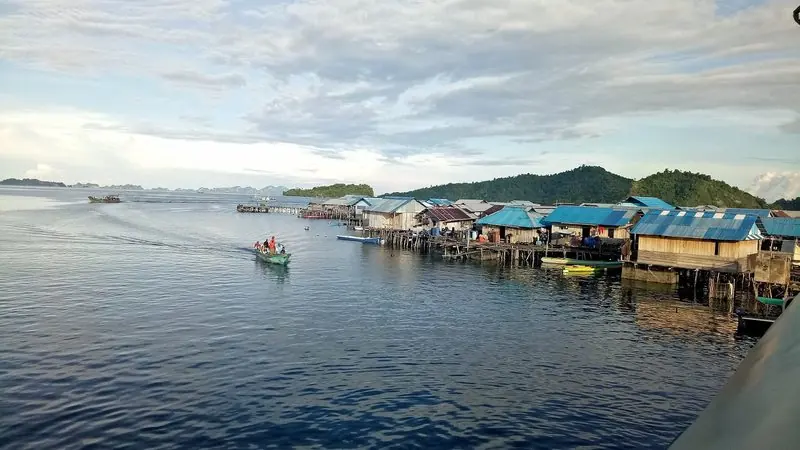
Questa è una destinazione d'acqua e un armatore deve regolare le aspettative di conseguenza. A terra a Komodo ci sono le camminate con i ranger per i draghi, il crinale di Padar e le spiagge di sabbia rosa. A Raja Ampat sono le visite ai villaggi, gli uccelli del paradiso all'alba su Waigeo e il punto panoramico sopra il karst di Piaynemo. Bali, all'inizio o alla fine, fornisce templi, Ubud, ristoranti e tutto il resto che a un ospite potrebbe mancare.
Fuori da Bali il cibo è locale e semplice, quindi una barca fa provviste come si deve a Benoa o se le fa arrivare in aereo. A est di Bali la vita notturna non esiste. Quello che riempie le giornate sono le immersioni, lo snorkeling su barriere con più specie di corallo di tutti i Caraibi messi insieme, il kayak tra le formazioni carsiche e il fatto che nella maggior parte degli ancoraggi non c'è nulla se non una barca da pesca.
Carte, carburante, supporto e il difetto da dire
Le formalità passano da un sistema online di dichiarazione delle unità che è stato cambiato più di una volta, con porti di ingresso tra cui Benoa, Kupang, Ambon, Sorong e Biak. Agli yacht si chiede di dichiarare in anticipo ogni porto previsto, cosa che si concilia male con il modo in cui si naviga davvero un arcipelago, e molti porti richiedono ormai un agente locale registrato. I permessi di ingresso nei parchi nazionali e marini si pagano a parte e vengono controllati. La posizione sul charter per uno yacht di bandiera estera è la prima cosa da sistemare e richiede indicazioni locali aggiornate, non un presupposto portato dall'Europa.
Il carburante si trova a Benoa e nei porti maggiori, la disponibilità è buona e il problema è la qualità, quindi trattamento e filtrazione contano. In Indonesia non c'è nessun cantiere di refit che prenda uno yacht di 50 metri, e le alternative sono Singapore, Phuket o l'Australia, ciascuna a giorni di distanza. L'evacuazione medica da Raja Ampat è un serio esercizio di pianificazione. Contro tutto questo, le barriere di Misool sono le più ricche sopra cui uno yacht privato possa ancorare in qualunque punto della Terra.
What the permits cost, and what a berth does not
The park fees are the running cost here and they are published. Komodo National Park charges international visitors IDR 150,000 on a weekday and IDR 250,000 at the weekend, with IDR 50,000 more for snorkelling and IDR 100,000 for diving per person, and a ranger fee of roughly IDR 150,000 to 200,000 per group, and the park has been moving during 2026 to a single bundled ticket per route. Raja Ampat is the bigger number and the better value: the marine park entry permit is IDR 1,000,000 per person for international visitors, about USD 67, valid for twelve months from purchase and bought by bank transfer when registering on the SIPARI portal. For twelve guests that is IDR 12,000,000 for a year of access to the richest reefs on the planet, and it is checked.
Berthing does not exist east of Bali in any form a rate card could describe, so the berthing line in an Indonesian season is close to zero and the cost sits in fuel, agency, park permits and air freight. That is the inverse of the Mediterranean arithmetic. Marina di Porto Cervo's published 2026 tariff charges EUR 3,698 a day in the band to 40 m from 1 to 20 August, roughly EUR 102,000 for the month, and EUR 195,819 for a 1 May to 31 October contract, which is more than an entire Indonesian programme will spend on anything except fuel. What an owner is buying instead is total self-sufficiency: no yard in the country will take a 50 m yacht, Singapore, Phuket and Australia are each days away, and a medical evacuation from Raja Ampat is a planning exercise rather than a phone call.
Charter: the cabotage answer, stated plainly
A foreign-flagged yacht may not charter in Indonesia. The cabotage principle is codified in Law 17 of 2008 on Shipping, most recently amended by Law 66 of 2024, and it reserves the carriage of goods and the transport of passengers within domestic waters to Indonesian-flagged vessels crewed by Indonesian nationals. There is no permit, licence or fee that buys a foreign flag out of it for passenger carriage. What a foreign yacht may do is cruise, under the online vessel declaration and e-clearance system that replaced the old CAIT, and that clearance covers recreational use only with no commercial carriage of any kind. The narrow exemptions in the 2024 amendment are for offshore work where no Indonesian-flagged vessel is available, and they do not reach yacht charter.
That single rule explains the shape of the fleet an owner sees here. The commercial boats working Komodo and Raja Ampat are Indonesian-flagged, which is why the phinisi is the local charter platform rather than a European motor yacht, and it is why a visiting owner cannot defray a season by putting the boat out between guest blocks. An owner who wants the yacht to earn in Indonesian waters is looking at Indonesian registration and an Indonesian operating structure, not at paperwork. Set against Turkey, which since 19 June 2026 sells a charter licence to a foreign flag for EUR 74,423.36, and the Grenadines, which sell one over a customs counter, Indonesia simply does not offer the transaction.
Discharge, and why it matters more here than anywhere
Indonesian waters are not a MARPOL Special Area, so the general convention rules are the legal floor and they are a long way below what these reefs need. There is no MARPOL Special Area covering the archipelago on the IMO's own list, and there are no reception facilities of any consequence east of Benoa. The binding rules a yacht will actually meet are the park ones: Komodo and Raja Ampat both regulate anchoring and activity inside their boundaries, permits are checked, and both are UNESCO-listed, Komodo as a World Heritage site since 1991 and Raja Ampat as a biosphere reserve since 2025.
The practical position is therefore a matter of the operator's own standard rather than of enforcement, which is exactly why it should be written into the boat's orders before she leaves Bali. A yacht working Misool for a week over reefs holding about 75 per cent of the world's known hard coral species has no business discharging anything, and the tankage to avoid it is a specification question settled at build or refit. Anchoring is the same discipline. Depths are frequently too great to anchor close in, charts are nineteenth-century in places, and a chain laid across a coral head does damage that no permit fee compensates.
A terra, accessi e prenotazioni
| Getting guests aboard | Komodo International at Labuan Bajo has a 2,750 m runway and gained international status in 2024 with services to Kuala Lumpur. Domine Eduard Osok at Sorong has 2,500 m and connects through Jakarta and Makassar, with the small strip at Waisai onward into Raja Ampat. The realistic route for a European guest is a long-haul flight to Singapore, Jakarta or Bali and a domestic connection of two to four hours, the better part of two days from London. Baggage handling on the domestic legs is a real risk, which is why crews here routinely keep dive gear aboard rather than trust it to a guest's suitcase. |
|---|---|
| How the cruising clearance works | Clearance runs through an online Vessel Declaration System that replaced the old CAIT and has been changed more than once, with ports of entry including Benoa, Kupang, Ambon, Sorong and Biak. Yachts are expected to declare every intended port in advance, which sits awkwardly with how anyone actually cruises an archipelago, and many ports now require a registered local agent. The clearance covers recreational use only, with no commercial carriage of any kind. |
| Local pilots are now a rule, not a courtesy | Government rules are being implemented to require boats in Raja Ampat to engage local pilots and captains, both to provide employment and to bolster reef protection. The reason is on the record: since 2017, three vessels - the 120-passenger cruise ship Caledonian Sky and two yachts - have crashed into the corals, often at low tide, causing irreparable damage to the reef structure. |
| What the permits actually cost | Komodo National Park charges international visitors IDR 150,000 on a weekday and IDR 250,000 at the weekend, plus IDR 50,000 for snorkelling and IDR 100,000 for diving per person, and a ranger fee of roughly IDR 150,000 to 200,000 per group. Raja Ampat's marine park permit is IDR 1,000,000 per person for international visitors, about USD 67, valid twelve months from purchase and bought by bank transfer through the SIPARI portal - for twelve guests that is IDR 12,000,000 for a year of access. |
| What a berth does not cost, because there is none | There is no marina berthing for a large yacht anywhere east of Bali and no rate card to quote, checked 28 July 2026. The cost that would sit on a Mediterranean berthing line instead sits in fuel, agency fees, park permits and air freight - the inverse of the Mediterranean arithmetic, where Marina di Porto Cervo's 2026 tariff alone runs about EUR 102,000 for a August month. |
| Charter: the cabotage answer | A foreign-flagged yacht may not charter in Indonesia at any price. The cabotage principle in Law 17 of 2008 on Shipping, as amended by Law 66 of 2024, reserves domestic passenger carriage to Indonesian-flagged vessels crewed by Indonesian nationals, and there is no permit or fee that buys a foreign flag out of it. That is unlike Turkey, which has sold a foreign-flag charter licence for EUR 74,423.36 since 19 June 2026, or St Vincent, which sells one over a customs counter. |
| Fuel, refit and medical evacuation | Fuel is available at Benoa and the larger ports; availability is fine and quality is the concern, so onboard polishing and filtration matter. No refit yard in Indonesia will take a 50 m yacht - Singapore, Phuket or Australia are the fallback, each days away. Medical evacuation from Raja Ampat is a serious planning exercise, not a phone call. |
Cosa riferiscono armatori ed equipaggi
The reserve's own recovery numbers, not a marketing claim
Fish biomass inside the Misool no-take zones rose 250 per cent over six years, a figure drawn from a Mark Allen study at Murdoch University and cited by the foundation that runs the reserve. The Misool Marine Reserve, founded by Andrew and Marit Miners in 2005, now spans about 1,220 square kilometres of no-take zones and has been credited elsewhere with lifting shark populations sharply within its boundaries.
Marit Miners, co-founder, Misool Foundation (Ocean Panel perspective piece)Three groundings on coral since 2017 are why local pilots are now compulsory
The 120-passenger cruise ship Caledonian Sky and two yachts have crashed into the reefs since 2017, often at low tide, causing irreparable damage to the coral structure. That record is the reason Indonesia is moving to require boats in Raja Ampat to engage local pilots and captains.
Boat International, reporting from the phinisi Prana by AtzaroShark numbers are the crew's own yardstick for a healthy reef, and this one has plenty
Mick Taylor, cruise director and dive instructor aboard the 55 m phinisi Prana by Atzaro, has said shark numbers are one of the best indicators of a healthy reef system in these waters, and that Raja Ampat has them in quantity.
Mick Taylor, cruise director and dive instructor, Prana by Atzaro (Boat International)The crew who work here still find the place disorienting in a good way
Captain Saiful Hadi, who navigates Prana by Atzaro through Raja Ampat's bays, has said nothing prepares a visitor for a place like this, and that he sometimes cannot believe it exists himself.
Captain Saiful Hadi, master, Prana by Atzaro (Boat International)
Cosa convince e cosa va valutato
Punti di forza
- The reef recovery here is measured, not just claimedMisool's no-take marine reserve, run by the Misool Foundation, saw fish biomass increase by 250 per cent over six years, a figure the foundation's own co-founder cites from a Mark Allen, Murdoch University study. Onboard, the crew of the phinisi Prana by Atzaro rate shark numbers as one of the best live indicators of a healthy reef, and Raja Ampat has plenty.
- Two seasons that run in opposition keep a resident boat in season year-roundKomodo's dry season runs April to October and Raja Ampat's calm window runs October to April, so an owner committing six months to Indonesia never has to sit out either ground's bad weather.
- The published park fees are cheap for what they buyRaja Ampat's marine park permit runs about USD 67 a guest for twelve months of access to reefs holding roughly 75 per cent of the world's known hard coral species - a fraction of a single Mediterranean berth night.
- No berth invoice, but real self-sufficiency insteadThere is no marina berthing east of Bali at any price, so the cost that would sit on a Mediterranean tariff card moves entirely into fuel, agency and permits - a different kind of ownership, not a cheaper version of the same one.
- The place still produces the reaction owners come here forCaptain Saiful Hadi, who has run guests through these waters, put it simply: sometimes he cannot believe Raja Ampat exists himself.
Da valutare
- The charts cannot be fully trustedMuch of eastern Indonesia is surveyed to nineteenth-century standards or not at all. Since 2017, three vessels - the 120-passenger cruise ship Caledonian Sky and two yachts - have crashed into the coral, often at low tide, causing irreparable damage to the reef structure.
- There is no refit capability in the country for a boat this sizeSingapore, Phuket or Australia are the fallback for anything serious, each of them days away by sea, and medical evacuation from Raja Ampat is a genuine planning exercise rather than a call to an ambulance.
- Cabotage closes the one thing a European owner might expectA foreign-flagged yacht cannot charter in Indonesia at any price under Law 17 of 2008 as amended in 2024. There is no licence to buy here, unlike Turkey's EUR 74,423.36 foreign-flag charter licence or the Grenadines' over-the-counter version.
- The new local-pilot rule could price some vessels out altogetherPrana by Atzaro's own cruise director and dive instructor, discussing the proposal that followed the coral groundings, said it could help price certain vessels out of Raja Ampat, though he also called streamlining boat traffic crucial to saving the destination from overtourism.
- Nightlife and food ashore do not exist east of BaliWhat fills the days is diving and village visits; a boat provisions properly in Benoa or flies supplies in, and an owner should set guest expectations accordingly before the yacht leaves Bali.
A chi si rivolge: L'armatore i cui ospiti fanno immersioni, con una barca autosufficiente, un buon agente e la pazienza per permessi e navigazioni che si misurano in giorni.