Mexico's Pacific Coast (Puerto Vallarta, Cabo & La Paz)
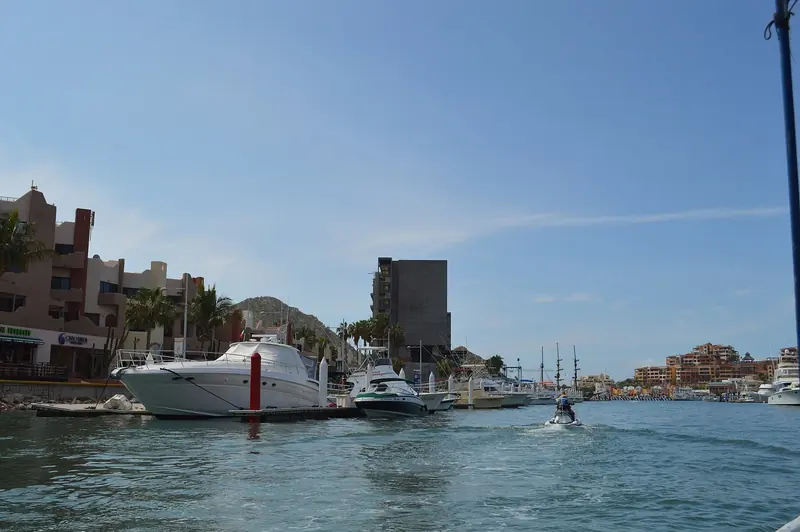
| Coverage | Mexico's Pacific and Sea of Cortez coastline from Puerto Vallarta and Riviera Nayarit south to Cabo San Lucas and north into the Baja peninsula to La Paz |
|---|---|
| Main gateway airports | Puerto Vallarta (PVR, Licenciado Gustavo Diaz Ordaz International), Los Cabos (SJD, San Jose del Cabo), and La Paz International (LAP) |
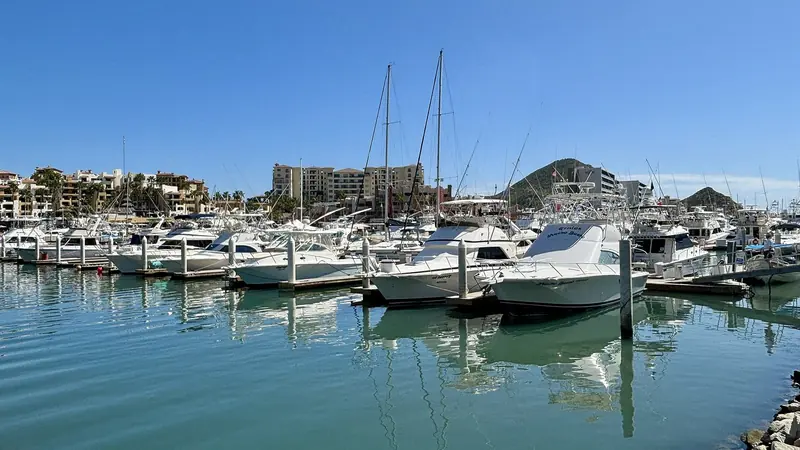
| Key marinas | Marina Vallarta (Puerto Vallarta), Cabo San Lucas Marina, Marina de La Paz |
| Hurricane season | the Eastern Pacific season runs officially 15 May to 30 November, with the statistical peak in September and heavy activity from mid-August to mid-October |
| Temporary Import Permit (TIP) | required for a foreign-flagged vessel staying more than a few days, valid for 10 years, one-time fee cited at roughly USD 60 by Marina de La Paz |
| La Paz whale shark season | roughly October through April, peaking December to March, inside a designated Marine Protected Area established as a national park in 2019 |
| Whale shark viewing rules | minimum 3 metres from the head and 4 metres from the tail, licensed boats and guides only, capacity limits of 14 boats per time slot across 4 daily slots, maximum 5 swimmers plus 1 guide per whale shark |
| El Arco (the Arch) | the natural rock formation at Land's End, Cabo San Lucas, the region's best-known landmark, visible from the marina approach |
Three Distinct Bases Along One Coastline
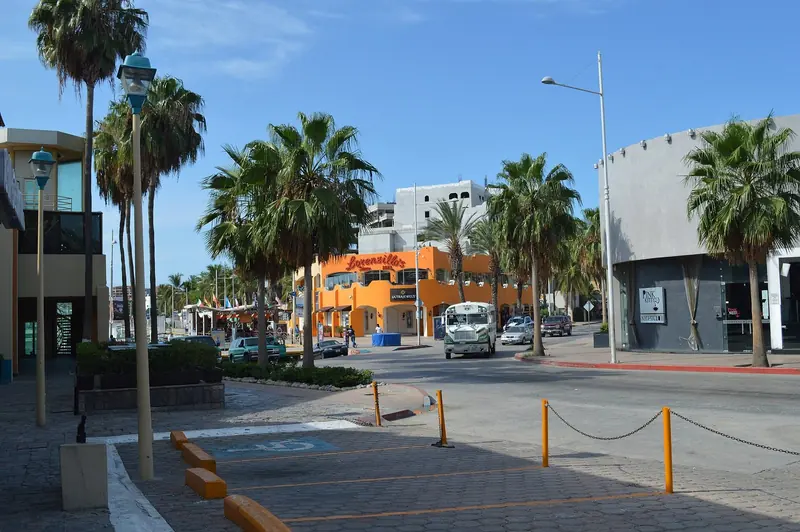
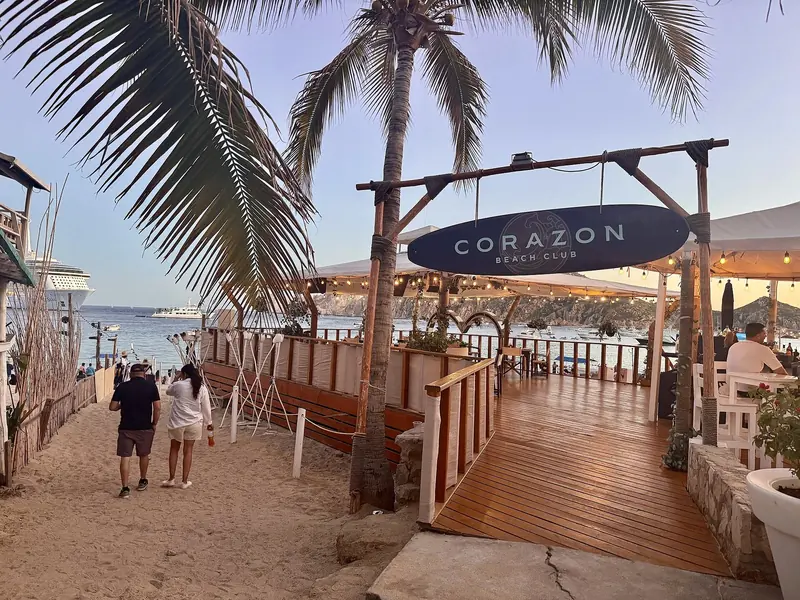
Puerto Vallarta sits on Banderas Bay on Mexico's mainland Pacific coast, its Marina Vallarta a short run from the city's international airport and its old-town waterfront. It is generally marketed and used as the more family- and culture-oriented of the three bases, with a genuine Mexican town at its centre rather than a purpose-built resort strip. Cabo San Lucas, at the southern tip of the Baja California peninsula, is the more overtly nightlife- and beach-club-driven of the three - Medano Beach's string of beach clubs, including the well-known Corazon, and the marina's proximity to bars and restaurants shape a livelier, younger-skewing scene, all set against the backdrop of El Arco, the natural rock arch at Land's End that is the region's single most photographed landmark.
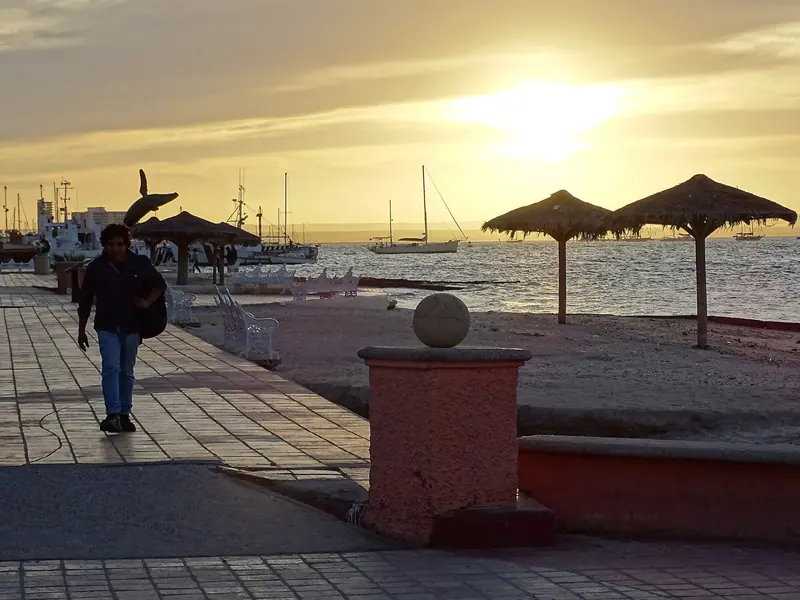
La Paz, further north on the Baja peninsula and facing the Sea of Cortez rather than the open Pacific, is the quietest and most conservation-oriented of the three. Charter operators consistently market it around marine wildlife - sea lion colonies, whale sharks in season, and the wider Sea of Cortez's protected areas - rather than around nightlife or beach clubs, a genuinely different pitch from Cabo's marketing. A first-time visitor choosing where to base a Mexico Pacific season should treat these as three distinct products rather than interchangeable stops on the same coast.
Hurricane Season Is a Real Planning Constraint, Not a Footnote
Puerto Vallarta, Mazatlan, Cabo San Lucas and the wider Pacific side of Mexico all sit within range of storms forming in the Eastern Pacific, and the season's statistical peak falls in September, with late August and early October close behind - meaning the real risk window is narrower and more concentrated than the official six-and-a-half month season suggests. That distinction matters practically: a yacht based here from December through May faces essentially no tropical cyclone risk, while the same yacht left in a marina through August and September needs a specific, tested hurricane plan.
Every marina along this coast operates within that same seasonal reality, so the question for an owner is less whether to worry about hurricanes at all and more whether to relocate the boat, arrange a haul-out, or accept the risk with appropriate insurance for the peak months. None of the three main marinas in this entry published a specific hurricane haul-out plan or storm-season pricing in the material available, which is worth asking about directly rather than assuming any marina here handles it identically.
Whale Sharks and the Rules That Actually Govern Seeing Them
The whale shark season in La Paz runs roughly October through April, with the heaviest concentration typically December through March, inside a designated Marine Protected Area that Mexico's environmental authorities, SEMARNAT and CONANP, elevated to national park status in 2019. Access is licensed rather than open: only permitted boats, captains and guides may bring visitors into the viewing area, with numeric limits of 14 boats per time slot across four daily slots, a two-hour limit in the viewing area, and in-water rules restricting a group to one whale shark at a time with a maximum of five swimmers plus one guide per animal.
For a private yacht wanting to include this in a Sea of Cortez itinerary, the practical implication is straightforward: this cannot be improvised with the yacht's own tender and crew - it requires booking through a licensed operator working within the permit system, the same way a private yacht anywhere else in this directory defers to local dive or wildlife-viewing operators for a regulated activity rather than attempting it independently. The distance rules (3 metres from the head, 4 from the tail) are specific enough to brief a crew on directly rather than leave to general common sense.
The Temporary Import Permit: the One Document That Actually Matters
Any vessel planning to stay in Mexican waters beyond a brief visit needs a TIP, and the document's value goes beyond simple legal compliance: it is what allows an owner to leave the boat in Mexico when flying home, and it is what lets replacement parts be imported duty-free when something breaks and needs a part shipped in urgently - a real, practical saving that cruising guides specifically flag as the TIP's most valuable feature beyond the legal requirement itself. It remains valid for 10 years regardless of how many times the vessel enters and exits Mexican waters during that period, so it is a one-time piece of paperwork rather than an annual renewal.
The other side of the TIP that cruising guides are specific about is cancelling it correctly when a boat permanently leaves Mexican waters or changes ownership - failing to cancel an old TIP has caused real problems for subsequent owners or on a later re-entry, according to cruiser forums and official guidance alike. An owner basing a yacht anywhere on this coast, whether in Puerto Vallarta, Cabo or La Paz, should treat the TIP as one of the first pieces of paperwork to sort out on arrival, not an afterthought once the boat is already settled into a marina.
The Marinas Themselves: Capacity and Reach
Marina Vallarta, the main marina serving Puerto Vallarta, carries 354 slips for vessels up to 160 feet, a solid mid-size facility matched to the resort city around it. Marina Cabo San Lucas is the more heavyweight of the three, with 380 slips overall and a dedicated mega-yacht section of 33 berths taking vessels up to 375 feet (114 metres), 29 feet (8.8 metres) of draught and 63 feet (19 metres) of beam - genuine superyacht capacity, not just a large marina for production motor yachts, and consistent with Cabo's position as the more heavily trafficked and higher-end of the three bases.
La Paz splits its capacity across several separate marinas rather than concentrating it in one: Marina de La Paz offers 120 slips up to 200 feet, Marina Costa Baja around 250 vessels from 30 to 225 feet plus a 50-slot dry marina for smaller boats up to 35 feet, Marina Palmira 193 slips from 25 to 145 feet, and Marina Cortez a similarly wide range from 40 to 200 feet. That spread gives an owner real choice of facility and price point in La Paz specifically, at the cost of the simplicity of a single obvious marina to book, unlike Puerto Vallarta or Cabo where one facility clearly dominates.
Getting Crew and Guests In and Out
Puerto Vallarta's Licenciado Gustavo Diaz Ordaz International Airport (PVR) and Los Cabos International (SJD) both handle substantial scheduled international traffic, making either a realistic direct arrival point for guests flying in from the US, Canada or further afield for a charter or private cruise starting at Marina Vallarta or Marina Cabo San Lucas respectively. La Paz International (LAP) is a smaller, more regional field, and a guest flying internationally to base a season there should generally expect to route through Los Cabos or Mexico City rather than fly directly, even though La Paz itself has scheduled domestic connections.
For an owner running a season that moves between all three bases - a realistic itinerary given how close they sit together along the same coastline - that airport hierarchy is worth planning crew changes around: bring guests in and out through Puerto Vallarta or Los Cabos where the flight options are richer, and treat La Paz as the quieter middle leg of the itinerary rather than a place to schedule an international guest arrival or departure. A charter broker booking this kind of multi-base season should build that asymmetry into the itinerary from the start.
A terra, accessi e prenotazioni
| Getting there | Puerto Vallarta (PVR), Los Cabos (SJD) and La Paz (LAP) are the three relevant international gateways; PVR and SJD carry substantial scheduled international service, while La Paz is a smaller, more regional airport. |
|---|---|
| Temporary Import Permit | Required for a foreign-flagged vessel staying beyond a short visit; valid 10 years regardless of how many times the vessel enters and exits Mexican waters, with a one-time fee cited at roughly USD 60 by Marina de La Paz - cancel it before permanently exporting the vessel, since an uncancelled TIP can create problems on a future entry. |
| Hurricane season planning | 15 May to 30 November officially, with the real risk concentrated from mid-August to mid-October; an owner planning to leave a boat here over summer should have a specific haul-out or hurricane plan for that window rather than assume the season is evenly low-risk. |
| Whale shark season and rules | Roughly October to April in La Paz, peaking December to March; licensed boats and guides only, 3 metre head and 4 metre tail minimum distance, capacity-limited by time slot - book through a licensed operator rather than an informal arrangement. |
| What is not published | A specific TIP fee in a second independent source beyond Marina de La Paz's figure, and a consolidated official berth-price comparison across Marina Vallarta, Cabo San Lucas Marina and Marina de La Paz. |
Cosa riferiscono armatori ed equipaggi
Regulators treat the whale shark rules as genuinely enforced, not advisory
the La Paz feeding area's 2019 designation as a national park, combined with licensed-boat-only access and hard numeric limits on boats and swimmers per whale shark, reflects a level of active management several other wildlife-tourism sites in this directory do not carry.
Mexico's SEMARNAT and CONANP, via multiple independent tour-operator guidesCabo's marina and beach-club culture draws a different crowd than Puerto Vallarta's
operators and charter guides consistently describe Cabo San Lucas as the livelier, nightlife-oriented base and Puerto Vallarta as the more family- and culture-oriented gateway, a distinction worth knowing before picking where to base a season.
Northrop & Johnson's West Coast of Mexico charter guideLa Paz is positioned as the quieter, more marine-conservation-minded base
charter operators focused on the Sea of Cortez side consistently market La Paz around its marine life and Marine Protected Areas rather than nightlife, a genuinely different pitch from the Cabo and Puerto Vallarta marketing.
Dream Yacht Charter's La Paz destination guide
Cosa convince e cosa va valutato
Punti di forza
- Three genuinely different bases on one coastlinePuerto Vallarta, Cabo San Lucas and La Paz offer real variety - family and culture, nightlife and beach clubs, or marine wildlife and quiet cruising - without needing to change countries
- A well-regulated, still-accessible wildlife encounterLa Paz's whale shark rules are specific and enforced through a national park designation, giving a visiting yacht a genuinely well-managed way to see them rather than an unregulated free-for-all
- The Temporary Import Permit rewards an owner who plans aheada single roughly USD 60, ten-year document removes most of the friction of leaving a boat in Mexico or importing parts duty-free - a real, practical advantage over destinations with annual import paperwork
Da valutare
- Hurricane season is a genuine, concentrated risk, not a rounding errormid-August through mid-October carries real tropical cyclone risk along this entire coast, and none of the three main marinas published a specific storm plan or season pricing that could be confirmed here
- Whale shark viewing cannot be improvised with a private tenderthe licensing and permit system means a yacht wanting this experience must book through an approved operator, not simply motor over independently, which some owners used to fully private wildlife encounters elsewhere may find limiting
- Berth pricing across the three marinas is not consolidated anywhereno single source compares Marina Vallarta, Cabo San Lucas Marina and Marina de La Paz on price, meaning a buyer has to contact each marina individually to budget a season properly
A chi si rivolge: An owner or charter broker planning a multi-base Baja and mainland Mexico season, comfortable sorting a Temporary Import Permit and a real hurricane-season plan rather than treating either as an afterthought.