Montenegro & the Adriatic
| Regione | Adriatico meridionale, Montenegro |
|---|---|
| Stagione migliore | da maggio a ottobre, picco fra luglio e agosto |
| Porti principali | Porto Montenegro (Tivat), Portonovi, Kotor |
| Contesto simbolo | la Baia di Kotor, patrimonio mondiale |
| Polo superyacht | Porto Montenegro, costruita su una ex base navale |
| Giurisdizione | Montenegro (fuori dall'UE, usa l'euro) |
| Ingresso | richieste formalità di dogana e immigrazione |
| Attenzione a | l'acqua profonda vicino a riva, che limita alcuni ancoraggi |
| Jurisdiction | Montenegro is outside the EU and uses the euro unilaterally |
| Entry | customs and immigration clearance in and out, which matters on any cruise that crosses to or from Croatia |
| EU accession | Montenegro is targeting 2028, with roughly half the negotiating chapters provisionally closed by mid 2026 |
| Air access | Tivat airport sits about ten minutes from Porto Montenegro |
| Duty-free diesel at Porto Montenegro | EUR 0.74 a litre, best-sourced figure reported February 2025, with no current published pump price |
| Regional retail diesel on 20 July 2026 | EUR 1.721 a litre in Croatia, EUR 1.81 in Montenegro, EUR 2.11 in Italy |
| A 60,000 litre uplift saves roughly EUR 59,000 against Croatian pump diesel and roughly EUR 82,000 against Italian, on figures whose dates do not match | |
| The 72-hour minimum stay condition for duty-free fuel has been removed, so a yacht may cross the border, bunker and leave | |
| Croatia offers no duty-free fuel, supplies or services at all, and Italian duty-free bunkers are limited to commercially registered yachts | |
| Neither Porto Montenegro nor Portonovi published a berthing tariff in July 2026 | |
| Charter VAT | none in Montenegrin waters, against 13 per cent in Croatia, with Croatian VAT applying to the Croatian days of a cross-border charter |
| Customs | leaving the EU discharges the 18 month temporary admission period, and a documented run to Kotor is a common way to reset it |
| EU accession, targeted for 2028, would end the duty-free fuel position and bring Montenegro inside the same 18 month clock | |
La baia fra le montagne
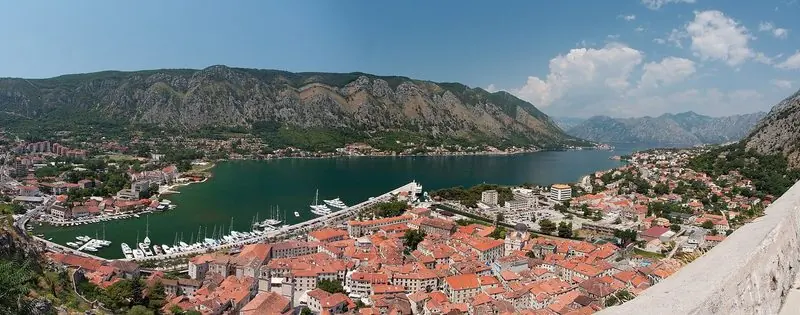
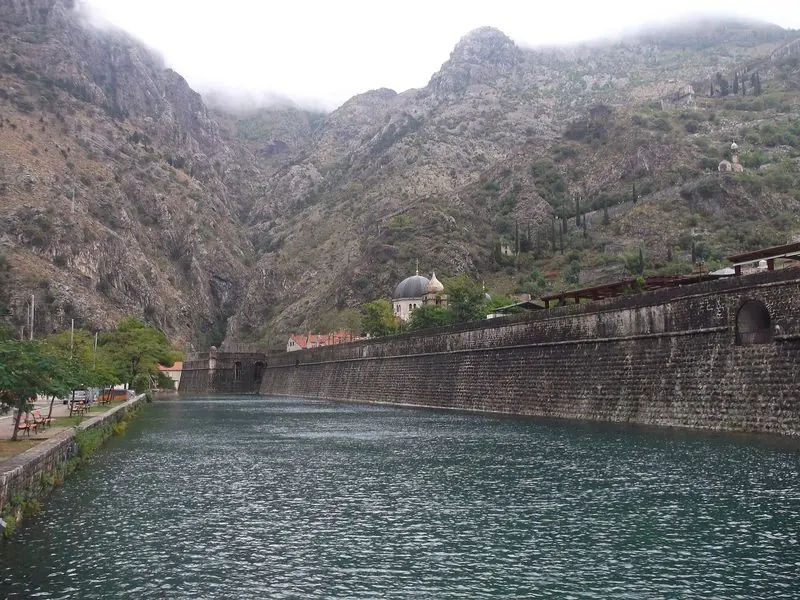
Il Montenegro occupa un tratto breve ma spettacolare dell'Adriatico orientale, appena a sud della Croazia. Il suo cuore è la Baia di Kotor, un'insenatura profonda e sinuosa spesso descritta come il fiordo più meridionale del Mediterraneo, anche se è stata formata da un canyon fluviale e non da un ghiacciaio. Montagne ripide si alzano direttamente dall'acqua, e antiche città venete costeggiano la riva. Per lo yachting il Paese si è reinventato attorno a una marina moderna per superyacht. Il contesto gli dà un carattere che non ha eguali nella regione.
Il richiamo unisce il paesaggio della baia a strutture davvero aggiornate. Porto Montenegro, a Tivat, è stata costruita su una ex base navale e offre posti per gli yacht più grandi, un villaggio-marina e un regime di carburante duty free che ha attirato la flotta. Portonovi, vicino all'imboccatura della baia, aggiunge una seconda marina moderna con resort. La città murata di Kotor sta in fondo alla baia, tutelata come patrimonio mondiale. Insieme uniscono spettacolo e sostanza.
La stagione
La stagione va da maggio a ottobre, in linea con le coste adriatiche vicine, con luglio e agosto i mesi più caldi e affollati. Le acque chiuse della baia restano calme, e le montagne intorno riparano da gran parte del tempo. Primavera e autunno offrono giornate miti e posti più liberi, e il mare conserva il calore fino a settembre. Molti yacht inseriscono il Montenegro in una crociera adriatica più ampia.
La baia chiusa è in genere riparata, anche se le montagne possono incanalare raffiche e nel caldo si formano temporali estivi. La costa aperta a sud vede più onda e più vento delle acque interne protette. Poiché il Paese è compatto, qui il tempo raramente detta una crociera come può fare nell'Egeo aperto. La calma della baia interna è gran parte del suo richiamo.
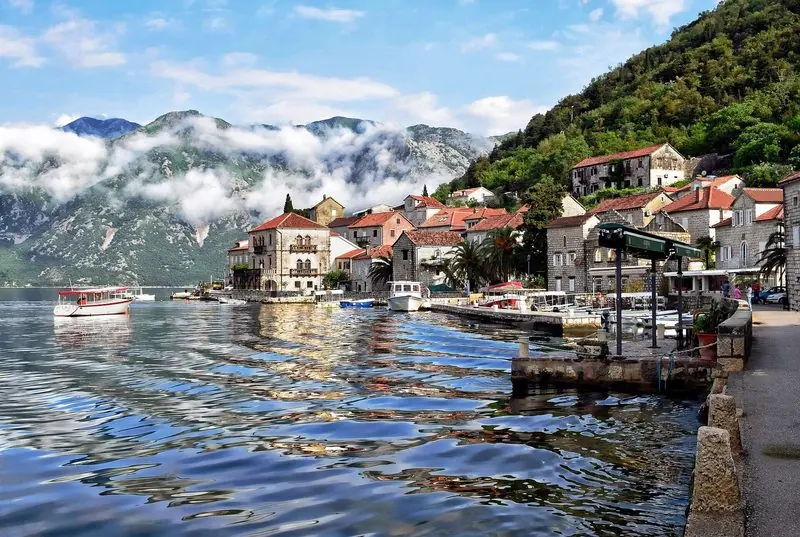
Una baia di canyon fra le montagne, con una marina da superyacht alla sua bocca.
Porti e ancoraggi
Porto Montenegro, a Tivat, è il perno dello yachting del Paese, una grande marina moderna capace di accogliere yacht molto grandi accanto a un villaggio di negozi e ristoranti. Portonovi, più vicina alla bocca della baia a Herceg Novi, offre un secondo posto da superyacht con resort. Kotor ha una banchina cittadina sotto le sue mura, e Budva, sulla costa aperta, offre un'ulteriore marina. Ormeggiare qui è più facile che su molte coste più antiche grazie a questi investimenti recenti.
Gli ancoraggi dentro la baia sono limitati dal fondale, perché l'acqua è profonda vicino alle rive ripide, ma nei bacini più larghi esistono punti riparati. Le isole davanti a Perast, compreso l'isolotto artificiale della Madonna dello Scalpello, formano uno sfondo memorabile. Fuori dalla baia le spiagge e le cale lungo la costa aperta verso Budva offrono altre opzioni. Molti yacht qui passano più tempo in banchina che all'ancora.
A terra e in acqua
A terra il punto alto è il centro storico murato di Kotor, con un labirinto di piazze e chiese e una salita ripida alla fortezza sopra, per una vista sulla baia. Perast, piccola città barocca sull'acqua, è tra i luoghi più belli dell'Adriatico. Il villaggio di Porto Montenegro offre ristorazione e negozi moderni direttamente al posto barca. Il Paese è conveniente per gli standard regionali, il che aggiunge attrattiva. Storia e paesaggio di montagna stanno fianco a fianco.
Sull'acqua è la baia stessa l'attrazione, un campo di navigazione riparato e circondato da montagne. Le gite in tender a Perast e alle chiese sull'isola sono un appuntamento fisso, e la costa aperta offre acqua più limpida per il bagno fuori dalla baia. Il contesto chiuso rende le giornate in acqua calme e facili. Toys e tender funzionano senza difficoltà nei bacini riparati. Per gli ospiti il contrasto fra paesaggio alpino e acqua adriatica calda è il ricordo che resta.
Note pratiche
Il Montenegro non è membro dell'Unione europea, quindi gli yacht sbrigano dogana e immigrazione all'ingresso e all'uscita dal Paese, un punto da mettere in conto in una crociera adriatica più ampia. Il Paese usa l'euro pur essendo fuori dall'Unione. Porto Montenegro ha storicamente offerto condizioni interessanti sul carburante, che sono state un richiamo importante per gli yacht più grandi. Gli agenti gestiscono di routine formalità e ormeggi per le barche più grandi.
Le marine moderne rendono ormeggio, carburante e assistenza più semplici di quanto la dimensione del Paese lascerebbe pensare, anche se i posti più grandi si esauriscono comunque nelle settimane di picco. L'approvvigionamento è buono attorno a Tivat e ai villaggi-marina. La baia profonda e dalle sponde ripide favorisce l'ormeggio in banchina rispetto all'ancora per molti yacht. Le operazioni con i tender sono semplici nell'acqua riparata, con le brevi traversate sulla costa aperta come cosa principale da pianificare.
Tivat airport, and the border
Tivat airport is the single best thing about Montenegro's logistics. It is about ten minutes by road from Porto Montenegro, takes business jets and has summer scheduled service from a range of European cities, and a guest can be aboard twenty minutes after landing. Podgorica is the country's larger airport, roughly ninety minutes away. Dubrovnik airport is about the same distance by road but involves a land border crossing that can take an hour in August.
Inside the country the roads round the bay are narrow and slow, and the drive from Tivat to Kotor is longer than it looks on the map, so the tender is usually quicker. Helicopter transfers operate but are less established than in Italy or France. The one thing to plan around is the border, because a yacht arriving from Croatia clears out of the EU and into Montenegro and does the reverse on the way back, and each clearance is a scheduled stop and not a formality.
Kotor, Perast and the road to Lovcen
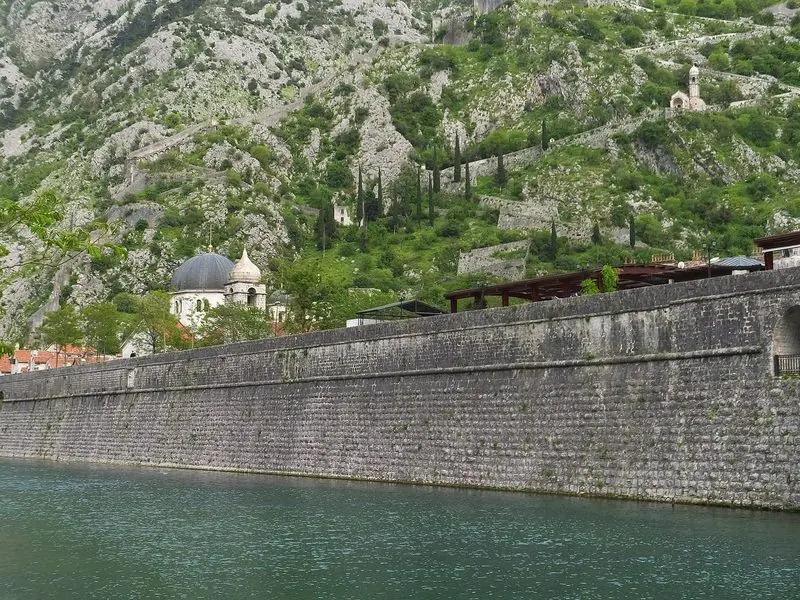
Kotor's old town is the set piece, a compact Venetian maze of squares and churches with the climb to the fortress of San Giovanni above it, and it is best done at eight in the morning before the cruise passengers land. Perast is prettier and quieter and has a handful of good waterside restaurants. Porto Montenegro's own village has the modern dining and the shops at the berth, which is convenient and feels like a marina development because it is one. Prices across the country remain lower than Italy or France by a clear margin.
The country inland is the surprise and almost nobody on a yacht sees it. The road up to Lovcen national park and the Njegos mausoleum climbs through 25 hairpins with the whole bay below, the village of Njegusi at the top makes the prosciutto and cheese the country is known for, and Cetinje beyond it was the old royal capital. Nightlife is concentrated at Budva and is a young regional crowd.
Clearance, duty-free fuel and EU accession
Montenegro is outside the European Union and uses the euro unilaterally, so a yacht clears customs and immigration on entry and exit and an agent should handle it. The country is targeting EU membership in 2028 and had provisionally closed around half its negotiating chapters by the middle of 2026, and an owner should assume that accession will change the customs position and with it the fuel arrangement that draws much of the fleet. Charter operations in Montenegrin waters have their own registration and tax requirements and need local advice.
Fuel is the commercial reason large yachts come. The Porto Montenegro fuel dock takes vessels up to 250 metres with 15 metres of draft and holds up to 800,000 litres of duty-free diesel, which on a full uplift for a large yacht is a serious number and is why boats reposition specifically to bunker here. Technical support at Tivat is better than the country's size suggests, with a service yard, a travel lift and a cluster of trades that has grown around the marina.
The honest downside
The cruising ground is tiny. An owner who books two weeks in Montenegro will have seen everything by day three and will spend the rest of the time on a berth in a marina village, however good that berth is. The bay is enclosed and its water exchange is limited, so the swimming inside it is not what guests expect from an Adriatic holiday and the clear water is out on the open coast past Budva. Anchoring options are genuinely poor because of the depth.
The other honest points are cost and crowding. Porto Montenegro was a bargain when it opened and is priced like a leading Mediterranean marina now, and the duty-free fuel advantage has a visible expiry attached to EU accession. Kotor takes cruise ships into a very small harbour and the old town on a two-ship day is unpleasant. And the border crossings mean that using Montenegro as a base for Croatian cruising costs half a day at each end of every trip.
Putting a number on the duty-free fuel
The commercial argument here is diesel and it can be sized, with one honest caveat: Porto Montenegro publishes no live pump price and quotes bunkering by email. The best-sourced figure for duty-free and tax-free diesel at the marina is EUR 0.74 a litre, reported in February 2025, against the marina's own long-standing claim of a price around 45 per cent below retail. Retail diesel across the region on 20 July 2026 stood at EUR 1.721 a litre in Croatia, EUR 1.81 in Montenegro and EUR 2.11 in Italy on GlobalPetrolPrices data. Croatia offers no duty-free fuel, supplies or services at all, and Italian duty-free bunkers are available only to commercially registered yachts, so for a privately used yacht working the Adriatic the Tivat fuel dock is the only untaxed fill on the coast. Montenegro has also removed the 72-hour minimum stay that used to be attached, so a yacht can cross the border, bunker and leave.
On a 60,000 litre uplift the gap between the February 2025 duty-free figure and Croatian pump diesel in July 2026 is roughly EUR 59,000, and against Italian pump diesel roughly EUR 82,000. Those two dates do not match and the arithmetic should be read as an order of magnitude rather than as a quotation. What is firm is the size of the thing: one full uplift for a large yacht saves about what a July and August month costs at ACI Split, which on the 2026 ACI card is EUR 53,900 for a 50 m boat. That is the entire reason yachts reposition here, and it explains why berth demand at Tivat spikes at each end of the season rather than through it. On berthing itself Montenegro publishes nothing. Neither Porto Montenegro nor Portonovi posts a tariff, both quote on application, and no rate card for either was public in July 2026.
Outside the EU, and what that is actually worth
Montenegro sits outside the European Union and outside its customs territory, and everything an owner comes here for follows from that. Two consequences matter. The first is the customs clock. A non-EU flagged yacht cruising the EU privately runs 18 months of temporary admission under Article 217(e) of Delegated Regulation (EU) 2015/2446, and that period is discharged by leaving the Union rather than by crossing an internal border, so a properly evidenced run to Kotor and back is one of the cleanest ways to reset it. The exit and the re-entry both have to be documented, which in practice means the clearances and the AIS track, not an assertion afterwards. The second is that every crossing to or from Croatia is a full customs and immigration clearance in both directions, which is a scheduled stop measured in hours and the reason using Tivat as a base for Dalmatian cruising costs half a day at each end.
On charter, Montenegro applies no VAT to a charter taking place in Montenegrin waters, which is the sharpest possible contrast with Croatia's 13 per cent an hour up the coast. An itinerary that continues into Croatia is taxed there on the Croatian days, so a cross-border charter is taxed on half of itself. Charter operations in Montenegrin waters carry their own registration and tax requirements and are a matter for a local adviser rather than an assumption. The real risk to all of it is a date rather than a rule. Montenegro is targeting EU membership in 2028 and had provisionally closed around half its negotiating chapters by mid 2026, and accession takes the country into the EU customs and VAT area. That would end the duty-free fuel position, fold Montenegro inside the same 18 month clock the yacht came here to reset, and remove the border stop that currently costs half a day. An owner signing a long berth contract at Tivat is buying a real advantage with a visible expiry attached.
A terra, accessi e prenotazioni
| Getting there | Tivat airport sits about 3.8 km from Porto Montenegro, roughly eight minutes by road, which is the shortest airport-to-quay run of any serious yachting base in Europe. Dubrovnik is the alternative for long-haul and larger private jets at about 48 km, but budget close to two hours rather than the hour the distance suggests, because the Croatian frontier at Debeli Brijeg queues badly in July and August. Podgorica is the third option and the least useful for a guest change. |
|---|---|
| Arriving by sea | Porto Montenegro answers on VHF 71 on +382 32 661 061. Clear in at Zelenika, Tivat, Kotor or Bar. Fly the Q flag on arrival with the Montenegrin courtesy flag, and give 24 hours notice of ETA through the marina or an agent. The Bay of Boka is held to 10 knots throughout, dropping to 6 knots in the Kumbor and Verige narrows, so a fast boat is a slow boat from the moment it enters the bay. Pilotage is compulsory for vessels of 1,000 GT and over entering Marina Bar, Porto Montenegro, Kotor or the port of Zelenika. |
| The vignette, and what it actually is | Montenegro's vignette is not a berth fee and not a wealth tax. It is a navigation-safety charge issued by the harbour master, and no foreign yacht may move in Montenegrin waters without one. It is sold by duration, from a single day through one week, one month, three months, six months and twelve, and it is priced per metre, so the cost scales hard with length and worse for a commercially registered motor yacht than a private sailing one. The harbour master publishes a calculator at vinjete.kapetanija.com, and there is a EUR 5 administrative charge on issue. First issue needs the certificate of registry, crew and passenger list, all passports, the insurance, the skipper's licence, evidence of the last port of departure, and a notarised power of attorney in English, Italian or French where the skipper is not the owner. |
| How you actually reserve a berth | Porto Montenegro takes bookings online, by telephone on +382 32 661 061 or by email to [email protected]. The marina accepts 6 m to 250 m LOA, which is the widest band on the Adriatic and the reason the bay collects boats that cannot be placed in Croatia. There is no allocation committee and no lottery of the kind Monaco runs in Grand Prix week; in practice the constraint here is simply how early you ask for August. |
| What a berth costs, and what is not published | Porto Montenegro publishes no transient rate card. Daily, weekly and monthly visitor berthing all price on application, and the only figures in open circulation are third-party guides quoting annual contracts in a broad band of roughly EUR 950 to over EUR 1,550 per metre a year depending on size. Treat those as indicative and not as the marina's own numbers. The marina's published capacity also disagrees with itself across its own pages and its press material, which quote 460, 481 and 580 berths, so do not plan around a berth count either. An owner cannot compare this marina against a Croatian or Italian one on published price before committing, and that is a real weakness of the destination rather than an oversight of this page. |
| On the quay | Water and electricity on every berth, with shore power running from 16A all the way to 1000A, which is what lets the marina take 250 m. Grey and black water pump-out is fitted on all berths over 15 m, as is fibre optic internet at speeds up to 50 Mb/s. Duty-free fuel is available, and spare parts attract preferential VAT treatment. The duty-free fuel is the single strongest commercial reason a Mediterranean programme detours here. |
| Where to eat, within walking distance | Al Posto Giusto in the marina village is the one with the local crowd rather than the visiting one: a wood-fired oven, homemade pasta, an open kitchen and the specials chalked straight onto black walls. One is the contemporary Mediterranean room in the village, most often praised for its octopus and seafood risotto. Murano at the Regent is the hotel dining room and the formal option, with Gourmet Corner alongside it for patisserie and delicatessen and the Onyx Bar and Garden for a nightcap. All of it is inside the marina village, which means guests walk and crew do not need a car. |
| After dark | The promenade is the nightlife. Bars and lounges spill onto the waterfront through the summer and several of the marina restaurants turn into cocktail rooms after dinner, so bar-hopping happens along the jetties on foot. It is a convivial rather than a loud scene, closer to Portofino than to Ibiza, and people eat late. Porto Montenegro and the municipality run live music, DJ sets, wine events and regattas across the summer. |
| The season | July and August are the peak and the only months when berth availability is genuinely tight. Shoulder months are quiet and the bay is at its best in them. Winter is a serious proposition here in a way it is not elsewhere on the Adriatic: the marina sells Premium and Platinum winter packages on a pay-six-months-get-the-seventh basis, which is why a number of Mediterranean boats winter in Tivat rather than running back to Italy or Spain. |
Cosa riferiscono armatori ed equipaggi
Berth ownership prices have come off, and visibly
A 50 m berth at Porto Montenegro was re-listed at a 22 per cent reduction, reported as a significant price drop in the berth market rather than a routine repricing. For an owner weighing a purchased berth against paying transient rates that are never published, the second-hand berth market is currently the only place in Tivat where a real number can be seen.
YACHTZOOClearance is straightforward but it is not self-service
Agents working the bay describe the same fixed sequence on every arrival: 24 hours notice of ETA, Q flag and courtesy flag on approach, then the vignette issued against the registry, crew list, passports, insurance and evidence of the last port. Yachts already holding a valid vignette clear on a shorter pack. The procedure rewards having the document set assembled before the passage, not on arrival.
Montenegro DestinationsThe vignette is the item most often mispriced in a budget
It is quoted per metre and by duration, and the harbour master maintains a public calculator rather than a flat table, so two similar yachts can pay very different amounts depending on registration type and length of stay. Crews report treating it as a fixed arrival cost and being wrong; the calculator is the only reliable way to price a stay in advance.
Montenegro Harbour Master (Lucka Kapetanija) vignette calculator
Cosa convince e cosa va valutato
Punti di forza
- Duty-free fuel, and the reason the detour paysMontenegro sits outside the EU customs territory, and Porto Montenegro sells fuel duty free. On a large motor yacht that single line can pay for the passage into the Adriatic and the berth on top of it, which is why the bay collects boats whose owners never intended to cruise Montenegro.
- Eight minutes from an international airport to the passerelleTivat is about 3.8 km from the marina. Nothing in the western Mediterranean comes close on guest-change friction, and it turns a mid-charter crew rotation from a half-day operation into an errand.
- It takes boats that have nowhere else to go on this coastThe marina accepts 6 m to 250 m with shore power to 1000A. The Adriatic otherwise runs out of berth above roughly 60 m very quickly, so for a 90 m or a 120 m the bay is not one option among several, it is the option.
- Genuinely sheltered, not nominally shelteredThe Boka is a drowned river canyon with high ground on both sides and a narrow entrance, so the anchorages hold in weather that empties exposed Adriatic roadsteads. Combined with pump-out on every berth over 15 m and fibre to the boat, it works as a base rather than as a stop.
Da valutare
- Nothing about the price is publishedNo transient rate card at any duration, and the marina's own berth count is quoted three different ways across its material. A buyer or a charter broker cannot compare Tivat against Croatia or Italy on any published number, which is the opposite of how the destination markets itself.
- The bay is a 10-knot bay10 knots throughout the Boka and 6 knots in the Kumbor and Verige narrows, with automatic penalties. A 30-knot boat is worth nothing inside the bay, and Kotor, the thing most guests come to see, is at the far end of those limits from Tivat.
- The vignette scales against youIt is charged per metre and it is charged more heavily on commercially registered motor yachts than on private sailing ones, so the boats that most need to be here pay the most to be here. It is also a separate errand from berthing, with its own document pack and its own EUR 5 charge.
- Compulsory pilotage at 1,000 GTAny vessel of 1,000 GT or more takes a pilot into Porto Montenegro, Kotor, Bar or Zelenika. That is a modest cost but it is a scheduling dependency, and it applies to exactly the size of yacht the marina advertises for.
- It is a destination of one placeTivat and Kotor are the substance of Montenegrin yachting and they are twelve miles apart. An owner wanting variety leaves for Croatia within a few days, and that means the border, the vignette ending and a fresh clearance.
A chi si rivolge: Armatori che vogliono un paesaggio montano spettacolare e una marina moderna per superyacht a portata delle aree di navigazione croate.