Scotland & the Hebrides
| Region | the west coast of Scotland from the Firth of Clyde to Cape Wrath, roughly 200 nautical miles direct and far more as cruised |
|---|---|
| About 800 islands, fewer than a hundred inhabited, in an inner group close to the mainland and the Outer Hebrides 20 to 40 miles further west | |
| Distances | Oban to Tobermory 25 nautical miles, Tobermory to Canna 35, Canna to Loch Scavaig on Skye 20 |
| St Kilda lies 40 miles west of Harris in the open Atlantic and needs a settled forecast | |
| Dunstaffnage Marina, three miles north of Oban, has standard 12 m berths, a breakwater and a superyacht pontoon of 184 m | |
| Oban Bay community berthing runs about 100 private leased moorings and 16 visitor moorings in trots for 14 m, 12 m and 10 m vessels | |
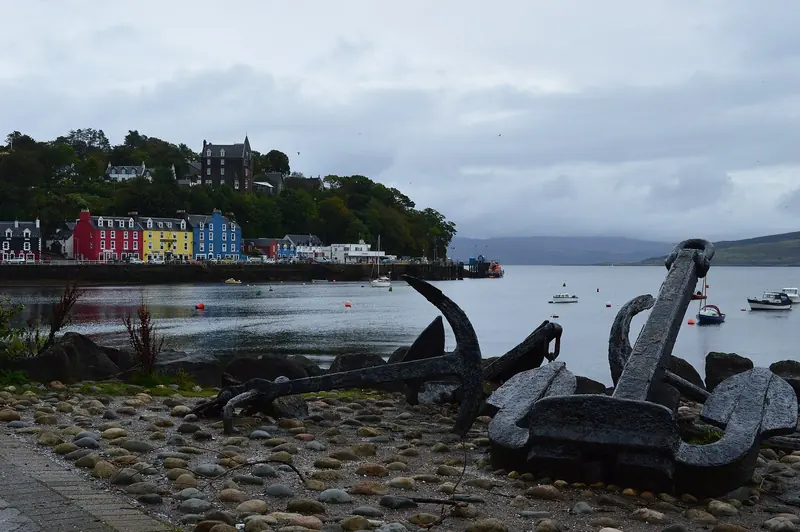
| Tobermory has an alongside pontoon usable at any state of tide, with water and electricity included and diesel available | |
| Caledonian Canal maxima | 45.72 m length, 10.67 m beam, 4.1 m draft and 35 m air draft, through 29 locks |
| A vessel with a freshwater draft over 3.5 m must contact the canal office before arrival | |
| Minimum canal transit is two and a half to three days, subject to weather, traffic and lock delays | |
| The canal saves the 400 mile passage around Cape Wrath and through the Pentland Firth | |
| Tides | springs of four to five metres, with streams of several knots at Dorus Mor, the Sound of Luing, Kyle Rhea and the Sound of Islay |
| The Gulf of Corryvreckan between Jura and Scarba holds one of the largest whirlpools in the world and is transited only at slack water | |
| Anchoring is banned in Loch Creran except in four designated anchorages, to protect its serpulid reefs | |
| There are no comparable anchoring bans elsewhere in Scottish waters, following work between RYA Scotland and NatureScot on maerl and seagrass | |
| The proposal to designate Highly Protected Marine Areas across 10 per cent of Scottish seas by 2026, as consulted on, was not taken forward | |
| St Kilda is a dual UNESCO World Heritage site for nature and culture, with the largest seabird colonies in the north east Atlantic, evacuated in 1930 | |
| Islay has nine working distilleries within a few miles of each other, several reachable from an anchorage | |
| Season | May to September, with June giving about 18 hours of usable daylight and usually the driest weather |
| Sea temperature in high summer runs about 12 to 14 degrees | |
| Midges bite in still damp conditions from June to September and are worst at dusk in sheltered spots ashore | |
| The United Kingdom has been outside the EU customs and VAT territory since 2021, so an EU yacht here is on UK temporary admission | |
| Air | Glasgow and Edinburgh for long haul, Inverness for the canal's northern end, and light aircraft strips at Islay, Tiree, Barra and Stornoway |
| Barra's runway is the beach, and its flight times move with the tide | |
A coast with more islands than berths
From the Firth of Clyde to Cape Wrath is roughly 200 nautical miles as the crow flies and several times that as a boat actually travels it, because the coast is a fractal of sea lochs, sounds and about 800 islands of which fewer than a hundred are inhabited. The inner group, Mull, Islay, Jura, Skye and the Small Isles, sits close to the mainland and gives sheltered water in almost any wind. The Outer Hebrides lie 20 to 40 miles further west across the Minch and are a different, more exposed proposition.
The scale is deceptive. Oban to Tobermory is 25 miles, Tobermory to Canna 35, Canna to Loch Scavaig on Skye 20. A fortnight covers the inner islands comfortably, three weeks reaches the Outer Hebrides, and St Kilda, 40 miles west of Harris in the open Atlantic, needs a settled forecast and a boat that can wait for one. Nothing here is far. Everything here depends on the weather being willing.
Where a large yacht can actually go
Dunstaffnage Marina, three miles north of Oban, has the largest berthing on the coast: standard 12 metre berths, a breakwater and a superyacht pontoon of 184 metres. That is the answer for anything of size, and it is one pontoon. Oban Bay itself is run by a community berthing company with around 100 private leased moorings and 16 visitor moorings laid in three trots, for vessels of 14, 12 and 10 metres respectively, which tells you what the coast is really equipped for.
Tobermory on Mull has an alongside pontoon giving access to the town at any state of tide, with water and electricity in the charge and diesel on the pontoon, and it is the most useful stop in the Inner Hebrides. Beyond that the infrastructure thins to village piers, fishermen's harbours and visitor moorings laid by community trusts. A large yacht cruising here anchors, uses its tenders, and treats Dunstaffnage as the place it goes back to.
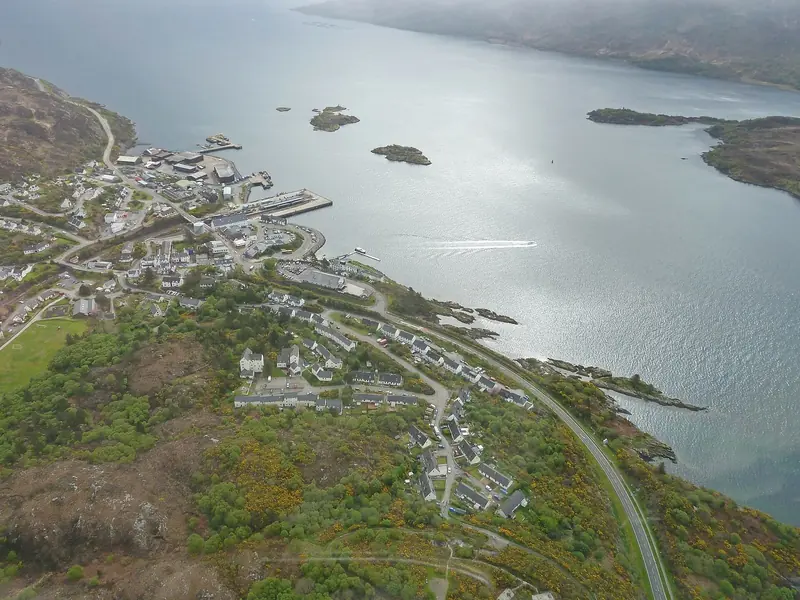
Two hundred miles of islands, one 184 metre pontoon, and a canal that stops at exactly 45.72 metres.
The Caledonian Canal, and its exact dimensions
The canal cuts the country in half along the Great Glen, from Corpach near Fort William to Inverness, through Loch Ness and 29 locks, and it saves the 400 mile passage round Cape Wrath and through the Pentland Firth. The published maxima are precise and unforgiving: 45.72 metres length, 10.67 metres beam, 4.1 metres draft and 35 metres air draft. A vessel with a freshwater draft over 3.5 metres has to contact the canal office before it arrives, because fresh water floats a hull lower than salt.
Minimum transit is two and a half to three days in good conditions, and weather, traffic and lock delays can extend it. Neptune's Staircase at Banavie is eight locks in a flight. For a yacht within the dimensions it is one of the great inland passages in Europe, running under Ben Nevis and along Loch Ness. For anything above 45.72 metres or 35 metres of air draft it does not exist, and the alternative is the north coast, which is a serious passage rather than a scenic detour.
The tides run the timetable
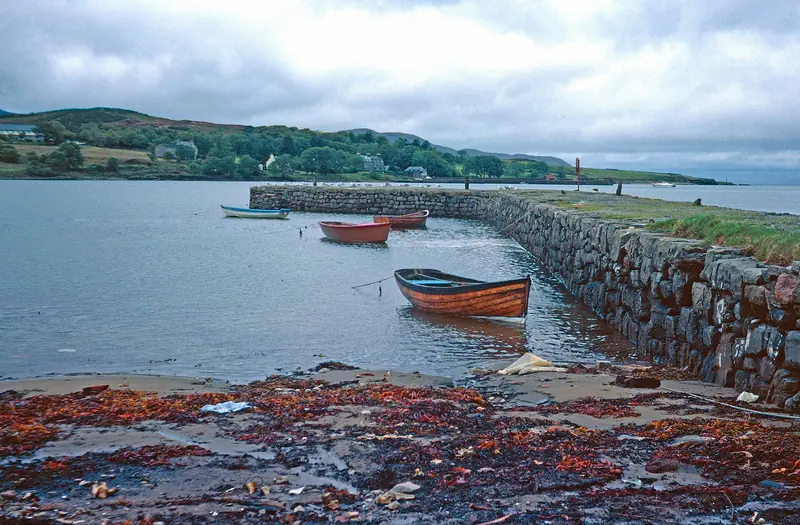
This is a big tidal coast, with ranges of four to five metres on springs and streams that reach genuinely dangerous speeds in the narrows. The Gulf of Corryvreckan between Jura and Scarba holds one of the largest whirlpools in the world and is transited only at slack water with local knowledge. Dorus Mor, the Sound of Luing, Kyle Rhea and the Sound of Islay all run several knots and all have to be taken on the fair stream. Passage planning here is tidal planning, and a day's run is defined by the gates it has to pass.
The compensation is that this makes the coast quiet. It filters out casual traffic and it means an anchorage that would be full in the Mediterranean holds two boats here. The tidal streams are exhaustively documented in the Clyde Cruising Club sailing directions and in the Admiralty tidal atlases, so none of it is guesswork. It simply requires a navigator who plans the week rather than the afternoon.
The anchorages people come for
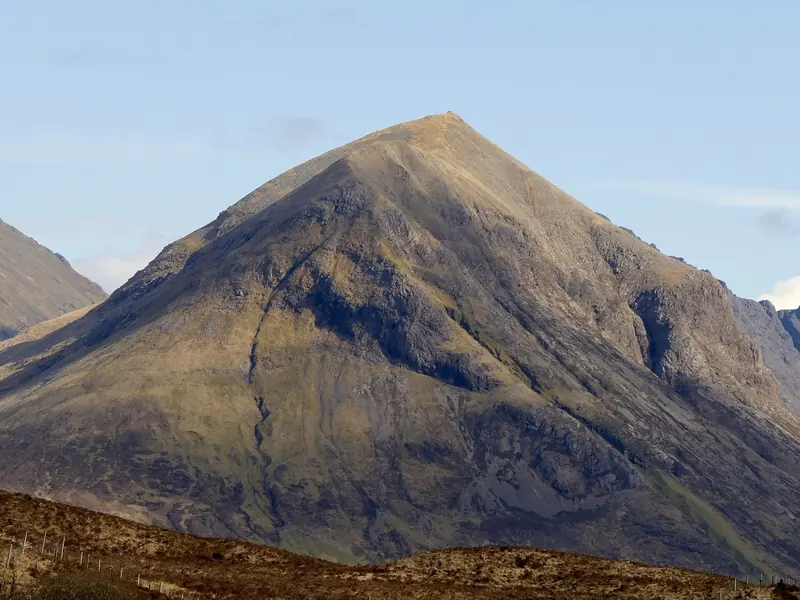
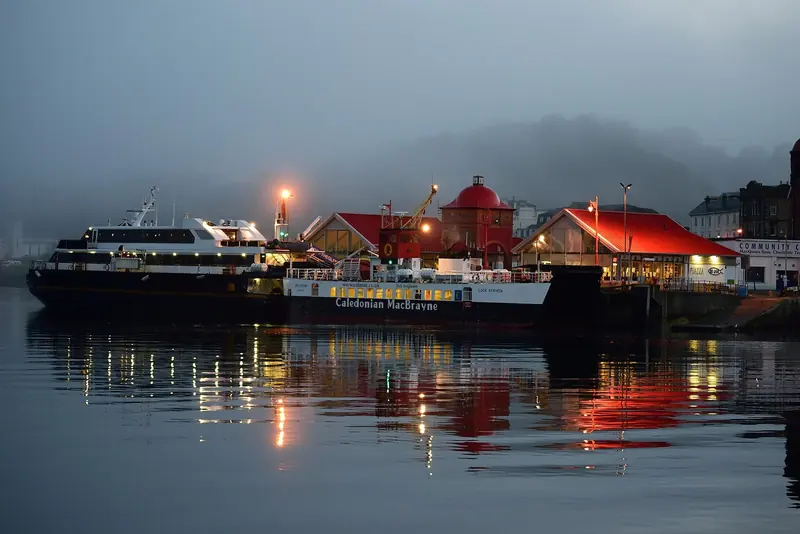
Loch Scavaig on Skye is the one everybody names. The boat anchors in a small pool under the black gabbro walls of the Cuillin ridge, with a freshwater loch a hundred metres inland over a rock step, and there is nothing else remotely like it in Britain. Canna in the Small Isles has a sheltered harbour and a population in single figures. Loch Aline, Puilladobhrain, the Isle of Ulva and the anchorages off Iona and Staffa, where Fingal's Cave sits in a colonnade of basalt, fill the inner cruise.
Further out, the Outer Hebrides give the beaches: Luskentyre and Scarista on Harris, the machair coast of the Uists, Vatersay and Barra at the southern end where the airport runway is the beach and flights are timed to the tide. St Kilda, 40 miles west of Harris, is a dual UNESCO World Heritage site for both nature and culture, holds the largest seabird colonies in the north east Atlantic, and was evacuated in 1930. Village Bay is an anchorage only in the right conditions, which is why getting there counts for something.
The rules are lighter here than anywhere in Europe
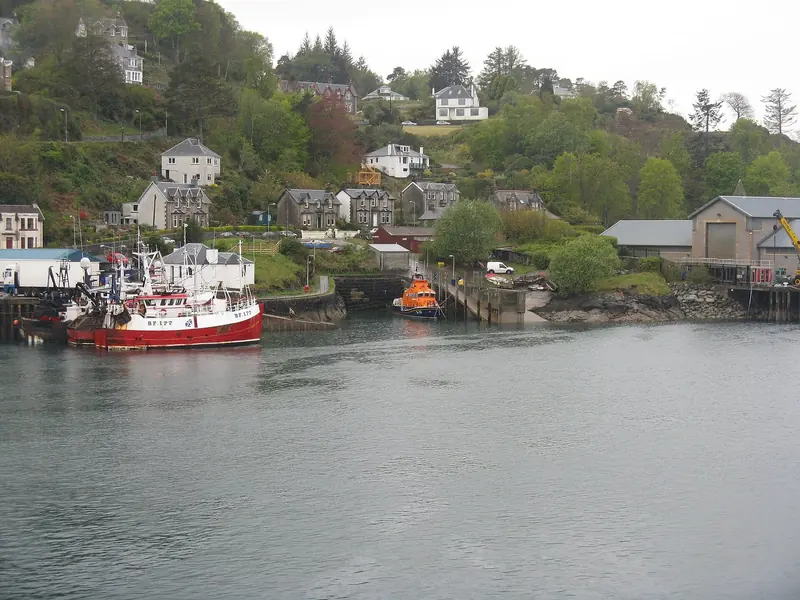
Scotland has an extensive network of Marine Protected Areas and almost no anchoring bans inside them. Loch Creran is the exception, where anchoring is prohibited except in four designated anchorages to protect its rare serpulid worm reefs. Elsewhere the position, arrived at between RYA Scotland and NatureScot, is that recreational anchoring was not banned over maerl and seagrass, on the understanding that boats take care to avoid damaging those habitats. That is a materially freer regime than Spain, France or Italy now offer.
The wider policy has moved as well. The proposal to designate Highly Protected Marine Areas across ten per cent of Scottish seas by 2026, as consulted on, was not taken forward, and ministers instead moved to develop existing management of fishing in marine protected areas and of priority marine features. For an owner the practical effect is that the west coast remains one of the few places in Europe where the seabed is the crew's judgement rather than a permit, and it is worth not abusing.
Weather, midges and the months
The season is May to September and it is short. June has the light, with around 18 hours of usable daylight and a genuine twilight through the night at these latitudes, and it is usually the driest month. July and August are warmer and wetter. May is cold, clear and often the most settled. Atlantic depressions cross all summer, so a fortnight will contain a blow, and the skill is having an alternative anchorage for every wind direction, which this coast supplies generously.
Two smaller matters decide whether guests enjoy themselves. The midge, a biting fly, appears in still damp conditions from June to September and is worst at dusk in sheltered anchorages ashore, which is an argument for staying aboard or anchoring where there is a breeze. And the water is cold, running about 12 to 14 degrees in high summer, so swimming is a brief and character forming activity rather than a daily one.
What guests do ashore
Islay has nine working distilleries within a few miles of each other and is the single strongest shore excursion on the coast, with Ardbeg, Lagavulin and Laphroaig standing in a row on the south shore, all reachable from an anchorage. Jura has one distillery and 200 people. Mull has Tobermory and its painted waterfront, and Iona at its south west tip has the abbey that carried Christianity into Scotland. Staffa is a short tender ride and Fingal's Cave is worth the swell.
The wildlife is the other draw and it is not marketing. Minke whales and basking sharks in the Sound of Mull and around Coll and Tiree through the summer, white tailed sea eagles on Mull and Skye, otters, seals and enormous seabird colonies. Skye adds the Cuillin, Britain's only true alpine ridge. And there are good hotels and restaurants in the small towns, which surprises people who have not been.
The United Kingdom position, and getting there
Scotland is in the United Kingdom, which since 2021 has been outside the EU customs and VAT territory. An EU flagged or EU VAT paid yacht arriving here is using UK temporary admission, and a yacht that charters in UK waters raises importation and VAT questions that are separate from anything settled in the Mediterranean. None of this is difficult and all of it is expensive to discover late, so it is a conversation with a UK adviser before the boat crosses rather than after.
Guests come through Glasgow or Edinburgh for long haul and Inverness for the Moray Firth end of the canal. Oban has a small airfield rather than an airport, and the regional strips at Islay, Tiree, Barra and Stornoway take light aircraft, with Barra landing on the beach at low water. Road transfers from Glasgow to Oban take about two and a half hours through good scenery. Helicopter is the practical answer for moving guests between the boat and a city, and it is used more here than the number of berths would suggest.
The honest downside, and what is not published
There is no superyacht infrastructure. One 184 metre pontoon at Dunstaffnage, a pontoon at Tobermory, visitor moorings sized for 14 metres and nothing else. There is no fuel of any scale outside the towns, no yard that will take a large hull, and no agent network of the kind the Mediterranean takes for granted. The weather will take days out of a fortnight, the water is 13 degrees, and the midges are real. Anyone whose guests expect a beach club should be sent somewhere else.
Checked in August 2026, no Scottish marina publishes a superyacht rate card, and the transit fee for the Caledonian Canal is quoted by Scottish Canals through its licence schedules rather than published as a simple figure for a large yacht. The canal's dimensional limits are published precisely and its charges are not. And nothing published tells an owner whether the one superyacht pontoon on the west coast is free in the second week of July, which on this coast is the only berthing question there is.
A terra, accessi e prenotazioni
| Getting there | Glasgow and Edinburgh handle long haul and full European schedules, with Glasgow about two and a half hours by road from Oban. Inverness serves the northern end of the Caledonian Canal. Oban has a small airfield rather than an airport, and the regional strips at Islay, Tiree, Barra and Stornoway take light aircraft, with Barra landing on the beach and its timetable set by the tide. Helicopter is used more here than the berthing suggests, because it is often the only quick way between a city and an anchorage. |
|---|---|
| Where the boat berths | Dunstaffnage Marina three miles north of Oban has the only large berth on the coast, a superyacht pontoon of 184 metres alongside standard 12 metre berths and a breakwater. Oban Bay itself offers about 100 private leased moorings and 16 visitor moorings laid in trots for 14, 12 and 10 metre vessels. Tobermory's pontoon gives alongside access to the town at any state of tide with water, electricity and diesel. Everything else is a village pier, a fishermen's harbour or a community trust mooring. |
| The canal, exactly | The Caledonian Canal runs from Corpach near Fort William to Inverness through Loch Ness and 29 locks, with published maxima of 45.72 m length, 10.67 m beam, 4.1 m draft and 35 m air draft. A vessel with a freshwater draft over 3.5 m must contact the canal office before arriving, since fresh water floats a hull lower than salt. Minimum transit is two and a half to three days. Neptune's Staircase at Banavie is a flight of eight locks. Above those dimensions the alternative is Cape Wrath and the Pentland Firth, which is a passage rather than a detour. |
| Planning around the tide | Springs run four to five metres and the narrows run hard. The Gulf of Corryvreckan between Jura and Scarba holds one of the world's largest whirlpools and is taken only at slack water with local knowledge. Dorus Mor, the Sound of Luing, Kyle Rhea and the Sound of Islay all need the fair stream. The Clyde Cruising Club sailing directions and the Admiralty tidal atlases document all of it, so this is planning rather than guesswork, but the day's run is set by the gates it must pass through. |
| Where you may anchor | Almost everywhere. Loch Creran is the one place where anchoring is prohibited except in four designated anchorages, to protect its rare serpulid reefs. There is no comparable ban elsewhere in Scottish waters: RYA Scotland and NatureScot settled the position that recreational anchoring would not be banned over maerl and seagrass, on the basis that crews avoid damaging those habitats. The proposal for Highly Protected Marine Areas across ten per cent of Scottish seas, as consulted on, was not taken forward. |
| The anchorages to plan the trip around | Loch Scavaig on Skye, a pool under the Cuillin with a freshwater loch a hundred metres inland over a rock step. Canna in the Small Isles for shelter and near total emptiness. Puilladobhrain, Loch Aline, Ulva and the water off Iona and Staffa, where Fingal's Cave sits in a basalt colonnade. In the Outer Hebrides, Luskentyre and Scarista on Harris, the machair coast of the Uists and Vatersay at the southern end. St Kilda's Village Bay when the forecast allows it. |
| The season, and two nuisances | May to September. June brings about eighteen hours of usable daylight, a twilight rather than a night, and usually the driest weather. July and August are warmer and wetter, May is cold, clear and often most settled. Atlantic depressions cross all summer, so a fortnight will contain a blow and the coast supplies an alternative anchorage for every wind. The midge bites in still damp conditions from June to September, worst at dusk ashore, and the sea runs 12 to 14 degrees in high summer. |
| Ashore | Islay carries nine working distilleries within a few miles, with Ardbeg, Lagavulin and Laphroaig in a row on the south shore, all reachable from an anchorage. Mull has Tobermory's painted waterfront, Iona has the abbey, and Staffa is a tender ride away. The wildlife is genuine: minke whales and basking sharks through the summer around Mull, Coll and Tiree, sea eagles on Mull and Skye, otters and vast seabird colonies. Skye adds the Cuillin, the only true alpine ridge in Britain. |
| What is NOT published | Checked in August 2026, no Scottish marina publishes a superyacht rate card and none publishes a fuel price. Scottish Canals publishes the canal's dimensional limits precisely and prices transits through licence schedules rather than as a simple figure for a large yacht. No independent published owner or captain account of superyacht service standards on the west coast could be found. And nothing published tells an owner whether the single superyacht pontoon at Dunstaffnage is free in July, which is the only berthing question this coast has. |
Cosa riferiscono armatori ed equipaggi
The canal's limits are published to the centimetre and they are absolute
Scottish Canals publishes maxima for the Caledonian Canal of 45.72 metres length, 10.67 metres beam, 4.1 metres draft and 35 metres air draft across its 29 locks, sets minimum transit at two and a half to three days subject to weather and traffic, and requires any vessel with a freshwater draft over 3.5 metres to contact the canal office before arrival, because fresh water floats a hull lower than salt does.
Scottish Canals Caledonian Canal skippers' guideOne pontoon carries the large yacht traffic of the whole coast
Dunstaffnage Marina, three miles north of Oban on the A85, offers short and long term berthing on standard 12 metre berths, a breakwater and a superyacht pontoon of 184 metres. By contrast, Oban Bay's community berthing company manages about 100 private leased moorings and 16 visitor moorings laid in three trots, sized for vessels of 14, 12 and 10 metres, which is the scale the rest of the coast is equipped for.
Dunstaffnage Marina and Oban Community BerthingScotland kept recreational anchoring legal where the rest of Europe has not
RYA Scotland records that it worked with NatureScot to ensure vulnerable maerl and seagrass habitats were protected without banning recreational anchoring, and that Loch Creran, where anchoring is prohibited except in four designated anchorages to protect rare serpulid reefs, remains the exception rather than the model. Ministers also declined to proceed with Highly Protected Marine Areas across ten per cent of Scottish seas as consulted on.
RYA Scotland and the Scottish GovernmentTobermory is the one town stop that works at any state of tide
The harbour authority pontoon at Tobermory provides alongside berthing with direct access to the town regardless of the tide, with water and electricity included in the charge and diesel available on the pontoon itself. On a coast where most stops are moorings or anchorages and the tidal range runs four to five metres on springs, that combination is rarer than it sounds.
Tobermory Harbour AssociationThe berthing question is the only one nobody can answer in advance
Checked in August 2026, no Scottish marina publishes a superyacht rate card or a fuel price, and Scottish Canals prices canal transits through its licence schedules rather than publishing a figure for a large yacht. No independent published owner or captain account of superyacht service standards on the west coast could be found. For a boat over about 20 metres, availability on the single Dunstaffnage pontoon is the constraint and it is not published.
Yotters desk, checked August 2026
Cosa convince e cosa va valutato
Punti di forza
- The emptiest first rate cruising ground in EuropeAround 800 islands, fewer than a hundred inhabited, and an anchorage that would hold forty boats in the Mediterranean holding two here.
- Anchoring is still a matter of judgement, not permitsLoch Creran aside, there are no anchoring bans in Scottish waters, and the Highly Protected Marine Areas proposal as consulted on was not taken forward.
- Two anchorages worth the whole tripLoch Scavaig under the Cuillin on Skye, and St Kilda's Village Bay, a dual UNESCO World Heritage site with the largest seabird colonies in the north east Atlantic.
- A shortcut through the countryThe Caledonian Canal takes 45.72 m through 29 locks and Loch Ness, saving the 400 mile passage around Cape Wrath and the Pentland Firth.
- Shore excursions nothing else can copyNine distilleries within a few miles on Islay, Iona's abbey, Fingal's Cave on Staffa, and minke whales and basking sharks in the Sound of Mull through the summer.
Da valutare
- There is one large berth on the entire coastThe 184 metre superyacht pontoon at Dunstaffnage. Oban's visitor moorings are sized for 14 metres and everything else is a village pier.
- The tide sets the timetableFour to five metre springs, several knots through Dorus Mor, Kyle Rhea and the Sound of Islay, and Corryvreckan passable only at slack water.
- The weather will take daysAtlantic depressions cross all summer, the season is only May to September, and sea temperature in August is 12 to 14 degrees.
- No support of any scaleNo yard for a large hull, no bunkering at scale outside the towns, and none of the agent network the Mediterranean assumes.
- Guests have to want thisMidges at dusk, cold water, rain in a fortnight and no beach club anywhere on the coast. It is the wrong ground for guests who came to be comfortable.
A chi si rivolge: An owner who has done the Mediterranean and wants an empty one, who values Loch Scavaig and St Kilda over a berth in a town, and whose boat is either under 45 metres for the canal or content to work off one pontoon at Dunstaffnage.