St Barths & the Leeward Islands
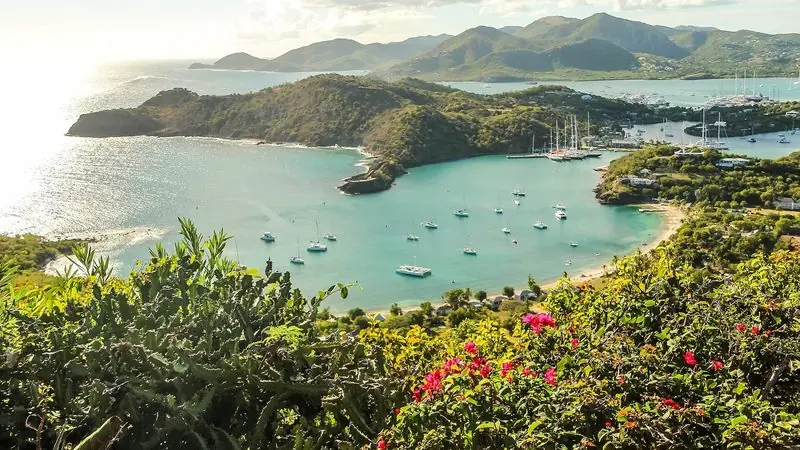
| Regione | Caraibi nord-orientali, Isole Sottovento |
|---|---|
| Stagione migliore | da dicembre ad aprile, picco attorno a Capodanno |
| Porti principali | Gustavia (St Barths), Simpson Bay Lagoon (St Martin/Sint Maarten), English e Falmouth Harbour (Antigua) |
| Ancoraggi simbolo | Colombier e Gouverneur (St Barths) |
| Appuntamenti fissi | Capodanno a Gustavia, St Barths Bucket e Antigua Sailing Week (primavera) |
| Polo di assistenza | Sint Maarten per refit, carburante e approvvigionamento |
| Giurisdizione | più nazioni, frequenti formalità doganali fra le isole |
| Attenzione a | alisei freschi e onda invernale da nord |
| Bridge times | outbound 08:30, 10:30 and 16:00, inbound 09:30, 11:30, 14:00 and 17:00, subject to change |
| Antigua | Falmouth Harbour Marina takes yachts to about 163 m with up to 6 m draft, Nelson's Dockyard to about 55 m stern-to |
| Fixed weeks in 2026 | St Barths Bucket 12 to 15 March, Antigua Sailing Week 22 to 26 April |
| Status | St Barths has been an EU overseas country and territory since 1 January 2012, outside the EU customs and VAT area, using the euro |
| No VAT applies in St Barths on goods, fuel or services, against 20 per cent on the French mainland | |
| The EU 18 month temporary admission clock does not run in St Barths waters, so a Caribbean winter does not count against a Mediterranean summer | |
| Port de Gustavia published no berthing or anchoring tariff in July 2026 | |
| Reserve moorings at Colombier and Ile Fourchue are reported to be free and limited, capped at four consecutive days, and closed to vessels over 25 m | |
| From 1 September 2024 every vessel must check in and out of the waters of Martinique, Guadeloupe, Saint-Martin and Saint-Barthelemy, whatever its flag | |
| Antigua and Barbuda | a valid cruising permit is required for every vessel, issued for up to six consecutive months, with self-declared compliance with small craft regulations as a condition |
| Antigua's Port Authority collects entrance, rubbish, anchorage or dockage and cruising permit fees at the counter in US or East Caribbean dollars | |
| No published charter-licence regime for St Barths itself could be sourced in July 2026 | |
| Yard cluster | Simpson Bay lagoon at Sint Maarten and Falmouth in Antigua, with the 17 m bridge clearance deciding which of the two a wide hull can use |
La capitale invernale
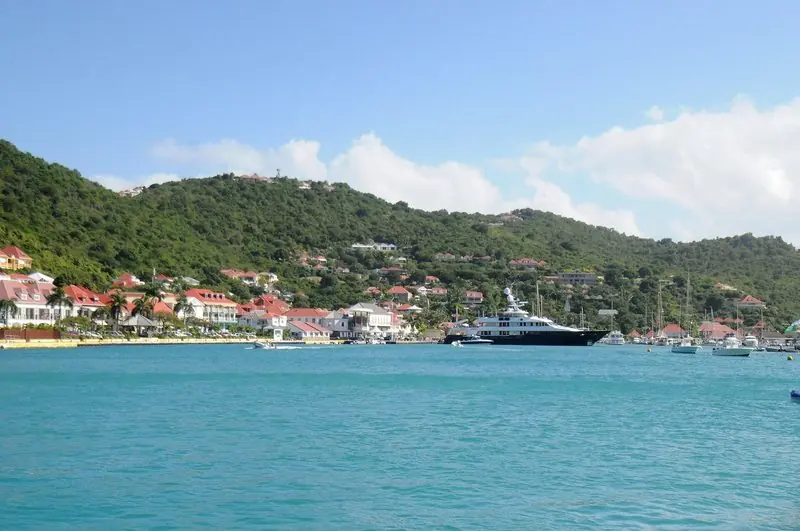
Saint-Barthelemy, che tutti chiamano St Barths, è una piccola isola francese con una reputazione enorme nel mondo dello yachting. Il suo porto principale, a Gustavia, si riempie ogni inverno di alcuni fra gli yacht più grandi in navigazione, attirati dal misto isolano di raffinatezza francese e calore caraibico. Lo shopping duty free e una serie di buoni ristoranti aggiungono attrattiva. Per l'inverno boreale questo è il centro sociale della flotta caraibica. Il ritrovo di Capodanno è l'appuntamento simbolo dell'anno.
Il gruppo delle Sottovento nel suo insieme dà all'isola un contesto e un'area di navigazione più ampia. Sint Maarten e St Martin, a nord-ovest, ospitano le principali infrastrutture nautiche della regione, compresa la Simpson Bay Lagoon. Antigua, a sud, è la capitale delle regate, con il suo arsenale georgiano e un calendario fitto di competizioni. Anguilla, St Kitts e Nevis aggiungono ancoraggi più tranquilli a breve traversata. Insieme permettono a uno yacht di basarsi a St Barths e di spaziare ampiamente.
La stagione
La stagione caraibica va da dicembre ad aprile, incorniciata dalla fine della stagione atlantica degli uragani a fine autunno e dal suo ritorno all'inizio dell'estate. Dicembre e gennaio portano le settimane sociali di punta, con St Barths al massimo dell'attività attorno a Natale e Capodanno. Febbraio e marzo offrono una navigazione affidabile con gli alisei e porti leggermente più calmi. Aprile chiude la stagione, mentre le barche si preparano a riattraversare l'Atlantico o a risalire verso il New England.
Il tempo in questi mesi è caldo e asciutto, rinfrescato dagli alisei costanti da nord-est che rendono la navigazione così bella. Gli alisei possono soffiare freschi, il che genera onda negli ancoraggi esposti e determina dove uno yacht passa la notte. Anche i passaggi di onda lunga da nord in inverno possono rendere scomodi alcuni porti. Nel complesso la stagione offre le condizioni stabili e soleggiate per cui i Caraibi sono noti.
Dove la flotta mediterranea passa l'inverno, stile francese compreso.
Porti e ancoraggi
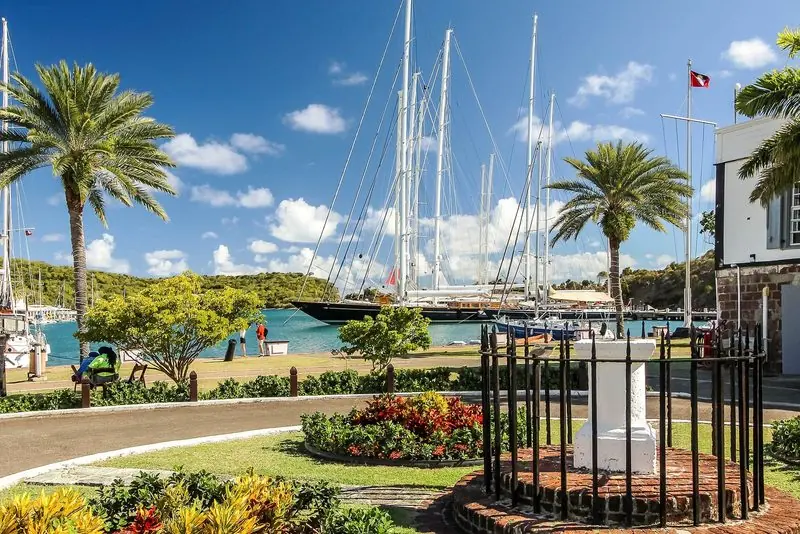
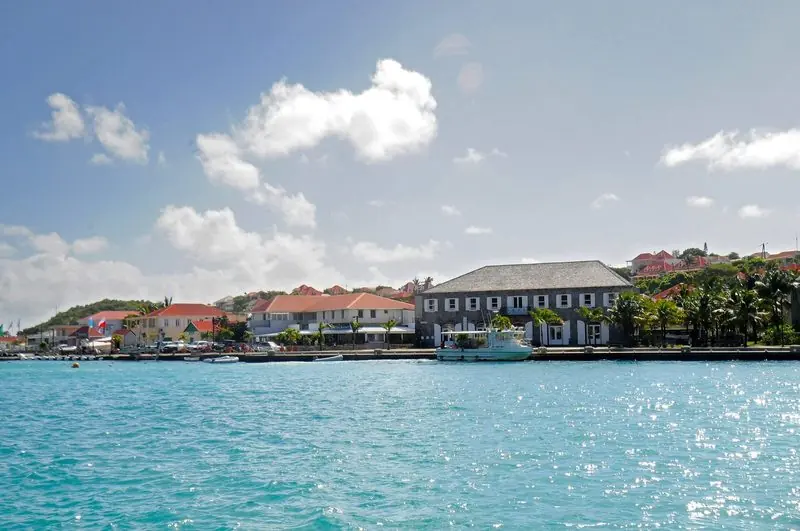
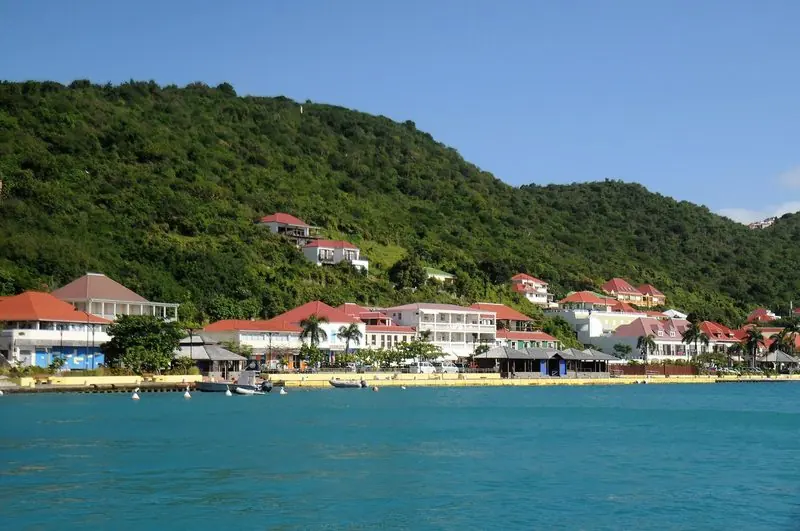
Gustavia è l'indirizzo di St Barths, un porto compatto con posti in banchina e un ancoraggio che si riempie di yacht oltre i moli. A St Martin e Sint Maarten la Simpson Bay Lagoon ospita diverse marine e i principali servizi di refit e assistenza della regione. English Harbour e Falmouth Harbour ad Antigua, riparati e storici, sono i posti classici delle Sottovento e la base della scena delle regate. In tutti questi luoghi lo spazio si stringe nettamente durante le feste.
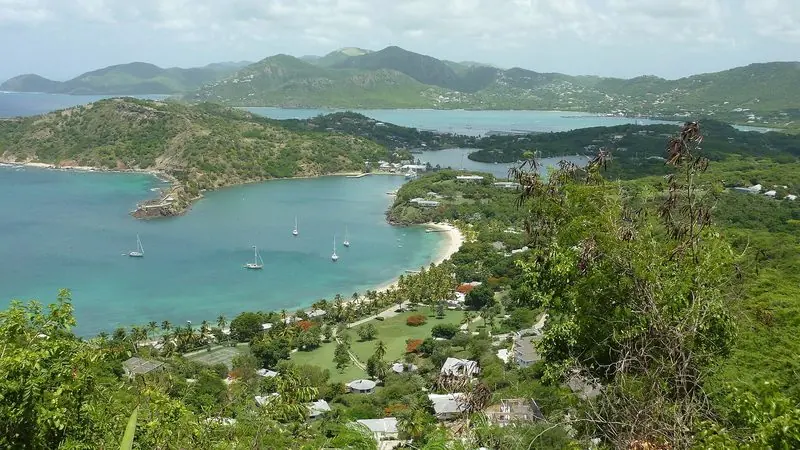
Gli ancoraggi sono un piacere. Davanti a St Barths, Colombier e Anse de Gouverneur offrono acqua limpida e bagni ottimi a poca navigazione dalla città. Attorno ad Anguilla i banchi di sabbia e le baie orlate di barriera sono fra i più belli della regione. Le molte baie di Antigua, comprese quelle dentro i porti, offrono soste notturne riparate. In tutte le isole ci si aspetta un ancoraggio attento, lontano dalla barriera e dalle praterie sottomarine.
A terra e in acqua
A terra, St Barths detta il tono con boutique firmate, ristoranti sulla spiaggia e una vita notturna che culmina durante le feste. Antigua offre la storia di Nelson's Dockyard, una base navale georgiana restaurata oggi patrimonio mondiale, insieme alla vita sociale delle regate. St Martin porta una scelta più ampia di ristoranti e il miglior approvvigionamento della regione. Ogni isola ha il proprio carattere, dal francese all'olandese al coloniale inglese.
Sull'acqua le Sottovento sono fatte di navigazione con gli alisei e di mari caldi e limpidi. Le traversate fra le isole sono brevi e le condizioni costanti, il che si addice tanto alla crociera quanto alla regata. L'Antigua Sailing Week e la St Barths Bucket richiamano ogni primavera i grandi yacht nella regione. Le corse in tender verso beach club e isolotti tranquilli riempiono le giornate all'ancora. Immersioni e snorkeling sono buoni sulle barriere, in particolare attorno ad Anguilla e St Kitts.
Note pratiche
Le formalità di ingresso sono un dato di fatto in una catena di isole divisa fra più nazioni, quindi gli equipaggi sbrigano dogana e immigrazione ogni volta che si spostano fra St Barths, St Martin, Antigua e le vicine. St Barths e St Martin sono francesi e usano l'euro, il lato olandese di Sint Maarten ha regole proprie, e le ex isole britanniche variano. Gli agenti gestiscono gran parte delle pratiche per gli yacht più grandi. In diverse isole si applicano permessi di navigazione e tariffe.
La laguna di Sint Maarten è il polo pratico per carburante, ricambi, refit e approvvigionamento in tutte le Sottovento settentrionali. Posti e ormeggi a St Barths nel periodo di Capodanno si prenotano con largo anticipo e costano tariffe di punta. Gli alisei e l'onda occasionale rendono importante la scelta dell'ancoraggio per una notte tranquilla. Le operazioni con i tender sono di routine, con la barriera e i bassi fondali come pericoli principali da sorvegliare.
Why guests fly into Sint Maarten
St Barths has an airport and it will not help. Gustaf III at Saint-Jean has a very short runway with a steep approach over a hillside, and it takes only small turboprops and light aircraft, so private jets cannot land there. Guests fly into Princess Juliana on Sint Maarten, which has long-haul service from Europe and North America and full business aviation handling, and then transfer by light aircraft, helicopter or the twenty minute ferry. Antigua's V C Bird airport takes wide-body long haul direct from London and North America and is the easiest arrival in the eastern Caribbean.
That transfer is the single most underestimated part of a St Barths week. The connection adds an hour or two at each end and it is weather-dependent, the last light aircraft rotations are early in the evening, and at Christmas the whole system is saturated. Antigua avoids all of it, which is one reason a lot of large boats now winter there instead.
Dinner on St Barths, beaches on Anguilla
St Barths is French and expensive and it does one thing extremely well, which is dinner. Bonito and Le Ti Saint Barth in Gustavia, Shellona on Shell Beach, Nikki Beach at Saint-Jean and the restaurant at Eden Rock are the fixtures, and the beach at Gouverneur has nothing on it at all. The shopping is duty free and the island has no VAT, which is a real difference in price on watches, jewellery and wine. The nightlife is a handful of venues and a lot of yacht crews.
The neighbours are not runners-up. Anguilla has the best beach restaurants in the Caribbean, Blanchards and Straw Hat among them, and no crowds. Antigua's Nelson's Dockyard is a restored Georgian naval yard and a UNESCO World Heritage site, with the Sunday evening barbecue at Shirley Heights above it that everybody ends up at once. Sint Maarten has the chandlers and the supermarket and very little else.
Clearance, fees and support
Clearance is the recurring chore, because this is a chain of small islands under four or five different flags and a yacht clears in and out of each one. St Barths and the French side of St Martin are French, the Dutch side of Sint Maarten runs its own arrangements, and Anguilla, Antigua and St Kitts are independent or British and each charge cruising permits and fees. St Barths has been an EU overseas country and territory since 1 January 2012, which puts it outside the EU customs and VAT area while it continues to use the euro. Agents handle all of this and are worth having.
Sint Maarten's lagoon is the technical centre of the eastern Caribbean, with the yards, the chandlers, the fuel and the freight, and Antigua is the second base with good marine trades around Falmouth. Between them they cover most of what a large yacht needs in a season. Everywhere else is thin, and a serious failure in Anguilla or Barbuda means a delivery to Sint Maarten.
The honest downside
The reserve rule at St Barths is the thing owners find hardest to accept, because the two best bays on the island are closed to their yacht and the boat spends the week in an open roadstead off Gustavia or on the exposed south coast. In fresh trades and a northerly swell that is a rolly week, and stabilisers work hard. Gustavia's berths are few, the New Year premium is severe, and the island's shore prices are among the highest in the world.
The wider point is that this is a hurricane coast with a memory. Irma in September 2017 devastated Sint Maarten, St Martin and parts of Anguilla and Barbuda, and rebuilding has taken years, which shows in patchy infrastructure and in insurance terms for the summer months. The season is also short, roughly December to April, so a yacht kept here works five months and then repositions or lays up. Owners who want a Caribbean base without that clock usually end up looking further south.
The one real saving, and everything that is not published
St Barths is where the tax answer is the simplest on this list and the price answer is the hardest. The island has been an EU overseas country and territory since 1 January 2012, which puts it outside the EU customs and VAT area while it continues to use the euro. There is no VAT on anything bought ashore, none on fuel and none on services, which is a measurable difference against the French mainland where the same purchase carries 20 per cent, and it is the reason watches, jewellery, wine and provisioning are genuinely cheaper here rather than merely presented that way. The same status means the EU's 18 month temporary admission clock does not run in these waters at all, because the yacht is not inside the customs union, so a Caribbean winter is time that does not count against a Mediterranean summer.
Against that, almost nothing is published. Port de Gustavia posts no berthing or anchoring tariff and none was obtainable in July 2026, so no figure is offered here rather than a guess. The reserve moorings at Colombier and Ile Fourchue are reported to be free and are limited in number, capped at four consecutive days, and closed in any case to vessels over 25 m, so the mother ship is not using them and the question does not arise for her. What can be budgeted with confidence is the clearance chain rather than the berth. This is a chain of small islands under four or five flags and a yacht clears in and out of each of them, with Antigua's Port Authority collecting entrance, rubbish, anchorage or dockage and cruising permit fees at the counter in US or East Caribbean dollars. The agent's fee is the predictable line in a Leewards budget and the berth is not.
Whether a foreign flag may charter in the Leewards
There is no single answer here because there is no single jurisdiction, and that is the honest shape of the problem rather than an evasion of it. St Barths sits outside the EU customs and VAT area, so a charter here attracts no French VAT and the EU maritime cabotage regulation does not apply as it does in metropolitan France. Since 1 September 2024 every vessel, private or commercial and whatever her flag or home port, must check in and out on entering or leaving the waters of Martinique, Guadeloupe, Saint-Martin or Saint-Barthelemy, which formalised what had been a variable practice. Beyond the French islands the position changes with the flag ashore. Antigua and Barbuda requires every vessel in its waters to carry a valid cruising permit, issued by the Port Authority or the National Parks for up to a maximum of six consecutive months, and a foreign-flagged vessel operating there is treated as having self-declared compliance with the local small craft regulations as a condition of holding it.
What could not be sourced in July 2026 is a published charter-licence regime for St Barths itself, and the absence of a document should not be read as an absence of rules. The regional pattern is consistent: most Caribbean islands apply no dedicated charter tax or VAT, but they do charge cruising permits, marine park fees, clearance charges and local levies, so the cost of chartering across the Leewards is a stack of small permits assembled island by island rather than one headline rate. The practical consequence is that a week combining St Barths, Anguilla and St Kitts crosses three fee regimes and three clearances, and it is the agent's schedule rather than any tax rate that decides whether the itinerary works. Technical capability is concentrated in the Simpson Bay lagoon at Sint Maarten and around Falmouth in Antigua, so a yacht too beamy for the lagoon's 17 m bridge clearance sits outside the region's main yard cluster before her season begins, and Antigua becomes the answer by default.
A terra, accessi e prenotazioni
| Getting there, and why no jet lands here | Gustaf III at Saint-Jean has a single runway of 2,119 feet, about 646 metres, approached over a hillside and ending at a beach. It is too short for any jet, and the largest type ever permitted here was the DHC-7, so arrivals are STOL turboprops only. In practice most jet guests land at Princess Juliana on Sint Maarten and connect on the 15 minute hop, which is flown by Winair and by St Barth Commuter; Air Caraibes sells the route as a marketing partner but the aircraft are St Barth Commuter's Cessna 208B Grand Caravans, not its own widebodies. SXM is not the only gateway: Tradewind Aviation runs scheduled service into Gustaf III from San Juan and from Antigua, both of which take private jets. Ferries are the alternative. Plan a guest change as two legs and build the connection into the day. |
|---|---|
| Arriving by sea | Gustavia is a controlled port and the authorisation is not a formality: every yacht must obtain specific permission from the Port Captain's office before entering or manoeuvring inside the port, calling on VHF channel 12 as Port de Gustavia. On speed, note that the two territorial bodies publish different figures and you should follow the stricter: the port's own notice limits the channel to 3 knots, while the territorial environment agency states 5 knots for the channel and the port and applies the same 5 knot maximum in the anchoring zones, within 300 metres of the coast, in the bays of the reserve and within 100 metres of the islets. |
| Clearance is only half online, and the half that is not catches crews | The port takes formalities either at the port office or through its online portal, but the online step is pre-clearance and may be filed no more than 24 hours in advance. The port states plainly that the formalities are not registered until the document has been printed and signed at the port office. A captain who files online and assumes the yacht is cleared has not cleared. Immigration questions go to the gendarmerie rather than the harbour office. |
| How you actually reserve a berth | You do not, formally. The port does not take reservations. What agents and captains do instead is email the Harbour Master well in advance with the yacht's dimensions and the intended dates, which lets the office plan the quay, and then call the capitainerie on channel 12 on approach to be shown where to go. Berthing is stern-to off an anchor against the quay wall. The inner harbour's bow and stern mooring field is the more convenient and comfortable option when a slot matching your length is free. |
| The nature reserve rules, which are stricter than most owners expect | The marine park runs to five zones. In Colombier and Fourchue, two of the anchorages people specifically come for, vessels over 25 metres are not authorised at all. Any vessel anchoring there must carry insurance including a removal and destruction clause. The ecological mooring buoys take a maximum of 20 tonnes and 25 metres and may be occupied for no more than 96 hours, after which the vessel must leave the reserve and stay outside it for at least 96 hours before returning; the agency states that anchoring areas are subject to the same size and time limits. At the 23 dive sites only boats up to 10 tonnes and 15 metres may use a buoy, one boat per buoy, for a maximum of 2 hours 30 minutes, and mooring a sailing yacht there is forbidden outright. |
| The toys you cannot use | Across the reserve zones jet skis, seabobs, electric surfboards and all towed watersports are prohibited, along with excessive speed and noise. The 5 knot maximum applies in the enhanced protection zone as well as the simple one, so it is not a limit that lapses once you move outside the strictest water. This catches charter guests and brokers regularly, because the same equipment is unremarkable a few miles away. If the programme depends on the toy garage, the reserve is not where it happens. |
| Water, waste and services on the quay | Port water is metered at EUR 0.012 per litre for vessels on subscription and EUR 0.019 per litre for visitors. The WiFi code comes from the harbour master's office, waste separation into the designated containers is mandatory rather than encouraged, and the port toilets are open 07:30 to 18:00. The harbour office handles postal mail for yachts, works in close collaboration with the marine reserve, and runs its own SNSM rescue station with a crew on permanent standby. |
| Where to eat, and after dark | Bonito sits above the harbour in Gustavia and is the reliable one for a table with the fleet in view, French technique against Latin American flavours under chef-owner Laurent Cantineaux, listed as Monday to Saturday from 19:00, on 590 590 27 96 96 or [email protected]. Shellona on Shell Beach is Greek-leaning with live music and DJs. The Sand Bar at Eden Rock on Baie de Saint-Jean carries Jean-Georges Vongerichten's menu. Le Ti St Barth above Pointe Milou is cabaret rather than dinner and should be chosen knowing that. For the rest of the night, Nikki Beach, Bete a Z'Ailes on the harbour front, and in Gustavia itself L'Eclipse, Le Yacht Club St Barth and The Strand. Note that the beach club long known as La Plage, at the former Tom Beach hotel in St Jean, now trades as Pearl Beach, and older listings still carry the old name. |
| Dates to plan around | The St Barths Bucket has published its dates to the end of the decade and has returned to the second-to-last complete weekend in March: 17 to 21 March 2027, 15 to 19 March 2028, 14 to 18 March 2029 and 20 to 24 March 2030. Take those from the regatta's own site, because secondary listings are circulating a 2027 date a day out. Les Voiles de Saint-Barth follows in April. New Year is the island's peak week. Hurricane season runs June to November and the yachting calendar here is a December to May one. |
Cosa riferiscono armatori ed equipaggi
Captains are directed to a berth, they do not choose one
The published procedure is to call the capitainerie on channel 12 as you near the port and be shown where to Med moor, rather than arriving to an assigned berth. Berthing is stern-to off the anchor against the quay wall, and the inner harbour's bow and stern field is described as the more convenient and comfortable option when an open slot matches the yacht's length.
Superyacht Services Guide and Southern BoatingThe overflow berths are available because nobody wants them
Side-to and stern-to dockage seaward of the mega-docks takes the boats the inner harbour cannot, and the reason it tends to be free is that winter swell makes for rolling nights aboard. It is the difference between a berth in Gustavia and a good berth in Gustavia, and it is not visible when the booking is made.
Southern BoatingThe 96 hour rule is the one that surprises returning owners
The territorial environment agency limits any stay on a reserve mooring buoy to 96 hours, after which the vessel must leave the reserve entirely and remain outside it for at least 96 hours before returning, and states that anchoring areas are subject to the same size and time limits. Combined with the 20 tonne and 25 metre buoy limits and the exclusion of vessels over 25 metres from Colombier and Fourchue, a settled week inside the reserve is not available to a large yacht.
Agence Territoriale de l'Environnement de Saint-BarthelemyThe shore programme at New Year is booked more than a year out
Villas, drivers and restaurant reservations for the New Year week are reported as needing to be secured twelve to eighteen months ahead, with New Year and the Bucket the first weeks to sell out each year. An owner deciding in the autumn that the boat should be in St Barths for New Year has already missed the shore side of it.
Haute RetreatsThe price everyone quotes is eight years old and carries no vessel size
The figure of about USD 581 a day that puts Port de Gustavia in the most-expensive-marina rankings comes from a list compiled by Motoyachting.com, published by Drivemag Boats and republished by Forbes in 2018, and it names no yacht length. No current tariff is published by the port. Anyone quoting a Gustavia berth rate today is quoting either that number or an agent's estimate, and it is worth asking which.
Motoyachting.com list, republished by Forbes, 2018
Cosa convince e cosa va valutato
Punti di forza
- The whole island is inside a tender rideGustavia is a small harbour and the anchorages, the restaurants and the airport are all within a few minutes of it. Nothing here is a passage, and a yacht can lie off and still put guests ashore in the middle of town in minutes.
- You can plan years ahead around the BucketDates are published through 2030 and fixed to the second-to-last complete weekend in March. For an owner who wants the boat there, or specifically does not, that is four seasons of certainty, which almost no other yachting fixture offers.
- The reserve has kept the water worth visitingFive managed zones, hard limits on tonnage and length at the sensitive bays, a 96 hour cap on any mooring and a ban on jet skis and towed sports have preserved the seagrass and reef the anchorages depend on. The restrictions are the reason the place still looks the way the photographs promise.
- It is French territory with the services that impliesEU standards ashore, gendarmerie handling immigration, a port that runs its own SNSM rescue station with a crew on standby, and an online pre-clearance system. The administrative side is orderly in a way that is not universal in the Leewards.
- The concentration of good tables is unusual for the sizeBonito, Shellona, the Sand Bar at Eden Rock and Le Ti are within a short drive of one another on an island of about eight square miles, which is why the New Year fleet comes for the shore programme as much as the cruising.
Da valutare
- Over 25 metres you are locked out of the best anchoragesColombier and Fourchue do not authorise vessels over 25 metres at all. For any yacht above that length, and that is the greater part of what this page is written for, it means anchoring elsewhere and sending guests in by tender to the two bays everybody photographs.
- No jet lands on the islandThe 646 metre runway takes STOL turboprops only. Most guest changes therefore run through Princess Juliana on Sint Maarten and a 15 minute commuter flight or a ferry, with the customs and schedule risk that adds at both ends. San Juan and Antigua are the alternatives, on Tradewind.
- There is no reservation to holdThe port does not take bookings. An advance email with the yacht's dimensions helps the Harbour Master plan, but the berth is assigned on approach, so a season cannot be built around a confirmed place on the quay.
- The toy garage is largely unusable in the reserveJet skis, seabobs, electric surfboards and towed watersports are prohibited across the zones, and the 5 knot limit applies in the enhanced protection zone as well as the simple one. On a charter sold partly on watersports that is a material gap between expectation and delivery.
- The outer berths rollSide-to and stern-to space seaward of the mega-docks is available when the inner harbour is full, and it is generally available precisely because winter swell makes for rolling nights aboard. The comfortable berths are the inner ones and there are not many.
- Nothing about the cost is publishedThe port publishes water at EUR 0.012 and EUR 0.019 per litre and then stops. There is no public mooring tariff, and the figure that circulates in superyacht marina rankings is from 2018 and carries no vessel length. An owner cannot cost a week in Gustavia from public information, which is unusual for a French port.
A chi si rivolge: Armatori che vogliono il porto invernale più alla moda dei Caraibi, con regate importanti e isolotti tranquilli a poca navigazione.