The Red Sea & Saudi Arabia (NEOM)
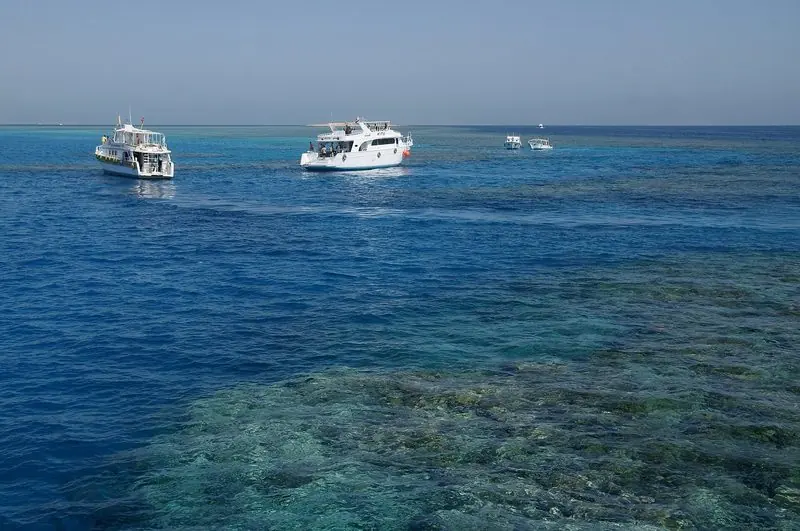
| Regione | Mar Rosso, Arabia Saudita nord-occidentale ed Egitto |
|---|---|
| Stagione migliore | i mesi più freschi, all'incirca dall'autunno alla primavera |
| Sviluppo di punta | l'isola di Sindalah a NEOM, aperta a fine 2024 |
| Marine consolidate | El Gouna e Hurghada sulla costa egiziana |
| Attrattiva | fra le barriere coralline più ricche al mondo, con acqua calda e limpida |
| Accesso | dal Mediterraneo attraverso il Canale di Suez |
| Giurisdizione | Arabia Saudita ed Egitto, requisiti diversi e in evoluzione |
| Stato | area emergente, strutture nuove o in costruzione |
| Saudi permits | tourism permits require passenger details, planned destinations and any charter contract, and requirements continue to change |
| Egyptian marinas | Abu Tig at El Gouna, Hurghada and Port Ghalib, all long established and used by the dive fleet |
| Defining weather | a persistent northerly along the length of the sea, which means a beat all the way south |
| Security | attacks on shipping have concentrated in the far south near the Bab el-Mandeb, and war risk pricing on the corridor has stayed elevated |
| Berth cost | Port Ghalib publishes USD 3.00 to 13.00 per metre per day for foreign vessels, USD 51 to 172 per metre per month and USD 387 to 1,347 per metre per year, tariff checked 28 July 2026 |
| Utilities at Port Ghalib | water USD 5.00 to 6.00 per cubic metre, power USD 0.30 per kWh, waste USD 1.00 per bag, immigration dock fee USD 300 |
| Comparison | Marina di Porto Cervo's published 2026 tariff is EUR 3,698 a day in the band to 40 m from 1 to 20 August, and EUR 195,819 for a 1 May to 31 October contract |
| Suez surcharge | the Suez Canal Authority raised the yacht transit surcharge from 14 to 26 per cent of normal transit dues, reported 15 July 2026 |
| Saudi licences | technical licence SAR 4,000 and tourism charter licence SAR 4,000, each valid six months, under the Saudi Red Sea Authority regulation announced 10 September 2024 |
| Saudi temporary entry | sailing and motor yachts admitted up to 12 months and renewable, under the ZATCA procedural manual issued 13 February 2024 |
| Saudi alcohol | import is prohibited and criminal, no yacht bonded-store procedure is published, and reports of licensed sales from 2026 were denied by a Saudi official to Reuters on 26 May 2025 |
| Discharge | the Red Sea is a MARPOL Annex I and Annex V Special Area designated on 2 November 1973 whose requirements have still not entered into force, so the binding rule is national |
| Nearest lift | nothing on this coast takes a 50 m yacht, and the nearest yards are Turkish, Italian or Spanish by way of the canal |
Una nuova frontiera
Il Mar Rosso è noto da tempo ai subacquei per le barriere coralline e per l'acqua calda e limpida, ma solo ora si sta sviluppando come destinazione da superyacht. La spinta dell'Arabia Saudita ad aprirsi al turismo ha messo la sua costa nord-occidentale al centro di quel cambiamento. Lo sviluppo NEOM ha costruito un'isola chiamata Sindalah come destinazione dedicata al lusso e allo yachting, aperta alla fine del 2024. La costa egiziana, con località come El Gouna e Hurghada, offre un lato più consolidato di questo mare. Per la flotta è una frontiera ancora in formazione.
Il richiamo è un misto di novità, navigazione in acqua calda e vita marina. Le barriere del Mar Rosso sono fra le più ricche al mondo, con acqua limpida e pesce abbondante. Sindalah offre una marina, uno yacht club e strutture da resort su una piccola isola a un breve volo dall'Europa. Per gli armatori la regione apre un'opzione invernale a portata del Mediterraneo, senza una traversata oceanica. Gran parte delle infrastrutture è nuova o ancora in costruzione.
La stagione
Il Mar Rosso si naviga meglio nei mesi più freschi, all'incirca dall'autunno alla primavera, perché su questa costa le temperature estive sono estreme. L'inverno porta giornate calde e piacevoli e acqua confortevole, il che coincide bene con la bassa stagione mediterranea. Questa tempistica permette a uno yacht di riposizionarsi dal Mediterraneo per l'inverno senza attraversare un oceano. La rotta abituale verso sud passa dal Canale di Suez.
I venti prevalenti nel Mar Rosso corrono in gran parte lungo il suo asse e possono essere forti, il che condiziona la pianificazione delle traversate su un mare lungo e stretto. Il caldo estivo rende la regione scomoda e in genere viene evitato. Le condizioni invernali che si addicono alla navigazione si addicono anche alle barriere e alle immersioni. Gli equipaggi nuovi all'area si appoggiano alla conoscenza locale per meteo e navigazione.
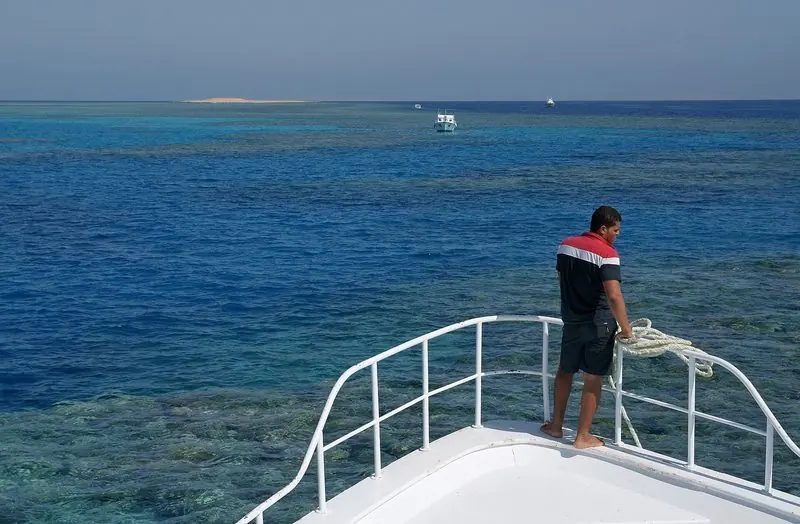
Una destinazione insulare nuovissima su uno dei mari corallini più antichi del mondo.
Porti e ancoraggi
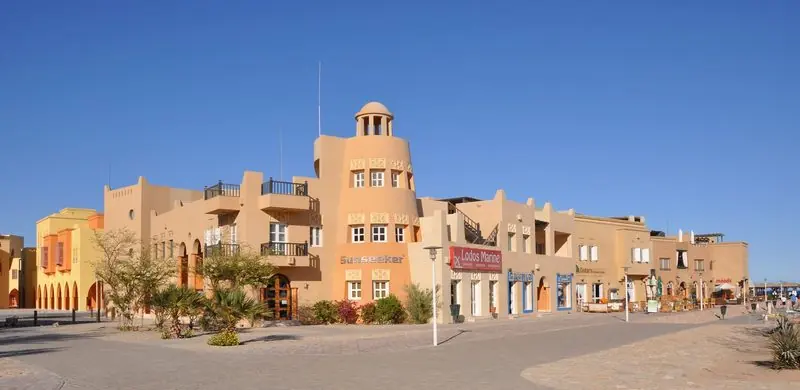
Sindalah è il nuovo posto barca di richiamo, con una marina che ospita in banchina decine di yacht e ormeggi al largo per le unità più grandi. È pensata come destinazione a sé, con uno yacht club, alberghi e ristoranti. Sul lato egiziano, le marine consolidate di El Gouna, Hurghada e lungo la costa servono il traffico subacqueo e turistico. Le infrastrutture per gli yacht molto grandi nel resto del Mar Rosso restano limitate e in via di sviluppo.
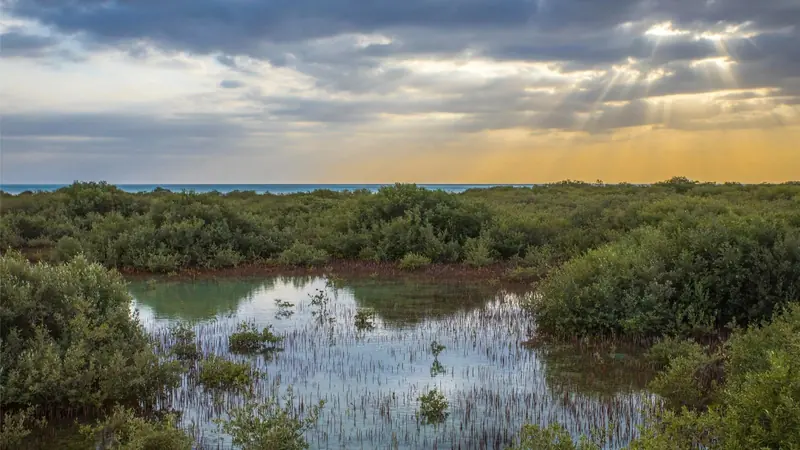
Gli ancoraggi del Mar Rosso sono definiti dalle sue barriere, che offrono acqua riparata dietro il corallo ma richiedono una navigazione attenta. La costa saudita custodisce una lunga sequenza di barriere e isole in gran parte intatte, oggi in apertura ai visitatori. Le acque egiziane hanno ancoraggi sulle barriere ben noti, usati da anni dalla flotta subacquea. Carte e piloti locali sono importanti visto il corallo, e il quadro cambia man mano che si aprono aree nuove.
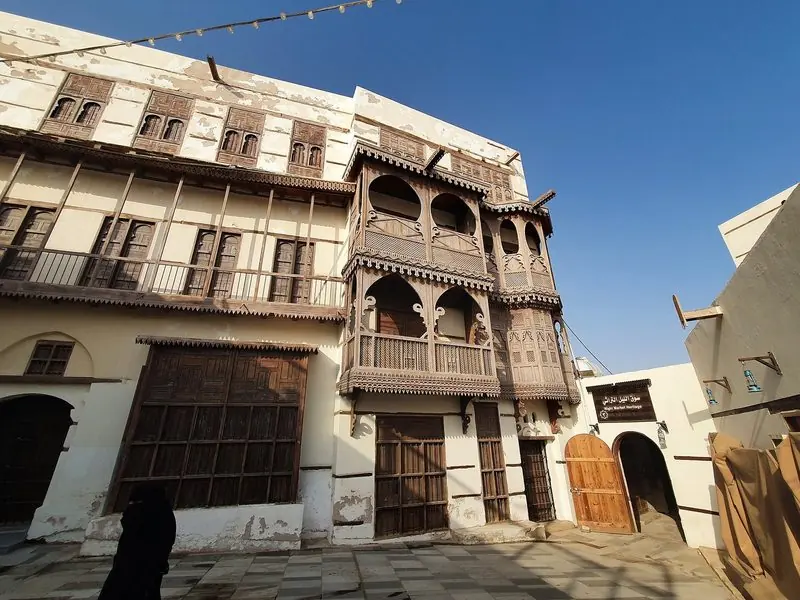
A terra e in acqua
A terra l'esperienza cambia nettamente fra i nuovi sviluppi sauditi e le località egiziane consolidate. Sindalah offre un contesto da resort curato, con ristoranti, negozi e tempo libero pensati proprio per l'ospite dello yacht. La regione NEOM nel suo insieme promette altre attrazioni man mano che verrà costruita. Sulla costa egiziana, le località turistiche offrono centri di immersione, alberghi e una storia turistica più lunga. Su quel lato le escursioni culturali nell'entroterra, verso siti di grande antichità, sono un ulteriore richiamo.
Sull'acqua il Mar Rosso è soprattutto le sue barriere. Immersioni e snorkeling su alcuni dei coralli meglio conservati al mondo sono l'attrazione centrale, con acqua calda e limpida per gran parte dell'anno. Le gite in tender verso barriere e ancoraggi sulle isole riempiono le giornate. La vita marina, dai pesci di barriera ai grandi pelagici, ripaga il tempo passato in acqua. Per molti ospiti è il mondo sottomarino la ragione del viaggio.
Note pratiche
Questa è una regione in sviluppo, quindi l'armatore dovrebbe considerare strutture, regole e accessi come soggetti a cambiamento e verificarne lo stato attuale tramite un agente prima di pianificare. L'Arabia Saudita ha introdotto visti turistici e procedure specifiche per gli yacht che visitano le sue nuove destinazioni, e i requisiti differiscono dallo schema mediterraneo consolidato. L'Egitto ha procedure di lunga data per gli yacht che transitano e navigano lungo la sua costa del Mar Rosso. Qui un supporto professionale locale è quasi indispensabile.
L'accesso dal Mediterraneo passa dal Canale di Suez, un transito che gli agenti organizzano e che aggiunge costi e pianificazione a un riposizionamento. Il supporto per i grandi yacht è concentrato nelle marine nuove e consolidate e resta più sottile che nelle aree mature. Carburante e approvvigionamento richiedono una pianificazione attenta su una costa lunga. La navigazione fra i coralli richiede prudenza, buone carte e, in molte aree, il pilotaggio locale.
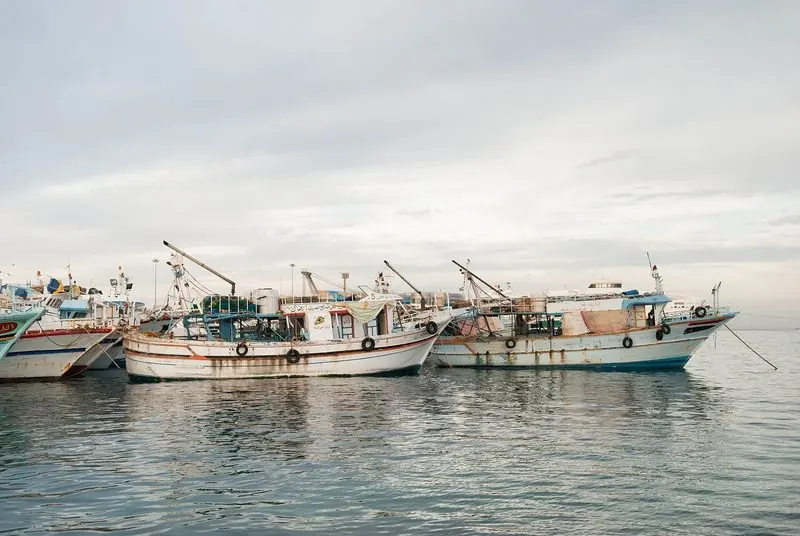
The Suez transit, and how guests arrive
Arriving by sea means the Suez Canal, which is about 100 nautical miles from Port Said to Suez and is normally run over two days with an overnight at Ismailia, handled entirely by an agent with a pilot aboard and tolls assessed on the vessel's canal tonnage. It is a straightforward transit and an expensive and paperwork-heavy one. Coming from the Indian Ocean instead means the southern Red Sea and the Bab el-Mandeb, which is a different proposition entirely.
Guests come by air. Sharm el-Sheikh, Hurghada and Marsa Alam all have international airports with European scheduled service and private jet handling, and Cairo is the hub. On the Saudi side NEOM has its own airport, and Al Wajh International and Red Sea International serve the coast further south, and Saudi tourist visas are now issued to most western nationalities online, which was not the case a few years ago. The weak link is the offshore reef anchorages, which are hours from anywhere with a runway.
Permits, agents and the rulebook
Nothing here is done without an agent and nobody should try. Egypt has long-standing but demanding procedures for yachts cruising or transiting its Red Sea coast, with port clearances, security notifications and fees at each stop, and the process is manageable when a good agent runs it and painful when one does not. Saudi Arabia is at the other extreme, with a framework written recently and still settling. The Saudi Red Sea Authority issued yachting regulations in 2025 covering visiting yachts and megayacht chartering, and tourism permits require passenger details, planned destinations and any charter contract.
The practical consequence is that an owner should treat every permit assumption as having a season's shelf life. Rules that applied last winter may not apply this one, and the Saudi position in particular has changed repeatedly as the country builds out its tourism regime. Charter operations across the region have their own layer of licensing. This is the one destination on this list where the paperwork is a bigger planning problem than the weather.
Support, fuel and the security question
Technical support in the Red Sea is thin and concentrated. Hurghada and Port Ghalib can handle routine work and carry the spares the dive fleet needs, and anything beyond that is flown in from Europe or the Gulf. Fuel is available at the main Egyptian marinas and at the Saudi developments, and quality is worth checking. Provisioning at the standard a large yacht expects is an El Gouna or Cairo exercise.
Security has to be addressed honestly. Attacks on merchant shipping since late 2023 have concentrated in the far south of the Red Sea and around the Bab el-Mandeb, several hundred miles from the northern cruising grounds, and traffic through the corridor has been through repeated cycles of pause and resumption with war risk pricing staying elevated. A yacht entering from the Mediterranean through Suez does not approach that area. Owners and their insurers will still have a conversation about it, and the answer will depend on the underwriter and on the month. That conversation changed on 19 July 2026, when the Houthi leadership announced a naval blockade of Saudi Arabia in response to the bombing of Sanaa International Airport the week before, according to the Council on Foreign Relations conflict tracker. The declaration is aimed at Saudi-linked shipping and it opens a front the northern Red Sea has not had to price before. No owner should plan a Saudi season on 2025 assumptions. Take current advice from the insurer and the flag state before committing a hull to that coast at all.
The honest downside
The infrastructure is ahead of the destination. There is a marina island with 86 berths and reportedly nobody in it, hotels that opened in stages, and none of the agents, chandlers, provisioners and crew services that make the Mediterranean work. An owner arriving in the Red Sea is buying the reefs and the novelty and paying for the absence of everything else. The Egyptian side is better supplied and much less glamorous.
The other points are the season, the access and the heat. Getting a yacht here means a Suez transit at each end and a commitment to a whole winter, which for most Mediterranean owners competes directly with the Caribbean and loses on convenience. Cruising is filed with authorities and not improvised. And the summer is genuinely uninhabitable on this coast, so the boat either leaves or sits. Owners drawn by the diving should be clear that is what they are buying. As of July 2026 the security picture is the larger downside. A blockade declared against Saudi shipping is not a berth availability problem, it is a reason to keep the boat in the Mediterranean and watch.
What a month here actually costs
Port Ghalib publishes a tariff, which is more than almost anything else on this coast does. On the marina's published rate card, checked on 28 July 2026, a foreign-registered vessel pays USD 3.00 to 13.00 per metre per day, USD 51 to 172 per metre per month, or USD 387 to 1,347 per metre per year, with water at USD 5.00 to 6.00 per cubic metre, shore power at USD 0.30 per kWh, a waste charge of USD 1.00 per bag and a USD 300 immigration dock fee. For a 50 m yacht that is USD 2,550 to 8,600 for a month alongside and USD 19,350 to 67,350 for a whole year. Clearance is separate and small: cruisers report around USD 500 to check in at Port Ghalib including a one-month cruising permit, and USD 150 for a two-month extension at Hurghada, on reports current in 2025. NEOM publishes no rate card for Sindalah and none could be found on 28 July 2026, so a Saudi berth is a quotation, not a price.
The comparison that matters is the Mediterranean summer the boat would otherwise be having. Marina di Porto Cervo's published 2026 tariff charges EUR 3,698 a day in the length band to 40 m between 1 and 20 August and EUR 5,437 a day in the band to 55 m, which is roughly EUR 102,000 and EUR 150,000 for the month of August, and the seasonal contract from 1 May to 31 October is EUR 195,819 and EUR 325,707 respectively. A full year alongside in Egypt at the top of the published band costs about a third of one Costa Smeralda summer. The saving is real and it is spent elsewhere: on an agent at every port, on air freight for parts, and on fuel that is worth testing before it goes in the tank. The transit has just become dearer as well. The Suez Canal Authority raised the surcharge applied to yachts from 14 to 26 per cent of normal transit dues, reported on 15 July 2026, which on dues of USD 50,000 takes the surcharge alone from USD 7,000 to USD 13,000.
Bonded stores, alcohol and what Saudi clearance involves
Saudi Arabia prohibits the import of alcohol absolutely, and the prohibition is criminal rather than fiscal, which is the fact that governs every other decision about stores on this coast. What the Kingdom does publish is the frame around the yacht. The Saudi Red Sea Authority's yacht regulation, announced on 10 September 2024, requires a technical licence at SAR 4,000 and, for charter, a tourism charter licence at SAR 4,000, each valid for six months, plus a tourism trip permit for every voyage carrying passenger names, destinations and the nature of the trip, and a designated maritime tourism agent throughout. Entry runs through the EBHAR platform with applications filed roughly three weeks ahead. Underneath it sits customs: the Zakat, Tax and Customs Authority issued a procedural manual for the temporary entry of maritime transport on 13 February 2024, under which sailing and motor yachts are admitted for up to 12 months renewable for the same period, against six months for passenger vessels. The same regulation prohibits the discharge of pollutants and requires waste to be landed.
What no Saudi authority states in writing is what happens to the bar. The working practice is declaration on arrival and a customs seal on the bar and the cellar for the whole time the yacht is in Saudi waters, broken only outside them, and the absence of a published procedure is precisely the risk. An agent who cannot get the sealing arrangement confirmed by customs before the boat is committed is the wrong agent, because the alternative to a seal is seizure and a criminal file rather than a fine, and it reaches the crew who signed for the stores. The direction of travel is no help either. Reports in May 2025 that alcohol would be licensed in some 600 tourist locations from 2026 were denied by a Saudi official to Reuters on 26 May 2025, and the prohibition still stood in July 2026. The clearest published signal remains the Kingdom's own cruise line, which carries no alcohol at all. Egypt has none of this and seals duty-free stores on arrival in the ordinary way.
Discharge, and the nearest yard that can lift her
The Red Sea was designated a Special Area under MARPOL Annexes I and V on 2 November 1973, and on the IMO's own table the discharge requirements for both have still not entered into force, because the bordering states have not notified adequate reception facilities. That is a strange position for a coral sea and it means the rule that actually bites is national. Saudi Arabia's 2024 yacht regulation prohibits pollutant discharge outright. Egypt takes waste at the marinas and prices it, at USD 1.00 per bag for foreign vessels on the Port Ghalib tariff. In practice a yacht here holds everything and lands it at El Gouna, Hurghada or Port Ghalib, and the reef anchorages have no facility of any kind.
There is no yard on either shore of the northern Red Sea that will lift a 50 m yacht. Port Ghalib prices a slipway service at USD 20 to 100, which is a fair measure of the scale the coast is built for, and Hurghada carries the spares the dive fleet needs and little beyond that. Anything structural means the canal, a Mediterranean passage and a Turkish, Italian or Spanish yard, which is why boats that winter here arrive with their yard period already done and a deep spares inventory aboard.
A terra, accessi e prenotazioni
| Getting there by air - NEOM/Sindalah | NEOM Bay Airport (IATA: NUM) is a few kilometres from Sindalah and currently has direct flights to and from Dubai and London for crew and guest transfers; Saudi authorities have said they are working to register Sindalah Marina itself as an international yacht entry-exit point, but this was not yet confirmed as active. |
|---|---|
| Getting there by air - Egyptian coast | Hurghada International Airport (IATA HRG, ICAO HEGN) and Sharm el-Sheikh International Airport (IATA SSH, ICAO HESH) are the two established international gateways for crew changes and guest arrivals serving Port Ghalib, El Gouna and Hurghada, and Sharm respectively. |
| Arriving by sea - Egypt | Yachts must register on Egypt's Maritime Sector Website at least 72 hours before arrival at the first port of entry (typically Port Ghalib, Hurghada, or Suez); an agent is effectively required to handle customs, immigration and port clearance, and agents advise checking which port currently has the lowest fees before committing to a check-in point. |
| Arriving by sea - Saudi Arabia/Sindalah | Under the Red Sea Authority's Visiting Yachts and Large Yacht Chartering regulations (issued August 2025), foreign yachts need a valid Cruising Permit and, for chartering, a Charter Permit applied for via the Ebhar platform, with a minimum 24m LOA and an internationally recognised classification certificate; a Maritime Tourism Agent handles the process. No VHF working-channel or hailing procedure for Sindalah was found published. |
| Reserving a berth - Sindalah | No live online booking system found; IGY Marinas (marina operator) lists a direct contact email and phone line (1-855-449-6274) to pre-book dockage. |
| Reserving a berth - Egyptian marinas | Port Ghalib International Marina takes bookings directly through its own office and website; Abu Tig Marina (El Gouna), Hurghada and Sharm el-Sheikh marinas are normally booked either directly or through a local yacht agent, who is also needed for the clearance paperwork regardless. |
| Berth cost - Sindalah | No public day-rate tariff published; direct quote only from the marina. |
| Berth cost - Egyptian coast (Port Ghalib, published tariff) | Port Ghalib's own rate card (single official source, not independently cross-verified) lists foreign-registered daily rates rising from about $11/m for 30.1-40m yachts to $13/m for 40.1-50m, versus roughly half that for locally-registered vessels; weekly rates for foreign 30m+ yachts run about $38-52/m. |
| Fuel and water - Port Ghalib | Published local-registered rates: fuel (non-contract) $40 per ton, water $5 per cubic metre, shore power $0.30 per kWh; foreign-flag rates were not separately published and should be confirmed with the marina or agent. |
| Agent requirement and cost | An agent is needed at first port of entry in Egypt; cruiser reports cite agent fees in the range of roughly $80-120 plus separate port clearance fees of about $200-250 for yachts over or under 20m and about $10 per person for immigration - figures vary by port and year, so get written quotes. |
| Where to eat | Sindalah's Yacht Club restaurant is run by Tuscan chef Enrico Bartolini, with sources citing either 16 exclusive restaurants and cafes or, elsewhere, 38 total culinary offerings across the island (sources disagree on the exact count, so treat as still ramping up); on the Egyptian side, Abu Tig Marina in El Gouna is the established dining hub, ringed by high-end restaurants and shops around its yacht club and rooftop lounge. |
| What's open after dark | Sindalah's Beach Club is marketed as a day-to-night venue with lounges and pop-up rooftop terraces, though much of the island's nightlife infrastructure was still incomplete as of the 2025 reporting; El Gouna's Abu Tig Marina has the coast's most established after-dark scene, with marina-front bars, lounges and restaurants. |
| Season and fixed dates to plan around | Core cruising season is October-April. Sindalah's public debut was the Red Sea Week opening event of 27 October 2024. Abu Tig Marina in El Gouna hosts the El Gouna Regatta, reported to run in March, and has historically been a waypoint for international rallies (Med-Red, Vasco de Gama, Blue Water) transiting the Red Sea, though current exact transit dates were not confirmed in this research. |
Cosa riferiscono armatori ed equipaggi
No substantive first-hand cruising review of Sindalah exists yet
Everything published to date on Sindalah is press-junket coverage tied to the October 2024 opening event (Robb Report's Red Sea Week party, with captained yachts such as the 55m Geco under Capt. George Ioannou sailing in from Greece to attend) rather than a working owner or captain's account of provisioning, clearance, or berthing there. A year on, on-the-ground reporting found the marina essentially empty of yachts per MarineTraffic data, with no operational track record yet to draw a review from.
AGBIWorking yacht agents on the Egyptian side confirm the old regime was the real obstacle
Seal Superyachts Egypt, an agency operating in Port Said and the Red Sea since 1983, spent months lobbying Egyptian authorities before the May 2025 rule change let foreign-flagged commercial yachts cruise without the previous restrictive permit-by-permit system; its Red Sea Operations Director called the change a transformative moment for yachting tourism in Egypt, which is itself first-hand confirmation that permit friction was a genuine, lived problem before 2025.
Seal Superyachts Egypt (Bahi Naguib, Red Sea Operations Director)Cruiser-submitted reports flag Egyptian port fees and agent inconsistency as a recurring real problem
Noonsite's crowd-sourced cruiser reports (multiple contributors, 2018-2019 updates plus ongoing country page) describe steep and inconsistently applied port clearance and marina fees at Port Ghalib and Hurghada, and advise getting written quotes from several agents before committing since fees vary by agent and port; recent guidance names Suez as currently the cheapest check-in/out point because a new government tariff has not yet been applied there.
Noonsite (Egypt cruiser reports)
Cosa convince e cosa va valutato
Punti di forza
- World-class reef diving directly off the cruising routeElphinstone Reef, Daedalus Reef and the Brothers Islands, reachable from both Hurghada and Port Ghalib, are internationally rated dive sites (oceanic whitetips, coral walls, wreck diving) that give this coast a genuine draw beyond the marinas themselves.
- Egypt's Red Sea coast is now genuinely open water for foreign yachtsAs of May 2025 foreign commercially registered yachts can cruise Egyptian waters and move between ports and marinas without the old restrictive single-entry permit system, a real, verified regulatory liberalisation rather than a marketing claim.
- Real, working marina infrastructure already exists on the Egyptian sidePort Ghalib, Abu Tig Marina (El Gouna), Hurghada and Sharm el-Sheikh have decades of operating history, published tariffs, fuel, water and power service, and Abu Tig has hosted established international yacht rallies (Med-Red, Vasco de Gama, Blue Water) and runs its own El Gouna Regatta.
- Sindalah is being built to a genuinely high design and service specThe marina holds 5-Gold Anchor accreditation from The Yacht Harbour Association (first in Saudi Arabia to get it), and has signed refit/repair and concierge partners including MB92, Camper and Nicholsons and Burgess, plus BWA Yachting for agency services - real institutional backing even if guest volume is not there yet.
- Reliable winter sailing window with short flight connectionsThe October-April season gives consistent sun; NEOM Bay Airport (IATA NUM), a few kilometres from Sindalah, already has direct flights to Dubai and London, and Hurghada (HRG) and Sharm el-Sheikh (SSH) are established international airports for Egyptian-side crew changes and guest transfers.
Da valutare
- Sindalah has been reported empty for a year after its launchAGBI's on-the-ground reporting in September 2025, roughly eleven months after the 27 October 2024 opening event, found the marina with no yachts docked per MarineTraffic data, hotels unopened, and construction still ongoing; management was subsequently moved from NEOM to Red Sea Global specifically to try to bring it back to life.
- The marina basin itself has a reported design flawAGBI reporting states the marina lets waves roll in for much of the year and that the island is hit by strong winds not properly accounted for in pre-construction assessments - a genuine operational weakness, not just an occupancy problem.
- No public berth tariff for SindalahIGY Marinas' own listing gives facilities and a booking contact (phone and email) but publishes no day-rate or weekly tariff for berths or buoys; pricing is direct-quote only at this stage.
- Egyptian port fees are high, inconsistent, and agent-dependentPort Ghalib's own published tariff shows foreign-registered yachts paying roughly double the local-registered rate (e.g. 30-40m foreign daily rate about $11-13 per metre versus $6 per metre for local-flag boats), and cruiser reports describe Port Ghalib and Hurghada fees as incredibly high compared with Suez under the current tariff regime - a real cost and predictability problem for a first-time visitor without an agent.
- Saudi Arabia's yacht regulatory framework is brand new and untestedThe Red Sea Authority only issued its first comprehensive Visiting Yachts, Large Yacht Chartering and Marina Design/Operations regulations in August 2025 (via the Ebhar platform, requiring a minimum 24m LOA and classification certificate for large yachts); with essentially no operating history yet, how smoothly a foreign yacht actually clears through this system in practice is unproven.
A chi si rivolge: Armatori in cerca di un'alternativa invernale in acqua calda vicino al Mediterraneo, con infrastrutture nuove e immersioni eccezionali.