Trinidad and Tobago
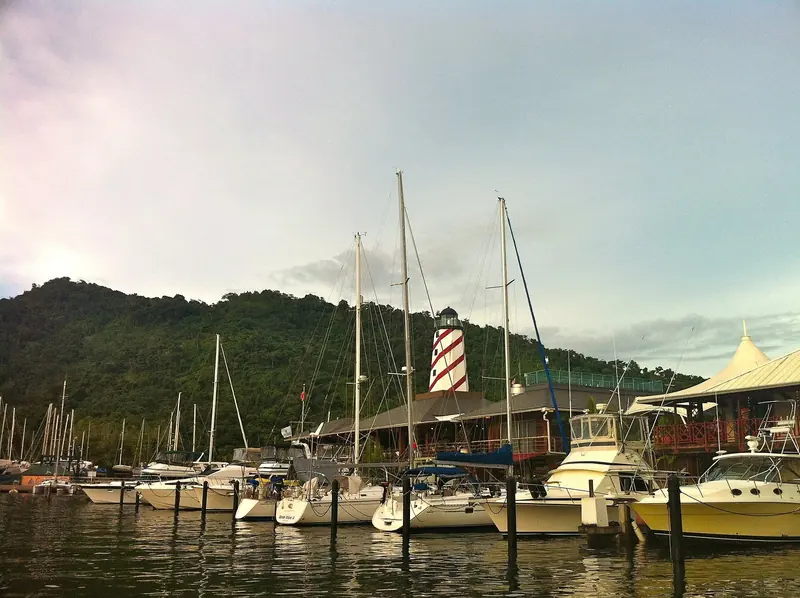
| Chaguaramas | Trinidad's northwest peninsula, about 10 NM from Port of Spain, roughly 10 degrees 40.7 minutes N, 61 degrees 38.2 minutes W (Noonsite, updated May 2025) |
|---|---|
| Piarco International Airport to Chaguaramas: about 39 km / 24 miles by road, 37 to 57 minutes depending on traffic, taxi roughly US$70-90 (Rome2rio, Taxigator) | |
| Hurricane season | 1 June to 30 November; many Caribbean insurance policies require a yacht south of 12 degrees 40 minutes N, or hauled out, for that period |
| Trinidad and Venezuela both lie south of the common 12 degrees 40 minutes N insurance line (Cruising World) | |
| Yard cluster origin | Power Boats installed the first major travel lift, 50 tons, around 1991; arrivals surged after hurricanes Luis and Marilyn in 1995; YSATT founded 1994 |
| Peake Yacht Services | 160-ton travel lift, 31 ft beam, storage to 375 vessels on the hard |
| Power Boats | two Acme travel lifts to 60 tons, about 19-20 ft beam, plus a catamaran cradle to 55 ft and about 18 tons |
| Industrial Marine Services (IMS) | 70-ton travelift, storage for about 130 boats on the hard |
| Crews Inn boatyard | 200-ton travel lift, 30 ft beam limit, over 76,000 sq ft covered; separate 68-slip marina to 210 ft |
| Coral Cove Marina | 40 berths plus two T-berths to 125 ft; travel lift tonnage not publicly listed |
| Peake's 2020 rate sheet | haul and launch from US$6.50/ft (to 55 tons) to US$25/ft (over 100 tons); first 6 days on the hard free; day rate from US$0.35/ft |
| Tobago clearance | Scarborough in the south or Charlotteville in the north; a bay-hop permit covers movement along the coast once cleared |
| Trinidad to Tobago by sea | about 100 NM around Trinidad's north coast, most of a day's motor-sail, against up to 2 kt of current off the NE corner |
| Tobago dry season | December to May, the better sailing and diving window |
Getting to Chaguaramas
No airline flies directly into Chaguaramas itself, and no water taxi or helicopter transfer service connects Piarco to the yards, so every owner, guest and delivery crew makes the same road trip. Rome2rio and the airport-transfer aggregator Taxigator both put the road distance at roughly 24 miles, with a taxi fare in the region of US$70 to 90 and a running time as low as 37 minutes in light traffic that regularly stretches past 50 minutes once the Port of Spain approach roads are busy. A crew scheduling a guest change should build the longer figure into the plan rather than the optimistic one.
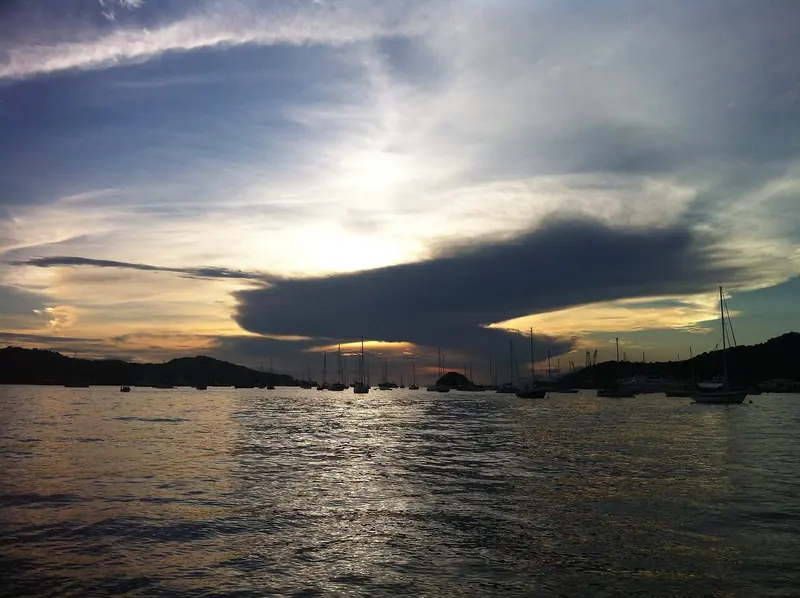
By sea, Chaguaramas is reached from the north through one of the Bocas, the channels between Trinidad and the small islands running toward Venezuela, with the marinas themselves sitting at the eastern end of the bay at roughly 10 degrees 40.7 minutes north, 61 degrees 38.2 minutes west, about 10 nautical miles from Port of Spain. Noonsite's own cruiser notes flag one hazard before arrival: a sunken barge in 70 feet of water near the harbour entrance that has snagged anchors, one of several wrecks reported in the anchorage over the years.
Why the insurance industry sends yachts here
The rule is an underwriting one, not a geography lesson: policies that name a hurricane box, commonly bounded by 12 degrees 40 minutes north on its low side, require a yacht to be south of that line or already on the hard in an approved yard for the named-storm season to stay covered, and Trinidad and neighbouring Venezuela both qualify. Cruising World's reporting on the region notes that prevailing storm tracks have spared Trinidad the direct hits that have struck islands further north, and that the southern rim of the Caribbean, Trinidad alongside Aruba, Bonaire and Curacao, has recorded only a handful of storms passing within 60 miles since 1980. Every insurer sets its own box and its own exceptions, so a crew should read the actual policy rather than assume the popular line applies to them.
The yard industry that now serves that insurance logic barely existed before 1990. Power Boats installed the peninsula's first serious travel lift, a 50-ton unit, in the early 1990s, and Cruising World's own account of the build-out traces the real surge to 1995, when hurricanes Luis and Marilyn tore through the northern Caribbean and sent owners looking for somewhere reliably south of the storm track; annual boat arrivals in Chaguaramas jumped past 2,300 that year and touched nearly 3,000 by 1999. The Yacht Services Association of Trinidad and Tobago, YSATT, was founded in 1994 by the yards themselves to organise the sector as it grew, and Noonsite's current entry for the area still calls Trinidad home to the highest concentration of boats laid up for hurricane season anywhere in the Caribbean.
Trinidad is best understood as an insurance decision as much as a cruising one: the boat goes there because the policy says so, not because the anchorage is pretty.
Clearing in: customs, immigration and the paperwork that is different here
Port Health operates out of the Crews Inn building and, per Trinidad Cruisers' own arrival guide, issues its clearance within minutes of being contacted; Immigration is up an outside staircase in the same building and Customs is reached by walking back down and to the right. Every vessel arriving from outside Trinidad and Tobago must also file a float plan in advance and, since 17 March 2026, complete an online Arrival and Departure Card through the government's travel.gov.tt portal, which replaced the paper form previously used. Crew should expect to pay in Trinidad dollars, cash only. The exact fee schedule is reported inconsistently even by current sources: Caribbean Compass puts a double-handed yacht's clearance for a stay of up to 30 days at around TT$900, while a May 2026 first-hand account on travelsketchsailing.com cites a TT$800 per-person visa-waiver charge introduced at the start of 2026, on top of separate customs and pet fees. A crew should treat both figures as a rough guide and confirm the current number with the office or an agent directly rather than budget from either one alone.
The process carries a few genuinely local quirks before the dinghy touches the dock. Trinidad Cruisers' guide warns that officers in Chaguaramas, while more relaxed than those downtown, still turn away visitors in dirty shorts, collarless t-shirts or tank tops, so a change of clothes before the walk to the office is not a bad idea. Firearms, flare guns included, must be declared and are typically confiscated for the length of the stay, and a pet on board needs a separate import permit from the Ministry of Agriculture arranged before arrival, with a government veterinarian inspecting the animal on board. Every move between two Trinidad and Tobago ports, including the separate hop over to Tobago, requires its own clearance, so a crew island-hopping through the country should expect to repeat parts of this process more than once.
The yacht-services cluster: five yards, one industry
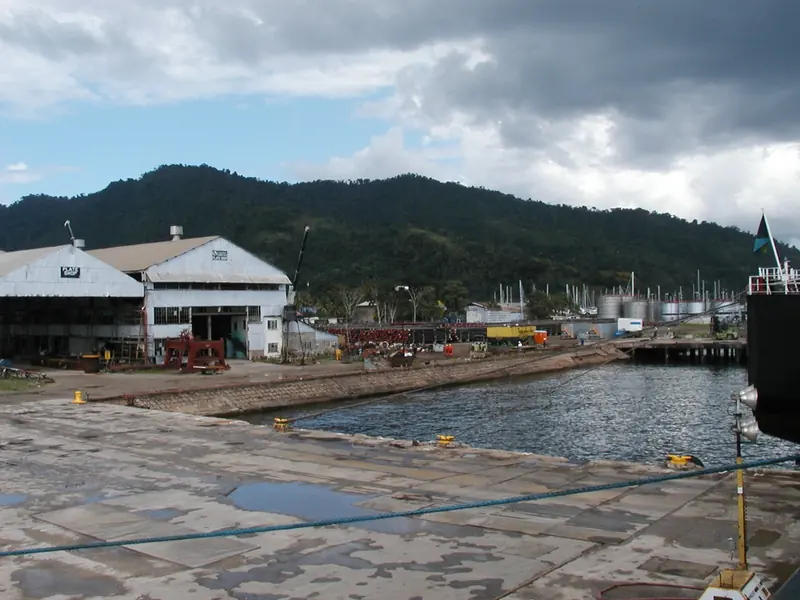
Peake Yacht Services runs a 160-ton travel lift rated to a 31-foot beam and, per the Superyacht Services Guide's own listing, keeps space for up to 375 vessels on the hard at any time, alongside a contractor base covering rigging, GRP and paint work, a chandlery and its own hotel and restaurant. Power Boats, the yard that started the whole cluster with that 50-ton lift in the early 1990s, now runs two Acme travel lifts rated up to 60 tons with roughly 19 to 20 feet of clear beam, plus a hydraulic catamaran cradle that takes multihulls to 55 feet, 28 feet of beam and about 18 tons, according to the yard's own site. Industrial Marine Services, IMS, operates a smaller 70-ton travelift with storage for about 130 boats on the hard, a figure Noonsite's own business listing and the local tntyellow directory both give.
Crews Inn's boatyard is the outlier on size: a 200-ton travel lift handling yachts to a 30-foot beam into what the operator's own site calls the largest covered boatyard building in the Caribbean, over 76,000 square feet, alongside a separate 68-slip marina taking yachts to 210 feet with customs and immigration on site. Coral Cove Marina and Boatyard runs a smaller 40-berth marina plus two longer T-berths to 125 feet and a working travel lift, though no source found in this research publishes its tonnage rating, a gap a crew planning a haul-out there should close with a direct call. What none of the yards or YSATT publish is a single total for how many boats the Chaguaramas cluster holds in an average hurricane season; the individual yard figures above, which already add to several hundred vessels across just three of the five yards, are the closest a reader can get without asking each yard for its current count.
What haul-out, storage and refit actually cost
Peake's 2020 commercial rate sheet, still the yard's most recently published version at the time of writing, scales everything by length or tonnage, whichever is greater: haul and launch runs from US$6.50 a foot up to 55 tons, to US$15 a foot up to 75 feet or tons, to US$22 and then US$25 a foot as a boat crosses the 75 and 100-ton marks. Chocking a boat up to 50 tons costs US$40 for the first month and US$20 a month after that, and the yard supplies water and normal electricity use free of charge, charging only a surcharge for air conditioning or a dehumidifier running in a closed-up boat through the wet season. The sheet states every price is subject to change without notice, and being five seasons old by 2026, a crew should treat it as a starting estimate and confirm current numbers before hauling.
None of the other four yards publish a comparable rate card anywhere this research could find, which is consistent with how boatyards serving larger, more varied tonnage usually handle pricing, on application once a boat's actual length, beam and scope of work are known. Sailor and blogger Telicia Campain of SV Liger, writing on travelsketchsailing.com in May 2026 after roughly two and a half years based in Trinidad across three hurricane seasons, reported Peake's price as close to Power Boats' but rated the experience ahead of it for air-conditioned toilets, hot showers and a free courtesy bus to the shops and the airport, a reminder that the sticker price is rarely the whole comparison. What is not published anywhere: current rate cards from Power Boats, IMS, Crews Inn or Coral Cove, and any single figure for what a full hurricane-season refit, rather than simple storage, costs on top of the haul and chock fees.
Tobago: the scenic side of the same two-island nation
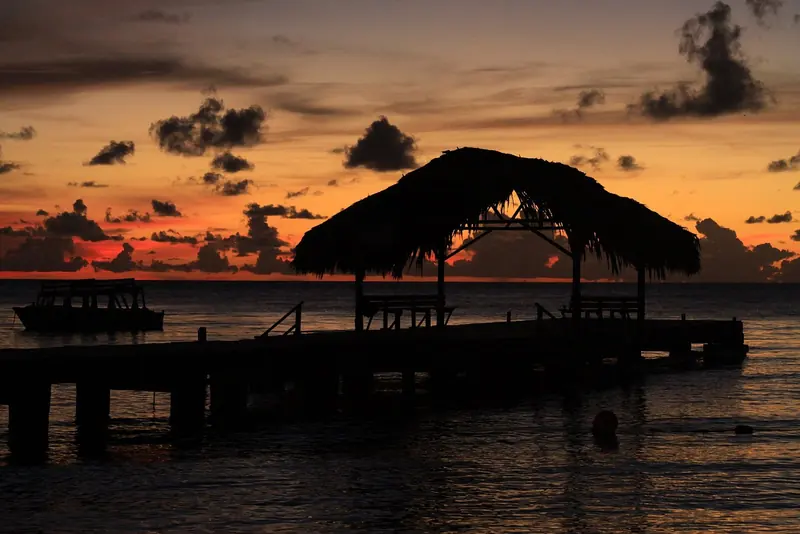
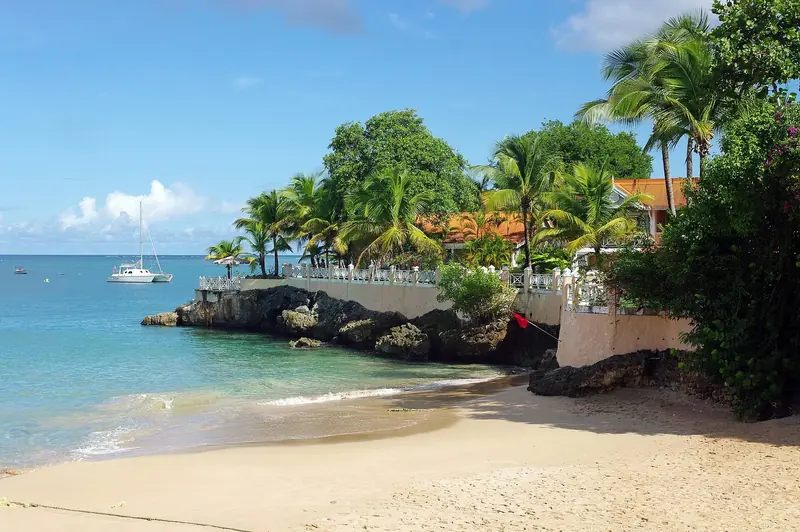
Caribbean Compass's own island-by-island guide describes the crossing as too long for a single day's sail and too often fought against wind and current, and a separate Compass account of the route describes hugging Trinidad's coast to find a counter-current before the sea builds off the northeast corner. Boats heading straight for Tobago clear in at Scarborough in the south or Charlotteville in the north rather than at Chaguaramas, each port handling only its own half of the island and issuing a bay-hop permit that lets a cleared yacht move along the coast between Castara and Prince's Bay without reporting in again at every stop. Store Bay, near the southwest tip and the island's own ANR Robinson International Airport, offers good holding in sand at 20 to 40 feet with a dozen free moorings, and sits a short dinghy ride from Buccoo Reef, a shallow marine park once rated by Jacques Cousteau among the world's most spectacular.
Charlotteville's Man O'War Bay, a horseshoe anchorage on the island's northeast tip with a newer 15-buoy mooring field in its Pirates Bay corner, is the other pole of Tobago cruising and the base for the more serious diving: Speyside and Goat Island offer sites such as Japanese Gardens and Angel Reef for divers who can handle the current, while beginners are better served by the calmer water off Crown Point, Buccoo and Mount Irvine near Store Bay. Tobago's dry season, December through May, is also the better sailing window, clear of the June-to-November rains that coincide with hurricane season on Trinidad. What Tobago does not offer is any equivalent to the Chaguaramas yards: outside Scarborough harbour, anchoring is the only option on the island, so a boat needing real haul-out or refit work still has to make the passage back to Trinidad first.
A terra, accessi e prenotazioni
| Getting there | Piarco International Airport (POS), about 39 km / 24 miles from Chaguaramas. Taxi 40-60 minutes depending on traffic, roughly US$70-90. No direct water or helicopter transfer exists. |
|---|---|
| Clearing in | Port Health, then Immigration, then Customs, all near Crews Inn in Chaguaramas. Customs open 24 hours. Cash TTD only. Online Arrival/Departure Card required via travel.gov.tt since 17 March 2026. |
| Clearance cost | Reported inconsistently: around TT$900 for a double-handed boat staying up to 30 days per Caribbean Compass, versus a TT$800 per-person visa-waiver fee cited in a May 2026 report. Confirm directly. |
| Hurricane-season window | 1 June to 30 November. Most policies require the boat south of 12 degrees 40 minutes N, or already hauled out, for that period. |
| Major yards | Peake (160-ton lift, to 375 boats on the hard), Power Boats (two lifts to 60 tons), Industrial Marine Services (70-ton lift, about 130 boats), Crews Inn (200-ton lift, 30 ft beam), Coral Cove (40 plus 2 berths). |
| Haul-out cost | Only Peake publishes a rate card (2020): haul and launch US$6.50-25 per foot by size; first 6 days free; day rate from US$0.35/ft. Power Boats, IMS, Crews Inn and Coral Cove quote on application. |
| Getting to Tobago | About 100 NM by sea around Trinidad's north coast, most of a day against wind and current. Separate clearance required at Scarborough or Charlotteville. |
| Tobago anchorages | Store Bay (sand, 20-40 ft, free moorings, near Buccoo Reef) and Man O'War Bay at Charlotteville (15-buoy field in Pirates Bay, base for Speyside diving). |
| Not published | A total boat count for the whole Chaguaramas cluster in an average season; current rate cards from Power Boats, IMS, Crews Inn or Coral Cove; a single figure for a full refit beyond basic haul and storage. |
Cosa riferiscono armatori ed equipaggi
Peake beat Power Boats on comfort at a similar price
After roughly two and a half years based in Trinidad across three hurricane seasons aboard SV Liger, Telicia Campain reported Peake's haul-out pricing as close to Power Boats' but preferred it for air-conditioned toilets, hot showers and a free courtesy bus to the shops and the airport.
Telicia Campain, travelsketchsailing.com, May 2026Chris Doyle stores his own boat at Power Boats between seasons
The author of the standard cruising guide to the islands built his survey catamaran Ti Kanot in Trinidad and lays it up at Power Boats in Chaguaramas whenever he is away, visiting the country at least twice a year to keep the guide current.
Chris Doyle, Cruising Guide to Trinidad and TobagoTheft from tenders remains the one recurring complaint
Despite yard security and coordinated night patrols that cruisers credit with real improvement, dinghies and outboard motors left in the water continue to be targeted, and the advice is to lock and lift them every night without exception.
Noonsite, Chaguaramas destination page, updated May 2025
Cosa convince e cosa va valutato
Punti di forza
- A hurricane-season base the insurance industry actually acceptsTrinidad sits south of the 12 degrees 40 minutes N line most Caribbean policies use as their hurricane boundary, so a boat hauled in Chaguaramas keeps its cover without leaving the Caribbean basin.
- Real depth of yard capacity, not one yard doing all the workFive yards with published or independently reported lift capacity from 50 to 200 tons, led by Peake's 375-boat hardstand and Crews Inn's 200-ton lift, give an owner genuine choice rather than a single bottleneck.
- Tobago is a real, separate reward once the boat is out of the yardStore Bay's sheltered anchorage and Buccoo Reef, plus Speyside's more serious diving off Man O'War Bay, give an owner a legitimate cruising ground that shares nothing with Chaguaramas' working waterfront.
Da valutare
- Pricing beyond Peake's 2020 rate card is opaquePower Boats, IMS, Crews Inn and Coral Cove all quote on application, and Peake's own sheet is five seasons old and marked subject to change without notice.
- Chaguaramas is a working industrial waterfront, not a cruising anchorageNoonsite's own notes describe theft from dinghies and outboards as an ongoing problem despite yard security and night patrols, and the bay itself offers little of the scenery cruisers come to the Caribbean for.
- Getting to Tobago is a genuine passage, not a day sail on paperCaribbean Compass describes the roughly 100 NM route around Trinidad's north coast as a fight against wind and a two-knot current, and Tobago has no equivalent haul-out capacity if something breaks once there.
A chi si rivolge: An owner or delivery crew who needs a genuinely insurable place to leave a yacht through hurricane season and is willing to treat Tobago as a separate, harder-won side trip rather than an extension of the same anchorage.