Lurssen's 114m Nausicaa ships fuel-cell-ready, running on diesel
A landmark build, delivered on diesel-electric power
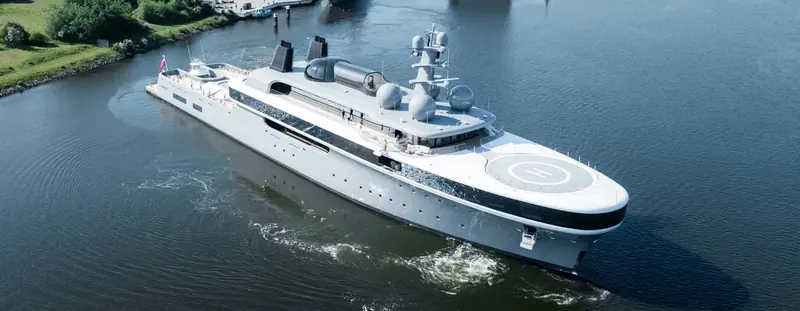
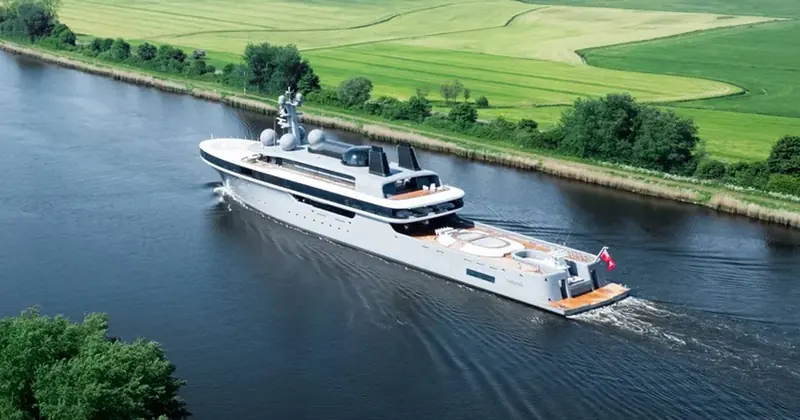
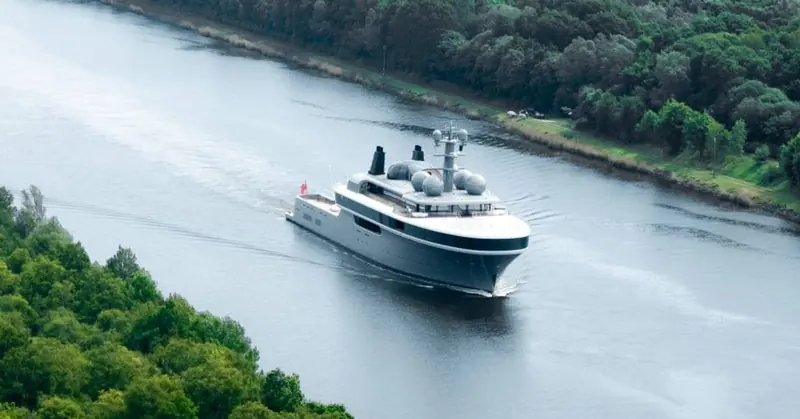
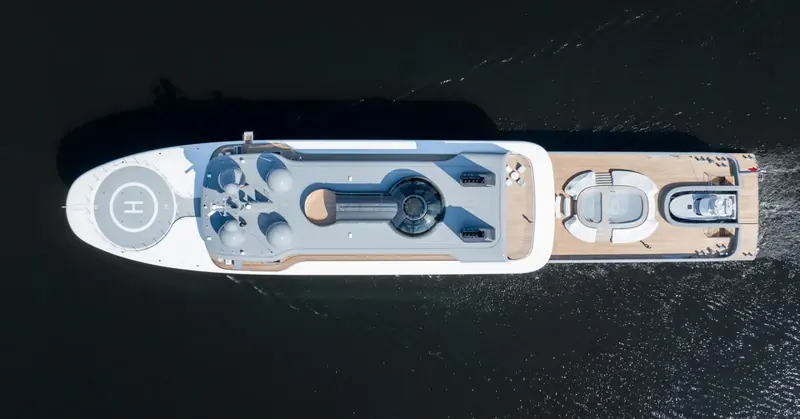
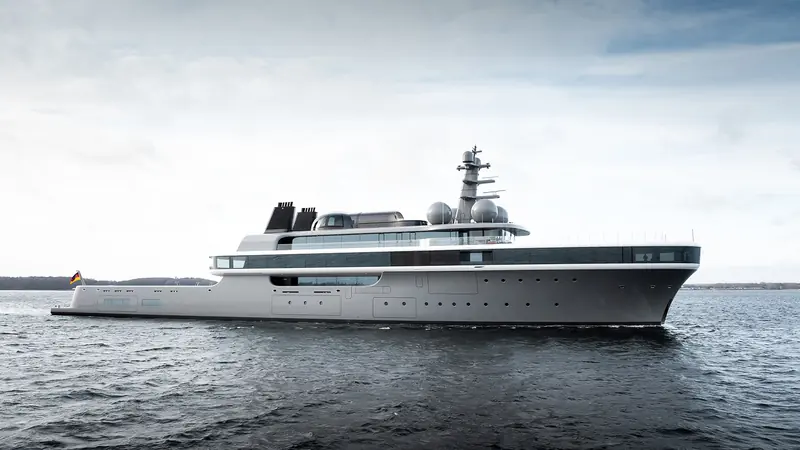
Lurssen handed over the 114.2-metre Nausicaa on 23 May 2026, sending the 6,300 GT yacht out of Germany toward Gibraltar on her maiden passage, according to reporting by BOAT International. Formerly known as Project Cosmos, she carries an explorer-style profile by the Australian industrial designer Marc Newson and was commissioned for a Japanese owner. Lurssen describes her as the first fuel-cell yacht to leave its sheds.
As delivered, Nausicaa runs on five diesel gensets, two main and three auxiliary, feeding fully electric azimuthing pods backed by a battery bank rated up to 2MW. She is built to Ice Class 1D for light-ice work and set up for long passages to remote waters, topped by a 56-square-metre glass Skydome. The methanol fuel cell system that defined the project through six years of build is not yet installed.
What fuel-cell-ready actually means here
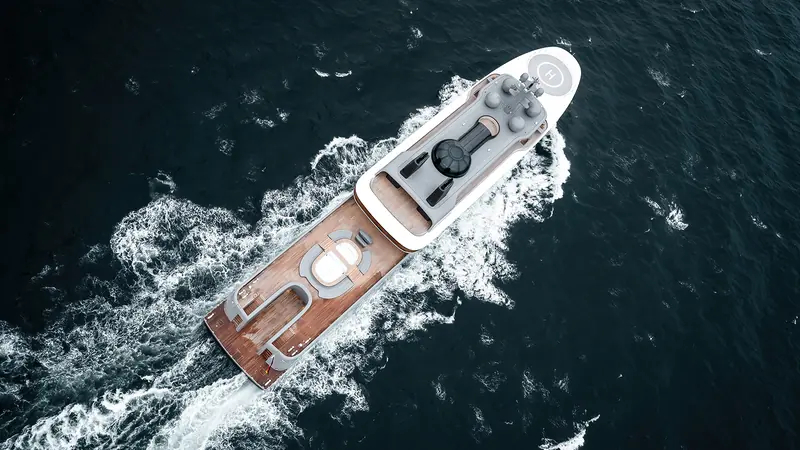
The yacht leaves the yard with provision for a pair of 500kW methanol fuel cells, meaning the space and the electrical and mechanical architecture to accept them at a later refit. When the pair is fitted, the design targets roughly 7 knots for about 1,000 nautical miles on the cells alone, or up to 15 days at anchor with zero emissions, per figures reported by BOAT International and Megayacht News. Until then, the green performance stays on paper.
The contrast with Feadship's 118.8-metre Breakthrough is instructive. That yacht, delivered in 2025 and named Motor Yacht of the Year at the 2026 World Superyacht Awards, shipped with a multi-megawatt hydrogen fuel cell plant already running on liquid hydrogen. Nausicaa reaches the water as Lurssen's fuel-cell flagship with her methanol cells still to come.
The calculation for owners and buyers
For a buyer, the retrofit path matters more than the headline technology. Provisioning a hull for fuel cells adds cost and lost volume up front, and it defers the emissions payoff to a future yard period whose date and price are not fixed. The bet is that methanol cells, and the green methanol to run them, both mature and become bunkerable before the yacht's first major refit.
That bet is now being placed across the fleet. Sanlorenzo has delivered fuel-cell power on its 50Steel line and is pursuing a green-methanol bi-fuel yacht, while Lurssen and Feadship have each put fuel-cell flagships in the water. Nausicaa sets a clear reference point for anyone comparing builds: a yacht can be sold as fuel-cell-ready long before it runs a mile on the cells, so the useful question for a yard is the timeline, when the hardware goes in and when methanol bunkering will be there to feed it.
What is good, and what to watch
Strong points
- A genuine landmark deliveryNausicaa is Lurssen's first hull built around an owner-ordered fuel-cell provision, and she ships with an Ice Class 1D steel hull rated for light ice as well as long-range cruising.
- Real silent running today, fuel cells or notThe five-engine diesel-electric plant (two primary, three auxiliary) drives electric Azimuth pods backed by up to 2 MW of battery storage, giving genuine quiet, zero-local-emission running even before any fuel cell is fitted.
What to watch
- The system that defined the project is not aboardThe twin 500kW methanol fuel cells the owner ordered were not fitted at delivery; today's performance is conventional diesel-electric, not the near-zero-carbon cruising the order implied.
- Basic performance figures are not publishedNeither Lurssen nor the press coverage found states a range or top-speed figure, an unusual gap for a flagship delivery of this size.
Practical detail
| Status at delivery | Diesel-electric only; the twin 500kW methanol fuel cells specified in the owner's brief are not yet fitted and are reserved for a later retrofit. |
|---|---|
| Propulsion | Five-engine diesel-electric plant (two primary, three auxiliary) driving fully electric Azimuth pods, with up to 2 MW of battery storage for silent running. |
| Hull and class | Ice Class 1D, steel hull and steel superstructure, 6,593 GT on an 18.7 m beam - built for light-ice and remote-water operation as well as conventional cruising. |
| Design | Exterior and interior by Marc Newson. |
| What is not published | Range and top-speed figures, price, and a confirmed owner identity. BOAT International describes the owner only as Japanese; some outlets have speculated a specific name, but neither the builder nor any owner has confirmed it, so no name is used here. |
Questions this story answers
What happened?
Lurssen has delivered Nausicaa, the German yard's first fuel-cell superyacht, and handed her over running on diesel-electric power. The methanol fuel cells she was designed around are not aboard yet. She ships with the space and systems to take a pair of 500kW cells at a later refit. That turns the industry's most watched green build into a real-world test of what "fuel-cell-ready" is worth to an owner today.
What is good about it?
A genuine landmark delivery. Nausicaa is Lurssen's first hull built around an owner-ordered fuel-cell provision, and she ships with an Ice Class 1D steel hull rated for light ice as well as long-range cruising.
What should an owner or buyer watch?
The system that defined the project is not aboard. The twin 500kW methanol fuel cells the owner ordered were not fitted at delivery; today's performance is conventional diesel-electric, not the near-zero-carbon cruising the order implied.
Who reported this?
BOAT International, YachtBuyer, FuelCellsWorks.
We do this for everyone who loves this world. The people who have spent their lives in it, and the people just discovering it. Yotters exists so that what we learn belongs to all of them.
Nobody pays us for this. No ads, no sponsors, nothing for sale. We just believe the world is a little better when knowledge is shared instead of kept.
If it gave you something today, tell us to keep going. Follow us, leave a like, or write a positive comment. We read every one, and they are what keeps us going.