D-Marin Mandalina (Sibenik)
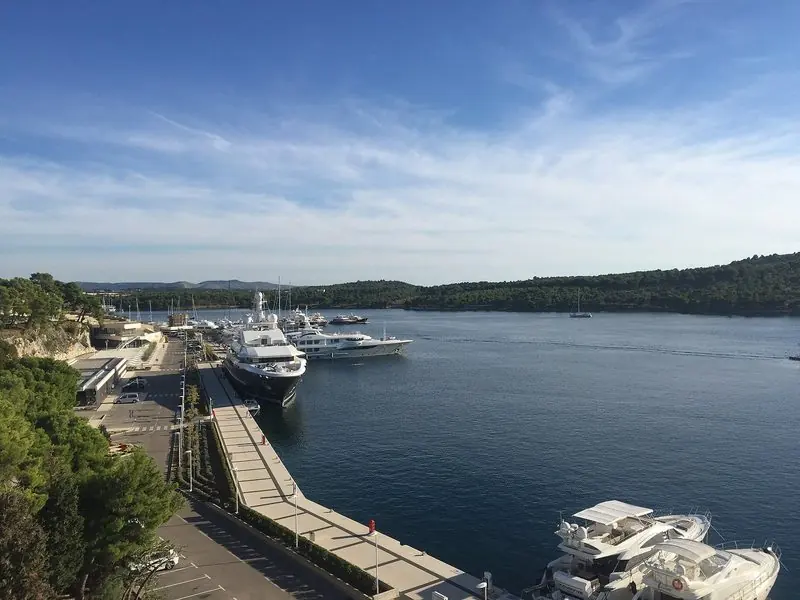
| Location | Sibenik, central Dalmatia, Croatia, at 43 43.8 N, 15 53.59 E |
|---|---|
| Operator | D-Marin, developed by the NCP Group and Dogus Group |
| Berths | 452 in total, around 440 of them in the water, for yachts to 70 m |
| Maximum LOA | 140 m, listed by both the operator and the Yacht Harbour Association |
| Access | no air draft or draft restrictions, and 5 nautical miles from open sea |
| Approach | the St Anthony Channel, over 2,000 m long and 140 m to 220 m wide, with a 6-knot speed limit |
| Current in the channel | a constant outflow of 0.5 to 1.5 knots, reaching 3 knots after heavy rain |
| Rating | Five Gold Anchors from the Yacht Harbour Association, plus Blue Flag |
| Marina boatyard | 50-tonne travel lift, 1.5-tonne crane, around 30 dry berths |
| Adjacent yard | sold and rebranded. It now trades as Iskra Shipyard (Iskra Group), still runs the 900-tonne ship lift but adds a 75-tonne travel lift and a 350 m quay, covers repairs to 80 m LOA and new builds to 60 m, and in 2024 contracted a new 110 m, 4,000-tonne floating dock, materially bigger than the 1,500-tonne dock older listings still describe. Several directories, including SuperyachtNews' own, still carry the old NCP Refit Shipyard name, checked 5 August 2026 |
| Airports | Split about 58km, Zadar about 84km |
| On site | D-Resort Sibenik hotel, control tower, VHF channel 17, 24/7 security and CCTV |
| Berth figures, from the operator's own marina page checked 28 July 2026: 452 berths for yachts to 70 m, and Mandalina described as Croatia's only marina designed for superyachts to 60 m. Higher counts and a 140 m maximum still circulate in third-party listings and are not what D-Marin publishes today | |
| Note on the 140 m figure | 140 m is also the narrowest published width of the St Anthony Channel, and the two numbers are easily conflated. Any yacht above 70 m should have the berth confirmed in writing |
| Travel lift on the marina's own page | 50 tonnes, with 30 dry dock places and hull pressure washing. Anything heavier goes next door to NCP Refit |
| Documents the operator requires on arrival: boat registration and a Croatian sailing permit | |
| Shore power | the operator describes smart pedestals and publishes no amperage, no voltage and no frequency, checked 28 July 2026. Croatia runs 50 Hz at 230 V and 400 V |
| Depth alongside is not published by the operator, checked 28 July 2026. The claim of no draft restriction is an operator statement and not a sounding | |
| No berthing rate of any kind is published by the operator, checked 28 July 2026 | |
Five miles inland, and the reason that matters
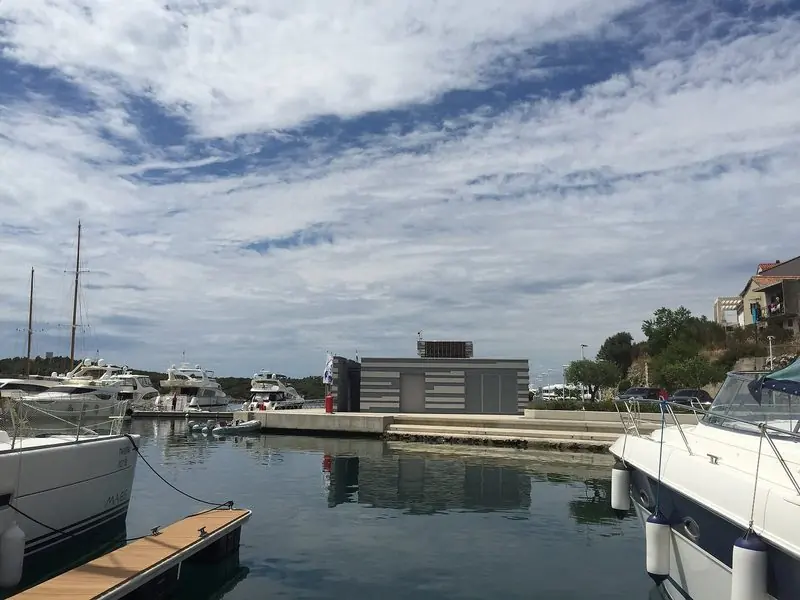
Mandalina sits on the south side of Sibenik bay in central Dalmatia, a body of water that opens out behind a long neck of land and is fed by the Krka river. The marina is five nautical miles from the open Adriatic, which sounds like an inconvenience and is in fact the whole proposition. Nothing that happens in the Adriatic reaches this water. The operator describes it as one of the safest berthing places in the Adriatic, and yacht captains who have wintered here use the same language.
It was built as Croatia's first purpose-designed superyacht marina by the NCP Group with the Turkish Dogus Group, and is now part of the D-Marin network that runs marinas from Spain to the UAE. That matters for an owner because the standards, the app-based berth management and the reciprocal berthing arrangements across the group are consistent. There are 452 berths in total, around 440 of them afloat. The maximum length overall is listed at 70 metres by the operator and by the Yacht Harbour Association, which awards the marina its Five Gold Anchors rating.
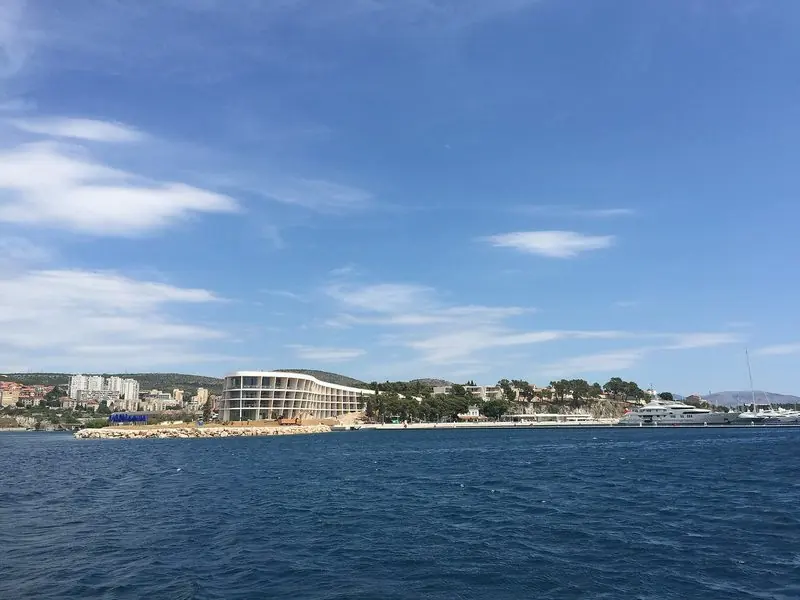
The St Anthony Channel
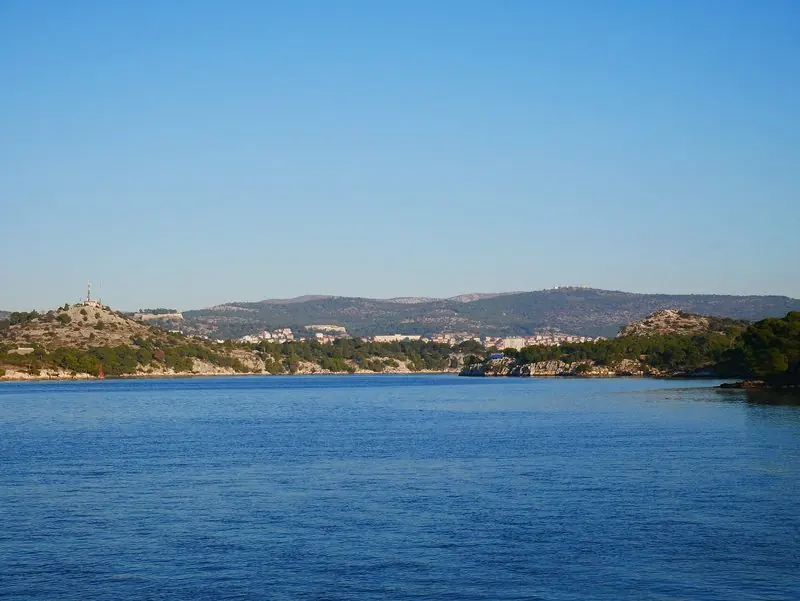
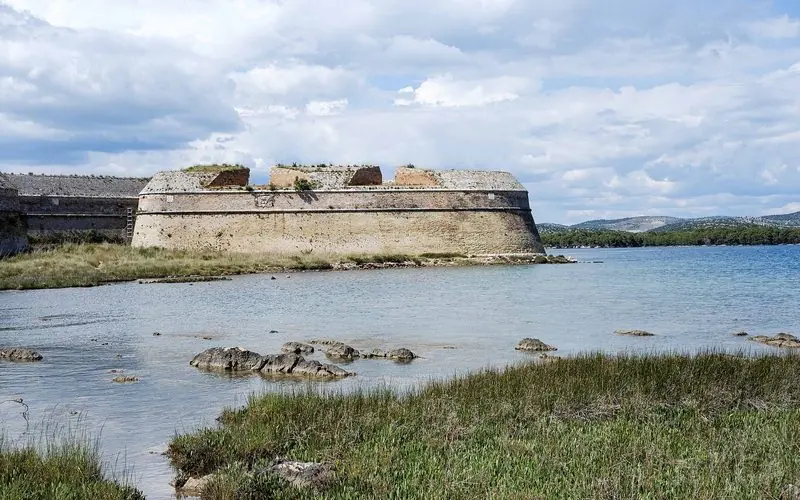
The entry to Sibenik is through the St Anthony Channel, a natural gorge over two kilometres long and between 140 and 220 metres wide, cut through limestone cliffs and running to about 40 metres deep. It is a genuinely spectacular piece of pilotage, guarded at its seaward end by the sixteenth-century St Nicholas Fortress, a UNESCO listed structure sitting on its own islet. The channel is lit for night entry with red to port and green to starboard, and the speed limit through it is six knots. There is no air draft restriction, so a tall mast or a heavy radar arch is irrelevant here.
The one thing to plan for is the current. A constant flow sets outward through the channel at 0.5 to 1.5 knots, and after heavy rain in the Krka catchment it can reach three knots and set up rips. That is a real consideration for a large single-screw hull entering against it in a crosswind. Once through, the bay opens into calm water with the marina on the southern shore. The transit at six knots takes about twenty minutes and guests tend to remember it.
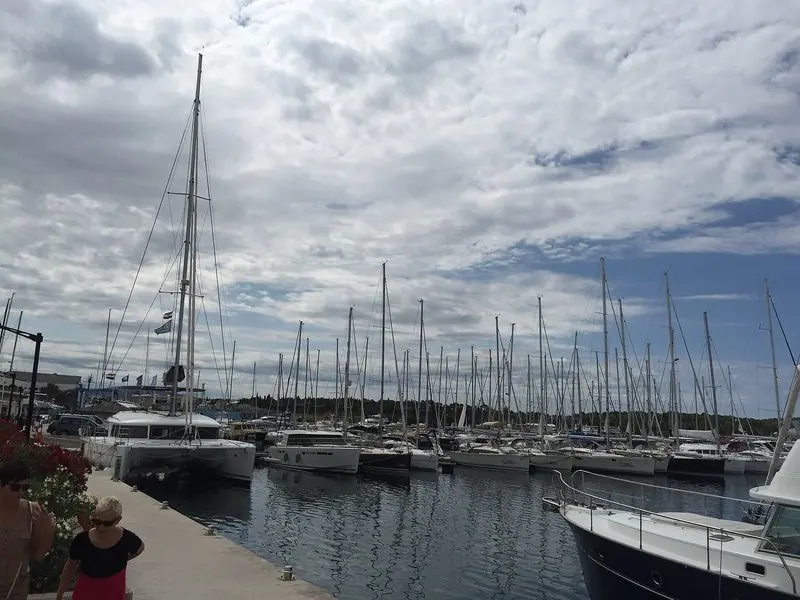
Two kilometres of limestone gorge separate this marina from the Adriatic, and that is exactly what an owner is paying for.
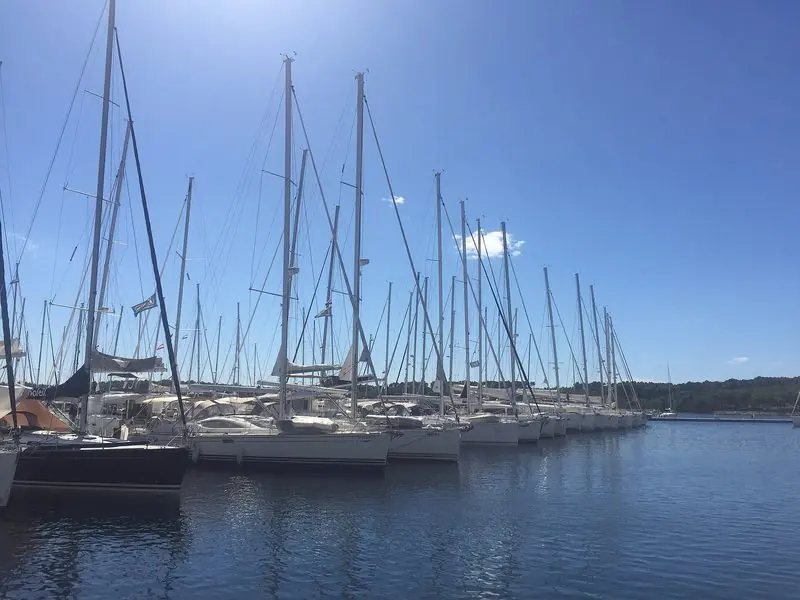
The berths and what they take
The marina publishes no air or draft restrictions, and its deep-water berths on the superyacht quay are the part of the facility that a 50 to 70 metre owner cares about. The standard pontoons handle the 15 to 70 metre range that makes up the bulk of the Adriatic fleet, and the largest positions are on the outer wall. Berthing is stern-to for most yachts and alongside for the biggest. A control tower manages movements and dock handlers are on duty around the clock.
Availability in Croatia is a summer problem and a winter opportunity. July and August are hard work anywhere on this coast, and Mandalina is the default choice for the large yachts that come, so the top berths are committed early. From October the picture inverts completely and the marina becomes a wintering base, partly because of the shelter and partly because of the yard next door. Annual contracts are the normal arrangement and carry benefits across the wider D-Marin network, including complimentary short stays at the group's other marinas.
The yard on the next plot
The marina runs its own boatyard with a 50-tonne travel lift, a 1.5-tonne crane, hull pressure washing and around thirty dry berths, which covers tenders, chase boats and small craft. The serious capability is next door, and it changed hands: what this page called NCP Refit Shipyard has been sold and now trades as Iskra Shipyard, part of the Iskra Group. It still runs a 900-tonne ship lift, and adds a 75-tonne travel lift and a 350 m berthing quay, with repair capacity to 80 m LOA and new-build supervision to 60 m.
For an owner that combination is unusual anywhere in the Mediterranean and unique in the Adriatic. A yacht can winter afloat on its berth, go up on the lift for antifouling and survey work, come back down and be ready for a May departure without a delivery passage. Iskra signed a contract in 2024 for a new 110 m, 4,000-tonne hybrid floating dock, well beyond the 1,500-tonne dock still quoted in older directories, including SuperyachtNews' own listing, which has not caught up with the new name. Croatian labour rates sit below Italian and French equivalents, which is a large part of why the yard fills. The marina's own rules forbid large-scale maintenance work on the berths, so anything beyond routine attention has to move to the yard.
Power, water and the running of the place
Power is supplied through smart pedestals with capacity matched to the yacht, and the marina makes a point of stable, non-fluctuating supply for large vessels, which is not a given on a Croatian island quay. Water runs 24 hours. Waste is collected and discharge into the water is prohibited outright. Fuel is available, and a chandlery, supermarket and yacht agencies operate inside the marina. The D-Resort Sibenik hotel sits on the marina grounds, which solves the question of where extra guests sleep.
Generator use is not permitted in the marina, so a yacht here runs on shore power and the pedestal has to be sized correctly before arrival. That is a detail worth checking early for a boat with a heavy hotel load and an owner in residence in August. Mooring assistance is provided and the dock handler service is continuous. Arrival is on VHF channel 17, with boat registration and the Croatian sailing permit needed at the gate.
Privacy, and Croatian paperwork
The marina is gated, fenced, covered by 24-hour security and CCTV, and set apart from the town on the Mandalina peninsula, so a yacht here is not on public display. Swimming, diving and fishing in the basin are prohibited, which keeps the water around the boats clear. Compared to lying stern-to on the town quay in Hvar or Split, the difference in exposure is stark. Guests arriving by car come in through a controlled entrance.
Croatia is in both the European Union and Schengen and uses the euro, which has simplified a great deal since 2013. A vignette, the Croatian sailing permit, is required and runs to the end of the calendar year. Owners intending to charter should look carefully at the rules before committing, because non-EU flagged yachts over 40 metres registered length need a charter licence to work in Croatian waters, and the country moved to mandatory electronic invoicing for charter from 1 January 2026. The private cruising position is straightforward and the commercial one is not.

Sibenik ashore and the cruising beyond
Sibenik is a Dalmatian city of about 34,000 built up a hillside around the Cathedral of St James, a UNESCO World Heritage site put up in stone without mortar or timber over a century of work. Three fortresses look down on the old town, and St Michael's has been converted into an open-air concert venue that runs a serious summer programme. There is no yachting scene and no visible money on display, which some owners consider the point. The waterfront restaurants are good and unpretentious.
The cruising is the reason to be here. Krka National Park and its waterfalls are up the river behind the marina, the Kornati archipelago of more than eighty islands is a short run out and north, and Hvar, Vis and Korcula are all within a day. Split airport is about 58 kilometres by road and Zadar about 84, both connected to the A1 motorway. Neither is a long-haul hub, so guests generally connect through Frankfurt, Munich, Vienna or Zagreb.
Season, weather and the honest downside
The Croatian season is short and intense, running roughly from mid-May to the end of September with a hard peak in the last three weeks of July and the first two of August. Outside that window the coast empties fast and by November the islands are shut. The Adriatic's defining wind is the bora, the cold northeasterly that falls off the mountains in violent gusts and is at its worst from autumn to spring, and the summer jugo brings the humid southeasterly weather with rain. Mandalina's position deep inside the bay means an owner reads about these winds instead of feeling them.
The downsides are real. Sibenik is a quiet provincial city with no international air link of its own and none of the restaurant or hotel depth of Split or Dubrovnik, so guests need a transfer. High summer on this coast is crowded to the point of unpleasantness in the famous harbours. And the five-mile channel run, magnificent though it is, adds close to an hour to every departure and return at six knots. Owners who want to slip lines and be at anchor in twenty minutes are in the wrong place.
What the operator actually publishes, and what it does not
The headline figures for Mandalina need correcting against the operator's own page. D-Marin states 452 berths for yachts up to 70 m and describes the marina as Croatia's only one designed for superyachts up to 60 m, checked 28 July 2026. It also gives its travel lift as 50 tonnes with 30 dry places. The 462 berths and 140 m maximum length overall that circulate in listings are not the operator's current numbers, and it is worth noting that 140 m is also the narrow end of the published width of the St Anthony Channel, which is exactly the kind of figure that migrates from one column of a specification sheet to another. A yacht above 70 m should have the berth confirmed in writing before committing to the passage up the channel.
Three numbers a captain needs are simply not published. There is no amperage on the pedestals, no depth alongside, and no price. The absence of the amperage is the sharpest of the three because the marina prohibits generator use, which turns the shore supply from a convenience into a go or no-go condition. A yacht that cannot draw its hotel load from the pedestal and cannot run its own set has nowhere to go. Croatia runs 50 Hz at 230 V and 400 V, in common with the rest of the continent, so the frequency is not the problem. The rating is. Ask for the amperage on the specific superyacht berth, ask whether the connection above a given rating is made by the marina or the crew, and get both in the booking confirmation.
The depth question, and the yard on the next plot
Depth is the other unresolved item. The operator's claim is that there are no air draft or draft restrictions and that the marina lies five nautical miles from open sea, which is a statement about the approach rather than a sounding at the berth. On a marina quoting 70 m capability that gap matters, because the binding constraint in a bay this far inside is almost always the water and not the length of the pontoon. The St Anthony Channel itself is over 2,000 m long and between 140 m and 220 m wide with a constant outflow of 0.5 to 1.5 knots, reaching 3 knots after heavy rain, and it is the current rather than the depth that a captain plans for on the way in.
On lifting, the split is clean and it is the reason the place works. The marina's own yard takes 50 tonnes, which covers tenders, chase boats and small craft and nothing else. Everything serious happens on the adjacent plot, now trading as Iskra Shipyard after a sale, which runs a 900-tonne ship lift, a 75-tonne travel lift and covered capability for yachts to 80 m, with a new 110 m, 4,000-tonne floating dock contracted in 2024. That is a genuine large-yacht capability within a walk of the berth, and it is unusual in the Adriatic. No day rate is published for either yard, checked 5 August 2026, and the general observation that Croatian labour sits below Italian and French rates is worth nothing to a budget without a figure attached.
Ashore, access and booking
| Getting there | Split Airport is about 57 km away, roughly 49 to 60 minutes' drive, with a private transfer priced around EUR 81 for up to three passengers. Zadar Airport is further, roughly 75 km depending on the route, about 50 minutes by taxi but with no direct bus connection, which favours Split for a guest without a car. |
|---|---|
| Arriving by sea | Work VHF channel 17. The St Anthony Channel entrance is marked by a lighthouse on Cape Jadrija to the north and the sixteenth-century St Nicholas Fortress, built to guard the channel from Ottoman naval attack, to the south. Keep to starboard through the channel, hold the 6-knot limit, and expect a current of 0.5 to 1.5 knots against you on the way in, reaching 3 knots after heavy rain. |
| Reserving a berth | D-Marin takes bookings directly ([email protected], +385 22 460 800, a two-business-day response by its own stated standard) and is also listed on third-party platforms including MarinaReservation.com, Seasy, Metarina and Direct Berth. No forum or broker account gave a specific figure for how far ahead a peak-season berth needs to be secured, so ask the marina directly for current lead times rather than assuming. |
| What a berth costs | No current D-Marin Mandalina rate card is published anywhere Yotters could reach, checked 5 August 2026. One Croatian pricing index states private marinas of this type generally charge 20 to 40 per cent above standard Croatian marina rates, but gives no Mandalina-specific figure. Get a written quote before budgeting a season. |
| The yard next door | Iskra Shipyard (Ship Refit Department, +385 22 312 971, [email protected]) runs the 900-tonne ship lift, a 75-tonne travel lift and a 350 m quay across 45,000 square metres of workshops, with repair capacity to 80 m LOA and new-build supervision to 60 m. No haul-out cost signal or booking lead time is published; ask the yard directly. |
| Eating within walking distance, and after dark | Pelegrini, a Michelin star in the 2025 Guide Croatia, sits by the Cathedral of St James in the old town. The on-quay marina bar and restaurant does handmade pizzas, praised by name in reviews. Sibenik itself is quiet after dark; the area's actual nightclub scene, at Hacienda in Vodice and Aurora in Primosten, is a drive away. |
| What is NOT published, and the fixed dates | No rate card, no haul-out cost signal from Iskra, and no independently confirmed maximum LOA: the operator says 70 m, Dockwalk says 90 m, and 140 m still circulates in older directories. D-Marin runs an annual superyacht showcase, Adriatic Wave Weekend, at Mandalina with a gala dinner at Fortress Barone, though a fixed 2026 date could not be confirmed. Sibenik hosts an International Children's Festival every June; confirm the exact dates directly with the festival organisers before planning around it, since sources checked disagreed on the edition number. |
What owners and crew report
Reviewers consistently praise the cleanliness of the facilities
Named Google reviewers describe "clean and spacey showers and rest room" and a supermarket open till 10pm, and call the marina "modern, super super good on service."
Noam R and A C, Google reviews via WanderlogBut shade and shower capacity draw genuine complaints for a marina this size
The same reviewer who praised the amenities also flagged that "it needs trees and shade, it very much sun exposed," and a second reviewer, while enjoying the quayside pizza bar, separately called it a "busy marina, clean facilities but few showers."
A C and Rory H, Google reviews via WanderlogWeaker, unverified reports describe slow management and berth-availability friction
Tripadvisor-indexed comments describe the marina as having gone into decline with unresponsive management and one visitor being told to look elsewhere for a berth. Yotters could not confirm the reviewers' identities or dates behind these comments, so they are reported here as a pattern worth asking the marina about directly, not as a settled fact.
Tripadvisor (reviewer identities not verifiable)D-Marin's own account of its customer satisfaction
D-Marin reports its own Net Promoter Score rising from 51 to 54 across its marina network and cites an iF Design Service Design Award. This is the operator's own account of its own service, not an independent measurement.
D-Marin, via Boat International
What is good, and what to watch
Strong points
- The only Croatian marina purpose-built for superyachtsMandalina has held Five Gold Anchors continuously since 2011, a rating no other Croatian marina carries at this level.
- A naturally sheltered, land-locked berthReaching the marina means five nautical miles up the St Anthony Channel, which multiple cruising sources describe as one of the most protected superyacht berths in the Adriatic.
- A serious haul-out yard genuinely next doorIskra Shipyard's 900-tonne ship lift and repair capacity to 80 m LOA sit a walk from the pontoon, so a winter refit does not mean a delivery passage.
- A Michelin-starred restaurant and the old town within ten minutesPelegrini holds a Michelin star in the 2025 Guide Croatia and sits by the Cathedral of St James in Sibenik's UNESCO-listed old town, a short walk from the berth.
- An on-site hotel and spaThe D-Resort Sibenik occupies the same plot, so guests and owners have a hotel to fall back on without leaving the marina.
What to watch
- No published rate card at allBudgeting a season here means calling the marina and waiting, by its own stated service standard, up to two business days for a quote.
- Public capacity figures genuinely disagreeD-Marin's own site states 452 berths to 70 m; Dockwalk states 90 m and 440 berths; other directories still circulate a 140 m maximum. A yacht above 70 m should get the specific berth confirmed in writing rather than relying on any of these.
- Shower capacity and shade are named, repeated complaintsMore than one named reviewer flags too few showers for the marina's size and a lack of tree cover on the pontoons.
- Weaker but recurring reports of slow managementUnverified Tripadvisor-indexed comments describe unresponsive staff and berth-availability friction; treat as a question to ask the marina directly rather than a settled fact, but do not ignore it.
- The yard next door has changed hands and the listings have not caught upWhat this page long called NCP Refit Shipyard is now Iskra Shipyard, and directories including SuperyachtNews' own still carry the old name and the old, smaller floating-dock figure. A booking made from a stale listing goes to the wrong contact.
Who it is for: The owner cruising the Adriatic who wants absolute shelter, a heavy-lift refit yard next door and a winter base that costs less than Italy.