Marina Ibiza
| Location | Paseo Juan Carlos I, Botafoch side of Port d'Eivissa, Ibiza, Balearic Islands |
|---|---|
| Operator | part of the IPM Group and IMG Marine Group |
| Berths | 425 |
| Max LOA | 110 m with up to 10.5 m draught on the outer berths, with the marina's own berths page quoting a fleet range of 8 to 95 m |
| Not to be confused with | Marina Botafoch, 428 berths to about 30 m at 3 to 4 m draught, and IGY Ibiza Marina on the Contramuelle, 27 berths from 20 to 150 m at 8.5 m draught |
| Approach hazard | the unlit Islotes Llado about 2 nm north-east of Isla Grossa, in the obscured sector of the Botafoc light |
| Season bands | low January to April and November to December, mid May, June, September and October, high July and August |
| Cost, 2026 industry guidance | around EUR 2,800 a day for yachts up to 60 m at the Ibiza high-season peak |
| Cost comparison, 2026 | Ibiza August rates roughly 6 to 9 per cent above Mallorca at the same length |
| Anchoring | posidonia protected under Balearic Decree 25/2018, partially annulled by the Balearic High Court on 21 April 2021 but with the anchoring ban intact, no length threshold, red and yellow chart zones closed, about 20 patrol boats enforcing |
| Certifications | Blue Star Marina five-star, Blue Flag, ISO 9001, 14001 and 45001 with EMAS |
| Airport | Ibiza about 7km from the harbour, 15 to 20 minutes by road |
| Shore power | 220 and 380 V, up to 400 A for the largest lengths, metered at the pontoon |
| Frequency | not published. Spain is on the 50 Hz grid and no 60 Hz supply is advertised |
| Electrical and water adapters are rented and sold at reception | |
| Berthside refuelling is available on jetties A, D and E only, out of a run from A to M | |
| Lifting on the island | Varadero Ibiza, in the same group, with a travel lift rated to 160 tonnes and 10 m of beam |
| Season bands as published by the marina: low January to April and October to December, mid May, June and September, high July and August | |
| Documents required on confirmation | ship's registration, insurance in force, owner or captain ID, captain's email and telephone, full crew list with ID for every name, and the marina's entry declaration form |
| Arrival | VHF channel 9, marinero on the berth, concierge meeting. Non-Schengen arrivals are directed to separate entry requirements rather than cleared at the marina office |
The approach and the traffic
Port d'Eivissa is entered past the Botafoc light, which stands on the islet at the end of the mole that gives the district its name. The approach is deep and unobstructed on the direct line from the south and east. Coming down from the north-east there is a genuine hazard, the unlit Islotes Llado about two miles north-east of Isla Grossa, which sit in the obscured sector of the Botafoc light and have caught out night arrivals.
The real navigational issue is congestion. The entrance to Ibiza town harbour is the busiest piece of water in the Balearics, with the Formentera fast ferries, the Barcelona, Denia, Valencia and Palma services, cruise calls, marina traffic and tenders all crossing in the same funnel. Ferry departures run to roughly two dozen a day in season. In a westerly or north-westerly the bay outside becomes uncomfortable and the approach should be taken with sea room to look at the swell and the traffic before committing.
What the marina holds, and what it is not
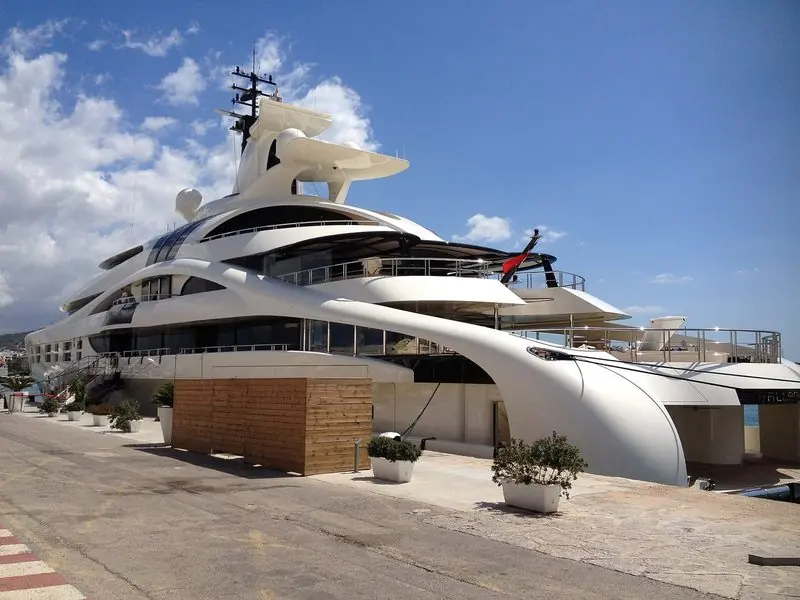
Marina Ibiza occupies the Paseo Juan Carlos I on the Botafoch side, below Talamanca and directly opposite the old town. Its headline figures are 425 berths taking yachts to 110 metres length overall with 10.5 metres of draught, which puts it among the more capable marinas in Spain. The marina's own berths page describes a fleet range of 8 to 95 metres, so the 110 metre figure applies to the outer positions and not to the marina generally.
Three names get confused in Ibiza and an owner should keep them apart. Marina Botafoch next door has 428 berths but tops out around 30 metres with only three to four metres of draught. IGY Ibiza Marina is a separate operation on the Contramuelle in the commercial port, with 27 superyacht berths taking 20 to 150 metres at 8.5 metres draught. Marina Ibiza is the one on the golden mile with the shops and the nightlife built into it.
Ibiza's real luxury used to be anchoring anywhere, and the posidonia rules have taken that away.

The berthing reality in season
Berthing is stern-to with dock assistance on arrival, and the marina splits its pontoons into two characters. Some are set away from the activity and are genuinely quiet. Others sit in the middle of the boutiques and restaurants, which is what a good number of guests want and a good number of owners do not.
Availability for large yachts in July and August is the constraint. Ibiza is a high-demand destination for the 50 to 60 metre bracket with a narrow inventory across the whole island, and market commentary for 2026 puts the island's August rates several percentage points above Mallorca at the same length for exactly that reason. An owner who wants a berth in the peak books it in the winter. Space in May, June, September and October is straightforward.
How a berth is obtained and how the year is banded
Berths are contracted directly with the marina on transient, seasonal and annual terms, and the tariff bands are published in advance. Low season is January to April plus November and December. Mid season is May, June, September and October. High season is July and August. The step between mid and high is the number that decides an owner's summer budget.
Confirmation is not given on a phone call. The marina requires the yacht's registration, its insurance policy, crew identity documents and an entry declaration submitted before arrival, which is worth knowing if the yacht has changed flag or insurer recently. Berths here are not sold as concessions in the way Antibes or Ventimiglia positions are, so an owner is a tenant on a renewable contract.
What it costs and what it is priced on
Pricing is by length and by season band, with position on the pontoon a secondary factor. Ibiza sits in the upper tier of the Mediterranean without reaching Porto Cervo or Monaco levels. Industry guidance for 2026 describes a rate of around EUR 2,800 a day for yachts up to 60 metres at the high-season peak in the Ibiza market, and puts the island's August pricing roughly 6 to 9 per cent above Mallorca for the same length.
Those figures are indicative and dated to 2026, and the berth is the smallest line in an Ibiza week. Table minimums at the beach clubs and the venues that the marina sits inside will run well past the cost of the berth, and provisioning on an island that imports almost everything is priced accordingly. Fuel is taken berthside at Spanish duty-paid rates for a privately used yacht.
Power, fuel, waste and who runs the place
The marina is part of the IPM Group and the IMG Marine Group, which runs a portfolio of Mediterranean marinas. On site there is a fuel station with berthside fuelling for superyachts, black and grey water pumping, a maintenance team, a guest shuttle and 24 hour security and concierge. Water and power are run to the pontoons and metered.
The marina carries Blue Star Marina five-star certification, a Blue Flag, and ISO 9001, 14001 and 45001 with EMAS registration, which for an owner mostly means the waste and environmental procedures are audited and enforced. What Ibiza does not have is heavy technical capability. Anything beyond routine attention goes to Palma, which is a comfortable overnight passage or a few hours in a fast boat.
Where anchoring is and is not allowed
This is the fact that changes how a yacht uses the Balearics. Posidonia oceanica seagrass is protected across the islands under Decree 25/2018, and dropping an anchor on it is forbidden. The rule keys on the seabed, not the boat: unlike the French 24 metre threshold there is no length or tonnage limit, so it binds a tender as much as a 60 metre. Note that the Balearic High Court partially annulled the decree on 21 April 2021, striking out among other things the clause that extended the ban to chain sweeping adjacent meadow, so the surviving prohibition is on the anchor itself. Official charts mark red zones covering existing meadows and yellow zones where the grass is regenerating, and both are closed to anchoring. The rule catches the exact sandy-looking patches around Ibiza and Formentera that yachts have used for decades.
Enforcement is real and getting harder. The Balearic posidonia surveillance service runs a fleet of around twenty patrol boats across Mallorca, Menorca, Ibiza and Formentera and has carried out well over a hundred thousand inspections, with violations reported at 6.4 per cent of vessels checked. Fines run under the state biodiversity law rather than the decree itself, which lost its own penalty bridge in the 2021 judgment: a serious infringement carries EUR 3,001 to EUR 200,000 under Ley 42/2007 article 81, and inside a protected area the Balearic LECO scale reaches EUR 450,000. The EUR 300,000 figure that circulates in the yachting press appears in neither statute. Offending yachts are named publicly on social media and the worst cases carry criminal exposure. In regulated areas outside port limits a buoy service operates from 1 June to 30 September and is chargeable.

Ashore, the airport and a family week
Ibiza airport sits about seven kilometres from the harbour, fifteen to twenty minutes by road, with jet handling and dense European connections through the summer. Dalt Vila, the UNESCO-listed walled town, is a short tender ride or a ten-minute drive, and the island's beach clubs, restaurants and venues are within half an hour by car. Formentera is a short cruise south and gives a family the clearest water in the Mediterranean.
Beyond the nightlife the island gives a family the calas of the north coast, an hour or so by yacht from the harbour, and a set of good hotels and restaurants inland that have nothing to do with the club scene. Mallorca is a comfortable passage east for anyone who wants a change of island. What Ibiza does not offer is much to do in bad weather, and it is small enough that a fortnight ashore runs out of ideas before it runs out of days.
The honest downside
The marina sits inside a nightlife district and the noise carries to the berths through the season. Ferry and fast-craft wash works through the harbour all day and the boats move on their lines. August pricing is aggressive and the island's inventory in the 50 to 60 metre bracket is genuinely thin, so a late decision means an anchorage. There is no heavy technical capability on the island, and anything past routine attention means a run to Palma.
The larger change is that anchoring freedom, which used to be Ibiza's real luxury, has been constrained. Owners should also take advice on the Spanish matriculation tax before basing a yacht here, since Spain levies a charge of 12 per cent and the exemption for exclusive charter use has historically been limited to yachts under 15 metres, with a reform to drop that threshold proposed and not yet settled. Whether a foreign-flagged yacht becomes liable turns on residency and on where the boat is based, so it is a question for a Spanish maritime lawyer before the season starts.
Shore power, fuel and what can be lifted
The marina publishes its electrical supply as 220 and 380 V, up to 400 A for the largest lengths, run to every pontoon and metered. That 400 A ceiling is the figure to check a boat against, because it is a long way below the 1,000 A published at Barcelona, Tivat and Yas, and a yacht at the top of the length range here has less shore capacity to work with than she would find in those ports. Frequency is not published anywhere in the marina's material. Spain is on the 50 Hz grid and no 60 Hz supply is advertised, so a 60 Hz yacht converts on board. The marina also rents and sells electrical and water adapters at reception, which is a plain admission that connections on the pontoon do not always match what a visiting yacht carries.
Fuel is delivered at the berth rather than at a station, but only on three of the pontoons. The marina's own facilities plan marks jetties A, D and E as the ones with berthside refuelling, out of a run that goes from A to M, so the jetty a yacht is allocated determines whether fuelling means a movement. Black water and bilge suction are handled at the berth. For lifting, the group runs Varadero Ibiza in the same port, with a travel lift rated at 160 tonnes and 10 m of beam, which the operator describes as one of the most significant in the Balearics. That covers a good deal more than routine attention, but it does not cover the top of this fleet, and anything beyond it still goes to Palma.
The paperwork the marina wants before arrival
Ibiza front-loads its formalities, which is a courtesy worth using. Once a berth is confirmed the marina asks for the documents in advance rather than at the desk: the ship's registration document, the certificate of insurance in force, an identity document for the owner, captain or skipper, the captain's email address and telephone number, a full crew list with an identity document for every name on it, and the entry declaration form the marina attaches to the confirmation. Check-in on arrival then reduces to signing the declaration, which for a yacht arriving at the end of a long day in August is the difference between twenty minutes and two hours.
A yacht coming from outside the Schengen area is a separate matter. The marina points those arrivals to the entry requirements for the vessel and for the crew rather than clearing them at the marina office, so that step has to be planned before the passage and not on arrival at the pontoon. Everything else is straightforward. The marina works VHF channel 9 on approach and will say where the berth is, a marinero is waiting on the berth to take lines and assist the manoeuvre, and the concierge meets the boat.
Ashore, access and booking
| Berth cost, large yacht, high season | No public tariff is posted for Marina Ibiza itself. Hype Luxury Blog (2026) puts peak-season Ibiza berthing broadly at EUR 3,000 to EUR 10,000 per night for a 50m yacht; a dated 2012 YBW Forum owner report put a four-night June stay for an 85 ft (approx. 26m) yacht at EUR 2,500, about EUR 625 per night, with the poster estimating August rates roughly double. Treat both as indicative only and confirm current pricing directly with the marina. |
|---|---|
| How to reserve | Phone +34 971 318 040 or email [email protected], or use the quote/booking form on the marina's own website; hail VHF channel 9 on arrival. SeeIbiza's marina guide advises booking as far ahead as possible for July and August, since availability tightens months in advance in high season. |
| Walk-to restaurants | Lio Ibiza (dinner-and-cabaret restaurant) and Zuma (Japanese, Paseo Juan Carlos I) sit directly on the marina promenade; Chinois Ibiza and Socialista Ibiza (late-night dining and dance venues) are a short walk along the same waterfront, per Ibiza Spotlight's marina guide. |
| Nearby transport and services | On-site ATM, car rental desk, fuel station and boutiques. Ibiza airport is roughly a 15 to 20 minute taxi ride. Dalt Vila old town and central Ibiza Town are a walk around the harbour or a short water-taxi hop across it. |
| Check before booking | Confirm which operator you are actually booking with, since Marina Ibiza and the adjoining Botafoch marina are separate facilities despite sharing the same waterfront, and ask for a berth away from Lio's weekend crowd if quiet nights matter, per a YBW Forum owner's report of noise on specific pontoons. |
What owners and crew report
Bills can roughly double between June and August for the same berth
A boat owner posting as Lozzer reported paying about EUR 2,500 for four nights on an 85 ft (Princess 85) motor yacht in Marina Ibiza in June, and estimated that the same berth would run roughly double that in August. Figure is from a 2012 thread, so treat it as directional, not current pricing.
Lozzer, YBW ForumAsk which pontoon you are assigned before confirming
The same owner warned that certain berths within the marina catch weekend nightclub and quayside noise more than others, and advised asking to avoid those specific pontoons when booking if a quiet night matters.
Lozzer, YBW ForumHistoric Botafoch nightly rate and a warning on dodging fees by anchoring
A separate owner on the same forum thread reported paying about EUR 375 a night for a 15m berth at the neighboring Botafoch marina in July/August (2009 post, so a dated figure), noted the on-site Club Nautico as a cheaper but run-down alternative, and warned that anchoring inside the Ibiza Town breakwater to avoid marina fees draws fines from the port authority.
YBW Forum, owner post, 2009 thread
What is good, and what to watch
Strong points
- Largest superyacht capacity of the Ibiza Town marinasMarina Ibiza takes yachts up to 110m LOA across 425 berths, well beyond the neighboring Ibiza Magna (85 berths, 60m cap) and Botafoch (about 428 berths, 30m cap). If a vessel is genuinely large, this is one of the few Ibiza Town berths that can physically take it.
- Berthside fueling and waste pump-out, not just dockageThe marina's own service list includes black/grey water pumping and berthside fueling for superyachts, services that spare a large yacht from having to unberth and queue at a fuel dock, which many marinas its size still require.
- Formal environmental certification stack, not just a marketing claimThe operator holds Blue Star Marina 5-star status plus ISO 9001, ISO 14001, ISO 45001 and EMAS registration, and runs a stated Posidonia-meadow preservation program. These are third-party-audited schemes rather than pure copywriting, though the specific claims are drawn from the marina's own website.
What to watch
- No published tariff anywhereThe marina's own berths page lists only season bands (low: Jan-Apr, Nov-Dec; mid: May-Jun, Sep-Oct; high: Jul-Aug) with no actual euro figures; a quote requires phoning or emailing first, which makes it hard to budget or compare against other Med marinas before making contact.
- Weekend nightlife noise on specific berthsAn owner who actually berthed an 85 ft yacht there reported that certain pontoons pick up weekend club noise from the on-site nightlife venues, and recommended requesting a different berth if that matters to the owner or guests.
- Two co-located but separately run marinas cause confusionMarina Ibiza and the adjoining Botafoch marina sit on the same stretch of waterfront, divided only by a small jetty, but are separate facilities with separate entrances, contacts and (per forum reports) separate pricing. Arriving crews have to be sure which operator they actually booked with.
Who it is for: An owner whose summer is the Balearics and who wants the boat inside the island's social life, not anchored off it.