Marina Port Vell (Barcelona)
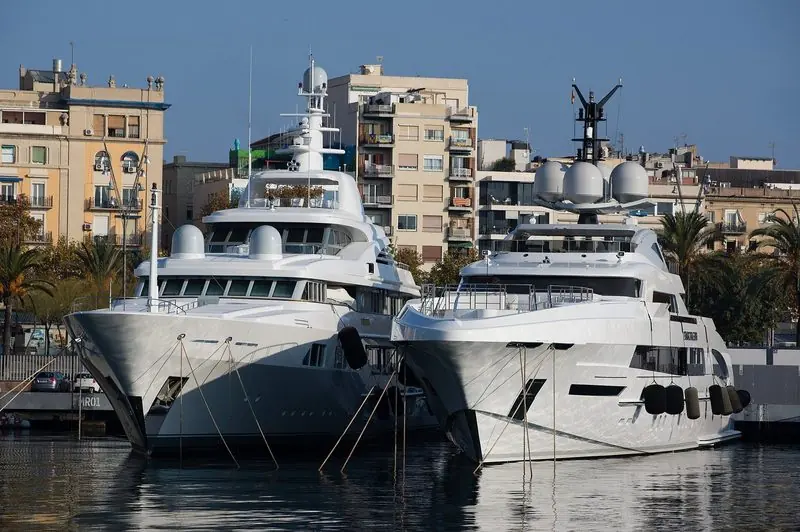
| Location | Moll de la Barceloneta 1, Port Vell, Barcelona, Spain, VHF channel 68 |
|---|---|
| Current branding | Marina Port Vell Barcelona, formerly traded as OneOcean Port Vell |
| Berths | 73 in total, of which 60 are superyacht positions |
| Max LOA | 190 m, on Espana's Dock alongside with ground lines |
| Dock ranges | Espana's 40-190 m, Pescadore's 30-80 m, Barceloneta's 25-80 m, Reloj's 55-75 m, Sota Muralla's 12-50 m, Deposit's 5-18 m |
| Shore power | up to 1,000 amps at 380 to 400 volts, single and three-phase |
| Depths | not published by the marina, so draught should be confirmed in writing |
| Security | ISPS compliant, 24 hour staffing, over 50 CCTV cameras with thermal imaging, three guarded entrances |
| Connectivity | fibre optic internet to every yacht |
| Certification | ISO 14001 and EMAS, with annual quality and environmental audits since 2010 |
| On site | fuel station and bunkering, MARPOL hazardous waste collection, no shipyard |
| Events hosted | MYBA Charter Show, The Superyacht Show, Barcelona International Boat Show, and a preferred superyacht marina for the 37th America's Cup |
| The marina now publishes a maximum draught of 10 m alongside, with 73 berths, a 190 m maximum LOA and a 400 m principal dock length | |
| Shore power is now published at up to 1,600 A, up from the 1,000 A previously quoted | |
| Frequency is not published. Spain runs at 50 Hz and no 60 Hz supply is advertised | |
| Fuel is delivered at the berth through an integrated pipeline system rather than at a fuel station | |
| A seventh dock, T Dock, now appears on the marina map alongside Barceloneta, Espana, Reloj, Pescadores, Deposito and Sota Muralla | |
| A long-term berth lease is now offered, with a choice of lease durations and authorised subletting when the berth is not in use. No price is published and there is no resale market | |
| The marina holds Inward Proceeding status under an RPA permit, which it describes as giving non-EU yachts a financial advantage on maintenance and repair work in the Mediterranean | |
A superyacht harbour inside a city
The marina occupies the inner basin of Barcelona's old harbour at Moll de la Barceloneta, works VHF channel 68 and operates around the clock. Port Vell as a whole was rebuilt out of derelict warehouses and rail yards for the 1992 Olympic Games and is now one of the most visited places in Spain, drawing something in the order of sixteen million people a year to its promenades, aquarium and shopping centre.
The superyacht marina is the enclosed part of that, and it was converted again from a general harbour into a facility built specifically for large yachts. It traded for years as OneOcean Port Vell and the name is still attached to it in the trade. The current branding is Marina Port Vell Barcelona, and an owner or a captain looking up the old domain will find it has lapsed to an unrelated site, which is worth knowing before anyone sends paperwork to an address found by search.
The docks, and the numbers the marina now publishes
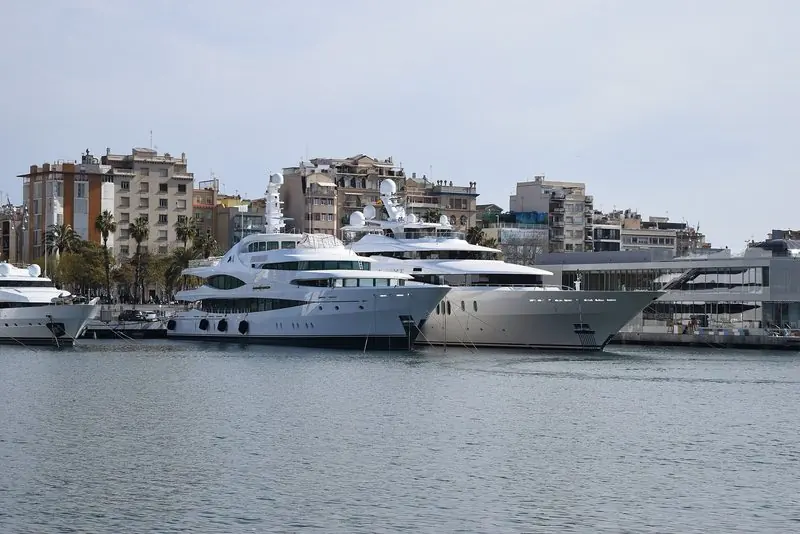
The marina publishes its berth specifications dock by dock, which is more transparency than most of its peers offer. Espana's Dock is the big wall, taking 40 to 190 m alongside on ground lines with power from 32 to 1,000 A at 380 V. Barceloneta's, Reloj's and Pescadore's Docks take 25 to 80, 55 to 75 and 30 to 80 m respectively, all stern-to on ground lines with 63 to 630 A at 400 V. Below that, Sota Muralla's Dock runs 12 to 50 m stern-to at 32 to 250 A and the Deposit's Dock covers 5 to 18 m craft. A seventh, T Dock, now appears on the marina's own map. Sewage collection and nearby storage are provided at every dock.
The two figures that were missing for years are now published. The marina states 73 berths taking yachts to 190 m LOA at 10 m of draught, on a principal dock length of 400 m, and it states shore power available up to 1,600 A, which is a step up from the 1,000 A it previously quoted and puts Barcelona at the top of the European supply range. What is still not published is frequency. Spain runs at 50 Hz and no 60 Hz supply is advertised, so a 60 Hz yacht converts on board. Fuel is delivered at the berth through an integrated pipeline rather than at a station, which for a marina inside a city centre saves a movement.
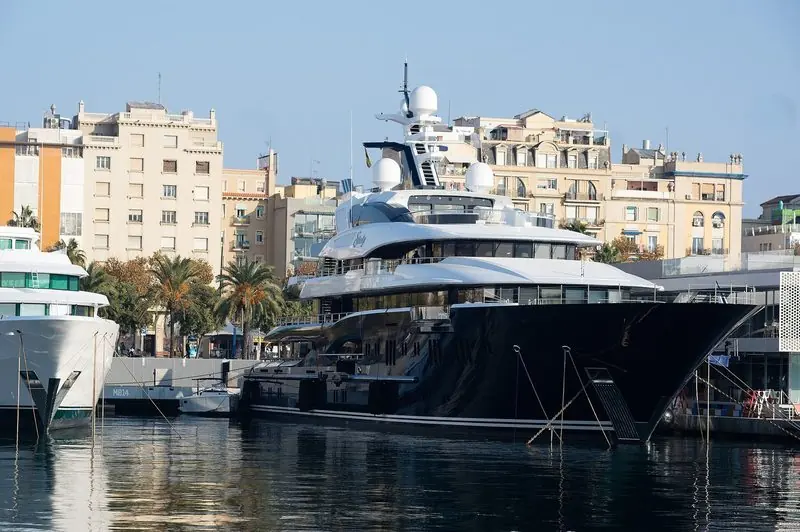
Sixty superyacht berths inside a city that has no off-season.
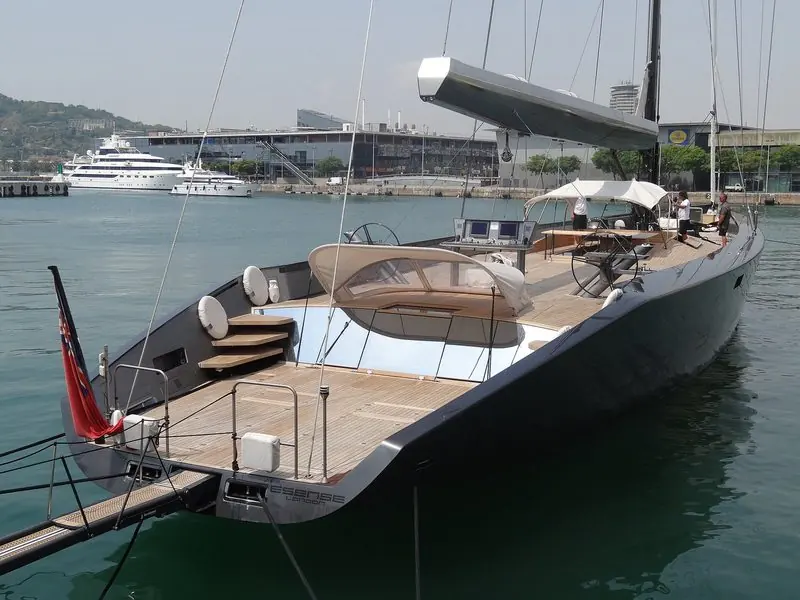
The berthing reality
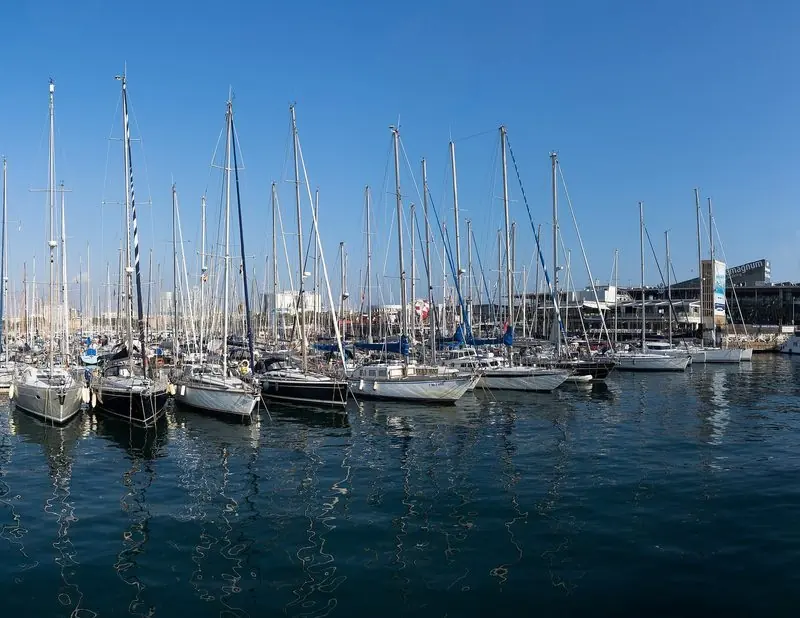
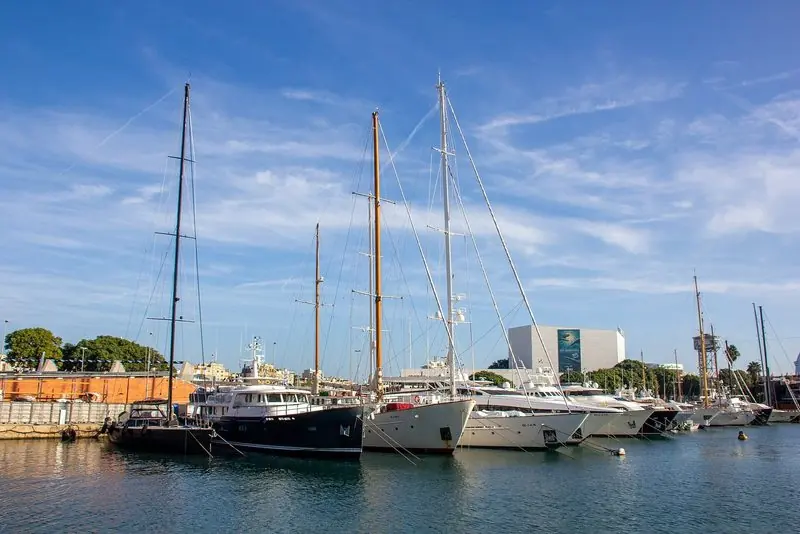
The marina is small in berth count and large in capability. It quotes 73 berths in total, of which 60 are superyacht positions, and takes vessels to 190 metres. That makes it one of a very short list of harbours anywhere that can put a yacht of that size against a wall in the middle of a major European city.
Because the count is small, availability is genuinely constrained in summer and around the show weeks. The compensating factor is that Barcelona works all year. Many yachts use it as a winter berth or a long-stay base while the owner is in the city, so the turnover pattern is unlike a resort marina where everything empties in October. Both alongside and stern-to positions are offered on short and long-term terms.
How a berth is obtained, and the lease that now exists
Berths are contracted directly with the marina, with short and long stays both available, and there is now a long-term lease alongside them. The marina describes a choice of lease durations, guaranteed access independent of seasonal availability, and authorised subletting when the berth is not in use, which moves Barcelona closer to the Antibes model than it has been. It stops short in the one respect that matters to a buyer. No price is published, and there is no resale market to read a comparable from, so an owner negotiating a lease here is negotiating without a benchmark. Enquiries go through reception in Barceloneta, and the marina runs a multilingual team that handles the arrival formalities of a commercial port.
Pricing for a straight berth is by length and by season and the marina publishes no tariff for that either. Barcelona sits in the upper tier of Mediterranean pricing without reaching Porto Cervo in August, and the winter rate is one of the better values in the western basin for a yacht that wants to stay in commission. The whole package is what needs pricing, because 1,600 A of shore power over a long alongside stay adds up in a way a two-night call does not. One item does not appear on the berthing invoice at all. The marina holds Inward Proceeding status under an RPA permit, which it describes as a financial advantage for non-EU yachts undergoing maintenance and repair in the Mediterranean, and it is a large part of why the marina positions itself as a homeport rather than a stop.
Power, water, fuel, waste and connectivity
Shore power runs to 1,000 amps at 400 volts, single and three-phase, with multiple sockets at the pedestal. Potable water is piped to every berth. There is a fuel station and bunkering on site, which for a marina inside a city centre is unusual and saves a movement. Hazardous waste is collected to MARPOL standards and there are recycling facilities.
Fibre optic internet is run to every yacht, which is the practical reason a number of owners work from the boat here for weeks. The marina holds ISO 14001 and EMAS certification and has been through annual quality and environmental audits since 2010. Two Seabin units skim floating debris from the basin, each rated to collect up to a tonne of rubbish a year.
Security and how exposed the yacht is
Security is the strongest part of the offer and it is genuinely industrial. The marina is ISPS compliant, staffed 24 hours, with more than fifty CCTV cameras including thermal imaging, three guarded entrances and a dedicated operations room. Getting onto these docks without an appointment is not straightforward.
Beyond the fence line the picture reverses. Port Vell is one of the busiest public spaces in the city, the Rambla de Mar walkway carries a constant crowd, and the yachts are visible from the promenade and from every restaurant terrace along the waterfront. Barcelona also has a well-known street-crime problem, and crew and guests moving between the marina and the old town at night are in a normal big-city environment. The boat is safe. The people walking off it are in a city.
The city, the airport and a family week
This is the section where Port Vell wins. Guests step off the passerelle into a major European capital, with the Gothic Quarter, the Picasso museum, the Gaudi buildings and a restaurant scene of real depth all within a short walk or ride. Barceloneta beach is behind the marina. For a family with older children or guests who do not want to be at sea every day, no marina in this guide comes close.
Barcelona El Prat is a short motorway run, usually twenty to thirty minutes, with long-haul connections and full jet handling, which makes crew rotations and guest arrivals easier here than almost anywhere. The Balearics lie a comfortable overnight passage east. The Costa Brava is a few hours up the coast. The marina hosts the MYBA Charter Show, The Superyacht Show and the Barcelona International Boat Show, and it served as a preferred superyacht marina for the 37th America's Cup.
The season and the year
The cruising pattern is the western Mediterranean one, building through May and June, peaking in the summer and easing in September. What separates Barcelona is that the shoulders and the winter remain useful. The city has no off-season, the marina stays staffed and busy, and an owner can join the yacht in February and have a real week.
The show calendar concentrates demand into specific weeks in spring and autumn, and those are the times to book early. Catalan trades and the yards along the coast handle work through the winter. A yacht can sit in commission here for six months and be used, which is a different proposition from a berth at a resort that closes.
The honest downside
There is no yard on the site. Anything involving a lift or a serious refit means moving the yacht, most often to Palma or to the yards along the Catalan and French coasts, so an owner who wants his home port and his shipyard in the same place should look at Palma instead. The berth count is small enough that a late decision in summer is likely to be refused.
The setting cuts both ways. This is a commercial and cruise port with the traffic, wash and background noise that implies, and the marina sits in the middle of a tourist quarter that never goes quiet. Spanish tax is the other item to settle before basing a yacht here, since Spain levies a matriculation charge of 12 per cent and the exemption for exclusive charter use has historically been limited to yachts under 15 metres, with a reform to remove that threshold proposed and unresolved. Take Spanish advice before the boat takes a Catalan berth for a season.
Ashore, access and booking
| Nightly/weekly berth cost for a large yacht | Not publicly published anywhere. Every channel checked (marinaportvell.com, MarinaReservation.com, YACHTZOO, Direct Berth) lists pricing as price on request - you must contact the marina directly for a quote tied to your yacht's length, beam and dates. |
|---|---|
| How to reserve | Three-step online form at marinaportvell.com (yacht type/LOA/beam, contact details, arrival and departure dates), or direct contact: phone +34 93 484 23 00, reception email [email protected], or the sales desk for longer-term/lease inquiries. |
| Walking-distance dining | On-site: OneOcean Club restaurant overlooking the pontoons. A short walk into Barceloneta along Passeig Joan de Borbo: Kaiku (seafood small plates, marina views) and Can Sole (est. 1903, classic Barceloneta rice and seafood house). Also cited near the quay: La Gavina and Merendero de la Mari, both seafood terraces overlooking the marina. |
| Transport and services nearby | Barceloneta metro station (L4) is within walking distance of the marina; Dockwalk's marina profile puts Barcelona-El Prat Airport at roughly a 25-minute taxi ride. The Rambla del Mar footbridge connects directly to the bottom of Las Ramblas and the Gothic Quarter on foot. |
| Check before booking | Confirm current pricing directly with the marina in writing before committing, since no operator publishes a rate card. Also worth asking about privacy and screening options for the berth, since the public waterfront promenade runs directly alongside the quay year-round with no separation beyond the gated pontoon entrances. |
What owners and crew report
Captains rate the security highly
Captain John Penman of the 49m Amels Volpini said the marina gave him a competitive berth rate for long-term visits and that the security is one of the best he has experienced in the Mediterranean, adding that the crew gym is popular.
John Penman, quoted by The IslanderCrew do not want to leave
Captain Guy Hayward of the 48m Royal Huisman sailing yacht Wisp stayed two weeks and said if circumstances allowed it would have been longer, praising the facilities, helpful staff, central location, and that the crew love it there.
Guy Hayward, quoted by The IslanderFirst choice for a Med winter berth among some captains
Captain Daan de Witt of M/Y Haida 1929 said that if he's wintering in the Mediterranean, he picks this marina over other options.
DockwalkCrew describe an active organized winter social calendar
Chief Stewardess Kelly Harrison of M/Y New Hampshire said the marina organizes events for the crews based there, including trips and beer-and-wine nights through the winter, plus a crew lounge, good internet, a gym, and a spa.
DockwalkA captain's plain-language safety read on the location
Captain Gary Morton of M/Y Aubrey described it simply as a very safe port, with restaurants in and around the port.
DockwalkThe city-centre setting itself is the draw for some captains
Captain Jamie Whitehead of the 50m Septimus compared berthing there to a big house in what is without a doubt the best city on the Mediterranean coast.
Jamie Whitehead, quoted via SuperyachtNews.com and Forbes reporting
What is good, and what to watch
Strong points
- One of the longest dedicated superyacht quays in the worldA single continuous 440m quay with a consistent depth of around 10m, independently reported by Forbes and repeated across berth brokers (YACHTZOO, Direct Berth) - unusual for a marina embedded inside a city rather than on an open coastline.
- Layered physical security that captains themselves single outThree guarded, controlled entrances and more than 50 CCTV cameras with thermal imaging cover the pontoons; Captain John Penman independently called the security one of the best he has experienced in the Mediterranean.
- A genuine crew community, not just a parking spotMultiple crew (Dockwalk interviews with Kelly Harrison, Daan de Witt) describe an organized winter social program - group trips, wine nights, a staffed crew lounge, gym and spa - which is why some captains choose it specifically for overwintering rather than just transiting through.
What to watch
- Barcelona's citywide pickpocketing problem sits right outside the gateBarcelona is widely described by safety guides as a European hotspot for petty theft, and Barceloneta's beachfront promenade specifically is flagged as a grab-and-run risk for phone and wallet snatches, especially at night. This is a city-level risk for crew and guests moving between the marina and the neighbourhood, separate from the marina's own on-site security.
- No real privacy from the public promenadeThe waterfront walkway alongside the marina, including the Rambla del Mar footbridge to Las Ramblas, is free and open to the public year-round - only the pontoons and the OneOcean Club building are restricted. Tourists and photographers routinely walk right along the quay at close range to the yachts, which is the tradeoff for the city-centre setting captains otherwise praise.
- Berth pricing is never published anywhereEvery booking channel checked - the marina's own site, MarinaReservation.com, YACHTZOO, Direct Berth - lists berths as price on request with no rate card. That makes it harder to budget or compare against other Mediterranean marinas without going through a direct sales inquiry first.
Who it is for: An owner who spends real time aboard and wants a capital city, an international airport and a berth for a 100 metre yacht in the same place.