Ocean Village Marina (Gibraltar)
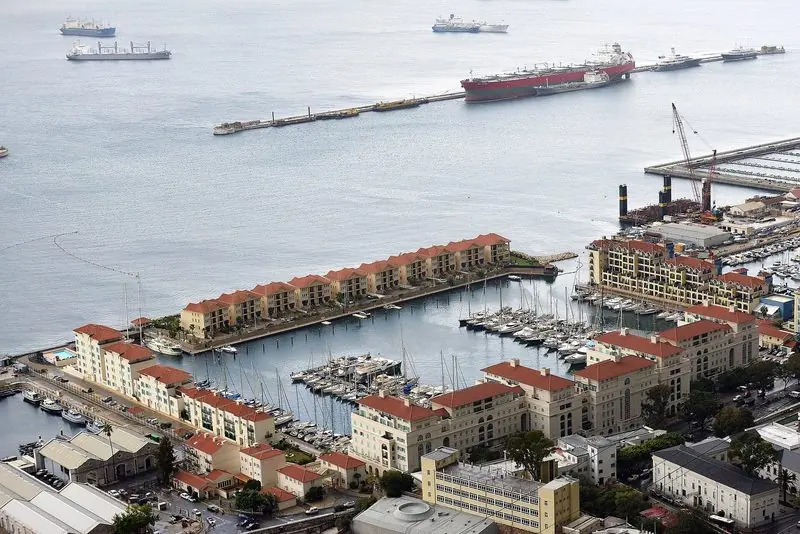
| Location | Gibraltar, on the west side of the Rock, at 36 08.5 N, 5 22.5 W |
|---|---|
| Berths | 95 at Ocean Village, with a further 209 at the adjoining Marina Bay under the same pier office |
| Maximum length | 90 m as published by the Gibraltar Port Authority |
| Depth | 4.5 m, which is the binding constraint for a deep-draft yacht |
| Superyacht berths | upgraded berths on the perimeter of the development designed for yachts to 80 m |
| Port control | VHF channel 71, with clearance of arriving vessels handled by the marina itself since the separate reporting berth closed in 2005 |
| Berth services | 24-hour security with coded gate access, three-phase power, satellite TV, wifi, laundry collection and concierge |
| Fuel | Gibraltar is the largest bunkering port in the Mediterranean, with around 60,000 vessels transiting the Strait each year |
| Tax | bunker fuel and ship supplies are exempt from both Gibraltar's new transaction tax and excise duty |
| New tax regime | a transaction tax of 15 per cent replaced import duty on 10 April 2026, rising annually towards the lowest EU VAT rate |
| Treaty | the UK-EU agreement on Gibraltar was signed on 14 July 2026 and applies provisionally from 15 July 2026 |
| Ship repair | Gibdock, with three dry docks from 154 m to 272 m and a kilometre of deep-water wharfage |
| The operator publishes no berth rate of any kind. Ocean Village and Marina Bay describe 250-plus berths between them and carry no tariff, checked 28 July 2026 | |
| Shore power is described only as three-phase, with no amperage published, checked 28 July 2026. Gibraltar runs the British standard of 240 V single phase and 415 V three phase at 50 Hz | |
| The depth question is unresolved by the operator. The Gibraltar Port Authority publishes 90 m maximum length and 4.5 m depth, and the marina separately markets upgraded perimeter berths for yachts to 80 m without stating whether those berths were dredged deeper | |
| 4.5 m alongside is the binding constraint until the operator says otherwise. Most 80 m motor yachts draw more than that | |
| No per-tonne bunker differential against Palma, Barcelona or Las Palmas is published by anyone, checked 28 July 2026. The saving is real and its size has to come from a firm quote on the day | |
| There is no travel lift at Ocean Village. Gibdock is a commercial ship repair yard with dry docks from 154 m to 272 m, not a yacht hoist, so a routine haul-out means leaving Gibraltar | |
| Marina reception works VHF channel 71 and is reached on +350 200 73300 | |
The stop everybody makes
Around 60,000 vessels transit the Strait of Gibraltar every year and a very large number of them stop, which is why the Rock became the largest bunkering port in the Mediterranean. For yachts the logic is identical. A boat leaving the Mediterranean for the Caribbean, or coming the other way in the spring, passes within sight of Gibraltar and can take on fuel, stores and crew without deviating.
Ocean Village sits on the west side of the Rock, facing the bay towards Algeciras, and was built as a marina village with apartments, restaurants, a casino and a Marina Club around the water. The Gibraltar Port Authority lists it at 95 berths, with the adjoining Marina Bay at 209, both under the same pier office and both quoting a maximum length of 90 metres. Queensway Quay, the third private marina, adds 156 more. Between them they can absorb a large arrival at short notice.
The approach, and the two winds
The approach into the Bay of Gibraltar is deep, wide and commercial, with anchorages full of ships waiting for bunkers. There is no bar and no channel. Tidal range is about a metre, which is negligible by Atlantic standards, and the marina holds 4.5 metres alongside. That depth figure is the real ceiling on this place, because a 90 metre yacht drawing more than four and a half metres cannot use a 90 metre berth.
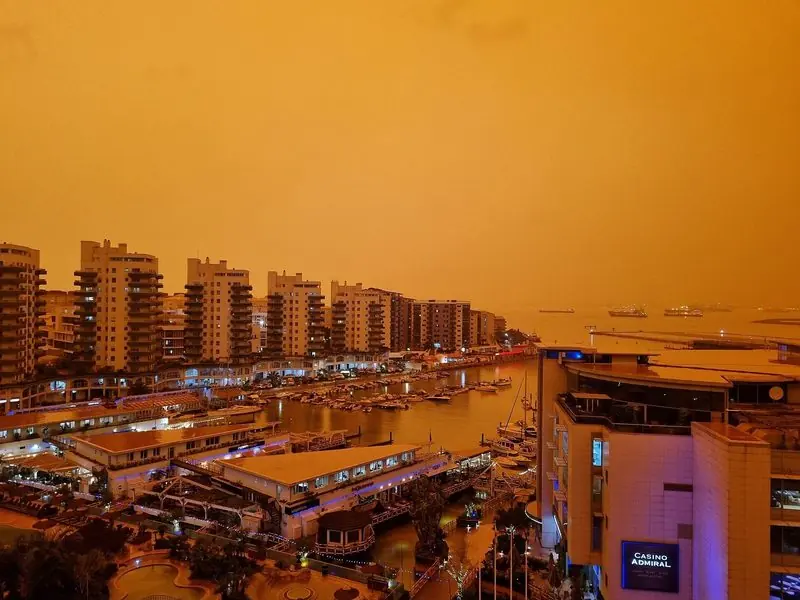
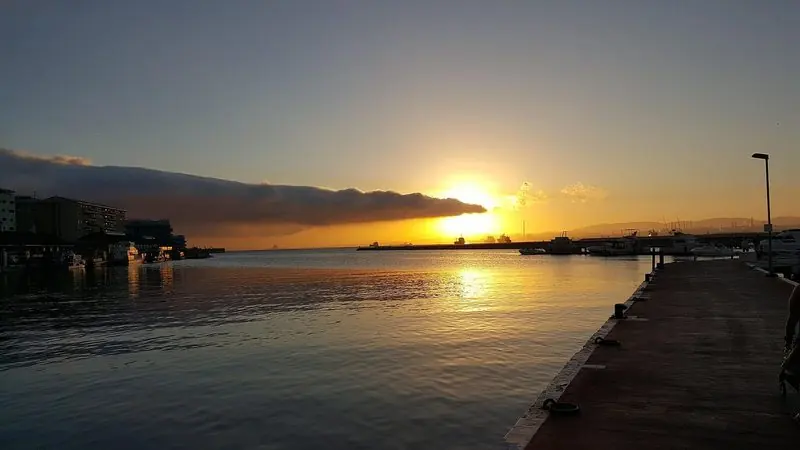
Two winds define the local weather. The levanter is the easterly that funnels through the Strait and hangs a plume of cloud over the Rock, bringing damp grey conditions and a sharp increase in wind acceleration off the cliff. The poniente is the westerly, which is usually clearer. Neither troubles a yacht inside the marina, and both matter enormously to anyone timing a passage through the Strait, where the surface current sets east into the Mediterranean at a rate that can defeat a slow displacement hull against a foul tide.
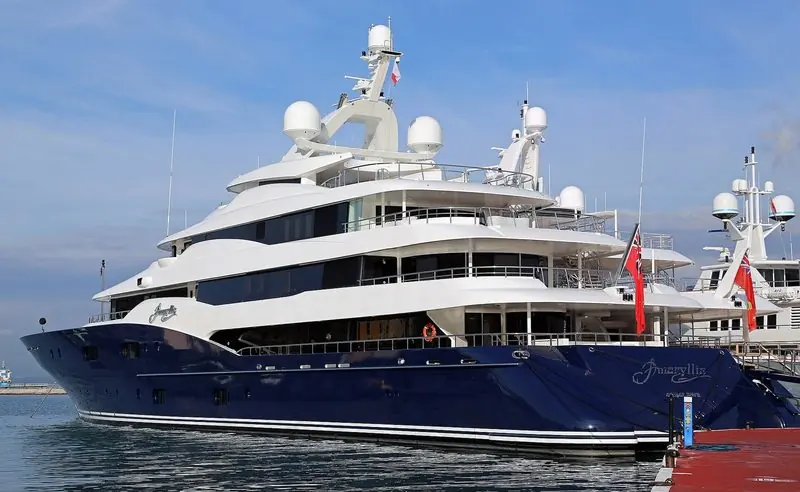
A junction and not a destination, and the cheapest legitimate fill between the Caribbean and the Aegean.
The berths and how they are taken
Berths are rented and nothing is sold freehold. Ocean Village expanded from 225 to 323 berths with the addition of its Premier Berths, most of which sit between 18 and 25 metres with the largest at 35 metres, and separately a set of upgraded superyacht berths designed by Marina Projects for yachts to 80 metres was built along the perimeter of the development. Contracts of twelve months and longer bring a crew privilege card with concessions in the shops and health club.
Availability is better than almost anywhere on this list because Gibraltar is a working port and not a destination that fills for a season. The pressure points are the transatlantic windows, late October and November when the fleet heads west, and April and May when it comes back. Outside those weeks a yacht can generally be accommodated. Clearance formalities are handled by the marina itself since the separate yacht reporting berth closed in 2005.
Fuel, and why owners care about the treaty
The commercial case for Gibraltar has always rested on fuel bought without duty. That looked vulnerable when the territory agreed to enter a customs arrangement with the European Union, and the detail matters. From 10 April 2026 a transaction tax of 15 per cent replaced Gibraltar's old import duty regime, rising annually towards the lowest rate of value added tax in the Union, with separate excise on tobacco, alcohol and fuel.
Bunkering fuel is exempt from both the transaction tax and the excise duties, and so are ship supplies and goods that pass through Gibraltar without being sold there. For a yacht taking on several hundred tonnes that exemption is worth a great deal, and it is the reason the Rock remains the cheapest legitimate fill in this part of the world. Owners should still take current advice, because the framework is new and the excise rates on other goods are set to converge with Spanish levels from April 2029.
A border that has just disappeared
The United Kingdom and the European Union signed the treaty on Gibraltar in Brussels on 14 July 2026, four years after negotiations began, with provisional application from 15 July. It integrates Gibraltar into the Schengen travel area and establishes a bespoke customs union without placing the territory inside the EU customs territory. Routine checks at the land crossing with Spain are abolished and dual border checks are introduced at Gibraltar's port and airport.
For an owner the practical effect is that guests and crew can move between Gibraltar, Spain and the wider Schengen area without the queue at La Linea that used to run to hours on a bad day. Direct flights between Gibraltar and EU airports become possible. It also means arriving crew face a Schengen entry check at the marina, which changes the paperwork rhythm of a crew change. The framework has been in force for under a fortnight, so procedures are still bedding in.
Services, yards and the town
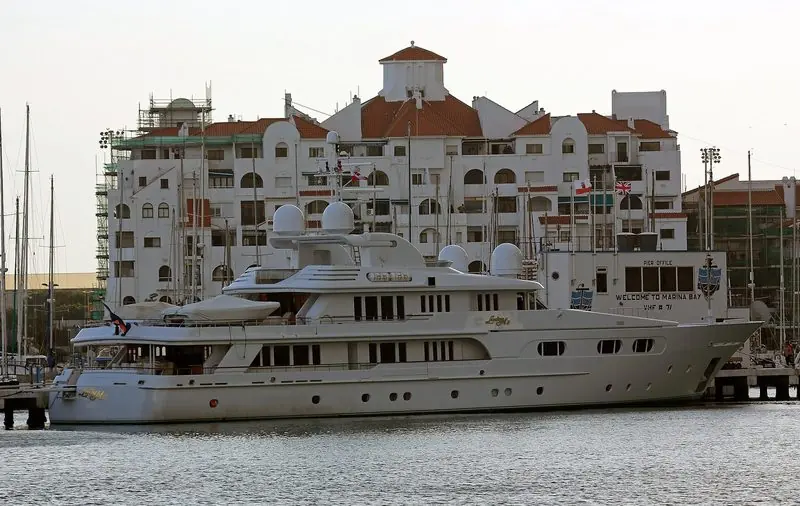
Berths carry three-phase power, water, satellite television and wifi, with 24-hour security and coded gate access to the pontoons, laundry collection, modern shower blocks and concierge arrangements for catering and cars. Chandlery, provisioning, offshore banking, a health and dental clinic and a gymnasium are within a few minutes of the quay. Gibraltar's agents and technical trades are experienced with yachts because the port handles crew changes and husbandry work continuously.
For structural work Gibdock occupies the old naval yard with three dry docks running from 154 to 272 metres, ten cranes, a 300 metre main wharf, a 435 metre mole and about a kilometre of deep-water wharfage with up to 11 metres alongside at low tide. That is commercial ship repair capability, so it is not a superyacht paint hall, and it will take a hull that no Mediterranean yacht yard can lift. Sotogrande and the Costa del Sol yards are a short run up the coast.
Ashore, and where a yacht goes next
Gibraltar International Airport is within walking distance of the marinas, with scheduled services to London and, under the new treaty, the prospect of direct EU connections. Malaga is around 130 kilometres up the coast for long-haul. The territory is small, English-speaking, uses the pound, and has a dense concentration of lawyers, accountants and ship registry expertise, which is why a good number of yachts fly the Gibraltar flag.
There is no cruising ground here, and that is the honest position. Gibraltar is a junction. Morocco is under 20 nautical miles across the Strait, the Costa del Sol runs northeast, Cadiz and the Portuguese Algarve lie west around Cape Trafalgar, and the Canaries are five days southwest on the standard Atlantic route. A family week based at Ocean Village would be spent looking at the Rock, its apes and its tunnels, which is a day and a half of material.
Season, timing and the honest downside
Gibraltar works all year and its busiest weeks are set by ocean crossings and not by summer. Late October and November fill with yachts heading for the Canaries and the Caribbean, and April and May bring them back. Summer is warm and dry and the marina is a comfortable place to leave a boat. The levanter can sit over the Rock for days at a time in any season and is the one weather feature that reliably annoys visitors.
The reservations are depth, scale and setting. Four and a half metres alongside rules out a proportion of the fleet that the 90 metre berth length would otherwise suit. The territory covers less than seven square kilometres and the marina looks across a working bay at the refinery and container terminal at Algeciras. Nobody keeps a yacht in Gibraltar for the view. They keep it here because the fuel is cheap, the paperwork is in English and the airport is at the end of the pontoon.

The levanter as a manoeuvre, not as weather
The levanter is described on most accounts as damp grey air and a cloud banner over the Rock, which is what it looks like from ashore and not what it is from a flybridge. It is an easterly, and Ocean Village sits on the west side of the Rock. A 400 m ridge directly upwind of a marina does not produce a steady breeze on its lee side. It produces a descending, gusting, direction-shifting flow that arrives in slugs, and that is a materially harder thing to hold a high-sided yacht against than a clean 25 knots on open water. The berths on the outer perimeter, which are the superyacht positions, are the ones most exposed to it.
The practical rule is that arrival and departure timing in a levanter is worth deferring rather than pushing, and that a yacht with a lot of freeboard and a short keel wants the tugs or the line handlers arranged rather than improvised. The levanter can sit over the Rock for days in any season and it is the one weather feature that reliably frustrates a schedule here. None of this troubles a yacht already secured. It is entirely a question of the ten minutes at each end. The poniente, the westerly, is usually clearer and comes off the water rather than off the hill, and is the easier of the two to work in.
Four and a half metres, and the price nobody prints
The unresolved item on this page is water. The Gibraltar Port Authority publishes a 90 m maximum length and 4.5 m of depth, and the marina separately markets upgraded perimeter berths designed for yachts to 80 m. Whether those perimeter berths carry more than 4.5 m is the single question an 80 m owner would ask and, checked on 28 July 2026, neither the port authority nor the operator answers it. Until they do, 4.5 m is the binding number, and most 80 m motor yachts draw more than that. The honest position is that Gibraltar sells a length it may not be able to float, and the sounding for the specific berth has to be obtained in writing before a passage is planned around it.
Price is the other blank. Ocean Village and Marina Bay publish no berth rate at all, for any length, on any of their pages, checked 28 July 2026, and the shore power is given as three-phase with no amperage on berths sold as taking 80 m yachts. Gibraltar runs 240 V single phase and 415 V three phase at 50 Hz, so a European yacht plugs in and an American one does not, but nobody publishes what it can draw. The bunkering argument is in the same condition. Duty-free fuel is genuinely the reason many yachts stop here, and no per-tonne differential against Palma, Barcelona or Las Palmas is published by anyone, so the saving is sized by asking three brokers for a firm quote on the same day and comparing them. That is a five-minute exercise and it is the only number that makes the case real.
Ashore, access and booking
| Hailing & phone | VHF Channel 71 is the working channel for both Ocean Village and Marina Bay (the two marinas share one Pier Office and radio watch) - confirmed independently by the marina's own site and by the Gibraltar Port Authority's official private-marinas listing. Landline is +350 200 73300, and the reception also runs a WhatsApp number, +350 58009812, which in practice gets answered faster than the phone during a levanter when everyone's on the radio. If you're bringing anything over about 24m, Gibraltar Port VTS wants you on Channel 12 separately for clearance into the restricted zone before you even call the marina - that's a different desk, easy to miss on a first visit. |
|---|---|
| Booking a berth | There's no instant-book system for anything of size. The marina wants an ETA update by phone or email 24 hours out, a confirmation call or VHF check-in an hour before arrival, and a final call at the entrance for a berth number - three separate touchpoints, not one. Turning up unannounced works for small boats if space allows, but multiple independent accounts (a longtime YBW Forum poster who's berthed there for years, and marina-industry coverage of the post-redevelopment squeeze) agree that spare capacity is thin now that the west side has been rebuilt for superyachts, so a same-day walk-in for anything large is a real gamble, not a fallback. |
| What a big yacht pays | The marina's own posted rate card (their top length band, 50m and over) charges GBP 4.50 per metre per night - so a 50-metre yacht at that band's floor runs roughly GBP 225 a night before anything else. The next band down, 30-50m, is GBP 3.75/metre. Prepay and it drops hard: 20% off for an annual booking, 15% off for six months. Nobody advertises what a negotiated season rate for an 80m+ superyacht actually looks like - that's set case by case, and it's the number that never makes it onto the tariff sheet. |
| Power and water | Electricity is metered at 16p/kWh, water at 1.25p per litre, each with a GBP 1 minimum charge per connection - figures taken from the marina's own tariff page, which is the only place they're published, so treat them as marina-stated rather than independently cross-checked. Power-adapter deposits run GBP 10-40 depending on what you need. No amp/voltage spec or shore-power-pedestal detail is published anywhere findable, which for a marina rated to 90m LOA is a genuine gap - you'll be asking reception directly what a given berth can actually deliver rather than reading it off a spec sheet. |
| Fuel and the 2026 treaty | This is the good news buried in the treaty text: bunkering fuel - fuel taken aboard as ship's stores rather than for resale - is permanently exempted from both Gibraltar's new 15% Transaction Tax and from excise duty under the UK-EU agreement that took provisional effect 15 July 2026. That's stated plainly in the Government of Gibraltar's own technical notice on the customs union and echoed in EY's tax-alert coverage of the same treaty. So the duty-free bunkering that's made Ocean Village and Marina Bay a Mediterranean refuelling stop isn't a casualty of the new border arrangement - it was carved out on purpose. On the quay itself there are Cepsa, Shell and BP pumps plus a dedicated GibOil terminal right at the marina entrance, so there's actual competition on price rather than one operator setting it. |
| Depth and where the big ones go | 4.5 metres alongside is the figure the Gibraltar Port Authority itself publishes for both marinas, matching the marina's own material - a genuinely consistent number, not a rounded-up brochure figure. Official max LOA is quoted at 90 metres, though the superyacht-specific pontoons built in the recent Marina Projects redevelopment (covered by Boat International and Marine Industry News) are sized for up to 80 metres. Anything that exceeds the LOA or draft limit here gets redirected to a berth at the Western Arm, North Mole - a different part of the port entirely, worth knowing before committing to Ocean Village as the destination. |
| Getting there | No source publishes an exact metre figure, which is itself telling for a marina that markets 'airport on your doorstep' - but Visit Gibraltar's own copy says the airport is within easy reach on foot, and independent travel-routing sites put it under a 10-minute walk. That's plausible on the ground: Gibraltar's runway and the old border crossing sit right at the isthmus, a few minutes from the marina gate. Since the July 2026 treaty removed routine checks at the land frontier, a crew change that used to mean a passport queue at the fence is now much closer to just walking through. |
| On the promenade | Ocean Village's dining strip is a mix of international chains and marina-facing independents, not a curated foodie destination - Las Iguanas (Unit 21b on the Promenade, Latin/Brazilian, waterfront tables) and Wagamama are both confirmed by Gibraltar's own tourism listings as well as third-party guides, and Bianca's is locally described as a Gibraltar favourite for the same reason regulars go back: reliable, unpretentious, good for watching the boats rather than for the food itself. It's a stop-off crowd, not a destination-dining crowd, and that's honestly fine given what else is going on right there. |
What owners and crew report
New superyacht pontoons are landing with captains
On the record about the completed Marina Projects redevelopment: 'The superyacht berths were seamlessly integrated into our design and, once operational, have proven to be popular with superyacht captains.' Worth reading as marina management talking its own book, but it's a named, dated claim rather than an anonymous one.
William Bowman, Marina Director, Ocean Village and Marina Bay (Marine Industry News, January 2025)Gibraltar's bunkering pitch predates the current redevelopment by a decade
Speaking as technical consultant when the superyacht marina project was first proposed, he argued Gibraltar had the lowest bunkering costs in the Mediterranean and that a full service shipyard is ten minutes from Marina Bay - a claim from 2015, before the current pontoons existed, but it's the same fuel-price and shipyard-proximity logic that still draws boats there now.
Captain E.S. Geary (SuperyachtNews, 2015)
What is good, and what to watch
Strong points
- Duty-free bunkering survived the treaty on purposeThe 15 July 2026 UK-EU Gibraltar treaty could easily have swept fuel into the new 15% Transaction Tax regime. It didn't - the Government of Gibraltar's own technical notice carves bunkering fuel out permanently, and EY's tax analysis of the same treaty confirms it. For a marina whose whole draw is cheap diesel, that's the headline risk that didn't materialise.
- Real competition on the fuel dockCepsa, Shell and BP pumps on the quay plus a separate GibOil terminal at the marina entrance mean there's no captive dependence on one supplier's posted price the way a lot of single-operator Mediterranean marinas run.
- The border basically isn't there anymoreWith routine checks gone at the land frontier since the treaty, and the airport within a short walk of the pontoons per Visit Gibraltar's own description, crew changes and provisioning runs into Spain lost a friction point that used to eat a genuine chunk of a turnaround day.
- The office never closes24 hours a day, 365 days a year, per the marina's own site - and in practice a WhatsApp line that gets answered faster than the phone. For a working marina rather than a lifestyle-branded one, that responsiveness matters more than the casino next door.
- The redevelopment was built around superyachts, not against themMarina Director William Bowman, quoted in Marine Industry News' January 2025 coverage of the Marina Projects-designed upgrade, said the new superyacht berths 'have proven to be popular with superyacht captains' - a claim from the person running the place, but corroborated by the fact the redevelopment happened at all: someone paid for pontoons rated to 80m because the demand was already showing up at the gate.
What to watch
- Surge in a blow is a known problem, not a rumourA longtime poster on the YBW Forum who has kept boats at both marinas over the years describes the surge as 'really wicked' at times and says they've seen a lot of damage to boats there - the fix is standard (good snubbers, doubled-up lines) but it's not a hypothetical risk, it's a maintenance habit needed before arrival, not after.
- There is no current public rate cardThe marina's own pricing page is still headed 'Berth Prices 2025', and the underlying tariff PDF on their site is dated from a 2021 upload - there's no confirmed 2026 sheet live anywhere findable. For anything above about 50m, the number being negotiated was never printed, which is exactly the gap this page's prose already points at.
- Space is genuinely tight nowIndustry coverage of the post-redevelopment marina describes berthing in Gibraltar as now quite difficult, since other local marinas lost capacity to the cruise-ship/hotel/casino build-out, and a separate longtime user on the same forum thread independently confirms shrinking availability. A same-day arrival without a booking is a real gamble for anything large.
- 4.5 metres is a hard ceiling, and it routes elsewhereIt's a consistent number across the Gibraltar Port Authority and the marina's own material, so it's not in dispute - but any vessel that exceeds the LOA or draft limit gets sent to a berth at the Western Arm, North Mole instead, a materially different part of the port. Worth confirming before planning around Ocean Village specifically.
Who it is for: The owner crossing oceans on a schedule who wants duty-free fuel, English-language paperwork and an airport he can walk to.