Port Pendennis (Falmouth)
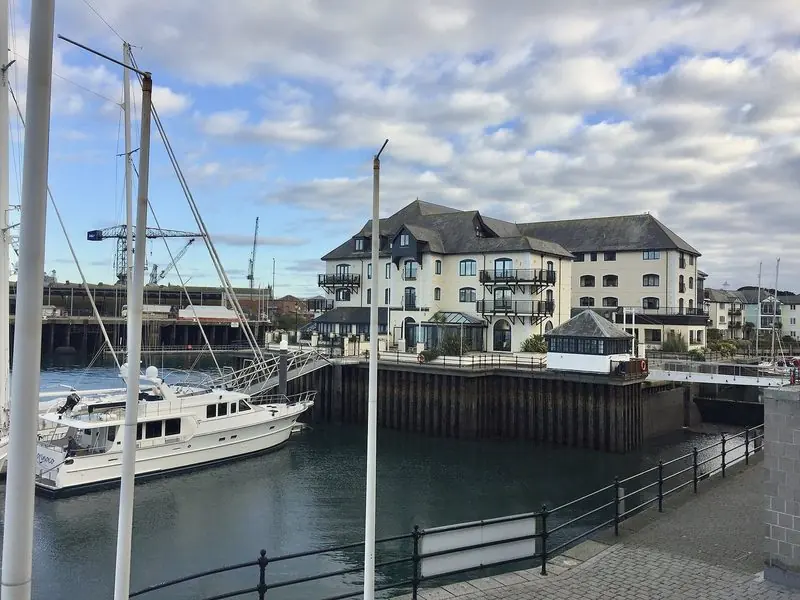
| Location | Falmouth, Cornwall, on the west side of Carrick Roads |
|---|---|
| Two basins | an outer marina with unrestricted tidal access and an inner marina behind a sill, open three hours either side of high water |
| Outer marina | completed 1999, 80 annual lease berths plus 260 metres of visitor pontoon, minimum 4.6 m on spring tides |
| Superyachts | wide concrete pontoons taking yachts of over 80 m LOA, with up to 6.0 m of depth on the outer berths |
| Shore power | 250 A or 100 A three phase on the superyacht bollards |
| 2026 daily rate | GBP 4.70 per metre under 25 m and GBP 7.50 per metre over 25 m, VAT included |
| 2026 monthly rate | GBP 110 per metre from 1 April to 30 September and GBP 50 per metre from 1 October to 31 March, for yachts up to 25 m |
| 2026 annual rate | GBP 765 per metre in the outer marina and GBP 676 per metre in the inner, running 1 April to 31 March |
| Electricity | metered at 25p per unit for annual berth holders, or GBP 6 a day for a 16 amp visitor supply and GBP 12 for 32 amp |
| Next door | Pendennis Shipyard, a 14-acre waterfront yard building and refitting custom yachts to 100 m |
| Pendennis facilities | a 150 m covered dry dock, two 90 m fit-out halls, a 45 m hall, a non-tidal wet basin with a 100 m berth and an 800-tonne travel hoist |
| Crew | rental accommodation and crew houses on the marina site |
| Correction from the marina's own facilities page, checked 28 July 2026: the superyacht power bollards supply 250 A or 100 A three phase, not 125 A | |
| Depth, from the marina's own facilities page: up to 6.0 m on the outer berths, against a 4.6 m minimum on spring tides across the outer marina as a whole | |
| United Kingdom shore supply is 400 V three phase at 50 Hz. Port Pendennis does not state voltage or frequency on its own site, checked 28 July 2026 | |
| What 250 A three phase at 400 V actually is: about 173 kVA. The 100 A bollard is about 69 kVA | |
| Inner marina minimum depth | 3.0 m, behind a hinged sill with access three hours either side of high water |
| Berth distribution | 80 annual lease berths in the outer marina plus 260 m of visitor pontoon, which is three 80 m yachts nose to tail with nothing spare, or one 80 m and two 60 m with room to work |
| The marina's own lift is small | Falmouth Boatyard at Ponsharden, about a mile upriver, has a slipway hoist of 40 tons and dry storage from 1 October to 31 May. The 800-tonne hoist belongs to Pendennis Shipyard, not to the marina |
| Exposed sector | the harbour entrance between Pendennis Point and St Anthony Head opens to the southeast, which is the only direction with a clear fetch into the outer harbour |
A deep harbour at the corner of England
Falmouth sits at the mouth of the Fal, where a drowned river valley makes one of the deepest natural harbours in Europe. Ships have used it since the age of sail for exactly the reason yachts use it now, which is that it is the first shelter a vessel reaches after the Western Approaches and the last it leaves on the way out. The entrance between Pendennis Point and St Anthony Head is wide, deep and free of hazards. A yacht arriving from the Atlantic in bad weather does not have to time anything.
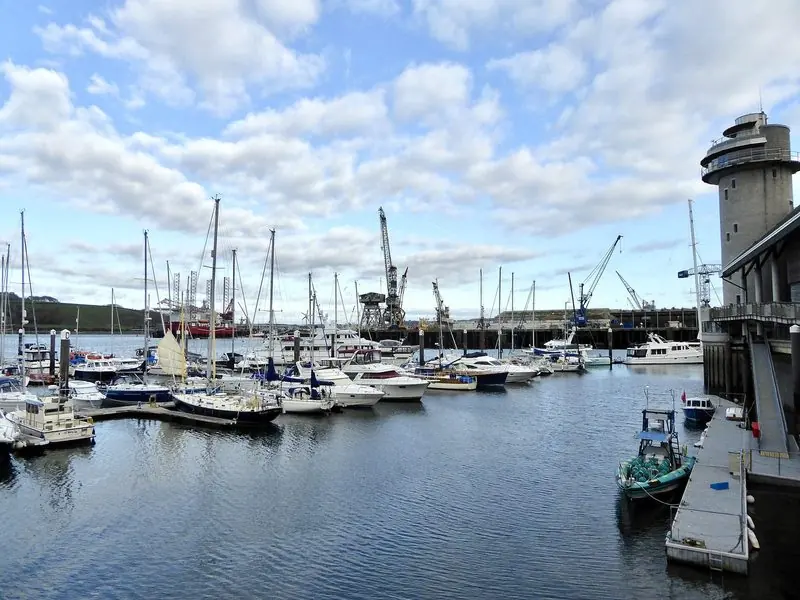
Port Pendennis occupies the inner corner of the harbour beside the town. It is split into two basins. The outer marina, completed in 1999, uses heavy concrete pontoons and has unrestricted tidal access with a minimum of 4.6 metres on spring tides. The inner marina lies behind a hinged tidal sill with access three hours either side of high water and a minimum of three metres, and is the more sheltered of the two.
What the outer berths take, and what the power really is
The superyacht facilities are on the outer pontoons, built wide and heavy, and the marina's own facilities page states that they accept yachts of over 80 m length overall with up to 6.0 m of depth available on the outer berths. That is a better figure than the 4.8 m that circulates in listings, and it sits alongside a separate and different number, the 4.6 m minimum on spring tides that applies across the outer marina generally. The two are not in conflict but they are not interchangeable either, and a deep hull needs the sounding for the berth it is actually being offered. The same page gives the power bollards as 250 A or 100 A three phase, which corrects the 125 A figure carried in most listings, and the marina states neither voltage nor frequency. The United Kingdom runs 400 V three phase at 50 Hz. Figures checked 28 July 2026.
The consequence is worth spelling out because the number on its own means nothing. At 400 V, 250 A of three phase is about 173 kVA and the 100 A bollard is about 69 kVA. For a 45 m yacht the larger bollard carries the boat comfortably. For an 80 m hull lying here through a Cornish winter with heating, galley, laundry and a full crew aboard, 173 kVA covers a good part of the hotel load and not the whole of it, so the yacht runs a generator for the rest and budgets fuel accordingly. Anyone moving a large boat here for a refit season should treat the shore supply as a supplement rather than a substitute, and ask the yard what temporary supply it can run to a hull in its own basin.
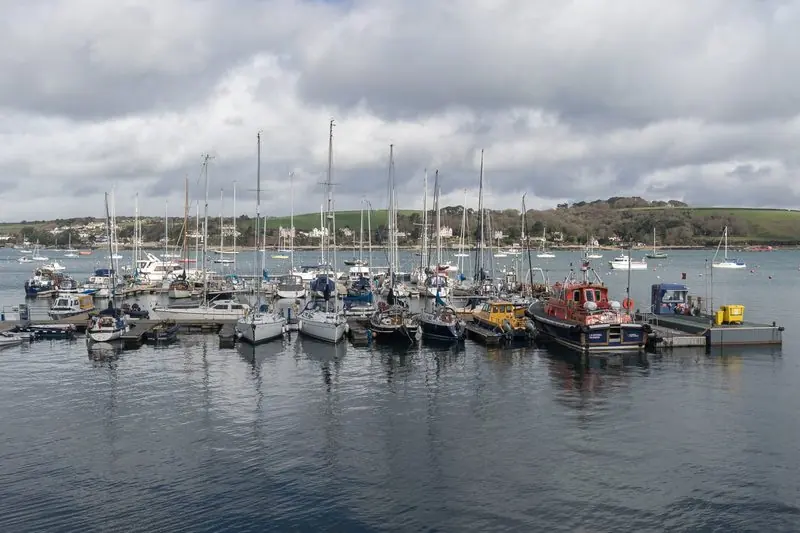
A 60 metre yacht pays GBP 450 a night here, and the yard that can rebuild her is a few hundred metres up the headland.
What it costs, and it is not much
Port Pendennis publishes its rates openly, which is rare at this end of the market. On the 2026 tariff a yacht over 25 metres pays GBP 7.50 per metre per day, inclusive of VAT, so a 60 metre yacht is GBP 450 a night. Monthly rates run at GBP 110 per metre in summer and GBP 50 per metre in winter for boats up to 25 metres. Annual berths are GBP 765 per metre in the outer marina and GBP 676 in the inner, taken as a single payment in advance for the year running 1 April to 31 March.
Electricity is metered at 25p a unit for annual holders, with a GBP 200 returnable deposit for the meter, and visitors pay GBP 6 a day for a 16 amp supply or GBP 12 for 32 amp. Set against a French or Italian summer tariff these numbers look like a misprint. Berths are rented and nothing is sold, and the annual lease berths in the outer marina turn over slowly. Boats must be off the berth by noon on the day of departure.
The yard on the same headland
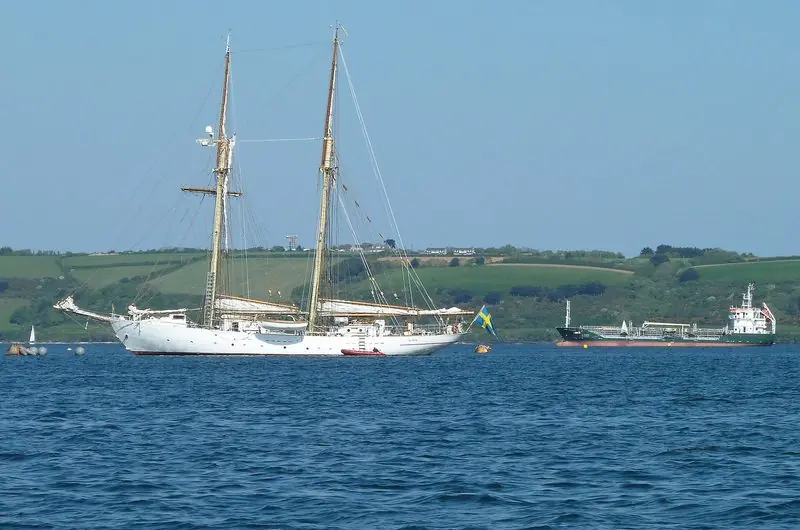
The reason a 90 metre yacht comes to Cornwall at all is Pendennis Shipyard, fourteen acres of waterfront a few hundred metres from the marina, building and restoring custom yachts up to 100 metres. The refit complex runs to a 150 metre covered dry dock, two 90 metre fit-out halls, a 45 metre hall, and a non-tidal wet basin of around 7,500 square metres with a 100 metre berth. An 800-tonne travel hoist moves hulls between the basin and the halls.
Pendennis keeps over 450 permanent tradespeople in house, which is the part that matters when a project runs long, because the work is not being subcontracted to whoever is available that month. The yard has a particular reputation in classic and sailing yacht restoration. It also runs a technical service centre and a 48-berth superyacht marina at Vilanova in Spain, so an owner can keep the same relationship on both sides of the Bay of Biscay.
Security, privacy and how the place feels
Access to the pontoons and to the town gate is by code, obtained from the marina office. This is a small Cornish harbour town of about 22,000 people with a maritime museum on the quay and no yachting scene in the Mediterranean sense, so a large yacht is noticed but not photographed all day. The marina is quiet, the neighbours are the exclusive village houses around the inner basin, and there is no promenade of restaurants overlooking the berths.
For an owner who dislikes the exposure of Monaco or Portofino, that anonymity is a genuine feature. There is no casino, no beach club and no queue of tenders. What there is instead is free wifi from the marina office, a tennis court that comes with a five pound key deposit, and a Tesco Express two minutes' walk away. The register of what this place is stays consistent all the way down.
Arriving, and British paperwork
Yachts arriving from international waters have to deal with British catering waste rules, which require food waste from outside the country to be handled as controlled material and declared, and the marina points arrivals at the government guidance. Customs clearance for a yacht entering the United Kingdom follows the standard reporting process. Since Brexit the position of a yacht moving between the United Kingdom and the European Union has become a matter for advice in each case, and marina operators on the south coast have reported additional superyacht traffic as owners work through where a hull is best kept.
The practical warning is that this is not a place to improvise a VAT or customs position. Returned goods relief, temporary admission and the treatment of a yacht that has spent years in the Mediterranean all turn on specific facts and dates. Owners bringing a boat to Falmouth for a refit should have the fiscal position confirmed before the passage and not after.
Cornwall ashore and the cruising around it
Falmouth town is across a footbridge from the marina. Cornwall in summer is a serious holiday county with good food, empty coastal walks, sailing everywhere and water that is cold enough to be memorable. Cornwall Airport Newquay is about an hour by road with domestic connections, and the sleeper and mainline trains reach London in around five hours from Truro. For guests arriving from abroad this is the weak link, because there is no international hub within two hours.
The cruising rewards the effort. The Helford River is around the corner, the Isles of Scilly are 40 nautical miles southwest, and the whole south coast of Cornwall and Devon runs east from here in short hops. Brittany is an overnight passage across, the south coast of Ireland is a day and a half northwest, and Scotland and Norway are open to anyone prepared to go north. This is where the northern European season actually happens.
Season, weather and the honest downside
The usable season runs from May to September, with July and August the reliable months and the shoulders a gamble. Falmouth Week in August fills the harbour with racing, and the town has a working regatta culture that has nothing to do with superyachts. Winter is quiet, wet and windy, and the inner marina is used for over-wintering by owners who want to keep the boat in the water.
The downside is the climate and the isolation. Atlantic depressions cross this coast in sequence from October to March, summer can produce a fortnight of low cloud and drizzle, and the sea temperature never becomes inviting. Guest logistics are hard work. What Falmouth offers in exchange is a genuinely deep, genuinely safe harbour, a world-class refit yard on the doorstep and berthing at prices that would not cover the electricity in Porto Cervo.
The wind that matters, and the lift that is not there
Falmouth's reputation as an all-weather harbour is earned, and the qualification is directional. The entrance lies between Pendennis Point and St Anthony Head and opens to the southeast, which is the one sector with an unobstructed fetch up Falmouth Bay and into the outer harbour. Westerly and northwesterly gales, which are the common ones, come off the land and the marina barely notices them. A hard southeasterly is the exception that sets a swell running past the docks, and it is the wind that decides whether a yacht sits out a blow on the outer pontoons or moves inside the sill. Atlantic depressions cross this coast in sequence from October to March and most of them arrive from the west, which is why the harbour works at all.
On lifting, the honest answer is that the marina cannot do it. Port Pendennis operates Falmouth Boatyard at Ponsharden, roughly a mile upriver towards Penryn, and its slipway hoist takes 40 tons, with dry storage available from 1 October to 31 May. That is a tender, a chase boat or a small sailing yacht. The 800-tonne travel hoist a few hundred metres away belongs to Pendennis Shipyard and is part of a contracted refit, not a service a visiting yacht books for a scrub. Any haul-out above 40 tons that is not a Pendennis project means a passage, and the realistic destinations are up-Channel or across to northern Spain rather than anywhere in Cornwall.
Ashore, access and booking
| Radio contact | Port Pendennis marina works VHF Ch 80 (tel +44 (0)1326 211211, [email protected]). General harbour traffic is Falmouth Harbour Radio on Ch 12 (Ch 16 for hailing, harbour master direct line 01326 312285). Any vessel over 20m LOA must separately report its movement to Falmouth Pilot Radio on Ch 09, giving at least 15 minutes' notice - three different channels for three different jobs, easy to get wrong on a first visit. |
|---|---|
| Berths on offer | 80 annual-lease berths plus 260 metres of pontoon kept for visitors. The outer marina takes yachts over 80m LOA, unrestricted tidal access, 4.6m minimum depth at springs; the dedicated superyacht pontoon goes to 6.0m. The inner marina is tidal (3 hours either side of high water, 3.0m minimum) and is where boats over-winter. |
| Power on the quay | Superyacht pontoon bollards supply 250A or 100A three-phase. Standard UK shore power is 230V/50Hz - a US-flagged yacht built for 120V/60Hz needs its own frequency converter or transformer to run hotel loads off it; this is routine practice, not a Falmouth-specific problem, but worth flagging to a first-time American owner. |
| Booking a berth | There is no online booking engine or published notice/deposit schedule - the marina office is called or emailed directly. That is normal for a marina this size in the UK, but it is a different rhythm from the broker-mediated reservation systems at the big Mediterranean marinas. |
| The yard next door | Pendennis Shipyard: 800-tonne travel hoist (upgraded from 620t in 2014, 400t in 2006), two 75m fully-enclosed dry docks that combine into one 150m x 24m dock, alongside berthing to 100m, and a wet basin with a 100m berth. Does refit, restoration and bespoke new-build - more than ten concurrent projects reported by the Group's own managing director in 2024. |
| Getting there by air | Cornwall (Newquay) Airport is the practical option - about 28 miles / 40 to 45 minutes by road. Exeter Airport is roughly 103 miles / just under 2 hours. London is 256 miles / about 4.5 hours by road, or 5.5 to 6.5 hours by train via Truro with no fast direct rail link - noticeably slower than flying into Nice or Palma for a comparable Mediterranean berth. |
| Clearing in | Post-Brexit arrivals fly the Q flag inside the 12nm limit, then call the National Yachtline (0300 123 2012) or file a C1331 or the newer digital sPCR report depending on circumstances. Falmouth has been a first and last port of call for Atlantic crossings for centuries - Robin Knox-Johnston's and Ellen MacArthur's round-the-world records both started and finished here. |
| Weather reality | Coastal Cornwall and the Isles of Scilly average around 24 gale-force (Beaufort 8+) wind days a year (Met Office), heavily loaded into December to February; summer months average under one gale day a month. It is a genuinely Atlantic-facing approach, not a sheltered Mediterranean season. |
What owners and crew report
Falmouth handles serious concurrent refit volume, not one-off projects
Right now, we're handling over ten diverse projects encompassing restorations, new constructions, refits and servicing - citing past work on yachts including Marala, Hemisphere and Rebecca.
Toby Allies, Managing Director, Pendennis Group (SuperyachtNews)Demand is skewing toward larger refit and new-build work
We have had an increasing number of enquiries for 60m-plus sailing and motoryacht refits and bespoke new builds over the past few months.
Stephen Hills, Managing Director, Pendennis Plus (SuperyachtNews)
What is good, and what to watch
Strong points
- Real superyacht scale, not a squeeze-fitThe outer marina takes yachts over 80m LOA with 4.6 to 6.0m depth, confirmed independently by both Port Pendennis's own site and Falmouth's town business directory - this is not a small-boat marina with a couple of long fingers added on.
- The shipyard is a genuine capability, not marketing dressingAn 800-tonne travel hoist, a 150m combinable dry dock, 100m alongside berthing, and, per the yard's own managing director Toby Allies, more than ten concurrent restoration, refit and new-build projects running through Falmouth as of 2024.
- Centuries of standing as the UK's first and last Atlantic portFalmouth's role for transatlantic arrivals and departures is not a modern marketing line - Knox-Johnston's 1968 and MacArthur's 2005 round-the-world voyages both started and finished here, and it was historically the base for the Packet Ships.
- A real, walkable food sceneRick Stein's Fish sits on Events Square, effectively at the marina's edge; The Wheelhouse (Upton Slip) and The Working Boat pub are both a short walk - Cornwall's seafood reputation is not just tourism copy here.
What to watch
- No usable public rate cardPort Pendennis's own fees page is dated to 2017 by its HTTP last-modified header and renders its prices as non-text images that cannot reliably be read or quoted - third-party guides show conflicting, stale numbers. Nobody can price a stay from the outside; the marina office has to be called.
- Weather is a real, not cosmetic, constraintAbout 24 gale days a year across coastal Cornwall, concentrated December to February (Met Office) - this is the open Atlantic approach to the English Channel, a genuinely different proposition from a Mediterranean summer season.
- Air access has real frictionThe nearest airport, Newquay, is a 40-plus minute drive with a limited route network; London is 4.5 hours by road or a multi-leg 5.5 to 6.5 hour train with no fast direct rail service - slower and less convenient than flying into Nice or Palma for a comparable Mediterranean berth.
- Ownership and structure are not transparent from outsideIt is not publicly clear whether Port Pendennis marina and Pendennis Shipyard next door share ownership - they are addressed and discussed together constantly but appear, from available filings and site content, to be operated as separate businesses. Worth confirming directly if that relationship matters to a berthing decision.
Who it is for: The owner with a refit in mind, or a northern European and transatlantic itinerary, who is untroubled by weather and unimpressed by scenes.