Porto Montenegro
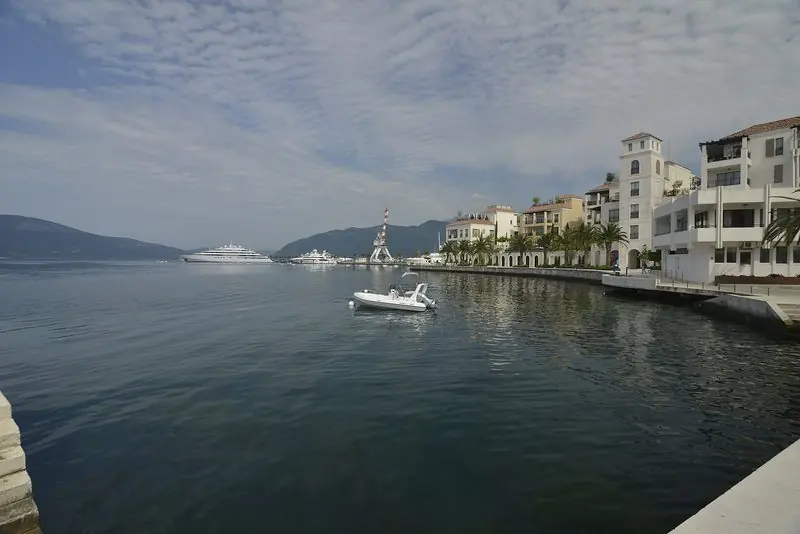
| Location | Tivat, Bay of Kotor, Montenegro, at 42 26.03 N 018 41.33 E |
|---|---|
| Operator | Adriatic Marinas d.o.o., reported since 2016 to be held by the Investment Corporation of Dubai |
| Berths | 481 quoted on the marina's berthing pages, with other material describing over 500 |
| Vessel range | 6 m to 250 m LOA |
| Mooring | Mediterranean stern-to on two bow ground lines, with mooring buoys on Jetty 1 berths over 50 m |
| Shore power | 16 amps up to 1,000 amps depending on berth size |
| Connectivity | fibre optic to 50 Mb/s at berths over 15 m, with grey and black water pump-out at the same threshold |
| Customs | official port of entry with customs and immigration on site, duty-free fuel, preferential VAT on spare parts, bonded warehouse |
| Accreditation | TYHA Five Gold Anchor Platinum, described by the marina as the world's first |
| Approach | through the Verige Strait, 2,300 m long and 340 m wide at its narrowest, with pilotage arranged for vessels over 1,000 GT |
| Refit | Adriatic 42 at Bijela, Herceg Novi, with a 720 tonne travel lift, a 180 x 34 m floating dock and 150,000 square metres of operational area |
| Airport | Tivat about 10 minutes by road, with a helicopter pad at the marina |
| Berth distribution, trade directory listing read July 2026: 117 berths at 24 to 30 m, 55 at 31 to 50 m, 5 at 51 m and above, for 177 superyacht positions | |
| Berth count varies by source | the marina's own berthing page now says 580, its older material 481, TYHA lists 484 with a 250 m maximum berth and describes 450 |
| Maximum draught listed at 17 m and maximum beam at 24 m. The fuel dock is quoted for yachts to 250 m at 15 m draught | |
| Shallow water lies off Jetty 4, lit and buoyed, and night arrivals are asked to give it a wide berth | |
| Wind | bora, a cold katabatic north to north-easterly, a winter wind, most severe in the Bay of Risan where gusts have been recorded at 250 km/h, about 135 knots |
| Wind | jugo, warm and humid from the south, present all year and concentrated in autumn and spring, bringing heavy rain |
| Bora warning sign used locally | cap cloud forming on the mountain ridge above the bay |
| No rate card is published. The only public pricing signals are the marina's own packages, including a 30-day Charter Flex block usable in any number of stays and a superyacht offer open to 40 to 50 m LOA case by case | |
The approach, and the strait that guards it
The Bay of Kotor is a drowned river canyon running about 28 kilometres inland from the Adriatic, made up of four linked basins. Herceg Novi sits at the mouth, Tivat is the outermost inner bay and holds the marina, and Risan and Kotor lie beyond. Average depth across the gulf is around 27 metres with a maximum near 60, so there is water everywhere.
The constriction is the Verige Strait, the 2,300 metre neck between the outer and inner bays that narrows to 340 metres at its tightest. A 100 metre yacht passes it without drama in daylight and it is the reason the inner bay is as flat as it is. Porto Montenegro lies at 42 degrees 26.03 minutes north, 018 degrees 41.33 minutes east, works VHF channel 71 and is marked by red and green lights at the marina entrance. Pilotage is arranged for vessels over 1,000 GT.
What the marina holds, and how few of the big berths there are
The berth count moves depending on who is counting. The marina's own berthing page now quotes 580 secure berths for vessels from 6 m to 250 m, its older material said 481, TYHA lists 484 with a 250 m maximum berth while describing 450, and some brokers list 456. None of that is the number that matters. The distribution is, and the trade directory breakdown gives 117 berths in the 24 to 30 m band, 55 in the 31 to 50 m band and 5 at 51 m and above, for 177 superyacht positions in total. Five berths at 51 m and over is the figure to plan a season around, whatever the 250 m headline says, and it explains why the very large end of the fleet books Tivat for a winter rather than for a week.
Mooring is Mediterranean stern-to on two bow ground lines, fitted at every berth, with mooring buoys on the Jetty 1 positions over 50 m. Dock staff handle lines around the clock, the marina runs a 24 hour yacht assistance desk and a dinghy is available for line handling and guidance onto the berth. Maximum draught is listed at 17 m and maximum beam at 24 m, which is more water and more width than any yacht afloat needs, and the fuel dock is quoted for vessels to 250 m at 15 m of draught. The one shallow patch is off Jetty 4, which is lit and buoyed, and a night arrival is asked to keep well clear of it.
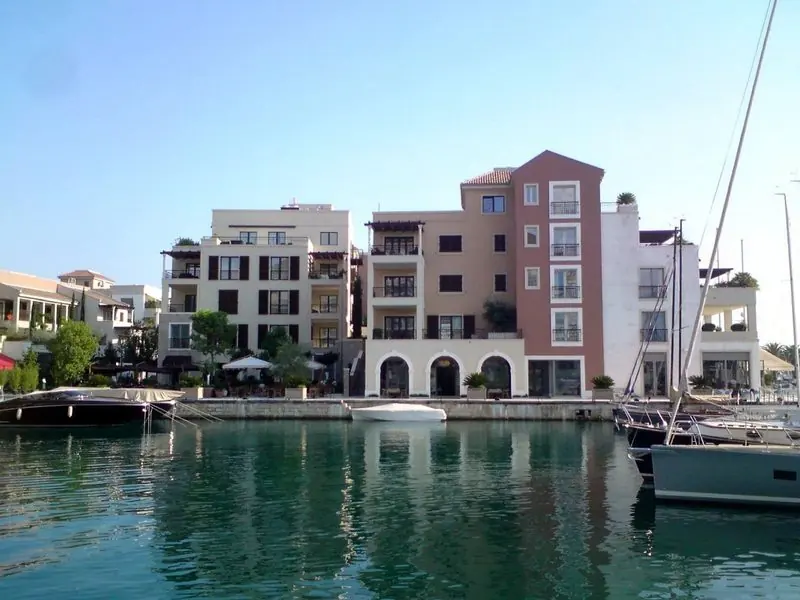
Water for a 250 metre yacht, duty-free fuel and a customs post at the quay, in a bay that is one of the wettest places in Europe.
Availability, which is the point
The reason owners look east is that the Western Mediterranean is full and this is not. A yacht of 70 or 80 metres that would need to book Porto Cervo in the winter can generally be accommodated at Tivat at short notice outside the peak weeks, and the very large end of the fleet has options here that exist almost nowhere else.
The marina lists weekly, monthly and annual rental terms directly and berth brokers handle longer arrangements. There is no active public market in headline berth prices at Tivat comparable to the Antibes breakwater, so an owner negotiates without a published comparable to bid against. Pricing is by length and by season and sits materially below the Riviera and the Costa Smeralda.
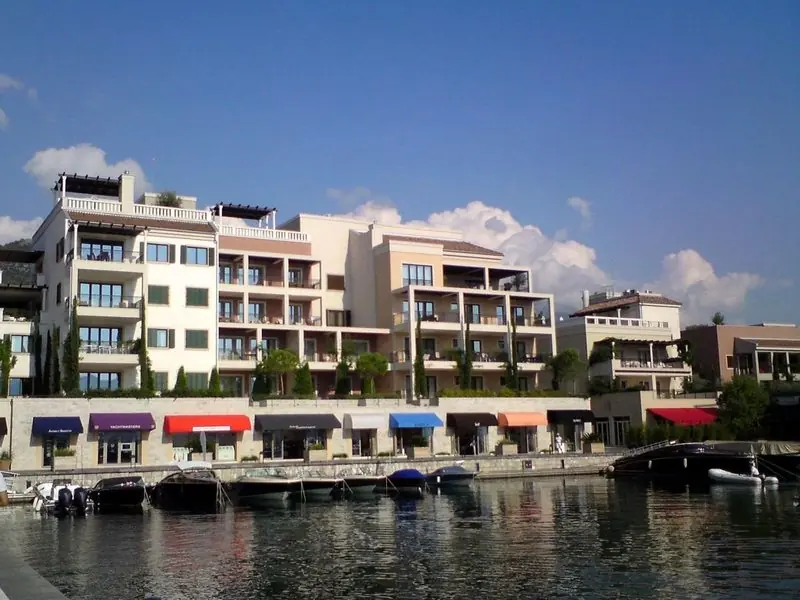
Being outside the European Union
Montenegro is not an EU member and not inside the bloc's customs and VAT territory, and the whole commercial logic of the marina follows from that. Porto Montenegro is an official port of entry with customs and immigration on site, so a yacht clears in and out at the quay. Duty-free fuel is available at the fuel dock. Spare parts attract preferential VAT and there is a bonded warehouse on the site.
For an owner running a non-EU-flagged yacht, or one managing temporary admission into EU waters, having a full-service port of entry a day's steaming from Croatia is a practical asset. It also means Schengen and EU cruising rules stop at the bay mouth and a passage north to Dubrovnik is an international movement with the formalities that implies. Crews plan for it and it is routine, but it is not the same as moving between Italy and France.
Power, water, waste and connectivity
Every berth has individual water and electricity, with supplies running from 16 amps up to 1,000 amps depending on the size of the position. That top figure is unusual and it is what lets a very large yacht sit alongside all winter without running generators. Grey and black water pump-out is provided at berths over 15 metres.
Fibre optic internet at up to 50 megabits is run to berths over 15 metres, with wifi across the site, which matters for an owner who works from the boat for weeks at a time. Security is 24 hour across the marina and the wider development. The marina holds TYHA Five Gold Anchor Platinum status, and describes itself as the first marina in the world to reach that grade.
Technical support and where the yard actually is
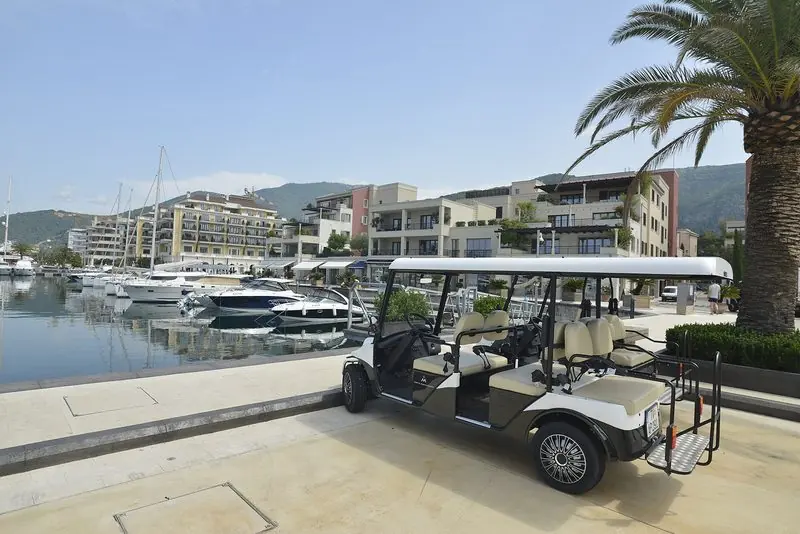
On site there is a chandlery, a local repair facility, provisioning, a bonded warehouse and a crew training centre running STCW-95 and RYA courses. That covers routine work and crew certification without leaving the bay.
Heavy refit is handled at Adriatic 42, which is in the Bay of Kotor but not at Tivat. It occupies the old Bijela shipyard site at Herceg Novi, across the water, with a 720 tonne travel lift, a floating dock of 180 by 34 metres, an operational area of 150,000 square metres and 8,000 square metres of workshops. It handles full refits, painting, teak, interiors and systems work, and it is ISO certified. An owner basing here for the winter has serious capacity within the same gulf.
The village, the security and the privacy
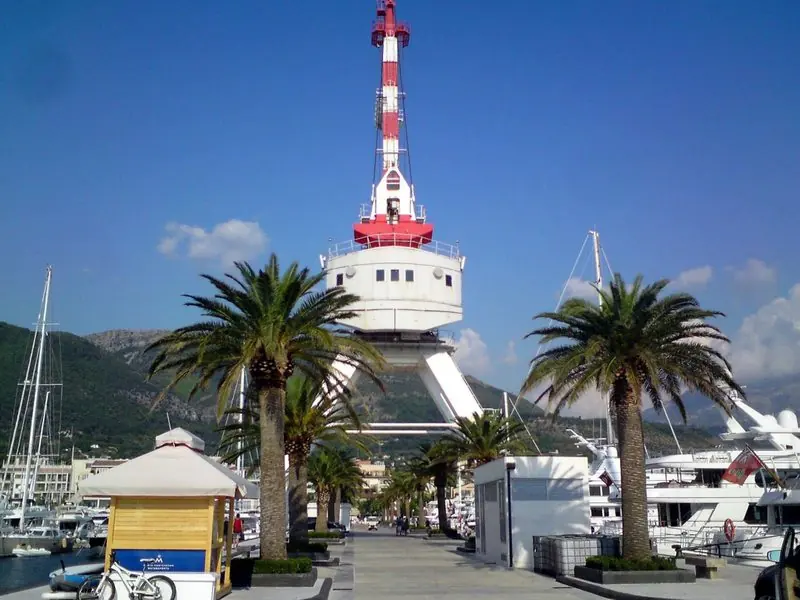
The site is a planned waterfront town, not a bare marina. Six waterfront neighbourhoods have been built or launched, including South Village and Boka Place with Vero and Versa adding 202 residences from 2025, alongside a hotel, a Yacht Club, a Crew Club with beach access and a promenade of about 25 acres. Four business clubs and a 560-seat auditorium serve the corporate side.
The naval history survives in a maritime museum on the waterfront with a preserved submarine. For privacy the arrangement works well, because the marina is gated and controlled, the town behind it is part of the same estate, and Tivat gets nothing like the sightseeing traffic of Monaco or Portofino. A yacht here is far less photographed than the same yacht on the Riviera.
Getting there and what a family does
Tivat airport is about ten minutes' drive from the quay, which is the shortest airport transfer of any marina in this guide. It handles regional and seasonal European traffic with business-jet capability, and there is a private helicopter pad at the marina. Dubrovnik airport, with wider long-haul connections, is up the coast in Croatia across an international border.
For a week ashore the bay is the attraction. Kotor's walled old town at the head of the inlet is a UNESCO World Heritage site inscribed in 1979 and is an easy trip by tender or car, Perast and the island churches sit halfway along, and the mountains behind give hiking and driving. The Croatian islands are a day's run north. What the bay does not have is the restaurant density or the shopping of the Western Mediterranean.
The honest downside
It rains. The Bay of Kotor sits where Mediterranean and humid subtropical climates overlap and is one of the wettest places in Europe, with the mountains that make it beautiful also making it wet. The reliable weather window is essentially June to September, which is shorter than Cyprus or Turkey and no longer than the Riviera. Winter here is a good place to leave a yacht and a poor place to use one.
The other constraints are practical. Tivat's air connections are seasonal and thin compared with Nice or Palma, and long-haul guests generally route through Dubrovnik or Belgrade. The cruising ground north of the bay is superb but it is in another country with its own clearance and charter rules. And an owner who buys into a berth here is buying into a single developer's estate, with the concentration of risk that implies.
The wind, which has two names here
Two wind systems govern the Boka and both of them have names. The bora is a cold katabatic north to north-easterly that falls off the Dinaric wall around the bay, Orjen at 1,894 m on the west side and Lovcen on the east, and it is a winter wind. It is most severe in the Bay of Risan, the inner basin beyond the Verige, where gusts have been recorded at 250 km/h, about 135 knots, with the air temperature dropping sharply over a few hours and freezing events on the shoreline. Bora situations are frequent enough that local sailors read the mountains for them, because cap cloud settling on the ridge is the standard warning that one is building. The jugo is the other, a warm humid southerly that runs all year and concentrates in autumn and spring, and it brings the rain that makes the Boka one of the wettest inhabited places in Europe.
What the bora does not do at Tivat is put swell into the marina. The berths lie in the outermost inner basin, two constrictions from open water, and the sea state alongside stays flat in almost any conditions. The problem is the gust and not the wave. A katabatic gust arrives with no building sea in front of it and hits a stern-to yacht with high freeboard as a single hard shove on the beam, which is a different loading from the surge a Riviera port takes. A bora day at Tivat is a day for doubling springs and leaving the boat where she is, not a day of uncomfortable motion. Manoeuvring in the bay is genuinely easier than at Sibenik or on the Cote d'Azur, but the reason is the absence of swell and not the absence of wind, and those are two different claims.
Ashore, access and booking
| Getting there | Tivat airport is about 4 km from the quay and the drive is under 10 minutes, the shortest airport transfer of any marina in this guide. Insist on the meter: the metered fare is around EUR 8 and rank drivers at the terminal routinely open at EUR 20 to EUR 40. There is a helicopter pad at the marina. Tivat's schedules are regional and seasonal, so long-haul guests route through Dubrovnik in Croatia, which is an international border crossing, or through Podgorica. |
|---|---|
| Arriving by sea, clearing in, and the vignette | Work VHF channel 71. Dock staff are on watch 24 hours and must be called before arrival and again before departure, with vessel name, length, berth code if known and last port of call. The entrance is lit green on the head of the north breakwater and red on the head of Jetty 5; keep clear of the outer side of Jetty 4, which is shallow and marked with orange buoys. The marina itself is a dead slow, no wake zone, the bay limit is 10 knots and the Kumbor and Verige channels are 6 knots. Pilotage is compulsory above 1,000 GT. This is an official port of entry: the dock team sends you to the customs dock on the north side near the Yacht Club, the captain completes entry with Customs, Immigration and the Harbourmaster, and the marina walks a customer through it with an English-speaking concierge at no extra cost. The crew list is stamped and a vignette, the cruising permit, is issued for anything from a week to a year. It is not needed for periods the yacht is laid up in a local marina or yard. |
| Reserving a berth | Berths are contracted directly. Marina booking is +382 (0)32 661 061 and [email protected], with [email protected] for contracts and a 24 hour line on +382 (0)32 661 063. Weekly, monthly and annual terms are offered and berth brokers handle longer arrangements. The published packages are the real pricing signal: a 30-day Charter Flex block that can be used across any number of separate stays, a summer flexible berthing offer, and a superyacht offer open to 40 to 50 m LOA case by case. |
| What a berth costs | The marina publishes no rate card and quotes on application, which is unusual even at this level. The only public annual indication Yotters could find is a Montenegro market guide (Ana Pajkovic, 2026) putting annual contracts at roughly EUR 950 to EUR 1,550 per metre of LOA a year, or about EUR 19,000 to EUR 31,000 for a 20 m berth depending on pontoon. No second independent source corroborates that range, so treat it as indicative and not as a comparable. The resale market is visible where the rental market is not: Peter Insull's Yacht Marketing listed a 50 m by 12 m berth on the main quay at EUR 900,000, cut from an original EUR 1,950,000, on an eleven-year lease running to May 2027. |
| Fuel, and why it is cheap | Montenegro sits outside the EU customs and excise territory, so the fuel dock sells at 0 per cent VAT and 0 per cent excise. Tax-free diesel was reintroduced for foreign yachts in February 2025 at EUR 0.74 a litre, and the government adjusts the price every fortnight, so budget from a fresh quote rather than that figure. The 72 hour minimum stay condition was removed on 29 August 2025. Porto Montenegro has the highest capacity of the three Montenegrin marinas offering it, taking up to 1,000 litres a minute. Orders go to [email protected] in advance, and by Thursday for a Saturday, Sunday or Monday delivery. |
| Metered fluids and services | Every berth has its own water and electricity, individually metered, from 16 A up to 1,000 A depending on the size of the position. That top figure is what lets a very large yacht sit alongside all winter without running generators. Grey and black water pump-out and fibre optic internet to 50 Mb/s are provided at berths over 15 m, with wifi across the site. On the quay there is a chandlery, provisioning, a bonded warehouse, a local repair facility and a crew training centre; heavy refit goes across the bay to Adriatic 42 at Bijela with its 720 tonne travel lift and 180 by 34 m floating dock. |
| Eating within walking distance | One is the longest-running restaurant in the village, modern Adriatic with a front-line view of the superyacht quay, and Crush Wine Station sits beside it. Al Posto Giusto is the Italian on the harbourfront promenade with wood-fired pizza and a heated terrace. Marea is the upscale seafood room on the waterfront. Murano and MayaBay are both inside the Regent Porto Montenegro. Off the promenade, Masala Art Kitchen is the Indian and Il Pescatore the casual seafood. Walk out of the gate along the town waterfront for Mala Barka, which is where Tivat itself eats grilled octopus. |
| After dark, and the fixed dates | The Clubhouse is the crew bar and the social centre of the port, with themed nights, live bands, DJs and every big sporting fixture on screen. Crush Wine Station is the wine room, and the Yacht Club carries beach club access for members. Fixed dates for 2026 at the marina: the Porto Montenegro Match Race on 8 to 10 May, a World Match Racing Tour event hosted by the Porto Montenegro Yacht Club, and the J70 Montenegro Championship on 12 to 14 June. The reliable weather window is essentially June to September. |
| What is NOT published | No berth tariff of any kind. No per kWh or per cubic metre rate for the metered power and water either, and third-party booking platforms contradict each other over whether consumption is included in the berth price, so get it in writing before you commit. The berth count itself is unsettled: the marina's berthing page has carried both 481 and 580, TYHA lists 484, a market guide says 512 and brokers list 456. Maximum draught is quoted at 17 m by the marina and at 12 m by two booking platforms, so a deep hull confirms with the berthing office rather than with an aggregator. |
What owners and crew report
Tax-free diesel came back, and then the minimum stay went
Montenegro reintroduced tax-free diesel for foreign yachts in February 2025 at EUR 0.74 a litre, with the government adjusting the price every fortnight in line with the market, and removed the restrictive 72 hour minimum stay on 29 August 2025. Of the three marinas licensed to sell it, Porto Montenegro has the highest capacity at up to 1,000 litres a minute, with advance booking advised above 100,000 litres.
YACHT (yacht.de)The industry's own worry is EU accession, not competition
Radule Dragovic of DRM Maritime Services warned that the transition may challenge existing tax breaks such as the yacht fuel exemption as Montenegro aligns with EU VAT and excise duties, and the trade remembers what happened when the exemption was abolished once before. Aleksandra Janicic of the Montenegrin Sailing Federation expects Schengen accession to ease crew and passenger mobility. Separately, Montenegro plans to end visa-free entry for Russian citizens around September 2026, and Russians have traditionally been a significant share of visiting yachts.
Marina WorldClearing in is friendly rather than fast
Cruisers report the customs dock immediately to the left of the marina and describe the process as not quick but staffed by helpful people. The vignette is priced by size and hull type rather than by a flat fee: a week for an 11.5 m monohull was reported at about EUR 27 against about EUR 84 for a catamaran of the same length, and a 16 m yacht paid roughly EUR 225 for a month.
NoonsiteCrew stay the winter because of what is ashore, not what is afloat
The Crew Club runs two to three events a week from October through May, from pub quizzes and bowling to hiking and spa trips, and members get a free ski chalet at Kolasin on Bjelasica, about two and a half hours by road, available January to April and equipped down to bedding and towels. The Superyacht Winter Games run over two weekends. For an owner deciding where to leave a yacht for six months, crew retention is the argument.
Superyacht Content, ACREWThe berth you buy comes with an end date
A 50 m by 12 m berth on the main quay was listed at EUR 900,000, reduced from an original asking price of EUR 1,950,000, on an eleven year lease running to May 2027. Anyone treating a Tivat berth as a freehold asset should read the remaining term before the price.
Peter Insull's Yacht Marketing
What is good, and what to watch
Strong points
- Water and shelter no Mediterranean marina matchesBerths to 250 m, shore power to 1,000 A, and a basin two constrictions from open water, so the sea alongside stays flat in almost any conditions.
- Duty-free fuel at the highest flow rate in the countryZero VAT and zero excise, EUR 0.74 a litre when the exemption returned in February 2025, up to 1,000 litres a minute, and no minimum stay since 29 August 2025.
- A working port of entry at the quayCustoms, immigration and the harbourmaster are on site, and the marina walks a customer through the process with an English-speaking concierge at no charge.
- Availability when the western basin has noneA yacht that would need to book Porto Cervo months out can generally be accommodated at Tivat at short notice outside the peak weeks, and the winter market is the marina's core business.
- Heavy refit inside the same gulfAdriatic 42 at Bijela carries a 720 tonne travel lift, a 180 by 34 m floating dock and 150,000 square metres of operational area, so a winter base does not mean a delivery passage.
What to watch
- No published price of any kindThere is no rate card, no fluid tariff and no active public market in headline berth prices here, so an owner negotiates without a comparable to bid against.
- A short usable season in a very wet placeThe reliable window is essentially June to September, in one of the wettest inhabited corners of Europe. Winter here is a good place to leave a yacht and a poor place to use one.
- The very large berths are fewA trade directory breakdown gives 117 berths at 24 to 30 m, 55 at 31 to 50 m and only 5 at 51 m and above, whatever the 250 m headline says.
- EU accession is a live risk to the tax caseMontenegro is aiming to close its negotiation chapters by the end of 2026 and targets membership in 2028, and a Montenegrin maritime services operator has publicly warned that alignment with EU VAT and excise may challenge the yacht fuel exemption.
- Tenure is a lease with a date on itBerths trade on fixed-term leases rather than freehold. The 50 m brokerage listing above runs only to May 2027, and the asking price had been more than halved.
Who it is for: An owner with a very large yacht who wants a guaranteed berth, duty-free fuel and a quiet winter, and who accepts a four-month usable season.