Silo Marina (Auckland)
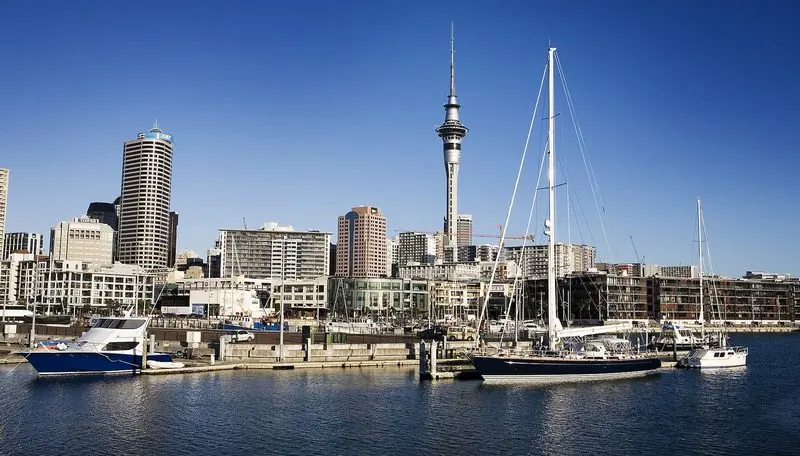
| Location | Jellicoe Street, Wynyard Quarter, on the southern side of Auckland's Waitemata Harbour, next to Westhaven Marina |
|---|---|
| Operator | Auckland Council, through Auckland Marinas |
| Berths | eight, at 140 m, 140 m, 95 m, 95 m, 92.5 m, 92.5 m, 90 m and 90 m |
| Maximum LOA | 140 m |
| Depths | 4.5 m to 6.5 m |
| Shore power | 400 volts at 50Hz, from 125 amps up to 750 amps per berth, with everything above 125 amps hard wired |
| Security | fully gated pontoons with keypad access and 24-hour CCTV |
| Clearance | Silo and Auckland Central are the only Auckland marinas that can clear vessels over 24 metres with Customs and the Ministry for Primary Industries |
| Biosecurity | New Zealand requires a clean hull on arrival, with biofouling removed less than 30 days before arrival or a cleaning arrangement in place within 24 hours of it |
| Next door | Orams Marine, with an 820-tonne travel lift hauling yachts to 75 m LOA |
| Orams sheds | two covered work sheds of 60 metres and one of 50 metres |
| Cruising | the Hauraki Gulf starts at the harbour entrance, and the tropical Pacific is a week north |
| Published berthage rate from 1 October 2025: NZD 11.50 per metre per day for a rental of up to one month, and NZD 9.50 per metre per day for one month or more, both exclusive of GST | |
| Utilities on the same rate card | electricity NZD 0.41 per unit and water NZD 7.00 per cubic metre, exclusive of GST |
| Bio-waste removal fee NZD 250 including one 60 kg bin, NZD 150 for each additional bin, plus a bunkering levy of NZD 0.05 per litre | |
| New Zealand GST is 15 per cent and the rate card is quoted net of it | |
| Vessels clearing Customs and MPI at Silo without being berth customers pay an additional berthage charge | |
| Berth designations and lengths | J1 95 m, J2 140 m, J3 140 m, J4 92.5 m, J5 92.5 m, J6 95 m, J7 90 m, J8 90 m |
| Depth is published as a marina-wide range of 4.5 m to 6.5 m and is not broken down berth by berth, checked 28 July 2026 | |
| Shore power | 400 V at 50 Hz, 125 A to 750 A per berth, 125 A on five-pin plugs and everything above hard wired by the marina |
Eight berths in the middle of a city
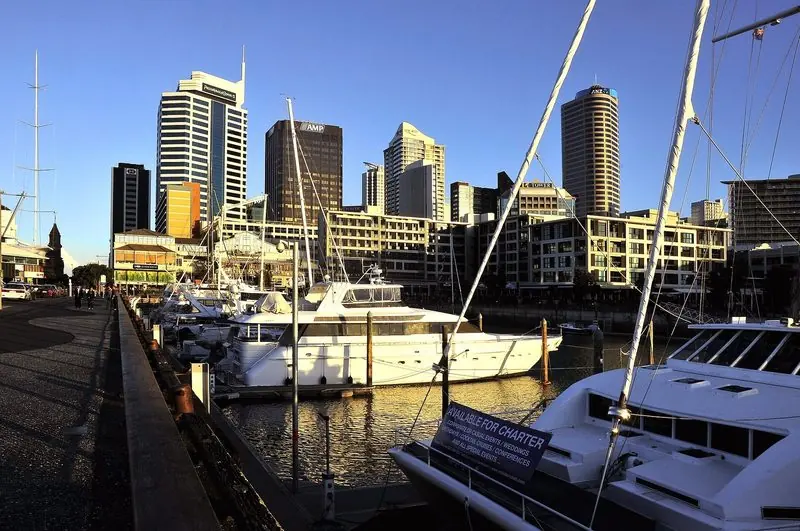
Silo Marina occupies the end of Wynyard Point on Auckland's inner harbour, a former tank farm rebuilt as a waterfront quarter. It is small and deliberate. Eight berths, two of them at 140 metres, two at 95, two at 92.5 and two at 90, with depths from 4.5 to 6.5 metres. Auckland Council owns and runs it through Auckland Marinas, alongside the much larger Westhaven Marina next door.
The proposition is concentration. A yacht here is a walk from the city centre, a shorter walk from the marine trades clustered in Wynyard Quarter, and inside a gated compound with keypad access and continuous camera cover. Berth holders quote the position as the reason they come back. There is no equivalent facility anywhere else in the South Pacific.
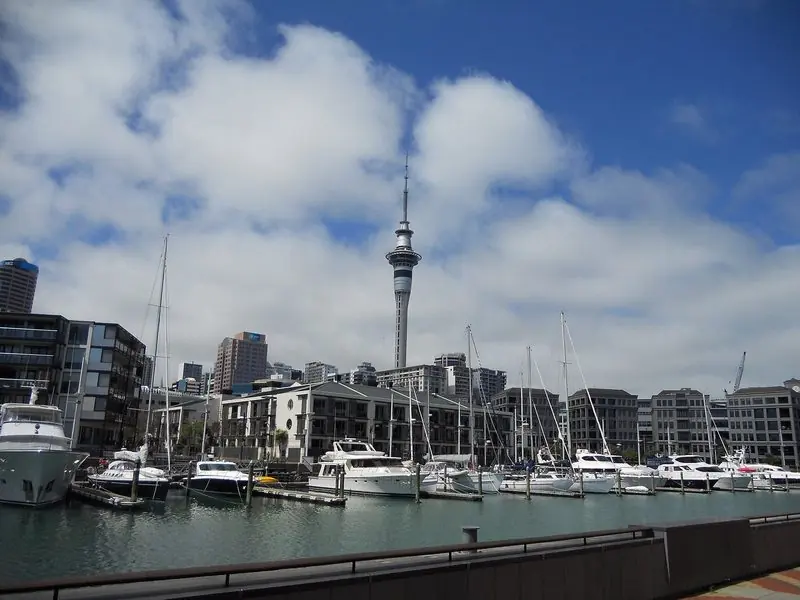
The approach and the harbour
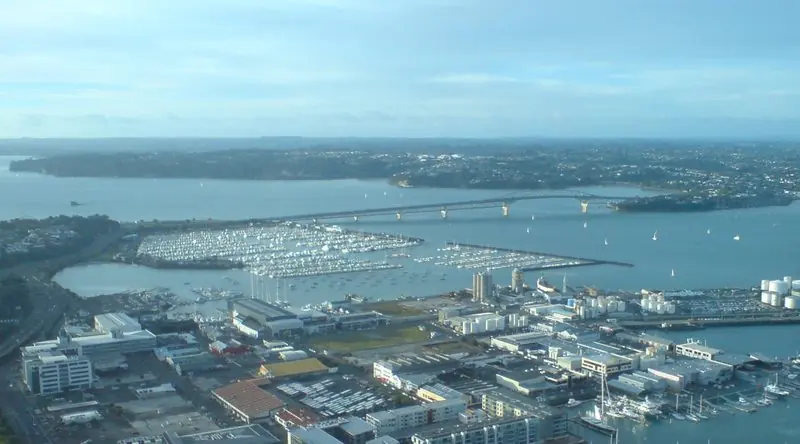
Access is around the northern head of Wynyard Point, using the same entrance as Westhaven Marina, off the Waitemata. The harbour is deep, well marked and busy with ferries, and there is no bar or shoal to negotiate. New Zealand has a real tide but nothing that gates this marina. Orams, which runs the adjoining superyacht berths, states deep water access with no air draft restriction, which matters for a large sailing yacht.
Auckland's weather is temperate and changeable, with the strongest winds coming from the southwest in winter and a summer pattern of settled northeasterlies broken by fronts. The Hauraki Gulf immediately outside is sheltered by Great Barrier Island and the Coromandel, which is why the city sails as much as it does. Ex-tropical cyclones occasionally track down from the north in late summer and are forecast days out.
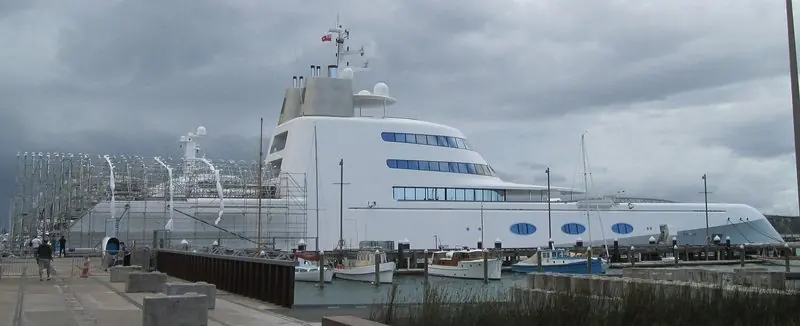
Two 140 metre berths, an 820-tonne lift on the next block, and the rest of the world several weeks away.
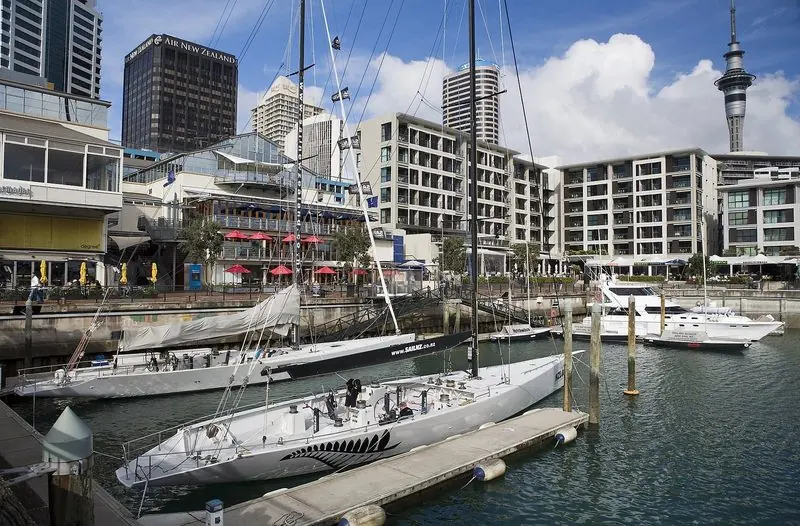
Power, waste and how a berth is taken
Every berth carries 400 volt, 50 hertz supply from 125 amps up to 750 amps, with the 125 amp units on five-pin plugs and everything larger hard wired, so a yacht's shore power arrangement needs to be discussed before arrival. Orams operates a vacuum pump-out for black and grey water at its 90 metre berths. Fuel, provisioning and the full range of technical trades sit within the quarter.
Berths are rented and Auckland Council publishes a rates card, with berthage charged by length and the marina taking bookings directly. Nothing is sold or leased in perpetuity. With only eight berths, availability over the southern summer is the constraint, and owners planning a New Zealand season commit early. The alternative berths are at Orams and at Auckland Central Marina, which takes yachts up to 50 metres.
The yard that justifies the journey
Orams Marine has been refitting yachts in Auckland since 1987 and operates an 820-tonne travel lift that hauls superyachts up to 75 metres length overall, which is the largest capability in the South Pacific by a wide margin. It runs two covered work sheds of 60 metres and one of 50 metres, so paint and structural work happens in a controlled environment. Its own 90 metre marina berths allow work alongside for yachts too big for the lift.
New Zealand's marine industry is the reason a European owner considers coming this far. The country builds its own America's Cup boats, has a deep and genuinely skilled trade base, and the yards have a reputation for finishing on time. Labour costs less than Europe and the exchange rate has generally worked in an offshore owner's favour. The catch is freight, because any part that is not in the country arrives by air from the other side of the world.
Customs, biosecurity and the clean hull rule
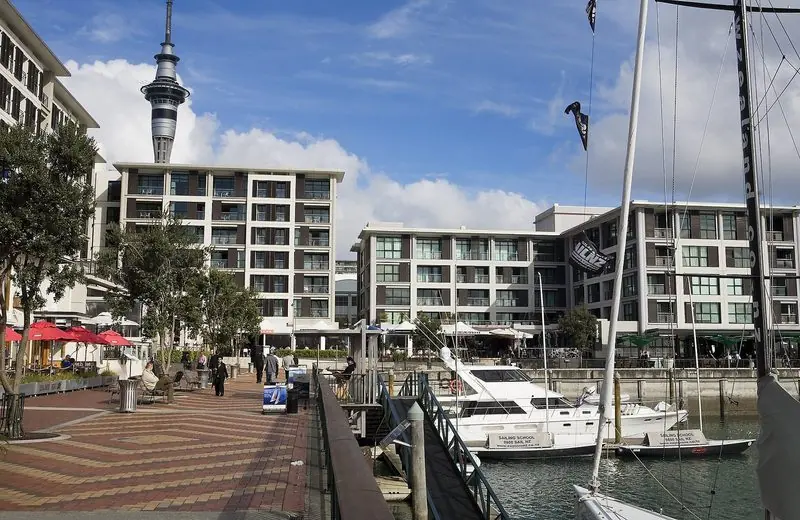
Silo and Auckland Central are the only marinas in Auckland able to clear vessels over 24 metres with New Zealand Customs and the Ministry for Primary Industries, with Westhaven handling anything up to 24. Arriving yachts must come to an approved place of first arrival, book a berth and then book the clearance with Customs and MPI directly. A full biosecurity clearance is what allows a yacht to move freely in New Zealand waters and stay beyond twenty days.
The biofouling regime is the strictest in the world and it catches people out. The Craft Risk Management Standard requires a vessel to arrive with a clean hull, meaning biofouling inspected and removed from the hull including niche areas less than 30 days before arrival, or a documented arrangement to clean within 24 hours of arriving. A biosecurity pre-arrival report has been mandatory since 1 May 2025. Yachts have been ordered out of New Zealand waters for failing this, and the cost of a mid-ocean surprise is entirely avoidable with a haul-out in Fiji or Tahiti on the way down.
Privacy and the city around it
The pontoons are gated and monitored, and Wynyard Quarter, while public, is a working waterfront and not a promenade built for looking at boats. One berth holder quoted by the marina describes it as close to contractors and to the city yet tucked away enough to keep privacy on board, which is a fair summary. Auckland is an unshowy place. Nobody is going to make a scene about a yacht.
The city itself has around 1.7 million people, good restaurants, decent hospitals and schools, and an international airport 30 to 40 minutes from the marina with long-haul services to Asia, North America, Australia and the Gulf. Flights to Europe involve at least one stop and the better part of a day. That distance is the single largest fact in any decision to base a yacht here.
Where the yacht goes from here
The Hauraki Gulf begins at the harbour entrance and holds Waiheke with its vineyards, Great Barrier, Kawau and a hundred anchorages within a day. North of Auckland the Bay of Islands is an easy overnight run and is the classic New Zealand cruising ground. The Marlborough Sounds and Fiordland are further and reward a longer commitment.
The bigger picture is the Pacific. Fiji, Tonga, New Caledonia and Vanuatu lie roughly a week north, and French Polynesia is further east across the trades. Yachts working this circuit spend the austral winter in the tropics and come south to New Zealand for the summer, which is what turns Silo Marina into a seasonal home port for the same yachts year after year.
Season, timing and the honest downside
The tropical South Pacific cyclone season runs roughly from November to April, and New Zealand sits below the belt, so the yachts come south for the austral summer of December to March and go back north in May. That makes the New Zealand summer the cruising season and the New Zealand winter the refit season, which is the opposite of every European assumption. Berths at Silo are tightest from December to February.
The downsides are distance, scale and paperwork. Eight berths is not a lot, a delivery from the Mediterranean runs to several weeks and a large fuel bill, the biosecurity regime is unforgiving, and goods and services attract 15 per cent GST. Auckland winters are wet and windy. Owners who make the trip generally do it once, stay two or three seasons and get a refit done while they are there.
What the rate card actually says
Auckland Council publishes the Silo berthage rates as a one-page card and the numbers are plain. From 1 October 2025 a berth rental of up to one month is charged at NZD 11.50 per metre per day, and a rental of one month or more drops to NZD 9.50 per metre per day. Both are exclusive of GST, which New Zealand levies at 15 per cent. Electricity is NZD 0.41 per unit, water is NZD 7.00 per cubic metre, bio-waste removal is NZD 250 including one 60 kg bin with NZD 150 for each additional bin, and fuel carries a bunkering levy of NZD 0.05 per litre. A vessel that comes alongside only to clear Customs and the Ministry for Primary Industries without being a berthing customer pays an additional charge that the card names but does not price.
Worked through, a 70 m yacht on the long-term rate is NZD 665 a day, NZD 19,950 for a thirty-day month, and NZD 22,943 once GST is added. The same yacht on a two-week visit pays the short-term rate of NZD 805 a day, NZD 11,270 for the fortnight, NZD 12,961 with GST. Against a Mediterranean summer berth that is not expensive, and against the cost of getting a hull to New Zealand it is close to a rounding error, which is the honest shape of the decision. The berth is not what an owner is paying for on this side of the world. The yard is.
Which berth, and how much power it carries
There are eight berths and the marina names them. J2 and J3 are the 140 m positions, J1 and J6 are 95 m, J4 and J5 are 92.5 m, and J7 and J8 are 90 m. Depth is published as a marina-wide range of 4.5 m to 6.5 m and, checked on 28 July 2026, Auckland Council does not attach a figure to an individual berth. With only eight positions that is a table that would fit on one line, and its absence is the one thing a deep-draught yacht cannot resolve from the website. A hull drawing more than 4.5 m should get the sounding for the specific berth in writing at the time of booking, because the difference between the top and the bottom of that range is two metres.
The power note is the best in this set and deserves reading as a specification rather than a boast. Every berth carries 400 V at 50 Hz, from 125 A up to 750 A. The 125 A units run off five-pin plugs that a crew can connect. Everything above 125 A is hard wired, which means the marina makes the connection and it is arranged before arrival, not improvised on the quay. At the top of the range, 750 A of three-phase at 400 V is roughly 520 kVA, which is enough to carry the hotel load of a large yacht alongside without running a generator. Very few marinas anywhere publish that number, and fewer still say who does the plugging.
Ashore, access and booking
| VHF and phone | VHF Channel 73; marina office +64 9 355 7479, staffed 24/7 (confirmed on the operator's own contact page and matched by an independent aggregator; a second phone number, +64 9 355 1837, turns up on some third-party marina databases - likely a stale or sister-office line, so treat the 7479 number as current). |
|---|---|
| Operator | Run by Auckland Council's marina arm out of the Auckland Central Marina office at 141 Halsey Street - the same back office that runs Silo, Auckland Central and Viaduct marinas. |
| Berthage rate | Published at NZD 7.50 per metre per day on the marina's rate schedule (matched on two independent booking-aggregator sites quoting the same figure); power and water are metered and billed separately on top of that - exact per-unit rates were not independently confirmable, so are not quoted here. |
| Booking process | No online instant-book for vessels over 30m - allocation goes through the marina office directly. During the 2020-21 America's Cup season, every vessel over 25m wanting to berth between 1 October and 31 March had to file a formal Expression of Interest, and both Silo and neighbouring Viaduct ran at full capacity that summer - a sign of how tight notice needs to be around a big regatta year. |
| Biofouling / clean-hull rule | New Zealand's Craft Risk Management Standard for biofouling has been in force since 15 May 2018. A vessel must arrive with a demonstrably clean hull, or be hauled and cleaned within 24 hours of arrival at an MPI-approved facility. Compliance is normally shown through continuous hull-maintenance records or an inspection/clean carried out within 30 days before arrival - MPI wants the paperwork, not just a clean hull on the day. |
| Customs and biosecurity on arrival | An Advance Notification of Arrival must reach NZ Customs at least 48 hours before the vessel crosses the 12-nautical-mile territorial limit. On arrival, everyone and everything stays aboard until boarded and cleared by a Customs officer and an MPI biosecurity officer - standard procedure at any New Zealand Port of First Arrival, which includes Silo Marina. |
| The yard next door | Orams Marine's 820-tonne travel lift went into service in January 2021 (first haul-out 13 January, a 34.8m vessel) and can take yachts up to roughly 75m LOA, with deep water access and no air-draft restriction - the largest travel lift of its kind in the South Pacific. Orams operates on a 125-year Council land lease from Panuku Development Auckland, on a site marine trades have used since 1908. |
| Getting there | Auckland Airport is about 21km / 23 minutes' drive from Wynyard Quarter by road. There is no heliport at the marina itself, but Auckland's city-waterfront heliport sits nearby on the downtown waterfront and is used by local charter operators for CBD transfers - worth booking ahead rather than assuming walk-up availability. |
What owners and crew report
The marina's own published endorsement centres on location, not price or facilities
Silo Marina's own website carries a single published berth-holder quote, attributed only to the yacht's name: praise for being close to Auckland's marine contractors and walking distance to the city centre while still private enough aboard. Treat this as the marina's own selected testimonial, not an independent review - no third-party review platform (Waterway Guide, Superyacht Services Guide) currently carries a posted review of Silo Marina at all, which is itself notable for a facility this size.
Vessel 'Slim', published on silomarina.co.nz
What is good, and what to watch
Strong points
- First and only Superyacht Ready-accredited marina in New ZealandSilo and Auckland Central marinas received Gold Anchor and Superyacht Ready accreditation from the Marina Industries Association in September 2023, presented by MIA CEO Suzanne Davies to Auckland Council's marinas team - a formal, dated industry credential, not marketing language.
- Genuine deep-water refit capability on the doorstepThe 820-tonne Orams travel lift (operational since January 2021) can haul yachts to roughly 75m LOA with no air-draft restriction - a rare combination in the South Pacific and the reason boats route through Auckland rather than just anchor off.
- City-centre convenience with full official clearance statusSilo Marina is a recognised Port of First Arrival for vessels over 24m (alongside Marsden Cove in Whangarei), within walking distance of Auckland's CBD - clearance happens on the pontoon rather than requiring a tender run to a separate customs dock.
What to watch
- It's a genuine detour, not a stopoverAuckland to Suva, Fiji is roughly 1,100 nautical miles - about 7 to 10 days for a typical cruising yacht, faster for a performance motor yacht. New Zealand is a deliberate seasonal commitment (most boats migrate north around May to June, back south ahead of the November to April cyclone season), not somewhere to drop in on a whim.
- No public real-time rate cardCurrent, official per-metre pricing is not posted on the marina's own site in an easily citable form - the NZD 7.50/m/day figure only surfaces through third-party booking aggregators referencing the marina's rate schedule, and exact power/water unit rates could not be independently confirmed.
- Very few slots for very large yachtsWith only a handful of berths at the top end of the size range, capacity gets absorbed fast around big events - both Silo and Viaduct ran fully booked through the 2020-21 America's Cup summer, and vessels over 25m had to file a formal Expression of Interest just to be considered for that season.
- Biosecurity paperwork has to be sorted well before arrival, not on the dayThe clean-hull requirement wants evidence - inspection or cleaning within the 30 days before arrival - so a crew that leaves hull compliance to the last minute risks a haul-out-on-arrival scramble rather than a straightforward pontoon clearance.
Who it is for: The owner running a Pacific programme, or willing to cross an ocean for a refit in a country that finishes on time.