MB92 loses its Golfe-Juan yard right, and the slot returns to tender
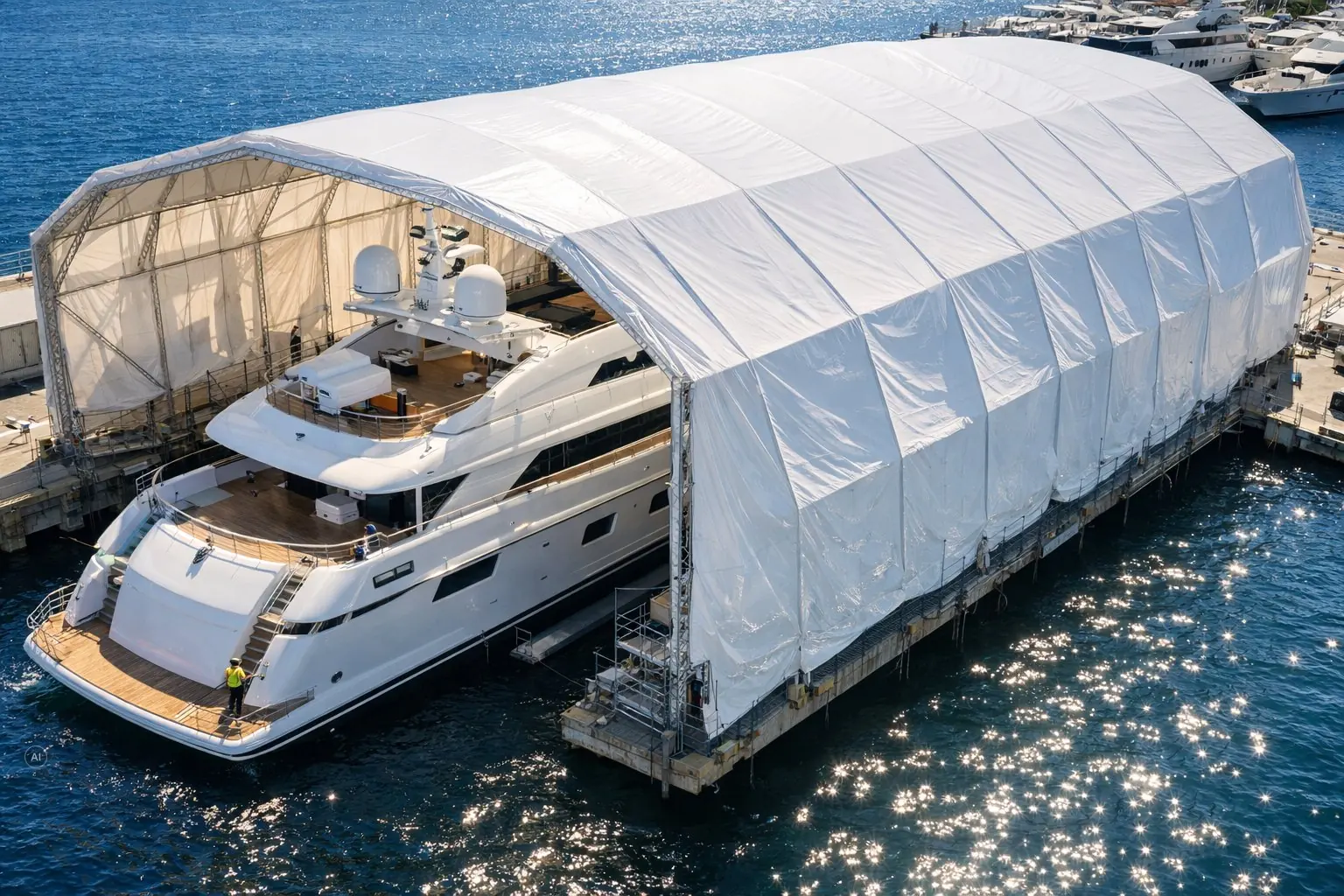
Three rulings, one exclusive undone
The tribunal administratif de Nice handed down three decisions on 28 July that pick apart how the shipyard inside Port Camille Rayon came to be run by MB92. The court found that the commune could not grant the group an exclusive right to occupy and trade on public property without first advertising the opportunity and running a selection process. That is a finding about procedure rather than about how the yard is run, and the remedy is the same: the temporary occupation authorisation covering the shipyard is to be terminated. The judges deferred the effect by nine months so the town can organise a proper procedure and the site can keep trading meanwhile.
The challenge was brought by Rodriguez Yachts, which contested the way the right was awarded. The prefect of the Alpes-Maritimes took a separate line, arguing the arrangement should have been treated as a public service subconcession, which carries its own advertising obligations. Neither argument required the court to find fault with MB92 itself. The yard is the beneficiary of a process the judges say the municipality got wrong, which is a clean distinction in law and no comfort to an owner with a boat booked in.
What is actually at stake on the hardstanding
MB92 opened the Golfe-Juan site on 18 February 2025 after spending more than EUR 5 million on modernising it. The yard runs a 240-tonne travelift, can hold sixteen yachts at once and works up to a limit of about 43 metres. More than fifteen people from the previous operation stayed on under site manager Philippe Escousse, and the site is run alongside MB92 La Ciotat, whose chief executive is Rob Papworth.
That specification puts Golfe-Juan in the busiest part of the refit market rather than the headline end of it. Yachts of 30 to 43 metres are the volume segment on the Cote d'Azur, and they are the ones that most need a yard within an easy run of Antibes, Cannes and Monaco. An owner at 90 metres has few options anywhere and plans years ahead as a matter of course. An owner at 38 metres expects to book a winter, hand over the keys in November and collect the boat in March.
The marina concession is untouched
The rulings leave the wider port concession alone. That contract was signed on 8 July 2024 with D Marinas Hellas, part of the D-Marin group, and covers the running of the marina itself. Only the separate right to operate the shipyard inside the port was found to be defective. The distinction is worth holding onto, because it means the berths and the marina services at Golfe-Juan are not in question here.
What is in question is who holds the hardstanding and the lift once the nine months run out. A fresh tender can end with MB92 keeping the site, with a competitor taking it, or with a stretch in which nobody is quite sure. Rodriguez Yachts is an established name on that coast and has already shown it will go to court over the process. An owner reading this should plan for a contest rather than a formality.
Winter 2026-27 is safe, spring 2027 is not
Nine months from 28 July lands in late April 2027. That is tidy judicial timing, whether or not it was meant to be: it clears the whole 2026-27 winter refit season, which is when the Riviera fleet actually comes out of the water. A yacht hauled in November and splashed in March is untouched by any of this.
The exposure sits in the season after. Yards take bookings a year or more ahead, and quotes for spring and summer 2027 work are being written now against a site whose operator may change before the final invoice is settled. Owners signing for that period should be asking who the counterparty will be in May 2027, what happens to a part-finished project if the authorisation lapses, and whether deposits survive that event. None of those are exotic questions. None of them had to be asked at Golfe-Juan a week ago.
A tight coast gets tighter
The wider point is capacity. Refit space between Marseille and the Italian border is chronically short, and the band under 45 metres feels it first because it has the least leverage with the yards. Every site that becomes uncertain pushes work toward La Ciotat, toward Italy, or toward a delivery passage long enough to eat into the season. That cost lands on the owner rather than on the yard.
For a boat in that size band, easy access to a good yard is part of what the asset is worth. It shortens the downtime and it shows up at resale in a survey that comes back clean. A dispute about advertising rules in a municipal contract is paperwork on its face. In practice it helps decide where a 40-metre yacht spends the winter of 2027-28 and what that winter ends up costing.
Questions this story answers
What happened?
The administrative court in Nice has ordered an end to MB92's right to run the shipyard inside Port Camille Rayon, finding that the town handed the group an exclusive on public land without putting it out to competition. The effect is deferred by nine months, which clears the coming winter and leaves the spring of 2027 exposed. Any owner holding a 2027 slot on that hardstanding now has a counterparty question to settle.
Who reported this?
Boat Industry, Petites Affiches, MB92, Tribunal administratif de Nice.
We do this for everyone who loves this world. The people who have spent their lives in it, and the people just discovering it. Yotters exists so that what we learn belongs to all of them.
Nobody pays us for this. No ads, no sponsors, nothing for sale. We just believe the world is a little better when knowledge is shared instead of kept.
If it gave you something today, tell us to keep going. Follow us, leave a like, or write a positive comment. We read every one, and they are what keeps us going.