OceanXplorer's Design Studio Renames Itself Gresham Marshall
Why did Gresham Yacht Design rename itself Gresham Marshall?
The new name formalises a partnership that already existed inside the studio for years, rather than announcing a new one: Mark Marshall had been Steve Gresham's collaborator on the firm's largest projects long before his name went on the door.
Gresham Yacht Design had carried Steve Gresham's name alone since he founded it, but Gresham says that was never the full picture. "The best creative partnerships are built over time," he told Megayacht News. "Through years of working together, Mark and I have developed a shared understanding of what great yacht design should be: innovative, purposeful, and uncompromising in quality." He added that the working relationship had turned into something closer to co-ownership: "What began as a working relationship developed into a genuine creative partnership built on mutual respect, shared values, and a common vision for design. Bringing that partnership into the name of the business felt like a natural and important step in our evolution."
Marshall, for his part, credits Gresham with shaping how he designs today. "Steve possesses a rare talent for visualizing creative solutions to complex design challenges that others simply don't see," he said. "Importantly for me, from day one he made me feel that my input and opinions genuinely mattered. That belief has helped shape the designer I am today." Gresham himself came to yacht design by way of Formula 1: before setting up his own studio in 2011, he worked as a car stylist in Williams Grand Prix Racing's engineering division, developing championship-winning race cars with the help of a wind tunnel, according to his own SuperyachtNews.com profile. He then trained under British designer Don Shead, whose credits include work for Sunseeker and yachts such as Chamar and Sussurro, contributing to the 25-metre turbine-powered Oci Ciornie, according to the studio's own account of his career.
What does Mark Marshall bring to Gresham Marshall that his own name is now attached to?
Marshall trained as a boat builder before he trained as a designer, and his nearly ten years inside Gresham's studio already cover the two projects that matter most to the firm's reputation: OceanXplorer and the 91-metre Moonlight II refit.
Marshall's route into yacht design ran through New Zealand, where he emigrated as a teenager and first worked as a boat builder across several yards before studying yacht design and joining LOMOcean Design in Auckland. There he worked on the 39-metre explorer catamaran The Beast and the 46-metre catamaran Charley, both production composite builds rather than one-off superyachts, according to Gresham Marshall's own account of his career. That background in production composites and military craft is different from Gresham's, and the studio now presents it as a deliberate complement rather than an overlap: Gresham Marshall's own description of Marshall credits him with expertise spanning production composite vessels, military craft and high-end superyacht projects, a wider spread of boat types than most single-name bespoke studios claim.
Marshall returned to the UK almost a decade ago and became, in the studio's words, "an essential part of Gresham's team," working on OceanXplorer's 87-metre research-vessel conversion and the 91-metre Moonlight II interior refit before the rename made that role explicit. Those two projects sit at opposite ends of the studio's range: one a working science vessel built to carry submersibles and helicopters, the other a refit of an existing yacht's interior. Naming both partners removes any ambiguity, for a prospective client, about which of the two actually did the work an owner is buying.
What has Gresham Marshall actually built, under either name?
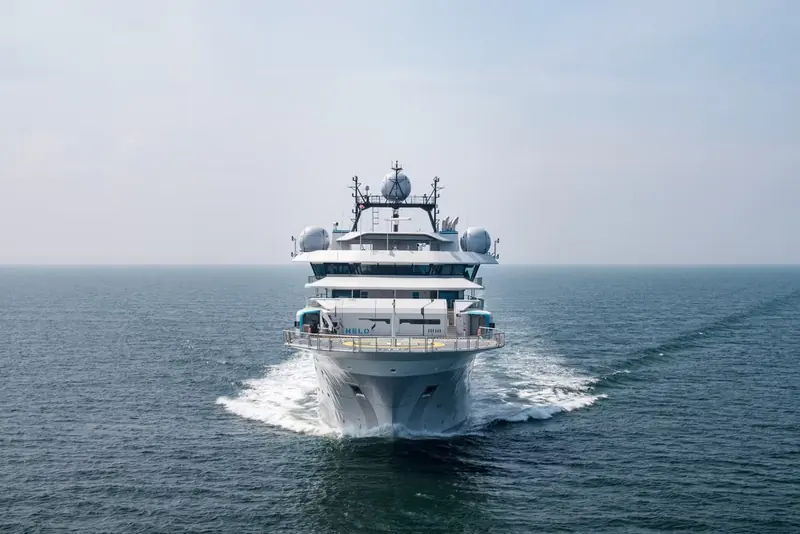
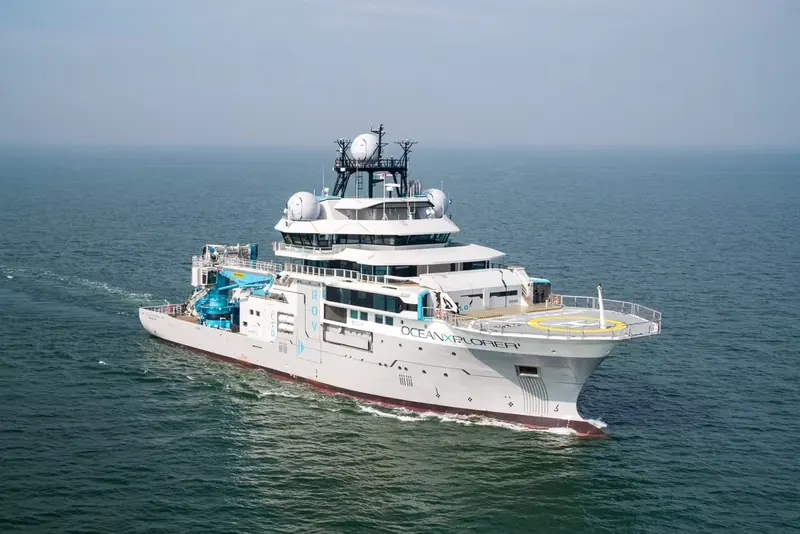
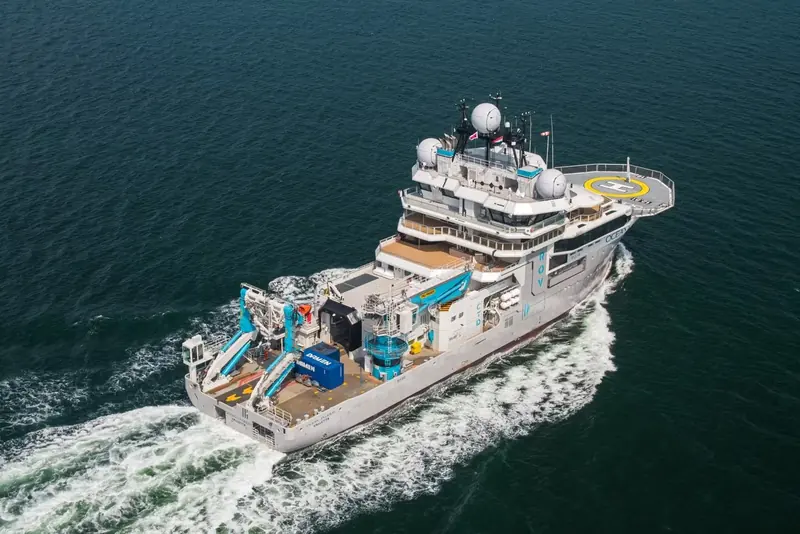
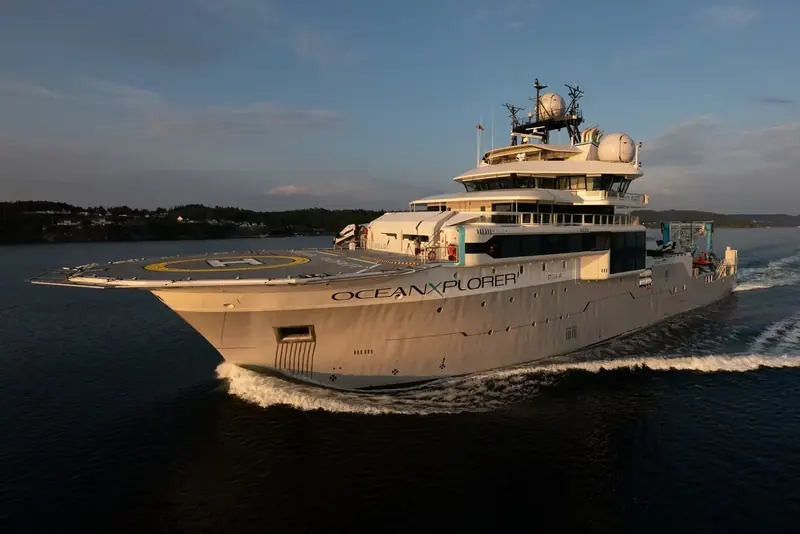
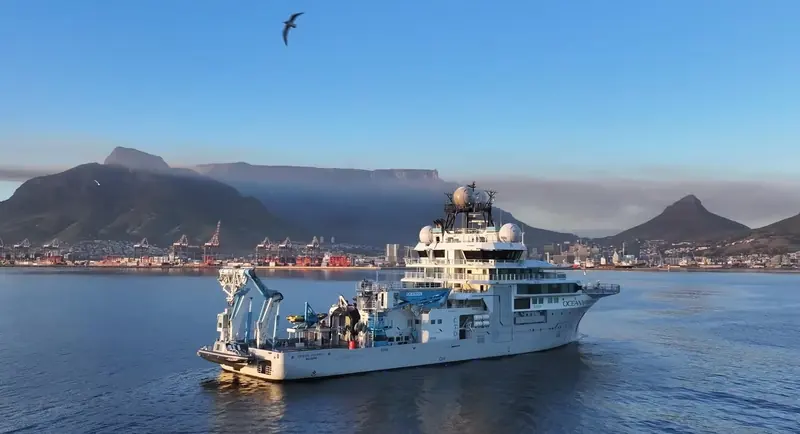
The studio's calling card is OceanXplorer, the 87-metre former fishing trawler turned research vessel for OceanX that appeared in the BBC's Blue Planet, and its current live build is Romeo Marine's 60-metre Romeo 60.
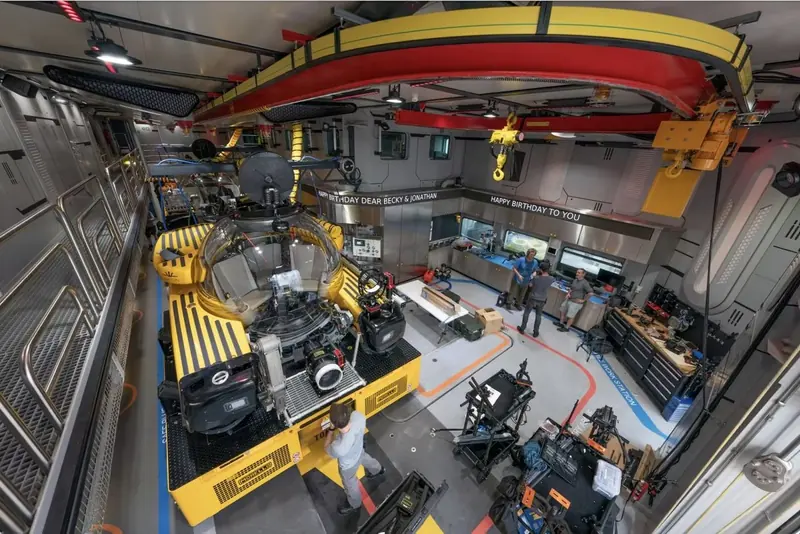
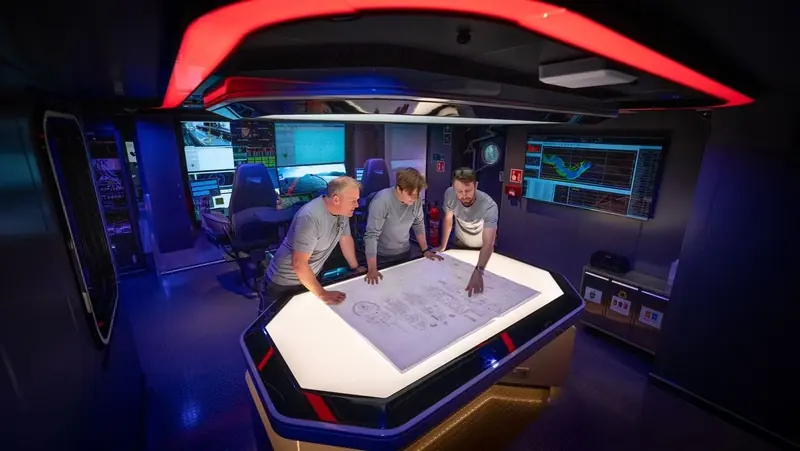
OceanXplorer is the project Gresham Marshall's own website leads with. The 87-metre vessel carries hangars for a helicopter and two submersibles, wet and dry laboratories, and a mission control room fitted out for live-streamed science broadcasts, styling and interior arrangement credited to the studio. Its profile on television, through the BBC's Blue Planet series, has made it the studio's most publicly recognised project by a wide margin, ahead of superyacht work like the 123-metre Al Lusail and the 125-metre Maryah that Gresham designed for H2 Yacht Design earlier in his career, or the 71-metre Victoria delivered under his own name. Gresham has called Maryah, built to full SOLAS commercial safety rules, his most demanding project: positioning the lifeboats behind large superstructure doors and hiding an enclosed forward mooring room out of view both had to be checked against the regulations before they could be signed off, alongside a fully certified CAP 437 helideck, he told SuperyachtNews.com.
The studio's live project list, published on greshammarshall.com, also names the 60-metre Romeo 60 for Romeo Marine, Megayacht News' one confirmed current build, alongside concept and design work described only by name and length: the 61.5-metre Juno, the 90-metre Apollo, the 120-metre Emir, the 100-metre Thor, a Whitmarsh Beachlander production series and a concept called the Hydrosphere Ocean Gallery Platform. That spread, from a production tender series to a 120-metre concept, is what the studio is now asking clients to judge Gresham Marshall by, rather than either partner's name alone.
Why should an owner commissioning a custom yacht care whether the design studio survives its founder?
A bespoke superyacht build typically runs three to five years from signature to delivery, so an owner is not only buying a look, he is betting that the practice behind it stays intact, accountable and reachable for that entire period.
Gresham Marshall describes itself as "a bespoke design studio, defined by its focus and dedication to individual projects," working with "a small number of clients at any one time" to allow, in its words, "a genuine partnership throughout the design journey." That model is common across boutique yacht design, and it carries a risk owners rarely price in at signature: a studio built around one name is a studio whose continuity depends on one person's health, interest or eventual retirement, over a build cycle measured in years rather than months.
The rename addresses that directly, and the studio has widened the bench further than the two founding partners' names suggest. Andrew Johansson, who spent nearly seven years as design editor at The Superyacht Group's media division before joining Gresham Marshall for marketing and business development, and Andrey Kuleshov, a 3D visualisation specialist who has worked in computer-generated imagery since the mid-1990s and now folds AI-driven visualisation tools into the studio's concept work, are both named on the studio's own staff page. For an owner weighing a signature-name boutique against a larger, multi-partner practice, Gresham Marshall's answer is now written into its own name: two designers, both credited, both staying.
What is good, and what to watch
Strong points
- Continuity now on the recordTwo named partners rather than one removes the single-founder succession risk an owner is otherwise betting on over a three-to-five-year build.
- Genuine range across boat typesThe combined portfolio runs from production composite catamarans (The Beast, Charley) to a 120-metre megayacht concept (Emir), wider than most single-name bespoke studios claim.
- A proven, publicly verifiable flagshipOceanXplorer is a delivered, operating vessel with independent television exposure through the BBC's Blue Planet, not a rendering or a concept still waiting on a client.
What to watch
- No published pricingNeither greshammarshall.com nor the trade coverage of the rename discloses a design fee structure or day rate, so an owner cannot compare cost against a larger studio like H2 Yacht Design without a direct enquiry.
- Most of the portfolio is unverified beyond name and lengthJuno, Apollo, Emir, Thor and the Hydrosphere concept are listed on the studio's own site with no build status, yard or client confirmed independently - it is not established which are under contract and which are speculative concept work.
- The combined name itself is untested in the marketGresham Marshall as a legal and reputational entity is days old; Marshall's work is proven, but no owner has yet signed a contract with the firm under its new name.
Practical detail
| Studio base | Hampshire and London, UK |
|---|---|
| Founded (as Gresham Yacht Design) | 2011 |
| Renamed Gresham Marshall | August 2026 |
| Core services | Concept design, layout planning, exterior styling, design project management |
| Signature delivered project | OceanXplorer, 87m research vessel for OceanX, featured in BBC's Blue Planet |
| Live build | Romeo 60, 60m, for Romeo Marine |
| Named concept and design work | Juno (61.5m), Apollo (90m), Emir (120m), Thor (100m), Whitmarsh Beachlander series, Hydrosphere Ocean Gallery Platform |
| What is not published | No design fee structure, day rate or team size beyond the two named partners and two named staff (Johansson, Kuleshov) appear on the studio's own site |
Questions this story answers
What happened?
Steve Gresham has renamed his London design studio Gresham Marshall, putting Mark Marshall's name on a partnership that had already produced the 87-metre research vessel OceanXplorer and a 91-metre interior refit before it went on the door. For an owner choosing who draws his next build, a studio's own succession answers a question that outlasts any single signature: whether the firm he signs a contract with is still the same firm, run by the same people, by the time his yacht is delivered three to five years later.
What is good about it?
Continuity now on the record. Two named partners rather than one removes the single-founder succession risk an owner is otherwise betting on over a three-to-five-year build.
What should an owner or buyer watch?
No published pricing. Neither greshammarshall.com nor the trade coverage of the rename discloses a design fee structure or day rate, so an owner cannot compare cost against a larger studio like H2 Yacht Design without a direct enquiry.
Who reported this?
Megayacht News (Ken Kremsler, 29 August 2026), Gresham Marshall (studio website, greshammarshall.com), BOAT International (news index, 29 August 2026), SuperyachtNews.com (designer profile, Gresham Yacht Design).
We do this for everyone who loves this world. The people who have spent their lives in it, and the people just discovering it. Yotters exists so that what we learn belongs to all of them.
Nobody pays us for this. No ads, no sponsors, nothing for sale. We just believe the world is a little better when knowledge is shared instead of kept.
If it gave you something today, tell us to keep going. Follow us, leave a like, or write a positive comment. We read every one, and they are what keeps us going.