Puerto Calero (Lanzarote)
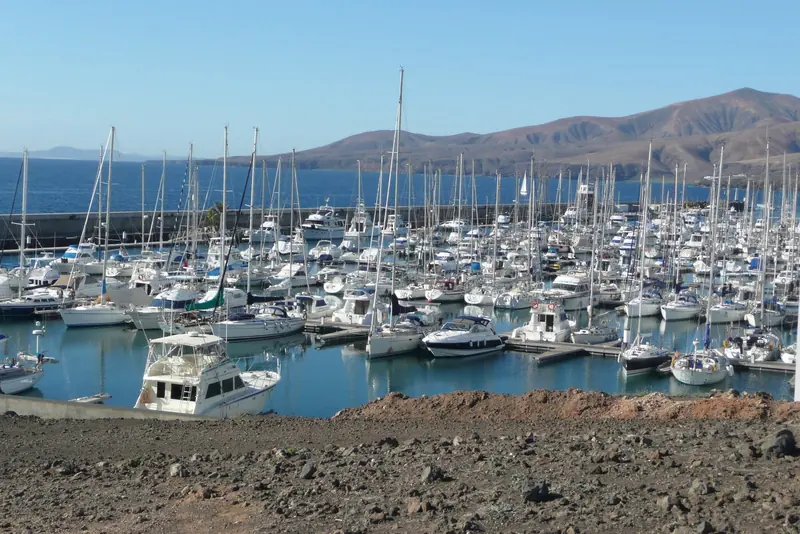
| Расположение | юго-восточное побережье Лансароте, Канарские острова, 28 54.922 N 013 42.417 W, сразу к юго-западу от Пуэрто-дель-Кармен |
|---|---|
| Оператор | Calero Marinas (Puerto Calero Marinas S.L.), семейная компания, основанная Хосе Калеро и возглавляемая сегодня его сыном Хосе Хуаном Калеро в должности генерального директора |
| Срок владения | 25 июля 2025 года Puertos Canarios окончательно утвердила продление концессии El Barquito на 35 лет при инвестициях EUR 4 462 202,35 плюс EUR 2 936 997,65 на обслуживание и замену и годовом платеже EUR 194 316,23 с привязкой к индексу потребительских цен; сам оператор отдельно говорит о более чем EUR 12 миллионах |
| Места | 438 на собственной странице марины у оператора и на Yachting Pages, 446 у Hello Canary Islands и более 450 по Marina World, и это тот разброс, которого следует ожидать между источниками |
| Размеры судов | от 8 m до 80 m длины на собственной странице марины у оператора, причем Dockwalk согласен на 80 m; суперъяхтенный причал, добавленный в 2006 году, строился под диапазон от 25 до 50 m, а планку в 60 m, которую приводят некоторые островные путеводители, к оператору возвести не удалось |
| Глубины | максимум 5,5 m у стенки, минимум 7 m во входном канале, вход возможен на любой стадии прилива при максимальном приливном размахе около 3 m |
| Швартовка | плавучие пальцы; максимальная ширина не публикуется |
| Береговое питание | одна или три фазы, 220 V и 380 V, до 200 ампер на суперъяхтенных местах |
| Вода | опресненная и питьевая, подведена к каждому месту; бесплатный wifi по всей марине |
| Топливо | топливный причал в конце мола, сразу справа при входе, открыт с 0800 до 1930 ежедневно, наличные или карта, вызов на VHF 9. Беспошлинного дизеля для прогулочных судов нет |
| УКВ | канал 9, канал 16 на прослушивании. Офис марины +34 928 511285, работает с 0800 до 2000 ежедневно |
| Таможенный статус | внутри таможенной территории ЕС, вне зоны НДС ЕС и вне гармонизированной акцизной территории. IGIC по 7 процентов заменяет испанский НДС по 21 проценту |
| Верфь | Varadero Puerto Calero, 90-тонный травелифт с максимальной шириной 7,40 m, крытая и открытая рабочие площадки, с 0800 до 1600 с понедельника по пятницу, закрыто в выходные и праздники |
| Тяжелый рефит | 820-тонный травелифт, подъемная камера 52 m на 14,5 m и площадка в 20 000 квадратных метров находятся в Marina Lanzarote в Арресифе, в девяти милях вверх по берегу, мажоритарная доля продана Calero Marinas в июле 2025 года |
| Аккредитации | Голубой флаг. Классификации Gold Anchor нет, декларация ISPS не публикуется |
| Аэропорт | Лансароте (ACE) в Арресифе, 13,6 km по дороге, такси около EUR 19 и примерно от 13 до 15 минут, ежечасный автобус от Terminal 1 примерно за 33 минуты. Только европейские ближние рейсы, дальнемагистральных нет |
Гавань и то, что заявленные цифры позволяют и чего не позволяют
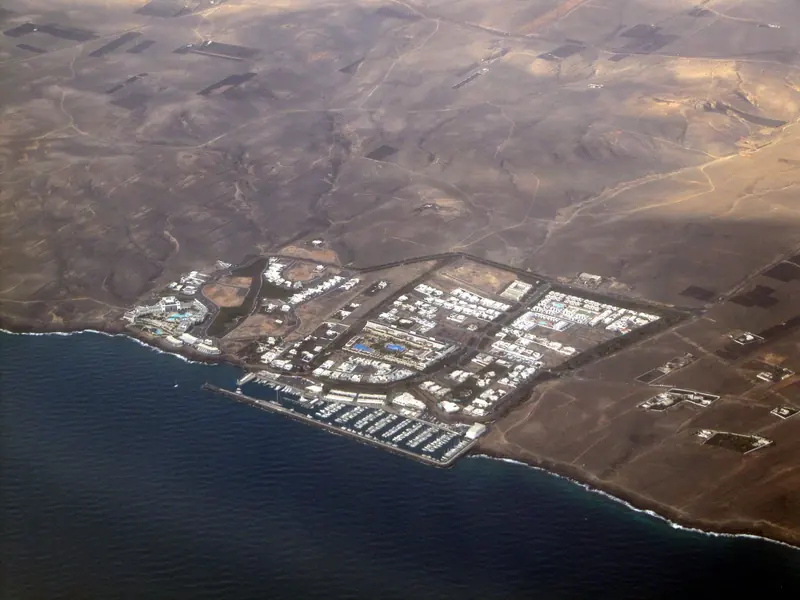
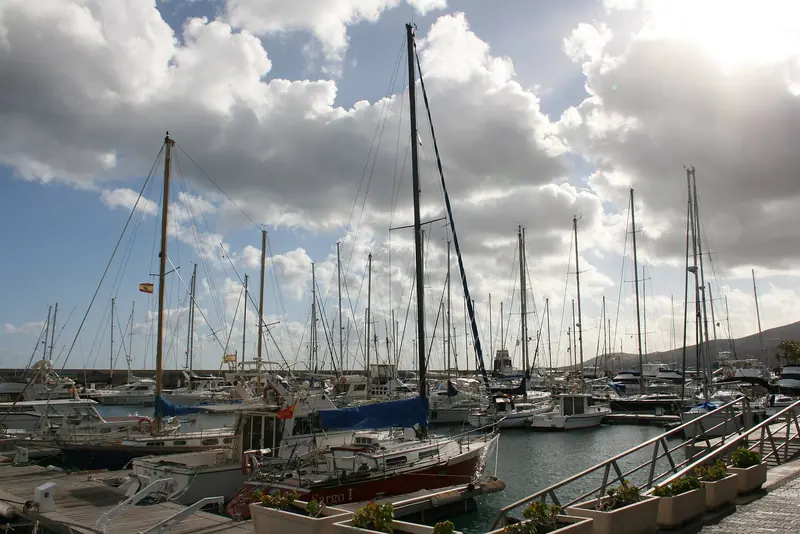
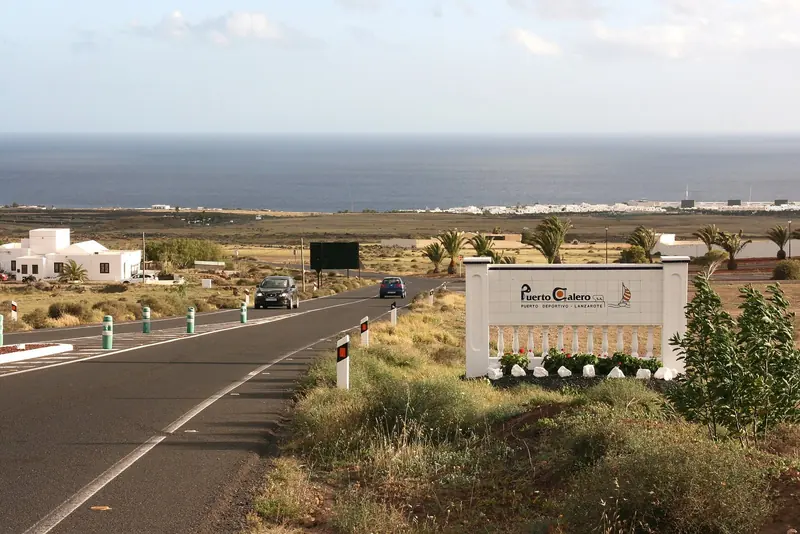
Пуэрто-Калеро лежит на юго-восточном побережье Лансароте, сразу к юго-западу от курорта Пуэрто-дель-Кармен, в точке 28 54.922 N 013 42.417 W. Собственная страница марины у оператора дает 438 мест, максимальную длину 80 m, максимальную глубину 5,5 m и минимум 7 m во входном канале, и Yachting Pages приводит те же 438 мест и те же 80 m. Другие опубликованные подсчеты выше. Hello Canary Islands называет 446, а Marina World, сообщая о продлении концессии в июле 2025 года, описала марину, выросшую со 198 мест на момент открытия до более чем 450. Швартовка на плавучих пальцах от 8 m, вода и электричество на каждом месте, одна или три фазы при 220 V и 380 V, до 200 ампер на суперъяхтенных позициях.
Две цифры, которые надо читать вместе, это 80 m и 5,5 m, потому что они стоят рядом в одной таблице на странице самой марины. Длина есть, ограничение это вода. Яхта в 70 или 80 m с осадкой больше примерно пяти метров здесь лагом не встанет, что бы ни говорила строка о длине, а планка в 60 m, которая ходит по этой марине, к оператору не возводится вовсе: Yotters смогла проследить ее только до Lanzarote Information, островного путеводителя, который в том же абзаце дает 450 мест против 438 у оператора. Собственная карточка Calero Marinas в Superyacht Services Guide сохраняет 80 m для Пуэрто-Калеро и относит 60 m к Marina Lanzarote и к 820-тонному травелифту в Арресифе, откуда цифра скорее всего и происходит. Сам суперъяхтенный причал появился в 2006 году и строился под диапазон от 25 до 50 m. Честное чтение такое: 80 m это цифра длины, под которой 5,5 m воды, единственная опубликованная проектная величина это диапазон от 25 до 50 m причала 2006 года, а все, что выше, разговор с офисом стоянок в частном порядке, а не заявленная возможность. Максимальной ширины тоже никто не публикует, и марина держит Голубой флаг, но не публикует ни декларации ISPS, ни классификации Gold Anchor.
Подход, прилив и единственное направление ветра, которое имеет значение
Вход открыт на юго-запад и настолько прост, насколько вообще бывает вход в канарский порт: никаких мористых препятствий, минимум 7 m в канале, башенный огонь на голове южного мола, канальный буй, оставляемый слева, и красный огонь, вделанный в оконечность стенки. Приливный размах доходит примерно до 3 m, так что бассейн доступен на любой стадии прилива, днем и ночью, и здесь нет ни шлюза, ни моста, ни обязательной лоцманской проводки для яхты.
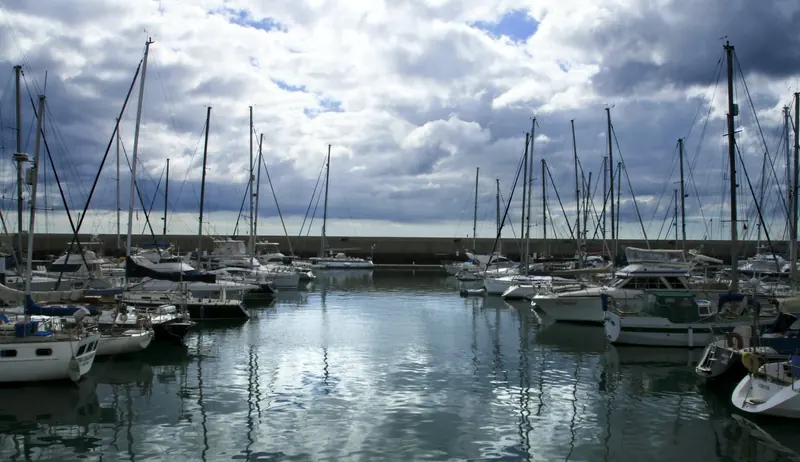
Погода это другая история, и именно ради нее сюда приходят. Лансароте почти весь год стоит в северо-восточных пассатах, и зоны разгона вдоль восточного и южного берегов регулярно дают на двадцать узлов больше прогноза. Пролив Бокайна между Лансароте и Фуэртевентурой сжимает эти пассаты в короткую толчею, которая застает врасплох всякого, кто считает спуск к Плайя-Бланке прибрежным перескоком. Длиннопериодная зыбь с севера и северо-востока огибает остров и раскачивает почти все открытые якорные стоянки. На этом фоне бассейн спокоен: Noonsite отмечает гавань как хорошо укрытую от волны, а Calero Marinas называет ее самой естественно защищенной яхтенной гаванью на Канарах. Открытость, которая остается, обращена на юго-запад, то есть ровно туда, куда смотрит вход, и юго-западный ветер это тот ветер, который закрывает порты Лансароте. 15 февраля 2026 года эпизод сильного ветра и тяжелой зыби поднял спасательные службы по всему острову, а порт Арресифе объявил превентивное закрытие за сутки именно из-за юго-западного ветра. Опубликованных сообщений о разрушительном накате внутри самого Пуэрто-Калеро мы не нашли, и это отсутствие само по себе полезная величина после сорока лет работы.
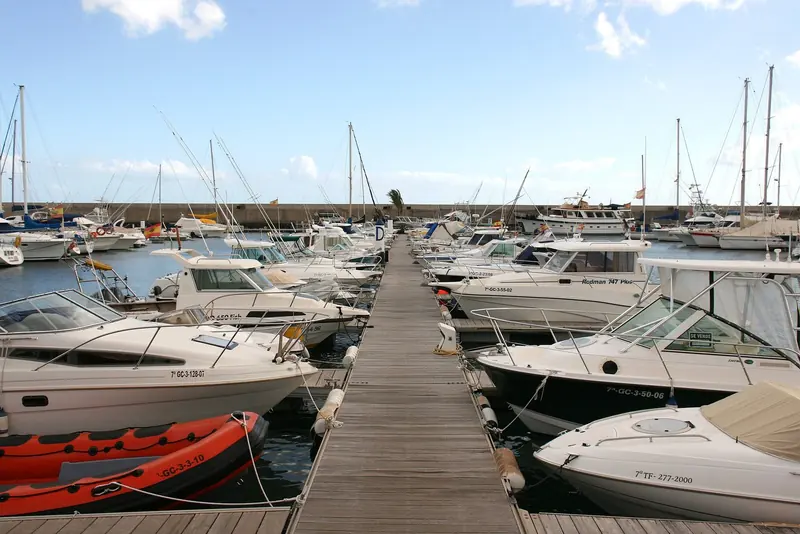
Самый спокойный бассейн на Канарах и самая дешевая долгая стоянка в Европе, а переход, ради которого вы пришли, начинается двумя островами дальше.
Ноябрь и декабрь, и календарь перехода, который управляется не отсюда
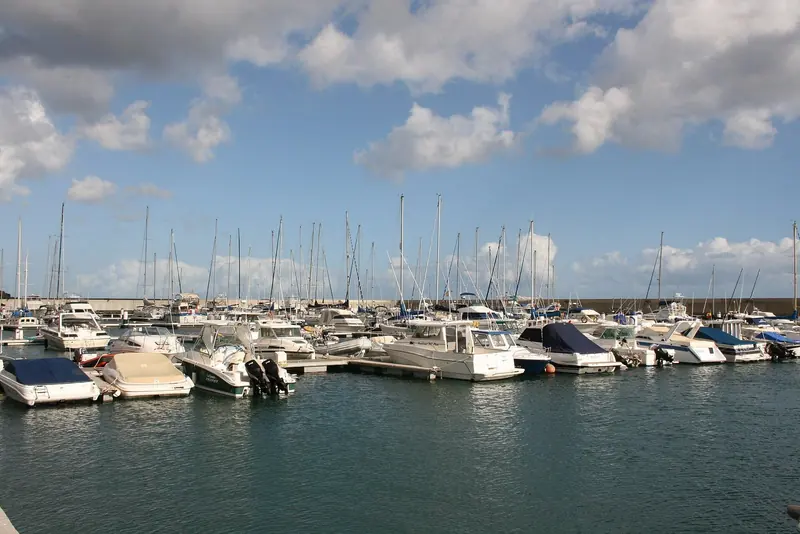
Это единственное, что владелец обязан понять про это место правильно. Atlantic Rally for Cruisers стартует из Лас-Пальмас-де-Гран-Канария, а не с Лансароте. ARC 2026 уходит из Лас-Пальмаса 22 ноября на 2 700 миль до Родни-Бей на Сент-Люсии. ARC+ выходит двумя неделями раньше, 8 ноября, на 850 миль до Минделу на Кабо-Верде и затем 2 150 миль до Port Louis Marina на Гренаде. Для этого флота Пуэрто-Калеро порт подготовки, а не порт старта. Лодки приходят сюда в августе, сентябре и октябре, чтобы подняться на берег, вооружиться, снабдиться и доделаться, а потом уходят на запад вдоль цепи островов к старту. Перегон на Гран-Канарию стоит закладывать в программу, а не вспоминать о нем задним числом, и место в Лас-Пальмасе бронировать одновременно со здешним.
Марина и тарифицируется ровно под этот рисунок. В ее долгосрочном прейскуранте есть отдельная ставка Transatlantic при минимуме в девяносто суток и отдельное предложение Pre-Transat для заездов, начинающихся между 1 августа и 31 декабря. Преимущество это наличие мест. Отчет Noonsite 2014 года от экипажа Enki II, до сих пор самое ясное свидетельство из первых рук о ноябрьской давке, описывал Гран-Канарию и Тенерифе, где свободного места не было нигде, пока ARC не ушла. Стоять двумя островами на ветер от этого и есть смысл зимовки здесь. Январь разворачивает поток: RORC Transatlantic Race вышла из Marina Lanzarote в Арресифе в воскресенье 11 января 2026 года, однокорпусники в 1230 UTC и многокорпусники в 1240, и флот из двадцати одной лодки обогнул поворотный знак напротив Пуэрто-Калеро, прежде чем уйти на 3 000 миль к Антигуа. Кто стоит здесь в начале января, тот получает флот у себя под молом.
Сколько стоит место и какой формы тариф
У тарифа необычная форма, и она говорит, для чего эта марина нужна. Пуэрто-Калеро считает по квадратному метру швартовного модуля в сутки, а не по метру лодки, так что узкий корпус в широком модуле платит за модуль. Все, что опубликовано, это долгая стоянка: ставка Transatlantic EUR 0,42 за квадратный метр в сутки при минимуме в девяносто суток, ставка Homeport EUR 0,40 при минимуме 180 суток, EUR 0,38 для многокорпусников и акция Pre-Transat по EUR 0,33 для заездов, начинающихся между 1 августа и 31 декабря. Ставки Transatlantic и Homeport ограничены длиной 16 m; предложение Pre-Transat на собственной странице Calero не ограничено по длине вовсе, оно рассчитано для однокорпусников, отсылает многокорпусники к отдельному тарифу и включает воду и электричество для яхт короче 20 m. Вода, wifi и электричество входят в цену везде, предоплата снимает от 5 до 10 процентов, и на все это ложится 7 процентов IGIC. Полные диапазоны в практических строках ниже. Ставки действуют для броней, сделанных до 31 декабря 2026 года, а для судов коммерческой регистрации скидки снимаются, так что чартерная яхта платит стандарт.
В деньгах: лодка в 12 m в модуле 12 на 4 m занимает 48 квадратных метров, что дает по ставке Homeport EUR 19,20 в сутки до налога, около EUR 7 010 в год или около EUR 6 310 с годовой предоплатой. Это арифметика Yotters по опубликованной ставке, а не коммерческое предложение, но порядок величины верный, и это доля того, что та же лодка платит где угодно в западном Средиземноморье. Выше 20 m включенные услуги заканчиваются, электричество и вода считаются отдельно. Чего на странице нет, так это короткой стоянки. Нет ни транзитного тарифа по диапазонам длины, ни суперъяхтенной ставки вообще, а страница тарифов верфи несет список оборудования без цен, что мы проверили в браузере, а не предположили. Единственный публичный транзитный сигнал, который Yotters смогла найти, это платформа бронирования Seasy со средней ценой EUR 60 за ночь и последней бронью EUR 60 для лодки в 14 m. Один агрегатор это не прейскурант, и владелец, приходящий на неделю, торгуется вслепую.
Налоговое положение и история про беспошлинность, которую все рассказывают неверно
Канары находятся внутри таможенной территории Европейского союза, но вне зоны НДС ЕС и вне гармонизированной акцизной территории, и это действительно ценное положение, только не то, о котором думает большинство владельцев. Практические следствия таковы: стоянка, работы на верфи и снабжение облагаются 7 процентами IGIC вместо 21 процента испанского НДС, а яхта, с которой НДС ЕС никогда не уплачивался, может стоять на островах неограниченно долго без часов временного ввоза, которые управляют Средиземноморьем. Noonsite отмечает, что канарские власти склонны обращаться с любой приходящей яхтой так, как если бы она пришла из третьей страны. Между островами приход и отход не оформляют, достаточно отметиться в офисе марины. Приходя из-за пределов ЕС, идут в порт входа, а экипаж из третьих стран проходит паспортный контроль при выходе из Шенгена. Формальную очистку при уходе из архипелага брать стоит, потому что на той стороне Атлантики ее часто спрашивают.
С топливом фольклор ошибается, и об этом стоит сказать прямо, потому что Канары широко считают беспошлинной бункеровочной остановкой. Для частной яхты они таковой не являются. Испанское льготное дизельное топливо, gasoleo bonificado, предназначено для рыболовных и коммерческих судов и прямо недоступно для движения прогулочных судов, и налоговый статус архипелага здесь ничего не меняет. Что вы получаете, так это более низкую налоговую базу, а не освобождение, и это все равно делает острова дешевле материка. Для масштаба: La Voz de Lanzarote сообщила 28 мая 2026 года, что средняя по острову цена автомобильного дизеля, открывшая 2026 год на EUR 1,187 за литр до закрытия Ормузского пролива и достигшая пика EUR 1,64 месяцем ранее, в мае впервые с момента закрытия опустилась ниже EUR 1,60, до EUR 1,58. На той неделе самый дешевый дизель на острове стоил EUR 1,435 на станции Plenenergy в Арресифе, а самый дорогой EUR 1,675 на Repsol на трассе LZ-2 в сторону Плайя-Бланки. Своей цены на колонке марина не публикует, так что спрашивайте на причале и считайте бюджет по свежей котировке.
Верфь и два ее жестких предела
Varadero Puerto Calero стоит на территории и рутину делает хорошо: подъем, мойка, необрастающее покрытие, присмотр за лодками, оставленными без экипажа, и магазинчик с краской, аккумуляторами и чистящими средствами, а такелаж, двигатель, электроника, сварка, механическая обработка и работа со стеклопластиком организуются через контору верфи. Говорят по-испански, по-английски и по-немецки. Два предела как раз те, что никто не пишет в буклете. Травелифт берет максимальную ширину 7,40 m, что исключает все ходящие крейсерские катамараны, и рассчитан на 90 тонн, что исключает большинство яхт длиннее примерно 25 m. Собственная страница подъемов у группы называет 100-тонный травелифт на две верфи, но и карточка Noonsite, и собственное трансатлантическое предложение Calero говорят 90, так что планируйте на 90 и подтверждайте до брони подъема. Контора работает с 0800 до 1600 с понедельника по пятницу и закрыта в выходные и праздники, так что поломка в пятницу после обеда это работа на утро понедельника.
Тяжелые работы уходят на девять миль вверх по берегу в Арресифе, где верфь при Marina Lanzarote держит 820-тонный травелифт, подъемную камеру 52 m на 14,5 m и более 20 000 квадратных метров твердой площадки и является единственным суперъяхтенным рефит-предприятием архипелага. Это другой актив в другой гавани, и с июля 2025 года он под другим контролем: Calero Marinas продала мажоритарную долю в Marina Lanzarote компаниям Buenavista Infrastructure и Nauplia Capital, сохранив пакет и соуправление текущими операциями, а страница тарифов Marina Lanzarote теперь перенаправляет на отдельный собственный сайт. Страница подъемов группы по-прежнему описывает две верфи как одно предприятие, и это уже не вся картина. Своего шипчандлера в Пуэрто-Калеро тоже нет. Ближайший это Lava Tienda Nautica в Арресифе, открытый четыре часа в день по будням, а профильные поставщики сидят в квартале Наос того же города.
Снабжение, газ и смена экипажа
Супермаркет в марине это магазин у дома, а не место, где снабжаются на трансатлантику; серьезные закупки в недолгой поездке на машине, в Мачере, Тиасе и Пуэрто-дель-Кармен, а свежее на воскресном рынке в Манча-Бланке и на субботних в Арресифе и Арии. Газ любой национальности идет через верфь, для иностранных баллонов с предупреждением за два дня. Подробности в практических строках. Две вещи стоит отметить здесь, потому что на них попадаются. Товары, отправленные на Канары, облагаются 7 процентами по прибытии, и транзитной яхте не стоит рассчитывать на возврат, так что комплект парусов или новый спасательный плот с доставкой обходится дороже, чем при заказе. А постановка на якорь в морском заповеднике Чинихо у Ла-Грасиосы и Алегрансы требует письменного разрешения Cabildo de Lanzarote, которому нужны тридцать дней, так что это решение принимают до выхода из Европы, а не в тот же день.
Смена экипажа самая простая часть всей операции. Аэропорт Лансароте в Арресифе (ACE) находится в 10 km по прямой и в 13,6 km по дороге, такси стоит около EUR 19 и идет примерно тринадцать минут, сама марина называет пятнадцать. От Terminal 1 каждый час ходит автобус, дорога занимает около 33 минут. Подвох в том, что такое ACE: загруженный европейский аэропорт ближних и чартерных рейсов с плотной сетью в Великобританию, Германию, Ирландию и Скандинавию и вовсе без дальнемагистральных линий. Владельцы и гости из Северной Америки, из Залива или из Азии стыкуются через Мадрид или через североевропейский хаб и теряют на этом день. У Лас-Пальмаса на Гран-Канарии сеть шире, и этот разрыв и есть цена спокойствия.
Поселок, стол и фиксированные даты
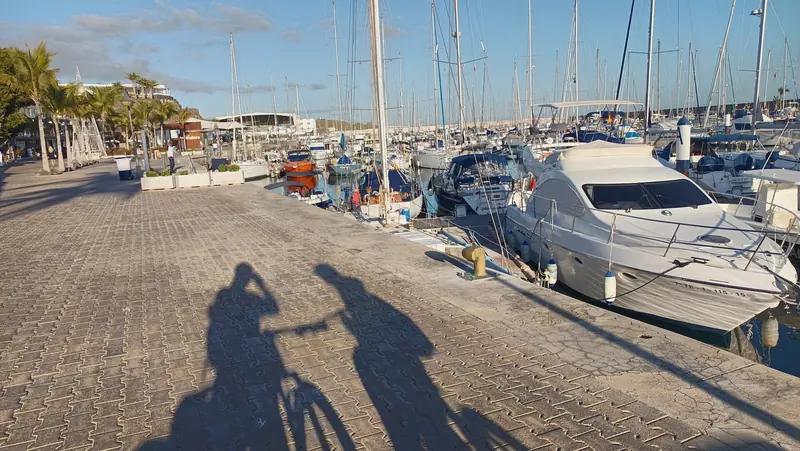
Пуэрто-Калеро это специально построенная набережная, а не городок, которому случилось иметь гавань, намеренно низкий и намеренно тихий. Amura здесь ресторан-эталон, обладатель Bib Gourmand от Michelin на перекрестье понтонов напротив суперъяхтенных мест. Чего у места нет, так это ночи. Променад гаснет рано, а пьют в соседнем Пуэрто-дель-Кармен, куда можно дойти пешком по береговой тропе, доехать автобусом или добраться водным такси через залив. Экипаж, которому нужен бар в полночь, поедет на такси; владелец, приехавший сюда спать, прочтет это как достоинство, каким оно и является.
Фиксированные даты стоит планировать, потому что они забирают места. Единственная еще впереди в этом сезоне это 52 SUPER SERIES Puerto Calero Lanzarote Royal Cup с 24 по 29 августа 2026 года, с пятью гоночными днями начиная с 25-го; другое событие серии на Лансароте, Marina Rubicon Sailing Week, прошло с 20 по 25 июля 2026 года, впервые на одном острове провели две регаты подряд. 44Cup гонялся здесь как 44Cup Calero Marinas, последний раз в марте 2024 года. Puerto Calero Marlin Cup проводится в октябре, в 2024 году дошел до тридцать первого выпуска, собрал 56 лодок на тридцатилетие в 2023 году и отправляет победителя на чемпионат мира в Коста-Рику. За всем этим стоит самый сильный сигнал намерений по объекту: 25 июля 2025 года Puertos Canarios окончательно утвердила продление концессии El Barquito в Пуэрто-Калеро на 35 лет. Планировать надо по цифрам самого регулятора: инвестиции EUR 4 462 202,35 плюс EUR 2 936 997,65 на обслуживание и замену и годовой концессионный платеж EUR 194 316,23 с привязкой к индексу потребительских цен. Широко цитируемые более чем EUR 12 миллионов это более широкое обязательство самой Calero Marinas в изложении Marina World, а не условие в деле. Марина никуда не денется, и теперь у нее три с половиной десятилетия срока, под которые эти деньги можно тратить.
На берегу, подъезд и бронирование
| Getting there | Lanzarote airport (ACE) at Arrecife is 10 km from the marina in a straight line and 13.6 km by road. A taxi is about EUR 19 and takes around thirteen minutes; the marina quotes the drive at fifteen. An hourly bus runs from Terminal 1 and takes about 33 minutes. ACE is one of the busiest leisure airports in Spain for northern European traffic, with dense year-round service to the UK, Ireland, Germany and Scandinavia, but it has no long-haul service at all. Guests arriving from North America, the Middle East or Asia connect through Madrid or a northern European hub, which costs a day in each direction. If long-haul access is the deciding factor, Las Palmas on Gran Canaria is the better base and this is the wrong island. |
|---|---|
| Arriving by sea, and the passage that catches people out | The entrance opens to the south-west, carries a minimum of 7 m in the channel, and has no off-lying hazards. Look for the tower light on the head of the south breakwater, the port-hand channel marker and a red light set into the end of the dock wall. Call the office on VHF 9, with 16 monitored, or telephone +34 928 511285 before you arrive; the office is open 0800 to 2000. The fuel dock is immediately to starboard on entry and the visitors' berth is on the port-side wharf. There is no lock, no bridge and no pilotage requirement for a yacht. The passage is the harder part: the north-east trades accelerate down the east and south coasts and regularly run twenty knots above the forecast, and the Bocayna strait between Lanzarote and Fuerteventura funnels them into a steep, confused sea. Long-period northerly swell wraps the island and makes the open anchorages roll. |
| Clearing in, and the tax status you are entering | The Canaries are inside the EU customs territory but outside the EU VAT area and outside the harmonised excise territory. You do not clear in and out between the islands; you report to the marina office. Coming in from outside the EU you go to a port of entry, and non-EU crew report to passport control when leaving Schengen. Noonsite records that Canarian officials tend to treat all arriving yachts as if from a third country. The practical upside is real: a yacht on which EU VAT has never been paid can lie here without the temporary-admission clock that runs in the Mediterranean, and everything you buy is taxed at 7 per cent IGIC rather than 21 per cent VAT. Take a formal clearance when you leave the archipelago, because it is often asked for on the far side of the Atlantic. |
| Reserving a berth | Long stays are contracted directly with the marina office on +34 928 511285 or through [email protected], with the Pre-Transat promotion booked through [email protected]. Short stays go through the reservation form on the marina's own site or through the group's online booking system. For the August-to-December preparation season, book in the spring: this is the window in which the whole crossing fleet is looking for the same thing, and the marinas further west fill first. A Homeport contract of 180 days or more carries up to three weeks of reciprocal berthing at the group's sister marinas, which is worth having if you intend to move around the archipelago. Discounts and special offers are not available to commercially registered vessels, so a charter yacht pays the standard rate. |
| What a berth costs | Rates are charged per square metre of the berth module per day, not per metre of boat, and are valid for reservations made before 31 December 2026. Transatlantic offer, monohulls to 16 m: EUR 0.42 per square metre a day, minimum 90 days, minimum quarterly payment EUR 900, water, wifi and electricity included. Homeport offer, minimum 180 days: EUR 0.40 per square metre a day for monohulls to 16 m with a EUR 300 monthly minimum, EUR 0.38 for multihulls to 16 m, same inclusions, with 5 per cent off for six months prepaid and 10 per cent off an annual contract. Pre-Transat promotion for occupancies starting between 1 August and 31 December: EUR 0.33 per square metre a day plus 7 per cent Canarian tax, three-month minimum, monohulls only with multihulls asked to enquire separately, and no LOA cap printed on the offer at all; water and electricity are included for yachts under 20 m LOA. Seven per cent IGIC applies to all of it. As arithmetic on the published rate, a 12 m boat in a 12 by 4 m module is 48 square metres, so about EUR 19.20 a day, roughly EUR 7,010 a year at the Homeport rate or EUR 6,310 with the annual prepayment discount, before tax. That is a Yotters calculation, not a quotation. |
| Fuel, water, power and what is extra | The fuel dock sits at the end of the breakwater, open 0800 to 1930 every day, cash or card, requests on VHF 9. There is no duty-free or rebated diesel for private yachts; Spain's gasoleo bonificado is for fishing and commercial vessels only. The saving in the Canaries is the tax base, not an exemption. For scale, and all from La Voz de Lanzarote's report of 28 May 2026: the island average for road diesel opened 2026 at EUR 1.187 a litre, rose through the closure of the Strait of Hormuz to a 2026 peak of EUR 1.64 in April, then fell back below EUR 1.60 in May for the first time since the closure, to EUR 1.58. Cheapest and dearest pumps that week were EUR 1.435 at the Plenenergy in Arrecife and EUR 1.675 at the Repsol on the LZ-2 towards Playa Blanca. The marina does not publish its own pump price. Under 20 m LOA, water, electricity and wifi are inside the berthing fee. At 20 m and above they are not: electricity is EUR 60 plus IGIC for a three-phase connection and then EUR 0.30 per kW, and water is EUR 0.0045 a litre with a EUR 5 minimum. A storage locker of about 2 by 2 by 2 m is EUR 90.15 a month. Goods shipped into the islands attract 7 per cent on arrival, and a yacht in transit should not count on recovering it. |
| The yard, spares and chandlery | Varadero Puerto Calero runs a 90-tonne travel hoist with a maximum beam of 7.40 m, a covered and an open work yard, hauling, scrubbing, antifouling and guardianage, and a small shop for paint, batteries and cleaning materials. It will organise rigging, engine and outboard work, electronics, welding, machining and glasswork. Spanish, English and German are spoken. Hours are 0800 to 1600 Monday to Friday and it is closed at weekends and bank holidays, so a Friday-afternoon problem is a Monday problem. The 7.40 m beam limit excludes every cruising catamaran, and 90 tonnes excludes most yachts over about 25 m; heavy and large work goes to the 820-tonne shipyard at Marina Lanzarote in Arrecife. There is no chandlery on site. Lava Tienda Nautica in Arrecife carries Imray charts, Garmin, Vetus, Lewmar and Hempel and opens 1000 to 1200 and 1400 to 1800 on weekdays and 0900 to 1300 on Saturday, with 10 per cent off for Calero Marinas Club members, and the trade suppliers Suministros San Gines, Sucesores de Hermenegildo Duarte and Inox Naval are in the Naos district. |
| Eating, drinking and provisioning | Amura is the best table on the promenade, a Michelin Bib Gourmand set at the crossroads of the pontoons opposite the superyacht berths, cooking Mediterranean and Canarian. La Taberna del Puerto, Sushi Bar Minato, Mumbai Masala, Margherita, Finnegans in the Port and La Portena fill out the waterfront, with main courses typically EUR 15 to EUR 28. After dark the marina is quiet and the nightlife is in Puerto del Carmen next door, reached on foot along the coast path, by bus or by water taxi. For provisioning, the marina supermarket opens 0800 to after 2100 and is a convenience shop rather than a passage store; the real runs are Spar at Macher, HiperDino at Tias and Lidl in Puerto del Carmen. Fresh produce markets: Mancha Blanca on Sunday, Arrecife and Haria on Saturday from 0900 to 1400. Camping Gaz is exchanged through the boatyard, Canarian NuB bottles are refilled at the Macher fuel station, and foreign bottles need two days' notice. |
| The fixed dates, and what is NOT published | Still ahead as this is published on 6 August 2026: the 52 SUPER SERIES Puerto Calero Lanzarote Royal Cup on 24 to 29 August 2026, with five race days from the 25th, and the Puerto Calero Marlin Cup, which runs each October and reached its thirty-first edition in 2024. Already past this year, and useful only as recurring windows: Marina Rubicon Lanzarote Sailing Week, the circuit's other Lanzarote event, was sailed on 20 to 25 July 2026; the RORC Transatlantic Race, a January fixture, left Arrecife on 11 January 2026 and rounded a turning mark off this breakwater; and the 44Cup last raced here as the 44Cup Calero Marinas in March 2024. So the windows to plan around are late August, October, and the January transatlantic start. The August-to-December Atlantic preparation season is the real squeeze. Not published: any transit or short-stay tariff by LOA band; any tariff at all above 16 m for the offers or above 20 m for included services; any superyacht rate; any boatyard or hoist tariff, since the yard's own tariffs page carries only an equipment list; the marina's fuel price; the maximum beam; and any ISPS declaration. The berth count and the maximum LOA are both disputed between the operator's pages and third-party guides, and no depth alongside is published for the superyacht berths at all, so confirm all three with the berthing office before you commit a large yacht. |
Что сообщают владельцы и экипажи
The November squeeze is real, and it is west of here
Crossing crews reported that in early November there was no space to be had anywhere in Gran Canaria or Tenerife until after the ARC had departed, while berths were available on Lanzarote at around half Puerto Calero's daily rate at the then brand-new Marina Lanzarote nine miles up the coast. The report dates from December 2014 and the relative pricing will have moved, but the seasonal pattern it describes has not.
Noonsite, report by Diana and Alex of s/v Enki IIThe yard cannot lift a catamaran
The boatyard's travel hoist is rated at 90 tonnes with a maximum beam of 7.40 m, and it is closed at weekends and on bank holidays. Advance reservations are recommended. Repair services, a guardianage service and a small shop selling paint, batteries and cleaning materials are on site, and Spanish, English and German are spoken. Anyone bringing a multihull to Lanzarote for a lift is going to Arrecife.
Noonsite business listing, Varadero Puerto CaleroImporting gear costs 7 per cent you probably cannot get back
A crew shipping new sails to the Canaries from Sweden before a crossing found that all imports attract the 7 per cent local tax, payable in cash on delivery, and could get nowhere with recovering it as a yacht in transit. Having a Spanish tax number smoothed the customs path, and their marina office lent them its own. The sails arrived within a week. Budget the tax into any pre-crossing shipment.
Noonsite, report by Diana and Alex of s/v Enki IIThe operator has just bought itself another 35 years
Puertos Canarios approved a 35-year renewal of the Puerto Calero concession, announced on 28 July 2025, with the operator committing more than EUR 12 million to infrastructure, service upgrades, energy efficiency and information systems. That figure is the operator's, not the regulator's: the Canary Islands government's own announcement of 25 July 2025 puts the filed investment at EUR 4,462,202.35 plus EUR 2,936,997.65 for maintenance and replacement, at an annual concession fee of EUR 194,316.23 index-linked to CPI. Founder Jose Calero Rodriguez called the renewal a continuation of a shared vision rather than only a legal milestone, and CEO Jose Juan Calero described Puerto Calero as the foundation and guiding model for the group's other marinas.
Marina WorldThe group no longer controls the big shipyard
Calero Marinas sold a majority stake in Marina Lanzarote at Arrecife, where the 820-tonne travel hoist and the archipelago's only superyacht refit yard sit, to Buenavista Infrastructure and Nauplia Capital in a deal completed in July 2025. Calero remains a shareholder and continues to co-manage day-to-day operations. Owners planning heavy work should note that the marina and the big yard are now separate businesses even though the group's own hoisting page still describes them as two halves of one operation.
Marine Industry News, DC AdvisoryThe racing fleet treats Lanzarote as a venue, not a stopover
The 52 SUPER SERIES scheduled two consecutive 2026 regattas on the island, Marina Rubicon Lanzarote Sailing Week on 20 to 25 July and the Puerto Calero Lanzarote Royal Cup on 24 to 29 August, in a five-event season that otherwise runs Puerto Portals, Porto Cervo and Valencia. Separately the twelfth RORC Transatlantic Race started off Arrecife on 11 January 2026 with twenty-one teams and rounded a turning mark off Puerto Calero on its way to Antigua.
52 SUPER SERIES, Royal Ocean Racing Club
Сильные стороны и что учесть
Сильные стороны
- The calmest basin in the archipelago, with a simple entranceNo off-lying hazards, a minimum of 7 m in the entry channel, a tidal range of about 3 m and access at any state of tide by day or night. Noonsite records the harbour as well sheltered from the waves. Yotters found no published account of damaging surge inside the basin either, but repeated searching turning up nothing is not the same as evidence of calm, and it is not part of the case above.
- Long-stay pricing that is published, cheap and inclusiveEUR 0.40 per square metre a day on a 180-day Homeport contract with water, wifi and electricity included under 20 m, 10 per cent off for annual prepayment, and up to three weeks of reciprocal berthing at sister marinas. Nothing in western Europe at this standard is close.
- Seven per cent tax instead of twenty-one, and no VAT clockThe Canaries are outside the EU VAT area, so IGIC at 7 per cent applies to berthing and yard work, and a yacht that has never paid EU VAT can lie here without running the temporary-admission clock that governs the Mediterranean.
- A fifteen-minute airport and thirty-five years of tenureLanzarote airport is 13.6 km away and a EUR 19 taxi, which makes crew changes trivial, and on 25 July 2025 Puertos Canarios renewed the concession for 35 years against a filed investment of EUR 4.46 million plus EUR 2.94 million for maintenance and replacement, at an annual fee of EUR 194,316.23 index-linked to CPI.
- It is on the road, in both directionsThe Atlantic preparation fleet stages here from August to December and the RORC Transatlantic Race rounds a mark off the breakwater every January on its way to Antigua, so the yard, the riggers and the sailmakers see ocean boats all season rather than day boats.
На что обратить внимание
- The crossing does not start hereARC 2026 leaves Las Palmas de Gran Canaria on 22 November and ARC+ on 8 November, two islands to the west. A boat wintering at Puerto Calero has to plan and book a delivery leg and a second berth, and the marinas at the start fill first.
- The yard has a 7.40 m beam limit and a 90-tonne hoistNo cruising catamaran can be lifted at Puerto Calero, and most yachts over about 25 m cannot either. The 820-tonne hoist and the only superyacht refit yard in the Canaries are nine miles away at Arrecife, in a marina Calero Marinas majority-sold in July 2025. The yard also shuts at weekends and on bank holidays.
- The 80 m headline is not matched by the depthThe operator's own page gives a maximum LOA of 80 m and a maximum depth of 5.5 m in the same table, and no maximum beam at all. The only published design figure for the big berths is the 25 to 50 m band the superyacht dock was built for in 2006. A 60 m ceiling circulates in third-party guides, but Yotters could trace it only to Lanzarote Information, an island guide whose berth count also disagrees with the operator's, and Calero's own Superyacht Services Guide entry applies 60 m to Marina Lanzarote rather than to here. Length is available on paper; water is the constraint, and nobody has published what a 70 m yacht actually draws alongside.
- No transit tariff, no superyacht tariff, no yard tariffEverything published is a long-stay offer, capped at 16 m on the Transatlantic and Homeport rates and uncapped but monohull-only on the Pre-Transat. The boatyard's own tariffs page carries an equipment list and no prices, the marina does not publish its fuel price, and the only public short-stay signal is a single booking platform quoting EUR 60 a night for a 14 m boat.
- No long-haul airport and no chandlery on siteLanzarote (ACE) is a European short-haul airport; guests from outside Europe lose a day connecting through Madrid or a northern hub. The nearest chandlery is in Arrecife and opens for four hours a day on weekdays. Everything technical is a drive away.
- Fuel is not duty-free, whatever the Canaries' reputation suggestsSpain's rebated gasoleo bonificado is for fishing and commercial vessels and is not available for the propulsion of pleasure craft. What the islands give you is a lower tax base, not an exemption, and the marina does not publish its pump price.
Для кого: Владелец, которому нужна дешевая, спокойная и хорошо связанная база, чтобы подготовить лодку и оставить ее на сезон, и который принимает, что эта марина скорее мастерская и ночлег, чем самостоятельное направление.