Silver Yachts' New 26m Explorer Cat Ranges 4,000nm on Diesel
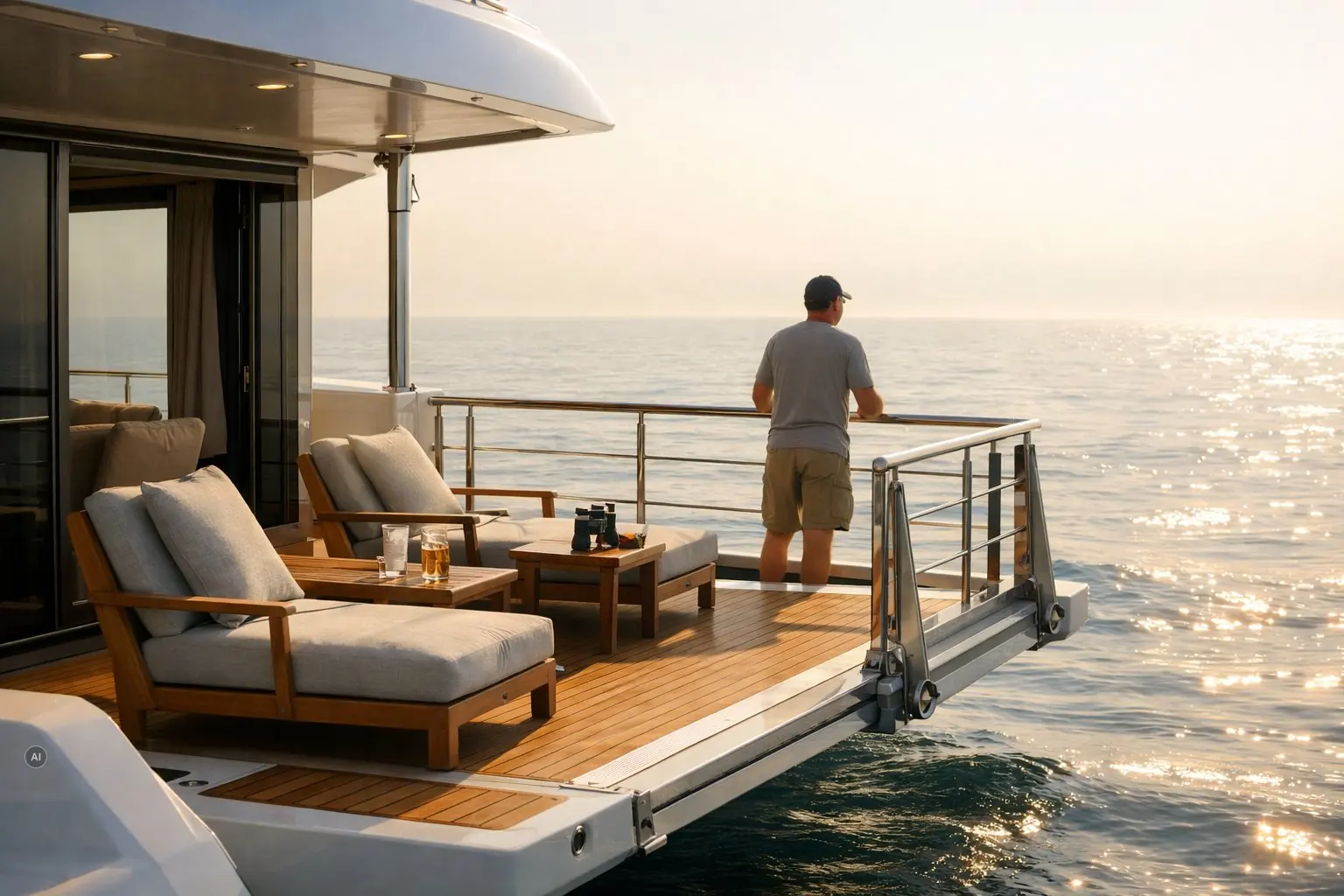
Metal cutting starts on a bespoke long-range catamaran
Silver Yachts, the Australian aluminium specialist, has begun the first stages of construction on a 26-metre custom explorer catamaran known internally as Project H780. Plate cutting started in August 2026 at the yard's Jiangmen facility in China, the same site that built the 36-metre SpaceCat and the smaller SilverCat models the yard already sells as a production range. This one is a one-off, not a catalogue hull: the yard describes the client as an experienced owner planning extended, far-flung family cruising rather than a Mediterranean charter season.
The build runs long by design. Launch is set for March 2028 and delivery for April 2028, roughly twenty months from the first cut plate to handover. Neither the price nor the owner's identity has been disclosed, which is normal for a fully custom order at this stage but leaves a buyer weighing a similar boat with no cost anchor to work from until the yard or a broker publishes one.
Wave-piercing hulls and a lifting foil, not just a bigger fuel tank
The range figures are not a function of a bigger tank alone. The hulls are wave-piercing, a bow shape that cuts into a sea rather than riding over it, which cuts pitching and slamming in a head sea and reduces the drag penalty a conventional catamaran bow pays at speed. A lifting foil sits ahead of that, generating lift that unloads the hulls as speed builds, trimming wetted surface and, with it, fuel burn. It is the same logic performance sailing designers have used for years, applied here to a cruising motor catamaran built to cross an ocean rather than win a race.
The numbers behind the engineering: 25 knots flat out for 2,000 nautical miles, or 11 knots cruise for 4,000 nautical miles, on 35,000 litres of fuel carried across four MAN diesels rated at 850hp each. Four engines rather than two means an owner mid-ocean keeps way on and steering redundancy if one unit fails, a real consideration on a boat built specifically to be far from a marina when something breaks.
Jason Ker's hull, Mark Tucker's rooms
The naval architecture is by Ker Yacht Design, the practice Jason Ker founded more than twenty years ago on the back of his first commission, Shakermaker, in 1997. Ker's name carries weight in performance sailing: his Ker 55, racing as Bribon, won all seven inshore races at the 2003 Admiral's Cup, and the office has kept winning in IRC racing since, through the Fastnet, the Sydney Hobart and the Rolex Commodores' Cup. A spell leading design for a South African America's Cup campaign brought CFD, FEA and neural-network tools into the studio that now feed its broader portfolio, which today runs from Ker 40 and 46 racing designs to lightweight cruising multihulls between 50 and 115 feet. H780 sits at the cruising end of that range, built on the same computational hull-optimisation work as the race boats.
Interiors and exterior styling are by Design Unlimited, the studio Mark and Julie Tucker founded in 2000 after Mark Tucker's earlier posts at Camper & Nicholsons and Ken Freivokh Design. The firm's recent work spans the 33-metre sailing yacht Missy, the 53-metre Feadship Mirage, the Baltic SY 67 series and the soon-to-launch 53-metre Pink Gin VI, alongside long-standing production relationships with Sunseeker, Baltic Yachts and Hanse. That is a sailing- and cruising-heavy portfolio rather than a motor-yacht one, which fits a catamaran brief built around efficient long-range cruising rather than a beach-club-and-nightclub brief.
Four cabins on 26 metres, and a serious tender garage
The accommodation is modest for the length: eight guests in four staterooms, where a monohull of the same 26 metres would typically fit five or six cabins. The trade is deliberate. Hull volume on a long-range wave-piercing catamaran goes into fuel, tankage and the structure needed to carry that weight efficiently at both cruise and top speed, not into stacking extra guest space. A buyer choosing between this and a similarly sized planing monohull is choosing between guest headcount and genuine ocean range, not comparing like for like.
The stern carries a drive-in, lifting tender dock, a feature rare below 30 metres that lets a tender be driven straight in and lifted clear rather than launched and recovered by crane or davit. Combined with the catamaran's wide beam of 12.9 metres against a 23.9-metre waterline length, it points to a boat designed around access to the water and its own toys on a long voyage, not around at-anchor entertaining for a large group.
What a buyer still cannot check
Nothing about this boat can be independently verified yet, and that is worth saying plainly rather than dressing up as more than it is. Metal cutting only started this month, so there is no sea trial, no fuel-burn log against the claimed range figures, and no owner or captain account to weigh against the yard's numbers. Everything published so far, including the range, speed and fuel-capacity figures, comes from the builder's own disclosure through the press covering the project, not from independent measurement.
What it signals is more interesting than the boat itself at this stage: a builder known for fast aluminium monohulls, including the 77-metre Silver Fast, committing real design and production capacity to a genuinely bespoke long-range explorer catamaran rather than another entry in its existing SilverCat production line. For an owner weighing a custom order against a semi-custom platform, H780 is a live example of what the fully bespoke route costs in time, at minimum twenty months from first plate to delivery, before it costs anything in money that has yet to be published.
What is good, and what to watch
Strong points
- Exceptional range for the size4,000nm at 11 knots outperforms most 26-metre motor yachts and rivals catamarans nearly twice her length, without a hybrid drivetrain or a sailing rig.
- Genuine sea-keeping engineeringWave-piercing bows paired with a lifting foil target comfort and efficiency in open water, drawing on the naval architect's race-boat CFD and FEA work rather than a styling exercise.
- A real tender garage, not a token oneA drive-in, lifting tender dock at the stern is rare below 30 metres and removes the usual crane-and-davit routine for an owner who actually uses the boat's toys.
What to watch
- Only four staterooms for 26 metresA monohull this length typically carries five or six cabins; the hull volume here goes to fuel and range instead of guest space, a real trade-off for anyone planning to cruise with more than a small party.
- Nothing to inspect for another twenty monthsPlate cutting only started in August 2026, so no sea trial, fuel-burn log or independent owner account exists, and none will for roughly two years.
- Price and owner both withheldWithout a published figure, a buyer weighing this against a production explorer catamaran has no cost anchor to compare it against.
Practical detail
| Length / beam | 26m LOA, 23.9m waterline length, 12.9m beam |
|---|---|
| Range | 4,000nm at 11 knots cruise; 2,000nm at 25 knots top speed |
| Engines | Four MAN diesels rated at 850hp each |
| Fuel capacity | 35,000 litres |
| Guests / crew | 8 guests in 4 staterooms; crew accommodation not published |
| Builder / yard | Silver Yachts, Jiangmen, China |
| Naval architecture / interior | Ker Yacht Design (hull); Design Unlimited (interior and exterior styling) |
| Timeline | Plate cutting began August 2026; launch March 2028; delivery April 2028 |
| What is not published | Price, owner identity, crew accommodation, and any independently measured performance figures |
Questions this story answers
What happened?
Silver Yachts has started cutting metal on a 26-metre custom explorer catamaran built to cover 4,000 nautical miles without refuelling. Her wave-piercing hulls and a lifting foil are aimed at owners who actually cross oceans rather than pose at a dock, and for anyone comparing hulls at this size, the range and the four-engine redundancy set a mark few motor yachts of the same length can match.
What is good about it?
Exceptional range for the size. 4,000nm at 11 knots outperforms most 26-metre motor yachts and rivals catamarans nearly twice her length, without a hybrid drivetrain or a sailing rig.
What should an owner or buyer watch?
Only four staterooms for 26 metres. A monohull this length typically carries five or six cabins; the hull volume here goes to fuel and range instead of guest space, a real trade-off for anyone planning to cruise with more than a small party.
Who reported this?
Megayacht News (Marie Cullen, 12 August 2026), YachtForums, Project H780 build thread (12 August 2026), Ker Yacht Design, company profile, Design Unlimited, company profile.
We do this for everyone who loves this world. The people who have spent their lives in it, and the people just discovering it. Yotters exists so that what we learn belongs to all of them.
Nobody pays us for this. No ads, no sponsors, nothing for sale. We just believe the world is a little better when knowledge is shared instead of kept.
If it gave you something today, tell us to keep going. Follow us, leave a like, or write a positive comment. We read every one, and they are what keeps us going.