Steeler's New Nikitoo Trades a Side Deck for a Bigger Interior
An Owner's Brief With One Hard Number
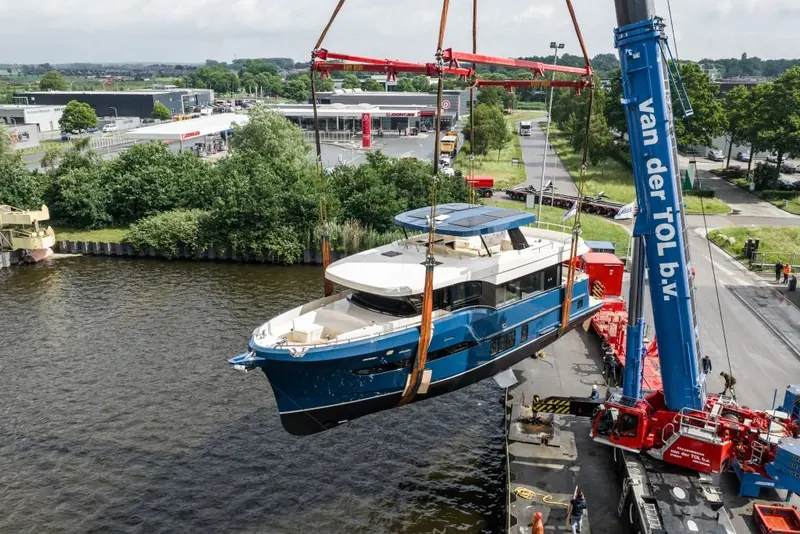
After boot Dusseldorf 2024, an experienced sailing couple approached the Dutch yard Steeler about swapping sail for power for long-range passagemaking. They had one non-negotiable: a maximum beam of 5.60 metres, set by the marina berths and canal routes they planned to use. But they also wanted the interior volume of Steeler's Ocean Explorer 72, a model built on a noticeably wider hull. Steeler's answer became the Ocean Explorer 67, and Nikitoo, delivered in early August 2026, is the first hull off that line.
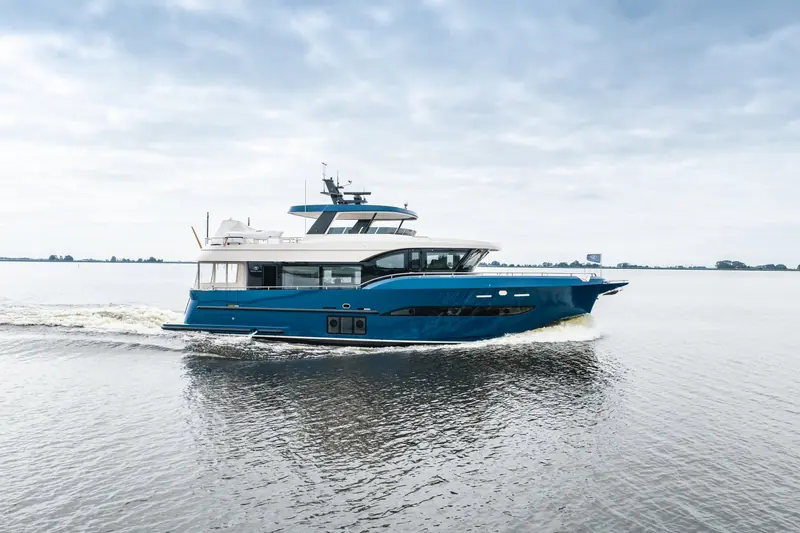
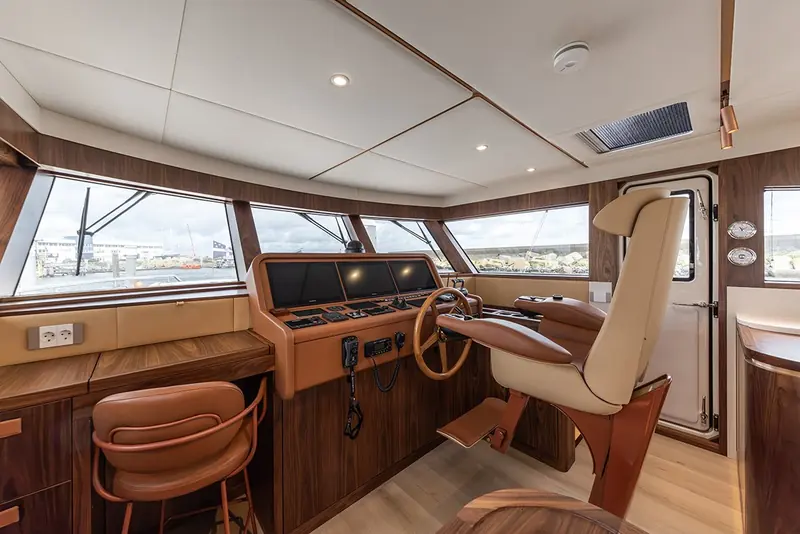
The two numbers do not usually fit together. A narrower beam normally costs an owner cabin width, headroom in passageways, or both. Steeler's fix was structural rather than cosmetic: drop one of the two conventional side decks and run the accommodation full-beam on the side that is left, reclaiming the width a second walkway would have taken. It looks obvious in a rendering and is genuinely difficult to build around watertight doors, sightlines from the helm, and where crew actually need to walk. Steeler's yard designation for the boat, hull 6701, reads as model-then-hull: the first delivery off a line the yard expects to build more of, positioned between the smaller Ocean Explorer 61E and the larger 72 and 85 in its steel-hull explorer range.
What a Single Side Deck Buys, and Costs
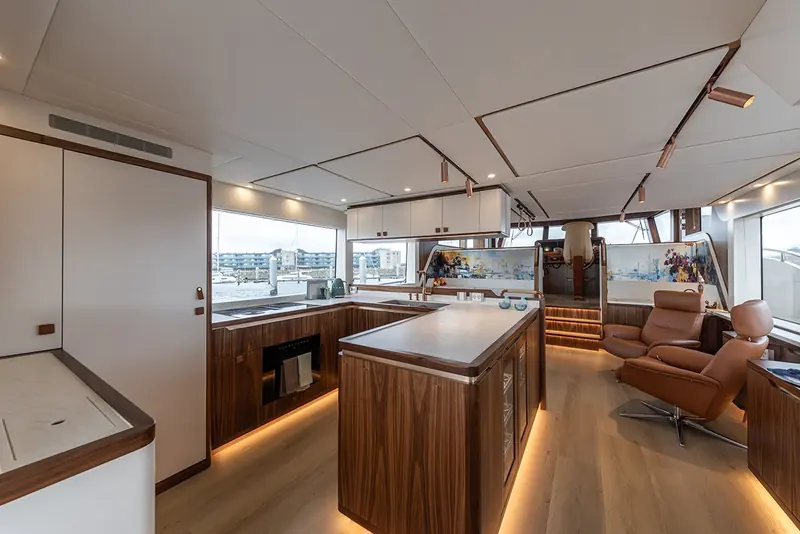
On board, the payoff is visible in the galley and saloon: a full-width island galley, walk-around counters, and a lounge that runs the beam of the boat without a corridor cutting through it, the kind of open-plan volume normally associated with a wider or longer hull. Steeler describes the single-side-deck arrangement as a proven concept in long-range cruising that reclaims valuable interior space - a framing that is, notably, the yard's own, not an independent naval architect's.
The tradeoff falls on the side without a deck: crew handling lines, fenders or the tender have exactly one route around the boat, not two. That is a real constraint at an unfamiliar berth, though less of one for owners who, like Nikitoo's, plan their own routing and can choose which side ties up. It is a decision that suits a specific cruising style rather than a universal one, and a buyer comparing the Ocean Explorer 67 against a symmetric-deck rival should weigh it against how much of their own docking they actually control.
Built for Sailors Learning to Motor
Nikitoo's owners are, by Steeler's account, experienced sailors making a first move to motor-yacht passagemaking, not first-time boat owners. That shows in what the yard prioritised: a 7-knot cruising speed yields a 4,000 nautical mile range, a figure closer to a long-range trawler than a fast-cruising motor yacht, and one that suggests genuine ocean-crossing ambition rather than weekend hops between marinas. Twin MAN D2676 LE484 engines, rated at 290kW each, give a 12-knot maximum - enough to make a landfall on schedule, not to outrun weather.
The hull is steel with an aluminium superstructure, the conservative, repairable combination long-range owners tend to specify over GRP, and construction meets CE Classification A, the category for vessels built to withstand open-ocean conditions. Interior design is by Annemarie Dottinga and Pim Dijksman, working within Steeler's semi-custom platform rather than a fully bespoke brief - one reason Nikitoo could go from a post-boot-Dusseldorf-2024 conversation to a delivered hull in roughly two and a half years. That range sits either side of the 67: the 61E is Steeler's smaller steel explorer, the 85 its largest, and a buyer cross-shopping the line is choosing primarily between interior volume and the beam or length required to carry it, not between fundamentally different construction standards.
The Numbers a Buyer Would Want
Overall length is 21.45 metres (20.40 metres on the hull), beam the owner-mandated 5.60 metres, and loaded draught 1.55 metres - shallow enough for the canal and coastal routes the brief was built around. Displacement at 50 per cent load is 88 tonnes. Fuel capacity is 12,250 litres and fresh water 2,145 litres, tankage that, paired with the 4,000nm range, points to weeks rather than days of genuine independence at anchor. None of those numbers has yet been checked against an independent fuel-burn log; they are the figures Steeler quotes for a boat that left the yard in June and finished trials in July.
Accommodation runs to three guest cabins and three bathrooms, plus a dedicated crew cabin - modest for a 21-metre yacht by charter-fleet standards, but consistent with an owner-operated passagemaker rather than a boat built to sleep the maximum number of paying guests. Nikitoo will make her public debut at the Cannes Yachting Festival in September 2026, alongside Steeler's wider expansion: the 57S and Enigma 54 Tempest are both under construction at the yard's Meppel facility, and a new Enigma 50 recently launched at Steenwijk.
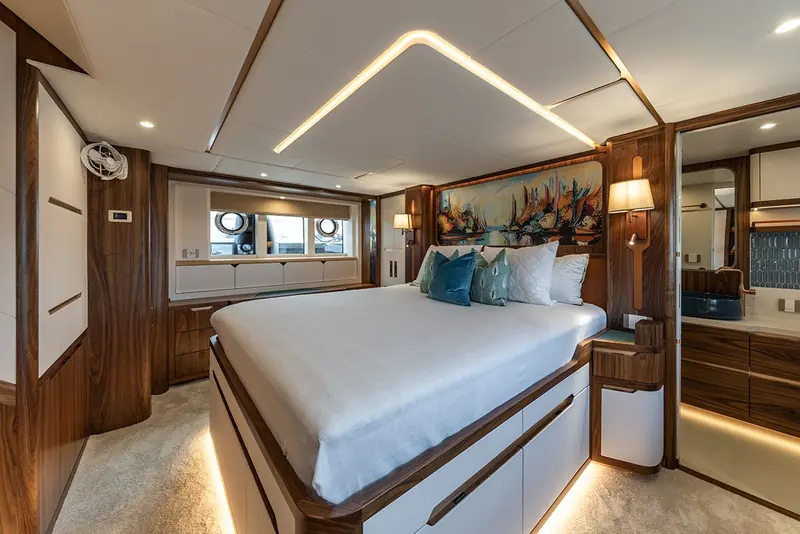
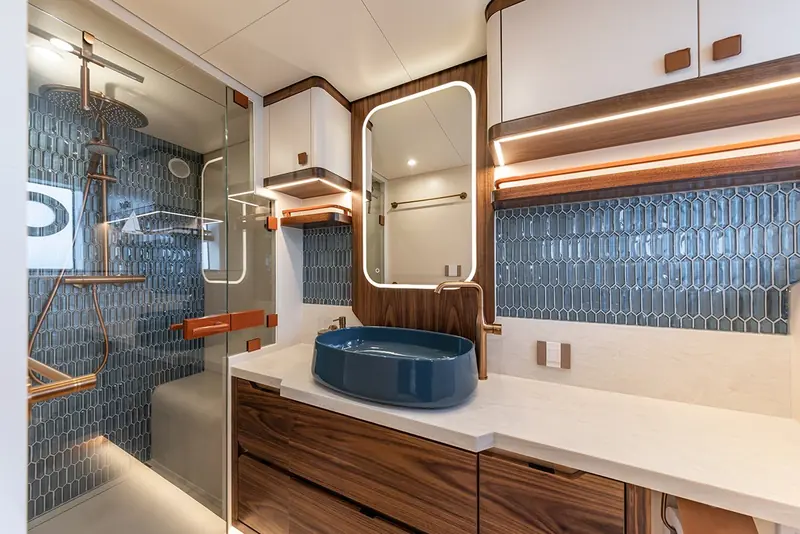
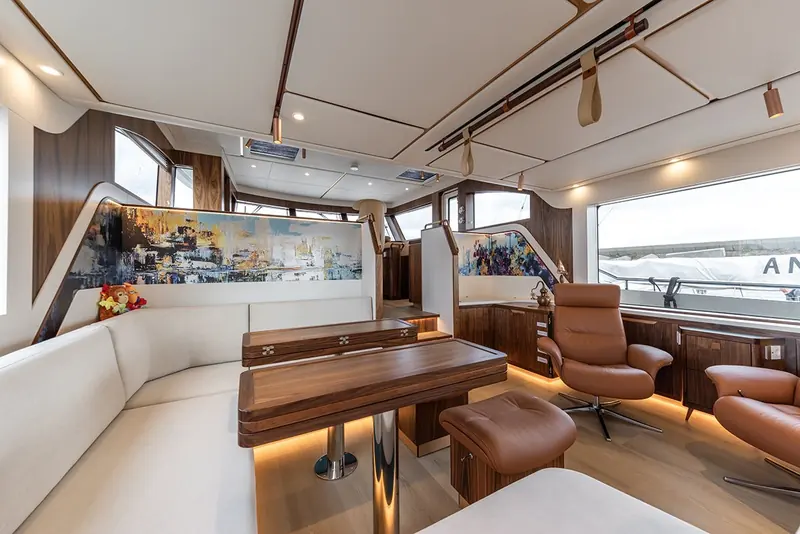
What Steeler Has Not Published
No price for Nikitoo or the Ocean Explorer 67 model is public; Steeler, like most semi-custom European builders at this size, quotes per project rather than publishing a base figure. No independent sea trial or fuel-burn data exists yet either - the speed, range and tankage figures above are all the yard's own, not a third party's, because the boat has been in the water for barely two months. That is ordinary for a first-of-line delivery, not a red flag, but it is worth an owner comparing this yacht to an established rival knowing which numbers here have been checked by someone other than the builder, and which have not.
The same is true of owner experience: nobody has owned an Ocean Explorer 67 for more than a few weeks, so there are no independent reports of how the single-side-deck layout performs at a real marina, in a real crosswind, with real guests aboard. Steeler's own account of the design brief is detailed and consistent across every outlet that has covered the delivery, which is a reasonable basis for describing what the yacht is - just not yet for judging how well it works.
What is good, and what to watch
Strong points
- Genuinely reclaims interior volumeThe full-beam galley and saloon show real open-plan width at a 5.60m beam, the kind normally needing a wider or longer hull.
- 4,000nm range is a real ocean-crossing numberAchieved at a practical 7-knot cruise, not inflated by an unrealistically slow figure.
- Steel and aluminium constructionThe conservative, repairable combination serious long-range owners specify over GRP at this size.
What to watch
- One side deck means one route around the boatCrew handling lines or fenders have no second path - a real constraint at an unfamiliar berth.
- 12 knots maximum is slow even for a displacement explorerA boat this size cannot outrun weather, only plan a passage around it.
- Every performance figure is unverified by a third partyNo independent sea trial or fuel-burn number exists yet for the Ocean Explorer 67.
Practical detail
| Price | Not published - Steeler quotes full-custom builds per project, no base price for the Ocean Explorer 67 line |
|---|---|
| Engines | Twin MAN D2676 LE484, 290kW (394hp) each |
| Speed and range | 12 knots maximum; 7-knot cruise gives a 4,000nm range |
| Tankage | 12,250 litres fuel, 2,145 litres fresh water |
| Accommodation | 3 guest cabins, 3 bathrooms, 1 dedicated crew cabin |
| Hull and classification | Steel hull, aluminium superstructure, CE Classification A |
| What is not published | No independent sea trial or fuel-burn data exists yet - all performance figures above are the yard's own |
Questions this story answers
What happened?
Steeler Yachts has delivered Nikitoo, the first hull in its new Ocean Explorer 67 line, built for an experienced sailing couple who wanted the interior volume of the yard's 72-footer inside a narrower hull. The fix was a single side deck instead of two - a trade any buyer comparing displacement explorer yachts under 25 metres should understand before they sign.
What is good about it?
Genuinely reclaims interior volume. The full-beam galley and saloon show real open-plan width at a 5.60m beam, the kind normally needing a wider or longer hull.
What should an owner or buyer watch?
One side deck means one route around the boat. Crew handling lines or fenders have no second path - a real constraint at an unfamiliar berth.
Who reported this?
Boote (delivery report, 11 August 2026), Ocean Magazine Australia (delivery report, August 2026), Steeler Yachts (press release, Delivered: The First Ocean Explorer 67).
We do this for everyone who loves this world. The people who have spent their lives in it, and the people just discovering it. Yotters exists so that what we learn belongs to all of them.
Nobody pays us for this. No ads, no sponsors, nothing for sale. We just believe the world is a little better when knowledge is shared instead of kept.
If it gave you something today, tell us to keep going. Follow us, leave a like, or write a positive comment. We read every one, and they are what keeps us going.