Two Westport 130s sell, and one went to auction with no reserve
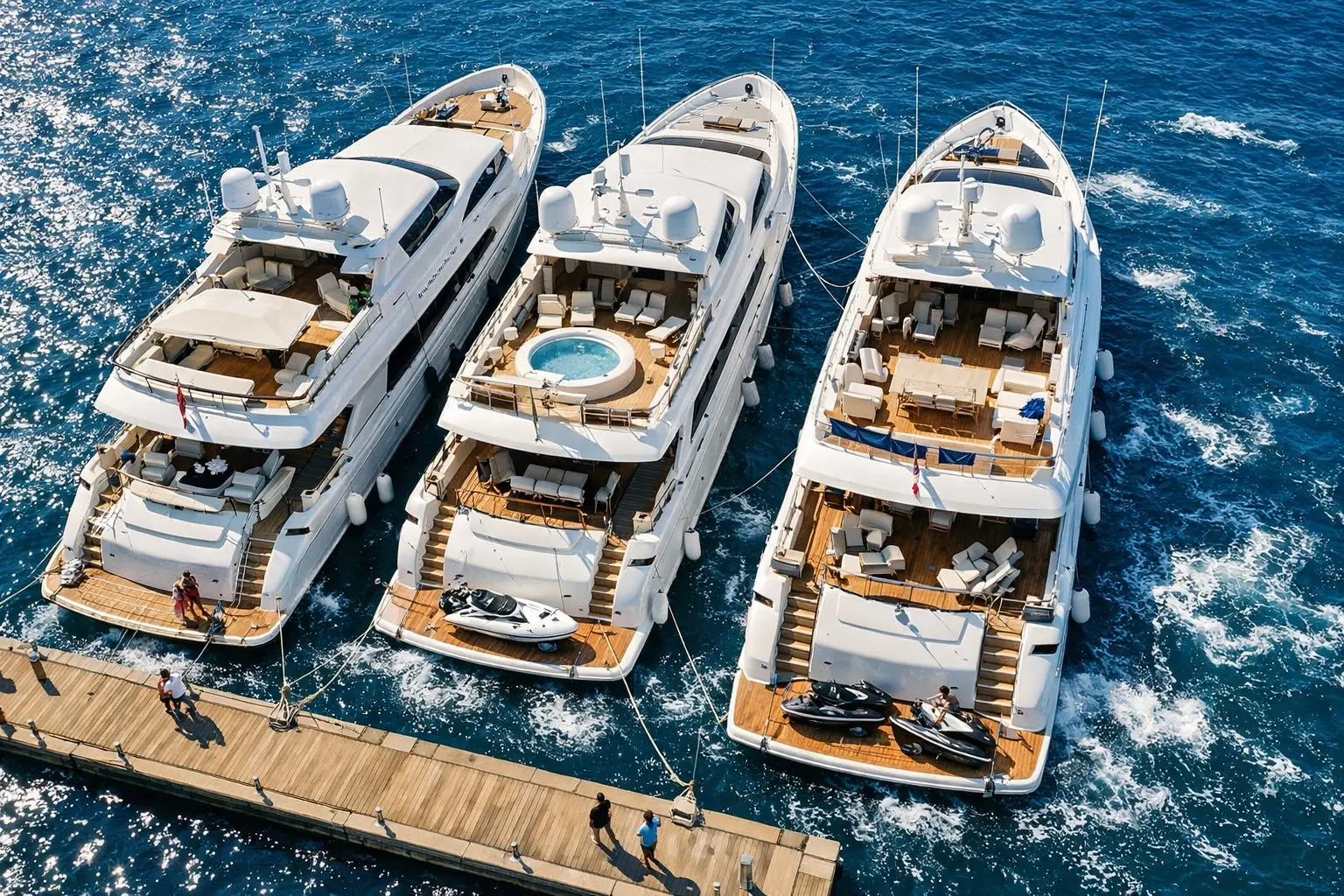
Elysian sold with no floor under her
The 39.6-metre Westport Elysian, delivered in 2004, has been sold following a no-reserve online auction conducted by Boathouse Auctions in partnership with HMY Yacht Sales, SuperYacht Times reported at the end of July. Viewings opened on 29 May and live online bidding ran on 25 June. No reserve means what it says: the yacht went to the highest bidder regardless of where the bidding stopped. The tri-deck sleeps ten guests in five staterooms and was lying in Fort Lauderdale. Neither side has published the figure it reached.
The missing number matters less than it looks. The auction is itself the price signal, because the seller agreed in advance to accept whatever a qualified field would pay inside a fixed window. Boathouse runs a four-week preview, shows every bid to every bidder in real time, and closes in thirty days or less. An owner who takes that arrangement is buying certainty of date rather than certainty of price, and he knows it before the bidding opens.
Far Niente took the slower road to a similar place
On 31 July, BOAT International reported the sale of Far Niente, a 2014 Westport of the same 39.6 metres, carrying an asking price of USD 12,995,000. Boomer Jousma and Vittoria Santarone of The Italian Yacht Group and James Corts of MarineMax were named on the listing, with Whit Kirtland of Northrop and Johnson acting for the buyer. The asking price had already been reduced before the deal closed.
The two hulls bracket the same model a decade apart. Elysian is a 2004 boat that went to open bidding; Far Niente is a 2014 boat that went through standard central agency and still needed a cut to move. Both are Westport 130s, the most numerous American-built yacht at this size, and that is what makes the pair readable. When two near-sisters clear within the same month by two different mechanisms, the market has said more about a 40-metre than any valuation letter will.
Rule No.1 is still asking, and still coming down
The third data point has not sold. Rule No.1, a 39.62-metre Westport delivered in 2011, came down from USD 16,500,000 to USD 14,590,000 on 3 June, a cut of just over USD 1.9 million, with Kent Harrington and Hannah Wolstenholme of Edmiston holding the listing. She sits between the other two on age and above both on ask. Nothing about her is distressed; she is simply the one still waiting.
Read together, the three give an owner a band instead of a guess. A 2011 hull is publicly asking USD 14,590,000 after a reduction. A 2014 hull accepted a deal at an ask of USD 12,995,000. A 2004 hull accepted whatever a live auction produced in a single session. Age, refit history and equipment explain part of that spread. They do not explain the part that should interest an owner, which is how much of a published ask survives contact with an actual buyer.
Why an owner gives up the floor
Jack Mahoney, a director of Boathouse Auctions, puts the logic in terms of concentration. A well-structured auction, he has said, concentrates global interest into a defined timeframe and creates healthy competition among qualified buyers. The pitch is aimed at owners who have done the arithmetic and found that the running cost of a 40-metre can outweigh the extra money a longer wait might produce. Crew, dockage, insurance and the next class cycle do not pause while a listing ages on a broker's site.
This is not new ground for the model. Serengeti, a 2002 Westport of the same length, was offered with no reserve through the same platform in March, lying in Newport Beach with Northrop and Johnson on the listing. In that same event a 34.5-metre Benetti, Star of the Sea, carrying a refit of more than USD 1,000,000, opened at USD 250,000. The platform has been working through this part of the fleet all year, and the 130 has been in it more than once.
What it sets for your own hull
An owner with a production 40-metre now has something close to a reference series. The Westport 130 is built in numbers, the boats are genuinely comparable to one another in a way custom hulls never are, and four of them have been publicly priced, offered or sold inside five months. For a market that usually hides its clearing prices behind a handshake, that is unusually good information, and it is free.
The practical reading is about the choice of channel. If the objective is the highest achievable number and the holding cost is comfortable, central agency is still the route that produced USD 12,995,000 on a 2014 boat. If the objective is to be out by a fixed date, the auction route now has a visible record at this size and a thirty-day close behind it. The mistake would be to assume the two routes end at the same number.
What owners and crew report
The auction house's own pitch is about time, not price
Jack Mahoney has described a well-structured auction as concentrating global interest into a defined timeframe and creating healthy competition among qualified buyers, aimed at owners for whom the running cost of holding a 40-metre outweighs the extra money a longer wait might produce.
Jack Mahoney, director, Boathouse Auctions
What is good, and what to watch
Strong points
- Four hulls of one production model priced, offered or sold inside five monthsThat density of public data points on a single model is unusual in a market that normally hides its clearing prices behind a handshake.
- The auction structure is transparent about its own mechanics even when the price is notA four-week preview, live bids visible to every registered bidder in real time, and a guaranteed close inside 30 days is a documented process, not a black box.
- Far Niente closed through two separately named brokerage houses on opposite sidesThe Italian Yacht Group and MarineMax for the seller, Northrop & Johnson for the buyer, an arm's-length deal rather than a single house matching itself.
- The pitch for the auction route is attributable to a named executive, not anonymous marketing copyJack Mahoney, the format's own director, has spoken publicly, including to BOAT International, about the trade-off it offers: certainty of date over certainty of price.
What to watch
- Neither route disclosed the number that matters mostWhether by auction or central agency, the actual closing price on Elysian and Far Niente was never published, so an owner still cannot benchmark exactly what a Westport 130 clears for today.
- Reported production totals for the model vary widelySources put total Westport 130 production anywhere from 28 to 43 hulls, a spread of 15 boats that weakens any claim about exactly how tight the comparable set is.
- The auction route carries real transaction costAn 8% buyer's premium plus a possible 5% co-brokerage commission is a cost structure the concentration pitch does not itself quantify against a central-agency sale.
- The reference series still includes an unsold hullRule No.1 remains listed months after its cut, at a higher ask than either of the two that moved, a reminder that not every boat in the set has cleared.
Practical detail
| Elysian (2004) | No-reserve auction, Boathouse Auctions x HMY Yacht Sales; viewing from 29 May, bidding closed 25 June 2026; closing price not disclosed |
|---|---|
| Far Niente (2014) | Asking USD 12,995,000, reported sold 31 July 2026 by BOAT International; closing price not disclosed |
| Rule No.1 (2011), still listed | Cut from USD 16,500,000 to USD 14,590,000 on 3 June 2026, with Edmiston |
| Auction cost structure | 8% buyer's premium on the winning bid, plus a 5% co-brokerage commission if the buyer used a registered broker, per Boathouse Auctions |
| Same model, same platform, earlier in 2026 | Serengeti, a 2002 Westport 130, also sold no-reserve through Boathouse in March, lying in Newport Beach |
| Total Westport 130 production | Reported between 28 and 43 hulls depending on source and generation cutoff, per YachtWorld and Worth Avenue Yachts |
| What is not published | The closing price on either Elysian or Far Niente, and the number of registered bidders in the Elysian auction |
Questions this story answers
What happened?
Three Westport 130s have put a public number on the same 39.6-metre hull this year, and one of them did it with no reserve price at all. Elysian, built in 2004, sold to the highest bidder after a June online auction; Far Niente, ten years younger, cleared through brokers at an asking price of USD 12,995,000. For anyone holding a production 40-metre, the gap between those two routes is the most honest valuation the market has offered in months.
What is good about it?
Four hulls of one production model priced, offered or sold inside five months. That density of public data points on a single model is unusual in a market that normally hides its clearing prices behind a handshake.
What should an owner or buyer watch?
Neither route disclosed the number that matters most. Whether by auction or central agency, the actual closing price on Elysian and Far Niente was never published, so an owner still cannot benchmark exactly what a Westport 130 clears for today.
What do owners and crew report?
Jack Mahoney has described a well-structured auction as concentrating global interest into a defined timeframe and creating healthy competition among qualified buyers, aimed at owners for whom the running cost of holding a 40-metre outweighs the extra money a longer wait might produce. (Jack Mahoney, director, Boathouse Auctions)
Who reported this?
BOAT International, SuperYacht Times, Boathouse Auctions, HMY Yacht Sales, Edmiston, Northrop & Johnson, YachtWorld, Worth Avenue Yachts.
We do this for everyone who loves this world. The people who have spent their lives in it, and the people just discovering it. Yotters exists so that what we learn belongs to all of them.
Nobody pays us for this. No ads, no sponsors, nothing for sale. We just believe the world is a little better when knowledge is shared instead of kept.
If it gave you something today, tell us to keep going. Follow us, leave a like, or write a positive comment. We read every one, and they are what keeps us going.