VisionF's First E-Cat 80 Returns to Market at EUR 6.95m
A First-of-Type Boat Comes Back to Market
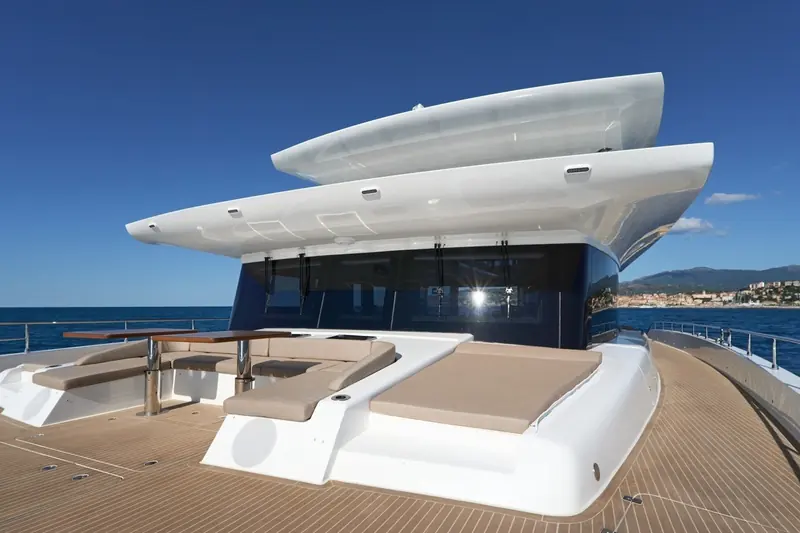
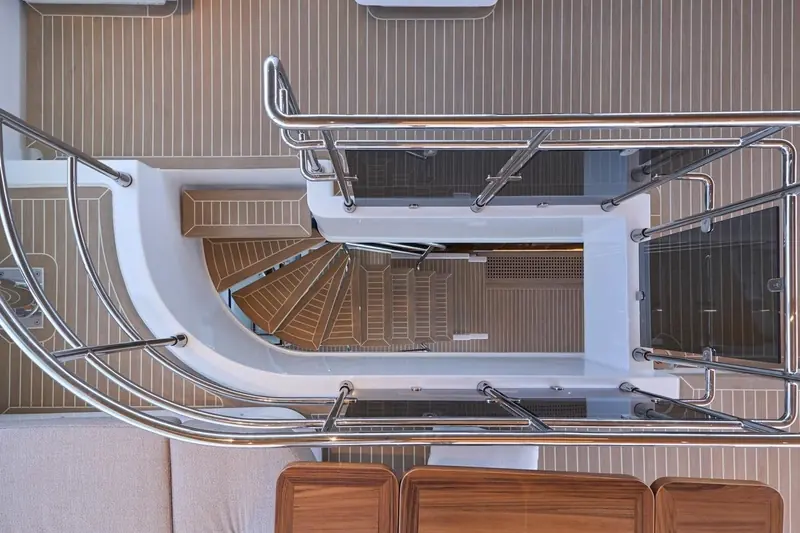
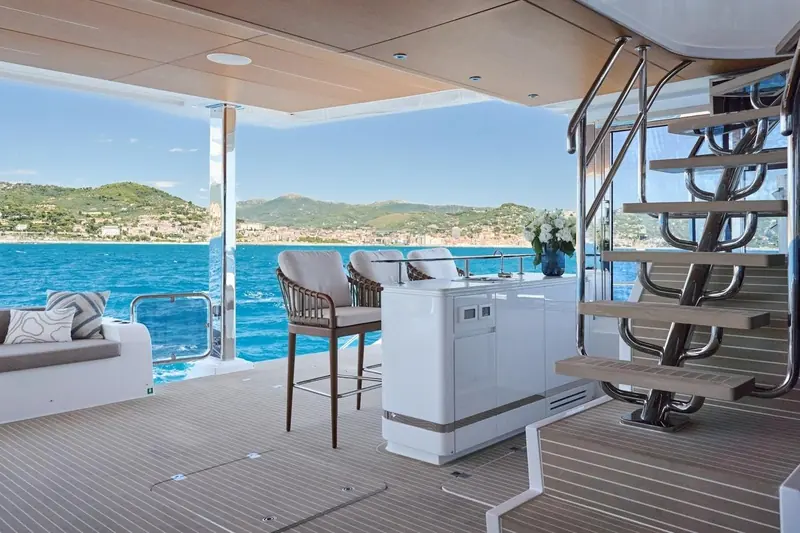
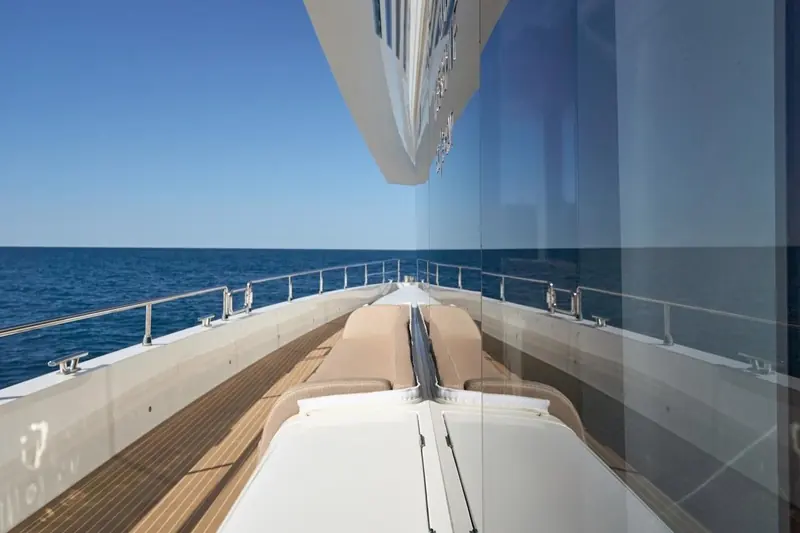
Atraversia launched from VisionF's Tuzla yard near Istanbul in February 2025 and was delivered that April as the first hull in the builder's E-Cat 80 line, a 24-metre carbon-fibre catamaran designed by Marco Casali of Too Design and built around twin electric motors, a 54-panel solar array and a pair of diesel generators for backup. Now, sixteen months later, she is for sale, listed through both Denison Yacht Sales and YachtBuyer at EUR 6.95m, or roughly USD 8.06m, currently lying in Imperia on Italy's Ligurian coast.
A resale this early in a first-of-type boat's life is itself informative. VisionF has since delivered a second E-Cat 80, named Gloriamaris, in August 2025, so Atraversia is no longer a one-off prototype but the first of a small, growing series coming back onto the brokerage market while the model line is still young. That timing gives a buyer something rare: a chance to judge an electric-propulsion design against a documented year and a half of real running, rather than against a builder's launch-day claims alone.
The Spec Sheet Does Not Agree With Itself
The figures attached to Atraversia have shifted since her 2025 launch coverage, and this desk could not fully reconcile them. Denison's current listing and the original BOAT International delivery report both describe twin 340kW Danfoss electric motors; YachtBuyer's listing for the same yacht states twin 199kW motors, a materially different power figure for an identical vessel. Speed claims diverge too: early press around the launch cited a top speed as high as 16 knots, while both current for-sale listings, Denison's and YachtBuyer's, independently state 8 knots cruising and 9 knots maximum under electric power, with a range beyond 1,000 nautical miles once the diesel generators are running.
Two independent brokerage listings agreeing on the lower, slower figures is the more careful reading, and it is the one this desk is treating as current. It is possible the higher motor-power and speed figures from 2025 described a generator-assisted or design-target performance that the boat does not deliver in day-to-day electric running, or that a units error crept into early reporting and was never corrected. Either way, a buyer relying on search results rather than the current listing documents would form the wrong impression of how fast this boat actually moves.
What the Generator Hours Actually Say
The single most useful number on Denison's listing is not a performance claim at all: as of August 2026, Atraversia's twin 150kW backup diesel generators show 480 and 561 hours respectively. Averaged over the roughly sixteen months since delivery, that works out to somewhere near 30 to 35 combined generator-hours a month, a meaningful and regular draw on the backup diesel plant for a yacht sold on its zero-emission, solar-charged running.
That is not proof the boat spends most of its time on diesel power; a catamaran chartering the West Mediterranean logs plenty of hours at the dock running air conditioning, watermakers and galley loads off generator power even when the diesels never touch the propellers. But it is a genuine, verifiable data point that the launch-day marketing never offered, and it is exactly the kind of number PAGE_STANDARD exists to surface: what an owner actually experiences after the press release fades, not what the yard hoped he would.
The Series Keeps Moving While the First Hull Resells
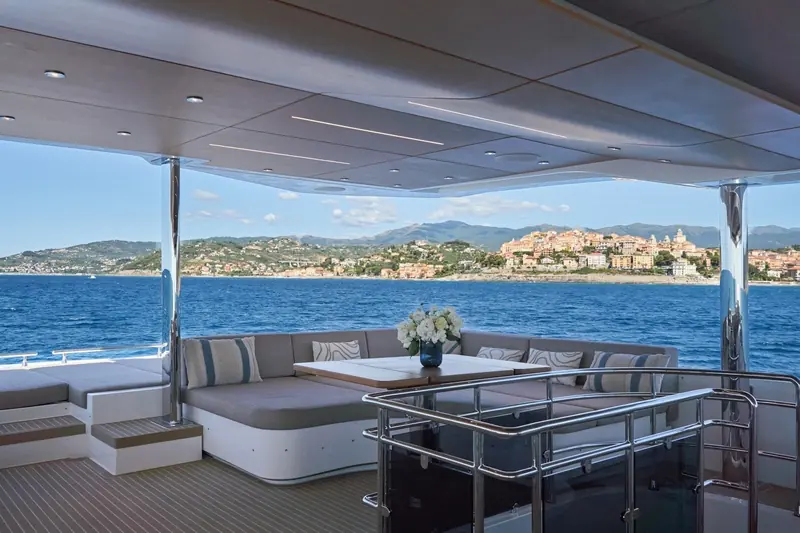
VisionF has not stood still on the design since Atraversia left the yard. Gloriamaris, the second E-Cat 80, launched in August 2025 with an extended solar array generating up to 24.8kW an hour against Atraversia's 21.6kW, a fifth cabin where Atraversia carries four, a flybridge jacuzzi and a dedicated children's room. That is a builder iterating fast on a genuinely new propulsion concept rather than repeating a fixed design, which cuts two ways for a buyer: it validates that VisionF is committed to the line, but it also means a boat bought today is competing on the used market against newer hulls with more solar capacity and cabin space built in from the start.
Atraversia's own charter listing, offered in the West Mediterranean from EUR 54,000 a week in low season and EUR 60,000 in high season through brokers including Allied Yachting and Yachts Invest, cruises France, Italy, Monaco and Spain. No independent owner or charter-guest report on her real-world performance has surfaced in this desk's research; the closest thing to field data is the generator log itself. A prospective buyer will be relying largely on that log and the brokerage specification sheets, not on a body of published sea-time reviews the way he could for an established diesel catamaran of the same size.
Guest Capacity Also Depends on Which Document You Read
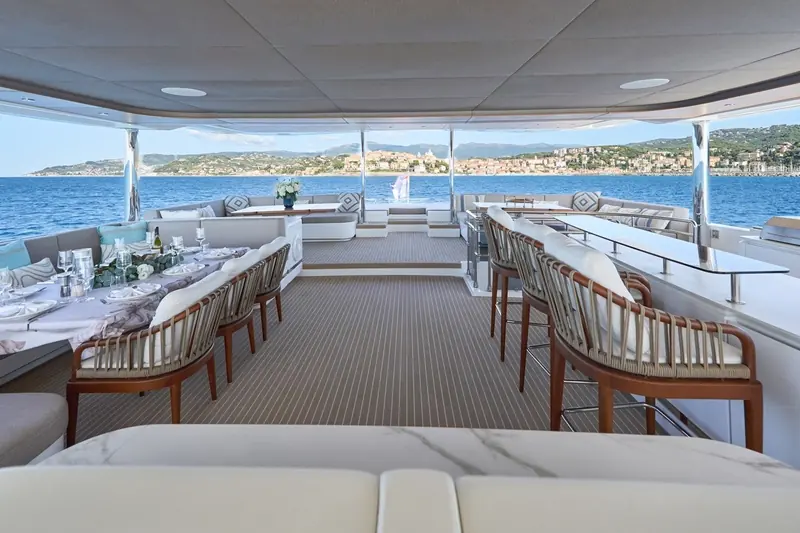
Even accommodation numbers are not fully consistent across sources. VisionF's own launch materials and several charter listings describe capacity for up to 14 guests; the current for-sale specification sheets from both Denison and YachtBuyer state 9 guests across 4 cabins, one owner's suite, two VIP cabins and one double. The gap likely reflects day-charter capacity against overnight sleeping capacity, a common and legitimate distinction in yacht listings, but it is not explained on either page, and a buyer comparing Atraversia to a conventional 24-metre catamaran on paper needs to know which figure he is actually getting for overnight guests.
None of this makes Atraversia a bad boat; it makes her a genuinely documented one, which is rarer than it sounds in a market where most first-of-type technology yachts sell before anyone outside the builder has logged real hours on them. For an owner weighing whether an electric catamaran can do real charter and passage work today, Atraversia's brokerage file, contradictions and all, is closer to an honest answer than any single press release from her 2025 launch.
What is good, and what to watch
Strong points
- Genuinely zero-emission running is possibleThe electric motors and solar array let the boat run and charge without the generators, unusual at this size and price
- A real, useful solar contribution54 panels generating up to 21.6kW an hour meaningfully offsets house loads at anchor, not just a marketing gesture
- A design line the builder is investing inA second, upgraded hull, Gloriamaris, was already delivered five months after Atraversia, evidence of a genuine series rather than a one-off prototype
What to watch
- Slow for the size8 to 9 knots under electric power is well below what a conventional 24-metre catamaran cruises at, ruling out fast passages or outrunning weather
- Real, regular diesel reliance480 to 561 hours logged on the backup generators in about sixteen months shows the zero-emission billing is not the whole operating picture
- Modest overnight capacity9 guests in 4 cabins is light for a 126 GT catamaran this length, the tradeoff for battery and solar space
- No independent track recordNo published owner or charter-guest reviews exist yet; a buyer is relying on the generator log and brokerage sheets alone
Practical detail
| Asking price | EUR 6.95m (approx. USD 8.06m), listed through Denison Yacht Sales and YachtBuyer |
|---|---|
| Location | Imperia, Italy |
| Propulsion | Twin Danfoss electric motors; output disputed between sources, 340kW each per Denison and BOAT International, 199kW each per YachtBuyer |
| Backup power | Twin 150kW diesel generators, logging 480 and 561 hours respectively as of August 2026 |
| Solar array | 54 panels generating up to 21.6kW per hour |
| Speed | 8 knots cruising, 9 knots maximum under electric power, per the current for-sale listings; range beyond 1,000 nautical miles with generators running |
| What is not published | No independent sea trial or third-party speed verification exists. Every performance figure traces back to either the 2025 launch press or the current brokerage listings, and those two sets of figures do not agree |
Questions this story answers
What happened?
Atraversia, the first fully electric catamaran VisionF Yachts ever delivered, is back on the brokerage market sixteen months after handover, asking EUR 6.95m through Denison Yacht Sales and YachtBuyer. The listing carries a detail the launch press releases did not: 480 and 561 hours already logged on her two backup diesel generators. For an owner weighing a first-of-type electric build, that number says more about real ownership than any spec sheet.
What is good about it?
Genuinely zero-emission running is possible. The electric motors and solar array let the boat run and charge without the generators, unusual at this size and price
What should an owner or buyer watch?
Slow for the size. 8 to 9 knots under electric power is well below what a conventional 24-metre catamaran cruises at, ruling out fast passages or outrunning weather
Who reported this?
BOAT International, YachtBuyer, Denison Yacht Sales, Megayacht News.
We do this for everyone who loves this world. The people who have spent their lives in it, and the people just discovering it. Yotters exists so that what we learn belongs to all of them.
Nobody pays us for this. No ads, no sponsors, nothing for sale. We just believe the world is a little better when knowledge is shared instead of kept.
If it gave you something today, tell us to keep going. Follow us, leave a like, or write a positive comment. We read every one, and they are what keeps us going.