Williams Jet Tenders Launches a Range 20% Cheaper, 30% Lighter

A cheaper way into a name every superyacht carries
Williams Jet Tenders has quietly retired its MiniJet 280, the smallest boat it built, and replaced it with a new two-model range called TurboJet MX. The 280MX is priced from GBP 17,299 and the larger 320MX from GBP 19,995, positioning both below the GBP 20,000 mark that has effectively fenced Williams tenders off from smaller yacht owners since the brand's expansion into full-custom superyacht garages. Williams says the MiniJet 280 will stop production in September 2026, so the TurboJet MX is not an addition to the range but a direct replacement at the entry point.
The pricing move matters because Williams tenders have long carried a premium tied to the brand rather than the boat: the same hull shape and jet-drive layout that goes on a 70-metre Feadship's garage deck also had to be paid for by the owner of a 45-foot flybridge cruiser who wanted the name on his transom. At roughly 20 per cent below what Williams calls comparable jet tenders and about 30 per cent lighter, the TurboJet MX is built to be lifted by davits sized for a much smaller boat, which is the actual constraint on most yachts under 70 feet.
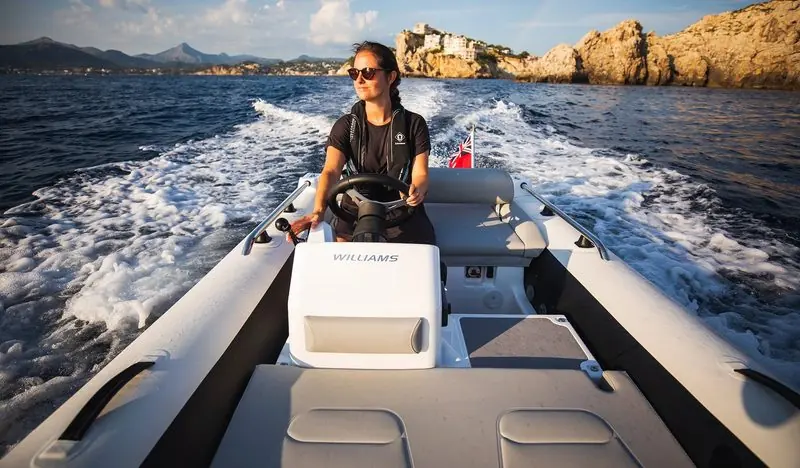
Two sizes, one jet-drive pitch
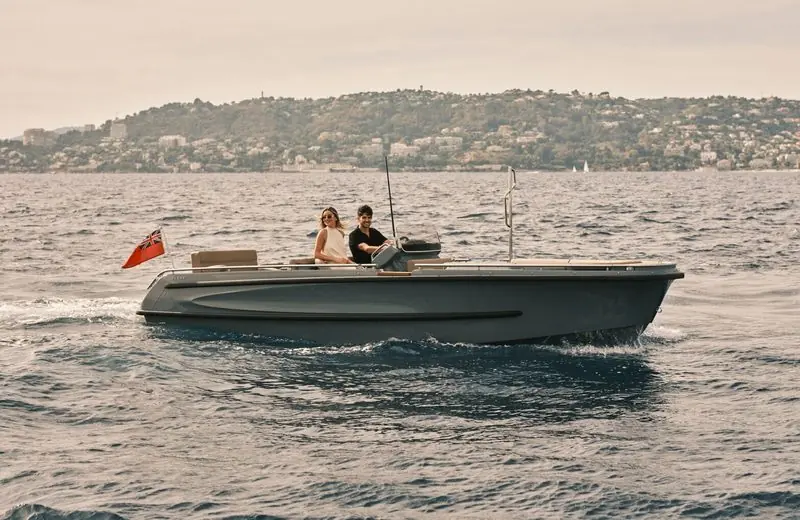
The 280MX measures 2.79 metres long and 1.54 metres wide, is powered by a 60hp BRP-Rotax Ace 903 engine, and carries three adults and a child at a claimed top speed of 42mph. The 320MX steps up to 3.19 metres by 1.62 metres, a 90hp engine, capacity for four adults and a child, and a claimed 45mph. The Ace 903 is the same engine family BRP uses in its entry-level Sea-Doo personal watercraft, which keeps servicing and parts inside a network most marinas already carry, rather than a bespoke marine unit few technicians have seen. Neither model has a published fuel tank figure or range, and Williams has not said whether the two share a hull mould scaled up or are separate tools.
Both use jet propulsion rather than an outboard or sterndrive, the choice Williams has built its brand on since 2005: no exposed propeller near a swim platform, a shallower draft that lets the tender nose onto sand a propeller boat would foul, and a lower noise signature at idle next to the yacht at anchor. The tradeoff is the one every jet boat carries: some of the engine's power is lost to the water jet rather than driving a shaft, so a 90hp TurboJet 320MX will feel less urgent off the line than a 90hp prop-driven tender of the same weight.
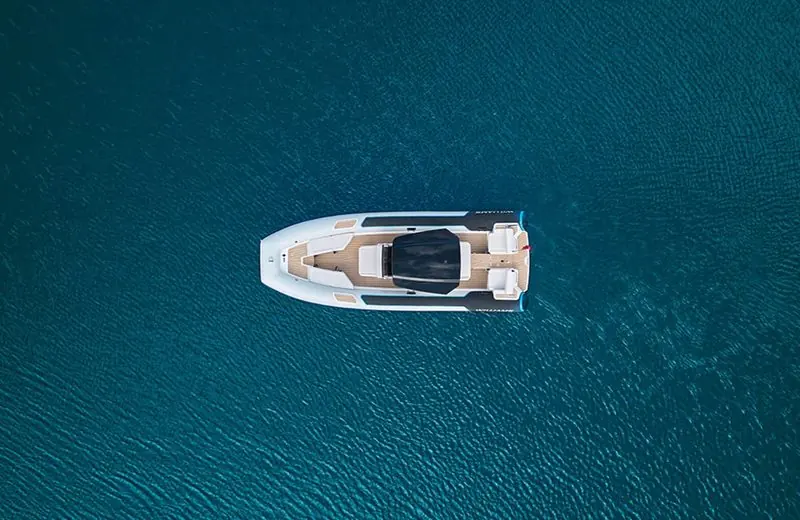
Why now: a stalled 40 to 70 foot market
Williams has been explicit that the TurboJet MX answers a slowdown in yacht sales in the 40 to 70 foot bracket, a segment more exposed to inflation and financing costs through 2026 than the market above 100 feet, where cash buyers are less sensitive to rate moves. Mathew Hornsby, Williams' commercial director, said the company had listened carefully to the market and recognised an opportunity to deliver a tender that maintains the quality, performance and ownership experience customers expect from Williams, while opening the door to a broader audience.
That is a business decision as much as a product one: Williams is choosing to defend volume in the segment most exposed to a soft market rather than hold price and let entry-level buyers walk to a cheaper unbranded jet tender. For an owner in that bracket, it means a name-brand tender is now a realistic line item on a new-build or refit budget where it may previously have been cut in favour of a generic alternative, a real change to what a Williams tender can mean on a smaller yacht.
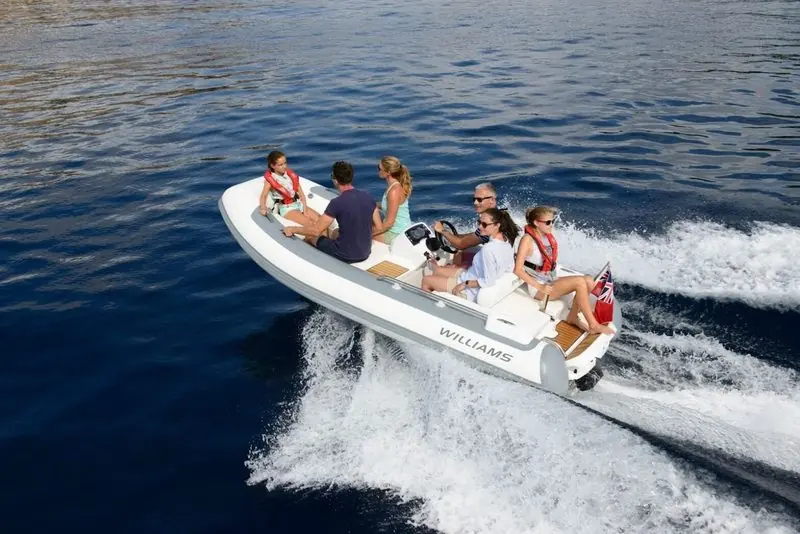
From a garden shed to the transom of megayachts
Williams Jet Tenders was founded in 2004 by brothers Mathew and John Hornsby together with Roy Parker, building its first boats, under the name Williams Performance Tenders, in a garden shed in Oxfordshire. The company's first jet tender, the TurboJet 325, launched in 2005 and set the template the brand has sold on since: a rigid hull, a shrouded water jet instead of a propeller, and a finish pitched at the same level as the yacht carrying it.
Two decades on, Williams tenders are standard equipment on new-build superyachts from most of the major European yards, which is precisely the credibility the TurboJet MX is trading on at a lower price. The provenance is real, this is not a badge licensed onto someone else's hull, but it also means the brand has more reputation than track record to lean on for a genuinely new, cheaper product line.
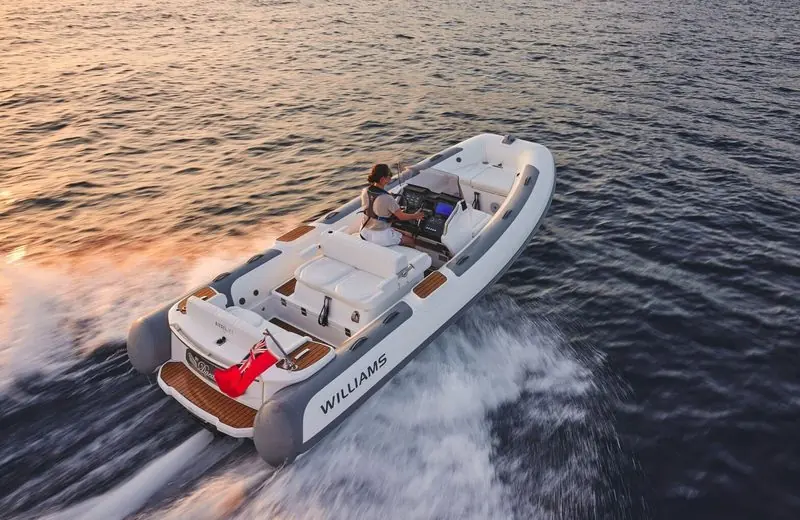
What a buyer should still check
The TurboJet MX launched this week, so there is no independent sea trial, no resale data and no owner review to set against the spec sheet; anyone buying now is buying on the strength of Williams' larger range, not on this one. Capacity is tight on both models: three adults and a child on the 280MX, four and a child on the 320MX, enough for a beach run or a supply trip but not for moving a full guest list in one pass, a job that still falls to a yacht's primary tender.
Williams has quoted price only in pounds sterling; a euro or dollar figure was not published at launch, and a buyer working in another currency should ask a dealer for a written quote rather than convert the headline number. Williams is selling the TurboJet MX through its existing dealer network rather than a new online-only channel, so warranty and servicing follow the same route as the rest of the TurboJet line. The honest read is that the TurboJet MX buys real Williams engineering and a genuine price cut, at the cost of the performance headroom and proven history that the brand's larger, more expensive tenders still carry.
What is good, and what to watch
Strong points
- Genuinely cheaper entry pointAbout 20 per cent below comparable jet tenders and roughly 30 per cent lighter, so it does not need a bigger crane or a reinforced garage floor to lift.
- No exposed propellerJet propulsion keeps the impeller shrouded, which matters directly next to swimmers, a mooring line or a reef, the tradeoff Williams has sold on since 2005.
- A recognised name at a lower rungBuyers who could never spec a full-size Williams tender now get the same badge and dealer network on a boat sized for a 40 to 70 foot yacht's garage.
What to watch
- Modest power for the size60hp on the 280MX and 90hp on the 320MX are well below the larger TurboJet models most owners associate with the name, and jet drives lose some efficiency to a shaft-driven propeller of equivalent power.
- No track record yetThe range only launched this week; there is no independent sea trial, no resale data and no owner review to weigh against the spec sheet.
- Capacity is tightThree adults and a child on the 280MX, four and a child on the 320MX, is enough for a beach run but not for moving a full guest list in one trip.
Practical detail
| TurboJet 280MX | 2.79m x 1.54m, BRP-Rotax Ace 903, 60hp, 3 adults + 1 child, 42mph claimed top speed, GBP 17,299 |
|---|---|
| TurboJet 320MX | 3.19m x 1.62m, 90hp, 4 adults + 1 child, 45mph claimed top speed, GBP 19,995 |
| What it replaces | The MiniJet 280; Williams ends MiniJet 280 production in September 2026 |
| Who it targets | Owners of roughly 40 to 70 foot yachts whose garages could not take a full-size Williams tender |
| What is not published | No euro or dollar price has been issued, GBP 17,299 to GBP 19,995 is the only currency Williams has quoted, and no independent sea trial exists for either model |
Questions this story answers
What happened?
Williams Jet Tenders has replaced its entry-level MiniJet 280 with a new TurboJet MX range, priced from GBP 17,299 and built for owners who could never fit, or justify, the brand's larger tenders. The 280MX and 320MX are roughly 20 per cent cheaper and 30 per cent lighter than comparable jet tenders, aimed at the 40 to 70 foot yachts where tender choice is usually a compromise between garage space, speed and the name on the transom.
What is good about it?
Genuinely cheaper entry point. About 20 per cent below comparable jet tenders and roughly 30 per cent lighter, so it does not need a bigger crane or a reinforced garage floor to lift.
What should an owner or buyer watch?
Modest power for the size. 60hp on the 280MX and 90hp on the 320MX are well below the larger TurboJet models most owners associate with the name, and jet drives lose some efficiency to a shaft-driven propeller of equivalent power.
Who reported this?
Marine Industry News, Williams Jet Tenders (TurboJet 280MX and 320MX product pages), Motor Boat & Yachting.
We do this for everyone who loves this world. The people who have spent their lives in it, and the people just discovering it. Yotters exists so that what we learn belongs to all of them.
Nobody pays us for this. No ads, no sponsors, nothing for sale. We just believe the world is a little better when knowledge is shared instead of kept.
If it gave you something today, tell us to keep going. Follow us, leave a like, or write a positive comment. We read every one, and they are what keeps us going.