A methanol box that carries ten times the energy of a battery of the same weight
What was tested
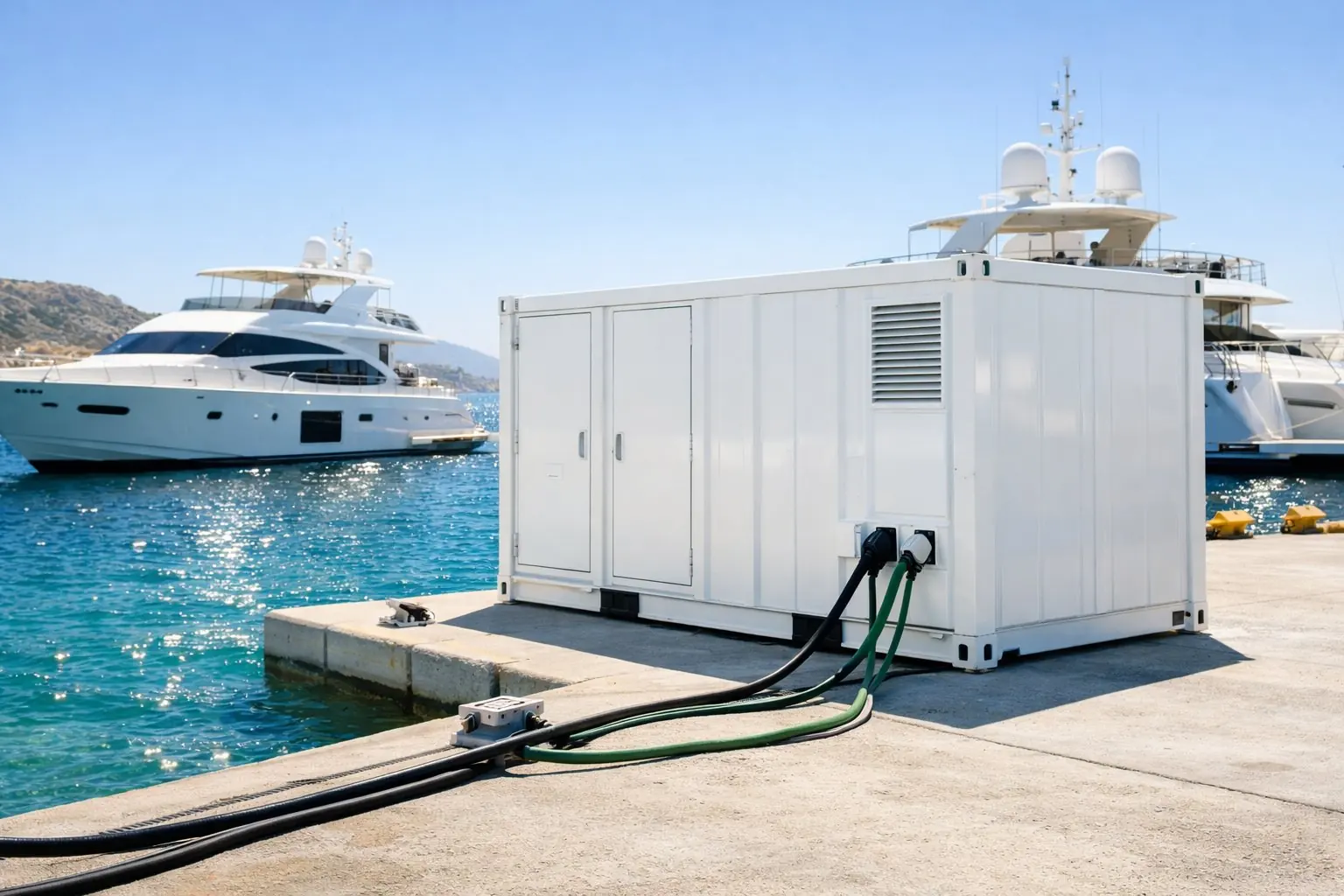
The prototype was built and run at Archipelago Yachts' facility on the Isle of Wight. It combines an E1 Marine methanol reformer, an Auriga Energy hydrogen fuel cell, a 100 kW electric propulsion system and a 100 kWh high-voltage battery, all installed in a modified 20-foot container. Methanol goes in as a liquid, is reformed into hydrogen on board, and the fuel cell turns that into electricity for the motor and the battery.
The work sits inside the Methanol Pathfinder UK project, funded by Innovate UK through the sixth Clean Maritime Demonstration Competition and the UK Shipping Office for Reducing Emissions. Stephen Weatherley, chief executive of Archipelago Yachts, said the results exceeded expectations and provided real-world validation of a technology that could change how electric vessels are powered.
The number that matters
The headline result is an effective gravimetric energy density of around 1.5 kWh per kilogram. Marine lithium iron phosphate batteries sit roughly ten to twelve times below that. Efficiency in the test was reported as comparable to a marine diesel engine, which is the second half of the claim and the harder one, because reforming and fuel cells both lose energy along the way.
Weight is the whole problem with electric propulsion at sea. A battery bank large enough to move a displacement yacht any useful distance weighs so much that it eats the payload, the tankage and often the stability margin. Carrying the energy as a liquid and converting it on demand removes that constraint. The developers estimate around 40 tonnes of carbon dioxide saved per leisure vessel per year when green methanol is used, with substantial reductions in nitrogen oxides, sulphur oxides and particulates.
How far off it is
The project moved from a technology readiness level of 2 to 3 up to 5 to 6. In plain terms, it has gone from a laboratory idea to a validated prototype in a relevant environment. It has not gone to sea. The partners are exploring a sea-going demonstrator and are talking to investors and potential customers about commercial deployment, and they are looking for further funding.
That places it several years behind the methanol fuel cell installations already going into large yachts, where Sanlorenzo has delivered a running boat and Lurssen has built a 114-metre with the space reserved. The difference is scale and price. A containerised 100 kW package is aimed at vessels far smaller than a 114-metre, which is where the technology has to work if it is ever going to reach tenders, support boats and yachts under 40 metres.
What it changes for an owner
Nothing this season. What it changes is the calculation on a boat being specified now for delivery in three or four years. The standing objection to battery-electric on anything larger than a day boat has been range, and the standing objection to hydrogen has been that nobody will store it aboard a yacht. Methanol is a liquid that can be bunkered and tanked in ways a naval architect already understands.
The practical caution is fuel supply. Green methanol is not available on a fuel dock in Bodrum or Antigua, and a boat that depends on it is a boat with a short cruising map until that changes. Owners weighing an alternative-fuel specification should ask the builder what the vessel does when the fuel is not there, and get the answer in the contract. The other question is service life. A reformer and a fuel cell are consumable items with defined replacement intervals, and neither has a track record on a privately owned yacht doing three hundred hours a year in salt air.
Questions this story answers
What happened?
Archipelago Yachts and Chartwell Marine have run a working prototype that turns methanol into hydrogen and then into electricity, packaged inside a modified 20-foot container. It reached an effective energy density of about 1.5 kWh per kilogram, roughly ten to twelve times that of current marine lithium iron phosphate batteries, at an efficiency the developers say matches a marine diesel. This is the missing piece in every electric yacht argument.
Who reported this?
Marine Industry News, Ship and Bunker, Archipelago Yachts, Chartwell Marine, Innovate UK.
We do this for everyone who loves this world. The people who have spent their lives in it, and the people just discovering it. Yotters exists so that what we learn belongs to all of them.
Nobody pays us for this. No ads, no sponsors, nothing for sale. We just believe the world is a little better when knowledge is shared instead of kept.
If it gave you something today, tell us to keep going. Follow us, leave a like, or write a positive comment. We read every one, and they are what keeps us going.