Zero starts trials: a 69m ketch, 5MWh of battery, no fuel tank
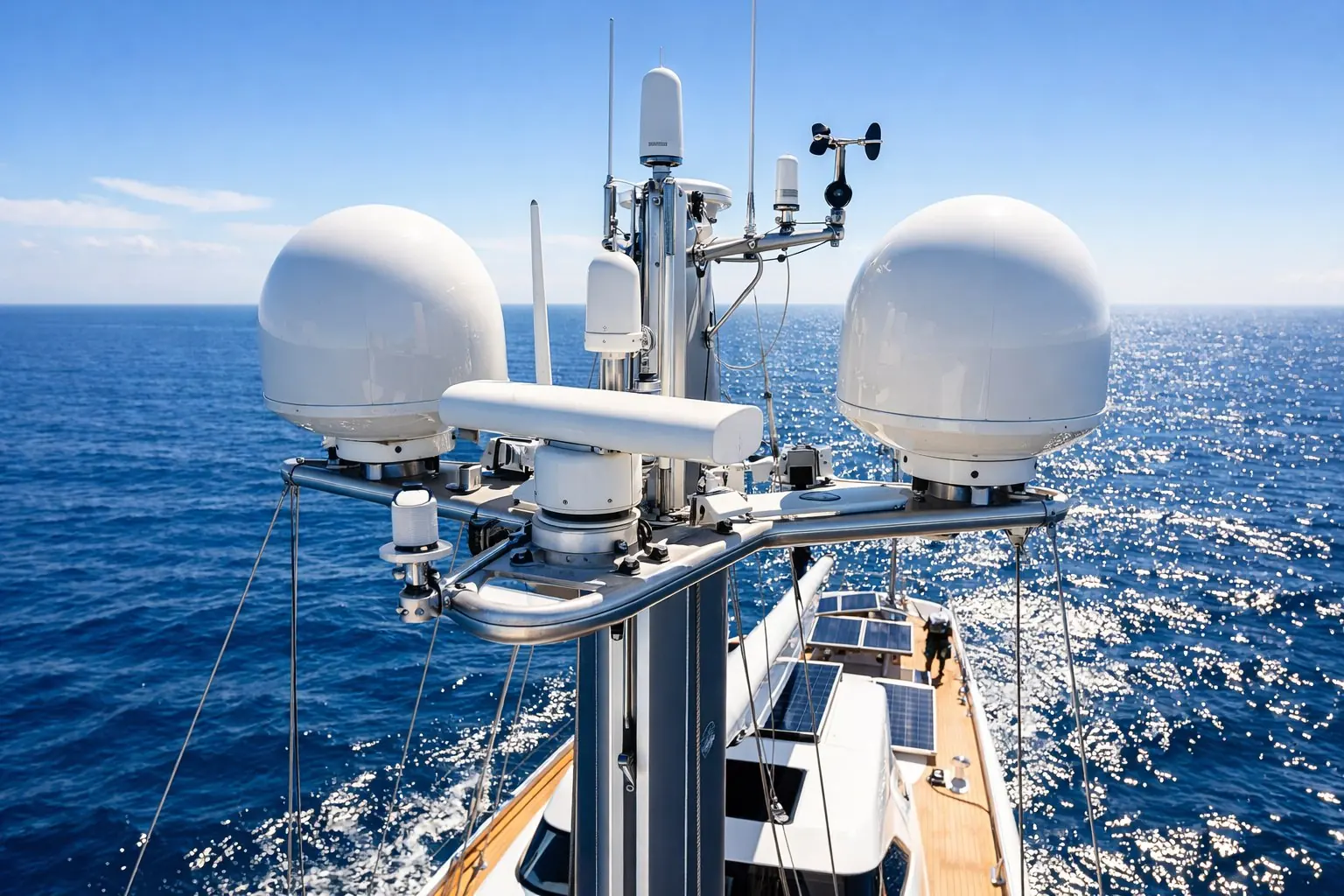
A 69-metre ketch, and not a drop of diesel
Vitters moved Zero out of its building hall at Zwartsluis on 6 July and barged the hull to Harlingen, where she went in the water and her masts were stepped in the second week of the month. She is a 69-metre ketch with an air draught of 62.5 metres, a rig measured against the Panama Canal rather than any marina gantry. The aluminium hull was built at Jacht- en Scheepswerf Gouwerok before it went to Vitters for outfitting, and the keel was laid in September 2022. Vripack drew the exterior and the interior, Dykstra Naval Architects did the naval architecture, and Carbo-Link built the masts.
The idea dates to 2019, and the partners put more than 60,000 hours of research into it before any metal was cut. She carries a lifting keel and long overhangs, so on the water she reads as a classic and not as a science project. "We're at the point where all this innovation, science and engineering is entering the real world," project manager Eduard van Benthem told SuperyachtNews.
Where the power comes from
Zero has no combustion engine aboard and nothing to fill. Electricity sits in a battery bank of five megawatt hours, closer to a shore-based commercial installation than to anything normally fitted in a sailing yacht. It is refilled three ways: hydrogeneration through the propulsion pods, rated at up to 250 kilowatts when she is sailing, roughly 100 square metres of hybrid photovoltaic-thermal panels on deck, and the sails themselves, doing the work a generator set would otherwise be paid to do.
The thermal half of those panels matters more than it sounds. They capture about 60 per cent of the incident energy as heat at 80 to 85 degrees, and that heat drives a 17-kilowatt absorption chiller, which takes a large part of the air conditioning off the batteries. Hotel load is what sinks most electric propulsion arguments on a yacht this size, because guests do not turn the boat off when they go to bed. It is the load this design has spent the most effort on.
The number that decides the argument
Under sail in a 17 to 21 knot breeze the rig delivers about 1.5 megawatts of effective power. Two azimuthing pods with a combined disk area of 2.9 square metres take part of that back as electricity when she is moving well, which is what keeps the bank topped up on passage rather than at a berth. On paper the arithmetic closes. Whether it closes with a full guest list, the chiller running and a week of grey weather is what the trials are for.
The programme now under way is aimed less at the hull than at the software. Every system aboard is managed by one suite that decides when to sail hard, when to regenerate, when to charge and when to spend, and it has never run outside a simulation. "Seeing her afloat transforms all of that into a living experiment," said Mark Leslie-Miller of Dykstra.
Why this matters to an owner who will never buy it
Zero is not for sale, her owner has not been named and her cost has not been published, so the reason to watch her is not that anyone is about to order a sister. It is that the entire programme is being published. The system data, the research, the software code and the design schematics go out through Foundation Zero's open platform, which means the next yard asked to quote a low-emission 55-metre does not start from a blank sheet and price the risk accordingly.
That bears on a specification written in 2027 or 2028. The parts of this boat that survive contact with the sea will turn up in ordinary newbuild proposals inside a couple of build cycles, and the parts that do not will quietly leave the brochures. An owner being sold a green package today is being sold a model, and after this season he will have measurements to hold it against.
What to watch
The trials run through the rest of the season, and the output worth having is not a press release but the numbers: real hotel load in the Med in August, real regeneration over a long passage, real time between charges with guests aboard and the air conditioning on. Vitters chief executive Louis Hamming said the yard was looking forward to "seeing Zero in her natural habitat and showing the world what can be achieved". Habitats are less forgiving than tank runs.
Two things are still missing. Without a build cost, Zero cannot be set against a conventional 69-metre on any basis an owner would recognise, and without a season of operating data the running cost is a projection. If the trial figures come out as promised and a price ever follows them, this becomes the first honest benchmark for what leaving fossil fuel behind costs at this length.
Questions this story answers
What happened?
Vitters has put a 69-metre ketch in the water with no combustion engine and nothing in a fuel tank, and the sea trials that decide whether that actually works have started. Zero carries five megawatt hours of battery, 250 kilowatts of hydrogeneration and about 100 square metres of hybrid solar panels. Every number she produces is going to be published, which is why the boat matters to owners who will never set foot on her.
Who reported this?
SuperyachtNews, SWZ Maritime, SuperYacht Times, BOAT International, Megayacht News, Vitters Shipyard.
We do this for everyone who loves this world. The people who have spent their lives in it, and the people just discovering it. Yotters exists so that what we learn belongs to all of them.
Nobody pays us for this. No ads, no sponsors, nothing for sale. We just believe the world is a little better when knowledge is shared instead of kept.
If it gave you something today, tell us to keep going. Follow us, leave a like, or write a positive comment. We read every one, and they are what keeps us going.