Vitters' Zero drops the engine room for a 5MWh battery
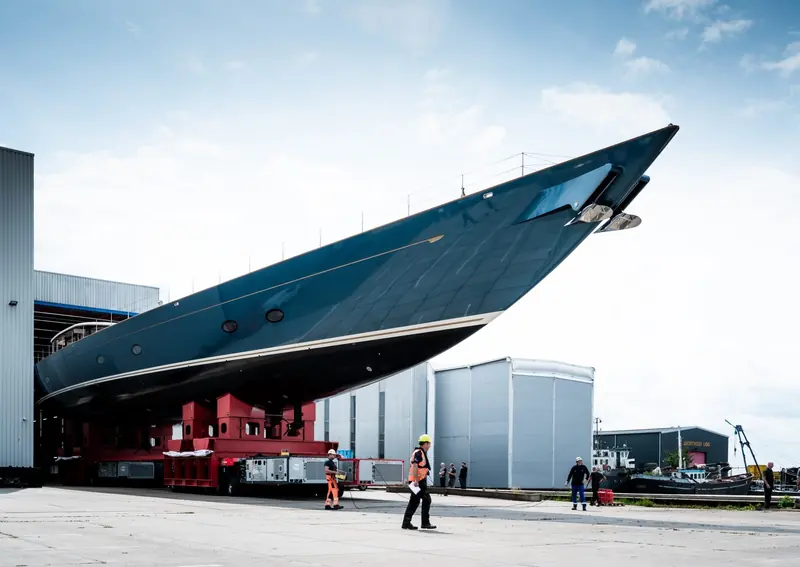
A 68.9-metre yacht built with no engine room
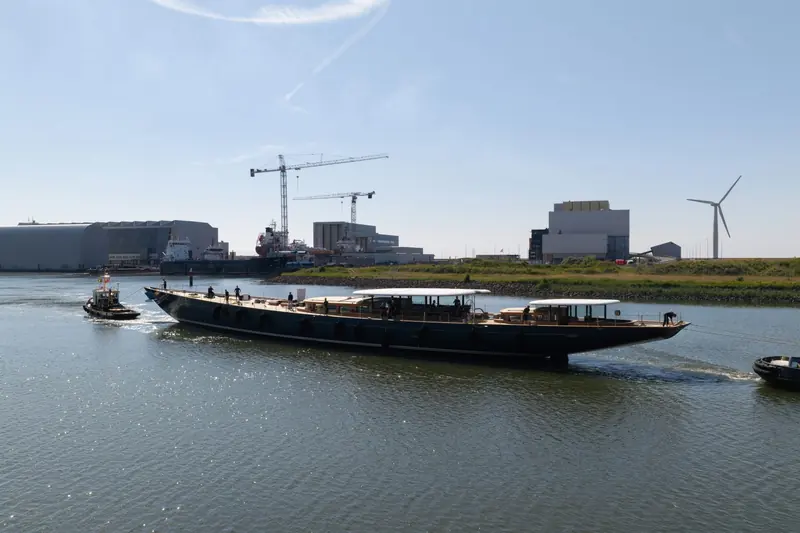
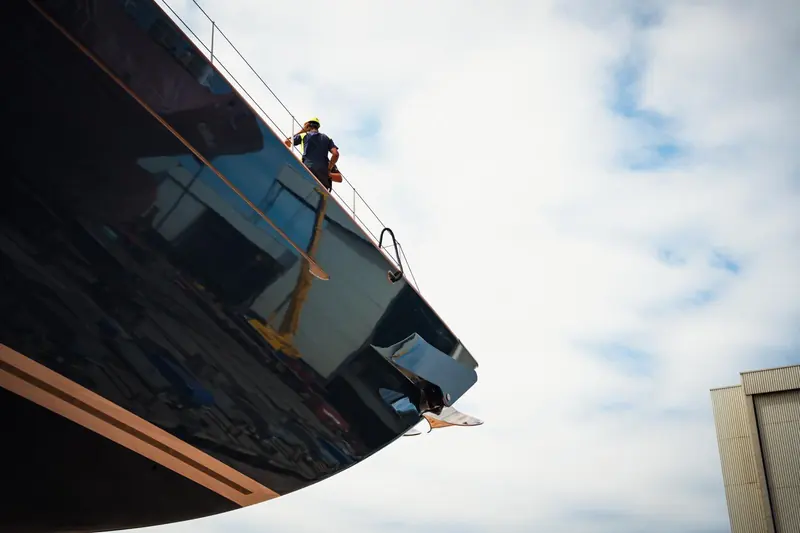
Vitters launched Zero at Harlingen in the Netherlands this month, closing seven years of work that began in 2019 with design studio Vripack and Dykstra Naval Architects, and hull refinement from Emirates Team New Zealand. The 68.9-metre aluminium ketch carries no combustion engine, no fuel tanks and no engine room. Vripack co-creative director Marnix Hoekstra has said those components were never in the plan, so they simply are not aboard.
Power comes from three renewable sources feeding a battery bank of about 5,000kWh (5MWh). Hydro-generating propellers reclaim up to 250kW while the yacht is sailing, 100 square metres of hybrid photovoltaic-thermal panels sit across the deck and superstructure, and the rig captures wind. A 700-volt direct-current grid ties it together. The design also cuts the hotel load, the power a yacht burns simply existing, to under 30kW from a more typical 90kW.
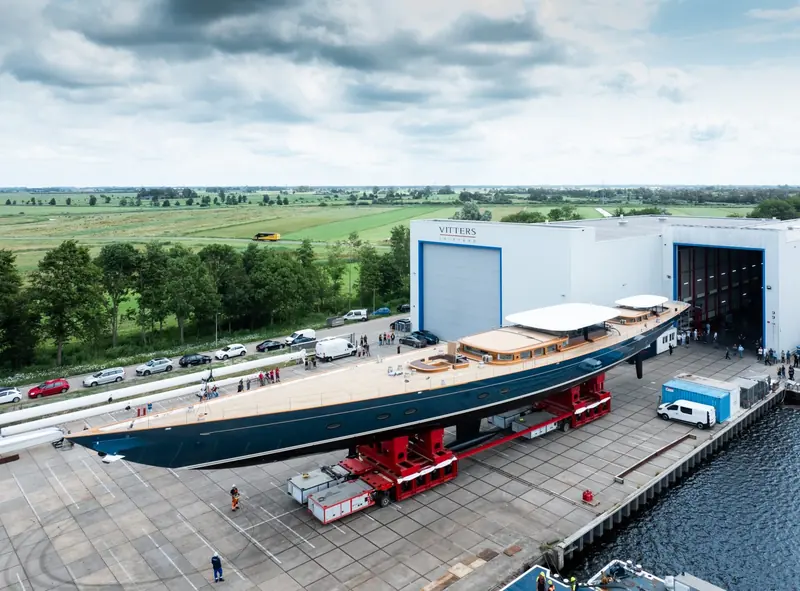
The target is fourteen days off the grid
The stated aim is two weeks entirely off shore power, generating and storing everything the yacht needs. The team frames it more starkly still: sail roughly two hours a day, they argue, and Zero could in theory stay grid-free year round. Lloyd's Register has certified the sails as her primary means of propulsion rather than an auxiliary to an engine that is not there.
The honest part is the caveat. Alongside at a marina or yard, Zero still draws shore power, which is only as clean as the local grid. That admission matters, because it points at where the real gain sits. The headline is the missing engine room, but the engineering that makes fourteen days plausible is the brutal cut to hotel load, the demand side rather than the supply side.
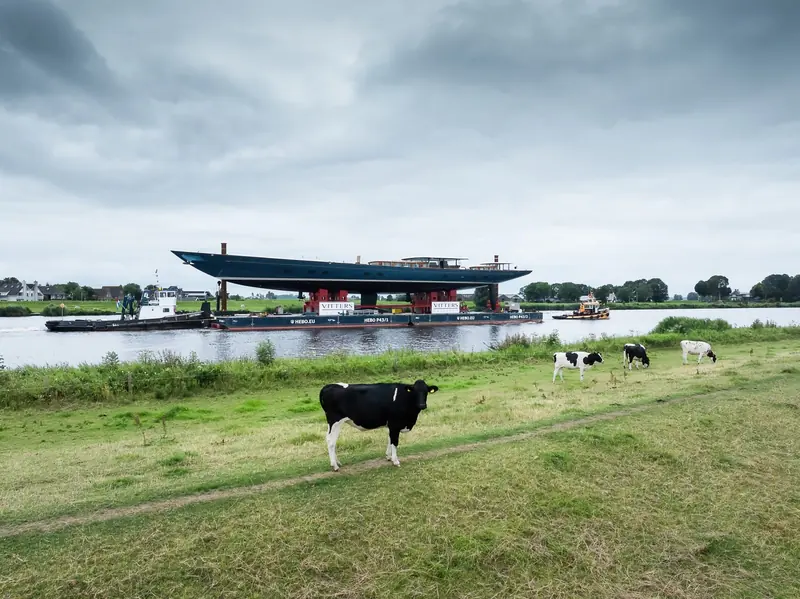
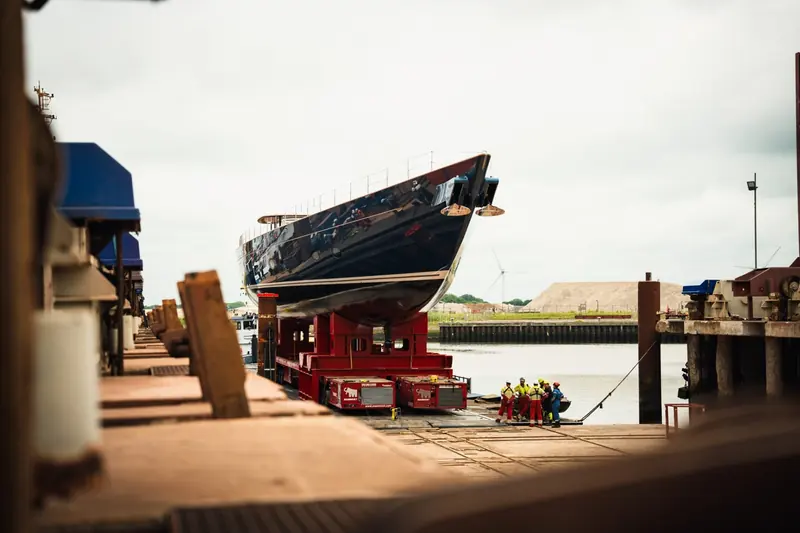
The open-source pack may outlast the boat
Vitters and its partners have handed the technical work to Foundation Zero, a non-profit publishing the project's research, software code and system schematics at foundationzero.org. The foundation holds no stake in the yacht and did not build her. Dykstra partner Mark Leslie-Miller described the moment of launch this way: 'Seeing her afloat transforms all of that into a living experiment.'
For an owner weighing a green build, that pack is the useful output. A bespoke one-off usually locks its lessons inside one hull and one yard. Here the reference point is public: a 68.9-metre proving what renewable propulsion and a disciplined hotel load can do together. The caveat for buyers is scope. Zero is a sailing yacht designed around her rig, not a template a displacement motoryacht can copy wholesale.
What is good, and what to watch
Strong points
- No engine room at allRemoving the combustion plant entirely frees volume other 69-metre yachts spend on tankage and machinery, and Lloyd's Register has certified the sails as her PRIMARY propulsion, not backup to an engine that isn't there.
- The engineering is published, not proprietaryFoundation Zero is releasing the research, software and system schematics openly, so the lessons from one bespoke hull are not locked inside it the way a normal one-off's are.
- Hotel load cut to under 30kWCutting the power the yacht burns simply existing from a typical 90kW to under 30kW is the less visible engineering win, and the part of this design a displacement motoryacht could actually borrow.
What to watch
- Still draws shore power alongsideZero needs grid electricity at a marina or yard like any yacht, and that power is only as clean as the local grid - an admission the project team makes itself.
- The propulsion side does not transferThe zero-emission case rests on a sailing rig; a displacement motoryacht owner can copy the hotel-load discipline but not the propulsion.
- No price, and the battery bank is unproven for resaleNeither Vitters nor Foundation Zero has published what Zero cost to build, and a 28-tonne, 5.2MWh marine battery bank has no service or resale history yet to weigh against a conventional yacht's known running costs.
Practical detail
| Price | Not published by Vitters, Foundation Zero, or any outlet covering the launch. |
|---|---|
| Battery pack | 5.2MWh, weighing 28 tonnes (YACHT); article's 'near 5,000kWh' is the same figure rounded. |
| Hull and fit-out | Hull built by Jacht- en Scheepswerf Gouwerok; fitted out at Vitters' own yard in Zwartsluis (YACHT). |
| Build timeline | 7 years in development, 3 years in construction, launched 6 July 2026 at Harlingen (YACHT; BOAT International). |
| Hull specifics | 456 tonnes displacement; lifting keel gives a draught range of 4.22m to 8.4m; 1,912 sqm of sail close-hauled; 62.5m mast (YACHT). |
| What is not published | Build cost, the battery bank's service life and warranty terms, and how a marine insurer rates a 5.2MWh lithium bank are not disclosed by any source checked. |
Questions this story answers
What happened?
Vitters launched Zero this month, a 68.9-metre sailing yacht built with no combustion engine, no fuel tanks and no generators. In their place sit a battery bank near 5,000kWh, 250kW of hydrogeneration under sail and 100 square metres of solar. For owners weighing a green build, the more useful output may be what comes next: the entire engineering package is being published open-source.
What is good about it?
No engine room at all. Removing the combustion plant entirely frees volume other 69-metre yachts spend on tankage and machinery, and Lloyd's Register has certified the sails as her PRIMARY propulsion, not backup to an engine that isn't there.
What should an owner or buyer watch?
Still draws shore power alongside. Zero needs grid electricity at a marina or yard like any yacht, and that power is only as clean as the local grid - an admission the project team makes itself.
Who reported this?
BOAT International, SuperyachtNews, Marine Industry News, Elite Traveler, Vitters, Vripack, Dykstra Naval Architects, Foundation Zero, YACHT.
We do this for everyone who loves this world. The people who have spent their lives in it, and the people just discovering it. Yotters exists so that what we learn belongs to all of them.
Nobody pays us for this. No ads, no sponsors, nothing for sale. We just believe the world is a little better when knowledge is shared instead of kept.
If it gave you something today, tell us to keep going. Follow us, leave a like, or write a positive comment. We read every one, and they are what keeps us going.