Gregory C. Marshall Naval Architect
| Founded in Victoria, British Columbia in 1994 by naval architect Gregory Marshall, joined by partner Gordon Galbraith in 1998 | |
| Marshall apprenticed as a teenager with West Coast designer Bill Garden, studied naval architecture at Memorial University in Newfoundland (graduating 1984), then spent eight years with Ed Fry's Houston firm and a spell at Pacific Mariner in Washington before opening his own Victoria practice | |
| Design credits span roughly 2,100 vessels with about 300 exceeding 100 feet, per a Canadian Boating magazine profile of Marshall, a count that includes commercial and semi-custom production hulls alongside one-off superyachts | |
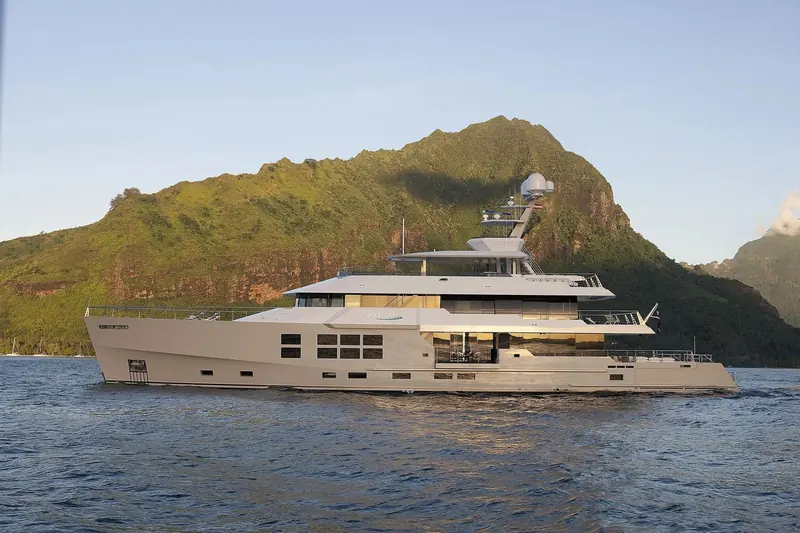
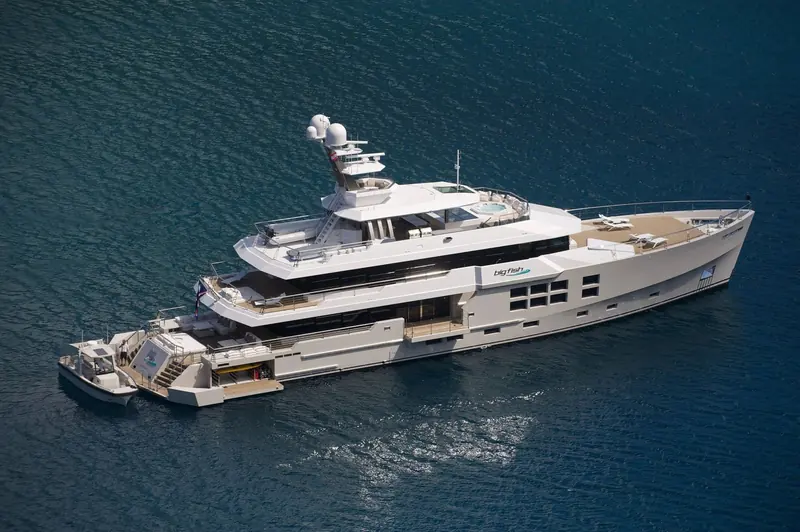
| Big Fish (McMullen & Wing, 45m, delivered 2010 for Hong Kong businessman Richard Beattie) was named one of the 50 best yachts of all time by Superyacht World in 2012, plus four further industry awards in 2010 and 2011 | |
| King Benji (Dunya Yachts, Turkey, 46.7m, delivered January 2024 for Miami owner Josh Golder) is the studio's newest flagship; its Design Unlimited interior won Best Interior Design under 500GT at the 2025 BOAT International Design and Innovation Awards | |
| Danzante Bay (Crescent Custom Yachts, 50.08m, delivered 2024) is the largest yacht ever built in Canada, finished from a Christensen hull that sat unfinished in Washington State from 2014 until a new owner had it completed in British Columbia | |
| Also credited with exterior styling on the 80m Nobiskrug flagship Artefact (2020), though published sources disagree on whether Marshall's firm or the shipyard's own team held the naval architecture credit | |
| The 2008 financial crisis cancelled twelve yacht commissions in progress; Marshall responded by building a commercial vessel division (workboats, patrol boats, water taxis) that has run alongside the yacht practice since | |
| Reported staff size varies by source, from about 15 to 18 in profiles published around 2015 to 30 on the firm's current website |
The Victoria Studio Behind the Explorer Reputation
Marshall's father, architect Donovan Marshall, introduced him as a teenager to Bill Garden, the influential West Coast yacht designer, and Marshall worked summers with Garden while studying naval architecture at Memorial University in Newfoundland, graduating in 1984. Garden reportedly warned him that his enthusiasm for big yachts would not survive contact with how complicated they actually are, a caution Marshall has since recounted rather than heeded. After university he spent eight years with Ed Fry's Houston based design firm, eventually buying into the operation, then contributed to Pacific Mariner's yacht designs in Washington State. He then opened an independent practice in Victoria, initially working out of his father's office, before formally incorporating as Gregory C. Marshall Naval Architect Ltd in 1994. Gordon Galbraith joined as partner in 1998 and remains the firm's vice president.
The studio's own materials describe more than 35 years of continuous design work, a framing that sits a little loosely against the 1994 incorporation date used in most third party profiles, since it counts Marshall's pre incorporation career under Garden and Fry. Scale is similarly hard to pin to one number: a 2015 trade profile put staff at 18, while the firm's current website cites a design team of 30. Per a Canadian Boating magazine profile of Marshall, the practice has design credit on roughly 2,100 boats over its history, with about 300 exceeding 100 feet, though that tally spans commercial vessels and semi-custom production lines built to a single Marshall design many times over, not 2,100 distinct one-off superyachts. The firm's actual roster of headline custom explorer deliveries is far smaller and far better documented, which is where the rest of this profile concentrates.
Big Fish: The Yacht That Made the Name
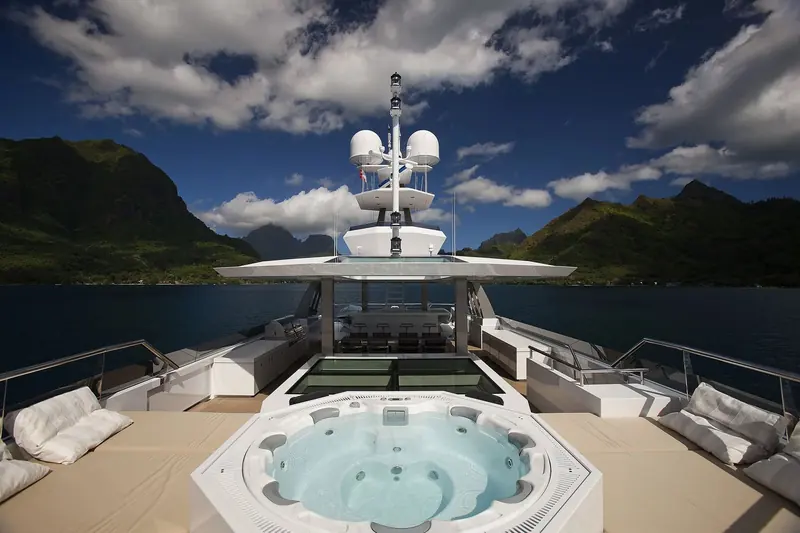
Beattie told Megayacht News in 2011 that six months of searching turned up no used boat close to what he wanted, and that the expedition style vessels which matched his performance needs looked, in his words, like tugs, workboats or fishing trawlers inside and out. Wanting remote water capability without giving up the styling and service of the charter yachts he had chartered before, he decided to build from scratch. The result, delivered in steel with an aluminium superstructure, runs 45m with a 9m beam and 496GT, powered by twin Caterpillar diesels to a top speed of 15 knots and a cruising speed of 13 knots, with a maximum range of 6,000 nautical miles at 10 knots confirmed independently by both BOAT International's yacht directory and YachtBuyer. She sleeps 10 guests across 5 cabins with a crew of 10, and her interior is built around a three deck atrium topped by a skylight, with 250 square meters of custom laminated glazing and bulwark sections that fold flat to create waterline terraces and a beach club aft.
Big Fish collected the World Yachts Trophy in 2010 and the International Superyacht Society, Showboats International and Asian Boat awards in 2011, then in 2012 Superyacht World magazine named her one of the 50 best yachts of all time, a rare distinction for a boat only two years old at the time. Beattie sold her in 2013 through broker Y.CO at an asking price reported around 25 million US dollars, and she has continued to work the charter market since. Fifteen years after delivery Big Fish still appears in current brokerage and charter listings rather than having aged out of relevance, which is a more durable measure of a design's worth than any single award.
An owner who wants a boat engineered to actually cross oceans, not one styled to look like it could, goes to the naval architect who apprenticed under Bill Garden and has been drawing steel expedition hulls for thirty years.
Beyond Explorers: A Wider Practice Than the Label Suggests
Alongside its bespoke explorer commissions, Gregory C. Marshall has long standing collaborations with production and semi-custom builders, including Westport's 112 and 130 foot lines and the San Juan 38 and 48, plus past project work referenced with Burger Boat Company, Christensen Shipyards and Ocean Alexander. When the 2008 financial crisis hit, twelve yacht projects the firm had in progress were cancelled outright, a shock Marshall has discussed openly in trade press. He responded by building out a commercial vessel design division, taking on workboats, patrol vessels and water taxis, which gave the practice steady revenue through a period when custom megayacht commissions largely dried up across the industry, and that division has continued alongside the yacht work since.
The firm's most prominent recent project by yacht size, the 80m Nobiskrug flagship Artefact delivered in 2020, illustrates how blurred design credit can get on the biggest jobs. Gregory C. Marshall's own portfolio and several industry profiles list the firm for naval architecture and exterior styling, and Artefact won Best Naval Architecture in its class at the 2021 BOAT International Design and Innovation Awards. But BOAT International's own yacht directory, a separate and more granular record, attributes Artefact's naval architecture to Nobiskrug's in-house team and credits Gregory C. Marshall for exterior design only, with interiors by Reymond Langton. The two sources disagree on exactly who did what, which is worth knowing before assuming every award citation maps cleanly onto a single firm's contracted scope.
King Benji: The Newest Flagship
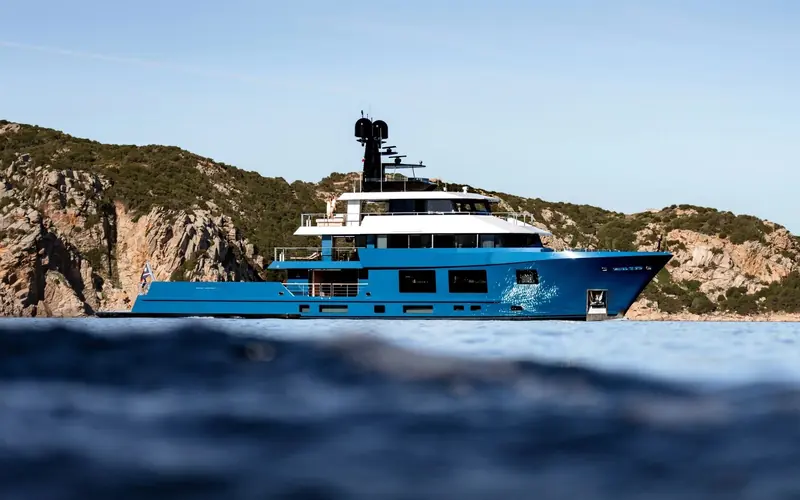
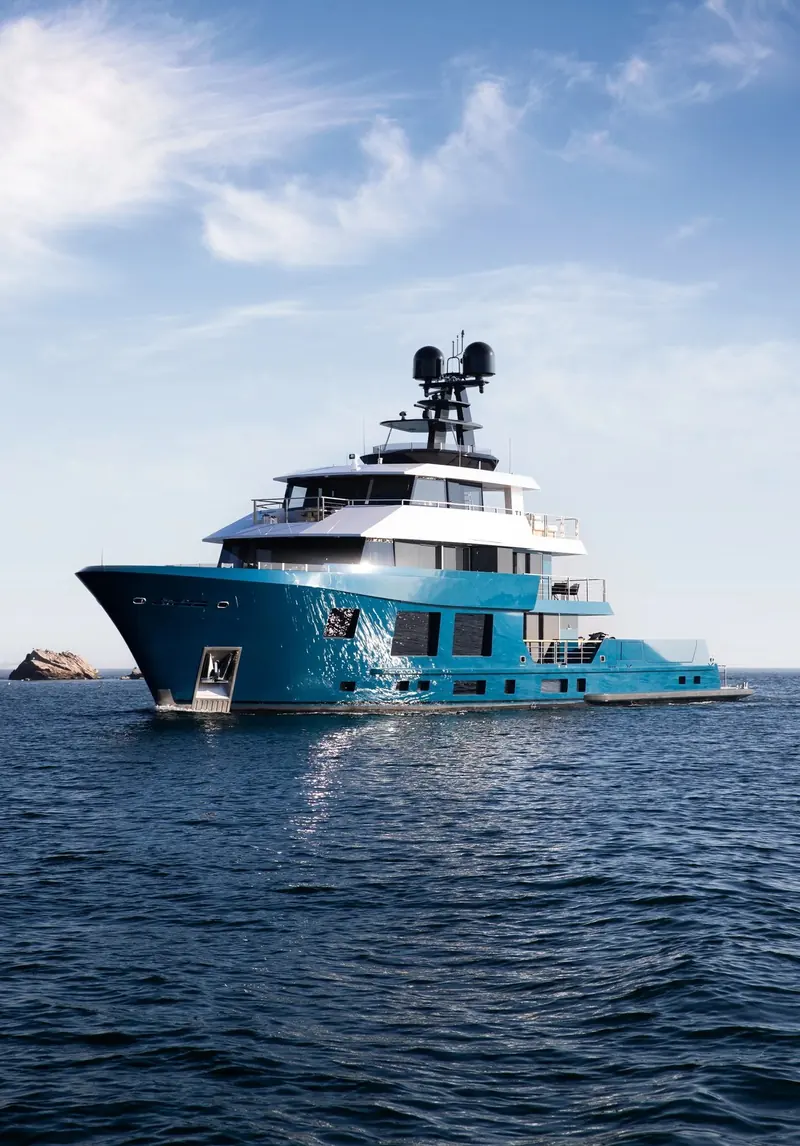
Marshall told BOAT International the design began as, in his words, a five minute doodle on the day he met Golder, adding that it was crazy how similar the finished yacht turned out. Golder's brief centered on two things he felt were missing from boats under 500GT: a real connection to the marine environment and genuine capability for what he called crazy adventures, translated into usable outdoor deck space from bow to stern, oversized windows, a 10 tonne main deck crane for exploration gear, a 40 foot tender and four 300 horsepower jet skis. Golder chose an acid blue hull over a conventional white one and named the yacht after his dog. Design Unlimited handled the interior, built around bamboo ceilings, warm woods and ocean themed wallpapers, and it won Best Interior Design for motor yachts under 500GT at the 2025 BOAT International Design and Innovation Awards.
King Benji runs 46.7m with an 8.9m beam and 491GT on a steel hull with aluminium superstructure and teak decking, powered by twin Caterpillar engines to a top speed BOAT International lists at 14 knots and a cruising speed of 12 knots, with a maximum range of 4,000 nautical miles at 10 knots. Construction ran through the COVID period and press coverage notes the pandemic slowed progress on site. Since delivery she has worked hard in charter, reported fully booked across a full Mediterranean summer season, while her asking price on the sale market has been cut more than once, most recently by roughly 2.5 million US dollars ahead of the 2025 Monaco Yacht Show to just under 37 million dollars, typical of a recently delivered explorer still finding its resale level.
Danzante Bay: Finishing a Hull Nobody Else Would
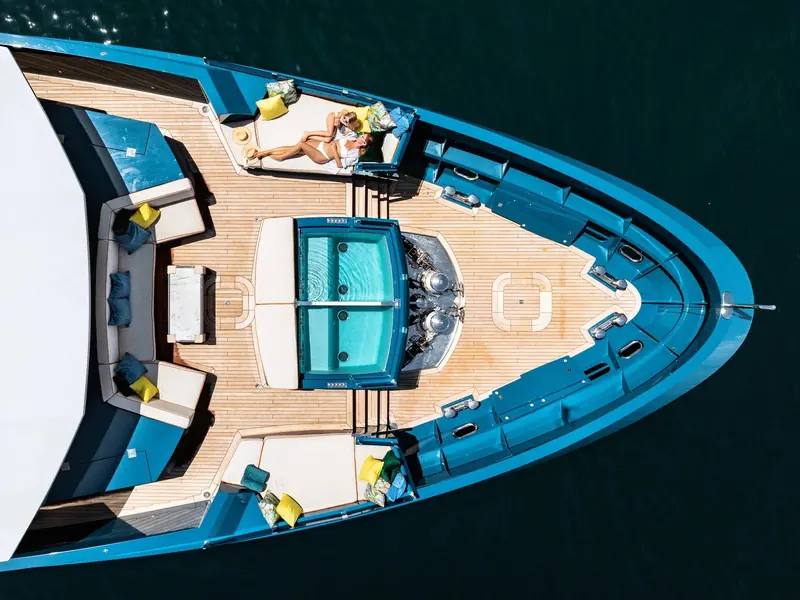
The hull was laid down as Christensen's project number 42 in Vancouver, Washington, but construction stopped in 2014 with only the hull and part of the superstructure complete, and the yard later ceased operations entirely, leaving the shell to sit dormant. American developer Owen Perry, profiled by BOAT International as a Baja California resort developer and longtime yachtsman, bought the unfinished project and had Crescent Custom Yachts of Richmond, British Columbia complete her. Gregory C. Marshall is credited for both naval architecture and exterior design on the finished yacht, with H2 Yacht Design handling interiors, a division of labor confirmed consistently across BOAT International, SuperYacht Times and the studio's own portfolio.
Delivered in March 2024, Danzante Bay runs 50.08m with a 9.2m beam and 499GT, notably built in GRP rather than the steel and aluminium of Big Fish and King Benji, with a teak deck and twin MTU engines giving a 15.5 knot top speed, 14 knot cruise and a 4,500 nautical mile range at 10 knots, carrying up to 12 guests and 10 crew. The project shows the practice working competently in a different hull material and finishing someone else's abandoned engineering rather than starting clean, and the relationship continues: Crescent's next yacht, the 44.5m steel and aluminium Legacy due in 2027, is also credited to Gregory C. Marshall for naval architecture and exterior design, with a hull and superstructure already joined at the time of writing.
What a Commission Costs, and Who Else Competes for the Work
No design fee, day rate or commission percentage for Gregory C. Marshall's work appears on the firm's own site or in any trade source reviewed for this profile; a client would need to ask directly. What is documented is scope: the firm typically contracts naval architecture, exterior styling and structural and mechanical engineering together, and often interior design as well, rather than styling a hull engineered by someone else. In the explorer and expedition niche specifically, the closest comparable specialists are Dutch: Dykstra Naval Architects, which built its name in sailing yacht engineering before extending into explorer motor yachts, and Vripack, which paired with Sialia Yachts on the Sialia 80 Explorer. Both operate from the Netherlands with larger international portfolios and closer working relationships with the biggest European yards than Gregory C. Marshall currently has.
Gregory C. Marshall's signature deliveries cluster in a 35 to 50 meter bracket, Big Fish at 45m, King Benji at 46.7m and Danzante Bay at 50.08m, below the 60 meter plus scale of the explorer flagships that dominate headlines, Artefact among them at 80m, where the firm's contracted role was narrower than the boat's fame suggests. That mid-size bracket is exactly where an owner wanting genuine ocean crossing range without gigayacht scale would look, and it is thinner ground for the handful of European explorer specialists who tend to chase the largest commissions, which is where Gregory C. Marshall's North American yard relationships, spread across New Zealand, Turkey and Canada rather than concentrated in one region, currently give it room to work.
What Is Not Published, and What a Buyer Should Verify
Three inconsistencies are worth naming plainly. First, staff size varies from about 15 to 18 in profiles published around 2015 to 30 on the firm's current site, and the studio's own claim of more than 35 years operating sits loosely next to the 1994 incorporation date used everywhere else, since it silently folds in Marshall's earlier years under Bill Garden and Ed Fry. Second, on shared credit projects such as Artefact, BOAT International's own directory splits naval architecture and exterior design between the shipyard and Gregory C. Marshall in a way that conflicts with how the studio's own portfolio and some award citations describe the same job, so a buyer should ask the yard directly which drawings originated where rather than trust either party's press materials alone. Third, even Big Fish's own performance numbers move between sources: two independent outlets, BOAT International and YachtBuyer, agree on a 6,000 nautical mile range at 10 knots, but older brokerage copy for the same yacht has quoted a vaguer 3,000 nautical miles plus, and King Benji's top speed is quoted at both 14 and 14.5 knots depending on the listing.
None of this points to anything invented, but it does mean brokerage and press copy should not substitute for the yard's own sea trial report, which was not found published independently for any of the three flagship yachts covered here, a common gap in this segment of the market rather than one specific to this studio. A prospective client evaluating Gregory C. Marshall for a new build should ask for that trial data directly, and should have the design contract state plainly which of naval architecture, exterior styling, interior design and engineering the firm is actually being hired to deliver, given how loosely the press covering the studio's own past work has described that division on its most famous projects.
معلومات عملية
| Design fee | Not published by the studio or found in any trade source reviewed. The firm typically contracts naval architecture, exterior styling and engineering together, and often interior design as well, rather than pricing each separately. |
|---|---|
| Signature size bracket | 35 to 50 meters for its best documented bespoke explorer deliveries: Big Fish 45m, King Benji 46.7m, Danzante Bay 50.08m. The firm also works down to about 10m and has styled the 80m Artefact, though its contracted role narrows at that scale. |
| Typical build partners | McMullen & Wing (New Zealand), Dunya Yachts (Turkey) and Crescent Custom Yachts (Canada) for recent bespoke explorers, alongside long standing semi-custom work with Westport's 112 and 130 foot lines and the San Juan 38 and 48. |
| What is not published | Current staff headcount (15 to 30 depending on source and date); independent, non-yard sea trial reports for any flagship yacht; and, for shared-credit projects such as Artefact, a single agreed account of which firm held the naval architecture. |
| Typical range on delivered explorers | 4,000 to 6,000 nautical miles at 10 knots across the three most recent flagships, per BOAT International and YachtBuyer; ask the yard for its own trial report before relying on any single brokerage listing's figures. |
ما يذكره الملاك والأطقم
Richard Beattie, owner, Big Fish (2010-2013)
Beattie told Megayacht News in 2011 that after six months of searching, no used boat resembled what he wanted, and that the expedition style boats matching his performance needs looked like tugs, workboats or fishing trawlers inside and out; wanting remote water capability without giving up charter-yacht styling and service, he decided to build his own boat from scratch rather than compromise.
Megayacht NewsJosh Golder, owner, King Benji (delivered 2024)
Golder said he felt two things were missing from boats under 500GT, a real connection with the marine environment and genuine capability for adventure, and that his brief prioritized usable outdoor deck space from bow to stern and big windows over conventional formal interior spaces.
BOAT InternationalGregory Marshall, founder, on designing King Benji
Marshall described the design's origin as a five minute doodle on the day he met Golder, and said the finished yacht turned out remarkably close to that first sketch, framing his working method as starting from what an owner would actually do with the boat rather than from the interior outward.
BOAT International
نقاط القوة وما يستدعي الانتباه
نقاط القوة
- Big Fish has aged into a genuine reference point, not a one-season headlineSuperyacht World named her one of the 50 best yachts of all time in 2012, and fifteen years after delivery she remains active in brokerage and charter listings rather than having faded, a more durable test than any single award.
- Real expedition capability, not just an expedition lookAll three flagship deliveries carry documented long-range figures, 6,000 nautical miles for Big Fish, 4,500 for Danzante Bay and 4,000 for King Benji, each at 10 knots on steel or GRP hulls built for distance rather than dockside styling alone.
- A practice built to survive its own market's cyclesWhen twelve yacht commissions were cancelled in the 2008 crash, Marshall built a commercial vessel division designing workboats, patrol boats and water taxis that has run alongside the yacht practice ever since, rather than leaving the firm dependent on one boom-and-bust segment.
- Trusted across yards on three continentsRecent flagship deliveries came from McMullen & Wing in New Zealand, Dunya Yachts in Turkey and Crescent Custom Yachts in Canada, suggesting the naval architecture and engineering travel with the studio rather than depending on one shipyard's in-house team.
ما يستدعي الانتباه
- No published fee, and a scope that is not always clearly boundedThe studio publishes no design fee or rate anywhere reviewed, and on its highest profile project by size, the 80m Artefact, BOAT International's own directory credits the shipyard rather than Gregory C. Marshall for naval architecture, conflicting with the studio's own portfolio description of that same job.
- Basic facts about the firm itself are inconsistent across sourcesStaff counts range from about 15 to 18 in profiles from around 2015 to 30 on the current site, and the firm's own claim of more than 35 years in operation sits loosely against the 1994 incorporation date cited elsewhere.
- No independently published sea trial dataPerformance figures for the flagship yachts come from brokers and the yards themselves and occasionally disagree, such as Big Fish's range being quoted as both 6,000 nautical miles and a vaguer over-3,000 figure across different listings, with no independent trial report found published for comparison.
- At least one recent build ran longKing Benji's construction stretched through the COVID period, and press coverage of the build notes the pandemic slowed progress on site, a schedule risk a buyer commissioning a similarly bespoke one-off hull should budget contingency against.
لمين هو: An owner who wants a yacht engineered for real long-range, remote-water cruising rather than styled to merely suggest it, building new most often through McMullen & Wing, Dunya Yachts, Crescent Custom Yachts or a Westport semi-custom line, and who is comfortable with a smaller North American practice rather than one of the established European explorer specialists.