Cummins Marine
| Category | marine diesel propulsion engines, inline-6 and V-configuration, for trawlers, sportfish boats, motor yachts and superyachts, sold alongside Onan and C Power marine generator sets under the same parent company |
|---|---|
| Maker | Cummins Inc, Columbus, Indiana, founded 3 February 1919 by Clessie Cummins with banker William G. Irwin; NYSE: CMI; 2025 revenue about $33.7 billion, about 67,400 employees worldwide |
| Marine is one of Cummins' original businesses: Clessie Cummins built and sold marine diesels, including the Model U and an early F-model engine, before the company became known for on-highway trucks | |
| Current yacht/commercial propulsion range, marketed under the Quantum Series name for the mid-range engines: QSB6.7/QSB7, QSC8.3, QSL9, QSM11, QSK19, QSK38, QSK50, QSK60 and QSK95 | |
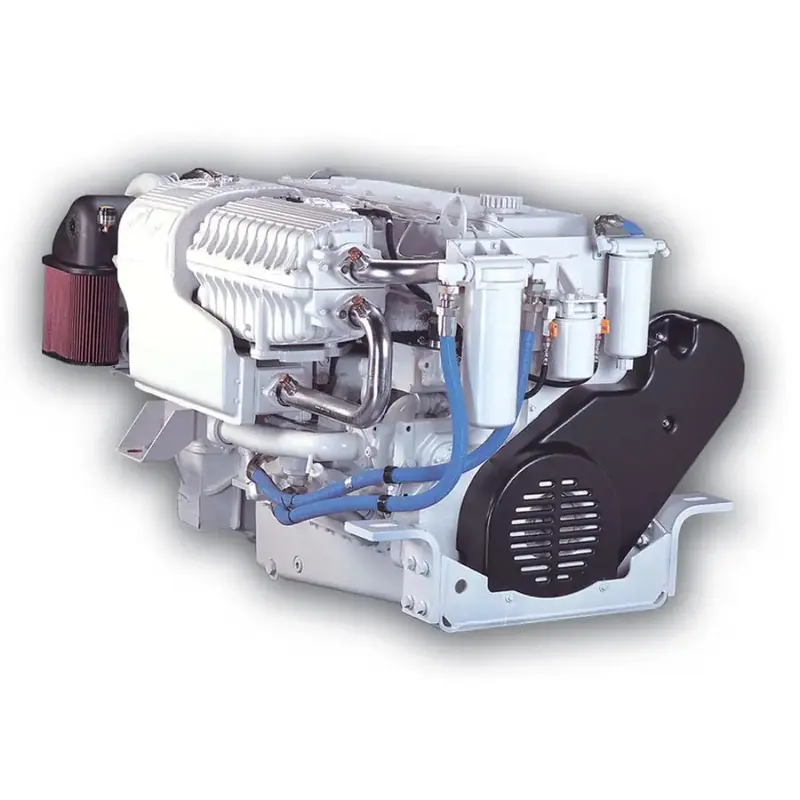
| QSB6.7 (inline-6, 6.7 liter) | roughly 220 to 550 hp; the most common repower size on trawlers and cruisers under 45 feet, successor to the smaller QSB5.9 (210 to 480 hp) |
| QSC8.3 (inline-6, 8.3 liter) | up to about 600 hp; a common step up from the QSB range for mid-size yachts and a frequent repower choice |
| QSL9 (inline-6, 8.9-9 liter) | roughly 280 to 405 hp; pitched more at commercial, patrol and pilot boats and 50-80 foot motor yachts than at production leisure boats |
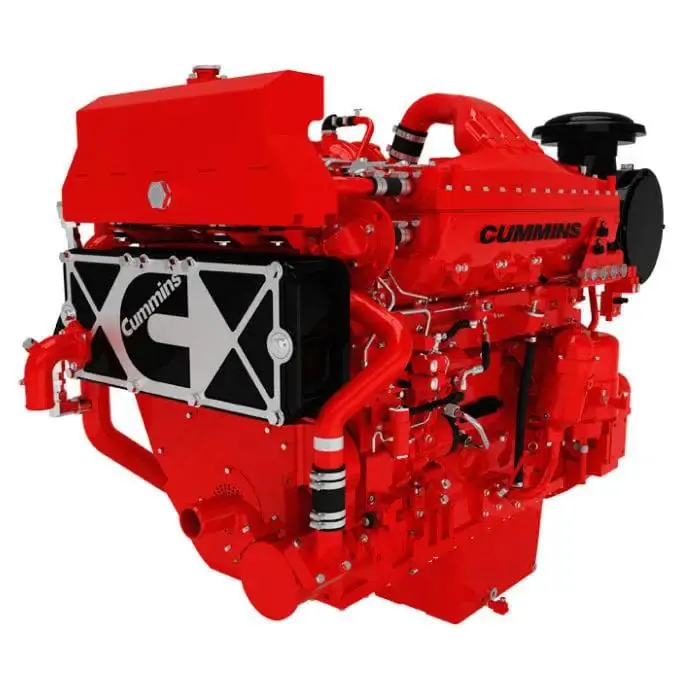
| QSM11 (inline-6, 10.8 liter) | roughly 300 to 715 hp, about 2,620 lb (1,188 kg); the engine most often specified on 45-65 foot sportfish boats and flybridge motor yachts |
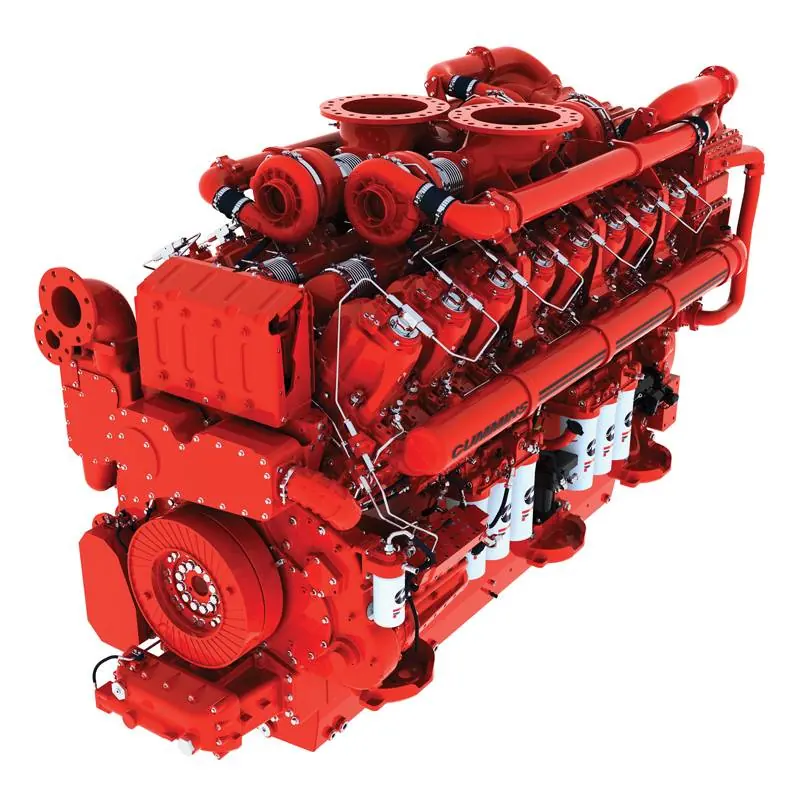
| QSK19 to QSK95 (V6 to V16, 19 to 95 liter): roughly 500 hp up to 4,200 hp, covering superyacht propulsion, yacht support vessels and large passenger craft; the QSK95 is Cummins' most powerful high-speed diesel | |
| Standard recreational marine warranty is 2 years or 2,000 hours, whichever comes first; Cummins' Encompass extended plans can push major-component coverage out to 6 years | |
| Cummins states a marine-certified network of about 500 distributors and 7,500 to 7,600 dealer locations across more than 190 countries | |
| Cummins publishes no retail price list for any current marine engine; every dollar figure in this report comes from dealers, resellers or forum-reported quotes, not a manufacturer list | |
| Onan (4-195 kW) and C Power (74-1,230 kW) marine generator sets are sold by the same parent company but are a genuinely separate product line from the propulsion engines this page covers | |
| Recommended service intervals | oil and primary filter roughly every 200-500 hours depending on model, fuel filters around 500 hours and a full valve, injector and electrical service at 500 hours or annually |
| Seaboard Marine of Oxnard, California became the first official Cummins Marine dealer on the US West Coast in 1985 and is one of the most cited independent Cummins repower specialists in owner forums | |
| Recurring owner complaints center on the CP3 injection pump on older QSB units and exhaust manifold and turbo heat problems on QSM11s run near their top rating, not on the base engine architecture | |
| Built across multiple Cummins plants depending on the family, including Rocky Mount (North Carolina), Jamestown (New York) and Darlington (UK) | |
| PassageMaker sea trials record real fuel burn: a Helmsman 43E with a 250 hp QSB6.7 burned 1.2 gph at 1000 rpm and 10.3 gph wide open at 3070 rpm for about 11 knots | |
What Engines Does Cummins Marine Sell and How Is the Range Organized?
The range starts with the QSB6.7, a 6.7 liter inline-6 rated roughly 220 to 550 hp that replaced the long-running QSB5.9 (210 to 480 hp) and remains the most common size for repowering a trawler or cruiser under 45 feet. Above it sits the QSC8.3, an 8.3 liter inline-6 rated up to about 600 hp, and the QSL9, an 8.9-9 liter inline-6 rated roughly 280 to 405 hp that Cummins pitches more at commercial, patrol and pilot boats than at production leisure boats despite its larger displacement. The QSM11, a 10.8 liter inline-6 rated roughly 300 to 715 hp and weighing about 2,620 lb, is the engine most often specified on 45 to 65 foot sportfish boats and flybridge motor yachts, and several of these mid-range families are marketed together under the Quantum Series name.
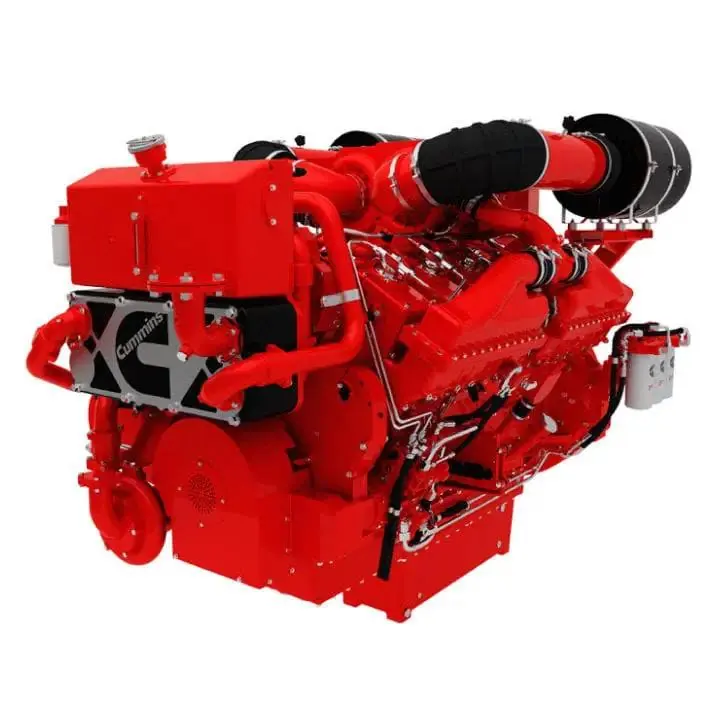
Above the QSM11 the range moves to V-configuration blocks built for superyachts, yacht support vessels and large passenger craft: the QSK19 (V6, 19 liter, roughly 500 to 800 hp), the QSK38 (V12, 38 liter, up to about 1,400-1,500 hp), the QSK50 (V16, 50 liter, roughly 1,700 to 2,200 hp), the QSK60 (V16, 60 liter, around 3,000 hp) and the QSK95, a V16 95 liter unit rated 3,200 to 4,200 hp that Cummins calls the most powerful high-speed diesel it builds. Cummins sells this propulsion range separately from its Onan and C Power marine generator lines, which share the same corporate parent and sometimes the same engine plants but are a genuinely different product, auxiliary power rather than main propulsion.
Who Owns Cummins Marine and How Did the Business Start?
Clessie Cummins was an enthusiastic boater, and his earliest engines, including the Model U and an early F-model design, found some of their first commercial success powering boats rather than trucks, work he did partly alongside local fishermen who needed a dependable diesel. The company he and Irwin founded in Columbus, Indiana grew from that marine and industrial base into the diesel manufacturer that now supplies engines across on-highway, construction, agriculture, defense, rail, power generation and marine markets worldwide.
Cummins Inc trades today on the New York Stock Exchange as CMI, reported 2025 revenue of about $33.7 billion and employed roughly 67,400 people worldwide at the end of that year. The company folded in the Onan generator business between 1986 and 1992, which is why current marine gensets are marketed as Cummins Onan and C Power rather than as a separate brand; that generator line is a useful comparison point against Northern Lights, Kohler Marine Generators and Fischer Panda, but it is a different product from the propulsion engines covered on this page, and a buyer researching one should not assume it says anything about the other.
Cummins Marine has been building marine diesels since before it built a single truck engine, and today's QSB-to-QSK95 range still wins on parts, dealer depth and documented repower longevity rather than on the flagship-yard exclusivity that carries MTU and Volvo Penta IPS at the very top of the superyacht market.
Which Cummins Engine Fits Which Size and Type of Boat?
PassageMaker's own sea trials show the pattern in practice: the Helmsman 43E pilothouse trawler runs a single 250 hp QSB6.7 and cruised comfortably at 6-9 knots burning 1.2 to 5.8 gallons per hour, while the Pacific Trawler 40 shipped with a 220 hp Cummins as standard and offered ratings up to 370 hp for owners who wanted more speed. At the larger end of the trawler class, the Beneteau Swift Trawler 54 is sold with twin 550 hp Cummins engines as its only power option, giving a 14-16 knot cruise and roughly 700 nautical mile range at 10 knots with a 10 percent fuel reserve, according to the builder's own figures reported by PassageMaker.
Sportfish and convertible boats lean toward the QSM11 and QSC8.3: owners on The Hull Truth discuss twin QSM11s rated 715 hp in a 52 foot Hatteras running well when kept below about 20 gallons per hour per engine, and QSC8.3 units at 600 hp are a common repower choice on similarly sized convertibles. Above about 100 feet, Cummins moves to the QSK series; its own case study on superyacht propulsion positions the QSK19 through QSK60 as the practical range for yacht support vessels and superyachts needing IMO Tier III compliance, with the QSK95 reserved for the very largest support vessels, passenger ferries and megayachts where 3,200 to 4,200 hp per engine is genuinely needed rather than just available.
How Does Cummins Marine Compare to Volvo Penta IPS, MTU and Caterpillar Marine?
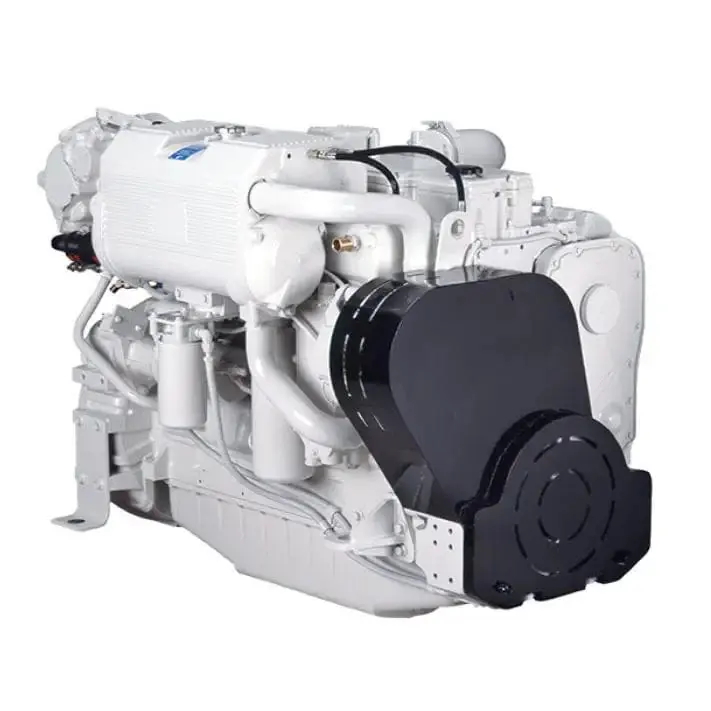
Unlike Volvo Penta, which pairs its diesels with the forward-facing IPS pod drive as one integrated system, Cummins sells the engine alone and leaves drive integration to the boatbuilder or a third party such as ZF, so a buyer comparing the two is really comparing an integrated drivetrain against a component. On raw hardware the two are closer than the marketing suggests: a Cummins QSM11 weighs about 2,620 lb against roughly 2,606 lb for a similarly rated Volvo Penta D13, essentially a wash on power-to-weight in that class, so the real difference is IPS's steerable pod versus a conventional shaft and rudder, not the engine block behind it.
Against MTU, Cummins competes hardest below the roughly 2,000 hp line where MTU's Series 2000 and 4000 dominate through yard-exclusive OEM contracts with builders like Sanlorenzo, Azimut Benetti and Mangusta; Cummins' QSK50, QSK60 and QSK95 can match or exceed those engines on paper but Cummins has not published equivalent flagship-yard exclusivity deals, so it shows up more often as a repower and support-vessel choice than as the factory-fit engine on the newest 40-metre-plus designs. Against Caterpillar, the two brands overlap directly in the sub-1,000 hp yacht and sportfish market; Hull Truth owners rank Cummins ahead of Onan, Phasor and Kohler on trouble-free operation but Caterpillar remains the more common factory-fit choice on production motor yachts from about 45 feet up, with Cummins holding a comparatively stronger reputation and a deeper independent repower ecosystem, built around specialist dealers like Seaboard Marine, in the sportfish and trawler-conversion market specifically.
How Much Does a Cummins Marine Engine Cost, New and Repowered?
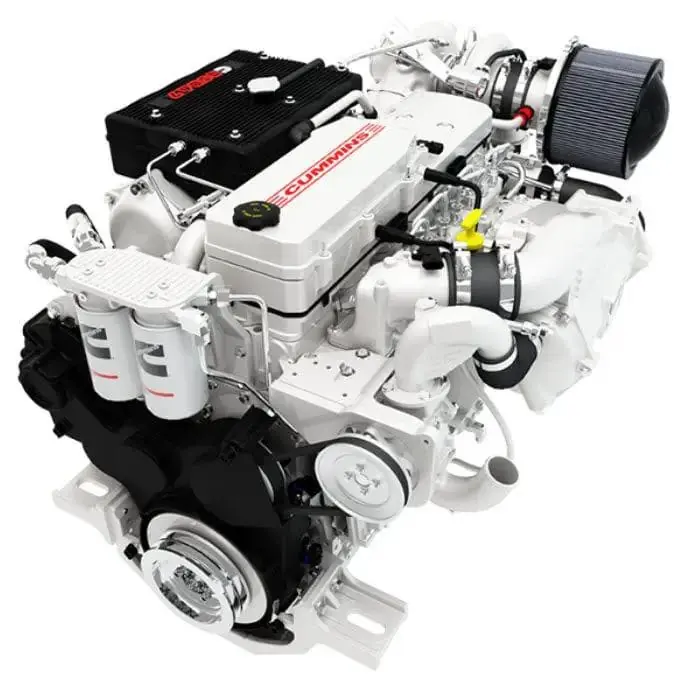
At the small end, resellers list a bare new QSB6.7 550 hp engine around $19,000 while forum-reported dealer quotes for a fully delivered 480 hp QSB6.7 package, with electronics and freight included, run closer to $37,700; the gap is mostly what is bundled in rather than a real price disagreement. A fully rebuilt QSC8.3 with harness, gauge panel and display has been quoted at about $41,000, and a QSC8.3 600 hp reman with marine gear at around $65,000, both from Trawler Forum posts rather than a Cummins price sheet. For a full repower, Downeast Boat Forum and Cummins Marine Forum threads put a twin QSB5.9-class sportfish repower, engines plus exhaust, cables and labor, at $120,000 to $175,000 depending on how much of the work an owner does personally.
Larger QSK-series engines show the widest spread precisely because nothing is published: dealer listings for a QSK19 marine engine run from about $100,000 for a Tier 3 unit up to a reported $165,000-170,000 for a current new build, while reman and used QSK19 cores trade from roughly $45,000 up to about $90,000 for a premium remanufactured complete engine. Cummins does not publish per-unit pricing for the QSK38, QSK50, QSK60 or QSK95 at all; these are quoted project by project through a distributor once hull, cooling, exhaust and emissions-tier requirements are known, which is standard practice across Cummins, MTU and Caterpillar alike at that end of the market.
How Reliable Are Cummins Marine Engines and What Actually Fails?
The reputation for longevity predates the current QS-badged range: Trawler Forum and Ducktalk, the forum for George Buehler's Diesel Duck passagemakers, both describe the older Cummins 6BT and 6BTA as a preferred repower choice over Yanmar specifically because parts are cheaper and easier to find and the engine runs comfortably at lower rpm with more usable mid-range torque, and Ducktalk members report Diesel Ducks running small Cummins diesels like the 4B3.9M for many years with only wear-item replacement. PassageMaker's own sea trial data on the Helmsman 43E's 250 hp QSB6.7, a clean, linear fuel burn from 1.2 gph at idle-cruise to 10.3 gph wide open, is the kind of independently measured number that supports the reputation rather than just repeating it.
The recurring complaints are specific rather than general. On Seaboard Marine's Cummins Marine Forum, posters describe older-vintage QSB high-pressure CP3 injection pumps as a known weak point, with failure eventually likely rather than a matter of if, plus a documented case of burnt intake valves and fuel dilution from dribbling injectors on a twin QSB5.9 330 hp installation. On The Hull Truth, QSM11 owners report exhaust manifold warping and gasket leaks bad enough on one boat to need three replacements before the owner switched brands entirely, and other posters attribute this specifically to running the QSM11 above about 20 gallons per hour per engine, where the dry turbo and exhaust manifold become the limiting factor; a charter boat kept below that threshold instead logged roughly 16,000 hours with only one manifold gasket replaced. Cummins itself revised the QSC-550's cruise rating down from 2,700 to 2,600 rpm after durability concerns, and one owner on Cummins' own forum reported a new 2023 QSB6.7 that stalled repeatedly during delivery, a reminder that even a well-regarded platform ships the occasional bad unit.
What Does Servicing a Cummins Marine Engine Cost and How Big Is the Dealer Network?
The standard recreational marine warranty covers parts, labor, diagnostic labor and limited travel for the first two years or 2,000 hours, whichever comes first, and Cummins' Encompass extended plans can stretch major-component coverage out to 6 years for buyers willing to pay for it; commercial and ReCon remanufactured units carry separate warranty schedules published on Cummins' own site. Scheduled maintenance is straightforward: oil and primary filter changes fall somewhere between every 200 and 500 hours depending on the specific engine, fuel filters around every 500 hours and a full valve, injector and electrical inspection at 500 hours or annually, whichever comes first, figures that match what Seaboard Marine's own published spec sheets show for the QSB and QSC families.
Labor is where costs vary most: Florida-based marine technicians at certified dealerships currently run $125 to $175 an hour, with a straightforward single-engine repower needing roughly 8 to 16 hours of shop time and a twin-engine job adding another 30 to 40 percent for the second side. Cummins' scale is the real advantage here. The company states about 500 marine-certified distributors and 7,500 to 7,600 dealer locations across more than 190 countries, a materially larger footprint than Fischer Panda's fewer than 200 locations cited in the same Hull Truth thread that ranks Cummins ahead of it on reliability, and broadly comparable in reach to Caterpillar's dealer network, though independent specialists like Seaboard Marine, the first official Cummins Marine dealer on the US West Coast since 1985, still do much of the specialized repower and diagnostic work that a generalist dealer may not.
Is Cummins Marine the Right Choice for Your Boat?
For the repower and mid-size production market, the case is strong and consistently made across Trawler Forum, The Hull Truth and Ducktalk: Cummins parts and expertise are easy to find, the QSB and QSM ranges have a long track record of running 15,000 to 20,000-plus hours with routine maintenance, and independent specialists like Seaboard Marine give an owner somewhere to go beyond the generalist dealer network. Real sea trial data, like PassageMaker's fuel burn numbers on the Helmsman 43E, backs up the reputation rather than just repeating a marketing claim, and the QSC8.3 and QSM11 in particular remain default choices for sportfish and convertible repowers where owners have already weighed Cummins against Volvo Penta, Caterpillar and Yanmar.
The weaker fit is at the very top of the market: a buyer commissioning a new 45-metre-plus superyacht is more likely to end up on an MTU engine through a yard's existing propulsion contract, or on Volvo Penta IPS if the hull is a mid-size planing design built around that pod system from the start, simply because those relationships are already in place before Cummins gets a look. Buyers at any size should also budget for the fact that Cummins publishes no price list anywhere in the range, so a real number only comes after getting multiple dealer quotes, and should ask specifically how hard a QSM11 or larger QSK-series engine will be run relative to its rated output, since the forum record is clear that the manifold and turbo problems show up when an engine is worked at or near the top of its curve rather than at a sensible cruise setting.
معلومات عملية
| New engine price by power band | Cummins publishes no price list. Dealer and reseller quotes gathered for this page: QSB6.7 roughly $19,000 to $38,000 depending on rating and what is bundled in; QSC8.3/QSL9/QSM11 typically $30,000 to $70,000 on a call-for-price basis; QSK19 roughly $100,000 to $170,000 new; QSK38/QSK50/QSK60/QSK95 quoted project by project, no public figures found. |
|---|---|
| Full repower cost | A twin-engine sportfish repower (engines, exhaust, cables, controls and labor) commonly runs $120,000 to $175,000 per Downeast Boat Forum and Seaboard Marine's Cummins Marine Forum. A single-engine trawler repower with a QSB6.7 or QSC8.3, including labor, is more often quoted at $40,000 to $80,000 all-in. |
| What is not published | Cummins publishes no retail price for any current marine engine, no combined price list across the range and no standard-distance dB(A) noise figure on its marine product pages. Every price in this report comes from dealers, resellers or forum-reported quotes, and every figure should be treated as a starting point for a quote, not a firm number. |
| Used and remanufactured market | A fully rebuilt QSC8.3 with harness and gauges has been quoted around $41,000, and a 600 hp QSC8.3 reman with marine gear around $65,000. Used QSK19 cores average around $47,000 on equipment marketplaces, while a premium remanufactured complete QSK19 starts near $90,000. |
| Service and labor cost | Standard warranty is 2 years or 2,000 hours. Certified dealer labor in Florida currently runs $125 to $175 an hour; a single-engine repower takes roughly 8 to 16 hours of shop time, more for complex installations. Oil and filter service falls every 200 to 500 hours depending on model, fuel filters around every 500 hours. |
| Cost versus alternatives | Roughly comparable to Caterpillar in the sub-1,000 hp yacht and sportfish class, where both compete on similar dealer-quoted pricing. Neither Cummins nor MTU publishes pricing at the QSK50-QSK95 or Series 4000 superyacht tier, so no direct like-for-like comparison is possible there; Cummins' wider global dealer count is its main cost advantage in ongoing service rather than in the purchase price itself. |
ما يذكره الملاك والأطقم
Preferred over Yanmar for repower specifically on parts and low-rpm torque
Trawler Forum threads comparing Cummins and Yanmar repowers describe the Cummins 6BT as simpler, American made, cheaper to keep in parts and typically 30 to 50 percent larger in displacement than a comparable Yanmar, giving longer life and more usable mid-range power.
Trawler ForumQSM11 exhaust manifold and turbo fail when run hard, but last well when not
One owner reported a QSM11's exhaust manifold warping and leaking badly enough to need three replacements before switching brands, while another owner running a charter boat below about 20 gallons per hour per engine logged roughly 16,000 hours with only one manifold gasket changed.
The Hull TruthSmall Cummins diesels are a long-serving, modestly powered choice on Diesel Duck passagemakers
Owners on the Diesel Duck owners' forum discuss 38 foot Ducks running an 80 hp Cummins engine, including a 4B3.9M on a 1992-built hull, consistent with designer George Buehler's preference for deliberately modest power over raw speed.
DucktalkOlder QSB high-pressure injection pumps are a known, eventual weak point
Posters on Seaboard Marine's Cummins Marine Forum describe older-vintage QSB CP3 injection pumps as likely to cause problems eventually, and document a case of burnt intake valves and fuel dilution from dribbling injectors on a twin QSB5.9 330 hp boat.
Seaboard Marine (Cummins Marine Forum)Real sea trial fuel numbers back up the reputation for efficiency
A Helmsman 43E fitted with a single 250 hp QSB6.7 burned 1.2 gallons per hour at a 1000 rpm cruise and 10.3 gallons per hour wide open at 3070 rpm for about 11 knots, and a Beneteau Swift Trawler 54 with twin 550 hp Cummins engines was quoted at roughly 700 nautical miles of range at a 10 knot cruise.
PassageMakerCummins ranks ahead of some rivals on trouble-free operation but behind Cummins' own commercial network in support depth
A Hull Truth thread on which diesel generator and engine brands give the least headaches ranks Cummins products ahead of Onan, Phasor and Kohler on reliability, in the same discussion that notes Cummins' service network of more than 7,000 locations dwarfs a smaller rival's fewer than 200.
The Hull Truth
نقاط القوة وما يستدعي الانتباه
نقاط القوة
- Marine diesel engineering is literally Cummins' founding businessClessie Cummins built and sold marine diesels, including the Model U and an early F-model engine, before the company that bears his name became known for on-highway trucks, giving Cummins Marine more than a century of continuous marine-specific engineering behind it.
- One brand covers a very wide power range on a single dealer and parts networkThe current lineup runs from a roughly 220 hp QSB6.7 to a 4,200 hp QSK95, letting an owner or boatbuilder stay with one manufacturer, and one service relationship, from a small trawler repower up through a megayacht support vessel.
- The deepest independent dealer and repower ecosystem among the diesel majorsCummins states about 500 distributors and 7,500 to 7,600 dealer locations in more than 190 countries, and specialist independents like Seaboard Marine, the first official Cummins Marine dealer on the US West Coast since 1985, add a layer of Cummins-specific repower expertise that owners on Trawler Forum and The Hull Truth repeatedly point to.
- Documented long service life with routine maintenanceTrawler Forum and Ducktalk owners report the older Cummins 6BT and 6BTA, and the current QSB and QSM families, running 15,000 to 20,000-plus hours with only wear-item replacement, a track record that predates the current model range by decades.
- Independently verified real-world fuel and performance numbers existPassageMaker's own sea trial of a QSB6.7-powered Helmsman 43E recorded a clean fuel burn curve from 1.2 gph at low cruise to 10.3 gph wide open, a specific, reproducible figure rather than a brochure claim.
ما يستدعي الانتباه
- No published pricing anywhere in the rangeCummins does not publish a retail price for any current marine engine, from the smallest QSB6.7 to the QSK95, so every number in this report came from a dealer, reseller or forum-reported quote, and quotes for the same engine can vary by tens of thousands of dollars depending on what is bundled in.
- Recurring hard-parts failures on engines run near their rated outputThe QSM11's exhaust manifold and dry turbo are documented on The Hull Truth as failure points above about 20 gallons per hour per engine, and older QSB units carry a known weak CP3 injection pump, both real, recurring costs rather than isolated incidents.
- No factory-integrated pod-drive system of its ownUnlike Volvo Penta, which sells its diesel and the IPS pod drive as one engineered system, Cummins sells the engine alone, so a boatbuilder or owner must source drivetrain integration separately, typically through ZF or a similar third party.
- Fewer yard-exclusive contracts at the very top of the superyacht marketMTU's Series 2000 and 4000 engines are bundled into long-term OEM contracts with builders such as Sanlorenzo, Azimut Benetti and Mangusta above roughly 2,000 hp; Cummins' QSK50, QSK60 and QSK95 compete on paper but do not carry equivalent publicly announced flagship-yard exclusivity.
- Occasional new-unit quality missesCummins revised the QSC-550's cruise rating downward from 2,700 to 2,600 rpm after durability concerns, and at least one owner on Cummins' own forum reported a brand-new 2023 QSB6.7 stalling repeatedly during delivery before the issue was resolved.
لمين هو: Owners repowering a trawler, cruiser or sportfish boat, or a boatbuilder fitting a mid-size production yacht, who want a widely parted, independently serviceable diesel backed by a large dealer network rather than a single integrated propulsion package.