Mastervolt
| Category | marine inverters, battery chargers (sold combined as Combis), lithium ion and lead-acid battery banks, DC-DC converters, alternators and charge regulators, plus MasterBus/CZone networked monitoring |
|---|---|
| Founded 1991 in Amsterdam, the Netherlands, as an independent Dutch power electronics company | |
| Headquarters and lead R&D centre | Amsterdam, with two further R&D centres in Auckland, New Zealand and Wisconsin, USA |
| Current ultimate owner | Brunswick Corporation. Mastervolt sits inside Brunswick's Navico Group (Marine, Mobile and Industrial division) alongside Simrad, B&G, Lowrance, C-MAP, RELiON and others |
| Ownership chain | independent through the 2000s, later one of the marine/mobile brands under Power Products LLC (Wisconsin), then controlled by private equity firm Genstar Capital after it bought Power Products from Sentinel Capital Partners in December 2016 |
| Genstar Capital sold Power Products' Global Marine and Mobile business, 11 brands including Mastervolt, to Brunswick Corporation for $910 million cash, announced 29 June 2018 and closed that Q3 | |
| Brunswick folded the business into Mercury Marine's parts and accessories group, later renamed it Advanced Systems Group (ASG), then merged ASG with the October 2021 Navico ($1.05 billion) and RELiON Battery acquisitions to form today's Navico Group | |
| Overall power range spans 300 W to roughly 40 kW across the full catalogue | |
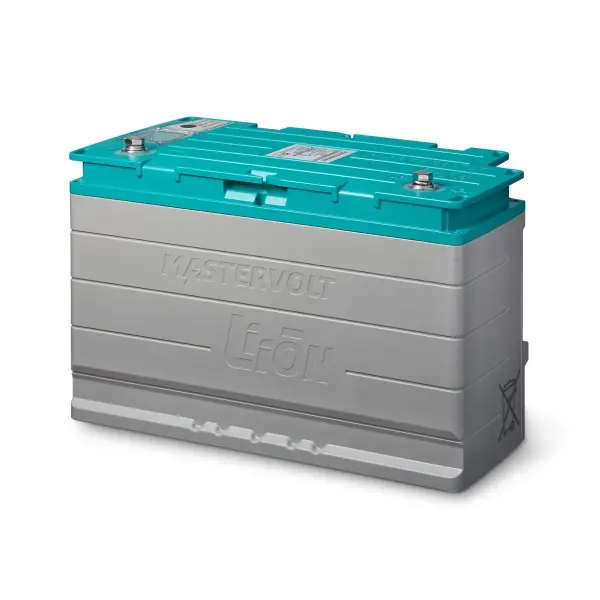
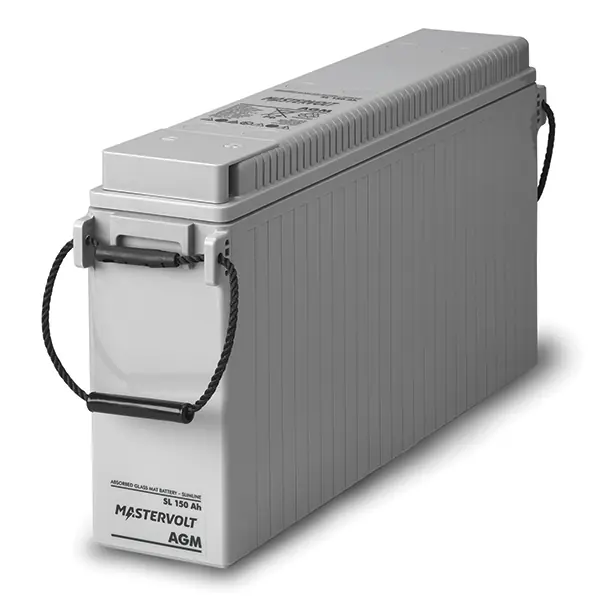
| Battery lines | MLI Ultra lithium ion (12/1250 through 12/6000, plus 24 V variants), MVG gel, AGM 12 V and 6 V, AGM SlimLine and MVSV 2 V semi-traction cells for large custom banks |
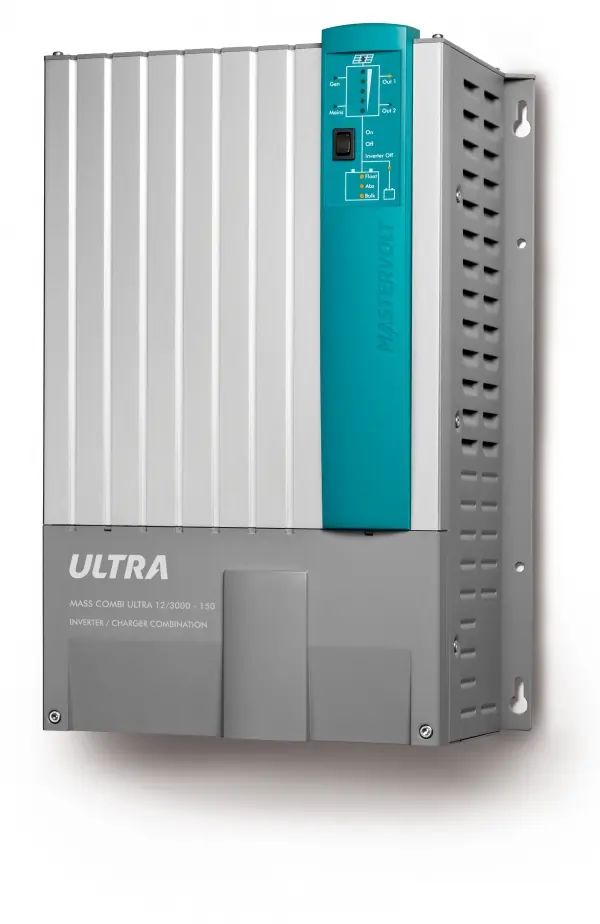
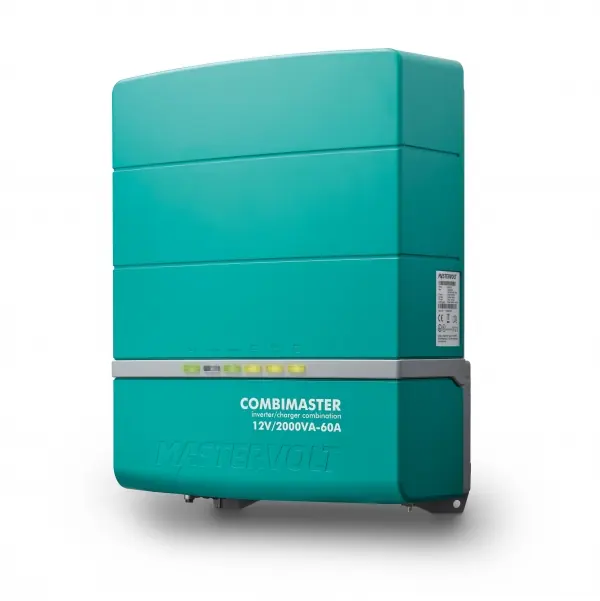
| Inverter/charger (Combi) lines | PowerCombi (entry), CombiMaster (mid-range), Mass Combi Ultra and Mass Combi Pro (premium, up to 5000 VA class) |
| Other product lines | Magic DC-DC converters, Alpha Pro charge regulators and Alpha alternators, AC Master pure sine inverters, MasterBus and CZone networked monitoring with EasyView and Touch displays |
| MLI Ultra 1250 battery won the 2021 DAME Design Award (Machinery, Propulsion, Mechanical and Electrical Systems and Fittings category) at METSTRADE in Amsterdam | |
| Standard warranty is 2 years on marine and automotive products, including the MLI lithium ion batteries and the AGM and MVG lines; the older MVSV 2 V gel cells carry a longer 7 year pro rata warranty | |
| Models 12/3000, 12/6000 and 24/6000 in the MLI Ultra range must be installed by a Mastervolt Certified Installer or the warranty is void | |
| Sold through a dealer network in more than 80 countries; the Mastervolt Pro Dealer tier requires at least one technician holding a valid ABYC Marine Electrical certification | |
| ISO 9001 certified company | |
| New lithium battery pricing (MLI Ultra) commonly runs $1,985 for the smallest 12/1250 unit up to about $6,090 for the 12/6000 | |
| New inverter/charger pricing spans roughly $1,080 for a small CombiMaster up to about $5,235 for a Mass Combi Ultra 24/3500 | |
| Mastervolt publishes no consolidated retail price list anywhere on mastervolt.com; every price in this report comes from independent distributors and dealers | |
What Is Mastervolt and What Does It Actually Make?
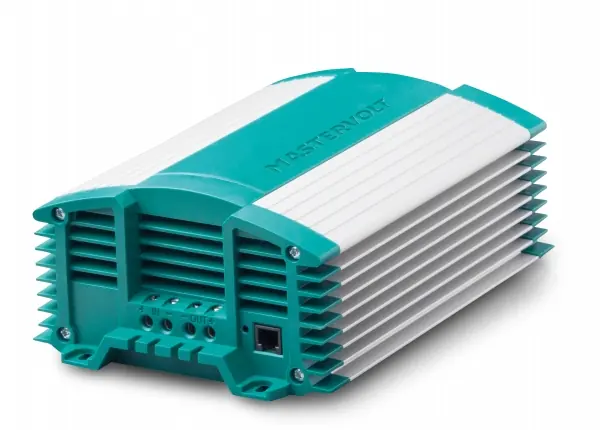
Mastervolt's catalogue runs from a 300 W DC-DC converter up to roughly 40 kW of installed power conversion, which covers everything from a small sailboat's single house battery to a superyacht's full hotel load. The company groups its hardware into a few families: batteries (lithium ion MLI Ultra, AGM, AGM SlimLine, MVG gel and MVSV 2 V semi-traction cells for large banks), Combis that combine a battery charger and an inverter in one enclosure (PowerCombi, CombiMaster, Mass Combi Ultra and Mass Combi Pro), separate chargers and pure sine inverters (AC Master), DC-DC converters under the Magic name and alternators and charge regulators under the Alpha name. A parallel product line, MasterBus and CZone, lets all of that hardware report to a single EasyView or Touch display panel rather than requiring a separate monitor for every device.
The company was founded in Amsterdam in 1991 as an independent Dutch power electronics business and still runs its lead research and development centre there, with two further centres in Auckland, New Zealand and Wisconsin, USA. It is ISO 9001 certified and sells through a dealer network the company states covers more than 80 countries, with buyers ranging from private owners refitting a single boat to boatbuilders specifying a complete Mastervolt system at the factory. The pitch, repeated across its own literature, is a one-stop-shop: rather than sourcing a charger from one maker, an inverter from another and a monitor from a third, an installer can buy the whole DC and AC power chain from Mastervolt and have it talk to itself over MasterBus.
Who Owns Mastervolt Now?
Mastervolt started as an independent Dutch company in 1991. By the 2010s it had become one of the marine and mobile electrical brands held by Power Products LLC, a Wisconsin-based components group, which was itself controlled by the private equity firm Genstar Capital after Genstar bought Power Products from Sentinel Capital Partners in December 2016. Genstar then sold Power Products' entire Global Marine and Mobile division, 11 brands including Mastervolt, Ancor, Blue Sea Systems, Marinco and ProMariner, to Brunswick Corporation for $910 million in cash, a deal announced 29 June 2018 and closed that same quarter.
Brunswick first folded the acquired brands into Mercury Marine's parts and accessories organisation, then regrouped them as Advanced Systems Group (ASG). In October 2021 Brunswick acquired the marine electronics maker Navico for $1.05 billion and the lithium battery maker RELiON Battery LLC, merging both into ASG to create the Navico Group that exists today. Mastervolt now sits in Navico Group's Marine, Mobile and Industrial division alongside Simrad, B&G, Lowrance, C-MAP, RELiON, Ancor and Blue Sea Systems, and the mastervolt.com website's own footer states plainly, as of 2026, that Navico Group is a division of Brunswick Corporation. Any reference to Marquip or a standalone Power Products Holding as Mastervolt's current owner is out of date.
Mastervolt sells a complete, dealer-installed marine power system under one warranty, at a price and with a certified-installation requirement that put it firmly against Victron's cheaper, more open, more DIY-friendly alternative.
What Does Mastervolt Sell, and Which Product Fits Which Boat?
On the battery side, the AGM 12 V and 6 V lines and the slimmer AGM SlimLine batteries are the entry point, sized for small to mid-size boats that still run lead-acid and just need a maintenance-free, vibration-resistant bank. The MVG gel line sits alongside AGM at a similar price and duty cycle. Above that, the MLI Ultra lithium ion range runs from the compact 12/1250 (100 Ah, 1250 Wh, small enough for a day boat or small cruiser's house bank) through the 12/3000 and up to the 12/6000 (460 Ah, 6000 Wh) for boats that want real cycling capacity without lead-acid's weight, with 24 V variants for larger systems. At the top, the MVSV 2 V semi-traction cells are built for owners who want a very large custom bank, typically wired in series strings, and are the choice on bigger commercial and superyacht installations that need years of daily deep cycling rather than the fastest possible recharge.
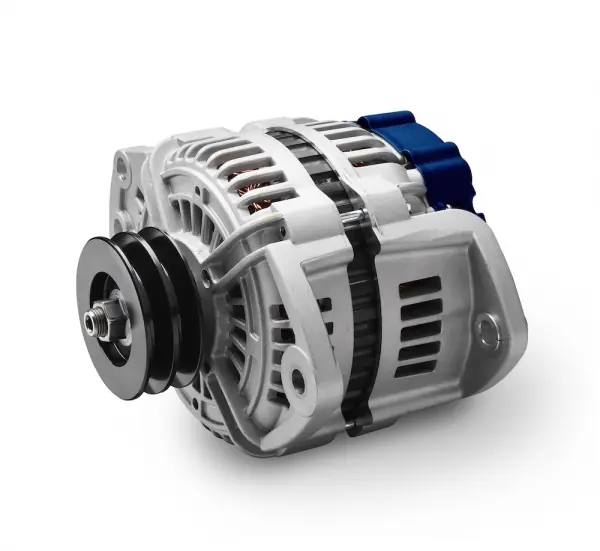
On the power conversion side, the PowerCombi is Mastervolt's simplest inverter/charger combination, aimed at smaller boats with modest AC loads. The CombiMaster steps up in both charge current and inverter output for mid-size cruisers and trawlers, and is the model most often paired with a single MLI Ultra bank in the retrofit projects documented on marine electronics sites. The Mass Combi Ultra and Mass Combi Pro sit at the top of the range, in the 3000 to 5000 VA class, and are the units specified where a boat runs multiple AC circuits, air conditioning or a washer-dryer off the inverter and needs a charger that can refill a large lithium bank quickly from a generator. Larger boats commonly run two or more Combis in parallel, fed by an Alpha-series alternator and Alpha Pro charge regulator on each engine and monitored as one system through MasterBus and an EasyView or Touch display, which is the integration Mastervolt sells as its real point of difference from a boat wired with separate best-of-breed components.
How Does Mastervolt Compare to Victron Energy?
The two brands are frequently cross-shopped on Trawler Forum, YBW Forum, Sailing Anarchy Forums and Cruisers Forum, and the recurring theme is not that they are similar but that they serve different buyers. Victron's MultiPlus and Quattro inverter/chargers run on the company's own VenusOS, which is open enough that owners commonly monitor and configure a whole system from a low-cost Cerbo GX unit or even a Raspberry Pi, feeding a large base of independent installers and liveaboard DIYers who came to marine power from vans and off-grid cabins. Mastervolt's MasterBus and CZone networking is sold the opposite way, as a closed system an owner buys complete and has configured by a Mastervolt Pro Dealer, a tier that requires at least one ABYC-certified electrician on staff. On a direct price comparison one YBW Forum poster shopping both brands wrote plainly that the Victron alternative was attractive because it was a little cheaper than its Mastervolt equivalent, a pattern echoed across the other threads reviewed for this page.
Reliability opinion has shifted over time. Older comparisons on Sailing Anarchy Forums noted that Mastervolt's Combis were fully solid state and lighter than Victron's more transformer-heavy designs of the same era, and some posters rated Mastervolt's enclosures a notch higher on ingress protection, a real consideration in a wet bilge or engine room. More recent posts on the same forum take the opposite view, with at least one experienced poster saying Victron has become considerably more reliable than Mastervolt over the past decade and describing their own Mastervolt gear as not well built and short lived. On Trawler Forum, long-time members researching a purchase pointed out that Mastervolt has changed hands repeatedly since the 2010s and argued there is not much left of the original Dutch engineering culture beyond the name, a view coloured by, but not solely explained by, the corporate history documented above. The Hull Truth's own thread on Victron MultiPlus versus Mastervolt MassCombi settled on no consensus at all: one marine electrician there favoured Victron, another favoured Mastervolt, and both were, in that poster's words, bloody expensive.
How Much Does Mastervolt Equipment Cost, New and Installed?
Mastervolt sells only through distributors and dealers and publishes no retail price list on mastervolt.com, so every figure here comes from independent sellers, not the manufacturer. For the MLI Ultra lithium range, Fisheries Supply lists the 12/1250 (100 Ah, 1250 Wh) at $1,985.62, the 12/3000 (230 Ah, 3000 Wh) at $3,043.68 and the 12/6000 (460 Ah, 6000 Wh) at $6,088.26, while Inverter Service Center prices the same 12/3000 higher, between $3,840.72 on sale and $4,566.32 at its regular price, and a European dealer, AB Marine Service, lists it at the equivalent of roughly $2,400. On a cost-per-watt-hour basis, marine electronics site Panbo calculated a Mastervolt MLI Ultra 5500 at about $1.04 per Wh against roughly $0.70 per Wh for a generic drop-in lithium battery of similar capacity, a premium the site attributed to Mastervolt's integrated monitoring and networked battery management rather than the cells themselves. On the lead-acid side, an AGM 12/55 (Group 24) runs about $278 at Nomadic Supply and the equivalent of roughly $228 at CHMarine in Europe.
On the Combi side, retailer listings put a CombiMaster 12/1500-60 at $1,078.99, a CombiMaster 12/2000-100 at $1,265.21 and a CombiMaster 12/3000-100 (230 V) at $1,773.99, while a Mass Combi Ultra 12/3000-150 lists at the European dealer SVB for the equivalent of roughly $3,000 and a Mass Combi Ultra 24/3500-100 runs $5,234.56 in the US, against $4,693.64 for the equivalent Mass Combi Pro. Installation is separate again: Panbo's own writeup of converting a boat's house bank to two 400 Ah Mastervolt MLi batteries with a CombiMaster, an EasyView 5 display and an Alpha alternator and regulator put the components alone at a little over $17,000, climbing to north of $22,000 once roughly 40 hours of labour, large DC cabling, lugs and bus bars were added. Used Mastervolt gear turns up on eBay and The Hull Truth's classifieds at a steep discount to new, a PowerCombi 12V/2000W-100A has sold used for about $500 and a used EasyView 5 display for around $180, but with no organised used market and no manufacturer buyback, resale value depends entirely on finding a private buyer.
How Reliable Is Mastervolt Equipment, and What Actually Goes Wrong?
The most concrete independent test found for this page is Panbo's bench evaluation of a Mastervolt MLI-class lithium battery rated for 200 A of continuous discharge. In testing, the battery ran for a little over eight minutes at around 150 A, seventy five percent of its rated figure, before its internal contactor began cycling repeatedly, a pattern Panbo attributed to a thermal limit inside the battery rather than any wiring or test-rig fault. That is a specific, reproducible shortfall against the manufacturer's own nameplate spec, not a general complaint. Separately, Trawler Forum has a thread devoted to multiple AGM 12/150 batteries in one owner's bank failing within about two years; other posters in that thread suggested the likely cause was how the bank was configured, paralleling multiple battery groups with different charge and discharge profiles, rather than a defect in the batteries themselves, but the failures were real and expensive regardless of root cause.
Other forum threads add a mix of smaller faults: YBW Forum and Sailboatowners.com Forums threads describe Mastervolt battery chargers with power-switch indicator lights that stop working and little in the way of self-diagnosis, forcing owners to call a local dealer rather than troubleshoot themselves, and separate threads describe Mastervolt inverters cycling on and off every couple of seconds when available charge or solar input sits right at the inverter's threshold. None of these amount to a pattern of catastrophic failure, and long-term owners on Trawler Forum and Cruisers Forum do report years of trouble-free service from Combis and lithium banks alike. The more consistent complaint, raised in several of the Mastervolt-versus-Victron threads rather than in isolation, is customer support: more than one poster comparing the brands side by side described their own experience of Mastervolt support as poor, in one case calling it a complete failure, in direct contrast to their experience with Victron's community-based support model.
How Does Mastervolt's Dealer and Service Model Work?
Mastervolt does not sell direct to boat owners in any meaningful volume; its own dealer locator is the primary route to a quote, an installation or a warranty claim, and the company markets a specific Mastervolt Pro Dealer tier that requires the dealer to employ at least one technician holding a valid ABYC Marine Electrical certification. That requirement is not just marketing. On the product pages themselves, Mastervolt states that its MLI Ultra 12/3000, 12/6000 and 24/6000 lithium batteries, the three largest in the range, must be installed by a Mastervolt Certified Installer or the battery's warranty is void outright, a real, sourced condition rather than a general recommendation. Smaller batteries and most of the Combi range carry the same 2 year standard warranty without that installer requirement, but the practical effect is that anyone buying into the top of Mastervolt's lithium line is also buying into a professional installation, whether they wanted the option to do it themselves or not.
Warranty terms across the catalogue are otherwise fairly plain: 2 years on marine and automotive products generally, including the MLI lithium ion batteries, the AGM range and the MVG gel line, which is a shorter term than some competitors offer on lithium specifically. Curiously, Mastervolt's own older MVSV 2 V semi-traction gel cells, used in large custom banks and not the premium product in the range, carry a longer 7 year pro rata warranty than the lithium batteries that cost several times as much per unit. Worldwide, Mastervolt states service and parts support across more than 80 countries, which matters for an owner cruising internationally, but several forum posters comparing brands noted that the actual density of technicians who know the product well varies a great deal by region, and that a dealer switching a customer over to Victron after a bad service experience was one of the specific reasons cited in the YBW Forum thread reviewed for this page.
Is Mastervolt the Right Choice for Your Boat?
The strongest case for Mastervolt is on a boat where the owner, or the yard building it, wants every piece of the electrical system, batteries, chargers, inverters, alternators and monitoring, to come from one manufacturer and report over one network, and is comfortable paying a professional to install and configure it rather than doing it themselves. That describes a lot of boatbuilder OEM specifications and professionally crewed yachts, where a single warranty and a single dealer relationship is worth more than the lowest component price, and where the mandatory certified installation on the largest lithium batteries is not a burden because a certified electrician was doing the work anyway.
It is a weaker fit for a budget-conscious owner who wants to do their own electrical work, monitor their system on open, low-cost hardware, or lean on a large pool of independent mechanics, all of which point toward Victron based on the forum record reviewed for this page. Buyers in the middle, choosing between a CombiMaster and lithium bank versus an equivalent Victron MultiPlus and drop-in lithium setup, should price both with installation included, confirm which of Mastervolt's battery models carries the certified-installer warranty condition, and weigh the real but shrinking case, made by some techs and owners but disputed by others, that Mastervolt's build quality still edges out Victron's on certain models. Either way, get the total installed price and the warranty terms in writing before comparing, since neither brand publishes a number that makes the comparison simple on its own.
معلومات عملية
| New battery price by tier | MLI Ultra lithium ion runs from $1,985.62 for the 12/1250 (100 Ah) to $6,088.26 for the 12/6000 (460 Ah), both per Fisheries Supply; the 12/3000 (230 Ah) has been seen from $3,043.68 (Fisheries Supply) up to $3,840.72-$4,566.32 (Inverter Service Center). AGM entry batteries such as the 12/55 (Group 24) run about $278 (Nomadic Supply) to the equivalent of roughly $228 (CHMarine, Europe). |
|---|---|
| New inverter/charger price by tier | CombiMaster models run $1,078.99 (12/1500-60) to $1,773.99 (12/3000-100, 230 V). Mass Combi Ultra and Mass Combi Pro run higher, from the equivalent of roughly $3,000 for a Mass Combi Ultra 12/3000-150 (SVB, Europe) to $5,234.56 for a Mass Combi Ultra 24/3500-100, against $4,693.64 for the equivalent Mass Combi Pro. |
| Install cost | Panbo's own lithium retrofit, two 400 Ah Mastervolt MLi batteries, a CombiMaster, an EasyView 5 display and an Alpha alternator and regulator, priced the components at a little over $17,000 and the all-in cost, including about 40 hours of labour and heavy DC cabling, at north of $22,000. Smaller single-battery, single-Combi jobs cost proportionally less but were not itemised in the sources reviewed. |
| What is not published | Mastervolt publishes no consolidated retail price list on mastervolt.com. Every figure in this report comes from independent distributors and dealers, whose prices for the same model can differ by more than 40 percent (the MLI Ultra 12/3000 ranged from about $2,400 in Europe to about $4,566 at a US dealer's regular price), so a buyer cannot get one reliable number without shopping multiple sources. |
| Used market | Used Mastervolt gear trades informally on eBay and forum classifieds at a steep discount to new, for example a used PowerCombi 12V/2000W-100A around $500 and a used EasyView 5 display around $180, but there is no organised resale market or manufacturer buyback program. |
| Cost versus Victron | Forum buyers shopping both brands directly, for example on YBW Forum, report Victron's equivalent Combi as a little cheaper than the matching Mastervolt unit; this report found no case where a like-for-like Mastervolt product priced below its closest Victron equivalent. |
ما يذكره الملاك والأطقم
A lithium battery could not sustain its own rated continuous discharge in independent testing
Panbo's bench test of a Mastervolt MLI-class battery rated for 200 A continuous discharge found the internal contactor began cycling repeatedly after a little over eight minutes at around 150 A, a specific and reproducible shortfall against the manufacturer's own spec.
PanboA full lithium retrofit ran to roughly $22,000 installed
One owner's documented conversion to two 400 Ah Mastervolt MLi batteries with a CombiMaster, EasyView 5 display and Alpha alternator and regulator priced the parts at a little over $17,000, rising past $22,000 once roughly 40 hours of labour and heavy DC cabling were added.
PanboMultiple AGM batteries in one bank failed within about two years
A Trawler Forum thread documents several Mastervolt AGM batteries failing within roughly two years in one owner's paralleled bank, with other posters suggesting the bank's charging configuration, rather than the batteries themselves, was the likely root cause.
Trawler ForumLong-time members see a brand thinned out by repeated ownership changes
Discussion on a Trawler Forum thread comparing Mastervolt and Victron characterised Mastervolt as having little left of its original engineering identity after being bought and sold multiple times since the 2010s, a view that lines up with the documented Power Products, Genstar Capital and Brunswick ownership changes.
Trawler ForumVictron priced lower than the equivalent Mastervolt Combi, and one dealer switched brands over service
A YBW Forum poster shopping both brands directly found the Victron alternative a little cheaper than its Mastervolt equivalent, and the same discussion cited a dealer who moved away from selling Mastervolt after a poor after-sales service experience.
YBW ForumTwo marine electricians split on which brand is better, and both called them expensive
In a Hull Truth thread comparing the Victron MultiPlus to the Mastervolt MassCombi, one experienced marine electrician favoured Victron and another favoured Mastervolt, with both agreeing that either brand's hardware was, in the poster's words, bloody expensive.
The Hull Truth
نقاط القوة وما يستدعي الانتباه
نقاط القوة
- A genuinely complete, single-vendor power systemBatteries, chargers, inverters, alternators, charge regulators and monitoring all come from one catalogue and report over one MasterBus/CZone network, which lets a boatbuilder or owner buy and warranty the whole DC and AC chain from a single source rather than integrating several brands.
- Covers the full range from a day boat to a superyachtThe catalogue runs from 300 W DC-DC converters and small AGM batteries up to Mass Combi Ultra inverter/chargers and MVSV 2 V semi-traction cell banks for large custom systems, roughly a 300 W to 40 kW span.
- Independently recognised product innovationThe MLI Ultra 1250 lithium battery won the 2021 DAME Design Award in the Machinery, Propulsion, Mechanical and Electrical Systems and Fittings category at METSTRADE, judged by an independent industry panel rather than a Mastervolt-run award.
- A real, ABYC-certified dealer network in over 80 countriesThe Mastervolt Pro Dealer tier requires at least one technician with a valid ABYC Marine Electrical certification, giving an owner a documented standard of installer competence rather than an arbitrary reseller list.
- Well-sealed hardware some technicians rate above Victron'sForum posters comparing the two brands' enclosures have rated Mastervolt's ingress protection a notch higher than the equivalent Victron unit, a real factor in a wet bilge or engine room installation.
ما يستدعي الانتباه
- Priced above Victron on like-for-like hardwareEvery direct price comparison found for this page, including a YBW Forum buyer who shopped both brands, put the equivalent Victron Combi below the Mastervolt price, and no case was found of the reverse.
- The lithium battery warranty is shorter than the manufacturer's own older gel cellsMLI Ultra lithium ion batteries carry a 2 year standard warranty, the same as the AGM and MVG lines, while Mastervolt's own MVSV 2 V semi-traction gel cells, an older and cheaper product, carry a longer 7 year pro rata warranty.
- No consolidated retail pricing, and real price variance between dealersMastervolt publishes no price list of its own; independent dealer prices for the same MLI Ultra 12/3000 battery ranged from roughly $2,400 in Europe to about $4,566 at a US dealer's regular price in the sources checked for this page.
- An independent bench test found a lithium battery short of its own rated specPanbo's test of an MLI-class battery rated for 200 A continuous discharge found its internal contactor began cycling after about eight minutes at 150 A, roughly 75 percent of the nameplate figure, pointing to a thermal limit below the advertised rating.
- Warranty voided on the largest lithium batteries without a certified installerThe MLI Ultra 12/3000, 12/6000 and 24/6000 batteries must be installed by a Mastervolt Certified Installer or the warranty is void, removing the DIY installation option some competitors' equivalent products allow.
لمين هو: Boat owners and boatbuilders who want one manufacturer accountable for the whole DC and AC power chain, installed by a certified dealer, and who are willing to pay a premium and accept less DIY flexibility for that single-source system.