Maxwell Marine
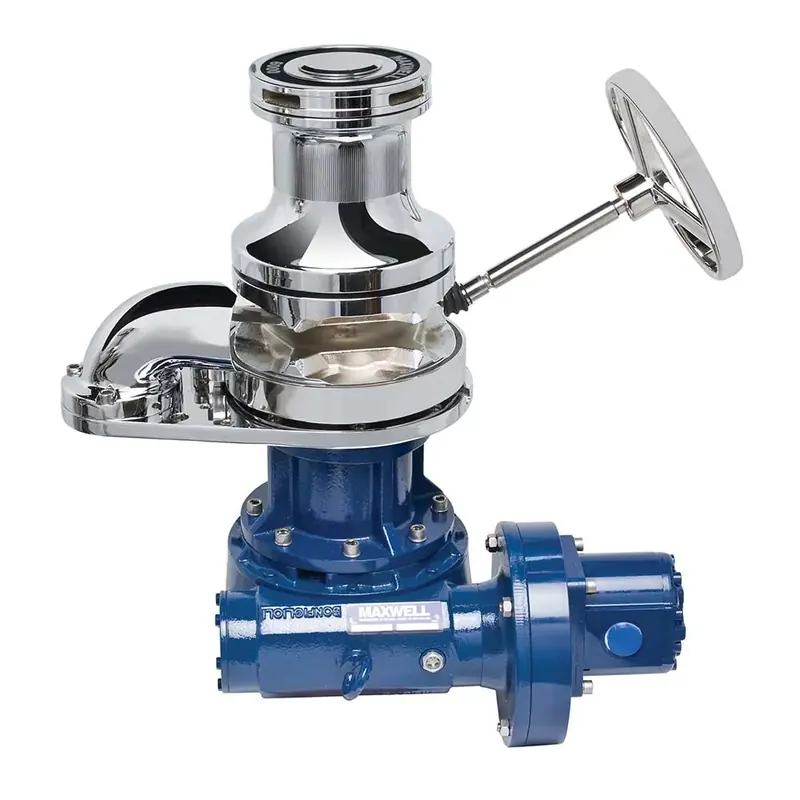
| Category | anchor windlasses, mooring capstans and custom deck gear for boats and superyachts |
|---|---|
| Founded | 1960s in Auckland, New Zealand, more than 50 years in continuous operation |
| Headquarters and main factory | Auckland, New Zealand, with additional offices in California, USA and Queensland, Australia |
| Range | recreational rope/chain windlasses from about 6 m boats, up to custom superyacht systems for vessels over 100 m |
| Milestone | introduced the world's first fully automatic rope/chain windlass in the mid-1990s |
| Acquisitions | Weaver Hatches and Southern Ocean Ropes (SOR), both New Zealand marine manufacturers, folded into the group |
| Recreational pricing, read September 2026: Maxwell HRC 8 (horizontal, 600 W) about USD 920 with a 3-year warranty per Practical Sailor's original test; Maxwell RC10-10 vertical windlass USD 3,192.76 to USD 3,831.31 depending on retailer, per Wholesale Marine | |
| Maxwell HRC10-8 (horizontal, 5/16 inch chain, 9/16 inch rope): USD 3,198.99 at West Marine, GBP 1,971 to GBP 2,157 at Jimmy Green Marine (UK) | |
| Pulling power, as independently tested by Practical Sailor: Maxwell HRC 8 exceeded 1,100 lbs on rope and 1,170 lbs on chain against a rated pull under 1,100 lbs; the Freedom 800 exceeded its 800 lb rating at 880 lbs on rope and 1,000 lbs on chain | |
| Superyacht windlasses, capstans and custom deck gear built for vessels up to and beyond 100 m carry no published price. Every superyacht order on Maxwell's own site routes to a Request a Quote form | |
What Maxwell Marine Builds, And Where It Sits On A Yacht
The company started in Auckland, New Zealand in the 1960s and has stayed there ever since: the head office and main production plant are still in Auckland, with additional Maxwell offices in California and Queensland supporting the North American and Australian dealer networks. In the mid-1990s Maxwell introduced the industry's first fully automatic rope and chain windlass, a single motor and clutch arrangement able to haul mixed rope-and-chain rode without a crew member re-tensioning a manual clutch by hand, and that automatic rope/chain mechanism is still the base of most of the recreational range sold today. Along the way the group has folded in two other New Zealand marine manufacturers, Weaver Hatches and Southern Ocean Ropes, rather than growing purely by building windlasses larger.
On a recreational boat the product a buyer actually researches is one of four series: VW and VWC vertical windlasses that mount through the deck with the motor below, HRC and HWC horizontal windlasses that sit entirely above deck for boats without headroom in the chain locker, RC combination rope/chain vertical units, and standalone capstans for mooring lines that never touch an anchor at all. On a superyacht the same four jobs exist but scaled and customised: windlasses rated for chain far beyond recreational sizes, capstans in vertical, horizontal and deck-flush retractable form, and bespoke deck gear including titanium components and anchors stowed below the waterline for a clean bow. The engineering team works with the shipyard from the design phase through sea trials on every superyacht order, which is the opposite of the catalogue-and-checkout process a recreational buyer gets.
The Recreational Range: What Each Series Costs And Pulls
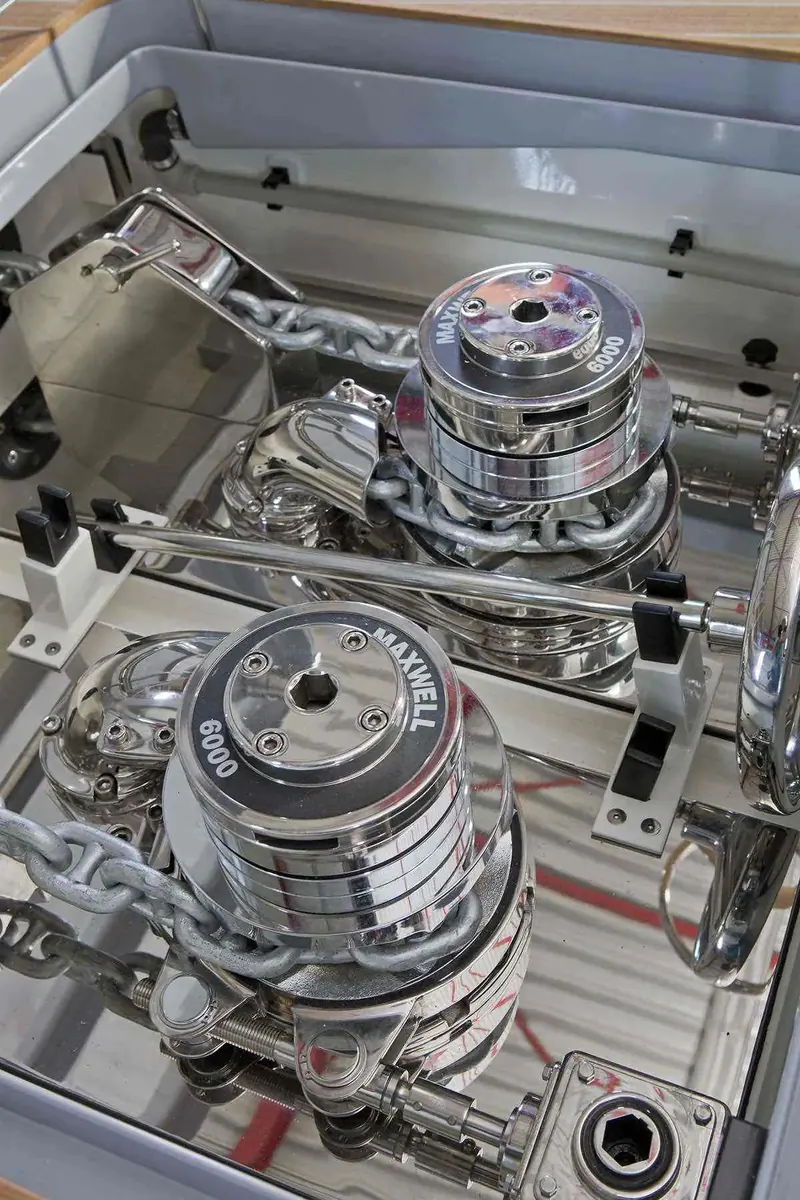
At the entry end, the HRC 8 horizontal windlass carries a 600 W motor and listed at USD 920 with a 3-year warranty when Practical Sailor tested it, the cheapest unit in that comparison and also the fastest, at 121 feet per minute with no load and 90 feet per minute under working load. Moving up, the Freedom 800 vertical windlass listed at USD 1,500 and is built for boats around 30 to 36 feet, and the RC10-10, sized for boats up to about 47 feet with 3/8 inch chain and 3/4 inch rope, runs from USD 3,192.76 on sale to a regular price of USD 3,831.31 at Wholesale Marine. The horizontal HRC10-8, built for a similar boat size but for installations with no locker depth for a vertical gearbox below deck, lists at USD 3,198.99 at West Marine and GBP 1,971 to GBP 2,157 at the UK's Jimmy Green Marine, a spread that reflects both currency and the retailer's own margin rather than two different products.
None of those list prices include installation, wiring sized for the motor's draw, a windlass-rated battery or the deck hardware to match an existing bow roller, and a buyer who prices only the box will under-budget the job. Practical Sailor's bench tests, run with a calibrated load cell rather than the maker's own figures, found Maxwell units meeting or beating their rated pull on every model tested: the HRC 8 exceeded 1,100 lbs on rope and 1,170 lbs on chain against a rating under 1,100 lbs, and the Freedom 800 pulled 880 lbs on rope and 1,000 lbs on chain against an 800 lb rating, with a no-load speed of 98 feet per minute against a maker's claim of 108 and a working-load speed of 81 feet per minute against a claimed 69. A rated pull that a boat's owner can rely on, rather than round up from, is worth more than the number itself.
Practical Sailor's bench tests, run on a calibrated load cell rather than the maker's own numbers, found every Maxwell model tested meeting or beating its rated pull, not merely matching it.
What Independent Testing Actually Found
In Practical Sailor's under-USD-2,000 comparison, the Freedom 800 was named top pick, described as a well-equipped, reasonably priced package with a versatile below-deck motor that can be oriented in twelve positions to fit a given boat's anchor locker, and it beat its own maker's speed claim on both no-load and working-load runs. In the direct three-way comparison against the Lewmar V3 Gypsy and the Lofrans Project 1000 and 1500, the reviewers found genuine differences rather than a clean sweep: the Lewmar V3 pulled harder in absolute terms, at 1,600 lbs on line and 2,140 lbs on chain against a 1,962 lb rating, and gripped line without slipping under extreme load, but cost USD 2,064 against the Freedom 800's USD 1,500. The Lofrans Project 1500 was the clearest loser of the group, achieving only 880 lbs on line against a 2,300 lb rating and running slower than its own cheaper Project 1000 sibling despite an USD 800 higher price.
In an earlier horizontal-windlass test, the HRC 8 sped past every competitor on no-load retrieval, at 121 feet per minute, which the reviewers flagged as a genuine advantage when a crew is hauling a long scope of chain in a hurry, but they also noted the trade-off: the enclosed gypsy design that makes the unit safer to stand next to also makes a jammed chain harder to clear by hand, and the unit's 56-amp continuous working-load draw forces larger-gauge wiring than a lower-power alternative, adding real cost to an installation that a spec sheet alone will not show. Reading the maker's own numbers next to a bench test is the only way to catch that kind of trade-off before the wiring is already run.
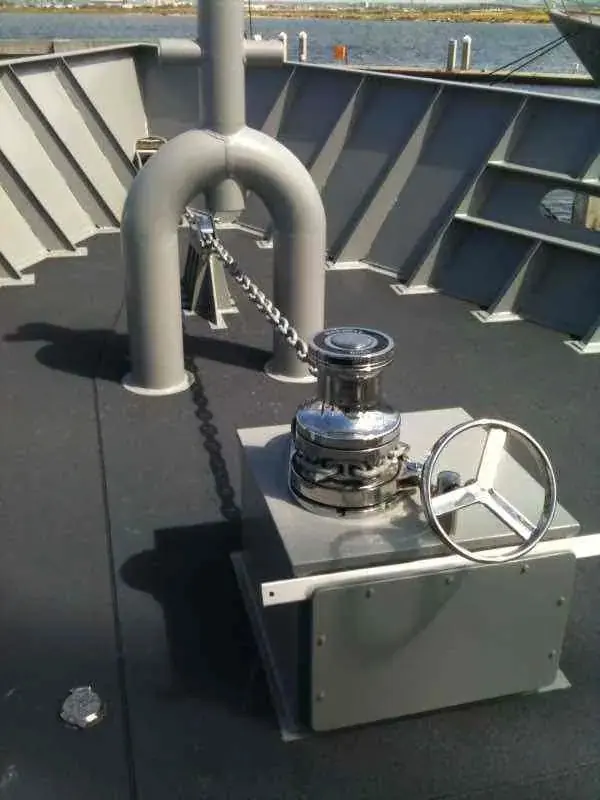
The Superyacht Line: A Custom Quote, And One Documented Refit
The superyacht catalogue splits into windlasses rated to handle vessels beyond 100 metres, capstans in vertical, horizontal and deck-flush retractable form for mooring control, deck gear such as chain pipes, roller stopper tensioners and compressor tensioners finished in mirror-polished or duplex stainless steel, and a specialty tier covering titanium components, submarine anchoring systems that stow the anchor below the waterline, and retracting anchor arms that fold into the hull to keep a bow's lines clean. None of it is priced on the site, and none of the recreational retailers that publish Maxwell's smaller units, West Marine, Defender, Wholesale Marine, carry the superyacht range at all, which means the only route to a number is a direct quote from Maxwell or the yard doing the refit.
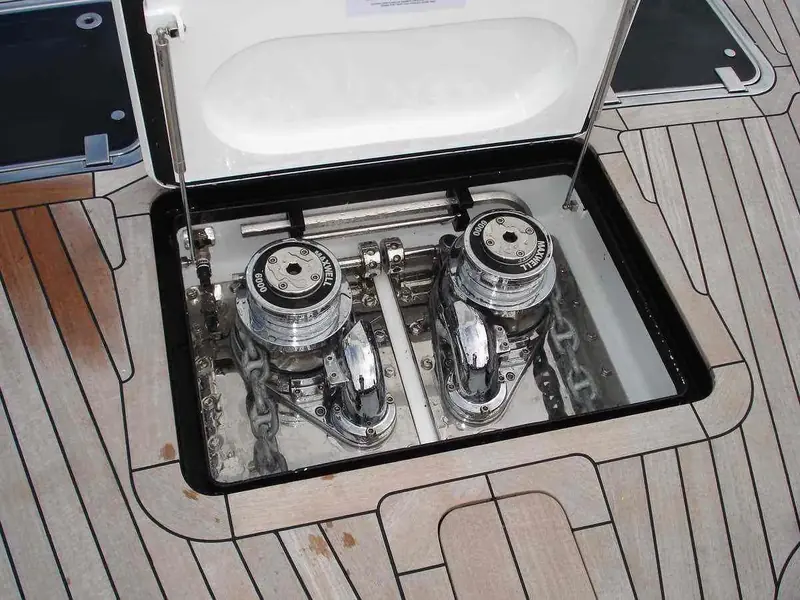
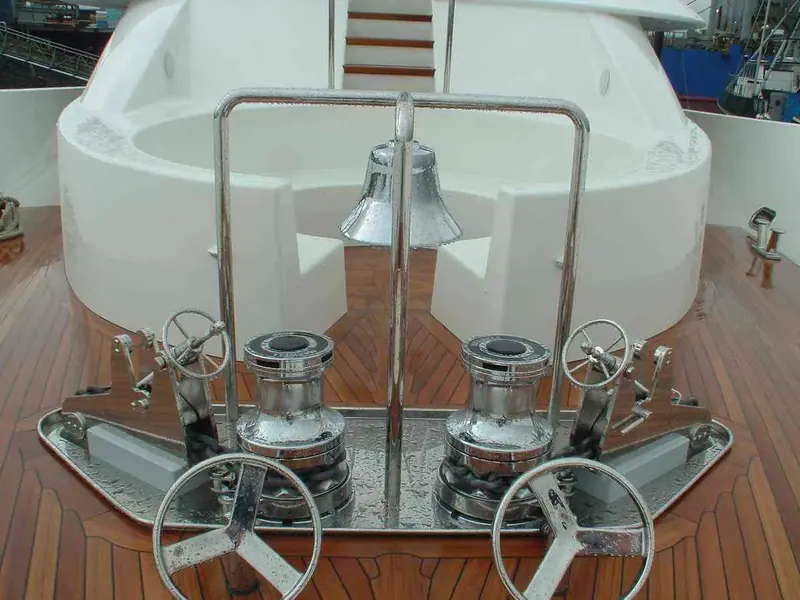
The one documented case is a 120-foot steel cruising yacht whose owners and captain asked for anonymity but let Maxwell publish photographs. The yacht's original dual-gypsy horizontal hydraulic windlass was replaced with two Maxwell VWC6000 vertical hydraulic units, and Maxwell's Auckland engineering office fabricated a custom mounting plinth that integrated the new windlasses with band-brake supports and chain stopper and tensioner hardware, work led on the North American side by Maxwell's superyacht representative Kevin Underwood. The stated reasons for the switch were improved functionality, better ergonomics for the deck crew, and what the write-up calls a major aesthetic improvement to the foredeck, which on a superyacht refit is as real a purchase driver as pulling power. No cost figure for the refit, the units, or the custom plinth work was disclosed.
What Owners Report, And What Actually Wears Out
On Sam's Marine's Hatteras owners forum and the Trawler Forum, recurring threads describe a below-deck pressure arm, the part that keeps the chain engaged with the gypsy, as a comparatively cheap plastic component that can crack and leave the windlass unable to pull or lower chain more than a foot or two at a time until it is replaced, a failure several posters describe as inexpensive to fix once diagnosed but confusing the first time it happens. On the Cruisers Forum and Catalina owners' boards, other threads describe clutch tension as touchy to set correctly, a problem Maxwell's own service documentation addresses directly: the clutch cones need periodic greasing with a waterproof marine grease, and getting at them means removing the above-deck capstan and cover rather than a quick external adjustment.
Maxwell's own maintenance guidance calls for greasing the top end every twelve months and changing the gearbox oil every two years in fresh water use, tightening to an annual full service in salt water, which is a real recurring cost a buyer should budget alongside the purchase price rather than discover later. A separate, smaller complaint from Sailboatowners forum threads concerns the emergency manual override handle: on some models the handle and the windlass both use a female spline fitting, and Maxwell has not offered a male-to-male adapter to connect them, which matters specifically in the one scenario the handle exists for, a dead battery or motor failure at anchor. None of these are reported as the windlass failing outright; they are reported as the specific parts and habits a Maxwell owner should know to check before they become a problem at sea.
معلومات عملية
| Recreational pricing is fully public | The HRC 8 horizontal windlass listed at about USD 920 with a 3-year warranty in Practical Sailor's own test. The Freedom 800 vertical windlass listed at USD 1,500. The RC10-10, sized for boats to about 47 feet, runs USD 3,192.76 to USD 3,831.31 at Wholesale Marine. The HRC10-8 horizontal unit lists at USD 3,198.99 at West Marine and GBP 1,971 to GBP 2,157 at Jimmy Green Marine in the UK. None of these figures include installation, wiring or deck hardware. |
|---|---|
| Superyacht pricing is not published anywhere | Windlasses, capstans and deck gear for vessels beyond roughly 100 feet carry no list price on Maxwell's site or from any recreational retailer. Every superyacht enquiry routes to a Request a Quote form, and the one refit case study Maxwell has published, a 120-foot yacht fitted with two VWC6000 units, names the equipment but discloses no figure for the units or the custom mounting work. |
| Service is a real recurring cost, not a one-time purchase | Maxwell's own guidance calls for greasing the top end every 12 months and changing gearbox oil every 2 years in fresh water, moving to a full annual service in salt water. Clutch cones need periodic waterproof marine grease, and reaching them means removing the above-deck capstan and cover, which most owners will pay a yard to do rather than do themselves. |
| The part that most often fails, and what it costs to avoid | Owner forums most commonly report a below-deck pressure arm, a plastic component on some vertical models, cracking under repeated use. It is inexpensive to replace once identified but is not something a recreational buyer is warned about at purchase, and it is a fair question to put to a dealer before buying a used boat with an existing Maxwell installation. |
| Wiring is a hidden line item on the higher-power models | Practical Sailor measured a continuous working-load draw of 56 amps on the HRC 8, a figure that forces larger-gauge wiring and a bigger circuit breaker than a lower-power windlass, adding real installation cost that does not appear on the unit's own price tag. |
ما يذكره الملاك والأطقم
Independently tested pull consistently beat the rating, not just met it
Bench testing with a calibrated load cell found the HRC 8 pulling 1,100 to 1,170 lbs against a rating under 1,100 lbs, and the Freedom 800 pulling 880 to 1,000 lbs against an 800 lb rating, with both units also beating the maker's own claimed retrieval speeds.
Practical SailorA below-deck pressure arm is the most commonly reported failure on vertical models
Multiple long-running threads describe a plastic pressure arm cracking and leaving the windlass unable to pull or lower chain more than a foot or two at a time, a fault owners describe as cheap to fix once identified but not something they were warned about at purchase.
Sam's Marine Hatteras Owners ForumClutch tension needs careful, infrequent, hands-on adjustment
Owners describe the clutch cones as touchy to set correctly and note that reaching them for the recommended periodic greasing means removing the above-deck capstan and cover rather than making an external adjustment.
Trawler ForumThe emergency manual override handle does not fit every model
On some units both the handle and the windlass use a female spline fitting, with no male-to-male adapter offered, which only becomes a problem in the exact scenario the handle exists for: a dead battery or motor failure while at anchor.
Sailboatowners ForumsA documented 120-foot refit chose Maxwell for ergonomics and deck aesthetics, not only pulling power
A steel cruising yacht's original dual-gypsy horizontal hydraulic windlass was replaced with two Maxwell VWC6000 vertical hydraulic units and a custom Auckland-fabricated mounting plinth, with the stated reasons including improved crew ergonomics and a major aesthetic improvement to the foredeck.
CharterWorld
نقاط القوة وما يستدعي الانتباه
نقاط القوة
- Independent tests, not just the maker's own claimsPractical Sailor has named a Maxwell model its top pick in more than one head-to-head windlass comparison, and its calibrated load-cell tests found Maxwell units meeting or exceeding their own rated pull, including the HRC 8 at 1,100 to 1,170 lbs against a sub-1,100 lb rating and the Freedom 800 at 880 to 1,000 lbs against an 800 lb rating.
- A genuinely continuous range, 6 metres to 100 metres and beyondThe same company engineers a USD 920 horizontal windlass for a day boat and a bespoke below-waterline submarine anchoring system for a superyacht, with the recreational catalogue fully priced and the superyacht side custom-engineered from the design phase through sea trials.
- More than 50 years in one place, doing one thingFounded in Auckland in the 1960s and still headquartered and manufacturing there, Maxwell introduced the first fully automatic rope/chain windlass in the mid-1990s, a mechanism still at the base of most of today's recreational range, and has grown by acquiring adjacent New Zealand marine manufacturers rather than by diluting the core product.
ما يستدعي الانتباه
- Superyacht pricing is a black boxNothing above the recreational range carries a published number anywhere, including in Maxwell's own case study of a 120-foot refit. A yard or owner budgeting a superyacht windlass replacement has no public reference point and must get a quote before any comparison is possible.
- A known weak part on some vertical modelsOwner forums repeatedly flag a below-deck pressure arm on some vertical windlasses as a comparatively cheap plastic component prone to cracking, which stops the unit pulling or lowering chain more than a foot or two until it is replaced.
- Higher-power models cost more to wire than to buyThe HRC 8's 56-amp continuous draw, measured independently by Practical Sailor, forces heavier wiring and a larger breaker than a lower-power competitor, an installation cost that never appears on the windlass's own price tag.
لمين هو: A buyer or refit yard sizing ground tackle for anything from a 30-foot cruiser to a 100-metre-plus superyacht, who wants a windlass line with public independent test results at the recreational end and is prepared to go through a direct quote process for anything superyacht-scale.