MTU
| Category | main propulsion diesel engines for motor yachts and superyachts, V-configuration, mechanical or SCR-aftertreated |
|---|---|
| Maker | mtu, a Rolls-Royce Power Systems brand. MTU Friedrichshafen was founded in 1909 by Wilhelm and Karl Maybach; a Daimler subsidiary until 2006, jointly acquired by Rolls-Royce and Daimler in 2011 for about EUR 3.4 billion, renamed Rolls-Royce Power Systems in January 2014 |
| Two yacht-rated families | Series 2000 (8V/12V/16V, roughly 600 to 2,600 mhp, EPA Tier 3, aimed at yachts to about 100 feet) and Series 4000 (8V/12V/16V/20V, roughly 1,000 to 5,800 mhp, aimed at superyachts over 100 feet) |
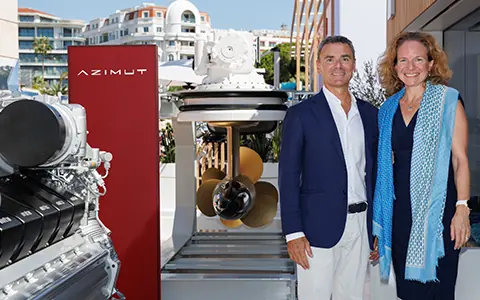
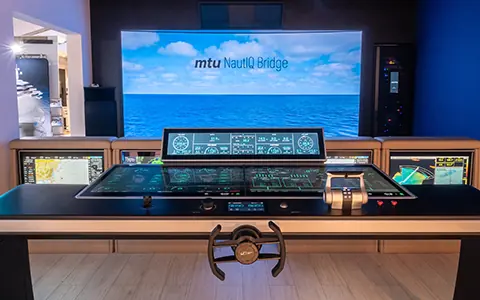
| Newest yacht engine | the 12V2000 M96Z at 2,222 mhp (1,634 kW), unveiled at the 2025 Cannes Yachting Festival paired with the integrated mtu NautIQ Bridge helm system |
| Emissions | EPA Tier 3 standard across the range; IMO Tier III and EPA Tier 4 available via SCR aftertreatment, and the whole range is approved for HVO renewable diesel |
| Current OEM contracts named in Rolls-Royce's own 2024-2026 press releases: Sanlorenzo (through 2028, Series 2000 and 4000 up to its 74-metre Steel range), Azimut Benetti's Grande 30M (paired with ZF 4900 pod drives), Overmarine's Mangusta Oceano 52 (64 engines across a 2026-2029 framework) | |
| Named superyachts already running Series 4000: Feadship's Aquarius (twin 16V4000 M63L, 3,000 hp) and Sea Owl (twin 16V4000 M53R, 2,038 hp), Abeking & Rasmussen's Excellence (twin 12V4000 M65R, 2,029 hp), Palmer Johnson's DB9, Bliss and Sanam (16V4000 M93L) | |
| No published price list anywhere in MTU's or Rolls-Royce's own material; a new engine is quoted only through the integrating yard or an authorized distributor | |
| Older MTU 183-series engines, fitted to Lazzara, older Azimut and Ferretti models through the 2000s, carry a maintenance-specific reputation that depresses resale even on well-built hulls | |
What MTU Actually Makes
MTU Friedrichshafen traces back to 1909, when Wilhelm Maybach and his son Karl founded Luftfahrzeug-Motorenbau GmbH on the shore of Lake Constance to build engines for Zeppelin airships, later renamed Maybach-Motorenbau. The company became a Daimler-Benz subsidiary and stayed one until 2006, when Daimler sold it to the EQT private equity fund as part of the Tognum group. Rolls-Royce and Daimler jointly bid for Tognum starting in March 2011, and after a sweetened offer secured 94 percent of the company in June 2011 at a valuation of about EUR 3.4 billion, each holding half; Rolls-Royce bought out Daimler's remaining stake in 2013 and renamed the business Rolls-Royce Power Systems on 9 January 2014. The mtu brand name, written lower-case in the company's own usage, has stayed on the engines throughout, across rail, defense, industrial and marine work as well as yachts.
For yachts specifically, MTU sells through two channels: direct OEM agreements with builders, who spec the engine into a production model before it is ever ordered, and authorized distributors who quote a repower or a one-off custom build. Both routes are backed by what MTU calls its Premium Yacht Service network, and Rolls-Royce's own recent press material repeats the same line to every yard partner: reliability, fuel efficiency and a worldwide service footprint. That reach at 2,000 hp and up is largely uncontested. Volvo Penta's IPS pods, the other engine name most owners will have heard of, serve a lower and midsize production segment on a fundamentally different propulsion layout; the two rarely compete for the same hull.
The Engine Range, By Series and Rating
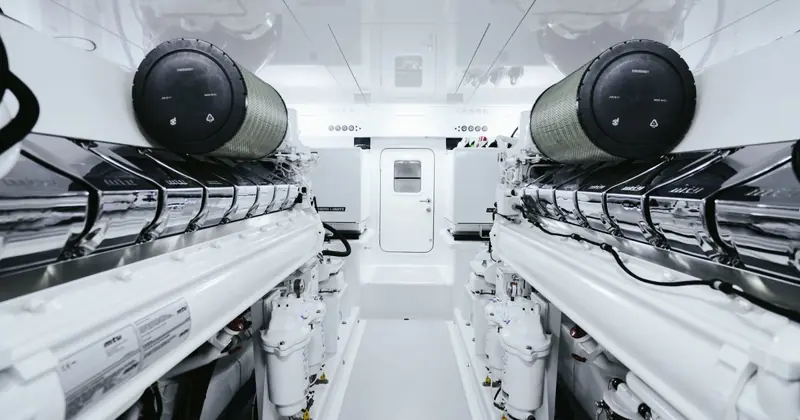
Series 2000 is pitched by MTU as light, compact and suited to a small engine room, with the current M96 generation running 12-cylinder ratings from about 1,700 to 1,920 bhp and 16-cylinder ratings from 2,185 to 2,600 bhp. The newest variant, the 12V2000 M96Z unveiled at the 2025 Cannes Yachting Festival, raises the 12-cylinder top rating to 2,222 mhp (1,634 kW) from the previous 2,002 mhp, and is sold as a package with the integrated mtu NautIQ Bridge helm system rather than as a bare engine. Rolls-Royce's own literature for its Sanlorenzo contract puts the whole Series 2000 family at 452 kW to 1,939 kW, which converts to roughly the same 600 to 2,600 hp span quoted for the M96 generation, a reasonable cross-check between the two documents.
Series 4000 trades some of that power-to-weight for torque delivered lower in the rev range, meant for continuous running rather than short bursts, and comes in 8V, 12V, 16V and 20V configurations. A representative rating, the 16V4000 M63, produces 2,680 bhp (2,000 kW) at a maximum 1,800 rpm from 76.3 litres of displacement, on a 170mm bore and 210mm stroke. Rolls-Royce's own Sanlorenzo press material puts the family's outer bounds at about 720 kW to 4,300 kW, which is close to the 5,766 hp implied at the top end; a separate MTU spec listing gives a slightly lower ceiling nearer 4,828 bhp for the same family, a gap most likely down to which duty cycle (continuous versus intermittent) each document is rating against rather than a straightforward contradiction. Either figure puts the largest Series 4000 variants well above what any yacht actually runs today; the real-world installs named on this page, from Feadship's 3,000 hp Aquarius down to Abeking & Rasmussen's 2,029 hp Excellence, all sit in the lower half of the family's range.
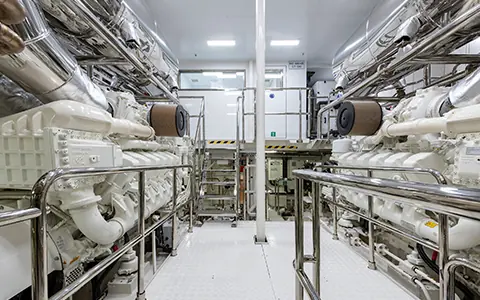
MTU publishes no price for the engine that runs most of the fleet above 2,000 hp; a buyer gets a number only once a yard or a distributor is actually asked.
Which Yards and Yachts Actually Run MTU
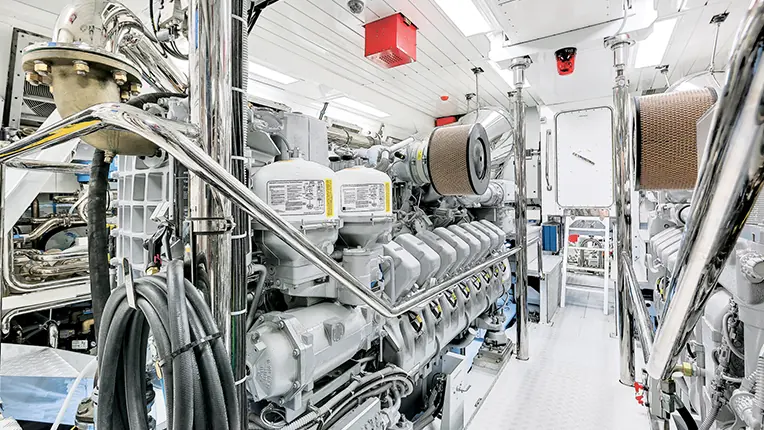
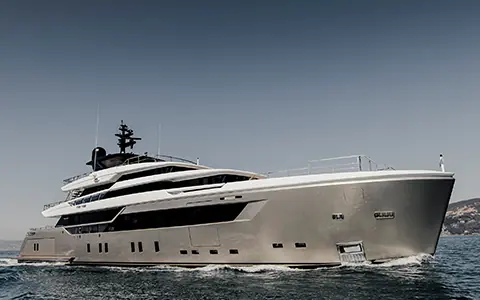
Rolls-Royce extended its framework with Sanlorenzo in May 2025 through the end of 2028, covering the Alloy 44/48 range on twin 16V2000 M96L engines, the composite 1150 EXP at 24 to 40 metres, and Sanlorenzo's largest yacht to date, a 74-metre Steel-series hull, on Series 4000 engines with SCR aftertreatment fitted for IMO III compliance. In September 2024 Rolls-Royce signed a separate four-year agreement with Azimut Benetti covering the new Grande 30M, pairing a 12V2000 M96 rated at 1,342 kW with ZF's 4900-series pod drive and mtu's own NautIQ Blue Vision NG automation, plus conventional shaftline packages for Azimut Benetti's larger megayachts. In June 2026 a third framework, with Overmarine, covers 64 engines across 2026 to 2029, split between 12V2000 and 16V2000 types across 30 propulsion systems, debuting the integrated mtu NautIQ Bridge on the Mangusta Oceano 52.
None of that is new territory for MTU; it is a renewal of a position the company has held for two decades. Feadship's Aquarius runs twin 3,000 hp 16V4000 M63L engines and Feadship's Sea Owl runs a lighter twin 16V4000 M53R pair at 2,038 hp each. Abeking & Rasmussen's Excellence runs twin 12V4000 M65R engines at 2,029 hp, and Palmer Johnson built DB9, Bliss and Sanam around the 16V4000 M93L. Further down in size, Viking Yacht Company's 92-foot sportfishing flagship runs twin Series 2000 M96 engines at 2,600 hp each, cruising at 31.5 knots at 2,200 rpm burning about 200 gallons per hour combined, and reaching 35.7 knots at full load on about 257 gallons per hour, according to MTU's own published case study on the boat. A Viking project engineer's reason for choosing the M96 over the alternatives was blunt: other engines could match or beat its horsepower, but at twice the weight.
What It Actually Costs
That silence is deliberate rather than an oversight. Engines sold through an OEM contract like Sanlorenzo's or Azimut Benetti's are priced as part of a fleet agreement between MTU and the yard, terms neither side discloses, and a one-off repower is quoted against the specific boat, its existing gearbox and shaftline, and whatever exhaust and SCR work the job needs. The closest public numbers come from general yacht refit guides rather than MTU-specific sources: a 60 to 100 foot motor yacht undergoing a major technical refit, engine work included, runs a published range of roughly USD 300,000 to 1,500,000 for the whole project, and that figure covers everything from mounts and shaftline alignment to exhaust and fuel-system rework, not the engines alone. No source found for this page breaks a Series 2000 or Series 4000 repower out of that bundle with a standalone number, which is itself the honest answer for a buyer pricing the job: get a yard quote, because nothing published will get you close.
Resale works differently again. A used MTU-powered yacht is valued on documented service history at least as much as on raw hours; a lightly loaded, well-run 1,800-hour engine can be a better buy than a hard-used 900-hour one, and deferred maintenance is what actually destroys resale value, not the hour count on its own. The clearest example is the older MTU 183 series, fitted through the 2000s to Lazzara, Azimut and Ferretti models in the high-60 to low-70 foot range: brokers describe it as a genuinely well-built engine that rewards correct maintenance and punishes neglect, and boats carrying it now trade at a real discount to otherwise comparable hulls, a discount one Florida brokerage flatly says exceeds the actual downside once the service record checks out. Nothing in that discount is published as a formula; it shows up only in what boats with 183s actually sell for against sisterships that do not have one.
Running Costs: Service, Overhauls and Fuel
Navigair, an authorized MTU service center, published its own comparison of two official maintenance matrices for the same 12V2000 M51A generator set: at 3,000 hours, one matrix calls for injector replacement and a boroscopic inspection, the other calls for a basic filter change, a real difference in scope and cost for supposedly the same job. The same source puts the full overhaul interval at 18,000 hours under one matrix and 24,000 under another, both described as accurate for the model rather than one being outdated. Below that top-end job, MTU's routine tiers run 250 and 500-hour oil and filter services, a 1,000-hour valve and cooler service, and a 2,000-hour major inspection covering injectors and turbocharger condition. Parts pricing follows the same pattern of expensive but not itemized: a single OEM turbocharger for a large MTU can run past USD 20,000, and South Florida marine labor, where most of the US MTU service network concentrates, runs USD 150 to 250 an hour.
Fuel burn scales directly with the series and the rating chosen, and the only granular, sourced figures available are MTU's own case study numbers for the Viking 92: twin Series 2000 M96 engines at 2,600 hp each burn about 200 gallons per hour combined at a 31.5-knot cruise and 257 gallons per hour at a 35.7-knot top speed. A Series 4000-powered superyacht at displacement or semi-displacement speeds burns markedly less per horsepower than that planing-hull figure implies, but no independently sourced fuel table for a named Series 4000 installation turned up anywhere in this research; MTU's yacht case studies concentrate on the faster, lighter Series 2000 boats, and a Series 4000 owner is left comparing sea trial reports from the yard rather than the engine maker.
Emissions Compliance: IMO Tier III and the SCR Question
SCR aftertreatment needs its own module roughly the size of a small equipment cabinet per engine, a urea (AdBlue) storage tank sized at around 10 percent of the boat's fuel tank capacity, and wider-diameter exhaust piping to handle the added backpressure, according to an owner discussion on YachtForums involving a 200-foot yacht running twin 16V4000 M53R engines with SCR fitted. That owner reported the system works reasonably well in practice, but flagged real running costs behind it: oil-change intervals effectively cut in half to protect the aftertreatment catalyst, a need for cleaner fuel than the MGO some cruising grounds actually supply, since contaminated fuel can damage the SCR system, and a requirement for better-trained engineers, which the owner summarized simply as needing more money below the waterline to run cleanly.
The space problem is structural rather than a one-off complaint. One forum participant with direct yard experience put it plainly: interior designers are claiming more of the hull every generation, machinery spaces keep shrinking, and a large SCR module fights that trend directly on a new build. A specialist in aftertreatment technology, posting on the same thread, added that the yacht market is small enough that some third-party emissions equipment makers see too little return to bother certifying their hardware against it, which is part of why MTU's own SCR package, rather than an aftermarket alternative, ends up specified on most Tier III yachts. Set against that cost, MTU's HVO approval across the whole range is a real and immediate win for an owner who can source the fuel: it cuts life-cycle CO2 by up to 90 percent on the same hardware, no retrofit required, though HVO's own availability at cruising destinations outside a handful of marinas remains the practical limit on using it.
Against Caterpillar, MAN and Volvo Penta IPS
Caterpillar's advantage is support, not the engine itself. Owners comparing the two report that Caterpillar dealers run up and down the US coast, while MTU's service network concentrates around Florida and a handful of other hubs, leaving remote areas thinner on official support. One experienced operator's summary, posted to Sam's Marine Hatteras Owners Forum, was direct: the MTU service schedule is more rigorous and its parts cost more than Caterpillar's for a comparable job, even though both makers are considered reliable when properly maintained. The Cat 3412, in particular, has a reputation among owners for very low running costs when looked after, with one owner reporting 4,000 hours of operation against about USD 5,000 in services. MAN sits at the other end: its 24-litre V12 range spans 1,400 to 2,000 hp and its 16-litre V8s span 1,000 to 1,300 hp, both genuinely competitive with MTU on power-to-weight, but MAN engines are reported as more expensive to service than either Caterpillar or MTU, the priciest of the three big yacht diesel names to keep running.
Volvo Penta's IPS system is a different kind of comparison entirely, since it is a pod-drive propulsion package rather than a shaft-driven main engine, and it competes with MTU only at the small overlap where a large motor yacht could plausibly be specified either way. Volvo Penta's own figures for IPS against a comparable shaft installation claim up to 30 percent lower fuel consumption, a 40 percent longer range and a smaller engine room footprint freeing up interior volume, figures that come from Volvo Penta's own marketing rather than an independent trial. Where IPS wins is genuinely real on the boats it fits: a smaller mechanical footprint and easier joystick maneuvering below roughly 90 feet. Above that, and above roughly 2,000 hp per engine, IPS is not offered at all, which is the actual reason MTU and Caterpillar, not Volvo Penta, are the names an owner of a 120-foot motor yacht is actually choosing between.
What Owners, Captains and Engineers Actually Report
A long-running Trawler Forum thread ranking diesel manufacturers summed up MTU as efficient, reliable and long-lived, though more expensive to maintain than Caterpillar, with parts prices not wildly different between the two brands. The same thread offered a specific mitigating point worth taking seriously: MTU engines are commonly pushed closer to their limits than other brands' engines are, in ranges few competitors offer at all, so a 2,800 hp MTU worked hard is likely to show more issues over its life than a 600 hp engine loafing along, which is a function of how the engine gets used rather than a flaw in how it is built. The same forum recorded a strong warranty response as a mitigating factor too: MTU flew a replacement engine and technicians to Fiji to swap a failed 3,650 hp unit, the kind of support a smaller-network competitor could not necessarily match at that distance.
David Walters Yachts, a Florida yacht brokerage, made a related point about the older 183 series specifically: it is not an unreliable engine, it is a maintenance-specific one that rewards correct service and punishes neglect, and that reputation, deserved or not, still moves the price a used boat actually sells for. Put alongside the Tier III owner's account of needing cleaner fuel and better-trained engineers to run SCR properly, the pattern across every independent account is the same: MTU rewards an owner who pays for real upkeep and penalizes one who does not, more sharply than a Caterpillar does on either side of that line.
معلومات عملية
| New engine and OEM pricing | No price list is published by MTU or Rolls-Royce Power Systems anywhere. Engines sold through an OEM contract (Sanlorenzo, Azimut Benetti, Overmarine and others) are priced within a fleet agreement neither party discloses; a one-off order is quoted through an authorized regional distributor against the specific boat and installation. |
|---|---|
| Refit and repower cost band | General yacht refit guides put a 60 to 100 foot motor yacht's major technical refit, engine work included, at roughly USD 300,000 to 1,500,000 for the whole project, covering mounts, shaftline, exhaust and fuel-system work alongside the engines. No source breaks an MTU-specific repower out of that bundle with its own number. |
| Service schedule and overhaul interval | Tiered service at roughly 250, 500, 1,000 and 2,000-hour intervals. Full overhaul (TBO) is quoted at 18,000 hours under one MTU maintenance matrix and 24,000 hours under another for the same generator model, a discrepancy an authorized MTU service center (Navigair) reported directly rather than resolved. |
| Parts and labor | A single OEM turbocharger for a large MTU can run past USD 20,000. South Florida marine labor, where most of the US MTU service network concentrates, runs USD 150 to 250 an hour. MTU's own service schedule is described by owners as more rigorous, and its parts more expensive, than Caterpillar's for a comparable job. |
| Fuel burn (Series 2000 example) | Twin Series 2000 M96 engines at 2,600 hp each, as fitted to Viking's 92-foot sportfish, burn about 200 gallons per hour combined at a 31.5-knot cruise and 257 gallons per hour at a 35.7-knot top speed, per MTU's own published case study. No comparably granular fuel table for a Series 4000 superyacht installation was found. |
| What is NOT published | No price for any bare engine, new or used. No standalone repower cost. No resolved overhaul interval (MTU's own matrices disagree by 6,000 hours on the same model). No independent fuel table for a Series 4000 installation. No published formula for the resale discount MTU 183-era yachts carry, only what those boats actually sell for against sisterships without one. |
ما يذكره الملاك والأطقم
More rigorous service schedule and pricier parts than Caterpillar
An experienced operator comparing the two brands for a Hatteras repower wrote plainly that the MTU service schedule is more rigorous, and parts are very expensive compared to CAT, while still rating both engines reliable when properly maintained.
Sam's Marine Hatteras Owners Forum (MTU vs CAT thread)Reliable and long-lived, but pushed harder than most competitors' engines
A manufacturer-ranking thread concluded MTUs are generally efficient, reliable and give great service life though more expensive to maintain, and separately noted that because MTU engines are commonly run at higher relative loads and in horsepower ranges few rivals offer, a heavily worked 2,800 hp MTU is likely to show more issues over its life than a lightly worked 600 hp engine of any brand.
Trawler Forum (diesel engine manufacturer ranking thread)Tier III SCR works, but costs real money and attention below the waterline
The owner of a 200-foot yacht running twin 16V4000 M53R engines with SCR fitted for IMO III reported the system works pretty well, but that running it properly needs cleaner fuel, better trained engineers and, in the owner's own words, more money to do right.
YachtForums (MTU 4000 series Tier III certification thread)The 183 series rewards maintenance and punishes neglect, and the market prices that in
A Florida yacht brokerage describes the MTU 183, fitted to Lazzara, Azimut and Ferretti models through the 2000s, as a genuinely well-built engine whose reputation depends entirely on service history, and notes that boats carrying it trade at a discount to comparable sisterships that the actual condition of a well-maintained example does not justify.
David Walters Yachts (yacht brokerage)
نقاط القوة وما يستدعي الانتباه
نقاط القوة
- The default choice above 2,000 hp, with long-term OEM contracts to prove itRolls-Royce's own 2024-2026 press material names current multi-year contracts with Sanlorenzo (through 2028), Azimut Benetti and Overmarine (2026-2029, 64 engines), on top of two decades of delivered superyachts from Feadship, Palmer Johnson and Abeking & Rasmussen already running Series 4000.
- A genuine power-to-weight advantage on the boats it is chosen forViking's own project engineer picked the Series 2000 M96 over rival engines specifically because alternatives matching its horsepower ran at roughly twice the weight, a real design tradeoff rather than marketing language.
- IMO Tier III and HVO compliance already engineered and sold, not promisedSCR aftertreatment for IMO Tier III and EPA Tier 4 is available across both yacht series today, and the whole range is approved to run on HVO renewable diesel with no hardware changes, cutting life-cycle CO2 by up to 90 percent where the fuel is available.
- A worldwide service network and a strong warranty response on recordMTU flew a replacement 3,650 hp engine and technicians to Fiji to resolve a warranty failure, the kind of remote support smaller competitors are not always positioned to match.
- Integrated bridge and automation reduces integration risk for the buyer of a production yachtThe mtu NautIQ Bridge, debuting on the Azimut Grande 30M and the Mangusta Oceano 52, combines propulsion, navigation and energy management on one console engineered by the engine maker itself rather than bolted together by the yard from separate vendors.
ما يستدعي الانتباه
- No published price, anywhere, for the actual productNeither MTU nor Rolls-Royce Power Systems publishes a price list for any yacht engine. A buyer gets a number only after asking a yard or a distributor, which makes comparison shopping against Caterpillar or MAN materially harder than it needs to be.
- More expensive to service than Caterpillar, on record from two separate owner forumsOwners on both Sam's Marine Hatteras Owners Forum and Trawler Forum independently describe MTU's service schedule as more rigorous and its parts as pricier than Caterpillar's for comparable work, with Caterpillar's wider US dealer network adding a real support-access gap on top of the cost gap.
- SCR compliance costs real engine room space and real running budgetAn owner running IMO Tier III-compliant Series 4000 engines on a 200-foot yacht reported oil-change intervals effectively halved, a urea tank sized at about 10 percent of fuel capacity, and a need for cleaner fuel and better-trained engineers, all real costs behind the compliance badge.
- MTU's own maintenance documentation is not internally consistentAn authorized MTU service center found two different official maintenance matrices for the same generator model, one calling for a full overhaul at 18,000 hours and the other at 24,000, with no public MTU statement reconciling which applies when.
- The older 183 series left a resale stigma that still taxes otherwise good boatsYachts from Lazzara, Azimut and Ferretti built through the 2000s on the MTU 183 series trade at a discount to comparable sisterships regardless of actual service history, a reputation a Florida brokerage says outweighs the real downside once the maintenance record is verified.
لمين هو: Buyers and owners of motor yachts and superyachts from about 70 feet up who are choosing, refitting or repowering a main engine, and captains and engineers budgeting the service schedule and compliance costs behind that choice.