Callegari buys Geniuss, the tender that shrinks its own outboard
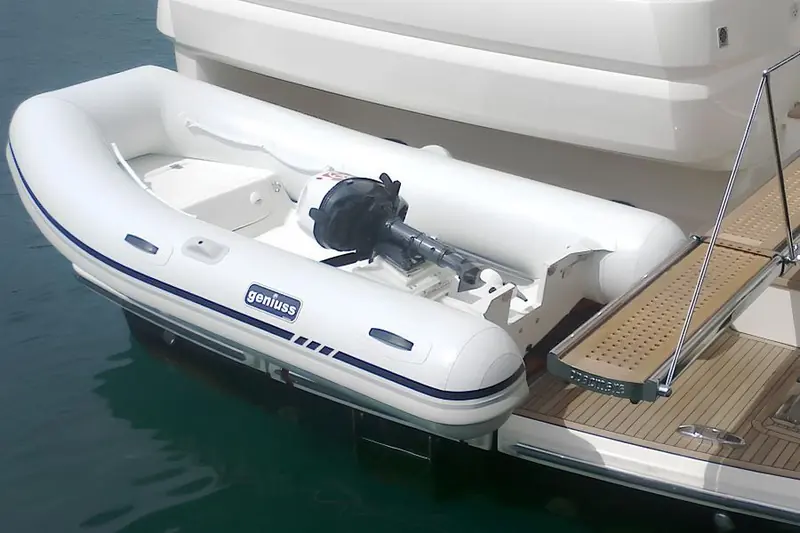
A garage problem hiding in every large tender
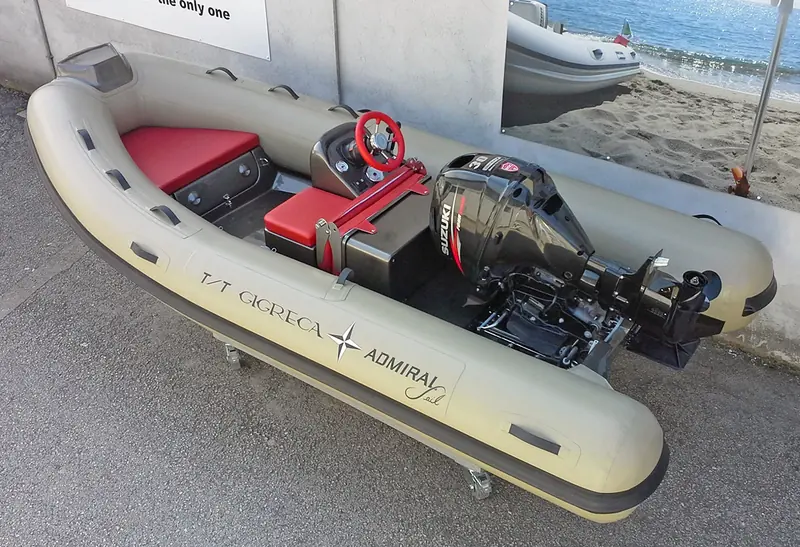
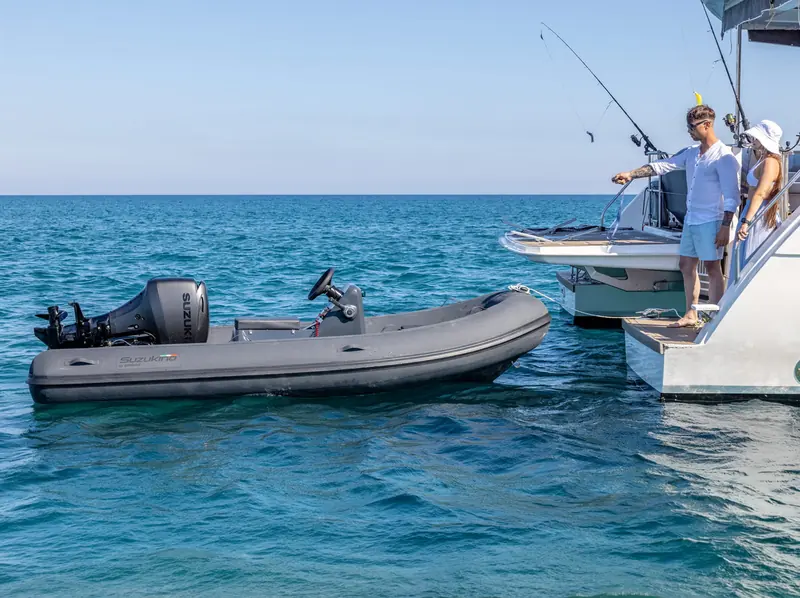
Every stern garage is built around one awkward fact: an outboard's lower unit hangs down and back well past the transom, so the opening has to be tall and deep enough to swallow the whole motor, not just the hull. That is the dimension that actually limits how big a tender an owner can fit in a garage sized for the yacht a class down, more often than the length of the tender itself. Geniuss's answer is mechanical rather than architectural: a sliding support carries the outboard, and a folding transom closes behind it, so the motor retracts into the tender's own hull as it comes aboard instead of staying fixed on the back of it.
Removing the protruding lower unit as the limiting measurement means a tender that would otherwise need a taller or deeper garage opening can go into the same slot as a size class down, which is the entire commercial case for the system. It also tucks the propeller and skeg out of reach during the highest-risk moments, launch and recovery, and shifts weight forward on the chocks rather than leaving it hanging off the stern. The simplest versions are worked by hand; Geniuss's higher-specification tenders run the retraction electro-hydraulically from a wireless remote, so the crew never has to lean over the transom to fold anything manually.
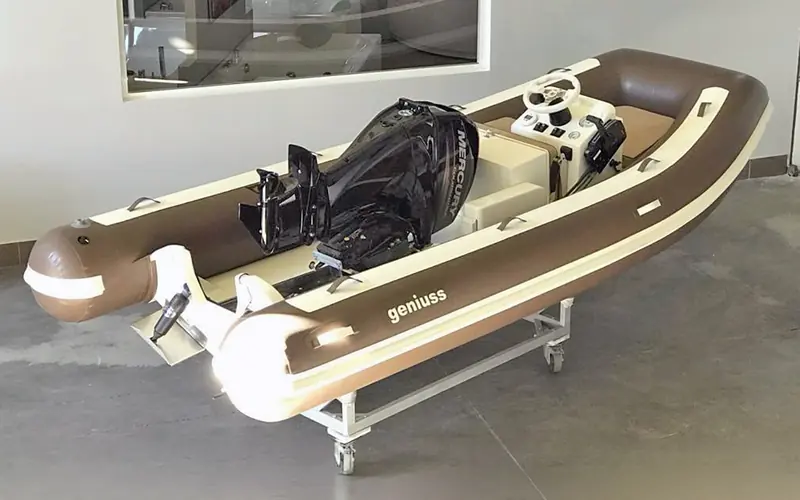
Why a RIB builder wanted a custom-tender maker
Callegari is an Anagni-based Italian yard best known for inflatable boats, not the rigid custom tenders that carry a superyacht's name on the bow. The acquisition moves it into a higher-value segment next to a customer base it already sells to: owners, captains and management companies who buy chase boats and shore transport and who are, increasingly, the people asking why a 6-metre tender needs a garage built for a 5-metre one. Geniuss is a small builder, but it holds a patented mechanism none of the larger tender yards offer as standard, which gives Callegari a technical edge to sell rather than simply more hulls to build.
The two brands stay visibly separate for now. Geniuss keeps its own name and its managing director, Claudia De Sanctis, remains in the role, while production moves onto Callegari's lines at Anagni. That is the standard playbook after a small specialist gets bought by a bigger group: the owners and dealers who already trust the Geniuss name keep seeing it on the bow, while the manufacturing and the balance sheet quietly consolidate behind it.
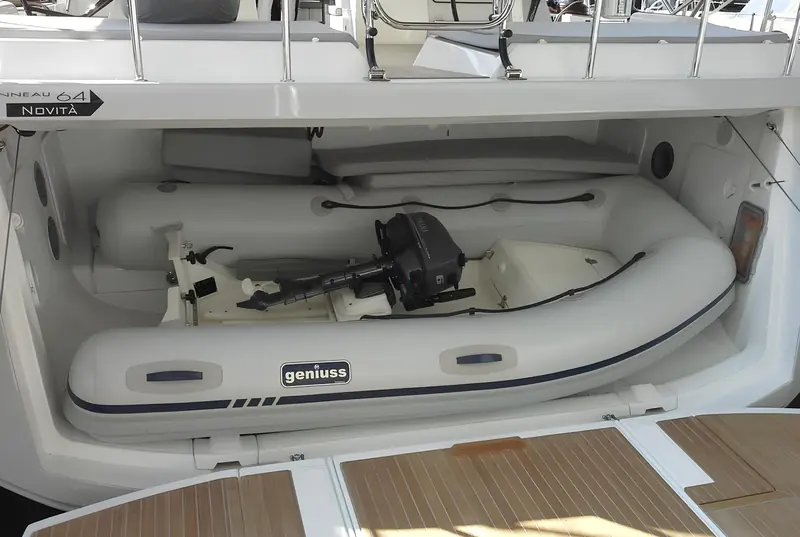
The scale Geniuss is joining, and what is not public
Geniuss was building at a rate of 50 to 60 tenders a year before the deal, a genuinely small-yard number next to the volumes a group like Callegari can push through its own production floor once the same hulls are built on shared tooling and a shared supply chain. Neither company has disclosed what Callegari paid for Geniuss, and no price list for a Geniuss tender fitted with the retracting-outboard system has been made public by either brand as of this week. Both are the kind of numbers a buyer would normally want before comparing this option against a conventional fixed-outboard tender of the same size.
That silence is itself useful information rather than a gap to complain about: an owner asking a management company or a broker to price a Geniuss-built tender right now should expect a quote direct from the yard rather than a published rate card, and should ask explicitly whether the figure includes the retracting mechanism or a simpler fixed mount, since the two are not the same tender at the same price.
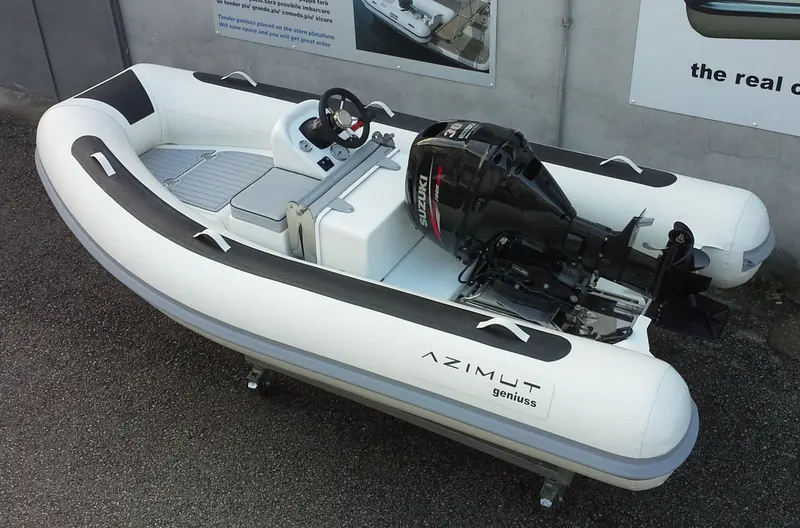
A carbon-fibre, and eventually electric, range is coming
Callegari's stated plan for the combined business goes beyond folding a small yard into a bigger one. It wants to develop a new family of carbon-fibre tenders using resin-infusion construction, the vacuum-based process that lays dry carbon cloth into a mould and pulls resin through it under pressure rather than hand-laminating wet cloth, producing a lighter, more consistent hull than traditional layup. Electric propulsion is described as a further step once that platform exists, rather than a feature available today.
For an owner planning a build with a delivery date more than a year out, that roadmap matters more than the acquisition itself: a carbon tender with the same retracting-outboard system would cut the single heaviest single item stowed at the stern, which affects trim on the mother yacht as much as it affects the tender. For anyone ordering now, none of it is buildable yet, and a yard roadmap is a plan, not a spec sheet.
What to check before specifying one
The mechanism is a genuine answer to a real constraint, but it is also a hydraulic system with moving parts sitting where salt water and grounding hazards both live, which a fixed outboard mount simply does not have to worry about. An owner should ask what the service interval is on the sliding support and the folding transom, what happens if the hydraulics fail with the motor extended, and whether the system is compatible with the yacht's existing davit or slipway launch arrangement, since retrofitting a garage designed around a fixed-mount tender is a different job from specifying one on a new build.
The honest comparison is not retracting-outboard against nothing, it is retracting-outboard against building the garage a size bigger in the first place, which is what most yards still do and what remains the simpler mechanical answer even if it costs more hull volume. An owner who wants the largest possible tender in a garage that is already fixed has a real reason to specify this; an owner still drawing a new-build general arrangement may find it cheaper, in every sense, to just draw a bigger garage.
What is good, and what to watch
Strong points
- Solves a real, common constraintLets a larger tender fit a garage sized for a smaller one, which is otherwise a hull-and-deck problem, not a fitting an owner can add later
- Backed by production scale nowMoving from a 50-to-60-unit-a-year specialist onto a bigger builder's lines should improve lead times and consistency without the mechanism changing
- A stated technical roadmapCarbon-fibre and electric plans go beyond the acquisition itself and would compound the weight case if delivered
What to watch
- Added mechanical complexityA sliding, folding, sometimes hydraulic system has more that can fail than a fixed outboard mount, in the wettest and hardest-worked part of the boat
- No public priceAn owner cannot yet compare the cost of this system against a conventional fixed-mount tender of the same size without asking the yard directly
- Retrofit is not simpleA garage built around a fixed-mount tender is not automatically compatible with a retracting-outboard replacement
Practical detail
| What it solves | Outboard slides into the tender hull on a sliding support with a folding transom, removing the lower unit as the dimension that sizes the garage opening |
|---|---|
| Production | Geniuss built 50 to 60 tenders a year before the deal; production is moving to Callegari's Anagni facilities |
| Operation | Manual on simpler versions, electro-hydraulic with wireless remote on higher-specification tenders |
| What is not published | Deal value and a price list for a retracting-outboard Geniuss tender; neither Callegari nor Geniuss has released either as of this week |
| What is next | A carbon-fibre tender family built by resin infusion, with electric propulsion described as a later step once that platform exists |
Questions this story answers
What happened?
Gommoni Callegari has acquired Geniuss, the small Italian yard that patented a way to slide an outboard motor inside a tender's hull so the lower unit stops being the dimension that decides how big a garage has to be. For an owner speccing a new build or a refit, the deal turns a niche fix into a production-line option, since the tender line now sits inside a group already turning out 50 to 60 hulls a year with a carbon-fibre and electric range promised next.
What is good about it?
Solves a real, common constraint. Lets a larger tender fit a garage sized for a smaller one, which is otherwise a hull-and-deck problem, not a fitting an owner can add later
What should an owner or buyer watch?
Added mechanical complexity. A sliding, folding, sometimes hydraulic system has more that can fail than a fixed outboard mount, in the wettest and hardest-worked part of the boat
Who reported this?
Leaders League, Barche Magazine, Pressmare, Il Messaggero (Nautica), Daily Nautica.
We do this for everyone who loves this world. The people who have spent their lives in it, and the people just discovering it. Yotters exists so that what we learn belongs to all of them.
Nobody pays us for this. No ads, no sponsors, nothing for sale. We just believe the world is a little better when knowledge is shared instead of kept.
If it gave you something today, tell us to keep going. Follow us, leave a like, or write a positive comment. We read every one, and they are what keeps us going.