Cap Cana Marina (Dominican Republic)
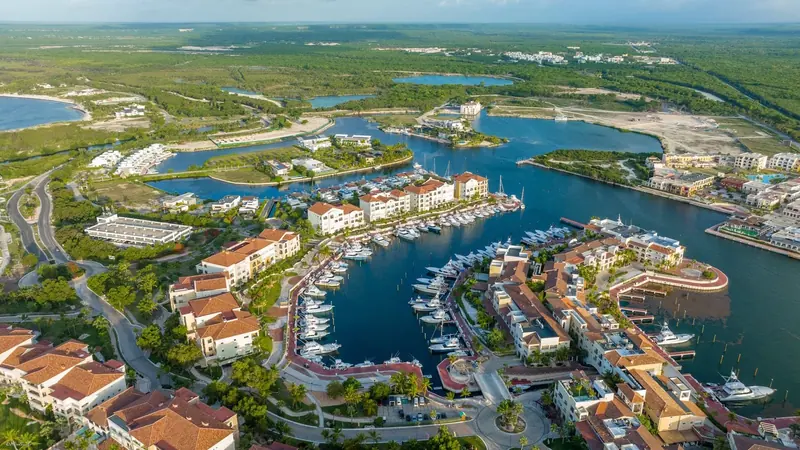
| Location | eastern tip of the Dominican Republic, inside the Cap Cana resort development, about 10 minutes by road from Punta Cana International Airport (PUJ) |
|---|---|
| Position | approximately 18 29.858' N, 68 22.094' W, per the marina's own published coordinates |
| Developer and operator | Cap Cana S.A., founded in the early 2000s by the Hazoury family (Ricardo and Fernando Hazoury); a distinct company from the neighboring Puntacana Resort and Club |
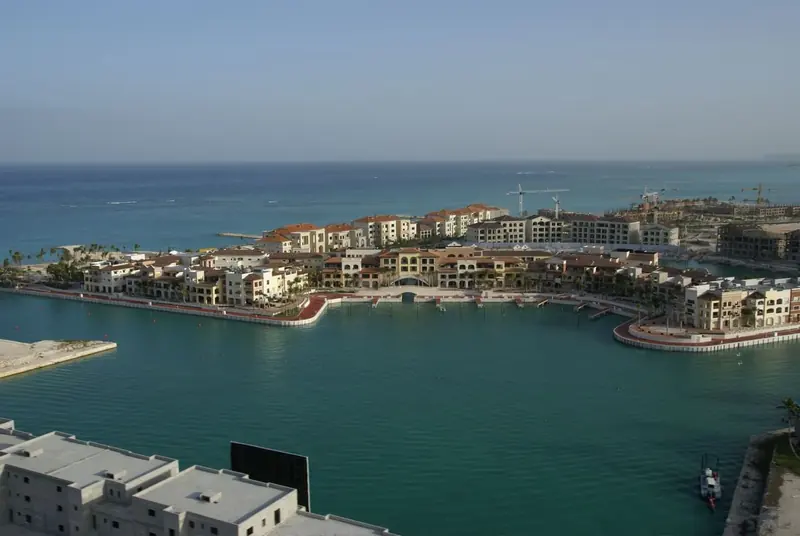
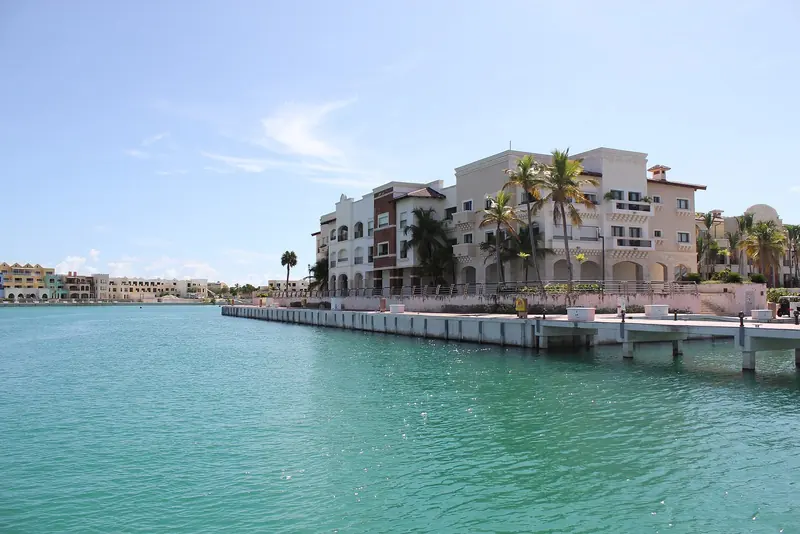
| Design | the first inland marina in the Dominican Republic, a dredged basin set behind a barrier reef for hurricane protection, rather than an open-coast harbor |
| Berths | over 150 slips currently, up from 106 to 140 in the marina's own earlier documents; one recent trade write-up counts as many as 172 |
| Maximum length | the marina's own site advertises slips up to 250 feet (76 m); independent marina directories describe the practical superyacht ceiling nearer 60 to 68 metres |
| Draft | about 8 feet (2.4 m) at low tide in the berths per the marina's own FAQ, with an 11.5 ft (3.5 m) controlling depth on the dredged approach channel |
| VHF | channels 16 and 72, monitored 6 am to 6 pm daily |
| Customs and immigration | Navy, Customs, Immigration, Port Authority and Agriculture officials clear a yacht at its own slip, arranged by the marina office after a VHF call 10 to 15 nautical miles out |
| Berth tariff | not published; a buyer must email [email protected] for a rate packet |
| Fixed dates | the Cap Cana Classic, the Cap Cana White Marlin Tournament and a Kids Fishing Festival run every year, with 2026 dates already published by the marina |
| History | the resort underwent a major debt restructuring in the years after the 2008 financial crisis, and a planned Trump-branded component of the development stalled at that time |
An Inland Marina Built Into a Resort, Not a Harbor
Cap Cana sits on the Dominican Republic's easternmost point, a short drive from Punta Cana International Airport, and the marina was conceived from the start as the heart of a much larger master-planned community rather than as a working harbor with a marina bolted on. Ricardo and Fernando Hazoury launched the project in the early 2000s; ground on the marina basin itself broke around 2001 to 2002, and excavation crews reported striking water for the first time in 2003. The plan, as covered by Cruising World at the time, was for what would have been the Caribbean's largest marina, with room eventually for more than a thousand boats along a Grand Canal roughly 200 feet wide and 1.25 miles long, flanked by shops, restaurants and residences.
That scale was never fully built out, and the 2008 financial crisis hit Cap Cana hard: a planned Trump-branded villa and golf component of the resort stalled after an initial rollout of lots, and the wider project went through a major debt restructuring, with roughly 250 million dollars in senior secured notes renegotiated and the company's debt cut by about 50 million dollars. The marina itself survived that period and kept operating and expanding. It is worth being precise about ownership here: Cap Cana is a distinct company and family (the Hazourys) from Grupo Puntacana, the Rainieri family business that runs the neighboring Puntacana Resort and Club and co-owns the shared airport. The two developments sit close together on the same stretch of coast and are easy to conflate, but they are run separately.
Berths, Length and Draft: What the Marina Actually Fits
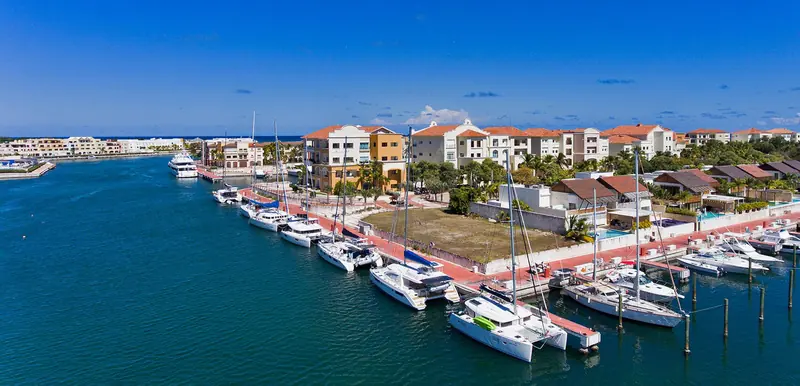
The marina's own current site and FAQ describe wet slips ranging up to 250 feet, a figure independently matched by the booking platform MarinaReservation.com, which lists a maximum length of 76 metres. That is the marketed ceiling. Industry marina guides tell a more conservative story: Dockwalk's Superports directory describes Cap Cana as offering over 150 slips for yachts to 60 metres, and other trade write-ups put the workable superyacht limit around 68 metres. The likely explanation is that a handful of the longest berths can physically take a 250-foot hull, while the marina's realistic day-to-day capacity for very large yachts sits lower than that headline number. A buyer with anything over about 60 metres should treat the smaller figure as the safer planning assumption and confirm directly with the marina before committing to a booking.
Berth count itself has clearly grown over time rather than being a fixed, stable number worth taking at face value from any one document. An older marina arrival guide describes three jetties providing 106 berths; that same document elsewhere cites 140 available slips, and an older syndicated description used by Tripadvisor references roughly 130 slips accommodating boats up to 150 feet. The current published figure across the marina's own site, Dockwalk and the Superyacht Services Guide directory has settled on over 150, and one 2026 marina destination write-up for Sports Illustrated's licensed content network counts 172 operational slips. Draft is more consistent: the marina's FAQ states an 8-foot controlling depth at low tide in the berths, MarinaReservation.com independently lists 2.4 metres (7.9 feet), and a Tripadvisor reviewer who arrived by sailboat with a 7-foot-6 draft reported no trouble entering or docking even at low tide. The dredged approach channel itself runs deeper, with an 11.5-foot (3.5 m) controlling depth stated on the marina's own services page.
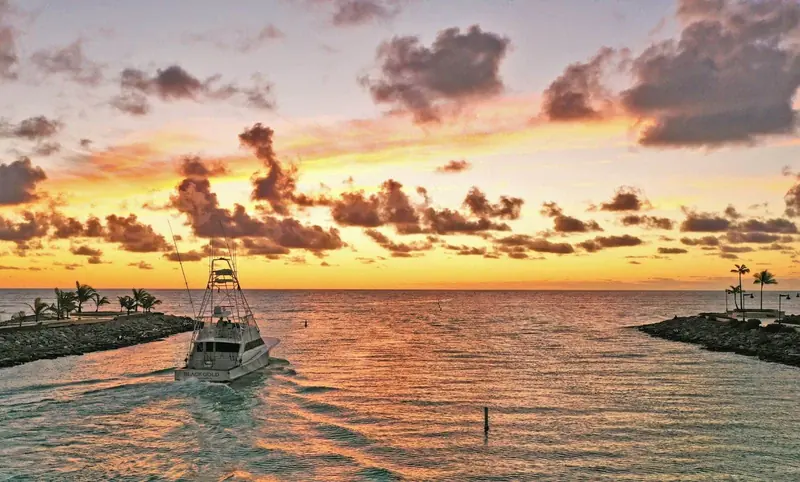
Customs comes to the boat at its own slip, not the other way around, and the marina still will not tell you what the berth costs.
Arriving by Sea: VHF, Hours and the Approach
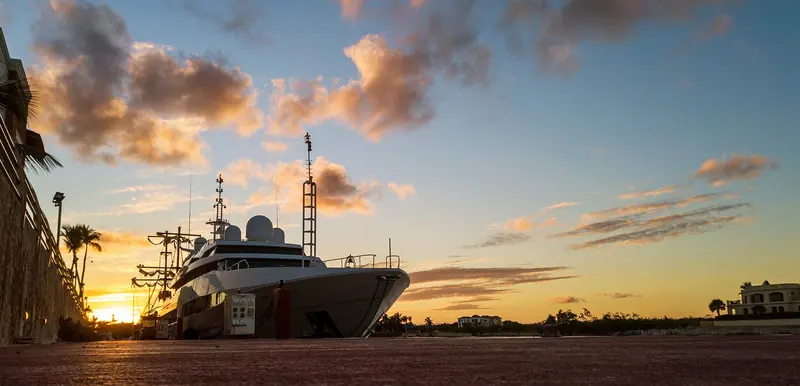
The marina monitors VHF channels 16 and 72 from 6 am to 6 pm, seven days a week, and its own arrival guide asks incoming vessels to make contact well before arrival so the harbor office can coordinate berth allocation and, where needed, bring officials down to the dock. Under Dominican maritime law, boats may not arrive at the marina before 6 am or after 6 pm; an after-hours arrival or departure requires specific authorization from the Dominican navy, arranged through the marina office rather than assumed as a default. That reception window is a real planning constraint for a yacht timing a long passage or an overnight arrival from Puerto Rico or the Turks and Caicos, both of which sit along the same roughly 250-mile yachting corridor that Cap Cana was built to serve.
Once inside the reef-protected approach, the marina describes a protected basin with no surge, a genuine advantage over the more exposed anchorages common elsewhere on the Dominican Republic's Atlantic-facing coast. The dredged channel's controlling depth of 11.5 feet is deeper than the berths themselves, which is the normal pattern for an entrance channel maintained to a working depth ahead of the finger piers it serves. No detailed public hazard chart for the approach could be confirmed beyond the marina's own stated controlling depths, so a visiting captain should request the marina's current arrival guide directly and cross-check it against an up-to-date chart rather than relying on any single secondary source, including this one.
Clearing In: A Genuine One-Stop Reputation
The clearance process itself is well documented by people who have actually done it rather than only by the marina's own marketing. One Tripadvisor reviewer, arriving by sailboat after a long passage, described contacting the marina in advance and having the marina manager, named in the review as Edward Cordones, coordinate the approach and have Navy, Customs, Immigration, Port Authority and Agriculture officials all waiting at the slip on arrival, calling it the smoothest and most efficient check-in of many years of cruising. A separate reviewer similarly described customs coming to the boat rather than the other way around, and found the officials friendly rather than bureaucratic. Multiple reviewers across different years independently name the same marina manager for coordinating their arrival, which is a stronger signal of consistent service than a single glowing review would be.
This matters beyond simple convenience: a visiting yacht clearing into an unfamiliar country for the first time is usually most anxious about the paperwork, not the docking, and a marina that reliably brings five separate government agencies to the slip removes a genuine source of friction that many Caribbean and Latin American ports still impose on visiting crews. It is also consistent with how the marina positions itself as one of the Dominican Republic's formal ports of entry on the eastern coast, with its own on-site customs and immigration facility rather than reliance on a distant regional office.
What a Berth Costs and How You Actually Book One
Every source checked for this entry, the marina's own FAQ, its main site and independent booking aggregators such as MarinaSpots.com, agrees on the same point: there is no browsable daily, weekly, monthly or annual rate table published anywhere for Cap Cana Marina. The FAQ directs a prospective berth-holder to email [email protected] for what it calls an information packet, and general online booking platforms that carry the marina's listing likewise stop short of a real quote. One widely repeated online estimate of 4,000 to 6,000 dollars a month for a 30-metre berth could not be independently corroborated from a second source and is not treated as a verified figure here; it is not published as an answer.
For anything above roughly 30 metres, third-party booking platforms note that public reservations are highly restricted and often not listed at all, given demand and limited large-berth availability, and suggest that an owner in that range typically works through a specialized yacht agency with a direct relationship to the marina's port management rather than a standard online booking form. That is a real practical difference from marinas that publish a full tariff card, such as some of the larger Adriatic and Mediterranean operations in this directory, and it means budgeting a season at Cap Cana requires a direct conversation with the marina well before arrival rather than a quick look at a price list.
On the Quay: Fuel, Services and Where to Eat
The marina's own services listing confirms fuel (premium diesel and gasoline), in-slip water, electricity, pump-out and a waste-oil center, pilot assistance, concierge and provisioning on request, a captain's business center with internet and chandlery alongside cable TV at each berth; an older technical document adds that individual berths carry electrical service up to 308 volts three-phase at 100 amps as well as standard 110/220-volt single and three-phase connections. What could not be confirmed from any reliable source is whether the fuel dock sells duty-free or tax-free marine diesel, a genuine cost advantage at several competing Caribbean bunkering stops; one online yacht-brokerage blog claims tax-free bunkering and an on-site shipyard capable of full engine overhauls, but neither claim could be independently corroborated from a second source, so both are treated here as unverified rather than confirmed.
For dining without leaving the marina, Soprano is a wood-fired pizzeria directly on the water at Marina Cap Cana, and API Beach sits on the sand nearby serving ceviche and cocktails in a casual, barefoot setting, both reachable on foot from any berth. The marina's own event space, referred to in its materials as the Capitania building, hosts dining, drinks and live music and doubles as the venue for tournament welcome parties and awards ceremonies. For a wider choice after dark, the Eden Roc resort a short golf-cart ride away adds several higher-end options, including the Mediterranean restaurant Mediterraneo, the seafood-focused La Palapa, the Nikkei-inspired Blue Grill + Bar and Riva Bar for cocktails, though these sit within the broader Cap Cana resort rather than directly on the marina quay itself.
Beyond the Water: Hotels, Golf and Scape Park
Cap Cana was built as a single gated community around the marina rather than a marina with hotels simply nearby, and reviewers consistently describe getting around by golf cart or a short taxi ride rather than on foot for anything beyond the immediate quay. The Eden Roc and Sanctuary hotels both sit within the resort a few minutes from the marina basin, and Punta Espada, an award-winning course designed by Jack Nicklaus, sits close enough that guests staying at Eden Roc are typically quoted a courtesy buggy ride of around ten minutes to the clubhouse, with the course itself closer still. Scape Park, the resort's cave, cenote and adventure park, is a further outing rather than a quick stroll from the marina, best planned as a half-day excursion by golf cart or car rather than attempted on foot.
Punta Cana International Airport is genuinely close, about ten minutes by road from the marina according to both the marina's own arrival guide and independent coverage, which matters for an owner flying in crew or guests to meet a boat rather than sailing them in. That proximity, combined with the resort's own school, university campus, spas and convention facilities, is part of why Cap Cana markets itself as a place to base a boat for an extended season rather than only a fuel-and-provision stop on the way through the Caribbean corridor.
The Fixed Dates: A Genuine Big-Game Fishing Calendar
Big-game fishing is not a marketing add-on at Cap Cana, it is close to the marina's original reason for being sited where it is: the Dominican Republic's eastern point sits near some of the Caribbean's most consistent blue and white marlin grounds, and the marina's own materials cite a Billfish Report ranking as the world's number one fishing destination in 2013 and sixth in 2014, a self-reported ranking from an outside publication that a prospective visitor should treat as the marina's own citation rather than something independently re-verified here. The Cap Cana Classic is the longest-running of the three events; a 2025 report on the tournament described it as the 21st running of an International Billfish Tournament first held roughly two decades earlier, making the November 2026 edition one of the most established fixtures in Caribbean big-game fishing.
An older marina document from 2015 also references a three-leg 'Dominican Billfish Triple Crown' pairing the Cap Cana Classic and the White Marlin Tournament with a separate International Billfish Shootout; that branding does not appear in the marina's current published 2026 calendar, so a visiting angler should confirm directly with the marina which events are running in a given year rather than assume the older naming still applies. Beyond the tournaments themselves, the marina's own event center hosts welcome cocktail parties, team jamborees and awards ceremonies around each competition, which is worth knowing for an owner planning a visit around one of the dates: the marina and its restaurants are considerably busier during tournament weeks than during a quiet mid-season arrival.
An Land, Anfahrt und Buchung
| Getting there | About 10 minutes by road from Punta Cana International Airport (PUJ), per the marina's own arrival guide and independent coverage; no fixed-price transfer figure is published by the marina itself. |
|---|---|
| Reaching the marina by VHF | Channels 16 and 72, monitored 6 am to 6 pm daily. Dominican maritime law restricts arrivals to that window; after-hours entry needs navy authorization arranged through the marina office in advance. |
| Berth size and draft | Marketed up to 250 feet (76 m) with an 8-foot (2.4 m) low-tide berth depth per the marina's own FAQ; independent marina guides put the practical superyacht ceiling closer to 60 to 68 metres, so a yacht above that should confirm directly before booking. |
| Berth pricing | Not published anywhere on the marina's own site or on the booking platforms carrying its listing. Email [email protected] for a rate packet; berths over roughly 30 metres are reported by third-party platforms as informally restricted rather than openly bookable. |
| Fuel and services | On-site premium diesel and gasoline, chandlery, water, electricity up to 308V three-phase, Wi-Fi, cable TV and pump-out are confirmed by the marina's own services page. Duty-free fuel status and any haul-out or shipyard capability could not be independently confirmed. |
| Clearing customs | Navy, Customs, Immigration, Port Authority and Agriculture officials clear a yacht at its own slip; hail the marina on VHF 72 roughly 10 to 15 nautical miles out so officials can be arranged in advance. |
| What is not published | A berth tariff of any kind, a single consistent maximum berth count (sources range from about 150 to 172), duty-free fuel status, and any confirmed haul-out or shipyard service. |
Was Eigner und Crew berichten
The marina's clearance process is the smoothest some long-time cruisers have experienced anywhere
arriving by sailboat after a long passage, the reviewer described the marina manager coordinating the approach on VHF and having Navy, Customs, Immigration, Port Authority and Agriculture officials all waiting at the slip on arrival, calling it the smoothest and most efficient check-in process in many years of cruising
Andrew S., Tripadvisor reviewer of Marina Cap CanaA 7-foot-6 draft sailboat entered and docked without issue, even at low tide
the same reviewer specifically noted the channel and slips as exceptionally well maintained for a boat of that draft, consistent with the marina's own published 8-foot low-tide berth depth
Andrew S., Tripadvisor reviewer of Marina Cap CanaThe berths themselves are calm and secure, with easy access to restaurants across the water
the reviewer described a wonderful side slip for a catamaran with a calm, non-wavy night's sleep, straightforward customs and restaurants within easy reach across the basin
Janet M., Tripadvisor reviewer of Marina Cap CanaStaff professionalism is named consistently across separate visits, not a one-off
a reviewer two years apart from Andrew S. independently praised the same marina manager, Edward Enmanuel Cordones, by name for outstanding customer service, suggesting the marina's service quality has held up over time rather than reflecting a single good day
Steve W., Tripadvisor reviewer of Marina Cap Cana
Was gut ist und worauf zu achten ist
Stärken
- A genuinely unique, hurricane-protected designthe first inland marina in the Dominican Republic, dredged behind a barrier reef rather than open to the Atlantic, which is a structural safety advantage over most Caribbean alternatives during hurricane season, not just a marketing claim
- A customs process that independently verified reviewers actually praisemultiple named Tripadvisor reviewers across different years describe a genuine one-stop, at-the-slip clearance with five government agencies present, and independently name the same marina manager for coordinating it
- Ten minutes from an international airport, with a real fishing pedigreethe short run to Punta Cana International Airport makes crew changeovers straightforward, and three annual, publicly dated tournaments give the marina a genuine, decades-old identity beyond simple berthing
Worauf zu achten ist
- No published berth tariff anywhereunlike marinas that publish at least a downloadable price list, Cap Cana requires a direct email to the concierge for any rate information at all, making it impossible to budget a season here without contacting the marina first
- Inconsistent capacity figures across the marina's own historyberth counts ranging from about 106 to 172 and maximum lengths from 150 to 250 feet appear across the marina's own documents and directory listings over time, so a buyer cannot take any single published number as definitive without confirming current specifics directly
- Large-yacht booking is informally gatedthird-party booking platforms describe reservations above roughly 30 metres as restricted and not openly listed, which pushes an owner toward a specialized agency relationship rather than a straightforward online booking
Für wen: An owner or captain planning an extended Caribbean season who wants a genuinely hurricane-protected inland berth close to an international airport, and who is prepared to email the marina directly for a quote rather than book online against a published rate card.