Falmouth Harbour Marina (Antigua)
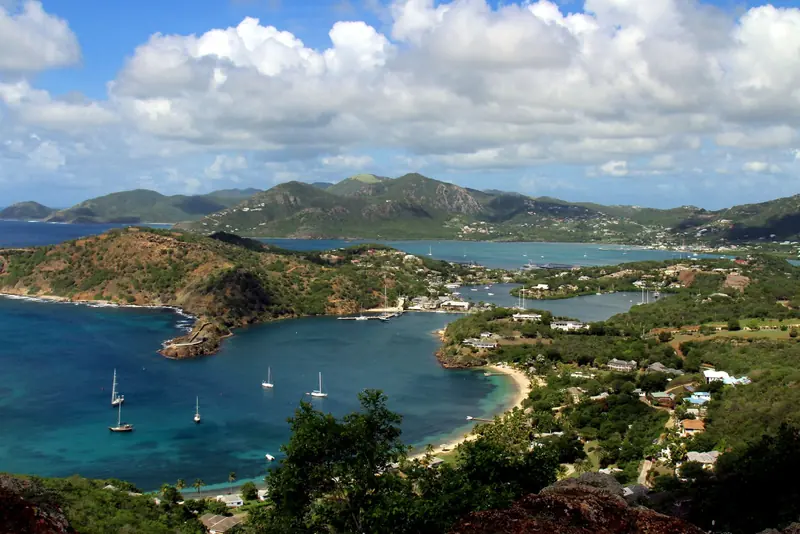
| Lage | Falmouth Harbour, Südküste Antiguas, auf 17 00.75 N 061 46.73 W, an der Hauptstraße nach English Harbour |
|---|---|
| Betreiber | Antigua Slipway Ltd, der Familienwerftbetrieb, seit 1966 in English Harbour. Die Marina entstand 1994 |
| Liegeplätze | 30 heckseits und 30 längsseits, an breiten Betonstegen mit Fahrzeugzufahrt |
| Maximale Länge über alles | 330 ft, rund 100 m, die Zahl, die die Antigua and Barbuda Yachting and Marine Association für das Schiff veröffentlicht. Die 535 ft auf der eigenen Website der Marina und die 525 ft oder 160 m in den Verzeichnissen sind die Länge des beim Ausbau 2022 gebauten Superyachtkais, kein Schiffsmaximum |
| Maximaler Tiefgang | 20 ft, rund 6,1 m, von allen Quellen übereinstimmend genannt und die Zahl, die tatsächlich bindet |
| Landstrom | 110 V, 208, 220 und 380 V Drehstrom laut Branchenverband, dazu 400 V auf der Website der Marina. Die Amperezahl ist nicht veröffentlicht. Strom wird mit USD 0,60 je kWh abgerechnet |
| Wasser | Frischwasser an den Liegeplätzen, abgerechnet mit USD 0,15 je US-Gallone. Duschen an Land USD 2 pro Person |
| Konnektivität | kostenloses Glasfaser-WLAN in der gesamten Marina. Wachdienst rund um die Uhr, Parkplätze, Abfallentsorgung, Tenderanleger und kranunterstützte Containerlagerung |
| Treibstoff | steuer- und zollfreier schwefelarmer Diesel an den Liegeplatz mit bis zu 1.000 Litern pro Minute, in der Hochsaison täglich, in der Nebensaison werktags, über Nacht auf Anfrage. Preis nicht veröffentlicht |
| UKW | Kanal 10. Marinabüro +1 268 460-6054 |
| Liegetarif, gelesen im August 2026 ohne Saisonjahr auf der Seite: Winter 1. November bis 31. Mai, heckseits USD 3,50 pro Fuß und Tag, längsseits USD 6,50; Sommer 1. Juni bis 31. Oktober, heckseits USD 2,55 und längsseits USD 4,65. Die Monatstarife liegen in beiden Bändern darunter | |
| Zollstatus | English Harbour ist ein Einreisehafen mit Zoll, Einwanderungsbehörde und Hafenbehörde in einem Gebäude, einen Fußweg über den Hügel von der Marina entfernt. Online-Klarierung über eSeaClear |
| Nationalpark | beide Naturhäfen liegen im Nelson's Dockyard National Park, und die Gebühren der Nationalparkbehörde sind zusätzlich zu Liegegeld und Hafenbehördengebühren verpflichtend. Die Besuchertickets sind veröffentlicht, US$15 pro Tag und US$100 für eine Saisonkarte, die am Ende der Yachtsaison verfällt, EC$10 für Einheimische und Ansässige. Die Gebühr für das Schiff selbst ist nirgends veröffentlicht |
| Nachbarkais | Nelson's Dockyard Marina, 30 Heckliegeplätze an Bugmuringleinen, betrieben von der Nationalparkbehörde auf UKW 68; die frühere Antigua Yacht Club Marina, heute Antigua Superyacht Marina and Resort; und die Catamaran Marina, bis 200 ft und 15 ft Tiefgang |
| Kranen | die Slipbahn von Antigua Slipway nimmt 200 Tonnen, bis 150 ft Länge über alles, 40 ft Breite und 14 ft Tiefgang. Bailey's Boatyard betreibt einen 70-Tonnen-Travellift und einen 80-Tonnen-Ascon-Lift; Jolly Harbour betreibt Travellifte mit 75 und 85 Tonnen und nimmt Katamarane bis 33 ft Breite; Shell Beach schafft 25 Tonnen. Nichts auf der Insel kann eine Superyacht heben |
| Flughafen | V.C. Bird International (ANU) an der Nordküste, rund 21,7 km und 35 bis 45 Autominuten entfernt, mit täglichen Langstreckenflügen nach Nordamerika, ganzjährigen Verbindungen ins Vereinigte Königreich und Privatjetabfertigung. Die einzige kontinentaleuropäische Verbindung, Condor ab Frankfurt, ist saisonal |
Zwei Naturhäfen, fünf Kais und wer welchen betreibt
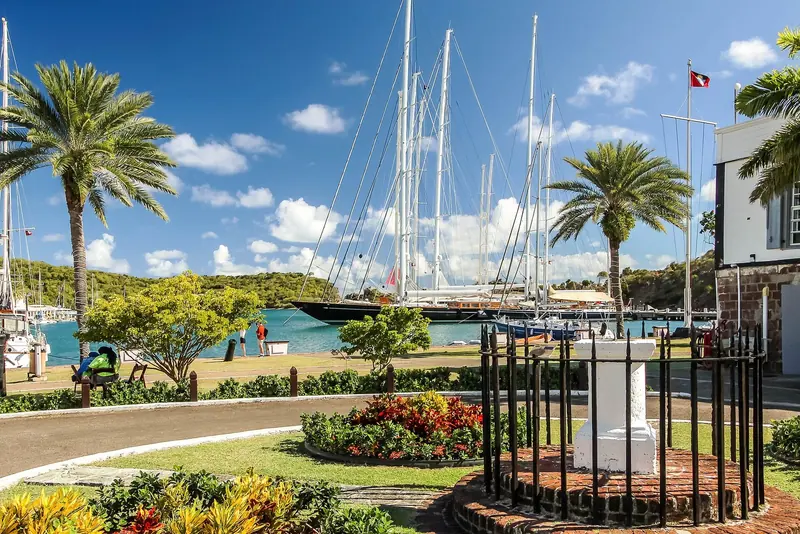
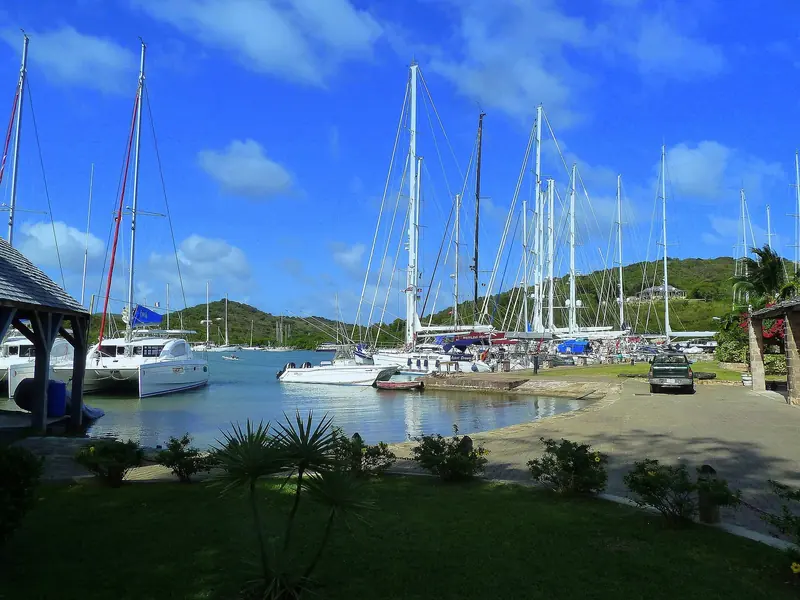
Falmouth Harbour ist eine hufeisenförmige Naturbucht an der Südküste Antiguas, auf 17 00.75 N 061 46.73 W. Das Dorf und der Hafen von Falmouth liegen am Nordufer, und English Harbour, die tiefere und bekanntere Bucht, schließt unmittelbar östlich an. Getrennt werden beide durch einen flachen Landrücken, den man in einer Viertelstunde zu Fuß überquert, und zusammen beherbergen sie fünf getrennte Liegeplatzbetriebe unter vier verschiedenen Betreibern. Die Falmouth Harbour Marina, die größte davon, liegt an der Hauptstraße nach English Harbour an der Ostseite von Falmouth Harbour und wird von Antigua Slipway Ltd geführt, dem Familienwerftbetrieb, der seit 1966 in English Harbour ansässig ist. Die Marina selbst entstand 1994, und der Branchenverband bezeichnet sie als die größte Megayacht-Marina der Insel und die am längsten etablierte der modernen Anlagen.
Nebenan in Falmouth liegt die Marina, die lange als Antigua Yacht Club Marina bekannt war; sie brannte am 2. und 3. Oktober 2023 während des Tropensturms Philippe aus und ist seither wiederaufgebaut und als Antigua Superyacht Marina and Resort neu benannt worden, wobei im Sommer 2026 der Baubeginn eines weiteren Komplexes ansteht. Antigua Slipway unterhält daneben in English Harbour einen eigenen Kai und einen eigenen Tanksteg an der Werft, der fünfte Liegeplatzbetrieb und derjenige, den die Aufzählungen am häufigsten vergessen. Am Nordende von Falmouth Harbour arbeitet die Catamaran Marina, ein Familienbetrieb, der Yachten bis 200 ft bei 15 ft Tiefgang aufnimmt. Und jenseits des Hügels in English Harbour betreibt die Nationalparkbehörde die Marina innerhalb von Nelson's Dockyard, eine gemeinnützige Körperschaft nach dem Nationalparkgesetz von 1984, die ihre Einnahmen in Restaurierung, Naturschutz und Archäologie steckt. Das ist die Konstellation, die man vor der Buchung verstanden haben sollte: Sie wählen zwischen einem kommerziellen Superyachtkai, einer wiederaufgebauten Resortmarina, einem Werftkai, einem kleinen Familienkai und einer staatlichen Denkmalbehörde, alle innerhalb eines Nationalparks, und jeder von ihnen schlägt die Gebühren der Nationalparkbehörde auf Ihre Rechnung.
Die Marina selbst und die Längenangabe, die in Wahrheit ein Kai ist
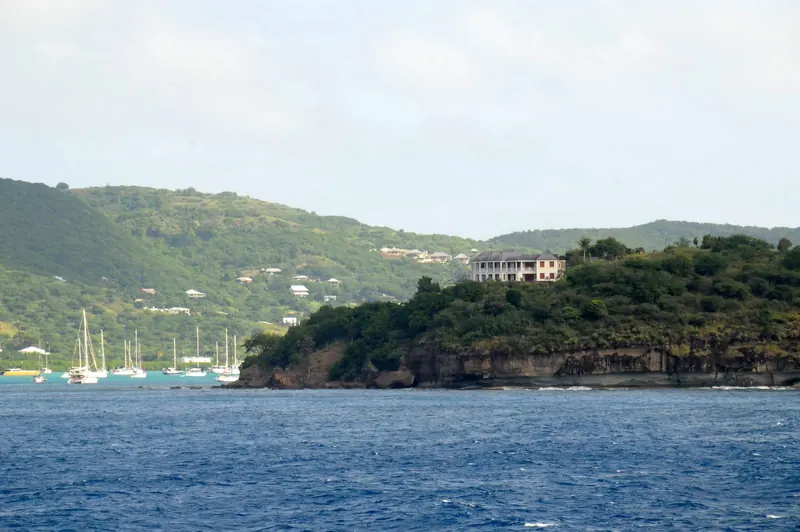
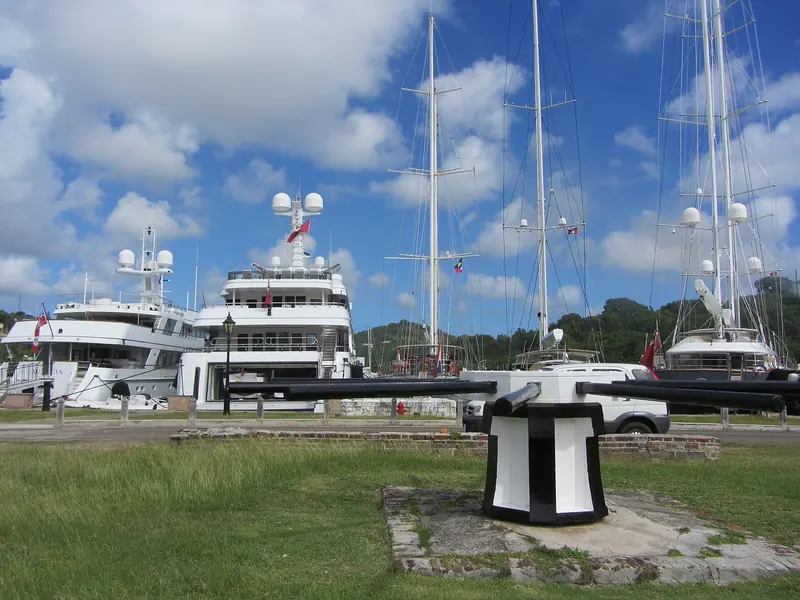
Die Falmouth Harbour Marina hat dreißig Heckliegeplätze und dreißig Längsliegeplätze an breiten Betonstegen mit einer Zufahrt, die für Lastwagen fast jeder Größe taugt, was mehr zählt, als es klingt, wenn ein Refit oder ein Charterwechsel zu beladen ist. Strom gibt es laut Branchenverband mit 110 V sowie 208, 220 und 380 V Drehstrom, und die Website der Marina nennt zusätzlich 400 V; ihr eigenes Liegeplatzformular bietet einphasig 120 V, einphasig 220 V und dreiphasig 380 V an. Die Amperezahl veröffentlicht niemand. An den Liegeplätzen gibt es Frischwasser, kostenloses Glasfaser-WLAN auf dem gesamten Gelände, Wachdienst rund um die Uhr, Parkplätze, Abfallentsorgung, einen Tenderanleger und kranunterstützte Containerlagerung. Die Marina hört auf UKW-Kanal 10.
Die maximale Länge sieht nach einem ungeklärten Widerspruch aus und ist keiner, und wer eine sehr große Yacht fährt, sollte vor der Saisonplanung wissen, warum. Die Website der Falmouth Harbour Marina nennt 535 ft, rund 163 m, und wiederholt die Zahl in ihren eigenen häufigen Fragen. Die Antigua and Barbuda Yachting and Marine Association, der Branchenverband, schreibt, dass Yachten bis 330 ft, rund 100 m, heck- und längsseits abgefertigt werden können. Die beiden Zahlen messen nicht dasselbe. All At Sea beschreibt in seinem Bericht über den durch COVID verzögerten Ausbau den neuen, eigens gebauten Superyachtkai aus Beton als 535 ft lang und 20 ft breit, auf Pfählen, die rund 40 ft tief in den Meeresboden getrieben wurden. Die 535 ft sind die Länge des Kais und nicht die eines Schiffes. Die 525 ft, die Yachting Pages führt, sind dieselbe Mauer, nur anders gerundet, dort gedruckt als Liegeplätze bis 160 Meter, und die antiguanische Presse berichtete über dieselbe Eröffnung. Damit bleibt 330 ft als einzige veröffentlichte Zahl, die tatsächlich ein Schiff beschreibt, und das ist die Zahl, mit der geplant wird; 535 ft ist die Menge Beton, an der die Marina eine Flotte aufreihen kann. Worin alle Quellen übereinstimmen, ist der Tiefgang: 20 ft, rund 6,1 m, und das ist die Zahl, die Sie tatsächlich stoppen wird. Wer über etwa 100 m liegt, sollte die Schlagzeile der Website als Gesprächsthema für den Hafenmeister behandeln und nicht als Buchung.
Sie veröffentlicht ihr Liegegeld, was in der Karibik fast niemand tut, und schlägt dann eine verpflichtende Nationalparkgebühr darauf, die überhaupt niemand veröffentlicht.
Die Ansteuerung, Bishop Shoal und das Einklarieren zu Fuß
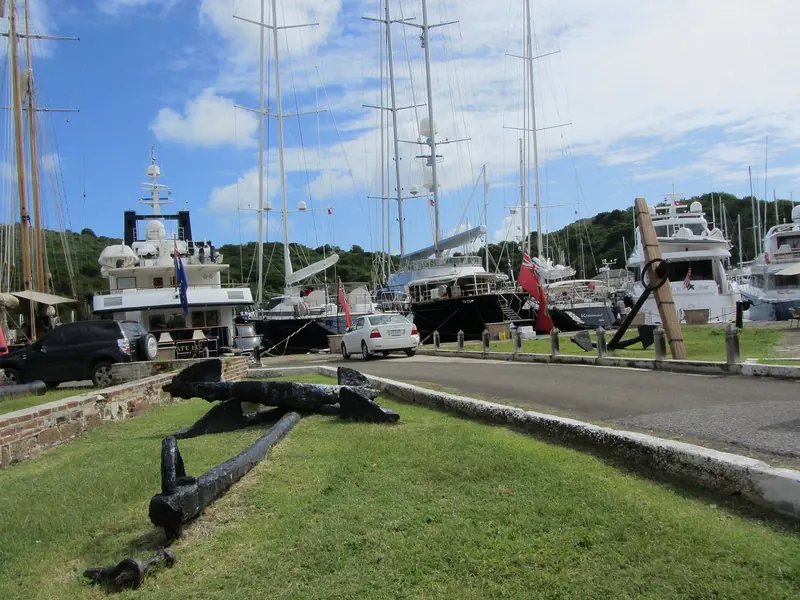
Antigua betonnt nach IALA B, also nach amerikanischer Konvention und genau umgekehrt zu Europa: rote Tonnen bei der Einfahrt an Steuerbord, grüne an Backbord. Wer das nach einer Atlantiküberquerung verwechselt, wird von Bishop Shoal daran erinnert. Die Untiefe liegt östlich der Einfahrt von Falmouth Harbour, ist durch eine große rote Tonne bezeichnet, die man an Steuerbord liegen lässt, und bricht sichtbar bei allem außer spiegelglattem Wasser. Ist sie passiert, lässt man die nächste rote Tonne an Backbord und folgt dem betonnten Fahrwasser, das sowohl zur Antigua Superyacht Marina als auch zur Falmouth Harbour Marina führt. Zur Catamaran Marina geht es andersherum, rote Tonne an Steuerbord, und man bringt zwei orangefarbene Dreiecke am Hang in Deckung; für die Nachtansteuerung gibt es Richtfeuer. Ankern darf man fast überall im Hafen, solange man die Fahrwasser und die Sperrzone vor den beiden großen Marinastegen frei hält.
Das Klarierungsverfahren ist das Beste am Ankommen hier, und es lohnt sich, es auszuschreiben. Sechs Stunden vor Ankunft ruft man die Küstenwache auf UKW 16 und beantragt die Einfahrt in die Gewässer von Antigua und Barbuda. Dann geht man längsseits und setzt die Q-Flagge. Die Hafengesundheitsbehörde klariert das Schiff, bevor sonst irgendetwas geschieht, und niemand außer dem Kapitän geht an Land, bis die Einreise abgeschlossen ist. Danach folgen Zoll, Einwanderungsbehörde mit den ED-Karten und sechs Kopien der Besatzungs- und Passagierlisten, zurück zum Zoll und schließlich die Hafenbehörde, bei der Einfahrt, Müllentsorgung, Anker- oder Liegegeld und die Fahrterlaubnis bezahlt werden. Alle drei Behörden sitzen im selben Gebäude in English Harbour, und eine in Falmouth liegende Crew geht dafür über den Hügel. Beim Ausklarieren dreht sich die Reihenfolge um, es beginnt bei der Hafenbehörde, verlangt vier Kopien der Listen, und danach bleiben Ihnen 24 Stunden, das Land zu verlassen. Online läuft das Ganze über eSeaClear. Jedes Schiff in antiguanischen Gewässern muss eine gültige Fahrterlaubnis mitführen, und die Quittungen für Hafen- und Nationalparkgebühren müssen auch dann vorgelegt werden, wenn Sie das Land über einen anderen Hafen verlassen.
Was ein Liegeplatz kostet und die Gebühr, die man nicht nachschlagen kann
Die Falmouth Harbour Marina veröffentlicht eine Preisliste, was im karibischen Superyachtmarkt ungewöhnlich ist und ein echter Grund, mit ihr zu arbeiten. Gelesen am 6. August 2026 und ohne Saisonjahr auf der Seite, gelten die Preise pro Fuß und Tag in US-Dollar. Winter, 1. November bis 31. Mai: heckseits USD 3,50 pro Tag und USD 3,20 im Monatstarif, längsseits USD 6,50 pro Tag und USD 5,95 im Monat. Sommer, 1. Juni bis 31. Oktober: heckseits USD 2,55 pro Tag und USD 2,45 im Monat, längsseits USD 4,65 pro Tag und USD 4,44 im Monat. Die Gebühren sind im Voraus zu zahlen, Abreise ist mittags, Visa und Mastercard werden genommen. Eine Warnung: die Bedingungszeile unter der Tabelle sagt, die Längsseitspreise seien doppelt so hoch, was nicht zur Tabelle passt, denn das Doppelte des winterlichen Heckpreises wären USD 7,00 und nicht USD 6,50. Lassen Sie sich die Zahl vor der Ankunft schriftlich bestätigen.
In Geld: eine 40-m-Yacht misst 131 ft, eine Winternacht längsseits kostet also rund USD 852 und heckseits rund USD 459; dieselbe Yacht liegt im Sommer längsseits bei rund USD 609. Eine 60-m-Yacht mit 197 ft zahlt im Winter längsseits ungefähr USD 1.280 pro Nacht. Das sind Yotters-Berechnungen auf Basis des veröffentlichten Tarifs und keine Angebote. Darüber liegen drei Posten, die sich aus keiner öffentlichen Quelle beziffern lassen. Strom wird mit USD 0,60 je kWh und Wasser mit USD 0,15 je US-Gallone abgerechnet, beides veröffentlicht. Die Gebühren der Nationalparkbehörde sind nur zur Hälfte veröffentlicht. Verpflichtend sind sie für jedes Schiff, das in English oder Falmouth Harbour ankert oder an einem der fünf Kais im Park liegt. Die Besuchertickets des Parks sind belegt: Antigua News Room nennt im August 2022 unter Berufung auf die Behörde US$15 für eine Tageskarte und US$100 für eine Saisonkarte, die am Ende der Yachtsaison verfällt, dazu EC$10 für Einheimische und Ansässige, EC$50 für eine Jahreskarte und EC$200 für eine Familienkarte für bis zu sechs Personen. Für eine achtköpfige Crew sind das US$120 je Besuch oder US$800 für die Saison. Nirgends veröffentlicht ist die Gebühr, die auf das Schiff selbst entfällt: die Behörde führt auf ihrer eigenen Seite keine Gebührenordnung, und die Klarierungsseite des Branchenverbands nennt die Pflicht ohne Betrag. Die Gebühren der Hafenbehörde für Einfahrt, Müll und Fahrterlaubnis sind ebenso unveröffentlicht. Die Yachtagentur Med Yacht Services kalkuliert in ihrem Gebührenblatt für Antigua 2026 die Zollabfertigung mit USD 250 bis 550 und die Einwanderungsformalitäten samt Begleitung mit USD 250 bis 500 und führt die Nationalparkgebühren schlicht zum Selbstkostenpreis. Näher an eine öffentliche Zahl kommt man hier nicht.
Treibstoff, Strom, Wasser und was das Duty-free wirklich umfasst
Zollfreier Treibstoff ist in jeder Marina in Falmouth und English Harbour zu haben, die Standardregelung für Yachten auf der Durchreise durch Antigua und einer der Gründe, warum die Flotte hier hält und nicht anderswo in der Inselkette. Die Falmouth Harbour Marina liefert steuer- und zollfreien schwefelarmen Diesel mit Durchflussraten von bis zu 1.000 Litern pro Minute direkt an den Liegeplatz, was eine große Motoryacht binnen eines Arbeitstages bunkert. In der Hochsaison wird täglich bebunkert, in der Nebensaison nur werktags, und auf Anfrage auch über Nacht. Die Nachbarkais gehen weniger industriell damit um: die heute als Antigua Superyacht Marina firmierende Anlage liefert zollfreien Diesel per mobiler Pumpe, und Antigua Slipway wie Catamaran Marina betreiben eigene Tankstege.
Was die Marina nicht tut, ist einen Treibstoffpreis zu veröffentlichen, und das tut hier auch sonst niemand im Hafen, weshalb ein Kapitän eine Bunkerung gegen ein frisches Angebot plant und nicht gegen einen ausgehängten Preis. Dieses Muster zieht sich durch die gesamte Kostenbasis. Die abgerechneten Nebenkosten sind veröffentlicht und moderat, mit USD 0,60 je kWh und USD 0,15 je US-Gallone Wasser, dazu Duschen an Land für USD 2 pro Person. Alles andere wird angeboten. Antigua importiert praktisch seinen gesamten Treibstoff, seine Lebensmittel und sein Material, und der größte Supermarkt der Insel, Epicurean Fine Foods, liegt in Jolly Harbour und St John's auf der anderen Inselseite und nicht in Falmouth, wo Ihnen der Dockside Supermarket in Nelson's Dockyard und Bailey's nahe der Catamaran Marina für den Alltag bleiben. Wer hier eine Charter proviantiert, sollte auf fast alles einen Importaufschlag einkalkulieren und eine Fahrt quer über die Insel in den Zeitplan einbauen.
Die Werftfrage und die Grenze bei 200 Tonnen
Das ist die strukturelle Schwäche von Falmouth und English Harbour, und keine Kailänge der Welt ändert daran etwas. Das maritime Gewerbe in Fußweite ist für einen karibischen Hafen wirklich dicht: Schiffsmaschinenbau, Elektronik, Riggerei, eine Segelmacherei, ein Tauchladen und mehrere Ausrüster, dazu Yachttischlerei und Refit-Dienstleister rund um Nelson's Dockyard, sodass laufende Arbeiten, Reparaturen unterwegs und ein Charter-Refit zwischen den Saisons alle unkompliziert sind. Was nicht geht, ist aus dem Wasser zu kommen. Antigua Slipway, das auch die Falmouth Harbour Marina betreibt, gibt für seine Slipbahn eine maximale Kranleistung von 200 Tonnen an, für Schiffe bis 150 ft Länge über alles, 40 ft Breite und 14 ft Tiefgang, und nennt sich die vollständigste Werft der Karibik. Bailey's Boatyard am Nordende von Falmouth Harbour betreibt einen 70-Tonnen-Travellift und einen 80-Tonnen-Ascon-Lift und hebt Boote bis 12 ft Tiefgang. Auf der anderen Inselseite hat Jolly Harbour zwei Travellifte mit 75 und 85 Tonnen und nimmt Katamarane bis 33 ft Breite; Shell Beach schafft 25 Tonnen.
Zweihundert Tonnen sind eine große Segelyacht oder eine bescheidene Motoryacht. Eine Superyacht sind sie nicht, und jede Yacht am oberen Ende des Kais in Falmouth verdrängt ein Vielfaches davon. Antigua ist ein Ort, von dem aus man ein großes Schiff betreibt, und keiner, an dem man es hebt; Lack, Stahl und strukturelle Arbeiten verlassen das Land. Das könnte sich am Rand bessern: Antigua Slipway hat eine Erneuerung seiner Slipbahn für US$2,5 Millionen angekündigt, bei der die alternde Unterwasserkonstruktion durch ein modernes Stahlsystem nach internationalen Ingenieurstandards ersetzt wird, mit Baubeginn im Juni 2026, 50 bis 60 Arbeitsplätzen während der Bauzeit und dem erklärten Ziel, die größte Krananlage der Karibik für ein einzelnes Schiff zu werden, die neben Yachten auch Schlepper und kommerzielle Arbeitsboote aus St John's bedient. Für die Ausbaustufe von 2026 selbst ist keine Tonnage genannt worden. Was die Werft nach Abschluss der ersten Phase im März 2023 sagte, einem neu gebauten Slipwagen für 100 ft und 100 Tonnen, war, dass die zweite Phase, die Sanierung der Unterwasserbahn, die Hebe- und Zuwasserlassungskapazität auf 200 ft Länge über alles und 270 Tonnen bringen werde. Das ist die Zahl, die man im Auge behält, und bis der Stahl im Wasser liegt, plant man ein Slippen mit den 200 Tonnen.
Der Kalender und die sechs Monate, in denen sich der Hafen leert
Zwei feste Termine belegen den gesamten Hafen, und sie sind der Grund, früh zu buchen oder wegzubleiben. Nur einer davon liegt noch vor uns. Die Antigua Charter Yacht Show läuft vom 4. bis 9. Dezember 2026 in ihrer 65. Auflage, veranstaltet von der Antigua and Barbuda Yachting and Marine Association und gleichzeitig an drei Kais abgehalten: Nelson's Dockyard Marina, Falmouth Harbour Marina und Antigua Yacht Club Marina. Sie läuft seit 1961, bringt rund hundert Charteryachten zusammen und ist die Veranstaltung, auf der die karibische Chartersaison tatsächlich verkauft wird. Die Frühjahrsregatten sind in diesem Jahr bereits gelaufen. Die Antigua Classic Yacht Regatta fand vom 15. bis 20. April 2026 statt, die Antigua Sailing Week folgte vom 22. bis 26. April 2026 in ihrer 57. Auflage, gekürzt auf ein knapperes Format über vier Tage mit Punkt-zu-Punkt-Kursen rund um die Insel und mit Basis in English und Falmouth Harbour. Wer die nächste Saison plant, hält sich stattdessen an die Termine 2027: die Classics vom 14. bis 19. April 2027 und die Sailing Week, 58. Auflage, vom 21. bis 25. April 2027. Antigua ist außerdem die Ziellinie des Atlantiks: das RORC Transatlantic Race, das am 11. Januar 2026 mit 21 Teams in Lanzarote startete, endete hier.
Dann hört es auf. Die atlantische Hurrikansaison läuft vom 1. Juni bis zum 30. November mit dem Höhepunkt von August bis Oktober, und die Yachtwirtschaft beider Naturhäfen geht mit ihr. Die Flotte der Crewed Charter verlegt ins Mittelmeer, Restaurants und Betriebe schließen über den Sommer, und der Betrieb der Marina spiegelt das: die Bunkerung fällt vom täglichen Dienst auf Werktage zurück, und der Tarif sinkt um rund 27 Prozent heckseits und 28 Prozent längsseits. English Harbour hat einen langen Ruf als Hurrikanloch, und er ist verdient, aber eine Garantie gegen einen Volltreffer ist er nicht, und niemand, der bei Verstand ist, lässt hier eine Yacht ohne schriftlichen Hurrikanplan unbeaufsichtigt liegen. Bailey's Boatyard verkauft Sturmlagerböcke, die alle großen Yachtversicherer anerkennen, und kalkuliert seine Sommerlagerung entsprechend. Der Brand vom Oktober 2023, der während des Tropensturms Philippe das Hauptgebäude der Antigua Yacht Club Marina zerstörte und vor Ort einem Blitzschlag zugeschrieben wurde, erinnert daran, was eine Sturmsaison an Land anrichten kann, selbst wenn die Boote heil bleiben.
An Land, und was es ehrlich kostet, hier zu sein
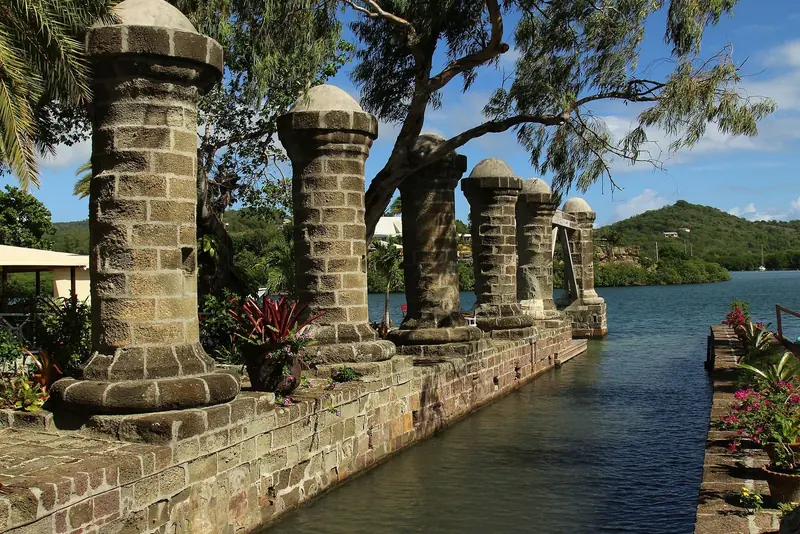
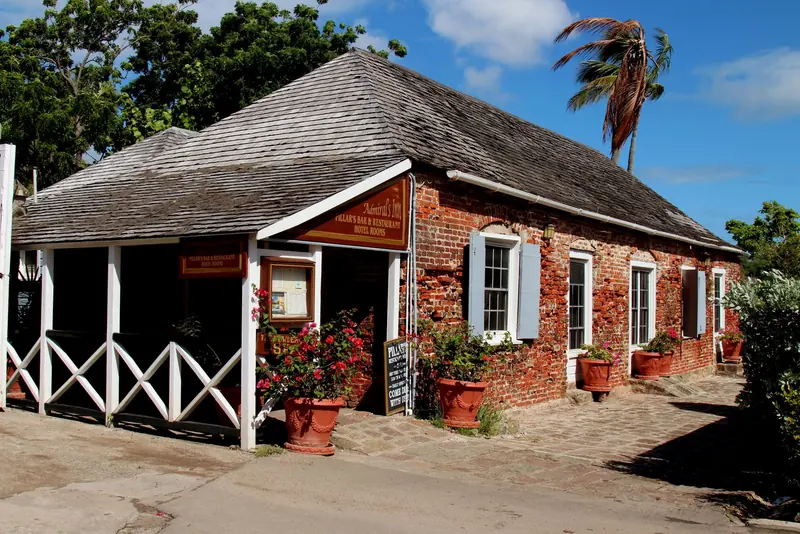
Die Entschädigung für all das ist, dass dies einer der angenehmsten Orte der Karibik ist, um ein Boot zu halten. Nelson's Dockyard, 2016 von der UNESCO als Antigua Naval Dockyard and Related Archaeological Sites eingeschrieben, ist die einzige durchgehend arbeitende georgianische Marinewerft der Welt und liegt fünfzehn Gehminuten von der Marina entfernt, mit einem Hotel, Restaurants, einem Ausrüster und einem Supermarkt innerhalb ihrer Mauern. Gegessen wird besser, als die Größe des Hafens vermuten lässt: Cloggy's im Yachtclub, geführt von Ton und Vanessa Smit, ist durchweg die bestbewertete Adresse in Falmouth, Boom liegt an der Marina, und Pillars gehört zum Admiral's Inn im Dockyard, dazu füllen Trappas und Colibri die Mitte. Das Glanzstück ist Shirley Heights Lookout über dem Hafen, wo die Sonntagsparty von 1600 bis 2200 läuft, mit Steelband bis 1900 und Reggae danach, für USD 10 oder EC 25 am Eingang, und donnerstags gibt es einen ruhigeren Reggae-Abend zum selben Preis.
Zwei ehrliche Einschränkungen zum Landgang. Der Flughafen liegt nicht am Hafen. V.C. Bird International liegt an der Nordküste, rund 21,7 km und 35 bis 45 Autominuten entfernt, und obwohl er tägliche Langstreckenflüge nach Nordamerika, ganzjährige Verbindungen ins Vereinigte Königreich und eine Abfertigung für Privatjets bietet, ist die einzige kontinentaleuropäische Anbindung saisonal, Condor ab Frankfurt, und jeder Crewwechsel und jede Gästeankunft bedeutet eine Stunde Fahrt in jede Richtung. Die Taxitarife setzt das Antigua and Barbuda Transport Board nach Zonen fest, doch der aktuelle Tarif ist nirgends veröffentlicht und die im Netz kursierenden Fassungen sind Jahre alt, also vereinbaren Sie den Preis mit dem Disponenten, bevor Sie einsteigen. Und die Sicherheitslage ist nicht mehr die alte: Noonsite hält auf Basis von Fahrtenseglerberichten und des Caribbean Safety and Security Net fest, dass Diebstähle von Beibooten, Außenbordern und loser Ausrüstung in vielen karibischen Häfen zunehmen, auch in diesem, und dass selbst abgeschlossenes und gesichertes Material verschwindet. Nachts den Tender aufholen.
An Land, Anfahrt und Buchung
| Getting there | V.C. Bird International Airport (ANU) sits on the north coast of the island, roughly 21.7 km from English Harbour, and the drive takes 35 to 45 minutes depending on traffic. It is a real international airport with daily long-haul service to North America and year-round service to the United Kingdom, plus private jet handling, so guests from those markets arrive without connecting through a hub. Continental Europe is seasonal only: Condor from Frankfurt is the single continental link and it does not run year-round. Either way it is an hour of road at each end of every crew change. Taxi fares are set on a zone basis by the Antigua and Barbuda Transport Board; the catch is that the current schedule is not published anywhere and the rate sheets circulating online are years out of date. Ask the dispatcher at the taxi coordination point for the official rate to Falmouth or English Harbour and confirm it before you get in. Fares are per taxi for up to four passengers, and both US and Eastern Caribbean dollars are taken. |
|---|---|
| Arriving by sea | Antigua uses IALA B buoyage: red to starboard on entry, the reverse of Europe. The one hazard is Bishop Shoal, east of the Falmouth Harbour entrance, marked by a large red buoy which you leave to starboard and which breaks visibly except in flat calm. Past it, leave the next red buoy to port and follow the buoyed channel, which serves both Falmouth Harbour Marina and the Antigua Superyacht Marina. For the Catamaran Marina at the north end, leave that same red buoy to starboard and line up the two orange triangles on the hillside; there are leading lights for a night approach. Call the marina on VHF 10. Anchoring is permitted almost anywhere in the harbour provided you keep clear of the channels and of the exclusion area in front of the two large marina docks. There is no lock, no bridge and no pilotage requirement. |
| Clearing in and out | Call the Coastguard on VHF 16 from six hours out of Antigua to request entry. Come alongside at any marina and fly the Q flag; everyone stays aboard until Port Health has cleared the vessel, and only the master then goes ashore. The order is Customs, then Immigration with ED cards for every person, passports, the general declaration and six copies of the crew and passenger lists, back to Customs for final approval, then the Port Authority to pay entrance, rubbish disposal, anchorage or dockage and the cruising permit. US and EC dollars and Visa or Mastercard are accepted. Clearing out starts at the Port Authority, needs four copies of the lists, and obliges you to depart within 24 hours. All three authorities are in one building at English Harbour, an easy walk from a Falmouth berth. Online procedures run through eSeaClear. Crew leaving the boat need an onward ticket or a signed letter from the captain or a local agent. Keep every Port and National Parks receipt, because they are demanded even if you clear out through a different port. |
| Reserving a berth | Berths are booked directly through the marina's own berth request form or its office on +1 268 460-6054, and the form asks for LOA, beam, draught, gross tonnage, flag, port of registry, arrival and departure dates and your electricity requirement, so have the yacht's particulars to hand. There is no published minimum stay and no published long-stay contract, only a monthly rate that is a few per cent under the daily. Book the December Charter Yacht Show and the April regatta fortnight months out: the show alone fills three marinas with around a hundred yachts, and the Classics and Sailing Week take the harbour for two consecutive weeks every April, 14 to 19 and 21 to 25 April in 2027. Because the marina's 535 ft headline is the length of its superyacht quay rather than a vessel maximum, and the published vessel figure is 330 ft, a yacht over about 100 m should have the dockmaster confirm the berth in writing rather than rely on the website number. |
| What a berth costs | Rates are per foot per day in US dollars, read on 6 August 2026 with no season year printed on the page. Winter, 1 November to 31 May: stern-to USD 3.50 daily and USD 3.20 monthly; alongside USD 6.50 daily and USD 5.95 monthly. Summer, 1 June to 31 October: stern-to USD 2.55 daily and USD 2.45 monthly; alongside USD 4.65 daily and USD 4.44 monthly. Berthing fees are payable in advance, checkout is noon, Visa and Mastercard are accepted. Note the contradiction on the marina's own page: the terms say alongside rates are double, which would make winter alongside USD 7.00 rather than the USD 6.50 in the table, so confirm the figure in writing. As arithmetic on the published rate, a 40 m yacht at 131 ft pays about USD 852 a night alongside in winter, about USD 459 stern-to, and about USD 609 alongside in summer; a 60 m yacht at 197 ft pays roughly USD 1,280 alongside in winter. Those are Yotters calculations, not quotations, and they exclude power, water, National Parks and Port Authority fees. |
| Fuel, water, power and what is extra | Tax and duty-free ultra-low-sulphur diesel is delivered directly to the berth at flow rates of up to 1,000 litres a minute, which is genuine bunkering capacity rather than a fuel dock. Service is daily through the high season and weekdays in the low season, with overnight delivery on request; submit the vessel details and quantity in advance. No price is published, so budget from a fresh quote. Duty-free fuel is available at every marina in Falmouth and English Harbour, and the neighbouring Antigua Superyacht Marina supplies it by mobile pump. Electricity at the berth is metered at USD 0.60 per kWh, fresh water at USD 0.15 per US gallon, and showers ashore are USD 2 a person. Wifi, parking, security and waste disposal are included. On top of all of it come the per-vessel National Parks Authority charge and the Port Authority fees, neither of which has a published schedule, though the park's own visitor passes are published at US$15 a day and US$100 a season. |
| The yard, and what has to leave the island | Routine and technical work is well covered within walking distance: marine engineering, electronics and rigging, a sail loft, a dive shop, several chandleries, and yacht carpentry and refit services clustered around Nelson's Dockyard. Antigua Slipway, which also owns this marina, is the yard, hauling up to 200 tons on its marine railway, for vessels up to 150 ft length overall by 40 ft of beam by 14 ft of draft, with storage ashore on welded cradles and tie-down straps, a fuel dock, a chandlery, two restaurants and a hotel. Its rates are quoted in Eastern Caribbean dollars, are subject to government taxes and are not published; you contact the office team for an estimate, haul-outs need 24 hours' cancellation notice, and accounts unpaid at 30 days attract 2.5 per cent a month. Bailey's Boatyard in Falmouth Harbour runs a 70-ton travelift and an 80-ton Ascon lift, hauls to 12 ft of draught, and keeps hurricane cradles accepted by the major yacht insurers; Jolly Harbour across the island runs 75-ton and 85-ton travelifts and takes catamarans to 33 ft of beam, and Shell Beach has 25 tons. Nothing on Antigua can lift a superyacht, so paint, steel and structural work is a passage to another country. |
| Eating, drinking and provisioning | Cloggy's at the yacht club, run by Ton and Vanessa Smit, is the highest-rated table in Falmouth and looks down over the harbour; Boom sits on the marina; Pillars is inside the Admiral's Inn in Nelson's Dockyard; Trappas and Colibri fill out the middle of the range. The institution is Shirley Heights Lookout on the ridge above English Harbour: the Sunday party runs 1600 to 2200 with a steel pan band to 1900 and reggae after, entry USD 10 or EC 25, with drinks around EC 10 to 16 and food around EC 35, and there is a quieter Thursday reggae evening at the same admission. For provisioning, the Dockside Supermarket sits inside Nelson's Dockyard and Bailey's is near the Catamaran Marina, both fine for daily shopping. Serious provisioning means a drive: Epicurean Fine Foods, the island's largest grocer, is at Jolly Harbour and St John's on the other side of Antigua. Everything is imported and priced accordingly. |
| The fixed dates, and what is NOT published | Still ahead: the Antigua Charter Yacht Show, 4 to 9 December 2026, the 65th edition, run by the Antigua and Barbuda Yachting and Marine Association across Nelson's Dockyard Marina, Falmouth Harbour Marina and the Antigua Yacht Club Marina, with around a hundred yachts. Already run this year: the Antigua Classic Yacht Regatta, 15 to 20 April 2026, and Antigua Sailing Week, 22 to 26 April 2026, the 57th edition in a shortened four-day point-to-point format. Next spring: the Classics 14 to 19 April 2027 and Sailing Week 21 to 25 April 2027, the 58th edition. The RORC Transatlantic Race finishes here each winter, the 2026 edition having left Lanzarote on 11 January with 21 teams. Hurricane season runs 1 June to 30 November. Not published: the per-vessel National Parks Authority charge on a berthed or anchored yacht, which appears nowhere in any form, although the park's visitor passes are published at US$15 a day, US$100 a season and EC$10 for residents; the Port Authority entrance, rubbish and cruising permit fees; the marina's fuel price; the shore power amperage; any long-stay or seasonal contract rate beyond the monthly per-foot figure; and Antigua Slipway's haul-out, storage and docking rates, which its own rates page answers with an invitation to ask. |
Was Eigner und Crew berichten
The marina's 535 ft is the length of its dock, not the length of a yacht
All At Sea, reporting the expansion of Falmouth Harbour Marina's superyacht dock after a COVID delay, describes the new custom-built concrete dock as 535 ft in length by 20 ft in width, built on piles driven some 40 ft into the seabed. That is the origin of the 535 ft on the marina's own website and of the 525 ft, or 160 metres, in the trade listings: they are the quay. The vessel figure is the trade association's, which states that yachts up to 330 ft in length can be catered for stern-to, with a 20 ft maximum draught, thirty stern-to and thirty alongside berths and electricity at 110 V, 208, 220 and 380 three-phase.
All At SeaYou can clear in on foot, and the fuel is duty-free at every quay
Cruisers report walking from Falmouth over to Nelson's Dockyard to complete clearance formalities, with Customs, Immigration and the Port Authority in a single building, and duty-free fuel available in all the harbour's marinas. The one navigational caution repeated by everyone is Bishop Shoal off the entrance, marked by a large red buoy which under the American buoyage convention is left to starboard on entry.
NoonsiteA storm took out a marina building, not the boats
A fire in the marina complex in October 2023, during Tropical Storm Philippe and locally attributed to a lightning strike, gutted the main Antigua Yacht Club Marina building and a number of well known businesses with it. Temporary services reopened on the old site in container buildings within about four months, and the operation has since been rebuilt and rebranded as the Antigua Superyacht Marina and Resort, with a further complex due to start construction in summer 2026.
NoonsiteDinghy and outboard theft is rising and locks are not enough
Based on reports to Noonsite from cruisers and from the Caribbean Safety and Security Net, thefts of dinghies, outboards and unsecured or loose items are on the rise in many Caribbean ports, this one included, and even locked and secured hardware is being stolen. The practical advice is to lift the tender at night rather than to rely on a cable.
Noonsite and the Caribbean Safety and Security NetThe yard is spending USD 2.5 million to stay relevant
Antigua Slipway Ltd announced a US$2.5 million redevelopment and upgrade of its marine railway at English Harbour, replacing the ageing underwater structure like for like with a modern steel system built to international engineering standards. Construction was scheduled to begin in June 2026, is expected to create 50 to 60 jobs during the build, and is intended to produce the largest single-vessel yacht haul-out facility in the Caribbean, also serving tugs and commercial work vessels from St John's Port. No tonnage has been attached to this tranche, but on completing phase one in March 2023, a rebuilt cradle good for 100 ft and 100 tons, the yard said phase two would take haul and launch capacity to 200 ft length overall and 270 tons.
Antigua NewsroomAn agent will budget the clearance you cannot price yourself
The yacht agency Med Yacht Services, in its Antigua fee sheet for the 2026 season, budgets customs clearance at USD 250 to 550 and immigration including escort at USD 250 to 500, and carries National Park Association fees simply as at cost, with surcharges of 10 per cent for holidays and peak season and 20 to 25 per cent for expedited events. That is the nearest thing to a public figure for the unpublished side of the bill.
Med Yacht Services
Was gut ist und worauf zu achten ist
Stärken
- A published rate card in a market that mostly refuses to publish oneWinter and summer, daily and monthly, stern-to and alongside, all in US dollars per foot per day, with metered power at USD 0.60 per kWh and water at USD 0.15 per US gallon on the same page. An owner can build a season budget from public information, which he cannot do at most Caribbean superyacht quays.
- Clearance on foot, in one building, at a port of entryCustoms, Immigration and the Port Authority all sit together at English Harbour, a fifteen-minute walk over the hill from the berth, and the online route runs through eSeaClear. For a yacht arriving off the Atlantic this is as painless as Caribbean entry gets.
- Industrial bunkering, tax and duty-free, at the berthUltra-low-sulphur diesel delivered alongside at up to 1,000 litres a minute, daily through the high season and overnight on request, with duty-free fuel available at every quay in both harbours.
- The densest marine trade cluster in the Eastern Caribbean, on footMarine engineering, electronics, rigging, a sail loft, a dive shop, chandleries and yacht carpentry are all within walking distance, with Antigua Slipway's own yard attached to the same ownership as the marina.
- It is where the Caribbean charter market is transactedThe Antigua Charter Yacht Show, 4 to 9 December 2026 and in its 65th year, occupies three marinas and around a hundred yachts, and the Classics and Sailing Week take the harbour every April, 14 to 19 and 21 to 25 April in 2027. A charter yacht based here is in the room.
Worauf zu achten ist
- Nothing on the island can lift a superyachtAntigua Slipway's marine railway takes 200 tons to 150 ft and 40 ft of beam, Bailey's 80, Jolly Harbour 85 and Shell Beach 25. Paint, steel and structural work is a delivery passage to another country. Even the announced USD 2.5 million railway rebuild is aimed at 200 ft and 270 tons, which still does not reach the yachts on the marina's own dock.
- The compulsory fee nobody publishesEvery vessel anchored in either harbour or berthed at any of the five quays inside Nelson's Dockyard National Park pays National Parks Authority fees on top of dockage and Port Authority charges. The park's visitor passes are published, at US$15 a day and US$100 a season. The charge on the vessel itself is not, and it appears neither on the Authority's site nor on the trade association's clearance page nor anywhere else Yotters could find.
- The headline length on the marina's own site measures its concreteThe 535 ft the marina publishes is the length of the superyacht quay completed in the 2022 expansion, 535 ft by 20 ft on piles driven some 40 ft into the seabed, and the 525 ft or 160 metres in the listings is the same wall. The published vessel figure, from the trade association, is 330 ft. An owner reading the website alone would size a season on a number that describes the dock and not his boat. Only the 20 ft draught limit is stated the same way by everyone.
- Six months of the year the place shutsHurricane season runs 1 June to 30 November, crewed inventory leaves, restaurants and businesses close for the summer, and the marina's own bunkering drops from daily to weekdays. English Harbour is a good hurricane hole but not a safe one in a direct hit, as the October 2023 storm fire showed.
- Fuel and provisions are quoted, not posted, and everything is importedNo marina in the harbour publishes a fuel price. The island's largest supermarket is at Jolly Harbour on the opposite coast, and a landed-import premium runs through the whole cost base from diesel to groceries to spares.
- The airport is an hour of road and the taxi fare is unknowable in advanceV.C. Bird International is 21.7 km and 35 to 45 minutes away on the north coast. Fares are set by zone by the Transport Board, but the current schedule is not published and the versions online are years out of date, so every transfer is negotiated at the rank.
- Tender and outboard theft is a live problemNoonsite, drawing on cruiser reports and the Caribbean Safety and Security Net, records rising theft of dinghies, outboards and loose gear in this and other Caribbean ports, with locked and secured hardware being taken.
Für wen: Der Eigner, der eine große Yacht durch einen karibischen Winter fährt und einen veröffentlichten Preis, zollfreien Treibstoff am Liegeplatz und den gesamten Chartermarkt nebenan will, und der das Schiff in dem Moment woandershin schickt, in dem es gekrant werden muss.