Gustavia (St Barths)
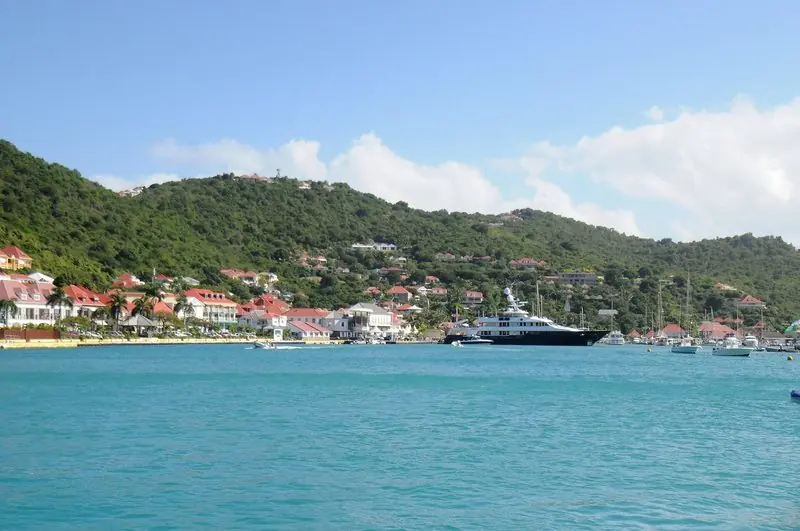
| Lage | Gustavia, Saint-Barthelemy, Französische Antillen |
|---|---|
| Verwaltung | das Hafenbüro der Insel und der Hafenkapitän |
| Liegen am Kai | Heck zum Kai für Yachten bis rund 60m |
| Größere Yachten | ankern auf der äußeren Reede |
| Innerer Hafen | bescheidene Wassertiefen, mit einem Muringfeld für kleinere Boote |
| Hochsaison | Weihnachten und Neujahr, dazu die Bucket-Regatta im Frühjahr |
| Reiz | die exklusivste Winterzusammenkunft der Karibik |
| Larger yachts | anchor in the outer roadstead and tender ashore |
| Depths | not published by the port, so draught should be confirmed with the port office |
| Airport | Gustaf III, a single 646 m concrete runway with a specific pilot licence required, served by Pilatus PC-12, Cessna 208B, DHC-6 Twin Otter and Britten-Norman Islander aircraft |
| Jet access | none on the island, with guests routing through Princess Juliana on Sint Maarten by commuter aircraft or ferry |
| Season | Christmas and New Year peak plus the spring Bucket regatta, with the summer closed by the Caribbean hurricane season |
| Shore power does not appear on the pleasure port's published service list at all. Voltage, amperage and frequency are published nowhere | |
| Water, metered at the tap on every quay: EUR 0.012 per litre for a subscriber boat, EUR 0.019 per litre for a visitor, which is EUR 12 and EUR 19 per cubic metre | |
| Worked comparison | the same cubic metre of water costs EUR 6.22 at Monaco and EUR 3.79 at Antibes. Fifty cubic metres at Gustavia costs a visitor EUR 950 |
| Published services | water, wifi on a code from the harbour office, refuse with compulsory sorting, sanitary facilities, marine reserve liaison, SNSM lifeboat station, postal address for crew mail |
| Refuse containers are on the Quai General de Gaulle and the Quai de La Collectivite. Sorting is compulsory island-wide | |
| Harbour office hours | 07:00 to 18:00, seven days a week, all year. Sanitary facilities 07:30 to 18:00. VHF channel 12 |
| Formalities are compulsory for access to the pleasure port and can be started online up to 24 hours ahead, but are only registered once the document is printed and signed at the port office | |
| The port states in writing that an agent is not necessary and not compulsory at Saint-Barthelemy, because every harbour office officer is bilingual | |
| Immigration questions go to the Gendarmerie nationale, not to the harbour office | |
| Speed limit in the channel | 3 knots |
Der Hafen von Saint-Barthelemy
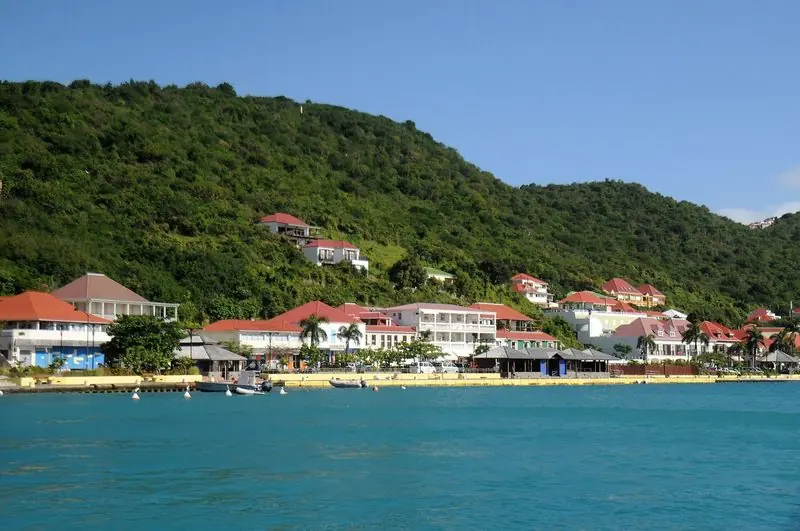
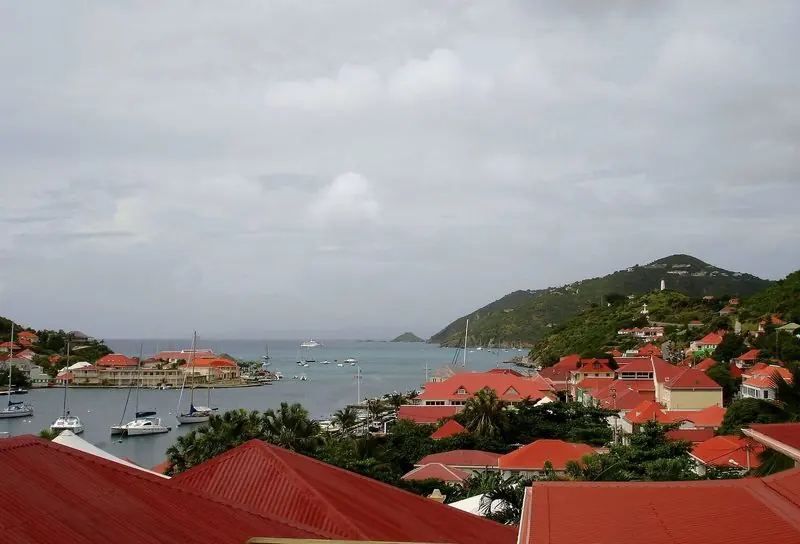
Gustavia ist die Hauptstadt und der Haupthafen von Saint-Barthelemy, einer kleinen französischen Insel in der nördlichen Karibik. Der Hafen liegt in einem natürlichen Einschnitt, den die Stadt umschließt, mit rotgedeckten Gebäuden, die die Hügel rund um das Wasser hinaufsteigen. Saint-Barthelemy zieht seit Jahrzehnten ein wohlhabendes und diskretes Publikum an, und in Gustavia sammelt sich sein yachtsportliches Leben. Der Hafen ist kompakt und die Umgebung intim. Die Insel ist klein genug, um sie in einer halben Stunde mit dem Auto zu queren, sodass der Hafen nie weit von den Stränden und den Villen entfernt ist.
Der Hafen wird von der örtlichen Verwaltung der Insel über das Hafenbüro betrieben, das Ankünfte und Liegeplatzvergabe eng kontrolliert. Yachten müssen ihre Manöver vor dem Einlaufen oder Verholen mit dem Hafenkapitän abstimmen. Der Hafen ist klein, und die Nachfrage in der Hochsaison übersteigt den Platz bei Weitem. Diese Knappheit prägt die Erfahrung, hier festzumachen.
Heck zum Kai, und der Ankerplatz
Der innere Hafen von Gustavia nimmt Yachten mit dem Heck zum Kai auf, mit einem Muringfeld für kleinere Boote im Inneren. Der Kai selbst passt zu Yachten bis rund 60 Meter, eine Grenze, die zum Teil von der Versicherung und vom Schutz des Hafens bestimmt wird. Größere Superyachten ankern auf der äußeren Reede und kommen mit dem Tender an Land. Diese Anordnung führt dazu, dass die größten Yachten immer knapp vor der Stadt sichtbar sind. Die Heckleinen laufen zu schweren Ringen in der alten Kaimauer, und das Hafenteam hilft den Yachten beim Manövrieren in die engen Lücken.
Die Wassertiefen im inneren Hafen sind bescheiden, weshalb Yachten mit großem Tiefgang draußen bleiben. Die Insel insgesamt kann eine große Flotte aufnehmen, wenn man die Ankerplätze ringsum mitzählt, doch Liegeplätze am Kai sind wenige und in der Spitze heftig umkämpft. Reservierungen für die Hochsaison werden lange im Voraus getroffen. Für einen Platz am Kai von Gustavia zu Neujahr plant ein Eigner Monate im Voraus.
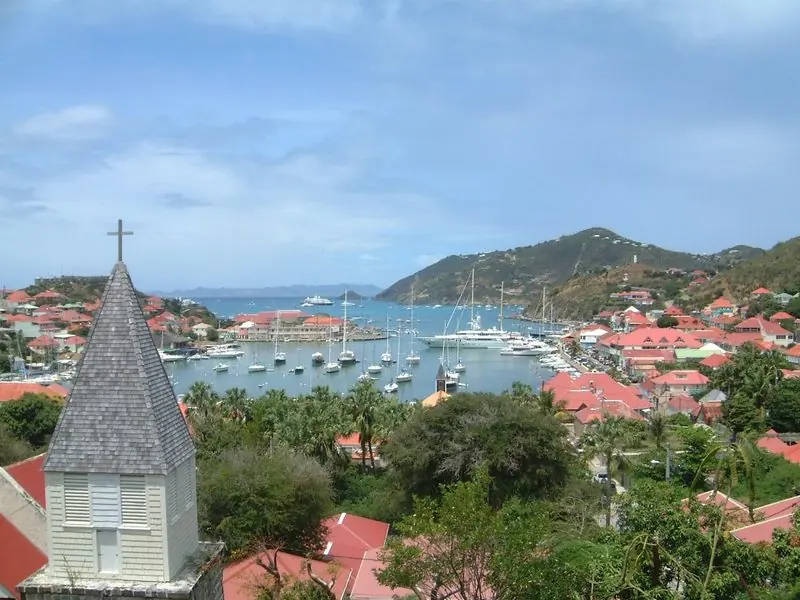
Die karibische Hochsaison, vor einem einzigen kleinen französischen Hafen geankert.
Dienstleistungen auf einer kleinen Insel
Für seine Größe bietet Gustavia eine überraschende Tiefe an Leistungen, die auf die Yachten zugeschnitten sind, die hier anlaufen. Treibstoff und Wasser lassen sich im Hafen abwickeln, und ein Netz von Agenten glättet Proviantierung und Logistik. Die Insel führt vieles ein, was sie braucht, sodass die Versorgung trotz der abgelegenen Lage gut organisiert ist. Crews finden das Wesentliche selbst in den betriebsamsten Zeiten abgedeckt. Wasser und Strom am Kai sind begrenzt, weshalb viele Yachten ihre eigenen Systeme fahren und auffüllen, wenn sie können.
Was die Insel wirklich bietet, ist eine Ballung von Luxus an Land, die wenige karibische Ziele erreichen. Die Boutiquen und Villen von Saint-Barthelemy sind auf dieselbe Klientel ausgerichtet, die per Yacht ankommt. Die Proviantierung reicht bis zu den feinsten französischen Waren, die für die Saison eingeflogen werden. Das Erlebnis ist ebenso um den Ruf der Insel herum gebaut wie um den Hafen selbst.
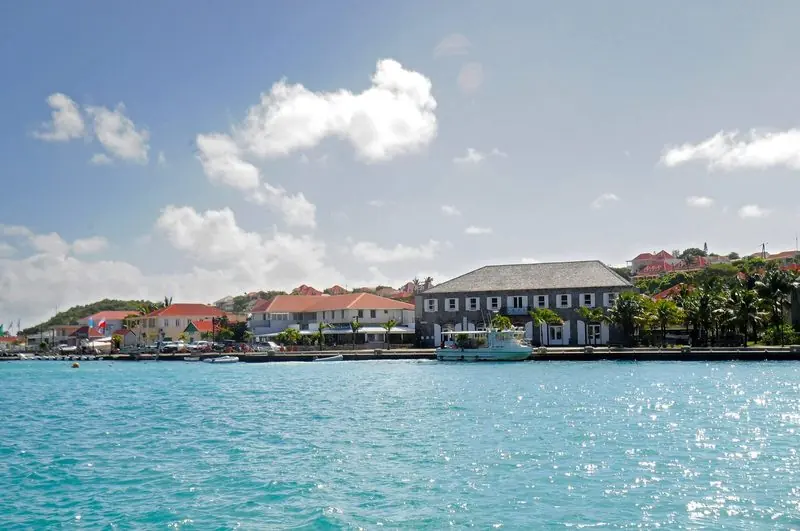
Die karibische Hochsaison
Das Jahr in Gustavia erreicht seinen scharfen Höhepunkt um Weihnachten und Neujahr, wenn die Insel zum Sammelpunkt der karibischen Yachtsaison wird. Hafen und Ankerplatz füllen sich mit einigen der größten Yachten überhaupt, und die Zusammenkunft an Silvester ist ein fester Punkt im Kalender. Die Bucket-Regatta im Frühjahr bringt für einige gefeierte Tage die Segelflotte. Der Rest des Jahres ist weit ruhiger. Die Preise erreichen zusammen mit der Nachfrage ihren Höchststand, und ein Liegeplatz im Neujahrsfenster gehört zu den teuersten Kurzaufenthalten im Yachtsport.
Die Szene rund um den Hafen ist in der Spitze dicht und exklusiv, mit den Restaurants und Clubs der Stadt an der Kapazitätsgrenze. Zu Neujahr in Gustavia zu sein ist eine Ansage in derselben Weise, wie Monaco es im Sommer ist. Die Insel lebt zu gleichen Teilen von Privatsphäre und Glanz. Für diese Wochen ist sie das Zentrum der Yachtwelt auf der westlichen Seite des Atlantiks.
Wo er in die Pläne eines Eigners passt
Gustavia ist der natürliche Mittelpunkt einer karibischen Winterfahrt, der Ort, an dem man zur Hochsaison um Neujahr sein muss. Er passt zu einem Eigner, dessen Yacht für den Winter den Atlantik quert und Saint-Barthelemy als Höhepunkt einer weiteren Inselrunde nutzt. Die Ankerplätze in der Nähe und die Nachbarinseln erweitern das Revier ringsum. Für die karibische Saison trägt kein Hafen dasselbe Gewicht. Anguilla und St Martin liegen einen kurzen Sprung entfernt und geben Gästen einfache Tagesausflüge weg vom Gedränge der Hochsaison.
Der Hafen ist ein saisonales Ziel und keine ganzjährige Basis, und der kleine Kai führt dazu, dass die meisten großen Yachten davor ankern statt festzumachen. Eigner planen einen Anlauf in Gustavia als Herzstück eines Winterprogramms und verbinden ihn oft mit dem Mittelmeer im Sommer. Er ist das karibische Gegenstück zu den Vorzeigehäfen des Mittelmeers. Seine Anziehung liegt in der Saison und der Insel und nicht im Festmachen selbst.
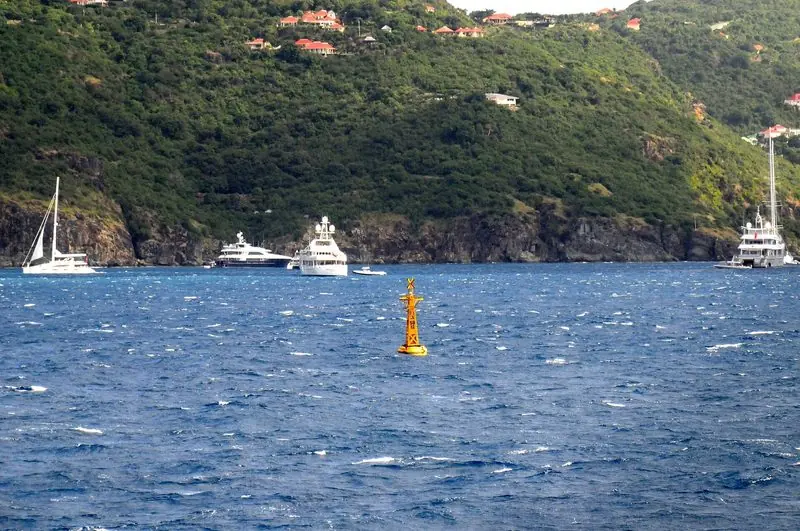
Services on a small island
For its size Gustavia handles yachts well, with fuel and water available in the harbour and a network of agents who make provisioning, transport, crew logistics and clearance straightforward. The island imports almost everything, and the supply chain into it is unusually well organised because the same chain feeds the hotels and villas. French provisions arrive for the season and can be sourced at a standard that surprises people.
What does not exist is technical capacity. There is no yard, no lift and no serious spares holding, and water and power on the quay are limited enough that many yachts run their own systems and top up when they can. Anything mechanical means St Maarten, which is a short hop, or a longer run to a proper Caribbean yard. A yacht that intends to spend the season here should arrive with everything working.
Security, privacy and how visible the yacht is
Saint-Barthelemy has been a discreet island for decades and the culture of the place protects the people who come to it. Crime is not a practical concern. The port is small enough that everyone in it is known to the harbour office.
Privacy from cameras is a different matter over Christmas and New Year. The quay is the town's promenade, the restaurants and bars back straight onto it, and the anchored fleet outside is photographed from every hillside and every tender. For those two weeks Gustavia is as exposed as Monaco in September. From mid-January it goes quiet.
Getting there, which is the real problem
Gustaf III airport has a single concrete runway of 646 metres running down a slope onto a beach, with an extremely steep arrival over the hilltop road on runway 10 and a specific pilot licence required to land there. The aircraft that use it are Pilatus PC-12s, Cessna 208B Caravans, DHC-6 Twin Otters and Britten-Norman Islanders. The largest type ever cleared for the airport was the DHC-7. No business jet is landing on Saint-Barthelemy.
In practice guests fly into Princess Juliana on Sint Maarten and transfer by commuter aircraft with Tradewind Aviation, St Barth Commuter or Winair, or come across by fast ferry. It works, and it is what everyone does, but an owner planning a week with family and staff should build the transfer into the plan and not assume the jet lands at the island.
The honest downside
The harbour cannot supply what people want from it. There are more owners who want to be alongside in Gustavia at New Year than there is quay, by a wide margin, and no amount of money changes the physical length of the wall. Prices for that window are among the highest short-stay costs in yachting. The island is expensive across the board and the peak weeks are priced accordingly.
The rest of it is the geography. This is a seasonal destination with a hurricane exposure that closes the summer, no technical support, a runway that excludes jets, and an island small enough to cross in half an hour, so a family staying a fortnight will have seen it. Owners treat Gustavia as the centrepiece of a Caribbean winter and pair it with the Mediterranean for the other half of the year.
What the port supplies, which is less than expected
The pleasure port publishes its service list and shore power is not on it. What is on it is water, wifi, refuse, sanitary facilities, a working relationship with the island's marine reserve and an SNSM lifeboat station of its own. Water is metered at the tap on every quay and it is expensive: EUR 0.012 per litre for a subscriber boat and EUR 0.019 per litre for a visitor, which is EUR 12 and EUR 19 per cubic metre. Set against Monaco at EUR 6.22 and Antibes at EUR 3.79 for the same cubic metre, water at Gustavia costs three to five times Riviera prices, which is what desalination on an island of 25 square kilometres costs. A visiting yacht taking 50 cubic metres pays EUR 950 for it.
Sorting refuse is compulsory across Saint-Barthelemy and the port provides the containers on the Quai General de Gaulle and the Quai de La Collectivite. Wifi is open to anyone on a code collected from the harbour office. The showers and WCs are reserved to port users and open 07:30 to 18:00. The harbour office itself is open 07:00 to 18:00 every day of the week and all year round, and works VHF channel 12. What the port does not list, and shore power is the conspicuous absence, is a question to put to the port office before the passage rather than an assumption to make on arrival.
Who clears the yacht, and why an agent is optional here
Entry and exit formalities are compulsory for access to the pleasure port, and there are two ways to complete them. Either at the port office directly, or online through the port's own clearance system no more than 24 hours ahead. The online route does not finish the job. The port states that the formality is only registered once the document has been printed and signed at the port office, so the online form saves the queue and not the visit. Immigration is handled separately by the Gendarmerie nationale, which is who to contact about anything to do with a crew member's status rather than the harbour office.
On agents the port is unusually direct, and it is worth taking at face value. Every officer in the harbour office is bilingual, and the port states in writing that it is in no way necessary for a vessel to have an agent at Saint-Barthelemy to represent her, then repeats on its formalities page that an agent's presence is not compulsory. Very few ports at this level publish that, and most of the ones that do not are protecting a local trade. Speed in the channel is limited to 3 knots, and the port repeats the limit on every page of its own site, which is a fair indication of how it is treated.
An Land, Anfahrt und Buchung
| Booking the quay | The pleasure port does not take advance reservations by name; an owner or agent contacts the harbour office directly (VHF 12, or its online clearance system up to 24 hours ahead) with the yacht's dimensions and dates, and berthing is allocated from there. For the Christmas and New Year window, space on the wall is spoken for months ahead regardless. |
|---|---|
| What it costs to sit alongside | The port publishes no berth rate of any kind. What it does publish is water, metered at EUR 0.012 per litre for a subscriber and EUR 0.019 per litre for a visitor (EUR 12 to 19 per cubic metre) - three to five times the Riviera price at Monaco (EUR 6.22) or Antibes (EUR 3.79). A visiting yacht taking 50 cubic metres pays about EUR 950 for water alone. |
| What is not published | No maximum draught or depth alongside, no berth tariff, and no shore power specification (voltage, amperage or frequency) appear anywhere on the port's own site. A deep or power-hungry yacht should raise all three with the harbour office before committing to a date. |
| Do you need an agent | The port states in writing that an agent is not necessary or compulsory, because every harbour office officer is bilingual - unusually direct for a marina at this level. Most large yachts use one anyway for provisioning, transport and crew logistics rather than for the clearance itself. |
| Getting there | No jet lands on the island: Gustaf III airport's 646 metre runway takes only Pilatus PC-12s, Cessna 208B Caravans, DHC-6 Twin Otters and Islanders. Guests fly into Princess Juliana on Sint Maarten and transfer by commuter aircraft or fast ferry. |
| Technical support | There is no yard, no lift and no serious spares holding on the island. Anything mechanical means a short hop to St Maarten or a longer run to a proper Caribbean yard, so a yacht wintering here should arrive with everything already working. |
| Next door | The quay is the town's promenade: duty-free boutiques and restaurants back directly onto it, and the anchored fleet outside is in full view from every hillside. The season runs Christmas through the spring Bucket regatta; the Caribbean hurricane season (roughly June to November) closes it. |
Was Eigner und Crew berichten
The waters here are unusually weather-reliable for a Caribbean venue
In seventeen years running the St Barths Bucket, the regatta has lost only a single race day to weather - a track record its own race chairman points to as evidence the trade-wind season around the island is dependable rather than lucky.
Peter Craig, St Barths Bucket regatta race chairman, via Boat InternationalThe approach still needs a careful eye, tradewinds or not
The Caribbean's most established cruising guide warns sailors approaching St Barths to study the charts and keep a good lookout rather than trust the marked channel blind, noting that the navigation lights and buoys on the approach have been known to fail or shift position.
Chris Doyle, Doyle Guides, via Caribbean Compass
Was gut ist und worauf zu achten ist
Stärken
- The one anchorage everyone else is watchingAt New Year the Gustavia roadstead is the most photographed gathering of large yachts in the Caribbean, and a berth or a good anchoring spot puts an owner in the middle of it.
- Duty-free and well organised for its sizeSaint-Barthelemy sits outside EU customs and VAT as a free port, and despite the island's tiny scale, agents, provisioning and fuel and water are handled efficiently through a supply chain built to feed the same hotels and villas.
- Genuinely weather-reliable racing and cruising conditionsTrade winds hold the season at a steady mid-20s Celsius, and the St Barths Bucket's own race chairman has lost only one race day to weather in seventeen years running it.
Worauf zu achten ist
- The quay cannot supply the demand for itThere is more demand for a New Year berth than there is wall, by a wide margin, and no amount of money lengthens the quay - an owner deciding in October is usually deciding to anchor, not berth.
- No technical capacity at allNo yard, no lift and no meaningful spares holding on the island; a mechanical problem means St Maarten at best.
- No jet accessThe 646 metre runway excludes every business jet; guests transfer via Sint Maarten by commuter aircraft or ferry, which has to be built into any plan.
- Basic facts the port will not publishNo berth rate, no maximum draught and no shore power specification appear anywhere on the operator's own site, which leaves a captain confirming by phone what most marinas of this standing publish outright.
Für wen: Eigner, die für den Winter in die Karibik queren und Saint-Barthelemy als Herzstück wollen.