ONE15 Marina Sentosa Cove (Singapore)
| Lage | Sentosa Cove, Singapur, bei 1 14.50 N, 103 50.40 E, auf UKW-Kanal 77 |
|---|---|
| Betreiber | in Betrieb seit 2007, Teil der SUTL-Gruppe |
| Liegeplätze | 270 Wasserliegeplätze einschließlich rund 32 Megayacht-Plätzen, dazu 60 Trockenliegeplätze |
| Maximale LOA | 220 Fuß, rund 67 Meter, bei einem veröffentlichten maximalen Tiefgang von 4,5 Metern |
| Zertifizierung | nach dem Standard Platinum Gold Anchor gebaut und 2022 als Superyacht Ready akkreditiert |
| Auszeichnungen | International Marina of the Year 2022 und 2023 und siebenmal Best Asian Marina |
| Landstrom | gezählt, bis dreiphasig 500 Ampere, dazu gezähltes Trinkwasser und eine Absauganlage |
| Abfertigung | die einzige private Marina Singapurs mit einer Anlage für Zoll, Einwanderung und Quarantäne vor Ort |
| Liegegebühr 2026 über 120 Fuß | SGD 8,83 pro Fuß und Tag für Nichtmitglieder und SGD 7,63 für Mitglieder, inklusive GST |
| Monatssatz 2026 über 120 Fuß | SGD 190,31 pro Fuß für Mitglieder oder SGD 158,60 pro Fuß bei Jahresbindung |
| Treibstoff | Benzin und Diesel täglich von 8 bis 23 Uhr, mit Mengenrabatten bis 20 Prozent über 5.000 Liter |
| An Land | 26 Hotelzimmer, Restaurants, eine Mitgliederlounge, Pool, Gym, Tennis- und Pickleball-Plätze und ein Shuttle nach VivoCity |
| Frequency and voltage | the marina publishes up to three-phase 500 A and states neither, checked 28 July 2026. Singapore runs 50 Hz at 230 V single phase and 400 V three phase |
| What 500 A three phase at 400 V amounts to: about 346 kVA, which is a genuine large-yacht supply and enough to carry a 60 m hull alongside without generators in equatorial heat | |
| How many of the roughly 32 mega yacht berths take over 50 m, against the 67 m ceiling, is not published, checked 28 July 2026 | |
| The published maximum draught of 4.5 m is the binding constraint and applies against a 220 foot maximum length. A 67 m yacht drawing more than 4.5 m does not fit whatever its length | |
| There is no superyacht travel lift on site. The marina's 60 dry berths are for small craft, so any haul-out means leaving Singapore | |
| Hull fouling intervals in equatorial water are not published by the marina and no diving or antifouling schedule is quoted, checked 28 July 2026 | |
Ein Yachtclub mit angehängter Marina
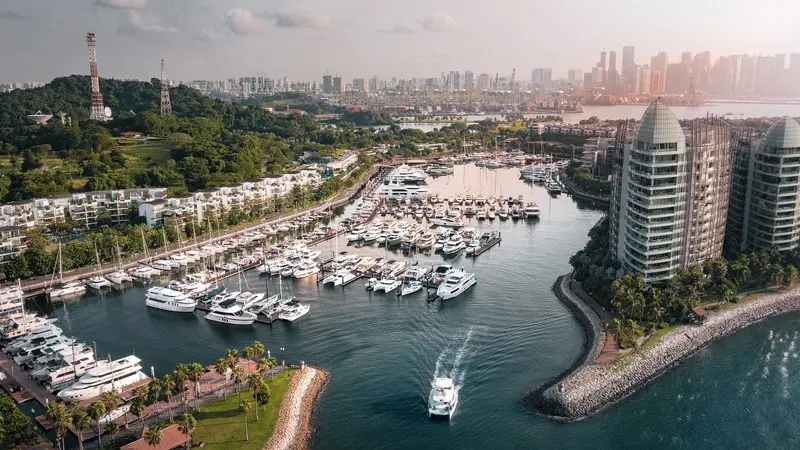
ONE15 eröffnete 2007 in Sentosa Cove, dem abgeschlossenen Wohnviertel am Wasser am östlichen Ende der Insel Sentosa. Es ist ebenso ein privater Club wie eine Marina, mit 270 Wasserliegeplätzen, von denen rund 32 für Megayachten ausgelegt sind, 60 Trockenliegeplätzen, einem Clubhaus, 26 Hotelzimmern, Restaurants, einem Pool und Tennisplätzen. Liegeplatzinhaber und Mitglieder teilen sich dieselben Einrichtungen.
Die Standards werden unabhängig geprüft, was in einer Region etwas wert ist, in der die Qualität von Marinas stark schwankt. Die Marina wurde nach dem Standard Platinum Gold Anchor der Yacht Harbour Association und der Marina Industries Association gebaut, 2022 als Superyacht Ready akkreditiert und zweimal zur International Marina of the Year sowie siebenmal zur Best Asian Marina gewählt. Die maximale Länge beträgt 220 Fuß, rund 67 Meter, bei einem veröffentlichten maximalen Tiefgang von 4,5 Metern.
Ansteuerung durch das meistbefahrene Wasser der Welt
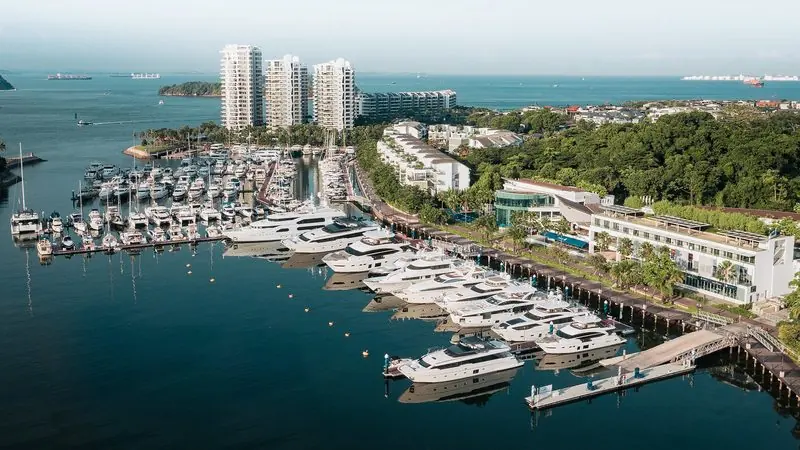
Nach Sentosa Cove zu kommen heißt, die Straße von Singapur zu queren oder zu umfahren, eine der am stärksten genutzten Schifffahrtsstraßen überhaupt, mit Reeden voller Tanker und Containerschiffe und einem ununterbrochenen Verkehr im Verkehrstrennungsgebiet. Es ist kein schwieriges Wasser, und es verlangt eine ordentliche Wache und ein belastbares Verständnis davon, wo Handelsschiffe fahren dürfen. Die Marina arbeitet auf UKW-Kanal 77.
Innen ist das Becken geschlossen, ruhig und vollständig geschützt. Singapur liegt fast auf dem Äquator, es gibt also zu keinem Zeitpunkt des Jahres eine Taifun- oder Zyklonsaison, was gegenüber Hongkong, Phuket oder irgendwo im Südpazifik ein echter struktureller Vorteil ist. Was das Klima liefert, sind Hitze und Luftfeuchte bei beständigen dreißig Grad, zwei Monsune und die plötzlichen Böenlinien, die vor Morgengrauen von Sumatra herüberkommen.
Am Äquator gibt es keine Sturmsaison, und das ist eine Form von Sicherheit, die kein Liegeplatz im Mittelmeer oder in der Karibik bieten kann.
Abfertigung am Steg
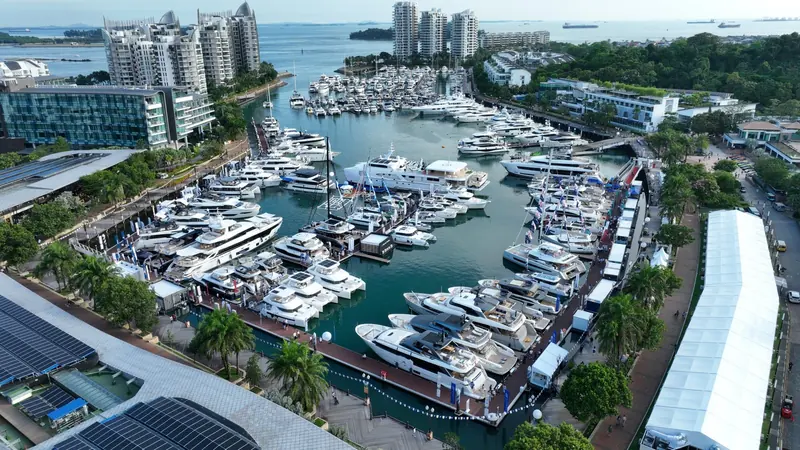
Die Marina hat eine Anlage für Zoll, Einwanderung und Quarantäne auf dem Gelände und ist die einzige private Marina Singapurs, die das hat. Für einen Eigner, der aus Indonesien oder Malaysia kommt, entfällt damit die Pflicht, anderswo abzufertigen und dann zu verlegen, was in diesem Teil der Welt sonst einen Tag kosten kann. Singapur ist eine effiziente Rechtsordnung, und der Papierkram funktioniert, wenn er richtig vorgelegt wird.
Über die Ankunft hinaus lohnen die Lizenzierung einer gewerblich genutzten Yacht und die Behandlung der Charter eine Beratung, denn die Marina erhebt entsprechende Zuschläge. Ein Fahrzeug mit Charterlizenz zahlt die doppelte Liegegebühr, und ein gewerblicher Liegeplatz trägt einen Aufschlag von 15 Prozent. Auf Waren und Leistungen in Singapur liegen 9 Prozent GST, die in den veröffentlichten Sätzen der Marina enthalten sind.
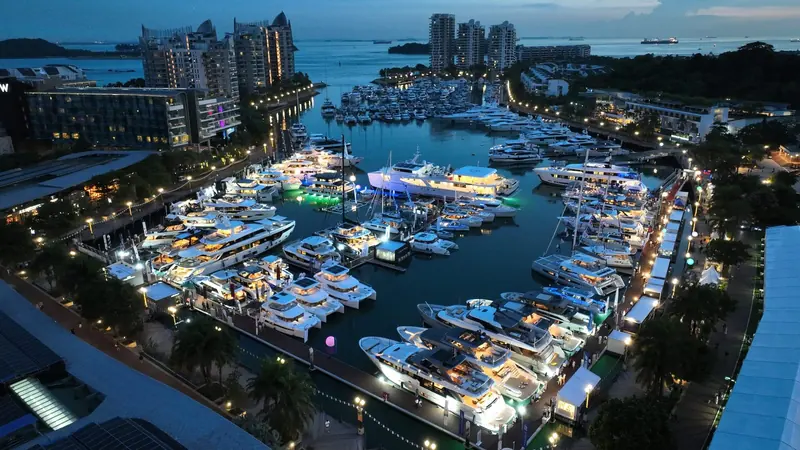
Was es kostet
ONE15 veröffentlicht seinen vollständigen Tarif, berechnet pro Fuß und inklusive GST. Über 120 Fuß zahlt ein Nichtmitglied SGD 8,83 pro Fuß und Tag und ein Mitglied SGD 7,63. Eine 60-Meter-Yacht misst rund 197 Fuß, eine Nacht kostet ein Nichtmitglied also etwa SGD 1.740. Im Monat zahlt ein Mitglied über 120 Fuß SGD 190,31 pro Fuß oder SGD 158,60 bei Jahresbindung, was für dieselbe Yacht rund SGD 37.500 im Monat oder SGD 31.200 zum Jahressatz ergibt.
Berechnet wird nach dem physischen Maß des Fahrzeugs oder der Länge des Liegeplatzes, je nachdem, was größer ist, bei einem Mindestansatz von 35 Fuß, und ein Katamaran oder ein breiter Einrumpfer, der über seinen zugewiesenen Platz hinausragt, zahlt zusätzlich 100 Prozent. Für Mitgliedsfahrzeuge, die länger als einen Monat bleiben, ist eine Kaution in Höhe von zwei Monatsliegegebühren zu stellen. Treibstoff wird in der Marina täglich von 8 bis 23 Uhr verkauft, mit Mengenrabatten, die über 5.000 Liter Diesel 20 Prozent erreichen.
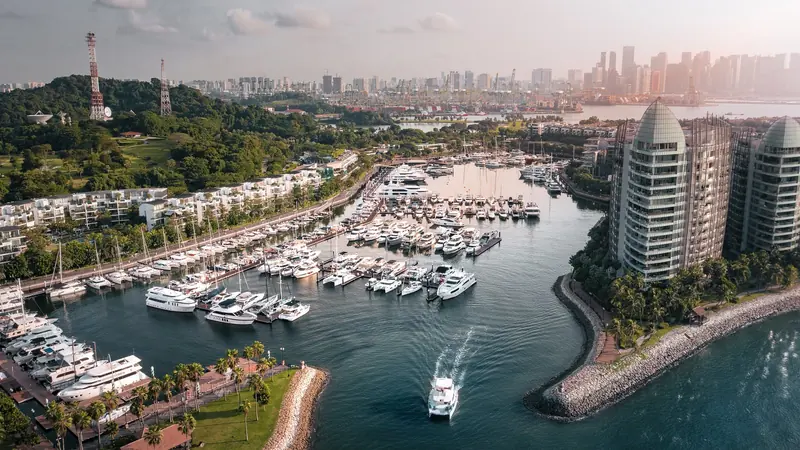
Strom, Entsorgung und der tägliche Betrieb
Der Strom wird gezählt und bis dreiphasig 500 Ampere geliefert, was die Flotte abdeckt, die die Marina aufnimmt, aber vor der Ankunft mit dem Bedarf eines konkreten Fahrzeugs abgeglichen werden sollte. Trinkwasser wird am Liegeplatz gezählt, und über die ganze Marina liegt eine Absauganlage. Eine Brandschutzanlage deckt die Stege ab, und ein Buggy-Service bewegt Menschen zwischen den Liegeplätzen und dem Clubhaus.
Südostasien ist keine Refit-Region in dem Sinn, in dem Florida oder das nördliche Mittelmeer es sind, und Singapurs kommerzielle Werften sind auf die Handelsschifffahrt ausgerichtet. Laufende Technik, Elektronik und Interieurgewerke sind verfügbar und kompetent. Alles Strukturelle oder eine komplette Lackierung bedeutet einen Schlag nach Phuket, wo die Gruppe in Panwa eine Schwestermarina betreibt, oder eine längere Reise nach Australien oder Neuseeland.
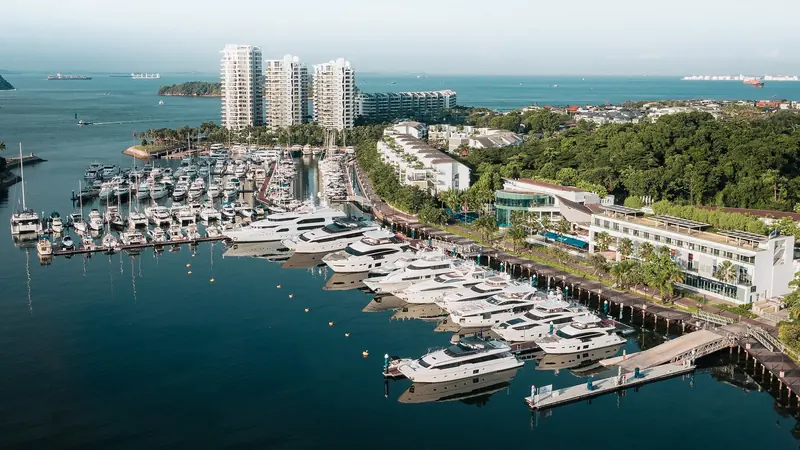
Sicherheit und Privatsphäre
Die Marina ist mit Tor gesichert, mit Bewachung rund um die Uhr und durchgehender Videoüberwachung, und sie liegt in Sentosa Cove, das selbst eine kontrollierte Wohnenklave ist. Singapur hat eine der niedrigsten Kriminalitätsraten aller entwickelten Länder, und das allgemeine Sicherheitsniveau ist so, dass die meisten Vorkehrungen, die eine Crew in der Karibik trifft, hier unnötig sind. Gäste kommen und gehen ohne Begleitung.
Die Privatsphäre ist nach den Maßstäben dieser Liste gut. Sentosa Cove ist Wohngebiet und keine Touristenpromenade, es zieht also keine Menge vorbei, die das Achterdeck fotografiert. Das Clubhaus und seine Restaurants sind Mitgliedern und ihren Gästen vorbehalten, ohne öffentlichen Zugang. Ein Eigner, der gesehen werden will, findet in Singapur ein merkwürdig gleichgültiges Publikum.
Die Stadt und wohin eine Yacht tatsächlich fährt
Changi liegt 30 bis 40 Minuten von der Marina entfernt und ist einer der bestvernetzten Flughäfen der Welt, mit Direktverbindungen nach Europa, Australien, Nordamerika und in jede asiatische Hauptstadt. Die Stadt hat die Banken-, Rechts- und Family-Office-Infrastruktur, die erklärt, warum so viel international mobiles Vermögen hier eine Adresse hält. Medizinische Versorgung, Schulen und Essen sind ausgezeichnet, und die Crew zu halten ist leichter als im übrigen Asien.
Das Revier ist die Schwachstelle, und alle wissen es. Singapur selbst hat kein Ziel. Die nächsten echten Ankerplätze liegen in den indonesischen Riau-Inseln, ein bis zwei Stunden südlich, und die Gruppe betreibt dort auf Nirup Island eine eigene Marina. Malaysias Ostküste und Tioman liegen einen Tag entfernt, Langkawi und Phuket eine Passage von mehreren Tagen um die Halbinsel, und Borneo und die Anambas lohnen eine längere Bindung. Das Ein- und Ausklarieren in Indonesien und Malaysia verlangt einen Agenten und Geduld.
Saison, Timing und der ehrliche Nachteil
Eine Saison gibt es hier nicht, und das ist der Punkt. Das Äquatorklima bedeutet, dass eine Yacht in jedem Monat genutzt oder bearbeitet werden kann, und die Versicherung schreibt keinen Sturmplan für benannte Stürme vor, weil es keine benannten Stürme gibt. Die beiden Monsune verschieben Windrichtung und Niederschlagsmuster, ohne etwas zu schließen. Das Fahren in der Region ist etwa von März bis Oktober am leichtesten, wenn der Nordostmonsun nachgelassen hat.
Die Vorbehalte sind Hitze, Entfernung und das Fehlen von allem, wohin man segeln könnte. Dreißig Grad und neunzig Prozent Luftfeuchte sind harte Arbeit für Gäste und härter für die Technik, die Klimaanlage läuft permanent, und der Bewuchs am Rumpf wächst schnell genug, um ständige Aufmerksamkeit zu verlangen. Das ist ein Ort, an dem man eine Yacht nahe am Geschäft eines Eigners hält und als Basis für Reisen nach Indonesien und Thailand nutzt. Als Ziel für sich existiert er nicht wirklich.
Three hundred and forty-six kVA, and what it is worth here
The marina publishes a metered supply up to three-phase 500 A and, checked on 28 July 2026, states neither the voltage nor the frequency. Singapore runs 50 Hz at 230 V single phase and 400 V three phase, which puts a European yacht on the right frequency and an American one on a converter. Worked out, 500 A of three phase at 400 V is about 346 kVA, and that is a genuinely useful number rather than a marketing one. In a climate that holds thirty degrees and high humidity all year, air conditioning is the dominant hotel load and it never switches off, so the difference between a dock that can carry it and one that cannot is measured in generator hours every single night of the year.
That makes the shore supply here worth more than it would be in a temperate marina, and it is the practical argument for keeping a yacht in Singapore rather than at anchor in the Riau islands. The counterpart is what the marina does not say. There is no travel lift on site capable of a superyacht, the 60 dry berths being small craft storage, so any haul-out is a passage out of Singapore. And the fouling question, which is real in equatorial water and moves faster than most owners expect, is not sized anywhere. Neither a diving interval nor an antifouling interval is published, checked 28 July 2026, and both belong in a running budget for a yacht kept here rather than in an observation about warm water.
Four and a half metres, and how many big berths there really are
The headline is 220 feet, roughly 67 m, and the number that actually governs is the published maximum draught of 4.5 m. A 60 m yacht drawing 4.8 m does not fit this marina regardless of what the length limit says, and that is the check to run first rather than last. Of the 270 wet berths, around 32 are described as mega yacht berths, and how many of those take over 50 m against the 67 m ceiling is not published, checked 28 July 2026. On a marina that is otherwise unusually precise about money, publishing rates per foot per day and per month for members and non-members, the absence of a size breakdown at the top of the range stands out.
The rest of the proposition is settled and worth restating in that light. The customs, immigration and quarantine facility on site is the only one at a private marina in Singapore, which removes the single most tedious part of arriving. There is no typhoon season and no named storm plan, so insurance behaves differently here from Hong Kong or Phuket. What the marina cannot supply is somewhere to go, and the answer to that is the Riau islands an hour or two south, which sit in Indonesia and require a cruising permit and an agent. That permit, its lead time and its cost are the gating item on the whole cruising argument and are not documented on the marina's material.
An Land, Anfahrt und Buchung
| Getting there | Changi Airport is 30 to 40 minutes away by car; ferries from Batam and Bintan land at nearby HarbourFront. |
|---|---|
| By sea | The marina works VHF channel 77. The approach crosses or skirts the Singapore Strait, one of the world's busiest shipping lanes, so a proper watch matters more than local knowledge. |
| Reserving a berth | Book through the marina office. Peak season, November to April, fills first and vessels over 80 feet should reserve well ahead. Member vessels staying beyond a month post a deposit of two months' berthing. |
| What a berth costs | Above 120 feet: SGD 8.83 per foot per day for non-members, SGD 7.63 for members, GST included. A 60 m yacht runs to roughly SGD 1,740 a night. |
| Monthly rate | Above 120 feet: SGD 190.31 per foot for members, or SGD 158.60 per foot on an annual commitment. For a 60 m yacht that is around SGD 37,500 a month, or SGD 31,200 annually. |
| Fluids | Shore power metered up to three-phase 500 A, about 346 kVA. Potable water metered at the berth. Diesel and petrol sold dockside 8am to 11pm, with bulk discounts up to 20 per cent above 5,000 litres. |
| Clearance | Customs, immigration and quarantine are on site, the only private marina in Singapore with all three together, which saves a day for a yacht arriving from Indonesia or Malaysia. |
| Haul-out | No superyacht travel lift on site; the 60 dry berths are small-craft storage only. The nearest capable yard is across the strait in Batam, Indonesia, 45 to 60 minutes away, with lifts up to 700 tons handling hulls to 80 m. |
| Where to eat | Quayside Isle's restaurant row is a five-minute walk from the pontoons. Sentosa Cove Village carries a supermarket and a 24-hour convenience store for provisioning. |
| After dark | The clubhouse, pool and members' lounge stay open to berth holders. Sentosa's beach clubs and Resorts World are a short taxi away, though Sentosa Cove itself stays quiet after dinner. |
| Fixed dates | Peak season runs November to April. Shoulder season, May to August, suits refits and quieter cruising. There is no named-storm season at any point in the year. |
Was Eigner und Crew berichten
Crews who have based here describe it as an easy, low-drama stop
Captain Mark of the yacht Batavia and his crew named ONE15 among the marinas that made their season, singling out the staff and the shoreside facilities. The marina published the account itself rather than an independent survey, so it reads as a satisfied-customer story rather than a critical review, and no negative first-hand account from a captain or owner is publicly attached to their name.
Captain Mark, M/Y Batavia (via ONE15 Marina)
Was gut ist und worauf zu achten ist
Stärken
- No storm seasonSingapore sits almost on the equator, so there is no typhoon or hurricane plan to write, unlike Hong Kong, Phuket or anywhere in the Caribbean.
- Clearance on the dockThe only private marina in Singapore with customs, immigration and quarantine together on site, which removes a full day of transiting for a yacht arriving from Indonesia or Malaysia.
- Genuine large-yacht powerA metered three-phase 500 A supply works out to about 346 kVA, enough to run a 60 m yacht's air conditioning around the clock in equatorial heat without falling back on generators.
- Independently rated, not just self-reportedPlatinum Gold Anchor status from the Yacht Harbour Association and Marina Industries Association, plus repeat International Marina of the Year wins judged outside the marina itself.
Worauf zu achten ist
- Nowhere to actually cruiseSingapore itself has no cruising ground. The nearest anchorages are an hour or two south in Indonesia's Riau islands and require a separate cruising permit and an agent to clear.
- No haul-out on siteThe 60 dry berths are small-craft storage only. Anything needing a lift means a passage across the strait to Batam, or further afield if the work is a full repaint.
- Heat and fouling nobody sizesA steady 30 degrees and high humidity mean air conditioning runs continuously and hull growth is fast, yet the marina publishes no antifouling or diving interval to budget against.
- The top end of the berth list is unpublishedAround 32 berths are described as mega yacht sized, but how many of those actually clear 50 m against the 67 m ceiling is not stated anywhere.
Für wen: Der Eigner mit einem Geschäftsleben in Asien, der die Yacht 40 Minuten von Changi haben will, sie das ganze Jahr nutzt und keinen Hurrikanplan schreiben muss.