Pier Sixty-Six Marina (Fort Lauderdale)
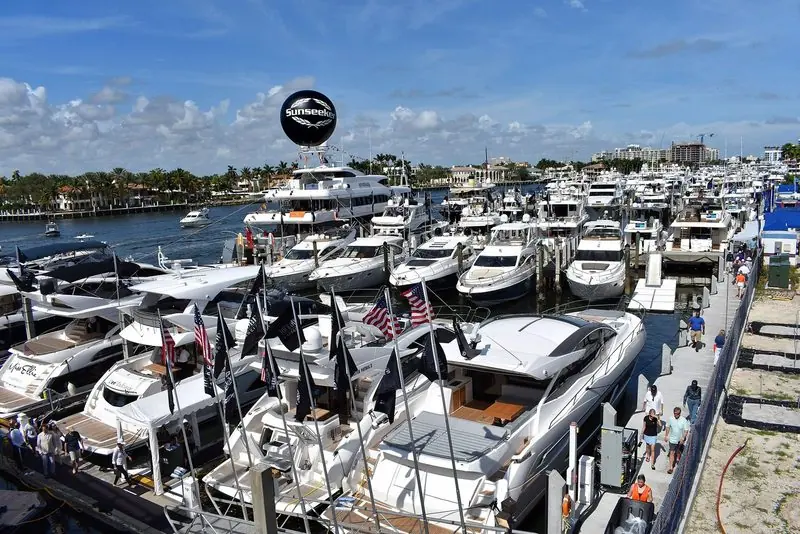
| Lage | 2301 SE 17th Street, Fort Lauderdale, Florida, die erste Marina innerhalb von Port Everglades |
|---|---|
| Liegeplätze | 164 Tiefwasserplätze für Fahrzeuge von 40 bis 400 Fuß (etwa 12m bis 122m) |
| Liegefläche | 5.000 laufende Fuß oder 1.525 Meter, aufgeteilt auf Pier North mit 127 Plätzen und Pier South mit 37 |
| Maximaler Tiefgang | 30 Fuß oder 9,1 Meter |
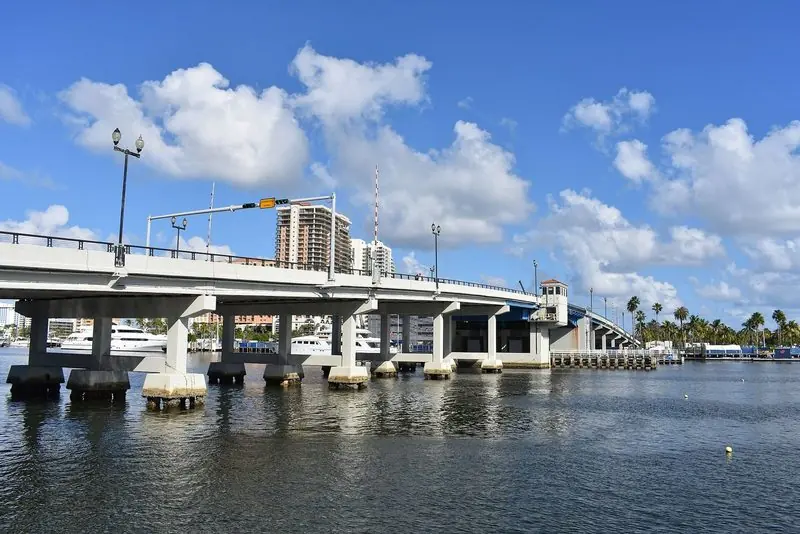
| Brücke | Pier South hat keine Brücke zwischen sich und dem Meer, Pier North liegt innerhalb der Klappbrücke SE 17th Street mit 55 Fuß Durchfahrtshöhe bei geschlossener Brücke |
| Landstrom | 30 Ampere bis 1.000 Ampere |
| Treibstoff | Schnellbunkerung direkt am Liegeplatz, steuerfrei verkauft |
| Einfahrt von Port Everglades | 500 Fuß breit und 45 Fuß tief |
| Neuentwicklung | ein Umbau von Resort, Marina und Residenzen durch Tavistock für USD 1 Milliarde, mit Wiedereröffnung des Hotels 2024 |
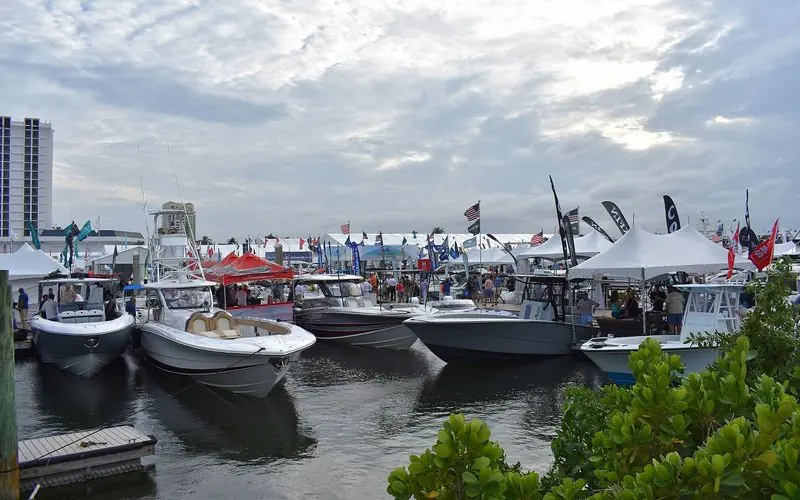
| Veranstaltungen | ein Austragungsort der Fort Lauderdale International Boat Show, die vom 28. Oktober bis 1. November 2026 in ihrer 67. Ausgabe läuft |
| Refit in der Nähe | Safe Harbor Lauderdale Marine Center, 65 Acres am New River mit einem 485-Tonnen-Lift |
| Steuer in Florida | die Umsatz- und Nutzungssteuer des Bundesstaats auf den Kauf eines Fahrzeugs beträgt 6 Prozent, gedeckelt bei USD 18.000 nach Statute 212.05 |
| Shore power, from the marina's own site checked 28 July 2026: up to 1,200 A per pedestal | |
| Frequency | Florida runs 60 Hz at 120 V, 208 V and 480 V. Pier Sixty-Six publishes neither voltage nor frequency, checked 28 July 2026, on the dock where the Mediterranean fleet arrives after crossing west |
| A 50 Hz yacht therefore needs a frequency converter aboard or stays on generators. Converter availability at the pedestal is a question for the slip booking and is not answered on the marina's site | |
| Customs cannot be cleared at the marina. The marina runs a shuttle to the US Customs office, and US and Canadian nationals may report through the Mobile Passport app | |
| The 17th Street bascule bridge opens on the hour and the half hour on demand and is hailed on VHF channel 19. Pier South needs no bridge, Pier North does | |
| The property is a designated Foreign Trade Zone | |
| Dock detail | floating docks with 3 feet of freeboard, 2 inch pump-out and water connections, 30 feet of water alongside |
| Tidal range | about 2.5 feet on a normal tide and 3.5 feet on a king tide |
| Fort Lauderdale International Airport | 4.8 miles by road |
Der erste Liegeplatz hinter der Einfahrt
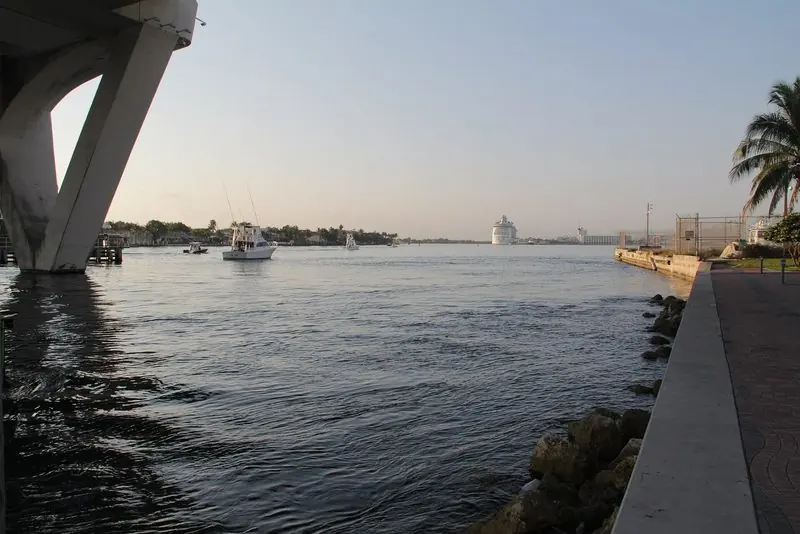
Port Everglades ist ein künstlicher Hafen, gerade vom Atlantik hereingeschnitten, und seine Einfahrt ist 500 Fuß breit und 45 Fuß tief, bevor sie sich durch das Wendebecken auf 450 Fuß und 42 Fuß verengt. Das ist Wasser für die Handelsschifffahrt, ausgebaggert für Tanker und Kreuzfahrtschiffe, und eine Yacht jeder Größe kommt und geht schlicht. Pier Sixty-Six liegt am 17th Street Causeway unmittelbar dahinter, womit es die erste Marina ist, die eine Yacht nach der Ansteuerungstonne erreicht.
Der praktische Wert dieser Lage ist Zeit. Eine Yacht an Pier South kann ablegen und binnen zwanzig Minuten im Golfstrom sein, ohne auf eine Brücke zu warten und ohne sich durch ein flaches Fahrwasser zu tasten. Bimini und die Bahamabank liegen rund fünfzig Seemeilen östlich über den Golfstrom, ein Vormittagsschlag. Fort Lauderdale hat keine planungsrelevante Tide und keine saisonale Schließung.
Zwei Piers und eine Brücke
Die Marina wird durch den SE 17th Street Causeway geteilt. Pier South trägt 37 Liegeplätze auf 2.000 laufenden Fuß und hat zwischen sich und der Hafeneinfahrt kein Brückenhindernis, weshalb die größten und höchsten Yachten dorthin gehen. Pier North hält 127 Liegeplätze auf 3.000 laufenden Fuß und liegt innerhalb der Brücke. Insgesamt weist die Marina 5.000 laufende Fuß Liegefläche, 164 Tiefwasserliegeplätze und einen maximalen Tiefgang von 30 Fuß aus.
Die Brücke selbst ist eine Klappbrücke mit 55 Fuß Durchfahrtshöhe bei mittlerem Hochwasser und geschlossener Stellung, die von 7 bis 19 Uhr zur vollen und zur halben Stunde öffnet. Seit Februar 2026 bleibt sie werktags in den Stoßzeiten geschlossen, um 7.30, 8.30, 16.30 und 17.30 Uhr, außer an gesetzlichen Feiertagen des Bundes. Eine Yacht mit hohem Bogen oder Mast, die nördlich davon liegt, hängt damit an einem Fahrplan, den die Pendler von Broward County bestimmen. Eigner, denen das wichtig ist, buchen südlich.
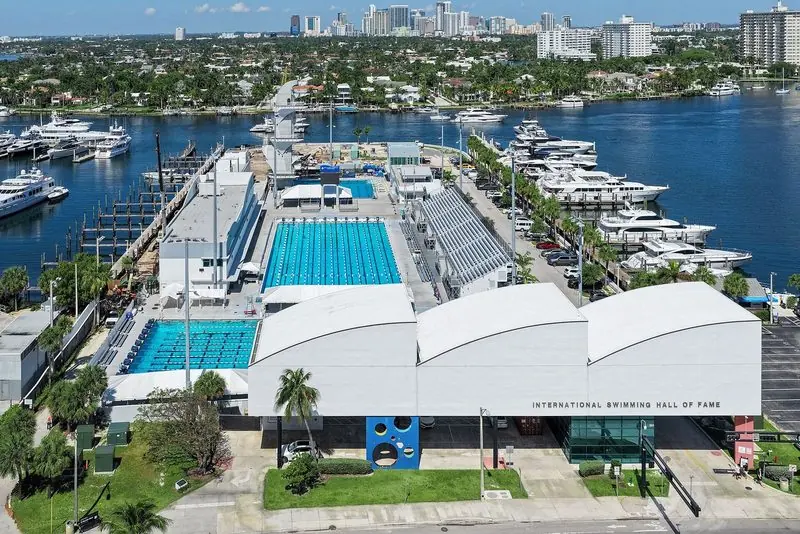
Zwanzig Minuten vom Steg in den Golfstrom, und jedes Gewerk, das eine Yacht braucht, im Umkreis von fünf Meilen.
Einen Liegeplatz bekommen, und wonach er bepreist wird
Bei Pier Sixty-Six wird alles vermietet. Liegeplätze werden pro Fuß und Tag genannt, mit Monats- und Jahresvereinbarungen, und die Sätze steigen über den Winter und rund um die Bootsmesse stark. Nichts wird hier auf Dauer verkauft oder verpachtet, wie es ein mediterraner Liegeplatz sein kann, auch wenn zur Neuentwicklung private Residenzen gehören, deren Eigentümer eigene Liegeplatzvereinbarungen haben. Ein Eigner nimmt einen Liegeplatz so, wie er eine Hotelsuite nimmt.
Die Verfügbarkeit folgt der Saison. Von Ende Oktober, wenn die Bootsmesse jede Marina im County füllt, bis in den April sind Liegeplätze in Südflorida wirklich knapp, und die guten gehen an Stammkunden und an Yachten, die sich früh festgelegt haben. Der Sommer ist ruhig, günstig und heiß. Die mit Abstand schwierigste Woche, überhaupt etwas zu finden, ist die Woche der Bootsmesse, wenn ein großer Teil der Weltflotte in der Stadt ist.
Strom, Treibstoff und die Steuerfrage
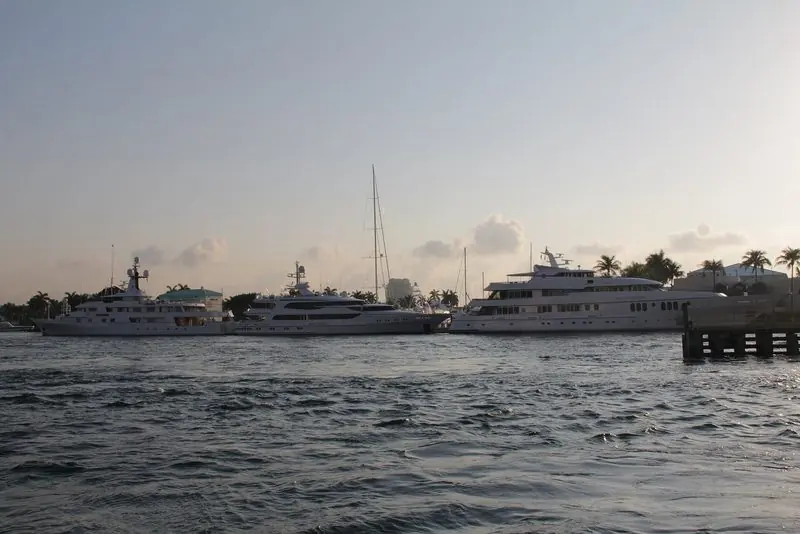
Der Landstrom reicht von 30 Ampere Hausanschluss bis zu 1.000 Ampere, was die gesamte Flotte abdeckt, die die Marina aufnimmt. Frischwasser, Absaugung am Liegeplatz, kostenloses WLAN und Parken nahe am Schiff sind Standard. Gebunkert wird am Liegeplatz aus Schnellpumpen, eine 60-Meter-Yacht tankt also, ohne sich zu bewegen, und der Treibstoff wird steuerfrei verkauft.
Die steuerliche Behandlung in Florida ist ein großer Teil des Grundes, warum so viele Yachten hier stationiert sind. Die Umsatz- und Nutzungssteuer des Bundesstaats auf den Kauf eines Fahrzeugs beträgt 6 Prozent, ist aber nach Florida Statute 212.05 bei USD 18.000 gedeckelt, die Steuer auf eine Yacht für USD 40 Millionen ist also dieselbe wie die auf eine für USD 300.000. Florida erhebt keine Einkommensteuer des Bundesstaats. Eigner brauchen trotzdem ordentliche Beratung zu Nutzungssteuer, Übergabe und Aufenthaltsdauer im Bundesstaat, denn die Befreiungen haben Bedingungen und die Fallen sind gut dokumentiert.
Die Gewerke vor der Tür
Fort Lauderdale nennt sich die Yachthauptstadt der Welt, und der Anspruch hält der Prüfung stand. Jeder große Broker, jede Managementgesellschaft, jede Crewagentur, jeder Ausrüster und jeder Spezialbetrieb hat ein Büro wenige Meilen von diesem Steg entfernt, und Teile, die zu einer Mittelmeermarina eine Woche brauchen, kommen am selben Nachmittag. Für einen Eigner heißt das kürzere Werftaufenthalte und weniger Ausreden.
Für strukturelle Arbeiten liegen die Werften landeinwärts am New River. Safe Harbor Lauderdale Marine Center umfasst 65 Acres und gilt als die größte Yachtreparaturanlage der Vereinigten Staaten, mit fünf Liften, darunter einer mit 485 Tonnen, überdachten Hallen und einer festen Basis an Handwerksbetrieben. Auch Derecktor und Bradford arbeiten vor Ort. Der Weg den New River hinauf führt über mehrere Brücken und verlangt einen Lotsen, die Fahrt braucht also Planung.
Sicherheit, Privatsphäre und das Resort darüber
Die Marina hat Sicherheitsdienst rund um die Uhr mit kontrolliertem Stegzugang, Concierge-Service und Parken neben dem Schiff. Was sie nicht ist, ist privat. Pier Sixty-Six liegt an einem stark befahrenen Damm zwischen einer öffentlichen Straße und einem arbeitenden Handelshafen, die Stege sind von der Brücke und von den Restaurants aus sichtbar, und Port Everglades ist einer der meistbefahrenen Kreuzfahrthäfen der Welt, an einem Wintersamstag passieren also mehrere sehr große Schiffe dicht vorbei.
Die Neuentwicklung hat den Charakter des Ortes verändert. Tavistock hat rund USD 1 Milliarde in den Umbau von Resort, Marina und einer Reihe von Residenzen gesteckt, mit der Wiedereröffnung des Hotels und seines rotierenden Wahrzeichens auf dem Dach im Jahr 2024 und einer neuen Marinapromenade mit Geschäften und Restaurants. Das bringt Menschen. Eigner, die in Südflorida Anonymität wollen, legen die Yacht an einen privaten Wohnsteg den New River hinauf oder an die Las Olas Isles.
An Land, Flüge und eine Familienwoche
Fort Lauderdale-Hollywood International liegt rund zehn Minuten vom Steg entfernt und wickelt sowohl Linienlangstrecke als auch eines der höchsten Privatjetaufkommen der Vereinigten Staaten ab, mit Miami International 40 Minuten südlich als Alternative. Das ist der kürzeste Flughafentransfer aller großen Yachtzentren überhaupt. Gäste kommen an und sind an Bord, bevor die Crew mit dem Papierkram fertig ist.
Die Stadt selbst ist eine Arbeitsstadt mit guten Restaurants, Stränden gegenüber und den Everglades eine Stunde westlich. Für eine Familie ist die Yacht der Punkt, denn das Ziel sind die Bahamas. Die Abacos, die Exumas und Eleuthera geben vierzehn Tage klares Wasser und kurze Schläge, und das Einklarieren auf den Bahamas ist unkompliziert. Das Winterwetter in Südflorida ist trocken und warm, mit Kaltfronten alle ein bis zwei Wochen, die einen Tag Nordwind und einen kabbeligen Golfstrom bringen.
Saison, Stürme und der ehrliche Nachteil
Die Saison in Florida läuft von der Bootsmesse Ende Oktober bis Ostern. Die Fort Lauderdale International Boat Show ist die größte Wassermesse der Welt und verteilt sich auf sieben Standorte, darunter die Pier Sixty-Six Marina und das Superyacht Village an Pier Sixty-Six South, mit der 67. Ausgabe vom 28. Oktober bis 1. November 2026. Von Juni bis November setzt die atlantische Hurrikansaison Südflorida mitten ins Risikogebiet, und die meisten Versicherungen schreiben Yachten, die bleiben, Sturmpläne für benannte Stürme vor.
Die Nachteile sind Hitze, Sichtbarkeit und Verkehr. Der August in Fort Lauderdale ist brutal und schwül, der Damm ist laut, und der Brückenfahrplan ärgert jeden, der nördlich davon liegt. Das ist ein Ort, von dem aus man eine Yacht betreibt, und kein Ort, um zu sitzen und eine Aussicht anzuschauen. Eigner wählen ihn, weil alles, was sie brauchen könnten, in einem Umkreis von fünf Meilen liegt.
Sixty hertz, and what a European yacht does about it
This is the dock where a Mediterranean yacht arrives after crossing west, and it is one of two pages in this set where the frequency of the shore supply decides whether the boat plugs in at all. Florida runs 60 Hz, at 120 V, 208 V and 480 V depending on the service. A yacht wired for the European 50 Hz standard cannot simply connect. It needs a frequency converter aboard, or a converter supplied at the pedestal, or it runs its generators and pays for the fuel and the hours. Checked on 28 July 2026, Pier Sixty-Six publishes 1,200 A per pedestal and states neither the voltage nor the frequency, which is a strange omission on a marina that markets itself to owners who have never been able to plug in since leaving the shipyard.
The practical sequence is to settle it at the booking and not on the quay. A captain should ask what voltage and frequency the specific pedestal delivers, whether the marina has converters and at what rating, whether the connection above a given amperage is made by the dock team or by the crew, and what the changeover costs. The same question travels the whole American east coast and the Caribbean, so an owner basing a European hull in Florida for a winter usually solves it once, aboard, rather than negotiating it at every marina. On a yacht that arrives without a converter, generator hours become a real line in the winter budget and the maintenance schedule shifts with them.
The federal paperwork, which is not done here
The single most useful thing the marina says about formalities is that they do not happen on its dock. Customs cannot be cleared at Pier Sixty-Six. Arriving vessels take a shuttle the marina arranges to the US Customs office, and US and Canadian nationals have the option of reporting through the Mobile Passport app. That is a materially different arrival from Yacht Haven Grande, where Customs and Border Protection sit on the property, and it needs planning into the first day rather than discovering at the fuel dock. The property itself is a designated Foreign Trade Zone, which is a customs status attaching to goods on the site and not a clearance point for the yacht.
Three federal points shape a European yacht's first Florida winter and none of them are marina matters. Customs and Border Protection issues a cruising licence to recreational vessels of certain flags, which relieves the yacht of formal entry and clearance at each subsequent US port, and eligibility turns on a reciprocity list that CBP maintains and revises, so the flag is checked against the current list rather than assumed. Crew need the correct visa class before arrival, and a B1 or B2 is not automatically the right answer for a paid crew member on a foreign-flagged yacht. Above all, the Passenger Vessel Services Act prohibits a foreign-flagged vessel from carrying passengers for hire between two United States points, which means the Riviera charter model does not transfer to Florida and an owner who assumes it does is exposed. Formally importing a foreign-built hull into the United States attracts duty under the tariff schedule and is a decision taken with an American maritime attorney, not a broker.
An Land, Anfahrt und Buchung
| Contact and VHF | VHF 16/71 for hailing; marina office (954) 728-3578 or [email protected]. Confirmed on the marina's own site and matched by Dockwalk's marina database. |
|---|---|
| Operator | CoralTree Hospitality Group runs the reopened resort and marina day to day, under owner/redeveloper Tavistock Development Company. Marina Director is Megan Lagasse - 20 years in the trade, including a stint at IGY's Yacht Haven Grande in St. Thomas and four years as Bahia Mar's general manager, per the marina's own site and the Marine Industries Association of South Florida. |
| Booking a slip | Reservations go through an online slip-rental form or a direct call/email to the marina office, giving vessel specs and arrival/departure dates. The marina's public FAQ does not publish an advance-notice window or a deposit figure, and draws no public distinction between transient and annual terms - that is negotiated directly with the dockmaster. |
| Pricing | No official rate card is published anywhere findable. The only per-foot figure that turned up - roughly USD 7 to 9 per foot per night for transient dockage, from a Fort Lauderdale yacht brokerage's marina guide - has no second source to confirm it, so treat it as indicative only, not a quote. |
| Fuel | Tax-free, in-slip diesel bunkering at up to 200 gallons per minute. The mechanism behind the tax-free claim is real, not just marketing copy: the marina sits inside a CBP-designated Foreign Trade Zone tied to Port Everglades. |
| Shore power | The marina's own site cites pedestals up to 1,200 amps; a 2025 trade piece aimed at captains (The Triton) cites 30-amp to 1,000-amp service. The two do not agree at the top end, so read the ceiling as roughly 1,000 to 1,200A rather than a hard number until confirmed dockside. |
| Getting there | FLL airport is about 5 miles away, roughly 10 to 15 minutes by road. Signature Aviation is the FBO at FLL itself. Banyan Air Service, often mentioned in the same breath, is actually based at Fort Lauderdale Executive Airport (FXE) - a separate general-aviation field a short drive away, not at FLL. |
| Customs | No CBP office on site. Per the marina's own FAQ, crew either take a marina shuttle to the U.S. Customs office or use the Mobile Passport app - consistent with clearance itself not happening dockside. |
Was Eigner und Crew berichten
Depth through the whole approach is the standout, not just at the dock
A 50ft sailboat drawing 8ft found 10ft of water the entire way from the canal to the berth, which the reviewer called the single most important feature for his boat - and it held. The same reviewer warned the marina basin entrance, off a canal off the New River, is hard to pick out after dark, and vanishes entirely behind a docked megayacht if one happens to be blocking the sightline.
William Mcnutt, S/V Vacatio (Waterway Guide review, Jun 2025)Floating docks with dockside trash pickup, but no showers or laundry on site
The same reviewer praised the floating docks and a feature he said he had not seen anywhere else - a trash bin at the end of each finger dock that staff empty for you - plus a free filtered-water kiosk for drinking (the tap water in Fort Lauderdale runs high in sulfur and there is no equivalent filtering for tank fills). His complaint: no showers, no laundry on site, and the nearest laundromat is coin-operated, expensive and 'sketchy'.
William Mcnutt, S/V Vacatio (Waterway Guide review, Jun 2025)Staff and location draw praise across different ownership eras of the docks
A second reviewer, docked here in a 55ft sailboat before the most recent redevelopment phase, called the harbor location and access great and singled out then-marina manager Megan and her staff by name as 'a great amazing team', noting the docks had recently been rebuilt while the original 1957 hotel tower was still under reconstruction.
Richard Alcott, S/V Sea Cloud (Waterway Guide review, Jan 2021)
Was gut ist und worauf zu achten ist
Stärken
- A real Foreign Trade Zone, not just a pricing gimmickThe tax-free fuel rests on the marina sitting inside a CBP-designated Foreign Trade Zone linked to Port Everglades - a legal status, not a discount policy the marina could revoke.
- Genuine marina-industry leadership installed for the reopeningCoralTree Hospitality brought in Megan Lagasse as Marina Director - prior stops at IGY's Yacht Haven Grande and four years running Bahia Mar - ahead of the 2025 relaunch. That is a marina professional, not a hotel generalist covering the waterfront.
- The trade is voting with its feetThe reopening was timed to the 66th Fort Lauderdale International Boat Show in October 2025, and Azimut and Benetti opened their Americas headquarters on site - a concrete signal from manufacturers, not just PR.
- Crew welfare beyond the dockA 13,000 sq ft Zenova Spa with nine treatment rooms, a 24-hour Technogym fitness center, and up to 12 planned food-and-beverage concepts on property give crew stuck aboard for a season somewhere to actually go.
Worauf zu achten ist
- No published rate cardPricing is opaque. The one per-foot figure found (roughly USD 7 to 9/ft/night, from a brokerage's marina guide) is uncorroborated - the real number comes from calling, not from browsing.
- Still finishing as of the 2025 reopeningRestaurants such as Garni and Pelican Landing were still opening through spring 2025 after the headline relaunch, and reporting on the project does not describe the full 12-concept dining rollout as complete until around October 2026 - book early in the cycle and part of what is advertised may not be open yet.
- Two piers split by a working causeway bridgePier North and Pier South sit on opposite sides of the 17th Street Causeway Bridge, so which side a yacht is assigned changes the walk - or tender - to the resort core. Worth asking at booking; the marina does not volunteer it.
- Published specs are not fully reconciled since the rebuildEven basic numbers disagree between the marina's own site and trade coverage - shore power cited at both 1,200A and 1,000A is the clearest example - which suggests the post-renovation spec sheet has not been fully cleaned up yet.
Für wen: Der Eigner, der das Jahr zwischen Florida und den Bahamas teilt und Tiefe an Gewerken, steuerliche Klarheit und zehn Minuten Flughafentransfer schätzt.