Port Hercule (Monaco)
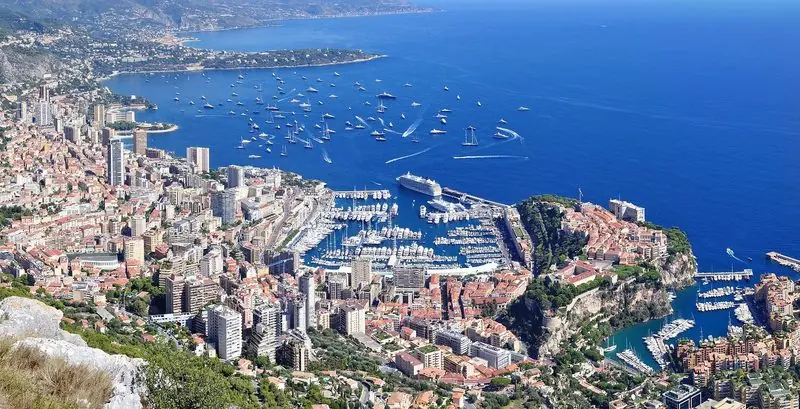
| Lage | Monaco (La Condamine), Französische Riviera |
|---|---|
| Betreiber | Societe d'Exploitation des Ports de Monaco (SEPM) |
| Liegeplätze | rund 700, darunter etwa 30 Gastliegeplätze |
| Liegeplätze für große Yachten | etwa 110 Positionen für Yachten über 24m |
| Max. LOA | größte Yachten bis rund 135m an der äußeren Mole |
| Wassertiefen | von wenigen Metern an den Kais bis rund 30m |
| Hochsaison | Monaco Grand Prix Ende Mai und die Monaco Yacht Show Ende September |
| Grand Prix week, 2026 | best trackside Grand Prix berth for a 50-59 m yacht about EUR 110,135 for the week |
| Annual berth, 2026 | annual berth for a 20 m yacht about EUR 25,000 to EUR 35,000 |
| Alternative with purchasable tenure | Cala del Forte, Ventimiglia, Monaco Ports-owned, 35 m concession quoted around EUR 1.6 million in 2026 |
| Services | 220V and 380V shore power, BP fuel station in port, grey water collectors, contracted black water pumping |
| Fixed dates 2026 | Formula 1 Grand Prix 5-7 June, Monaco Yacht Show 23-26 September |
| Shore power, Digue Rainier III | six points at 410 V, 2,000 A, 1,250 kVA, plus one high-voltage point at 6,600 V, 300 A, 3,400 kVA (port booklet, updated 20 March 2025) |
| Frequency | not published by the port. Monaco is on the European 50 Hz grid and no 60 Hz supply is advertised, so a 60 Hz yacht converts on board |
| Shore connection is compulsory on the dyke, sewage discharge is prohibited, radars off at the port entrance | |
| Pilotage compulsory for movements inside the port by yachts of 80 m and over | |
| Metered fluids | EUR 0.4188 per kWh and EUR 6.2245 per cubic metre of fresh water, VAT included, 2025 schedule |
| Depth on the dyke | 8 m of clear water maintained above the ground lines by tension, moorings at 15 m, marked by diver-set buoys |
| Weather limit on the dyke for yachts under 200 m: Beaufort 10 off the land (48 to 55 knots), Beaufort 8 off the sea (34 to 40 knots), above which the port can order the yacht off the berth | |
| Cost, 2026 published passage card, Hercule outside the dyke, VAT included: 50 to 54.99 m at EUR 500.40 a day low season and EUR 1,258.80 high season | |
| Cost, 2026 published passage card | 60 to 64.99 m at EUR 662.40 a day low and EUR 1,549.20 high, high season 1 May to 1 October 2026 |
| Cost, winter card 2026-2027, 1 October to 1 May, VAT included: EUR 97,456.80 for 50 to 54.99 m, EUR 116,722.80 for 60 to 64.99 m | |
| Multihull surcharge | 60 per cent on the Hercule passage and winter cards |
| Dyke fender wall | 22 units of 2,300 x 3,000 mm, 200 tonnes, 299 kNm energy, with four ground lines rated 60 to 80 tonnes horizontal traction |
Der Hafen im Zentrum des Fürstentums
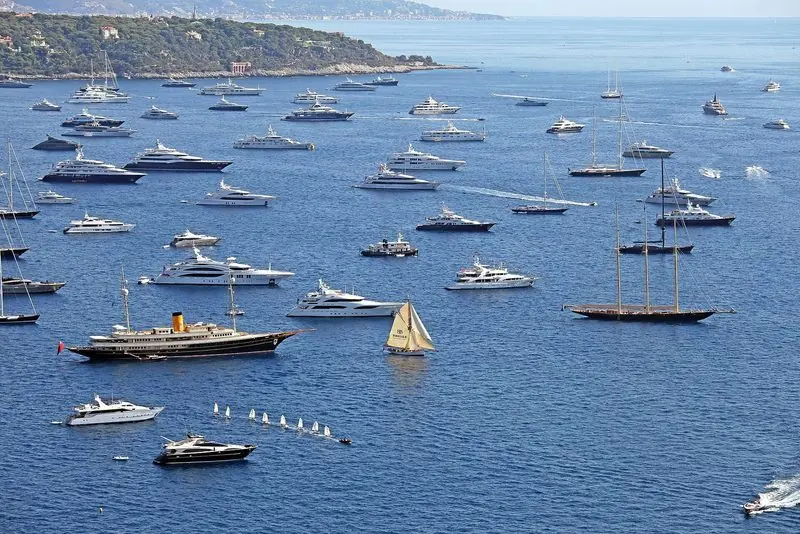
Port Hercule liegt im Viertel La Condamine zwischen der Altstadt Monaco-Ville und den Türmen von Monte-Carlo. Es ist einer der wenigen wirklich tiefen Naturhäfen an diesem Küstenabschnitt, weshalb er seit der Antike Schifffahrt und seit mehr als einem Jahrhundert Yachten anzieht. Das Wasser reicht unmittelbar an die Stadt heran, sodass eine Yacht hier zwischen Banken und Hotels liegt und nicht draußen auf einer aufgeschütteten Landzunge. Genau diese Nähe macht den Ort aus.
Der Hafen wird von der Societe d'Exploitation des Ports de Monaco betrieben, der staatlichen Gesellschaft, die die beiden Häfen des Fürstentums verwaltet. Eine lange Mole und ein großer schwimmender Wellenbrecher schützen das Becken vor der Dünung, die von Süden hereindrücken kann. Die Wassertiefen reichen von wenigen Metern an den Kais bis etwa dreißig in den äußeren Bereichen, sodass der Hafen große Einheiten aufnehmen kann, die anderswo aufsetzen würden. Die Anlage ist über Jahrzehnte öffentlicher Baumaßnahmen verfeinert worden und nicht aus dem Nichts errichtet.
Was das Becken aufnehmen kann
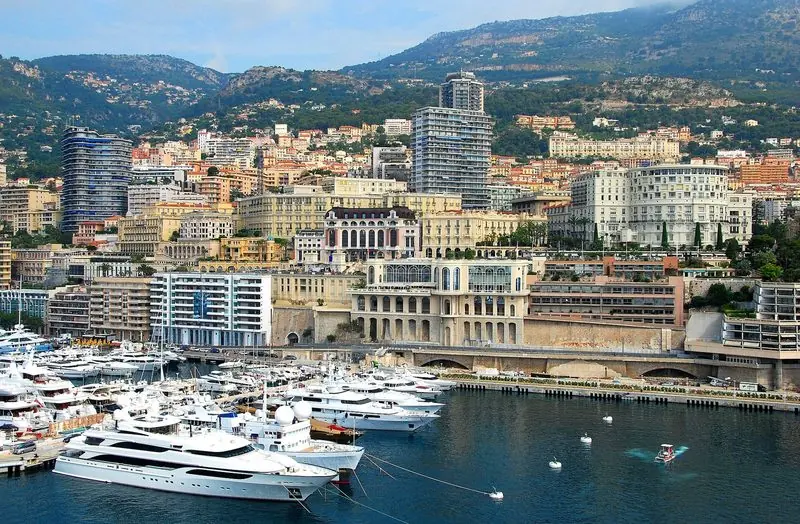
Port Hercule hält insgesamt rund 700 Liegeplätze, eine Zahl, die alles von kleinen ortsansässigen Booten bis zu den größten Gästen umfasst. Etwa hundert dieser Positionen sind für Yachten über 24 Meter dimensioniert, und eine kleinere Zahl an Gastliegeplätzen wird im Lauf des Jahres frei, wenn Eigner kommen und gehen. Die Kais sind so angeordnet, dass die größten Yachten an den Außenmauern liegen, wo das Wasser am tiefsten ist. Der Platz nahe der Mitte gehört zum umkämpftesten im Mittelmeer.
Der Hafen kann Yachten bis etwa 135 Meter aufnehmen, wobei die allergrößten mit dem Heck zum Kai an der äußeren Mole hinter dem Schwimmbad liegen. Die Wassertiefe am Liegeplatz und die geschützte Zufahrt sorgen dafür, dass die Breite nur selten die begrenzende Größe ist. Feste Liegeplätze werden hier so gut wie nie frei, und langfristige Pachtverträge für die besten Positionen wechseln privat zu Preisen, die in die Millionen reichen. Eigner, die Sicherheit wollen, sichern sich einen Liegeplatz meist lange bevor sie ihn brauchen.
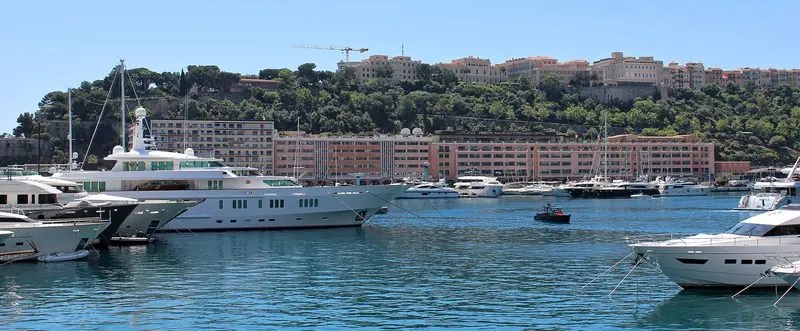
Die Adresse, die keiner Erklärung bedarf, im sichtbaren Zentrum der Yachtwelt.
Dienstleistungen für eine anspruchsvolle Flotte
Für einen kleinen Staat hält Monaco eine bemerkenswerte Tiefe an maritimen Gewerken in Gehweite des Kais bereit. Treibstoff und Landstrom werden am Liegeplatz abgewickelt, und das Hafenamt koordiniert die Manöver, die ein voller Hafen verlangt. Proviantierung und Crew-Betreuung liegen wenige Schritte landeinwärts. Ein Eigner muss die Yacht für die alltägliche Betreuung kaum irgendwohin schicken.
Das Fürstentum umgibt den Hafen zudem mit Dienstleistungen, die mit der See nichts zu tun haben. Privatbanken und Family Offices sitzen wenige Straßen vom Wasser entfernt, und das zählt für die Art von Eigner, die hier eine Yacht hält. Die Sicherheit ist im ganzen Staat streng geregelt, und diese Gewissheit gehört zu dem, was ein Liegeplatz in Monaco mitkauft. Das Ergebnis ist ein Hafen, in dem die Yacht und die Angelegenheiten des Eigners auf derselben Quadratmeile liegen.
Die Saison und die Szene
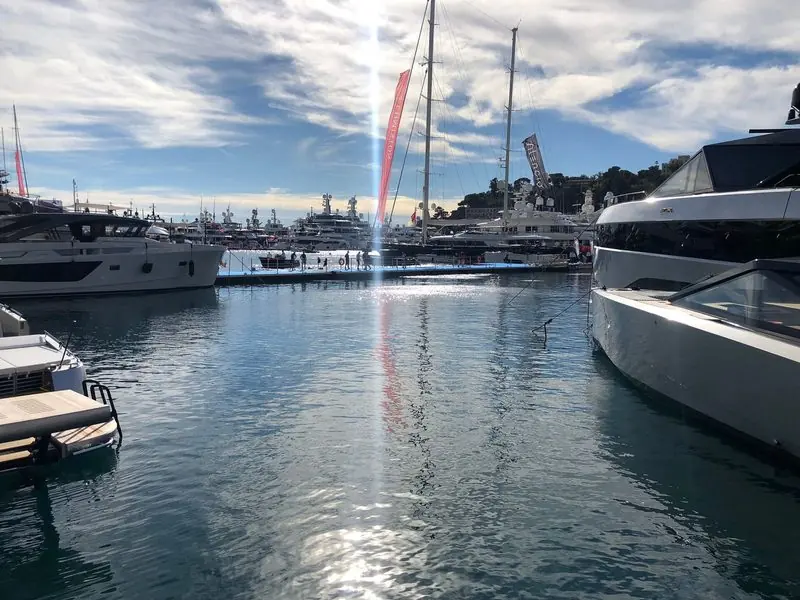
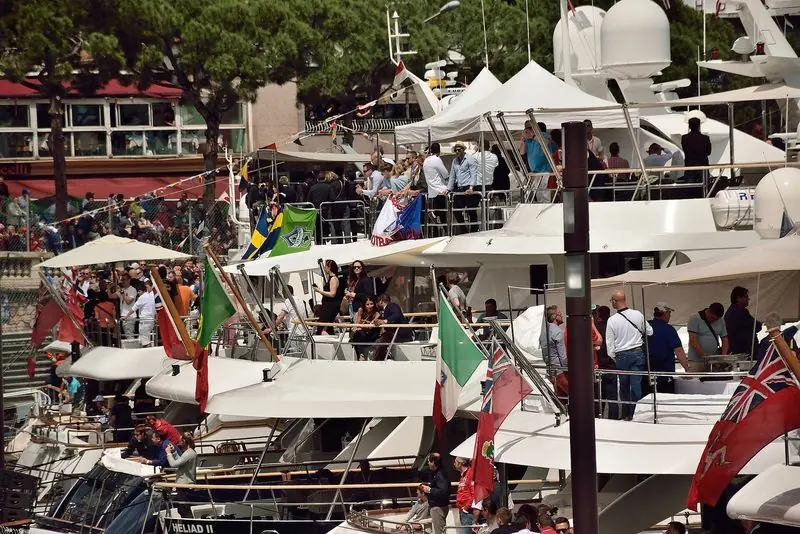
Zwei Termine beherrschen das Jahr in Monaco. Der Formel-1-Grand-Prix Ende Mai macht den Hafen zur Tribüne, mit Yachten, die sich Reling an Reling entlang der Kais an der Strecke drängen. Die Monaco Yacht Show Ende September füllt das Becken mit den jüngsten Stapelläufen und den Brokern und Käufern, die ihnen folgen. Dazwischen bleibt der Hafen den Sommer über betriebsam, weil Eigner Monaco als Basis nutzen.
Die Szene rund um den Hafen ist dicht, und das mit Absicht. Restaurants und Hotelterrassen blicken direkt auf das Wasser, und gesehen zu werden gehört für viele Eigner zum Reiz. Es ist kein ruhiger oder privater Hafen, und das weiß jeder, der hier eine Yacht liegen hat. Wer will, dass seine Ankunft bemerkt wird, findet im Mittelmeer keinen Liegeplatz, der das so unverstellt leistet.
Wo er in die Pläne eines Eigners passt
Port Hercule funktioniert am besten als Schauliegeplatz und Sommerbasis und nicht als Ort zum Verschwinden. Er liegt in kurzer Fahrt zu Saint-Tropez im Westen und zur italienischen Riviera im Osten, sodass ein Eigner ihn als Drehpunkt für die gesamte Saison im westlichen Mittelmeer nutzen kann. Der Terminkalender gibt dem Jahr seine Form, und viele Eigner planen ihre Bewegungen um die beiden großen Wochenenden herum. Kaum ein anderer Ort an dieser Küste bündelt so viel Aufmerksamkeit in einem einzigen Becken.
Der Preis dafür sind Kosten und Sichtbarkeit. Ein Liegeplatz hier verlangt einen Aufschlag, der die Adresse abbildet und nicht die bloßen Quadratmeter Wasser, und im Hochsommer bietet der Hafen wenig Privatsphäre. Eigner, die Ruhe schätzen, kombinieren einen Liegeplatz in Monaco oft mit einem stilleren Heimathafen anderswo. Als Ansage, im Zentrum der Yachtwelt angekommen zu sein, bleibt er jedoch der Maßstab, an dem die anderen gemessen werden.
Privacy, and the fact that there is none
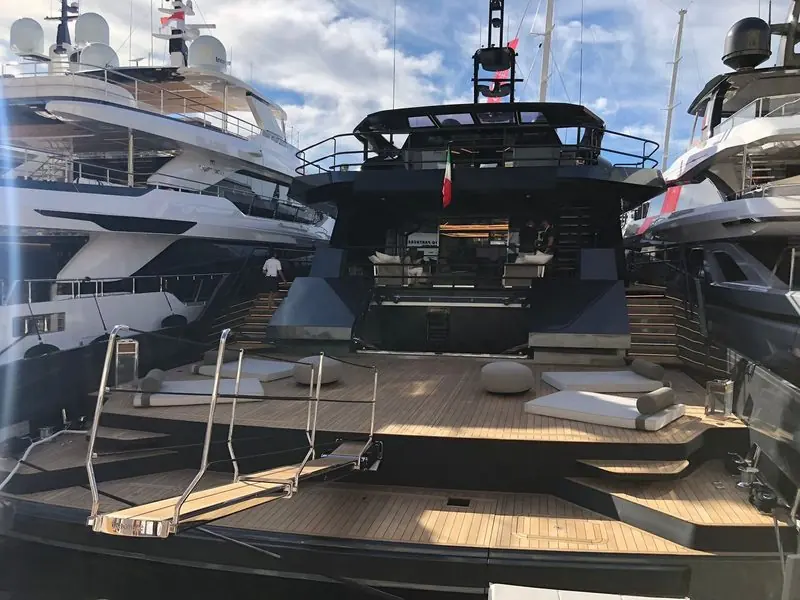
Monaco is one of the most heavily policed and surveilled square miles in Europe, and that reassurance is a real part of what the berth buys. Crime against a yacht or its guests is close to a non-issue. Access to the quays is controlled and the port office knows every movement in the basin.
Privacy from the public is a separate matter. Restaurant terraces, hotel rooms and the Boulevard Albert 1er look straight down onto the water from close range, the quays are a public promenade for much of the year, and during show and race weeks the yacht is photographed continuously from a few metres off the passerelle. An owner who wants the boat unseen should not take a berth here.
Ashore, and getting to it
The harbour is the middle of the town. The Casino square, the Hotel de Paris and the Yacht Club de Monaco are within a short walk of the quays, and the banking and family-office cluster that many owners deal with sits in the same few streets. For a week with family the constraint is that Monaco is small and built up. There is one usable beach at Larvotto, the Oceanographic Museum and a good deal of shopping, and after four or five days most families want the tender or the car.
Access is the strongest argument for the port. Nice Cote d'Azur is the closest airport with long-haul and private-jet handling, and Monacair runs a scheduled helicopter shuttle from there to the Monaco heliport at Fontvieille in seven minutes, roughly every half hour from early morning. The road transfer is around 30 kilometres and unpredictable, sometimes over an hour in summer traffic. Italy is twenty minutes east and Saint-Tropez is a comfortable morning's run west.
When to be there and when not
Two weeks dominate the year. The Formula 1 Grand Prix, which in 2026 moved out of its traditional May slot to 5 to 7 June, packs the harbour rail to rail along the circuit quays and rewrites the port's rules for a fortnight either side. The Monaco Yacht Show follows on 23 to 26 September 2026, filling the basin with around 120 superyachts and the brokerage world that follows them. Both are effectively closed to anyone who did not arrange a place well in advance.
The workable weeks are the rest of the summer, June through to mid-September, when Monaco functions as a base for the Riviera and the Italian coast. Spring and late autumn are pleasant and quiet, and winter berthing is genuinely available at reduced rates because much of the fleet has gone to refit or across the Atlantic. The weather that ends a day here is an easterly, which builds a short sea outside the port and makes the coastal run east towards Italy unpleasant well before it troubles the basin itself.
The honest downside
An owner cannot own the asset. Everything an owner spends on a Monaco berth is rent on something the state can decline to renew, allocated under a system that puts nationality and residency ahead of the size of the yacht or the length of the relationship. For an owner used to buying his way to certainty, that is the hard part, and it is why so many have quietly taken concessions at Ventimiglia instead and accepted the fifteen-minute shuttle.
The rest of it is crowding and cost. The basin is tight, movements are choreographed, wash from the constant traffic makes the inner berths lively, and in peak weeks the yacht becomes public scenery. Event prices have risen sharply since 2019. Most owners who want calm pair a Monaco berth with a quieter home port.
The shore power on the Rainier III dyke, in numbers
The port publishes what it built for mega yachts on the Digue Rainier III and the figures are unusually specific. Six shore power points deliver 410 V at 2,000 A, rated 1,250 kVA each, and a single high-voltage point delivers 6,600 V at 300 A, rated 3,400 kVA. The high-voltage position is the one to plan around, because a yacht taking it steps the supply down through her own transformer rather than plugging a standard cable, and it has to be arranged with the Capitainerie before arrival. Six units at 410 V and one at 6,600 V is also the practical measure of how many mega yachts the dyke can serve at once. All figures from the port's own superyacht infrastructure booklet, updated 20 March 2025.
Frequency is not stated anywhere in that booklet. Monaco sits on the European 50 Hz grid and the port advertises no 60 Hz supply, so a yacht built for 60 Hz converts on board. Running generators instead is not an option, because connection to shore power is compulsory at the dyke and discharge of sewage is prohibited. Fluids are metered rather than bundled, at EUR 0.4188 per kWh and EUR 6.2245 per cubic metre of fresh water, both with VAT included, on the March 2025 schedule. Two further port rules catch crews out. Radars must be switched off at the port entrance, and pilotage is compulsory for any movement inside the port by a yacht of 80 m or over.
The published tariff, and the winter number that matters more
Monaco publishes a passage tariff for Port Hercule outside the dyke, with VAT at 20 per cent already included. On the 2026 card a yacht of 50 to 54.99 m pays EUR 500.40 a day in low season and EUR 1,258.80 a day in high season, and a yacht of 60 to 64.99 m pays EUR 662.40 and EUR 1,549.20. High season runs 1 May to 1 October 2026, low season either side of it. The same card gives monthly rates of EUR 13,749.60 and EUR 25,207.20 for the 50 to 54.99 m band, and it runs in length bands all the way to 210 to 219.99 m. A multihull pays 60 per cent on top. Berths on the dyke itself are not on the passage card and are quoted by the Capitainerie.
The winter card is the one that shapes a season. Hivernage 2026-2027 covers 1 October 2026 to 1 May 2027 and is quoted as a single figure for the whole period, VAT included: EUR 97,456.80 for a 50 to 54.99 m yacht and EUR 116,722.80 for 60 to 64.99 m. Worked through, a 62 m motor yacht wintering at Hercule commits EUR 116,722.80 for the berth, then adds metered power at EUR 0.4188 per kWh and water at EUR 6.2245 per cubic metre on actual consumption, then adds the diver. Divers are chargeable to the yacht every time a dyke position has to slip and re-connect its ground lines so a neighbour on La Cloche can lift her anchor, which happens on someone else's schedule and not on the owner's.
The wind that empties the dyke, and the 8 m that is the real depth
Port operations have a published weather limit and it is asymmetric. For a yacht under 200 m on the Rainier III dyke, the threshold to remain alongside is Beaufort 10 with the wind off the land, which the port gives as 48 to 55 knots, and Beaufort 8 with the wind off the sea, 34 to 40 knots. Above either figure the port authority can require the yacht to leave the berth. It takes a full gale off the land to move a boat off the dyke and only a strong breeze off the sea, which is a plain statement of where the exposure lies. The sea wind here is the easterly, and it closes the coastal run east towards Italy long before it troubles the inner basin.
The depth figure that binds on the dyke is not the 30 m under the outer pier. The mooring system is dimensioned for winter conditions and works on four ground lines rated at 60 to 80 tonnes of horizontal traction, with concrete blocks and submerged buoys sitting at 15 m. Those lines must be held in tension for the entire stay, and the yacht is required to tell the Capitainerie if tension cannot be maintained, because the tension is what keeps 8 m of water clear above the lines. A diver sets marker buoys on the 8 m point when a yacht connects. A hull drawing more than that has a problem the headline harbour depths do not disclose. The fender wall she lies against runs to 22 units of 2,300 x 3,000 mm, 200 tonnes in total, rated at 299 kNm.
An Land, Anfahrt und Buchung
| Getting there | Nice Cote d'Azur is the airport. Monacair and Blade fly the 18 km to the Monaco heliport at Fontvieille in about 7 minutes, from around EUR 195 a seat, and the heliport is 1.8 km and about four minutes by car from the quay. The train from Nice-Ville to Monaco-Monte-Carlo takes about 22 minutes for under EUR 10, and the station is a short walk from the port. |
|---|---|
| Arriving by sea | Call the Port Authority on VHF channel 12 or +377 97 77 30 00. Reception runs 07:30 to 21:30 in season with a watchman around the clock. The speed limit inside the port is 3 knots, and yachts of 80 m and over take a compulsory pilot for movements inside the harbour. |
| Reserving a berth | For an ordinary visit there is no advance reservation: you call the pilot station on channel 12, and the port asks for 24 hours notice for a large yacht. Grand Prix week works the opposite way. Requests go through the SEPM online portal as a full dossier with original documents and an endorsement letter, there is a booking fee of EUR 300 including VAT, and an allocation committee weighs each application on the yacht, the intended use and the hospitality brief. Late or incomplete submissions are not reviewed at all. |
| Services on the quay | Fresh water and 220 V and 380 V power on the quays and pontoons, a BP fuel station at the landing stage, 12 showers and 20 WCs, and wifi at extra cost. Grey and black water go to the collection network or to an authorised contractor; discharging overboard is prohibited. |
| Eating within walking distance | Quai des Artistes is the Parisian-style brasserie on the quay itself, built around a seafood counter. La Rascasse sits on the Grand Prix bend and is the crew institution, recently reworked around a motorsport sports-bar identity. The Marche de la Condamine food hall at Place d'Armes, at the head of the port, is the affordable end and serves 18:00 to 21:30 Tuesday to Sunday. Le Louis XV at the Hotel de Paris is the three-star for guests, a short ride up the hill. Beefbar is worth knowing but sits at 42 Quai Jean-Charles Rey, which is Fontvieille, not this port. |
| After dark | La Rascasse and La Mome, the rooftop over the port, are the two on Port Hercule itself. Jimmy'z Monte-Carlo, Sass Cafe and Twiga are the late rooms up the hill. Maona runs seasonally in the summer months and Coya from April to October. |
Was Eigner und Crew berichten
Easterly swell was the harbour's historic weakness, and the dyke is the answer
Port Hercule was long exposed to swell driven by easterly winds, which is precisely what the 352 m, 160,000 tonne semi-floating dyke built under Prince Rainier III was designed to stop. It works, but Fontvieille is still the better shelter from a hard easterly, which is why some captains move rather than sit it out.
Hydro International, and the Societe d'Exploitation des Ports de MonacoYou cannot buy a berth here, and that shapes the whole ownership plan
Berths are state-owned and rented only, with priority to Monegasque nationals and then residents, so owners routinely secure a position years before taking delivery of the yacht that will use it. Those who want tenure they can actually own go to Cala del Forte at Ventimiglia, which Monaco Ports owns, where a 35 m concession was quoted at around EUR 1.6 million in 2026.
Societe d'Exploitation des Ports de Monaco, and 2026 market reportingGrand Prix week is an application, not a booking
An allocation committee reads every dossier and weighs the yacht, the intended use and the hospitality brief, in collaboration with the Automobile Club de Monaco. Incomplete or late applications are not reviewed. Owners who treat race week like a marina reservation do not get in.
Societe d'Exploitation des Ports de Monaco, Automobile Club de MonacoLa Rascasse is where the crew actually go
It sits on the Grand Prix bend on the quay itself and is named repeatedly in crew guides as the port's own bar rather than a guest destination, which is useful to know in both directions when an owner is deciding where to take a party.
Superyacht Services Guide, VisitMonaco
Was gut ist und worauf zu achten ist
Stärken
- The only deep natural harbour on this coast40 m at the entrance and 2.5 to 55 m in the basin, with an outer pier built for cruise ships to 300 m.
- Everything is walkableStation, food hall, brasseries and the crew bar are all on or beside the quay, and the heliport is four minutes by car.
- Fully sheltered since 2002The semi-floating dyke closed the easterly-swell weakness the harbour carried for a century.
- The address does work no other berth doesTwo fixed events a year put the world's buyers, brokers and yards on this quay.
Worauf zu achten ist
- You can never own the berthState-owned, rented only, with priority to nationals and residents. Planning years ahead is not optional.
- Visitor capacity is very smallAbout 30 of the 760 berths are held for visitors, and only around 110 are sized for yachts over 24 m.
- Race week pricing sits in a category of its ownAbout EUR 110,135 for a 50 to 59 m yacht for the week, reported in 2026.
- The rules bite, particularly on the dykeShore connection compulsory, sewage discharge prohibited, radars off at the entrance, and a compulsory pilot at 80 m and over.
Für wen: Eigner, die eine Sommerbasis und einen Schauliegeplatz im sichtbaren Zentrum der Mittelmeerflotte wollen.