Bannenberg & Rowell
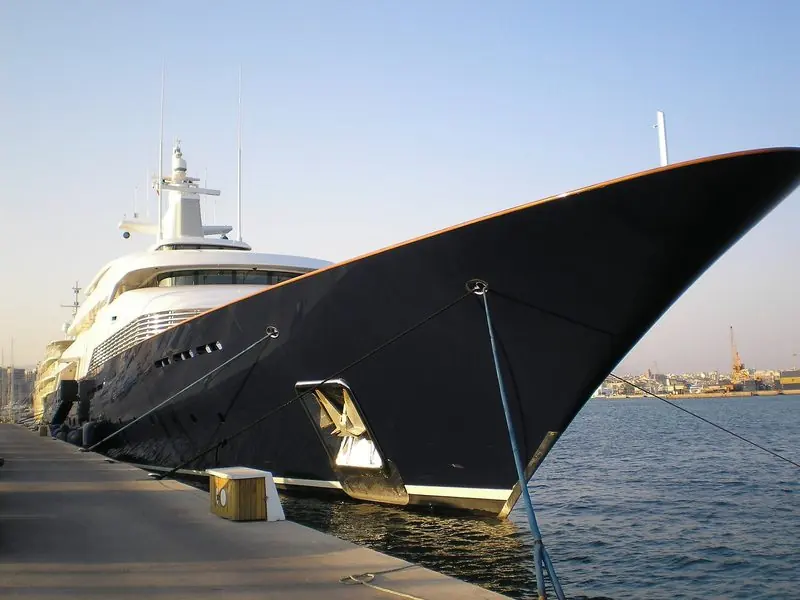
| Fundador | Jon Bannenberg (estudio desde principios de los años sesenta) |
|---|---|
| Responsables actuales | Dickie Bannenberg y Simon Rowell |
| Cambio de nombre | Bannenberg & Rowell en 2003 |
| Sede | Fulham, Londres |
| Disciplinas | diseño exterior e interior, nuevas construcciones y refits |
| Yates emblemáticos | Valor (79,5 m), Renaissance (112 m), Avantage (87 m) |
| Herencia | Jon Bannenberg, llamado el padre del diseño náutico moderno |
| Jon Bannenberg landmark | Nabila, 85.9 m, Benetti, 1980, now sailing as Kingdom 5KR |
| Renaissance, 112 m, Freire Shipyard, 2023: exterior and interior, and the largest superyacht built in Spain | |
| Avantage, 87 m, Lurssen, 2020 | exterior and interior |
| Valor, 79.5 m, Feadship, launched May 2025: interior, under a Studio De Voogt exterior and naval architecture | |
| Other interior-only work | Predator (72.8 m, Feadship, 2008) and Scott Free, delivered as Elandess (60 m, Abeking and Rasmussen, 2009) |
| Team | twelve people as described by Forbes in February 2017. The studio publishes no current headcount (checked 28 July 2026) |
| Design fee | not published. Market band 1 to 5 per cent of build cost, plus 2 to 4 per cent project management, both outside the yard price (SuperYachtReview 2026 price guide, updated March 2026) |
| On a refit, ownership of the original designer's as-built drawings sets the cost of the project and should be established before the design contract is signed | |
Heredero del padre del yate moderno
Jon Bannenberg fundó el estudio a principios de los años sesenta y reformuló durante las décadas siguientes cómo se diseñaban los yates. Se le reconoce ampliamente como el padre del superyate moderno, y su influencia recorre buena parte del sector. Su hijo Dickie Bannenberg y el diseñador Simon Rowell dirigen hoy la consulta. Los dos trabajaron junto a Jon durante muchos años antes de tomar el timón. Dickie Bannenberg pasó cerca de dos décadas trabajando junto a su padre antes de dirigir la firma.
El estudio pasó a llamarse Bannenberg & Rowell en 2003, el año siguiente a la muerte de Jon Bannenberg. Tiene su base en Fulham, en Londres, y trabaja tanto en yates como en proyectos en tierra. Desde el cambio de nombre ha entregado alrededor de cuarenta proyectos náuticos entre nuevas construcciones y refits. El legado del fundador sigue siendo una parte viva de la identidad del estudio. El equipo actual trata esa herencia como una responsabilidad sobre la que construir y no como un trofeo con el que comerciar.
Creativo y accesible
El estudio describe su trabajo como creativo, contemporáneo y accesible, y se resiste a un estilo de casa fijo. Diseña interiores y exteriores y disfruta dando a cada yate un carácter propio. El trabajo tiene a menudo un punto de ingenio y de color que lo separa de rivales más solemnes. Esa apertura refleja el espíritu por el que se conocía a su fundador. Jon Bannenberg rompió las reglas de su tiempo, y el estudio sigue resistiéndose a asentarse en una sola fórmula.
La oficina se maneja igual de bien con un refit audaz que con una nueva construcción desde cero. Trata cada pliego en sus propios términos en lugar de imponer una plantilla. Esa flexibilidad ha producido una cartera variada y viva. El estudio valora las ideas por encima de la fórmula. Un refit audaz puede ser tan inventivo como una nueva construcción en manos del estudio.
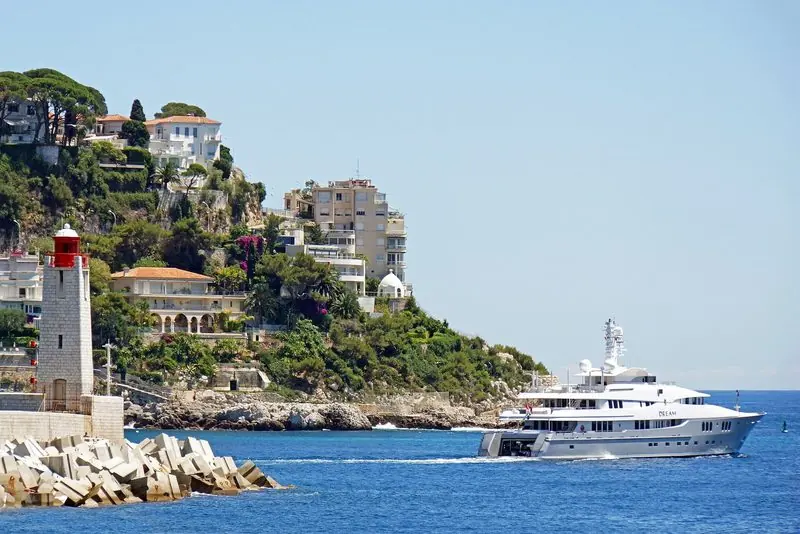
La revolución de Jon Bannenberg, llevada adelante con ingenio y color.
Una cartera variada
La obra construida del estudio incluye el Valor, un Feadship de 79,5 metros, y el Renaissance de 112 metros del astillero Freire. El Avantage de 87 metros de Lurssen y el Elysian de 60 metros de Abeking and Rasmussen, antes Elandess, figuran junto a ellos. Yates menores de Heesen y Feadship completan un rango amplio de tamaños. La variedad de astilleros y de tamaños llama la atención. Trabajar con tantos constructores distintos es la marca de un estudio en el que se confía ampliamente y que no está atado a un solo astillero.
Los propios yates de referencia del fundador, como el muy comentado Nabila de 1980, siguen siendo puntos de referencia en la historia del oficio. El estudio actual construye sobre esa herencia con su propia serie de trabajo nuevo. Sus refits han dado vida nueva a varios yates antiguos. La cartera se lee inventiva antes que repetitiva. El estudio prefiere sorprender a un armador que repetirse de un proyecto al siguiente.
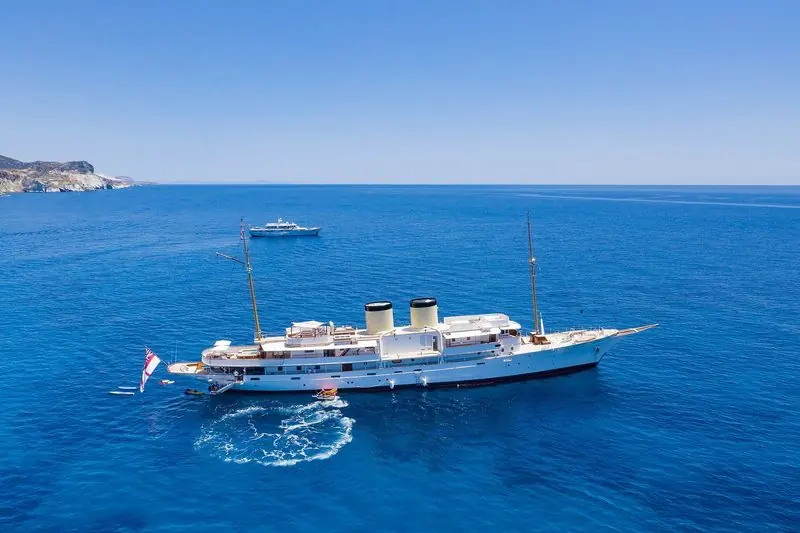
Armadores, astilleros y refits
Bannenberg & Rowell trabaja con un conjunto amplio de astilleros en Países Bajos, Alemania y otros lugares. Su disposición a asumir refits además de nuevas construcciones ensancha el tipo de armador al que sirve. El estudio se relaciona con el armador de manera relajada y colaborativa. Ese trato accesible es parte de su atractivo. Los armadores describen al estudio como fácil y agradable en el trato, algo que importa en una construcción que dura años.
La oficina mantiene un papel activo del concepto a la entrega tanto en nuevas construcciones como en refits. Sus diseñadores protegen el carácter de un proyecto a lo largo del largo proceso de construcción. La amplitud del estudio le permite adaptarse a pliegos muy distintos. Esa versatilidad mantiene variada su cartera de pedidos. Asumir nuevas construcciones y refits ensancha el abanico de armadores a los que puede servir el estudio.
Llevar un legado adelante
El estudio ocupa un lugar especial como descendiente directo de la consulta revolucionaria de Jon Bannenberg. Ese linaje le da una autoridad que pocos pueden reclamar. Bajo Dickie Bannenberg y Simon Rowell se ha labrado su propia reputación en lugar de vivir del pasado. El equilibrio entre herencia y trabajo nuevo es su fortaleza. Vivir solo del pasado habría sido el camino fácil, y el estudio ha decidido claramente no tomarlo.
La oficina sigue entregando nuevas construcciones y refits a ritmo constante. Su estilo creativo y accesible lo ha mantenido vigente a lo largo de dos generaciones. El nombre Bannenberg sigue pesando en todo el sector. El estudio sigue siendo una voz distintiva del diseño náutico. Dos generaciones después, el nombre Bannenberg sigue significando hacer las cosas de una manera algo distinta.
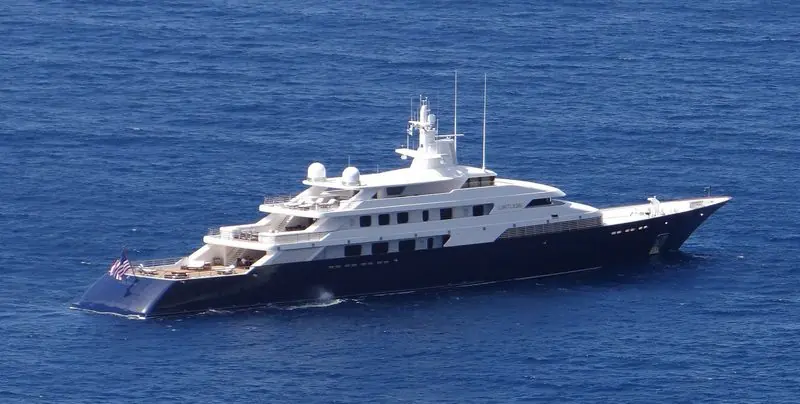
Valor, and interiors inside other people's boxes
Valor was launched by Feadship in May 2025 at 79.5 metres and 2,025 GT over six decks, with Studio De Voogt taking the naval architecture and the exterior and Bannenberg and Rowell the interior. She has a two metre ice belt above and below the waterline and a Bureau Veritas Young Ice 2 notation, which qualifies her to transit the Northwest Passage. Her propulsion is diesel-electric hybrid with four variable-speed generators, a water-cooled lithium-ion battery bank, a solar array on the mast and twin Schottel azimuthing thrusters, and Feadship quotes zero-carbon operation for up to two days.
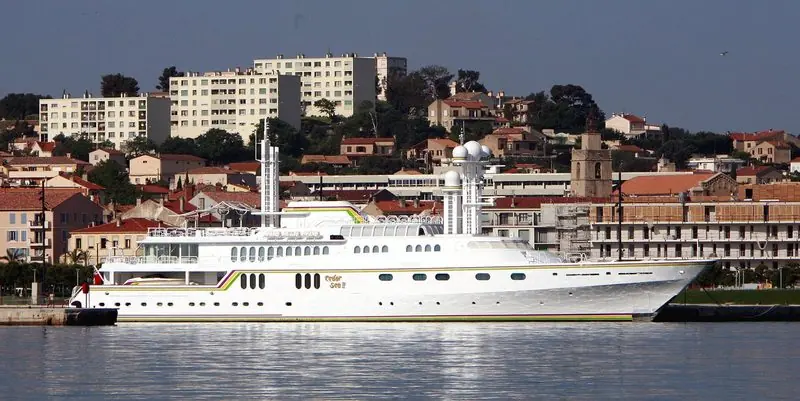
An explorer interior is a distinct discipline. Furniture has to be secured for conditions a Mediterranean yacht never sees, surfaces have to survive wet gear and cold, and the crew spaces carry a heavier load because the boat is used harder. The studio has similar work behind it. Predator, 72.8 metres from Feadship in 2008 and the first Feadship delivered with a reverse bow, carries a Bannenberg and Rowell interior and took a Neptune at the World Superyacht Awards in 2009.
Refits, which many studios avoid
The office takes refits as readily as new builds, and that is unusual at this level. Predator returned to Feadship in 2016 for a refit that added two guest suites. Scott Free, the 60 metre Abeking and Rasmussen delivered in 2009 as Elandess with a Donald Starkey exterior, carries a Bannenberg and Rowell interior.
Refit work is a harder brief than a new build and it pays less. The structure, the systems and the deck heights are fixed, half the drawings are missing or wrong, and every discovery on site costs money that was not budgeted. A studio willing to do it is a useful appointment for an owner buying a good hull with a tired interior, which at current new-build prices and delivery slots is an increasingly sensible route into a large yacht.
How a commission runs, and what it costs
The studio works closely and informally with owners from concept through delivery, on new builds and refits alike, and its designers stay on a project through construction to protect the scheme. There is no naval architecture in house, so the yard or an outside office holds the hull, the structure and every performance guarantee in the build contract. On a Feadship the platform comes from Studio De Voogt. Commercially the design agreement is separate from the build agreement and is signed and paid first, in stages, which means an owner can stop after concept for the price of the concept and can take the drawings to more than one yard for quotation, subject to the confidentiality undertakings the studio will require.
No studio at this level publishes a fee scale. The market band is 1 to 5 per cent of build cost for the designer and 2 to 4 per cent for project management, both outside the yard's quoted price, per the SuperYachtReview guide updated March 2026, and a mandate covering exterior and interior sits in the upper half of it. A refit is a different animal. It is faster, far less predictable, and the design fee is a smaller number attached to a much larger unknown, because a refit specification is written against a boat nobody has fully opened up yet. A contingency of real size should be budgeted and expected to be used.
Recognition, and who it does not suit
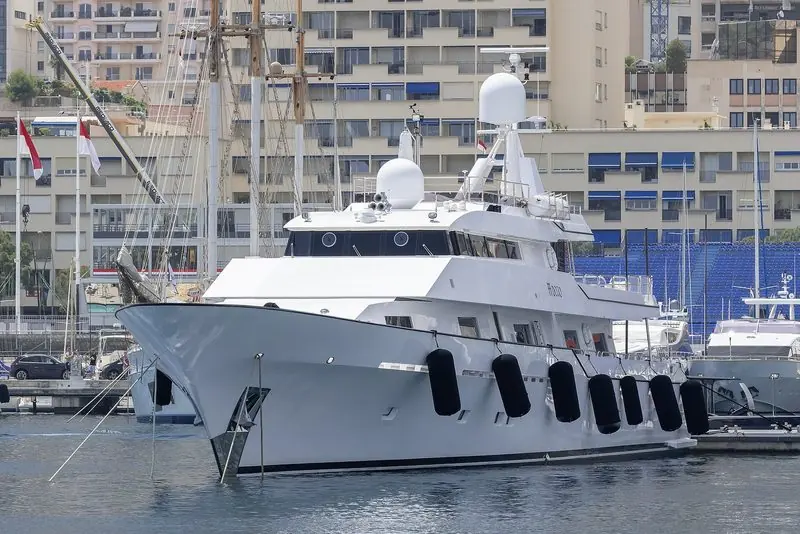
The studio's work has been recognised repeatedly, including the Neptune for Predator in 2009, and the Bannenberg name still carries weight across the industry. Awards are worth a narrow amount to an owner, confirming a finish standard and helping a broker at resale. The more useful signal is the spread of yards, which runs from Feadship and Lurssen to a Spanish builder and a German one, on new builds and refits alike.
This studio does not suit an owner who wants to buy a recognisable signature, because the practice deliberately does not have one. It does not offer naval architecture. It is not the obvious choice above about 112 metres, and it is not a sailing yacht office. Anyone who wants formal, polished grandeur will find the work too playful for the brief.
Two principals, an archive, and what the contract should cover
The practice runs on two named people, a director and a creative director, in a studio Forbes described as twelve strong in February 2017, and no current headcount is published. That concentration is part of what an owner is buying and it is also a risk that the standard documents ignore. The ITIC standard trading conditions for naval architects, dated 8 July 2025, cover intellectual property and cap liability at ten times the consultant's charges or GBP 100,000, whichever is higher, and say nothing about the unavailability of a named principal. Commercial consultancy handles this routinely, treating death or long incapacity of a key person as a termination event and requiring a replacement of equal standing subject to the client's approval.
The drawing question is sharper here than at most studios because of the archive. Copyright normally stays with the designer, with the owner licensed to build one hull, and superyacht practice at its best converts that into an exclusive, irrevocable and assignable licence, which is the standard clause Federico Santini describes in Barche magazine in August 2018. On a refit the same logic applies to the original designer's drawings, which the studio will not own and may not be permitted to copy. An owner buying a good hull that needs a new interior should establish who holds the as-built drawings before he signs anything, because that answer sets the cost of the whole project.
No signature means nothing to date
The deliberate absence of a house style is the most resale-friendly position in the directory, and almost nobody buys it for that reason. A boat that does not announce a studio also does not announce a decade. There is no fashionable silhouette to fall out of fashion and no theme the next owner has to either adopt or rip out. Ocean Independence, on 11 May 2026, ranks builder pedigree, specification and condition above cosmetic detail in what holds value, which is a polite way of saying the market prices the boat and not the byline. Work that is unformulaic by intention slips through that filter without a penalty.
Against that, the Bannenberg name still carries with brokers and with the trade, and it earns a hearing that an unknown studio would not get. The one place the approach costs money is with a buyer who wants to be told what he is looking at. Something recognisable is easier to market in a listing photograph, which matters when the median yacht of 24 metres and over took 277 days to sell in 2025 against an average of 487. A characterful boat with no obvious label needs a broker willing to explain it, and is worth more to the buyer who works that out for himself.
Información práctica
| Design fee | Not published by the studio; the market-wide band from the SuperYachtReview 2026 price guide is 1 to 5 percent of build cost for the designer plus 2 to 4 percent for project management, both outside the yard's quoted price |
|---|---|
| How the commission runs | Concept, then design development, then detailing, procurement and site support, each stage its own fee and each a point where an owner can stop |
| Who owns the drawings | Standard practice keeps copyright with the studio; an owner should insist on an exclusive, irrevocable, assignable licence rather than the bare non-exclusive licence the ITIC standard terms default to |
| Before commissioning a refit | Establish who holds the as-built drawings of the existing interior before signing, the original designer may own them and may not permit a new studio to copy them |
| Liability cap | The ITIC standard trading conditions (8 July 2025) cap the consultant's liability at ten times its charges or GBP 100,000, whichever is higher |
Lo que cuentan armadores y tripulaciones
A captain given complete authority over the design of a major project
The owner of Predator (72.8 m Feadship) gave Captain Drewes 100 percent control over the decision-making for the entire project, including the interior brief for quiet running, no vibration and 25 knots without a turbine.
Captain Drewes, Predator (72.8 m Feadship de Vries)The studio's own account of that same project
Dickie Bannenberg said the real difficulty was making a lightweight interior look the opposite, massive and solid, using Macassar ebony and zebrano veneers, and described client contact as almost the least frequent the studio has had on any project, because Drewes had full sign-off.
Dickie Bannenberg, Bannenberg & Rowell (the studio's own account)
Lo bueno y lo que conviene vigilar
Puntos fuertes
- The name and the track record are real, not marketingDirect lineage from Jon Bannenberg, credited with founding modern yacht design in the 1960s, and roughly forty projects delivered since the 2003 relaunch, spanning Feadship and Lurssen to Spanish and German yards.
- No house style ages better than a strongly authored oneA Bannenberg & Rowell interior doesn't announce a decade the way a strongly authored scheme does, which Ocean Independence ranks among the things that actually hold resale value.
- It takes on work most studios avoidThe office does refits as well as new builds, including finishing interiors inside hulls and layouts originally designed by other people.
A tener en cuenta
- The whole studio rests on two named peopleThe practice runs on a director and a creative director, last a published headcount of twelve (Forbes, 2017) with no current figure available, and the standard ITIC contract terms have no clause for a named principal becoming unavailable.
- No naval architecture in-houseThe studio doesn't offer naval architecture, so an owner has to appoint and coordinate a separate NA office alongside it.
- Not the natural pick at the very top of the marketThe studio is not positioned as the obvious choice above roughly 112 metres, and it does not do sailing yachts.
Para quién es: Armadores que quieren un diseño inventivo y con carácter, con un punto de ingenio, en una nueva construcción o en un refit.