De Voogt Naval Architects
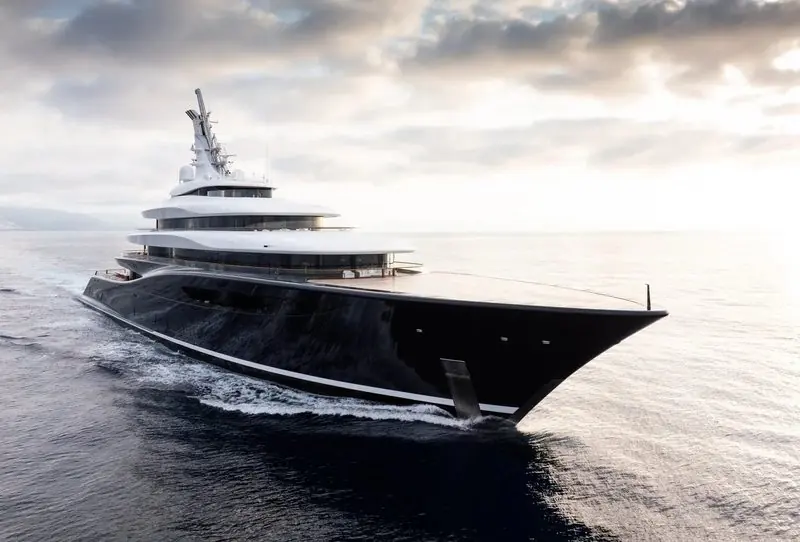
| Fundador | Henri de Voogt |
|---|---|
| Orígenes | 1913, Feadship constituida en 1949 |
| Sede | Países Bajos (zona de Haarlem) |
| Equipo | alrededor de 180 personas |
| Disciplina | arquitectura naval e ingeniería |
| Papel | centro de diseño e ingeniería de cada Feadship |
| Yates emblemáticos | Anna (110 m), Symphony (101,5 m), Savannah (83,5 m) |
| Disciplines | naval architecture and engineering, plus exterior design on more than half the Feadship fleet |
| Largest Feadship | Breakthrough, 118.8 m, launched May 2024, with exterior and interior by RWD |
| Anna, 110 m, delivered 5 October 2018 and listed since as Ambassador: De Voogt naval architecture under a Michael Leach Design exterior | |
| Savannah, 83.5 m, 2015 | exterior by De Voogt with CG Design, and Feadship's first hybrid yacht |
| Savannah's package | one medium-speed main engine on a single centreline shaft, three generators, batteries and a contra-rotating azimuthing stern thruster, with a claimed 30 per cent fuel saving |
| No separate design fee. The naval architecture is inside the Feadship build price and is not negotiated by the owner | |
| The owner still appoints and pays the exterior and interior studios himself, at a market band of 1 to 5 per cent of build cost for a designer, plus 2 to 4 per cent for project management, both outside the yard price (SuperYachtReview 2026 price guide, updated March 2026) | |
| Ocean Independence names Feadship first among the Northern European yards that hold market confidence on build quality, engineering pedigree and long-term support (11 May 2026) | |
Un siglo de arquitectura naval neerlandesa
El estudio remonta sus orígenes a 1913, cuando el arquitecto naval Henri de Voogt abrió su propia consulta en los Países Bajos. Se labró su reputación entre las dos guerras con grandes yates a motor, entre ellos un yate de 54 metros entregado al Sah de Persia en 1936. En 1949 De Voogt contribuyó a formar Feadship, una asociación exportadora que unía a los astilleros Royal Van Lent y De Vries. La oficina de arquitectura naval ha sostenido esa sociedad desde entonces. Ese tamaño refleja la profundidad de ingeniería que exige hoy un Feadship moderno.
Hoy De Voogt Naval Architects es un equipo grande de diseñadores, arquitectos navales e ingenieros con base en los Países Bajos. Aporta la arquitectura naval y la ingeniería de cada yate Feadship. Ese papel lo sitúa en el centro técnico de uno de los nombres más respetados de la náutica. El estudio ha crecido hasta unas 180 personas. El trabajo del estudio decide con qué silencio y con qué eficiencia se mueve un yate antes de que nadie vea el interior.
La ingeniería primero
La disciplina de De Voogt es la arquitectura naval, la ciencia del casco, su estructura, su estabilidad y su comportamiento en la mar. El estudio proyecta cascos eficientes y silenciosos que cumplen las reglas de clasificación y seguridad más estrictas. Su trabajo suele ser invisible para el invitado y, sin embargo, gobierna cómo se comporta un yate. La ingeniería sólida es el cimiento sobre el que se construye cada Feadship. Acertar con la arquitectura naval es la parte más difícil y menos visible de construir un yate.
La oficina desarrolla con frecuencia la arquitectura naval mientras un estilista externo dibuja el perfil por encima de la flotación. Se maneja bien en ese papel de apoyo, dando la plataforma para el exterior de otro diseñador. En muchos yates contribuye también al exterior y a la disposición general. Su prioridad es siempre un barco que funcione impecablemente en la mar. La oficina se conforma con aportar la plataforma sobre la que pueda apoyarse el perfil de otro diseñador.
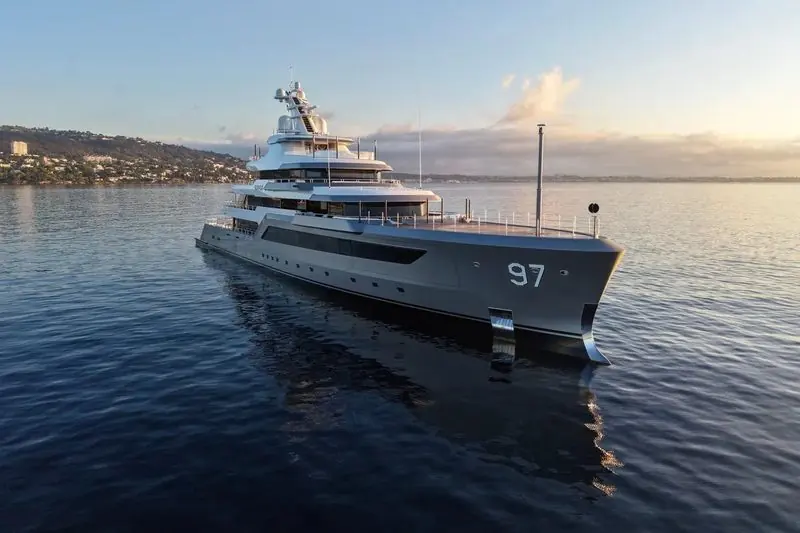
La espina dorsal de ingeniería, con un siglo a la espalda, detrás de cada yate Feadship.
Anna, Symphony y Savannah
El Anna de 110 metros es el mayor yate que ha entregado Feadship, con De Voogt responsable de la arquitectura naval. El Symphony de 101,5 metros tuvo ese récord antes que él y también se apoyó en la ingeniería de De Voogt, con exterior de Tim Heywood. El Savannah de 83,5 metros abrió camino como uno de los primeros yates de propulsión híbrida, de nuevo con arquitectura naval de De Voogt. Cada uno muestra al estudio trabajando en la frontera del tamaño o de la tecnología. Son puntos de una curva larga de avance sostenido y no logros sueltos.
Estos yates se inscriben en una larga línea de Feadship moldeados por la misma oficina a lo largo de muchas décadas. Su ingeniería ha hecho posibles tamaños de récord y propulsiones pioneras a partes iguales. Su coherencia a lo largo de generaciones de yates es notable. El nombre De Voogt respalda una flota que define la construcción náutica neerlandesa. Generación tras generación de Feadship se ha apoyado en la misma oficina de ingeniería.
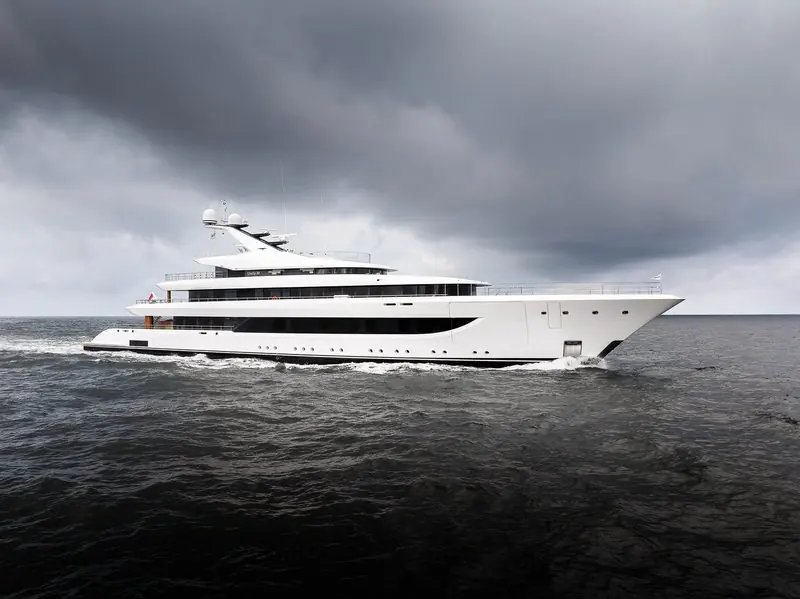
Dentro del sistema Feadship
De Voogt no trabaja como estudio independiente de alquiler al modo de la mayoría de los nombres recogidos aquí. Es el centro compartido de diseño e ingeniería de los dos astilleros constructores de Feadship. Esa integración hace que los arquitectos navales trabajen cerca de quienes construyen los yates. Es un modelo poco común de diseñador y constructor bajo una misma enseña. Esa cercanía entre la oficina de proyectos y el taller sostiene buena parte de la calidad de Feadship.
La oficina colabora a menudo con los estudios de exterior e interior que elige el armador. Aporta la espina dorsal de ingeniería mientras esos estudios dan forma a lo que el armador ve. Ese reparto ha producido muchos de los yates más admirados a flote. El sistema depende de que De Voogt acierte con los fundamentos. Los exteriores famosos solo funcionan porque la plataforma que hay debajo es sólida.
La espina dorsal de Feadship
La posición de De Voogt es inseparable de la reputación de calidad de Feadship. El siglo de arquitectura naval del estudio es uno de los historiales más largos del oficio. Su ingeniería sostiene yates considerados de los mejor construidos del mundo. Esa autoridad callada es su sello. Su linaje desde 1913 está entre los historiales ininterrumpidos más largos del sector.
La oficina sigue empujando el tamaño y la eficiencia en cada nuevo Feadship. Su papel como corazón técnico del astillero la mantiene en el centro de la náutica neerlandesa. Pocos estudios pueden reclamar un linaje tan largo e ininterrumpido. De Voogt es la espina dorsal de uno de los grandes constructores de yates. Cada nueva botadura suma a un cuerpo de ingeniería levantado a lo largo de más de un siglo.
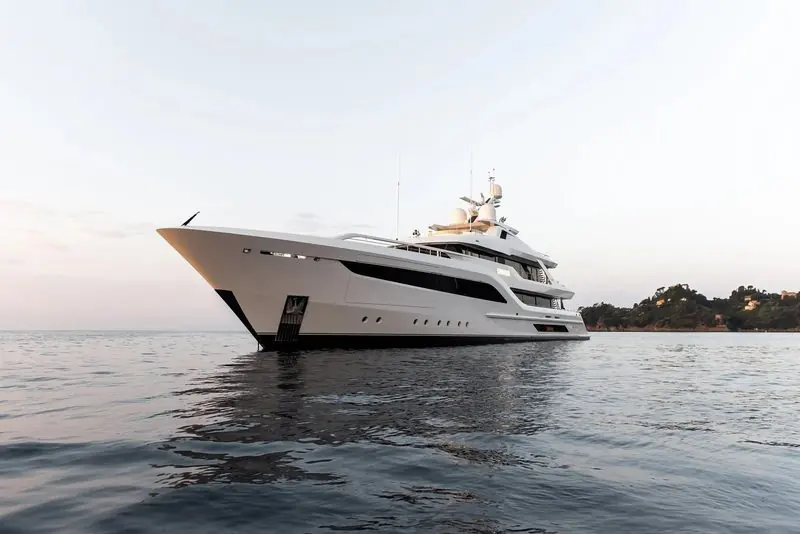
Breakthrough
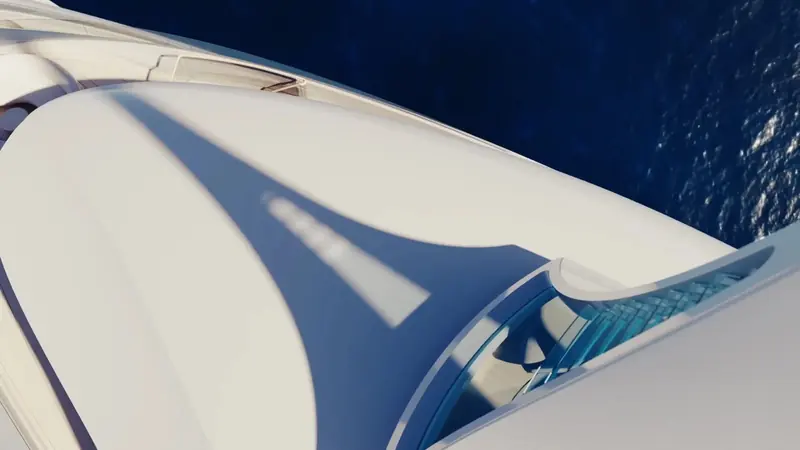
Feadship launched Breakthrough on 4 May 2024 at 118.8 metres and 7,247 GT, taking the yard's size record from Anna and becoming the largest superyacht ever launched in the Netherlands. RWD drew both the exterior and the interior. Her power comes from a 3.2 megawatt fuel-cell system running on cryogenic liquid hydrogen, with a hybrid arrangement allowing conventional diesel-electric operation as well.
The engineering problem was not the fuel cells. It was the hydrogen, which has to be stored at minus 253 degrees Celsius and occupies far more volume than diesel for the same energy, inside a hull that also had to carry fourteen balconies and seven unfolding platforms. Getting that arrangement past a classification society with no precedent to point at is naval architecture in its purest form. Five years of development went into it.
Where the naval architect's responsibility begins and ends
An owner should be clear about what this office guarantees. Speed, range, fuel consumption, noise and vibration levels and sea-keeping behaviour are the numbers that live in a build contract, and they rest on the naval architecture. Interior joinery, artwork and finish do not. If a yacht is loud at 12 knots or wet in a following sea, that is a hull and systems problem and the responsibility lies here.
The corresponding limitation is that De Voogt cannot fix a poor layout or an ugly profile chosen by somebody else. Where an outside studio holds the styling, the boundary between the two offices runs through the window line, the deck edge and the superstructure profile. On a Feadship that boundary is managed inside one project team, which removes the most common source of build disputes elsewhere in the industry.
How an owner meets De Voogt, and what it costs
There is no independent commission here. An owner does not appoint De Voogt. He orders a Feadship, and the naval architecture arrives as part of the yard's proposition, with the engineering fee inside the build price and not separately negotiated. That is a genuinely different commercial arrangement from every other studio in this directory, and it is worth pricing. On a custom project elsewhere the owner carries a designer's fee of 1 to 5 per cent of build cost and project management at a further 2 to 4 per cent, both outside the yard's number, per the SuperYachtReview guide updated March 2026. Here the first of those two lines is already inside the price for the engineering half of the job.
What an owner still chooses, and still pays for separately, is the exterior and interior studios, and Feadship is comfortable working with whoever he appoints. The sequence runs through a letter of intent, which reserves a slot, to the yacht building agreement, which is the commitment to price and delivery, as Oceanco describes the same industry practice in its owner's guide published by BOAT International on 10 June 2024. A yacht of 100 metres and above is commonly four to five years from first sketch to handover. The owner deals with the yard's project team once building starts, with De Voogt continuing through engineering, trials and delivery, which is attendance an outside naval architect would bill by the hour.
Standing, and who it does not suit
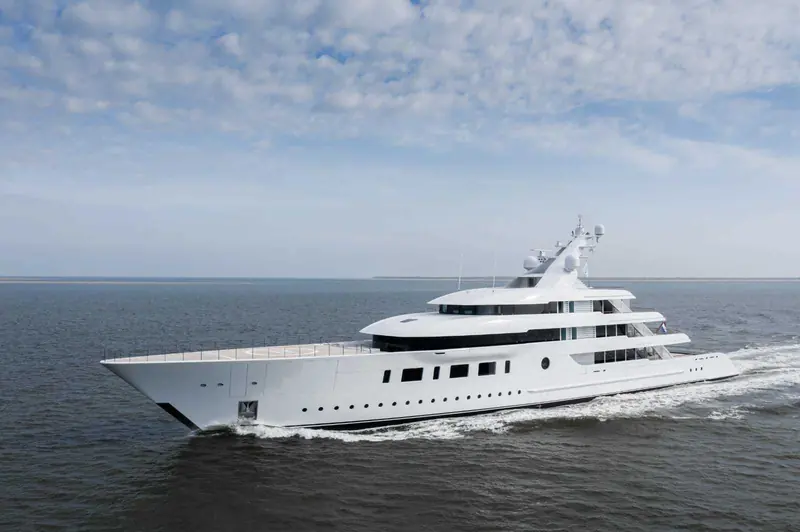
De Voogt's reputation is inseparable from Feadship's, and Feadship is generally placed at or near the top of any serious ranking of build quality. More than a century of continuous naval architecture is a record nobody else in yachting can claim. The office's contribution is invisible in photographs and decisive in ownership, which is why it is chronically underrated by buyers and never by captains.
This is not an option for an owner building anywhere other than Feadship, which rules it out for most of the market on price alone. It does not do interiors and it is not the place to go for a decorative brief. Owners who want a designer they can hire, argue with and take to a different yard should look elsewhere entirely, because that is not what this office is.
The engineering is the part the second owner pays for
A Feadship is the strongest resale position available in yachting, and the naval architecture is a larger part of that than the styling. Ocean Independence, writing on 11 May 2026, states that yachts from established Northern European yards, naming Feadship first, continue to command strong market confidence on build quality, engineering pedigree and long-term support. A buyer inspecting a fifteen-year-old boat is buying noise levels at 12 knots, fuel burn on a crossing, the condition of the steel and the quality of the systems drawings he will need at every refit. All of those are this office's work, and none of them can be improved later at a sensible price.
The consequence is that the exterior and interior studios an owner appoints move the number at the margin while the yard and the engineering set the range. That cuts both ways. A dated interior on a Feadship is a discount and a refit. A dated interior on a boat with weak engineering is a reason not to bid. It is also why the drawings matter at resale in a way they do not on a series boat. A complete, current, native-format engineering set makes a refit yard's quotation cheaper and faster, and a buyer who has been through one refit without the drawings will pay for the boat that has them.
Información práctica
| Design fee | no separate fee; the naval architecture is inside the Feadship build price and is not negotiated by the owner |
|---|---|
| What the owner still pays for | the exterior and interior studios he appoints himself, at the market band of 1 to 5 per cent of build cost plus 2 to 4 per cent project management, both outside the yard price (SuperYachtReview 2026 price guide, updated March 2026) |
| Contract sequence | letter of intent to reserve a build slot, then the yacht building agreement, which commits price and delivery date, the same sequence Oceanco describes in its owner's guide published by BOAT International on 10 June 2024 |
| Timeline | commonly four to five years from first sketch to handover at 100 metres and above |
| Where responsibility runs | speed, range, fuel burn, noise, vibration and sea-keeping sit with De Voogt and are written into the build contract; interior joinery, artwork and finish do not |
| Notable exteriors by outside studios on a De Voogt platform | Michael Leach Design (Anna), Tim Heywood (Symphony), RWD (Breakthrough), Sinot (Drizzle), Winch Design (Madame Gu) |
Lo que cuentan armadores y tripulaciones
No independently attributable owner testimony found
Feadship owners rarely speak on the record about hull performance, and coverage of Savannah, Anna and Breakthrough draws on the yard's own engineers rather than on owners or captains; this research found no on-the-record quote from anyone who has run one of these yachts describing her sea-keeping or systems
Yotters research desk
Lo bueno y lo que conviene vigilar
Puntos fuertes
- The longest unbroken naval architecture lineage in yachtingcontinuous operation since 1913, a record no other office in this directory can claim, carried through Frits de Voogt's near four decades at the head of the design side
- Naval architect and shipwright inside one organisationdrawings are checked against what the yard's own shop floor can build before they reach an owner, removing the referee role an owner normally has to play between separate design and build businesses
- Engineering that becomes the industry's reference pointSavannah's single-shaft hybrid drivetrain and Breakthrough's cryogenic hydrogen fuel-cell system were both solved at naval-architecture stage, years before either yacht's interior was chosen
- The strongest resale position the market offersOcean Independence names Feadship first among Northern European yards holding market confidence on build quality, engineering pedigree and long-term support
A tener en cuenta
- Not an independent hirean owner cannot appoint De Voogt directly; the naval architecture only comes as part of ordering a Feadship, which prices out most of the market before design even starts
- No interior, and exterior only on part of the fleeton more than half the fleet De Voogt also draws the exterior, but on the rest an owner appoints and funds a separate studio, and interiors are almost always somebody else's work
- Not for owners who want to shop the design elsewherethe naval architecture is bound to Feadship's yards; it cannot be taken to a different builder if an owner later changes his mind
- Long build times at the largest sizesa yacht of 100 metres and above is commonly four to five years from first sketch to handover
Para quién es: Armadores que encargan un Feadship y quieren un pedigrí de ingeniería que se remonta más de un siglo.