Jonathan Quinn Barnett
| Founder | Jonathan Quinn Barnett, born 1964 in Seattle, Washington |
|---|---|
| Training | industrial design degree, University of Cincinnati, thesis on yacht design |
| Early career | automotive styling under Tom Tjaarda at Dimensione Design, Turin, 1985 to 1986; modelled Klingon ships for Star Trek IV at Industrial Light and Magic, 1986 |
| Apprenticeship | three months with Ron Holland, 1986 to 1987, then nearly seven years with Jon Bannenberg from 1987, named by Barnett as his single greatest influence |
| Breakthrough | given lead design on the 73 metre Lurssen Coral Island (now Coral Ocean) by Bannenberg in 1992 |
| Own studio | founded Jonathan Quinn Barnett Ltd, trading as JQB Design, in Belltown, Seattle, in 1995; brother Chris Barnett is general manager |
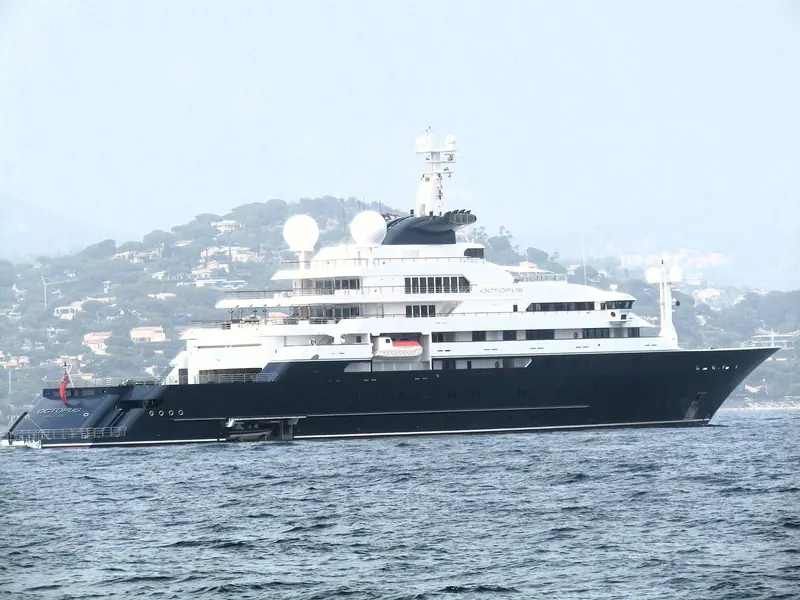
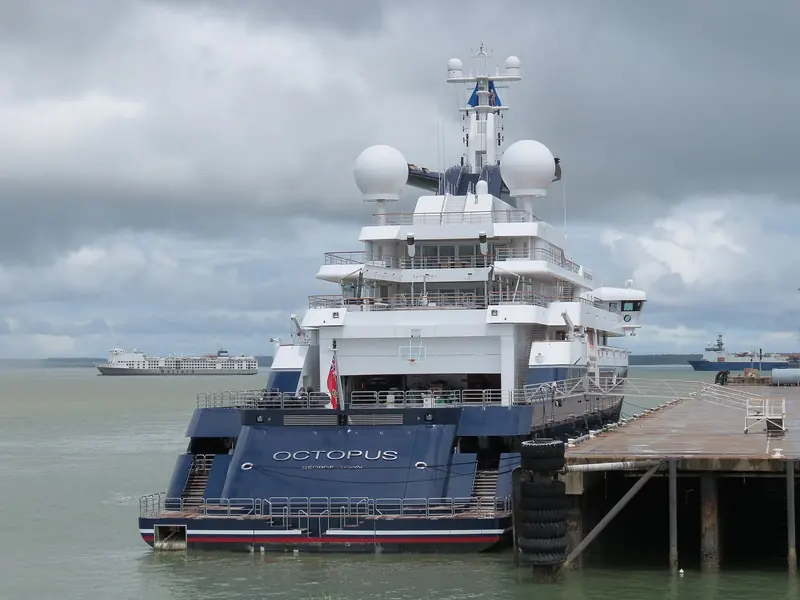
| Signature credit | sole interior designer of Octopus, 126.2 metres, Lurssen, delivered 2003 to Microsoft co-founder Paul Allen (exterior by Espen Oeino) |
| Octopus at launch | ice class 1A, 12,500 nautical mile range, about 19 knots top speed, 26 guests in 13 staterooms, two helicopter landing areas, a 36 metre tender and submarine garage, two submarines and a dive centre |
| Octopus build cost | most commonly put at 200 million dollars (Wikipedia; Yahoo Finance); one NBC News account instead gives 250 million dollars |
| Octopus since 2018 | Paul Allen died in October 2018; the yacht was listed in 2019 at 325 million dollars, cut to 278 million and sold in 2021 for a reported 275 to 278 million dollars to a buyer never officially named by the selling brokers, though trade press has widely identified him as Swedish businessman Roger Samuelsson |
| Octopus today | refitted at Blohm and Voss and chartered for the first time through Camper and Nicholsons, reported around 2.2 million euro a week |
| Wider portfolio | at least eighteen yachts credited by BOAT International, from 28 metres (Mick, 1993) to Octopus at 126 metres, mostly built by Delta Marine, Northern Marine and Crescent Custom Yachts in the Pacific Northwest |
| Awards | 2002 ShowBoats Design Award (Aerie, best semi-displacement motoryacht under 38 metres); 2011 Northwest Design Award (Monarch, exotic retreats); 2024 Taiwan Excellence Silver Award (Horizon V77 CMY) |
| Fee scale | none published by JQB Design; the only market-wide benchmark for a design office at this level is 1 to 5 per cent of build cost (SuperYachtReview 2026 price guide, updated March 2026) |
Turin, a Klingon warship and three months in Ireland
Barnett was born in Seattle in 1964 to a portraitist mother and an engineer father, and took an industrial design degree at the University of Cincinnati, switching his thesis from automobiles to yacht design partway through. His first jobs stayed on the automotive side: in 1985 and 1986 he worked in Turin for Tom Tjaarda's Dimensione Design, the studio behind the De Tomaso Pantera, then spent a stint at Industrial Light and Magic modelling Klingon ships for Star Trek IV.
The yacht career started with three months alongside Ron Holland in Ireland in 1986 and 1987, which led straight into an apprenticeship with Jon Bannenberg in London that ran nearly seven years. Barnett has said that if one person shaped his career more than any other it was Bannenberg. In 1992 Bannenberg handed him the lead on the 73 metre Lurssen Coral Island, now renamed Coral Ocean, which Barnett still calls one of the projects he is proudest of.
A family studio in Belltown, not the Riviera
Barnett founded Jonathan Quinn Barnett Ltd, trading as JQB Design, in the Belltown neighbourhood of Seattle in 1995, and it has stayed there ever since. His brother Chris Barnett runs the business side as general manager, which makes this a two-person leadership team rather than the larger studio structure common at this level. Since 1995 the office has put its name to more than twenty yacht projects ranging from around 28 metres up to Octopus at 126 metres, plus a smaller line of residential and commercial interiors, including the 2003 restoration of Francis Ford Coppola's Rubicon Estate Winery house in California.
The choice of base matters. Most studios competing for this level of work sit in Monaco, Antibes or Fort Lauderdale, inside the same networks as the brokers and the big European yards. JQB Design's yacht clients instead cluster around Pacific Northwest builders, Delta Marine, Northern Marine and Crescent Custom Yachts among them, a smaller and more regional pipeline than the international rosters kept by houses such as Winch Design or Reymond Langton. It is also, by the same token, a name a European owner is less likely to have heard of before someone points him at Octopus.
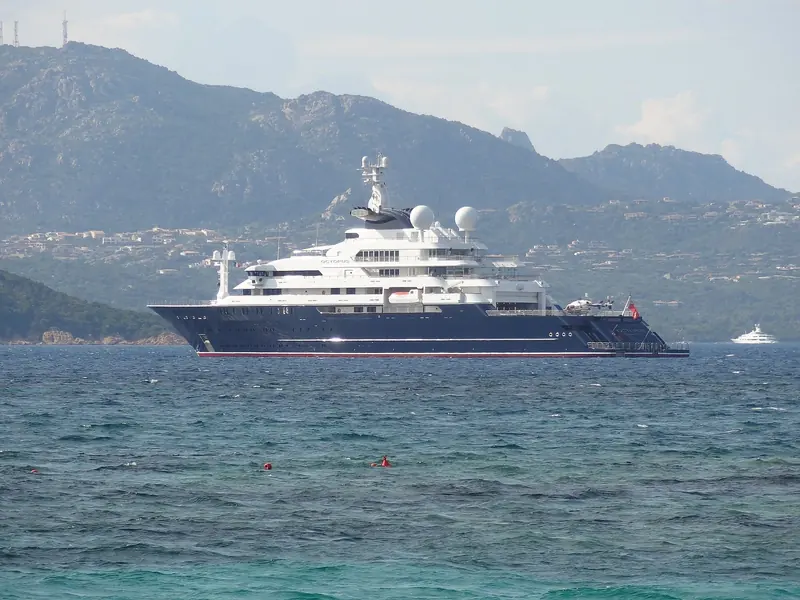
Told to copy the style of Paul Allen's two earlier Feadships, Barnett did the opposite and built what he calls a floating laboratory instead.
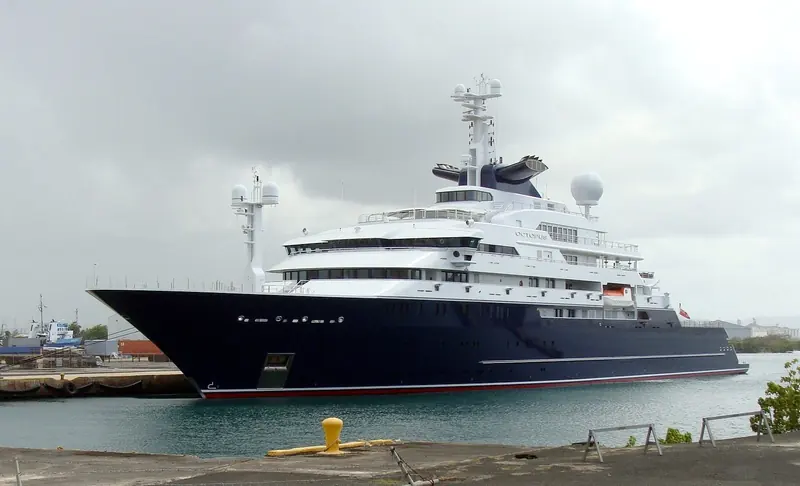
What a JQB interior looks like when it isn't Octopus
Away from the one famous job, Barnett's yachts read as warm and lived-in rather than showpiece rooms built for a two-week charter photoshoot. The 124-foot Aerie, delivered by Delta Marine in 2001, won the 2002 ShowBoats Design Award for best semi-displacement motoryacht under 38 metres. Que Sera, a 122-foot Delta Marine from 2005, was singled out at the time as one of the finest interiors the yard had produced, praised for light, airy spaces set against exquisite joinery.
Barnett has named the 53.3 metre MLR, a 2019 Delta Marine, as his own favourite among his designs. Silver Shalis, a 55 metre Delta Marine delivered in 2010 with a glass elevator and a curved marble staircase, was completed on time and on budget through the middle of the financial crisis, which he counts as one of the harder jobs he has managed. The studio is still working: a Horizon V77 CMY carrying JQB styling took a 2024 Taiwan Excellence Silver Award, evidence this is a working office and not a name resting on one yacht from 2003.
The brief he was handed, and the one he built instead
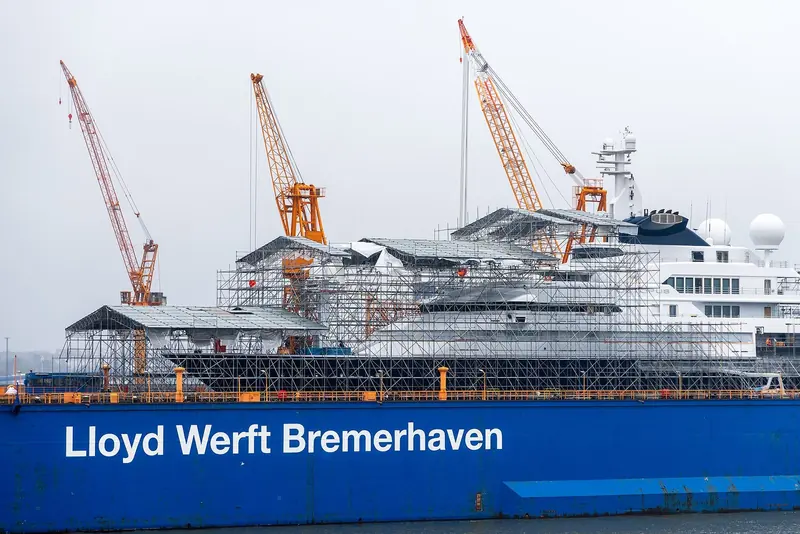
Paul Allen's team brought Barnett in fresh from Bannenberg's London office and told him to continue the look of Allen's two earlier Feadships. Barnett did the opposite. He has described the interior he built for Octopus as a floating laboratory, a deliberately timeless scheme he judged better suited to a client he saw as a restless, technically minded collector than another gentleman's-yacht interior would have been.
The rooms that resulted were built around that brief rather than around entertaining. A fully equipped medical centre and a dedicated storm cabin sat alongside a professional recording studio with a floor engineered to damp out noise and vibration underway, reportedly used at different times by Mick Jagger, Usher and Joss Stone, plus a full-size cinema and an observation lounge running the width of the superstructure. At launch Octopus slept 26 guests across 13 staterooms; her exterior is Espen Oeino's work and is covered on this site under his own entry, not repeated here.
Ice class, two submarines and a home for months at sea
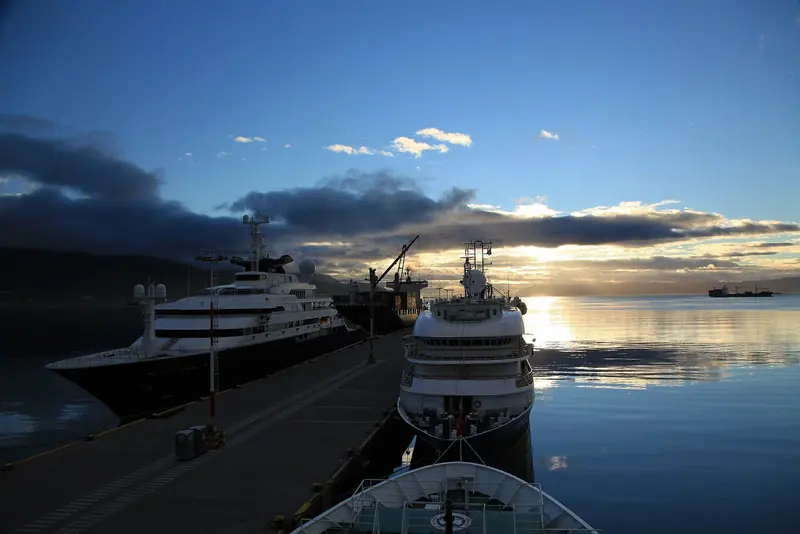
The brief Barnett was actually solving for was endurance, not entertaining, because Octopus was built to ice class 1A with a 12,500 nautical mile range and a top speed of only around 19 knots. A ship that spends months at a time at sea, sometimes in Antarctic or sub-Arctic water, needs living spaces that hold up as a home rather than a stage set for a fortnight, and that is the problem the interior was actually built to solve.
The equipment backed the intent: two helicopter landing areas with a hangar for two aircraft, a 36 metre floodable garage for tenders and a submersible, a second, remotely operated submarine rated to greater depth and a dedicated dive centre. The build cost is most often put at 200 million dollars, a figure repeated by Wikipedia's own account and by Yahoo Finance; one older NBC News piece instead gives 250 million dollars, a gap this research could not close and has not tried to average away.
What happened to Octopus after Paul Allen died
Paul Allen died in October 2018, and his estate put Octopus up for sale the following year through Burgess and Fraser Yachts at an asking price of 325 million dollars, later cut to 278 million. The size of that discount is itself a data point: even the most famous explorer yacht afloat took two years and a nine-figure price cut to find a buyer.
A sale finally closed in 2021, reported across outlets at a price in the range of 275 to 278 million dollars to a buyer the selling brokers never named. Yachting trade press has since widely identified him as the Swedish businessman Roger Samuelsson, though that identification rests on industry reporting rather than an on-the-record confirmation from Burgess or Fraser. Octopus was refitted at Blohm and Voss and, for the first time in her life, went onto the open charter market through Camper and Nicholsons at a rate reported around 2.2 million euro a week.
The exploration record, and where it stops being verifiable
Under Allen, Octopus earned her explorer reputation honestly. She was enrolled in the Automated Mutual Assistance Vessel Rescue network, rescued a sailor in difficulty 645 miles off San Diego and joined a search for a missing aircraft off Palau. In 2015 her crew and submarine located the wreck of the Japanese battleship Musashi, one of the largest warships ever sunk.
What this research could not do is attach a dated, named mission to the years since the 2021 sale. Charter marketing and secondary write-ups repeat general claims that she continues to be loaned for scientific and conservation work, but none of it points to a specific, sourced expedition under her current ownership. That is worth saying plainly rather than repeating the claim as settled fact: the exploration record that makes Octopus remarkable belongs, on the evidence available, to the Allen years.
What a JQB Design commission costs, and what he will not say
JQB Design publishes no fee scale, which puts it in the same position as almost every studio in this class. The one figure available for the market as a whole is the SuperYachtReview 2026 price guide's band of 1 to 5 per cent of build cost for a full design and naval architecture office, with project management running a further 2 to 4 per cent on top, both outside a yard's own quote; an interior-only commission such as Octopus would typically sit toward the lower end of that range, though JQB Design has never confirmed a number specific to its own work.
What is publicly known is the shape of the studio rather than its pricing: a two-person leadership of Jonathan Quinn Barnett and his brother Chris, based in Seattle rather than Europe, working mainly with Pacific Northwest yards, with one enormous exception. A prospective owner should go to JQB Design for a warm, genuinely liveable interior on a Delta Marine or Northern Marine-scale build, or for real long-range explorer thinking backed by the one designer who has already finished the biggest example ever built, not for a Riviera-style showpiece delivered through a large European atelier's name recognition.
Información práctica
| What a commission costs | not published by JQB Design; the only industry-wide benchmark is the SuperYachtReview 2026 price guide's 1 to 5 per cent of build cost for a full design office, with an interior-only commission typically toward the lower end |
|---|---|
| How the studio is structured | a family business based in Belltown, Seattle, since 1995: Jonathan Quinn Barnett as principal designer, his brother Chris Barnett as general manager |
| What is not published | day rates, project fee splits, current staff numbers and any dated, named mission for Octopus since her 2021 sale |
| Typical build partners | Delta Marine, Northern Marine, Crescent Custom Yachts and Sovereign Yachts, all Pacific Northwest yards, plus the one-off Lurssen commission for Octopus |
| What a prospective owner needs to know | this is the studio for a warm, liveable interior on a Pacific Northwest build or for genuine long-range explorer thinking, not for a Riviera-style showpiece delivered through a big European name |
Lo que cuentan armadores y tripulaciones
No independently attributable owner testimony found
press coverage of Octopus and of Barnett's other yachts repeats his own quotes, brokers' listings and charter managers' copy, but this research found no on-the-record quote from a private owner describing living aboard a JQB Design interior; Paul Allen operated Octopus under strict NDAs from 1998, as this site's own Espen Oeino entry already records, and none of Barnett's other identified owners have spoken on record either
Yotters research desk
Lo bueno y lo que conviene vigilar
Puntos fuertes
- Built the interior of the yacht that defined a categoryat 126.2 metres in 2003 Octopus was the largest private yacht in the world, and every ice-classed explorer with a hangar and a submarine built since has been measured against her
- Proven across the size range, not just on one giant jobBOAT International credits him with at least eighteen yachts from 28 to 126 metres, so an owner is not hiring someone whose only finished work is Octopus
- Trained by the two designers who set the template for modern superyacht stylingRon Holland, then nearly seven years under Jon Bannenberg, who handed him the lead on a 73 metre Lurssen in 1992, a pedigree few living interior designers can match
- A stable, continuing practicethe same two-person leadership has run the studio since 1995, and it was still winning awards in 2024, which is evidence of an active office rather than a name coasting on one 2003 credit
A tener en cuenta
- A boutique practice, not a global studiothe public record shows one principal designer and his brother as general manager, a much smaller structure than the thirty-person teams fielded by naval architecture houses at the same size of yacht
- A Pacific Northwest builder base, not a European onemost of his hulls come from Delta Marine, Northern Marine and Crescent Custom Yachts in Washington state, a smaller and less international pipeline than the Riviera-facing rosters of houses like Winch Design
- No published fee scalethe only public number for the class as a whole is the market-wide SuperYachtReview band, which says nothing about what JQB Design itself charges
- The exploration reputation is largely historicalthe rescues, the search off Palau and the Musashi discovery all predate 2018; this research could not verify a single dated, named mission for Octopus since her 2021 sale
- His most famous credit is usually attributed to someone else at a glancepress shorthand almost always calls Octopus an Espen Oeino yacht first, and a prospective client should know Barnett's interior work sits behind that name recognition rather than in front of it
Para quién es: Owners who want a warm, genuinely liveable interior on a Pacific Northwest-built yacht, or who are planning a real long-range explorer and want the one designer who has already finished the largest one ever built.