Sinot Yacht Architecture & Design
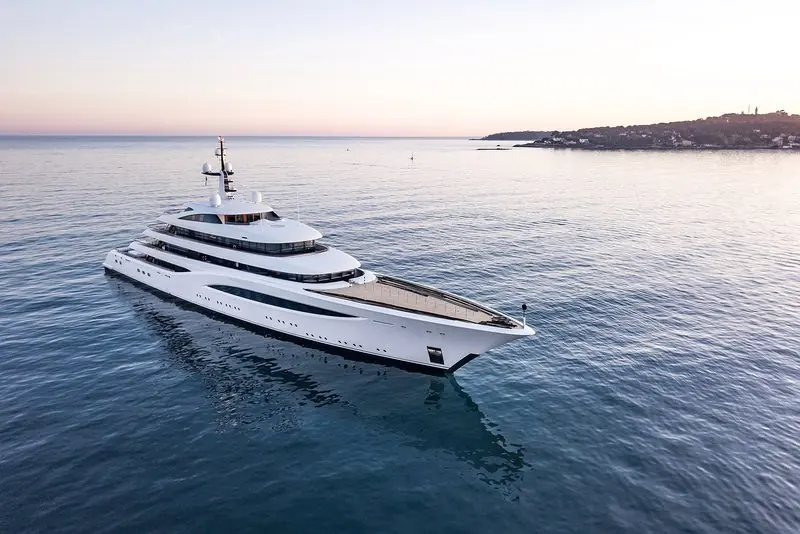
| Fundador | Sander Sinot, diseñador industrial |
|---|---|
| Fundación | años noventa |
| Sede | Países Bajos, cerca de Ámsterdam |
| Equipo | alrededor de 50 personas |
| Disciplinas | diseño exterior e interior, arquitectura de yates |
| Yate emblemático | Aquarius (92 m, Feadship, 2016) |
| Conceptos destacados | Aqua (hidrógeno), Nature |
| Aquarius, 92 m, Feadship, 2016 | exterior and interior, naval architecture by De Voogt |
| Galactica Super Nova, 70.07 m, Heesen, 2016: interior, under an Espen Oeino exterior | |
| Ulysses, 102.6 m, Feadship, 2024 | exterior and interior, naval architecture by Azure |
| Drizzle, 91.8 m, Feadship, 2024 | exterior and interior, naval architecture by De Voogt |
| Concepts | Nature (120 m, 2017), Aqua (112 m liquid hydrogen, 2019), Inspire (138 m, 2024) |
| Design fee | not published. Market band 1 to 5 per cent of build cost for the designer, plus 2 to 4 per cent for project management, both outside a yard's quoted price (SuperYachtReview 2026 price guide, updated March 2026) |
| Production consultancy through the build is an additional appointment, not part of the design fee. Naval architecture practice bills construction attendance separately and by the hour (ITIC standard trading conditions for naval architects, 8 July 2025) | |
| Copyright normally remains with the studio, with the owner licensed to build one hull unless the contract is negotiated further | |
Un estudio neerlandés con ojo industrial
Sander Sinot se formó como diseñador industrial antes de pasarse a los yates, y fundó su propio estudio en los Países Bajos en los años noventa. La oficina está a poca distancia en coche de Ámsterdam y ha crecido hasta un equipo de unas cincuenta personas entre arquitectura, diseño e ingeniería. Cubre el diseño interior y exterior bajo un mismo techo. Ese enfoque de estudio único es central en el aspecto sin costuras que persigue. Mantener interior y exterior bajo un mismo techo evita las costuras visuales que aparecen cuando dos firmas se reparten un yate.
La formación en diseño industrial se nota en el cuidado del estudio por la ergonomía, los materiales y la manera en que las cosas se fabrican. Sinot trata un yate como un objeto completo y no como un casco al que después se le añaden habitaciones. El equipo abarca maquetación, visualización y consultoría de producción junto al diseño puro. Esa amplitud permite a la oficina seguir una idea del boceto al detalle acabado. El equipo puede concebir, calcular y resolver el detalle sin ceder el trabajo a otros en cada etapa.
Sereno, natural y mínimo
La firma de Sinot es la contención, con líneas limpias, materiales naturales y un vínculo fuerte entre dentro y fuera. El estudio prefiere interiores serenos donde la luz, la piedra y la madera hacen el trabajo en lugar del ornamento. Sus exteriores son callados y modernos, y dejan que la proporción sostenga el diseño. El efecto general es sosegado antes que ruidoso. El estudio confía en los materiales, la luz y la proporción para sostener una estancia, en vez de en capas de decoración.
La naturaleza es un tema recurrente, y la oficina lleva a menudo la vegetación, el agua y la luz natural hasta el fondo de un yate. Eso da a su trabajo un aire contemporáneo y atento al bienestar que hoy buscan muchos armadores. El estudio mezcla elementos naturales y artificiales con mano ligera. Ese equilibrio se ha convertido en su sello reconocible. Llevar la luz natural y la vegetación al fondo de un casco es mucho más difícil de lo que parece desde fuera.
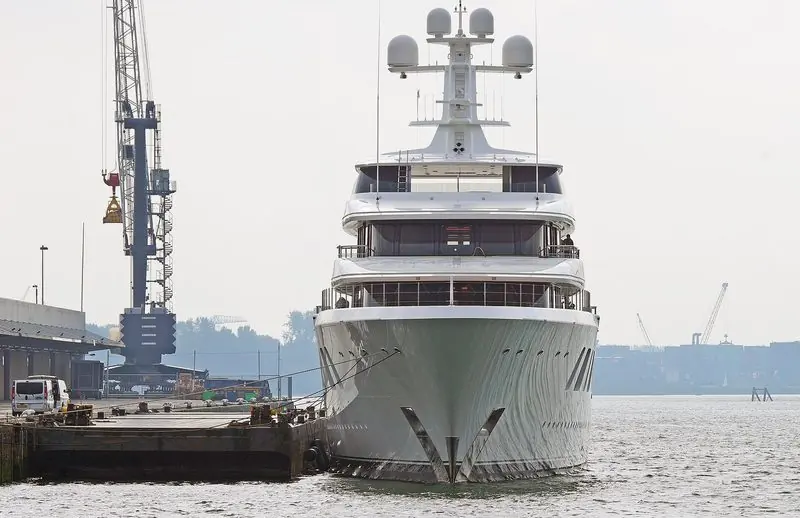
Minimalismo sereno hoy, y un argumento serio a favor del hidrógeno mañana.
Aquarius y los conceptos de energía limpia
El Aquarius de 92 metros, construido por Feadship y entregado en 2016 a Steve Wynn, es el yate más conocido del estudio, con Sinot responsable de exterior e interior. El diseño unió un estilismo minimalista a la ingeniería de Feadship con un resultado muy admirado. Sigue siendo un buen ejemplo de la estética serena del estudio a gran escala. El yate ayudó a asentar a Sinot en la parte alta del mercado. Demostró que una mano minimalista podía sostenerse con comodidad en un yate custom muy grande.
La oficina es igual de conocida por conceptos de futuro que ponen a prueba ideas nuevas. Aqua, presentado en 2019, imaginaba un yate de 112 metros propulsado con hidrógeno líquido y atrajo la atención mundial hacia la propulsión de cero emisiones. El concepto Nature, de 120 metros, situaba un jardín vivo en el corazón del diseño. Estos estudios señalan hacia dónde cree el estudio que puede ir la náutica de lujo. Los conceptos se leen como estudios serios de ingeniería y no como piezas de exhibición para un estand.
Aliado de Feadship
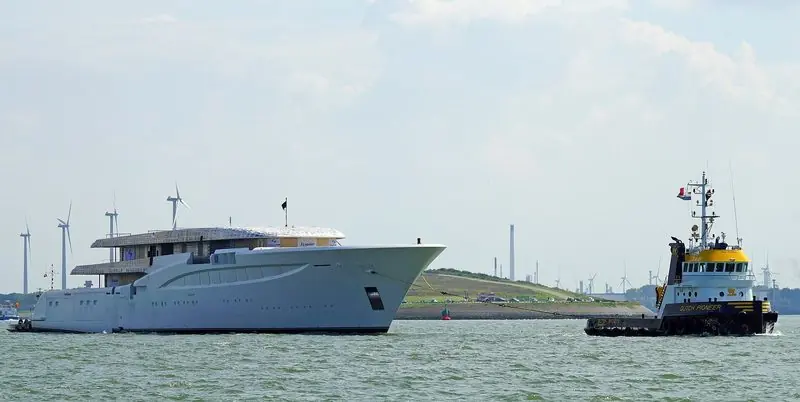
El trabajo estrecho de Sinot con Feadship ha marcado buena parte de su cartera construida y de su reputación. La relación une el estilismo del estudio con uno de los constructores más exigentes del mundo. Trabajar con un astillero de ese nivel exige precisión, y el rigor industrial del estudio encaja bien. Esa alianza ha producido algunos de sus trabajos más completos. Construir con un astillero de ese nivel deja muy poco margen de error en el detalle.
La oficina implica al armador en una conversación detallada sobre cómo quiere vivir en el mar. Sus temas de bienestar y de inspiración natural salen a menudo directamente de esas charlas. El estudio acompaña el proyecto durante la construcción para que la intención serena llegue intacta. Ese proceso cuidadoso encaja con armadores atraídos por un lujo más callado. Esos armadores suelen valorar la calma y una sensación de bienestar por encima de la exhibición.
Una voz para el yate del futuro
Sinot se ha labrado una posición clara como estudio de contención y de ideas sobre sostenibilidad. Sus conceptos han marcado la conversación del sector sobre propulsión limpia más que la mayoría. Ese liderazgo de ideas convive con un historial respetado de yates entregados. A la oficina se la toma en serio en ambos frentes. Los yates entregados y los conceptos de futuro se refuerzan mutuamente en la reputación del estudio.
El estilo sereno y natural del estudio ha resultado influyente a medida que los gustos se alejaban del exceso. Su trabajo con Feadship lo mantiene cerca del centro de la escena neerlandesa. Sinot continúa desarrollando yates reales y conceptos a la vez. Se ha convertido en una referencia para una idea más limpia y más callada del superyate. Esa posición ha ganado valor a medida que los armadores sopesan el impacto de sus yates.
The 2024 Feadships
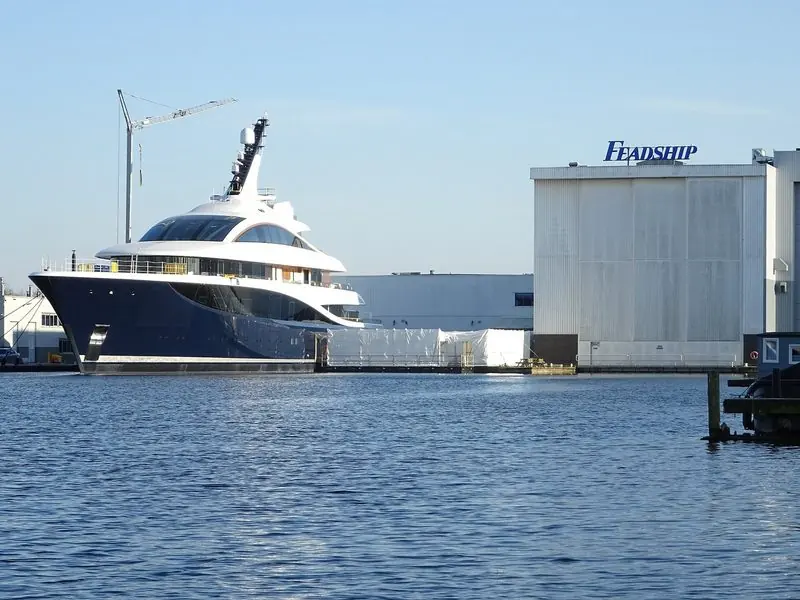
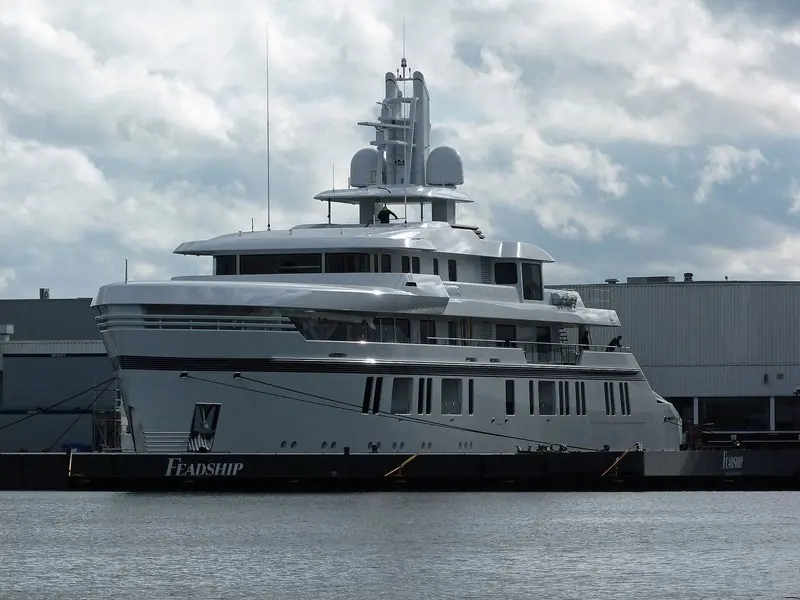
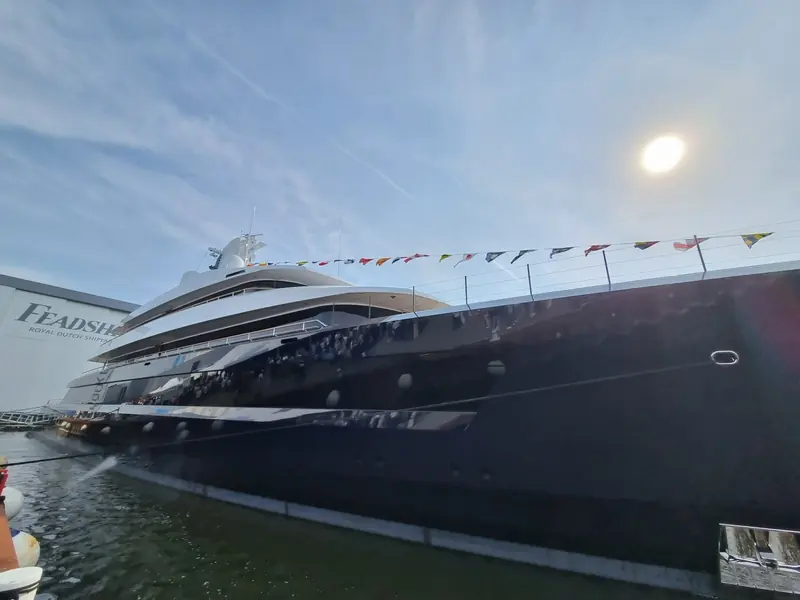
Two Feadships delivered in 2024 carry Sinot exterior and interior. Ulysses is 102.6 metres, with naval architecture by Azure Yacht Design and Naval Architecture, and she was one of the most tightly kept builds in recent Dutch memory. Drizzle is 91.8 metres, with naval architecture by De Voogt and a hybrid propulsion package.
Two boats of that size from one yard in one year, both inside and out from the same studio, is a serious statement about capacity. Feadship does not hand a designer two hulls at once on reputation. It matters to a prospective owner because it is evidence the office can staff a project properly and still answer the phone, which is the failure mode that catches out small studios when they win a big commission.
Aqua, Nature and the concepts
The studio is equally known for unbuilt work. Nature, a 120 metre concept shown at Monaco in 2017, put a climate-controlled garden at the centre of the yacht with a panorama deck above 900 square metres. Aqua, revealed at Monaco in 2019 at 112 metres, was drawn around liquid hydrogen stored in two cryogenic tanks and fuel cells, quoted at 17 knots and 3,750 nautical miles, with water as the only emission. Inspire, a 138 metre concept from 2024, carries an underwater observation room.
Concepts are easy to dismiss and this office has earned the right not to be. Aqua was published five years before Feadship launched an actual hydrogen fuel-cell yacht, and the arguments it forced into the trade press about tank volume, bunkering and range are the arguments the industry is now having in earnest. For an owner, the studio's concept work is a useful window into how it thinks. It is not a promise that any of it can be built to a budget.
How a commission runs, and what it costs
The studio works through a long dialogue about how an owner intends to live at sea, then moves through concept development to final design, with 3D visualisation used throughout to test whether an idea survives the technical and classification limits. Naval architects and yard staff join that conversation early, which is necessary when the studio does not hold the naval architecture itself. Commercially the work is bought in stages and paid for before a yard is contracted. The gates are worth naming. An owner can stop after concept for the price of the concept. A letter of intent reserves a slot. The yacht building agreement is the commitment, and from the day the yard starts engineering to these drawings, changing studio means paying for the same design twice.
No studio at this level publishes a fee scale, so the only current market figure is the SuperYachtReview 2026 price guide, updated March 2026, which puts a designer's fee at 1 to 5 per cent of build cost and project management at a further 2 to 4 per cent, both outside the yard's quoted price. On a EUR 200 million Feadship the designer's band alone is EUR 2 million to EUR 10 million. Exterior and interior from one office sits high in it, and still costs less than two appointments plus the interface between them. The studio's production consultancy is an additional service rather than part of the design fee, which is the normal way supervision is billed and, on a minimal interior, the money best spent.
Recognition, and who it does not suit
Sinot yachts have collected design awards consistently since Musashi, and the studio's concept work has taken it well beyond the trade press. The recognition is worth a narrow amount to an owner. It confirms the finish met a standard specialists would defend and it helps a broker at resale. It says nothing about behaviour in the second year of a build.
This studio does not suit an owner who wants a rich, layered, art-led interior, because the work runs the other way and a minimalist scheme executed half-heartedly looks cheap. It does not offer naval architecture, so anyone wanting hull form and styling under one contract should look elsewhere. It is not set up for boats below about 45 metres, and it is not a sailing yacht office.
The quiet interior is the one the market can absorb
A calm, daylight-led scheme is the most resale-friendly kind of authored interior in this directory, and for an unromantic reason. It does not impose a taste on the next owner, so the buyer pool is not narrowed by the decoration. Ocean Independence, writing on 11 May 2026, lists accommodation, layout, volume, technical specification and paint condition as the things that position a boat against its comparables, and a Sinot interior scores on all of them without asking a buyer to share an enthusiasm. Set against that, Feadship underneath is the real asset. Ocean Independence names the Northern European yards as those that continue to command market confidence, and a hull from one of them carries a valuation that a design signature does not.
The risk runs the other way, and it is a condition risk rather than a taste risk. Minimalism has nowhere to hide wear. A stone joint that has moved, a veneer that has faded unevenly, a cracked seal in a full-height glass panel are all invisible in a busy interior and glaring in this one. A ten-year-old Sinot boat that has been maintained looks new. One that has not looks tired in a way that costs real money to reverse, and the market does not usually give back the full cost of refit spending. The maintenance file is worth more on this boat than on almost any other in the directory.
Información práctica
| Typical project size | 45 metres and above; the studio does not take smaller commissions |
|---|---|
| Design fee | Not published. Market band for a full exterior-plus-interior appointment at this level is 1 to 5 per cent of build cost (SuperYachtReview 2026 price guide), EUR 2 million to EUR 10 million on a EUR 200 million Feadship |
| Project management fee | A further 2 to 4 per cent of build cost, billed separately from the design fee |
| What is not included | Naval architecture is never part of the appointment. On Feadships it comes from De Voogt in-house; on other yards the owner must appoint a naval architect separately |
| Payment structure | Bought in stages: concept, then a letter of intent to reserve a slot, then the yacht building agreement as the binding commitment. Changing studios after the yard starts engineering means paying for the design twice |
| Where to find the studio | Vlierberg 3, Eemnes, Netherlands, about 20 minutes from Schiphol airport, inside the Dutch yacht-building cluster |
| Studio size | Close to 50 staff across architecture, interior architecture, industrial design, 3D visualisation, design engineering and production consultancy |
Lo que cuentan armadores y tripulaciones
A two-year, hands-on brief
Steve Wynn worked through Aquarius's interior concept for two years alongside his own longtime designer Roger Thomas before Sinot executed it. It was an unusually long and direct client involvement for a yacht this size.
YachtBuyer
Lo bueno y lo que conviene vigilar
Puntos fuertes
- One studio for the whole visible boatExterior and interior come from a single design language and a single contract, removing the friction that usually opens up at the window line between two separate designers.
- Production consultancy through the buildThe studio stays involved once the yard starts cutting, which matters most on the minimalist work it is known for, where a badly cut stone joint has nowhere to hide.
- Proven capacity at the largest sizesTwo Feadships over 90 metres delivered in the same year, 2024, both exterior and interior from this office, is evidence of staffing depth that smaller studios cannot show.
- Resale-friendly interiorsOcean Independence names calm, daylight-led schemes as the kind that do not narrow the buyer pool at resale, unlike a heavily authored, opinionated interior.
A tener en cuenta
- No naval architectureAn owner wanting hull form and styling under one contract has to look elsewhere. Every Sinot yacht carries a separate naval architecture credit, from De Voogt, Azure or others.
- Not for boats under about 45 metresThe studio's own build list starts there, so smaller commissions are out of scope entirely.
- Minimalism is unforgiving of wearA calm interior with little to distract the eye shows a moved stone joint or an unevenly faded veneer far more readily than a decorated one, and refit spending to fix it is not usually recovered in full at resale.
- No published fee scaleOwners are budgeting from a third-party market band (SuperYachtReview) rather than a rate card, so a real number only comes from asking the studio directly.
Para quién es: Armadores atraídos por el diseño sereno y minimalista y por un estudio que piensa en serio sobre propulsión más limpia.