Terence Disdale Design
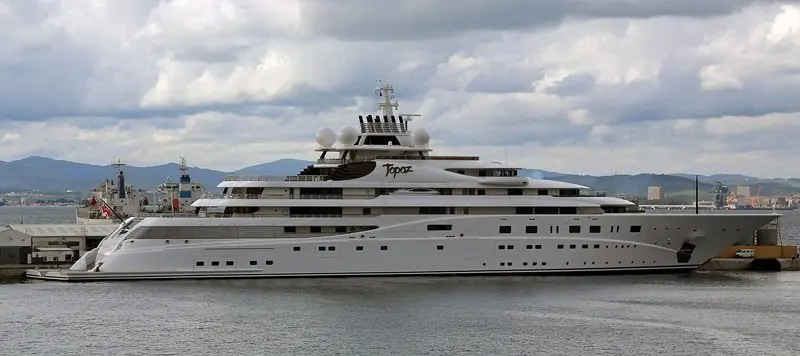
| Fundador | Terence Disdale |
|---|---|
| Fundación | 1973 |
| Sede | Richmond upon Thames, Inglaterra |
| Equipo | pequeño, alrededor de 15 personas |
| Disciplinas | diseño exterior e interior |
| Yates emblemáticos | Eclipse (162 m), Pelorus (115 m), Topaz/A+ (147 m) |
| Filosofía | 'casa de playa, no ático' |
| Blue, 160.6 m, Lurssen, 2022 | exterior and interior, 14,785 GT, 48 guests and 80 crew |
| Opera, 146.35 m, Lurssen, 2023 | exterior and interior |
| Interior work under other exteriors | Pelorus (115 m, Lurssen, 2003) and A+, delivered as Topaz (147 m, Lurssen, 2012) |
| Feadship work | Sussurro (49.5 m, 1998, exterior and interior) and Ecstasea (85.95 m, 2004, interior) |
| Philosophy, in the founder's words | beach house not penthouse |
| Design fee | not published. Market band 1 to 5 per cent of build cost, plus 2 to 4 per cent project management, both outside the yard price (SuperYachtReview 2026 price guide, updated March 2026) |
| Construction attendance is charged as a separate service, not included in the design fee, which is standard naval architecture practice | |
| No marine standard form covers the unavailability of a named principal. The ITIC conditions of 8 July 2025 address intellectual property and cap liability at ten times charges or GBP 100,000, whichever is higher, and are silent on key-person cover | |
Cinco décadas junto al Támesis
Terence Disdale estableció su estudio en 1973, lo que lo convierte en uno de los nombres más longevos del diseño de yates. La oficina tiene su base en Richmond upon Thames y trabaja con un equipo pequeño y muy unido. Disdale construyó su reputación a lo largo de décadas de trabajo en lo más alto del mercado. La longevidad es buena parte de la historia del estudio. Medio siglo de trabajo en la cima del mercado es un historial raro en cualquier campo del diseño, y pocos nombres han durado tanto.
La consulta se ha mantenido deliberadamente compacta en lugar de crecer hasta ser una gran casa corporativa. Ese tamaño mantiene la mano del fundador cerca de cada proyecto. También permite al estudio ser selectivo con el trabajo que acepta. El resultado es un cuerpo de obra concentrado construido a lo largo de medio siglo. Seguir siendo pequeño ha sido una decisión deliberada, y permite al fundador mantener su mano en cada diseño que sale de la oficina.
Casa de playa, no ático
La idea rectora de Disdale se recoge en la frase casa de playa y no ático, una preferencia por el lujo relajado e informal frente al glamur duro. Sus interiores prefieren las texturas naturales, la luz suave y el confort antes que el pulido y el brillo. El objetivo es un yate que resulte fácil de habitar en lugar de un escaparate. Esa filosofía ha dado forma a un aspecto distintivo y muy copiado. La idea suena sencilla, pero va a contracorriente de un mercado que a menudo confunde el pulido duro con el lujo.
Los exteriores llevan la misma confianza contenida, con líneas equilibradas que evitan los efectismos. El estudio diseña exterior e interior, lo que mantiene un yate coherente de arriba abajo. Su contención destaca en un mercado que a menudo persigue el espectáculo. El enfoque ha envejecido bien a lo largo de muchas botaduras. Los yates dibujados así tienden a resultar acogedores antes que grandiosos, y esa calidez es difícil de copiar bien.
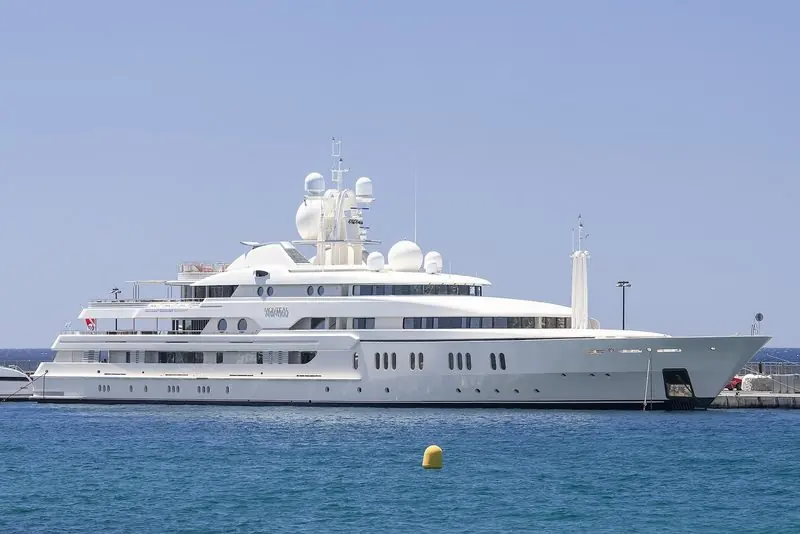
Casa de playa, no ático: lujo relajado dibujado sobre los cascos más grandes.
Eclipse, Pelorus y los gigantes
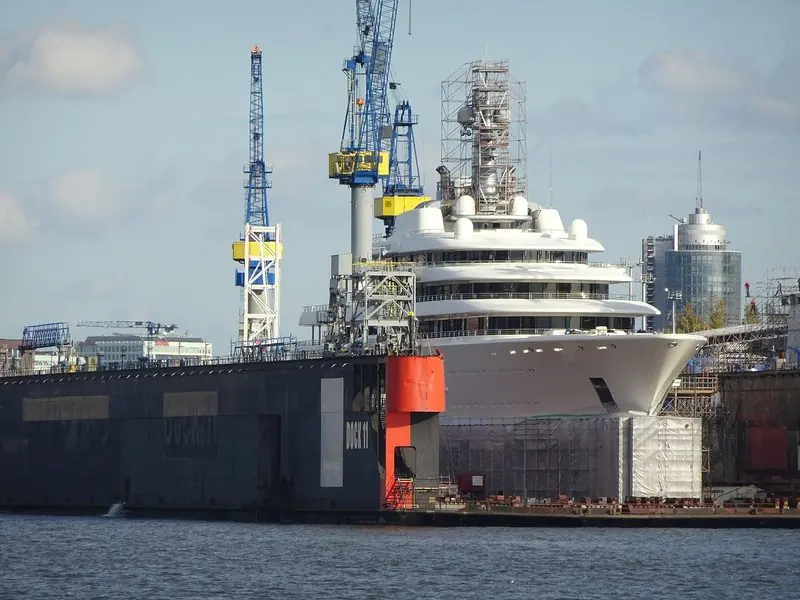
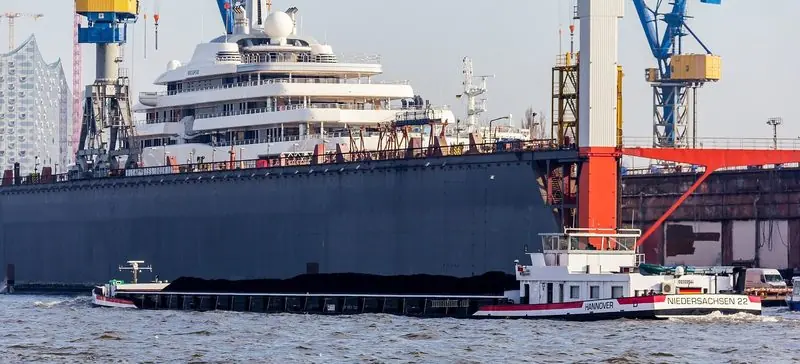
El Eclipse de 162 metros, construido por Blohm and Voss, es el yate más famoso del estudio y era el mayor del mundo en su entrega. El Pelorus de 115 metros es otro hito, un ejemplo temprano del estudio trabajando a gran escala. Tatoosh, de 92 metros, figura junto a ellos en la cartera. Estos yates asentaron a Disdale como diseñador de gigantes. Trabajar repetidamente a esta escala exige la confianza de los astilleros más serios, y ganarla llevó años.
El Topaz de 147 metros, después rebautizado A+, es otro de los mayores yates que ha dado forma el estudio. Esa serie de proyectos muy grandes es rara en una sola oficina. Cada uno lleva el carácter relajado de Disdale pese a su tamaño. El estudio ha demostrado una y otra vez que el lujo informal puede funcionar en los cascos más grandes. Escalar una estética relajada hasta cerca de los 160 metros es mucho más difícil de lo que parece, y el estudio lo ha logrado más de una vez.
Cómo trabaja el estudio
Disdale trabaja con astilleros importantes, sobre todo con los constructores alemanes capaces de acometer los mayores yates. La larga experiencia del estudio le permite guiar un proyecto exigente sin un gran equipo detrás. Se mantiene cerca de armadores que valoran la discreción y un pliego relajado. Ese servicio personal es parte de su atractivo. Los armadores de este nivel suelen valorar la discreción por encima de todo, y el estudio lo ha entendido y respetado desde hace mucho.
La oficina diseña para que se viva, y saca a la luz cómo usan realmente un yate el armador y su familia. Sus elecciones de material y color se derivan de esa conversación. El estudio protege su intención contenida durante la construcción. Ese cuidado mantiene el yate terminado fiel a la idea original. El estudio sigue de cerca cada proyecto para que el pliego relajado sobreviva a las presiones de una construcción larga.
Un gigante callado del oficio
Terence Disdale figura entre los diseñadores de yates más influyentes de la era moderna. Solo su trabajo en el Eclipse le aseguró un lugar en la historia del oficio. La filosofía de la casa de playa se ha imitado ampliamente en todo el sector. Esa influencia pesa más que el tamaño modesto del estudio. Muchas oficinas mayores han tomado prestada la idea de la casa de playa con los años sin igualar nunca su ejecución.
La consulta ha demostrado que una oficina pequeña puede dar forma a los mayores yates del mundo. Su estilo relajado ha resultado duradero a medida que los gustos cambiaban. El estudio sigue siendo selectivo y muy valorado. La huella de Disdale en el diseño de superyates es profunda y perdurable. Su estilo relajado ha resultado notablemente duradero mientras los gustos generales cambiaban a su alrededor.
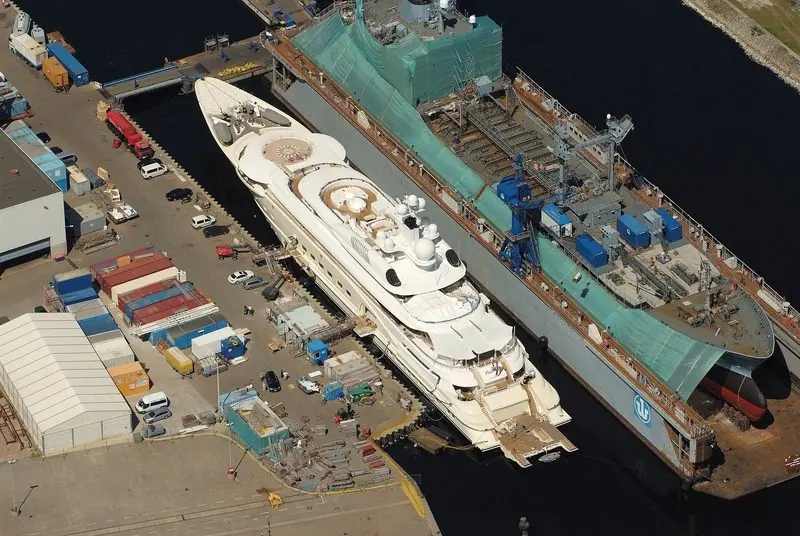
The interiors under other people's exteriors
The studio's own listing singles out the interior of Pelorus, the 115 metre Lurssen delivered in 2003 to a Tim Heywood exterior. A+, delivered by Lurssen in 2012 at 147 metres under the name Topaz, is another Heywood exterior over a Disdale interior. Ecstasea, 85.95 metres from Feadship in 2004, carries a Disdale interior over a De Voogt exterior, arranged for 14 guests in seven cabins.
That pattern says something about how the industry uses this office. Two of the strongest exterior studios in the field will happily hand it the inside of their largest boats, which is not a courtesy anybody extends twice if the first result was difficult. For an owner splitting a commission between two studios, a designer with a long record of working under other people's profiles is a lower-risk appointment than one who has always controlled the whole hull.
The small end, and why it still matters
Sussurro was delivered by Feadship in 1998 at 49.5 metres with exterior and interior by Disdale and naval architecture by De Voogt. She is aluminium throughout with a GRP element in the superstructure. She was built light and built to go fast, at a point when Feadship was known for neither. She is still regarded as one of the more interesting boats the yard has produced.
A 50 metre is the harder design problem. There is nowhere to put anything, every square metre is contested, and the compromises are visible. A studio that can make a 50 metre feel generous is applying the same skill when it makes a 160 metre feel intimate. Owners looking at a first boat in the 40 to 60 metre bracket should not assume a name associated with giants is uninterested in them.
How a commission runs, and what it costs
Disdale works directly with owners and with a small number of yards, above all the German builders capable of the largest hulls. The studio takes the brief personally, and its stated method starts from the owner's actual use of the boat and his budget before it starts from a look. The engagement is staged and the design contract precedes the build contract, which means an owner is paying this office for a year before a yard is committed to anything. Site attendance through construction is billed as a separate service rather than folded into the design fee, and it is the item to protect, because an unpoliced design degrades quietly as the yard proposes cheaper details.
Nobody at this level publishes a scale. The market band is 1 to 5 per cent of build cost for the designer and a further 2 to 4 per cent for project management, both outside the yard's number, per the SuperYachtReview guide updated March 2026. On a 160 metre hull the arithmetic is uncomfortable to write down and still a small line against the build. What an owner is buying at the top of that band is exterior and interior from fifteen people rather than from two houses that have to be refereed. What he is not buying is naval architecture, which stays with the yard along with every performance guarantee in the build contract.
Recognition, and who it does not suit
The studio has taken design awards across five decades and its influence is visible in work signed by other people, since the relaxed interior has been widely copied since the 1990s. Awards are worth a narrow amount to an owner. They confirm a standard of finish and they help at resale. The more useful signal here is that the same fifteen people have been given the largest yachts in the world three times.
This studio does not suit an owner who wants hard, polished, formal glamour, because the whole practice is built against it. It does not offer naval architecture. Capacity is limited and an owner in a hurry will not be accommodated. Anyone who wants a large team of account managers responding to design changes at speed through a build should appoint a bigger house.
Fifteen people, one name, and what the contract should say about that
A studio of fifteen carrying its founder's name concentrates risk that a larger office spreads. The professional standard forms are no help. The ITIC standard trading conditions for naval architects, in the version dated 8 July 2025, cover intellectual property and cap liability at ten times the consultant's charges or GBP 100,000, whichever is higher, and say nothing at all about what happens if the named principal is unavailable in year three of a five-year build. That silence is the market norm, not an oversight by this studio.
The remedy is contractual and ordinary. Commercial consultancy treats death or prolonged incapacity of a key person as a termination event and obliges the consultant to propose a replacement of equal standing for the client's approval. A design agreement can carry the same clause, together with a right to the complete drawing and specification set in native format if the practice ceases trading. Copyright normally remains with the studio and the owner buys a licence to build one hull, so without that step-in right an owner holds permission to build a boat and no files to build it from. Fifty years of continuous trading is a good sign. It is not a substitute for the clause.
Relaxed ages well, very large does not sell fast
A Disdale interior is easier for a second owner to live with than most, because the palette is informal rather than personal and the approach has been copied so widely since the 1990s that it now reads as a familiar idiom instead of one man's signature. Teak, rattan and low-key materials also wear in a way that looks intended, which is the opposite of a high-gloss interior where every mark is a defect. That is a genuine, if unglamorous, resale advantage and it is worth more than the awards.
The constraint is size, and it overwhelms everything else. Above 140 metres the number of credible buyers worldwide is small enough to count, running costs are the real barrier to entry, and a boat can sit for years without that saying anything about its design. Against the 470 sales of 24 metres and over recorded by Denison Yachting for 2025, at an average 487 days on market, the largest yachts are a different market with different arithmetic. An owner commissioning at this scale should assume the boat is illiquid by construction and should value the design for the twenty years of use rather than for the exit.
Información práctica
| Design fee | not published; market band is 1 to 5 per cent of build cost plus 2 to 4 per cent project management, both outside the yard price. Construction attendance is billed as a separate service (SuperYachtReview 2026 price guide, updated March 2026) |
|---|---|
| What the studio covers | exterior styling and interior design, plus private aviation interiors; no naval architecture |
| Studio size and base | around 15 people at 6 The Green, Richmond upon Thames, Surrey |
| Key-person cover | not addressed by the standard ITIC trading conditions; an owner should ask for a named step-in or replacement clause rather than assume one exists |
| Notable full commissions | Eclipse (162.5 m, Blohm and Voss, 2010), Blue (160.6 m, Lurssen, 2022, 14,785 GT), Opera (146.35 m, Lurssen, 2023); interior-only work includes Pelorus and A+ (delivered as Topaz) |
Lo que cuentan armadores y tripulaciones
No independently attributable owner testimony found
the portfolio includes some of the most secretive owners in yachting - Eclipse and Roman Abramovich, Tatoosh and the late Paul Allen - and this research found no on-the-record quote from any of them, a named captain, or a crew member about the studio's design work; only the founder's own philosophy quotes (beach house not penthouse) recur across press coverage
Yotters research desk
Lo bueno y lo que conviene vigilar
Puntos fuertes
- One of the longest continuously running practices in the businessfounded in 1973 and still at around 15 people, with close to 100 completed yachts and three of the largest vessels ever delivered - Eclipse, Blue and Opera - all carrying both exterior and interior from the same office
- A consistent, legible design philosophy over five decadesbeach house not penthouse is not a slogan invented for marketing; the studio's own account is that it deliberately avoids the wow factor because nothing dates quicker, which is a defensible position on a yacht an owner expects to keep for twenty years
- Proven on both sides of a projectfull exterior-and-interior commissions (Eclipse, Blue, Opera) sit alongside interior-only work under other designers' exteriors (Pelorus, A+ delivered as Topaz), showing the studio can slot into either role
- A founder who still answers his own phoneat 15 people, an owner commissioning this studio is buying direct access to Terence Disdale himself rather than a large organisation's account structure
A tener en cuenta
- Total key-person risk, with no cover in the standard contractno marine standard form addresses the unavailability of a named principal; the ITIC conditions of 8 July 2025 cover intellectual property and cap liability at ten times charges or GBP 100,000, whichever is higher, but are silent on what happens if Disdale himself becomes unavailable mid-build
- No naval architecturethe studio's disciplines are exterior styling, interior design and private aviation interiors; hull engineering has to be appointed separately
- No published fee scalethe only public figures are the market-wide SuperYachtReview band of 1 to 5 per cent of build cost plus 2 to 4 per cent project management, and construction-phase attendance is billed separately on top of that
- A deliberately narrow aesthetican owner who wants a formal, spectacle-driven interior is shopping against the studio's stated philosophy, not with it
Para quién es: Armadores que quieren un lujo relajado e informal y un servicio discreto y personal en un yate muy grande.