FarSounder merges AI radar and 3D sonar on one bridge screen
One screen for surface and seabed
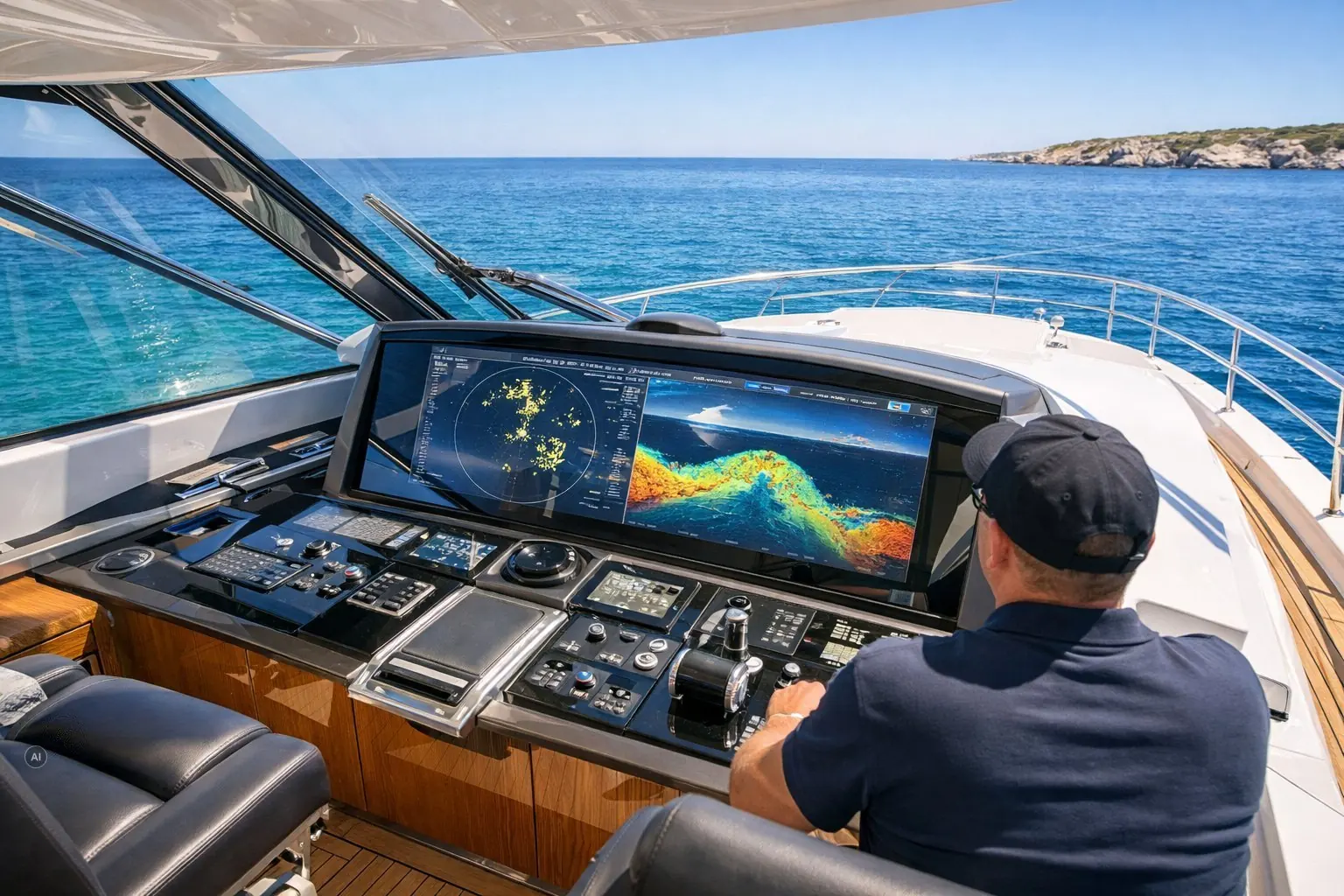
On 14 May FarSounder and the software firm Tocaro Blue tied their systems together, so a single navigation display now carries both a radar read of the surface and a sonar read of the water ahead. FarSounder's Argos forward-looking sonar already maps the seabed and the water column out in front of the hull. Tocaro Blue's ProteusCore takes the yacht's existing radar and turns its returns into labelled objects, which then appear in the same SonaSoft LT window as the sonar picture.
The radar side is the part that is new to the yacht market. ProteusCore's models were trained on more than three million radar frames, and the software classifies what it sees rather than just painting blips: other vessels, including small craft that carry no AIS transponder, plus buoys and shorelines. An Autofocus function adjusts range and gain on its own as sea state and weather shift, work a watchkeeper would otherwise do by hand. John Minor, chief executive of Tocaro Blue, called the tie-up 'a natural fit to give mariners enhanced situational awareness.'
Why it matters on the owner's bridge
The selling point is not a new instrument but one fewer thing to look at. Argos sonar is a fixture on expedition and long-range yachts precisely because it warns of reefs, shoals and uncharted ground before the depth sounder does, reading the water out to about a thousand metres ahead. Until now that picture sat apart from radar and cameras, and the person on watch had to build the full scene by moving between screens.
Merging the two speaks to the quieter problem on a modern bridge, which is workload rather than raw capability. For an owner whose brief is remote cruising in poorly charted water, the risk that costs the most is grounding, and the one that surprises crew is the fast open boat that never shows up on AIS. Reading both in one window, without hunting across displays, is the kind of gain that shows up in insurance conversations and in how confidently a captain will take a yacht into thin water.
Sensor fusion, not autopilot
This is the second sensor FarSounder has folded into the same window. In September 2025 it brought in Sea.AI, whose cameras read heat and light above the waterline to flag vessels and floating objects, sitting alongside the sonar view of what lies below. The radar tie-up extends that pattern, and it arrives as the company works on machine reading of its own sonar returns, a project backed by a Rhode Island state innovation voucher in January 2026.
Two cautions belong on the buyer's list. None of this is autonomy: the systems classify and warn, while the watch still decides, a line every vendor in the space is careful to draw. And because these are software layers riding on radar, sonar and cameras a yacht may already carry, the questions for a yard are about integration and licensing rather than steel, which keeps the upgrade inside the scope of a refit rather than a new build.
What is good, and what to watch
Strong points
- One screen instead of twoPutting radar-derived surface traffic and sonar-derived seabed and obstacle data on the same SonaSoft Lt display removes a genuine bridge workflow problem: a watch-keeper no longer has to glance between separate instruments to build one picture of what is around and ahead of the hull.
- Built on sensors many yachts already carryBecause ProteusCore is software riding on an existing Argos sonar installation rather than a new sensor to fit, it is positioned to reach owners through a refit rather than only a newbuild specification.
What to watch
- No price or availability givenNeither company's announcement discloses a cost, whether existing Argos owners get the integration as a free update, or a shipping date - the practical questions an owner would actually need answered.
- No independent sea trial foundEvery claim so far comes from the two companies' own joint announcement and its syndication across marine trade press; no classification society, flag state or independent sea-trial report was found confirming the integration's performance in service.
Practical detail
| Announced | 14 May 2026, jointly by FarSounder and Tocaro Blue |
|---|---|
| What it combines | Tocaro Blue's ProteusCore AI-radar software, trained on more than three million radar frames, inside the same SonaSoft Lt display that already runs FarSounder's Argos 3D forward-looking sonar |
| Who said what | Matthew Zimmerman, CEO of FarSounder, and John Minor, CEO of Tocaro Blue, both quoted in the companies' joint announcement; no third-party sea trial or classification society review found |
| Target vessels | Named by the companies as expedition cruise ships, superyachts, commercial operators, government vessels and unmanned vessels - not superyacht-specific |
| Not publicly known | Price, whether it is a free software update or a paid upgrade, which specific Argos hardware generations qualify, and an availability or shipping date |
Questions this story answers
What happened?
On 14 May FarSounder wired an AI radar layer into the same window that already carries its forward-looking sonar, so a bridge can read surface traffic and the ground ahead in one picture. For an owner who cruises poorly charted water, that is one fewer display to jump between at the moment it matters. And because it is software riding on sensors a yacht likely already has, it lands inside the reach of a refit.
What is good about it?
One screen instead of two. Putting radar-derived surface traffic and sonar-derived seabed and obstacle data on the same SonaSoft Lt display removes a genuine bridge workflow problem: a watch-keeper no longer has to glance between separate instruments to build one picture of what is around and ahead of the hull.
What should an owner or buyer watch?
No price or availability given. Neither company's announcement discloses a cost, whether existing Argos owners get the integration as a free update, or a shipping date - the practical questions an owner would actually need answered.
Who reported this?
MarineLink, AUVSI, FarSounder (company blog), The Digital Ship, Tocaro Blue.
We do this for everyone who loves this world. The people who have spent their lives in it, and the people just discovering it. Yotters exists so that what we learn belongs to all of them.
Nobody pays us for this. No ads, no sponsors, nothing for sale. We just believe the world is a little better when knowledge is shared instead of kept.
If it gave you something today, tell us to keep going. Follow us, leave a like, or write a positive comment. We read every one, and they are what keeps us going.