T700 Milano
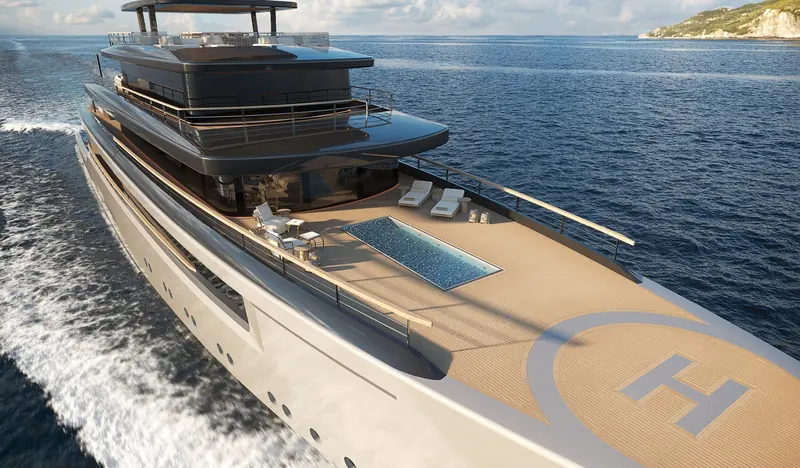
| LOA 70.0 m, beam 11.80 m | |
| About 1,480 GT, steel hull with aluminium superstructure | |
| Lloyd's Register class | |
| Diesel-electric propulsion, methanol fuel cell option up to 200 kW | |
| Top speed about 16.5 knots | |
| 14 guests in 7 cabins | |
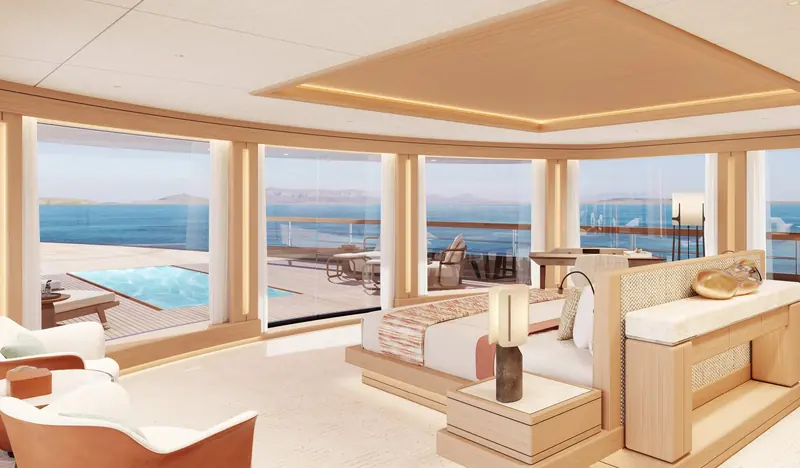
| 145 sq m beach club with 6.5 m pool | |
| Garage for 9 m and 8.5 m tenders |
Milan style on a Genoa hull
Tankoa introduced the Milano at Dubai in 2024 as the first fruit of its partnership with Nauta Design, the Milan studio behind some of the most admired exteriors of the past two decades. The name is a double tribute, to the studio's home and to the city's standing in fashion and design. Underneath the styling sits classic Tankoa construction, a steel hull and aluminium superstructure engineered to Lloyd's Register class.
The measurements put the Milano just below the yard's Apache flagship, 70 metres overall on an 11.8 metre beam with gross tonnage of around 1,480 and draught of 3.35 metres at half load. It is a size chosen with intent. The yacht clears the 1,000 GT threshold into genuine big-boat volume while remaining manageable in the Mediterranean harbours where an Italian-built yacht will spend her summers.
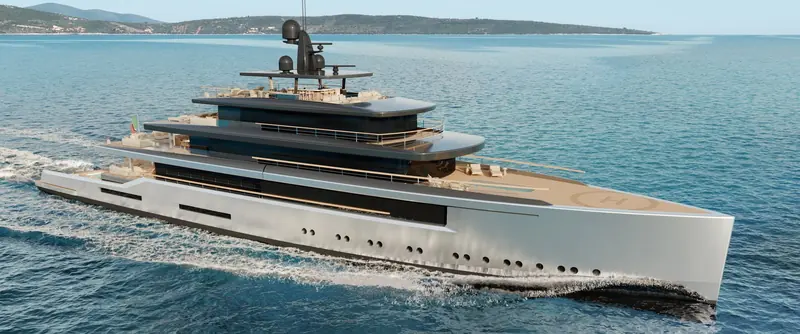
Nauta's calm, stretched lines
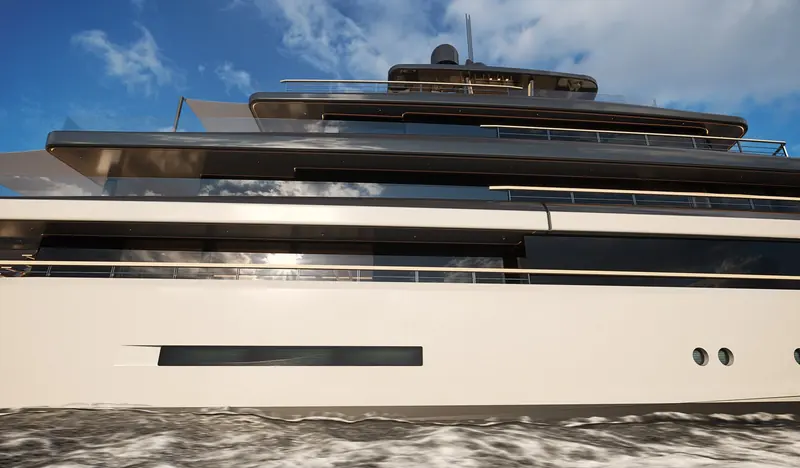
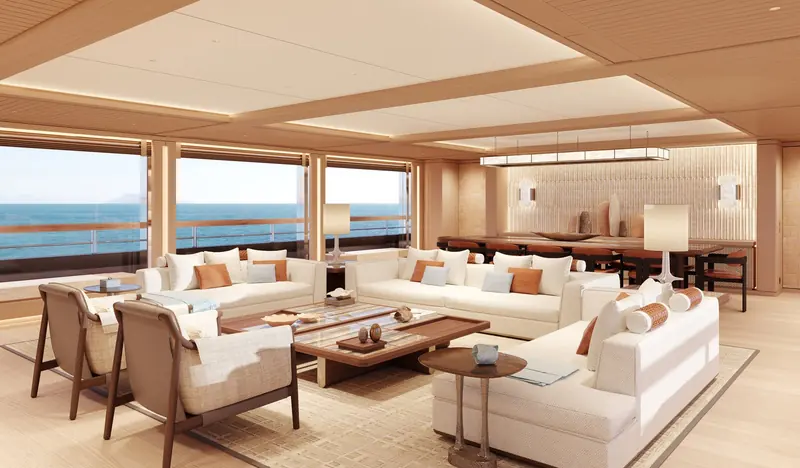
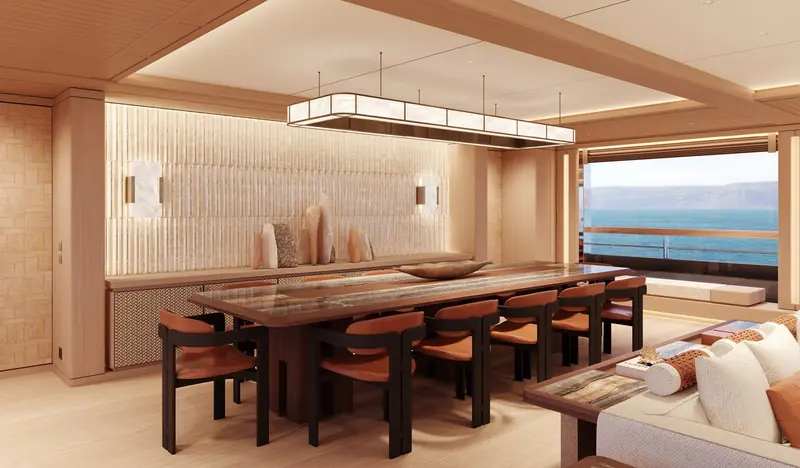
Nauta's signature has always been restraint, and the Milano wears it in long horizontal lines that visually stretch the hull and tie the yacht to the sea around her. Tankoa describes the brief as timeless, the same word it applies across the range, and the profile avoids the aggressive angles fashionable elsewhere in the 70 metre class. This is a yacht drawn to look right in twenty years, which is exactly how long an owner may keep her.
The design puts unusual weight on perspective views, clean sightlines down the decks and out over the water, with balanced volumes front to back. For owners the practical result is exterior deck space that feels domestic, wide, uncluttered and easy to furnish, and a superstructure that does not loom over the aft pools. It is architecture first, decoration second.
A 70 metre Nauta design with a 145 square metre beach club and a hull ready for methanol fuel cells.
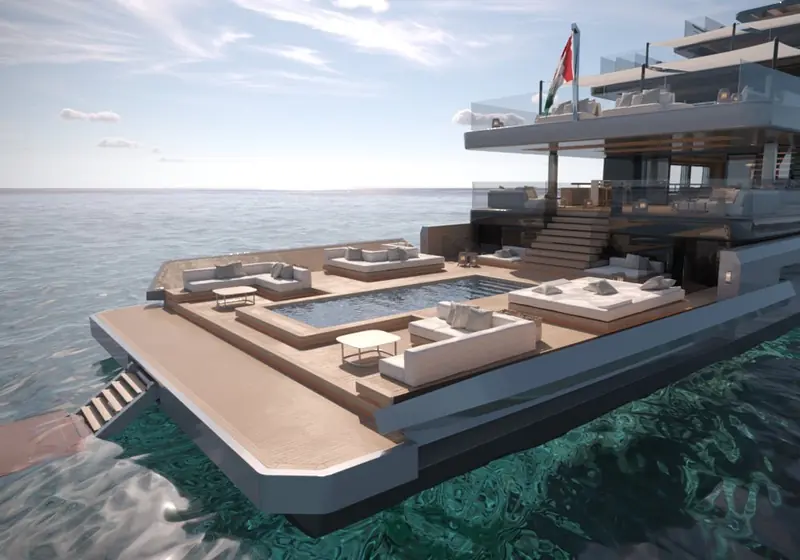
A 145 square metre beach club
The Milano's social centre is its beach club, roughly 145 square metres of sea-level space served by folding hull platforms and a 6.5 metre swimming pool. Four of the guest cabins sit on the lower deck with direct access to this area, an arrangement that turns the waterline into the daily living level for family and guests. The engine room is configured below the lower deck specifically to free this space.
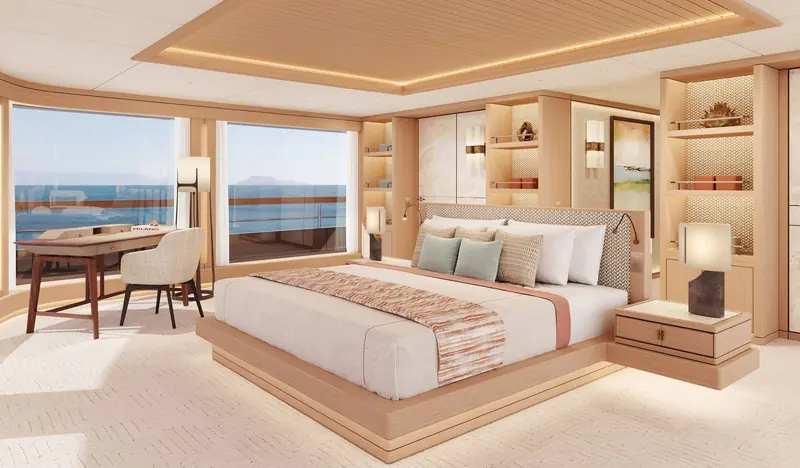
Higher up, the main deck garage swallows two serious tenders of nine and 8.5 metres, keeping the aft decks clear of chocks and cranes. Accommodation in the published layout runs to fourteen guests in seven cabins. The plans remain semi-custom, so an owner can trade cabins for a larger spa, an office or a private deck as the brief demands.
Diesel-electric now, methanol next
The Milano's most forward-looking sheet is the propulsion menu. The base offering is diesel-electric, driving the yacht to a top speed of about 16.5 knots with the quiet running and flexible load management that electric distribution brings. Above that, Tankoa has engineered the platform to accept methanol fuel cells delivering up to 200 kW of power, among the first yards to offer the option at this size.
For an owner the fuel cell provision is insurance as much as ideology. Emission rules in the Mediterranean and Northern Europe are tightening year by year, and a 70 metre yacht ordered today will trade through decades of them. A hull prepared for methanol keeps its options, and its value, open. The diesel-electric baseline already runs cleaner and quieter than conventional shafts.
Where the Milano fits
In Tankoa's range the Milano is the volume play, the yacht for an owner who wants close to the flagship's space with a calmer design language. Against the wider market it lines up with the 70 metre semi-customs from the established northern yards, and its argument is Italian design pedigree, a boutique build relationship and the propulsion flexibility the bigger production lines have been slower to offer.
The model remains at the project stage, so the first owner gets first-hull privileges, choosing layouts and finishes while shaping details of the debut. Tankoa's record of turning concepts into water is strong, the T55 Sportiva and T450 both went from renderings to deliveries inside a few years, and the yard's Civitavecchia expansion gives the Milano a shed to be built in.
The propulsion menu, and why it matters
Unlike most yachts of this size, which are sold with a fixed engine room, Tankoa is offering the Milano with a genuine choice. The default is diesel-electric: four variable-speed Caterpillar C32 generators, about 940 ekW each, feed a pair of electric motors of roughly 1,650 kW that turn the shafts, for a reported top speed of 16.5 knots. This is a well-used architecture in the 70-metre-plus bracket, valued for quieter running and lower part-load fuel burn than a conventional mechanical drivetrain, and nothing a classification society has not signed off on many times before.
The more speculative half of the menu is the methanol fuel cell option, said to add up to 200 kW. Tankoa's stated reasoning is that methanol is easier to store than hydrogen, a stable liquid at ambient conditions rather than a cryogenic gas, while still cutting emissions a diesel-electric system alone cannot. That is a sound argument on paper. What it is not, on everything publicly available, is a system that has been built, installed and run at sea. Tankoa's own language describes the yard as still selecting suppliers, which is shipyard language for not finalised. A buyer drawn to the Milano for the fuel cell story should treat it as a roadmap item to verify at contract stage, not a feature to take on faith from the unveiling renderings. One broker's own pages do not even agree with each other on when a hull might be ready, with build-slot dates for the same project spotted as far apart as late 2028 and late 2030, which is itself a sign that nobody has a firm delivery date to give a buyer yet.
Motorisation et systèmes
| Propulsion | Diesel-electric as standard: four variable-speed Caterpillar C32 generators, about 940 ekW each, feeding twin electric motors of roughly 1,650 kW, for a top speed of 16.5 knots (Tankoa, Boat International, Yachting Magazine and Megayacht News all agree on the core numbers) |
|---|---|
| Methanol fuel cell option | Up to 200 kW of additional power from methanol fuel cells. Tankoa's own language describes the yard as still selecting suppliers and remaining open to advances in storage technology, which is a design intention rather than a built and sea-tested system (Boat International, Yachting Magazine, Megayacht News) |
| Classification | Lloyd's Register, steel hull and aluminium superstructure, about 1,480 GT, 11.80 m beam, 3.35 m draught at half load (Tankoa). Brokers quote slightly different draught and displacement figures, 3.38 to 3.50 m and 1,600 to 1,680 tonnes; the builder's own numbers are used here as the more reliable source |
| Speed, range and tankage | 16.5 knots top speed is the one figure every source agrees on. Cruise speed, range and fuel and water tankage are reported inconsistently or marked TBD across broker listings and are not independently confirmed by Tankoa, so none of those numbers should be treated as fixed |
| Stabilisers and thrusters | A broker spec sheet lists Naiad zero-speed stabilisers on four 3.54 sq m fins and a 200 kW bow thruster, not corroborated by Tankoa's own material, so treat it as broker-sourced only |
Les points forts et les points de vigilance
Points forts
- A real yard with a genuine build recordTankoa is an established Genoa builder, founded 2008, currently constructing and delivering yachts up to 76 metres including the Apache-line T560 and T760, so the Milano is a design study from a yard that actually finishes boats, not a speculative concept from a startup
- A propulsion baseline that is proven, not experimentalThe diesel-electric core, four CAT C32 generators feeding twin electric motors, is conventional architecture already used on other large yachts. Only the methanol fuel cell add-on is unproven; the base system is not
Points de vigilance
- This is a concept, not a confirmed buildNo source found confirms a signed owner, a laid keel or a hull number for the Milano specifically. Broker listings show speculative delivery windows that disagree with each other by roughly two years, a sign these are template dates for an unsold design rather than a real production schedule
- The methanol fuel cell is a roadmap item, not a delivered featureTankoa's own language, remaining open to advances in storage technology, reads as the yard hedging on a technology path that is not finalised. A buyer drawn to the Milano for this reason should treat it as something to verify at contract stage, not a proven system
Informations pratiques
| Status | Unveiled as a concept and design study at the 2024 Dubai International Boat Show. As of the most recent coverage found, no source confirms a sold hull, a keel-laying or a named owner |
|---|---|
| Price | Only one broker figure found, USD 70 million ex-VAT and without options (Aberton Yachts). No editorial source confirms or references a price, so treat this as a single broker's estimate for an unsold build slot, not a confirmed transaction figure |
| Delivery | Broker-listed delivery windows range from late 2028 to late 2030 depending on the listing, and even a single broker's own pages disagree with each other, which is itself evidence these are placeholder dates rather than a real schedule |
| Builder | Tankoa Yachts, based in Genoa, with a second production site now online in Civitavecchia. Hulls are transferred to Genoa for fit-out (Megayacht News, Confindustria Nautica) |
Pour qui: The owner planning to keep a 70 metre yacht for decades, who values quiet Nauta lines, waterline living space and a propulsion plant that will still be welcome in the harbours of 2040.