T760 Apache
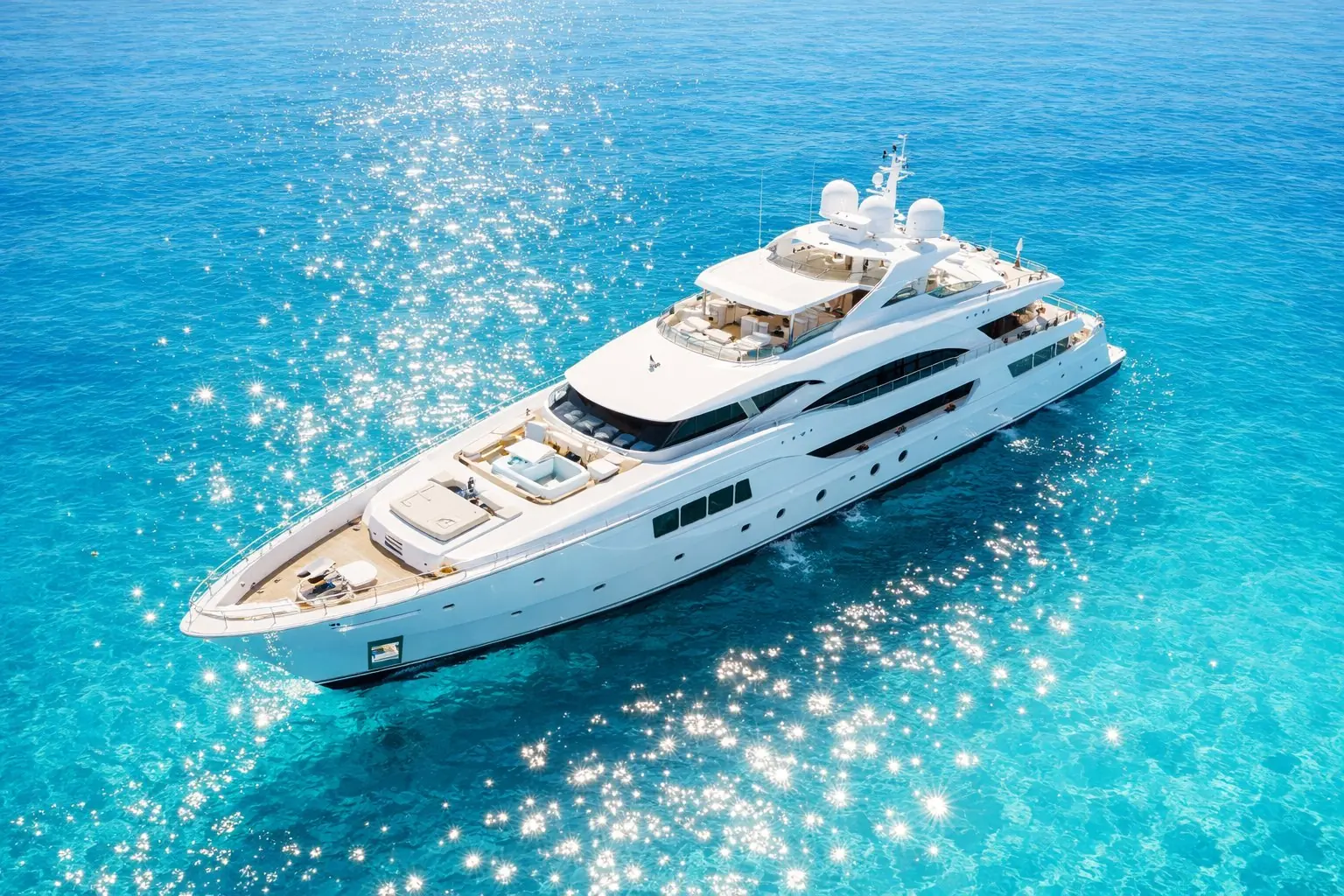
| LOA 76.0 m, beam 12.50 m | |
| 1,515 GT, about 1,350 tons displacement | |
| Steel hull, aluminium superstructure, Lloyd's Register class | |
| Top speed about 16.5 knots, cruise 15 knots | |
| Range in the region of 5,000 nm | |
| 14 guests in 7 staterooms, 15 crew | |
| 9.5 m flying pool above a bow gym atrium | |
| 150 sq m beach club with fold-out terraces |
The flagship of the Apache family
Tankoa revealed the T760 Apache as the largest model in its catalogue and the founding statement of the Apache line, which now also includes the 56 metre T560. At 76 metres with a 12.5 metre beam and 1,515 gross tons, it sits firmly in big-boat territory while staying within the reach of a yard that delivers only a few hulls a year. The project is classed by Lloyd's Register and built the classical way, steel hull under an aluminium superstructure.
Alberto Mancini carries both exterior and interior, which is rarer than it sounds at this size. The benefit for an owner is coherence. The same hand that sets the arrow-straight sheer decides the joinery lines inside, so the yacht reads as one object from the tender bay to the crow's nest. Tankoa builds the platform full custom above the engineering, so layouts remain open to negotiation at contract.
Lines like the fletching of an arrow
Mancini based the exterior on crisp horizontal, vertical and diagonal strokes that he compares to the fletching of an arrow. The effect is architectural, closer to a modern building than to the layered wedding-cake profile common at this length. Bulwarks are cut down to a minimum, which keeps sightlines from the decks uninterrupted and puts guests visibly close to the water, a deliberate reversal of the fortress feel of many 70 metre plus yachts.
The five decks run from lower deck to a crow's nest above the bridge deck, a lookout position that has almost vanished from modern yachts. Between them the yacht stacks generous open areas without breaking the profile, because the diagonal graphic disguises the height. It is a silhouette designed to be recognised at anchor, which for many buyers at this level is half the brief.
A 9.5 metre glass pool hangs above the bow atrium, so the owner swims suspended over the sea.
A pool flying above the bow
The signature feature is the flying pool, 9.5 metres of glass-sided water carried above an atrium gym in the bow. Swimmers look down through the pool floor into the gym and out over the sea ahead, an experience no other yard currently offers at this scale. The gym below gains a ceiling of moving light, which turns the workout space into one of the most photographed rooms on board.
Aft, the lower deck opens into a beach club of around 150 square metres with fold-out side terraces and an open transom framing the wake. A dominant central staircase connects it to the deck above, creating a double-height mezzanine that pulls daylight deep into the hull. The arrangement treats the sea-level deck as the social heart of the yacht, where guests actually live when the boat is at rest.
Space for fourteen guests and a real crew
Accommodation in the published arrangement runs to fourteen guests in seven staterooms, with a crew of fifteen housed in eight cabins. That crew-to-guest ratio is the quiet luxury of the design, because a 76 metre run with big-ship service standards needs the berths to deliver it. The owner's quarters take the prime forward positions with the panoramic views the low bulwarks were drawn for.
Tenders and toys stow out of sight to keep the decks clean, and the deck plan reserves distinct zones for dining, lounging and sport so fourteen guests can spread out without crossing paths. As a full-custom project above a resolved naval platform, the interior division remains the owner's to direct, from a diving-focused beach club to an additional office or spa.
Numbers built for crossing oceans
The naval architecture is conservative in the best sense. Twin diesels from Caterpillar or MTU drive the 76 metre hull to a top speed of about 16.5 knots with comfortable cruising at 15, and fuel capacity of some 160,000 litres gives a range in the region of 5,000 nautical miles. Those are numbers for an owner who intends to position the yacht between the Mediterranean, the Caribbean and beyond on her own bottom.
Displacement is around 1,350 tons at maximum load and draught at half load is 3.2 metres, workable for the marquee harbours despite the size. For a buyer weighing the northern European yards against Italy, the T760 argues that a Genoa build can carry the same Lloyd's class and engineering discipline while adding a design signature the bigger production lines will not attempt.
Motorisation et systèmes
| Engines (option A) | 2x Caterpillar C3512E, 1,901 kW each at 1,800 rpm (manufacturer spec) |
|---|---|
| Engines (option B) | 2x MTU V4000 M73, about 1,900 to 1,920 kW each at 1,970 rpm, sources vary on the exact figure (manufacturer spec) |
| Top speed | 16.5 knots (manufacturer estimate) |
| Cruising speed | 15 knots (manufacturer estimate) |
| Range | 5,000 nautical miles at cruising speed (manufacturer estimate) |
| Fuel tankage | 160,000 litres |
| Stabilizers | 4x electro-hydraulic fin stabilizers (manufacturer spec) |
| Gearboxes | not published |
| Generators | not published |
| Bow and stern thrusters | not published |
| Watermaker | not published |
| Engine room access | not published |
| Hull and tonnage | Steel hull, aluminium superstructure, displacement about 1,350 tonnes at max load. Tankoa's own site states 1,515 GT; a separate figure near 1,700 GT also circulates and the discrepancy is unresolved by a third source |
| Classification | Lloyd's Register, per Tankoa's own site |
Les points forts et les points de vigilance
Points forts
- Range and efficiency5,000nm at a 15 knot cruise from a 160,000 litre tank is a strong figure for the fast displacement 70 metre plus class, per manufacturer figures
- Design pedigreeExterior and interior both by Alberto Mancini, a designer with an established superyacht portfolio. The arrow feather deck lines set it apart visually from its peers
- Standout amenityA 9.5 metre glass bottomed flying pool suspended above the bow gym atrium, plus a 125 to 150 square metre convertible beach club, are unusual features not common at this size
- Speed for the class16.5 knot top speed and 15 knot cruise are competitive against the cited rival, the Amels 80, which cruises at 12 knots
Points de vigilance
- Unconfirmed build statusNo single verified source confirms a signed contract, hull number or firm delivery date. Brokerage listings for the same yacht disagree on delivery year, which points to speculative order book status rather than a contracted build
- Fast displacement tradeoffsA fast displacement steel and aluminium hull at 76 metres gives up some range and efficiency against a full displacement design and cannot match a planing hull's top end speed. 16.5 knots is modest against fast yacht benchmarks, so the label mainly distinguishes it from slower full displacement yachts rather than from planing craft
- Thin technical disclosureTankoa has not published generator, thruster or watermaker specifications, nor engine room details, even in its own marketing. That is unusual for a yard positioning this as a flagship product
- Young line, limited track recordThe Apache line was unveiled in 2021 and Tankoa's only in service Apache scale precedent is the smaller, differently designed 72 metre Solo delivered in 2018. There is no delivered T760 hull to point to for real world sea keeping, fuel burn or reliability data
- Price opacityNo manufacturer price exists. The one public figure, 70 million dollars, comes from a brokerage listing for a build slot rather than from Tankoa, and should not be treated as authoritative
Informations pratiques
| New build price | No price published by Tankoa. One brokerage listing (Aberton Yachts) quotes 70,000,000 USD excluding VAT and options for a build slot. That is a broker's asking figure for a speculative slot, not a shipyard price |
|---|---|
| Running costs | No public estimate found from any source |
| Comparable models | The Amels 80 from Damen is the closest rival in length, beam and fast displacement segment, named directly by YachtBuyer. A broader set would include other 70 metre plus fast displacement builds from Feadship, Benetti and Nobiskrug, though none were directly compared to the T760 in any source found |
| Not publicly disclosed | Confirmed hull or contract status, a firm delivery date (brokerage listings for the same yacht disagree, one quoting 2029 and another 2030), generator make and model, thruster specs, watermaker capacity, engine room layout, gearbox make, the actual sale price and any named owner |
Pour qui: The owner who wants a 76 metre flagship with a single design signature and a feature no charter guest will ever forget, built by a yard small enough to answer the phone.