RWD (Redman Whiteley Dixon)
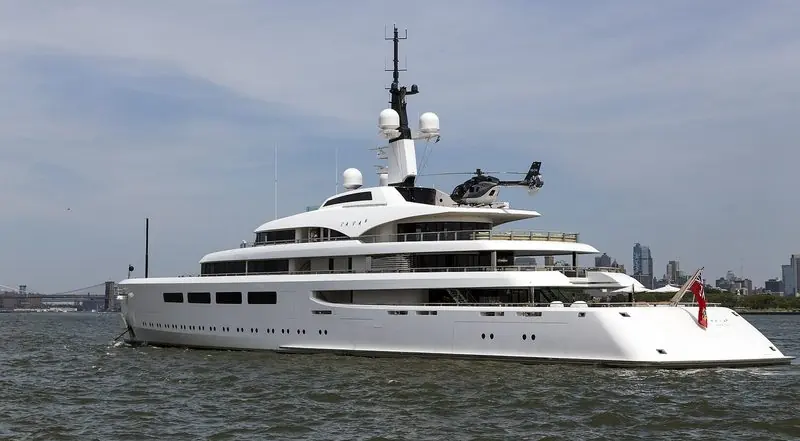
| Nom complet | Redman Whiteley Dixon (RWD) |
|---|---|
| Fondateurs | Justin Redman et Mark Whiteley, Tony Dixon les rejoignant en 2001 |
| Fondé | 1993 |
| Base | Beaulieu, Hampshire, Angleterre |
| Disciplines | design extérieur et intérieur |
| Yachts signatures | Ilona (73 m), Al Said (155 m), Vava II, Como |
| Portefeuille | environ 75 yachts, de près de 35 m à 155 m |
| Largest | Al Said, 155 m, Lurssen, 2008, RWD interior over an Espen Oeino exterior |
| Breakthrough, 118.8 m, Feadship, launched May 2024: exterior and interior by RWD, the first hydrogen fuel-cell superyacht, 7,247 GT | |
| Sophia, 96.55 m, Feadship, delivered 2017 as Faith: exterior and interior | |
| Vava II, 96 m, Devonport, 2012 | drawn by RWD, with the interior credited to Remi Tessier |
| Series work | Benetti's B.Now range at 50, 60, 67 and 72 metres, and the Oasis range at 34 and 40 metres |
| Design fee | not published. Market band 1 to 5 per cent of build cost, plus 2 to 4 per cent project management, both outside the yard price (SuperYachtReview 2026 price guide, updated March 2026) |
| Construction-phase attendance is normally charged in addition to the design fee rather than included in it, which is standard naval architecture practice (Sponberg Yacht Design and Kasten Marine published terms, read 28 July 2026) | |
| Series work for Benetti puts RWD lines into the brokerage market in numbers, which gives valuers comparables that a one-off design does not have | |
Fondé sur la côte sud
RWD signifie Redman Whiteley Dixon, les patronymes derrière le cabinet et non une autre lecture des initiales. Justin Redman et Mark Whiteley se sont rencontrés pendant leurs études de design industriel à Londres et ont fondé le studio en 1993. Tony Dixon les a rejoints en 2001, et la société a pris peu après son nom actuel en trois parties. Le bureau occupe une ancienne centrale électrique reconvertie, sur les rives de la Beaulieu River dans le Hampshire. Chacun des trois patronymes appartient à l'un de ses designers et non à une formule inventée.
Parti d'une première adresse à Chelsea, le studio a rejoint la côte de la New Forest, plus près de l'eau et des chantiers qu'il sert. Il a bâti une grande équipe au fil de trois décennies de travail régulier. Le déménagement lui a donné de la place pour grandir tout en gardant un cadre calme au bord de la rivière. Cette base fait désormais partie de son identité. Un cadre au bord de l'eau convient à un cabinet dont tout le travail porte sur la vie en mer.
Retenue et proportion
La main RWD privilégie des lignes nettes et équilibrées et une confiance tranquille plutôt que le bruit visuel. Le studio est connu pour ses proportions et pour des extérieurs qui vieillissent bien au lieu de courir après une mode passagère. Il dessine l'extérieur comme l'intérieur, ce qui aide à garder un yacht cohérent du profil au salon. Le travail se lit comme discret, en accord avec ses racines britanniques. Le studio préfère une ligne qui se lira encore bien dans vingt ans à une ligne qui se démode vite.
Le bureau vise l'intemporel, un yacht qui paraît toujours juste bien des années après son lancement. Cette discipline convient aux propriétaires qui préfèrent la longévité à la nouveauté. Le studio traite une large gamme de tailles sans perdre son caractère mesuré. Sa retenue est un contraste voulu avec des maisons plus flamboyantes. Ce caractère mesuré est un choix et non une limite de ce que le studio sait dessiner.
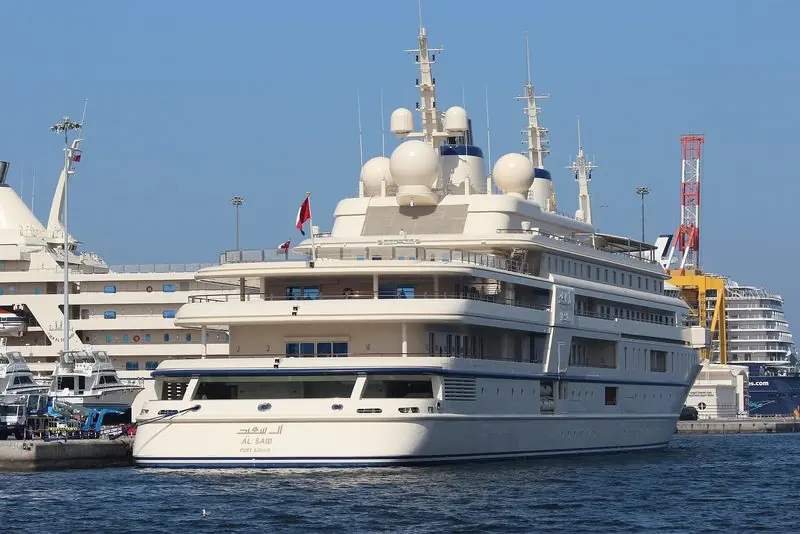
La retenue britannique à toutes les tailles, du croiseur de 35 mètres au vaisseau amiral de 155 mètres.
D'Ilona à Al Said
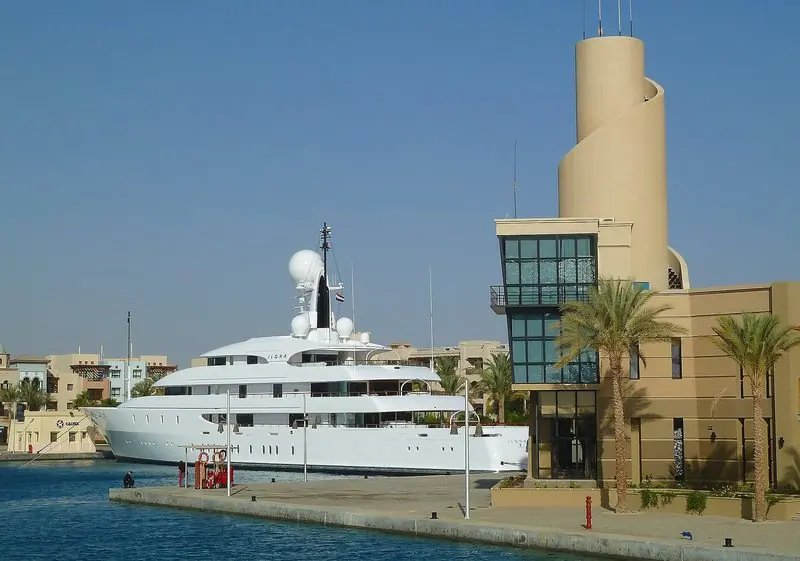
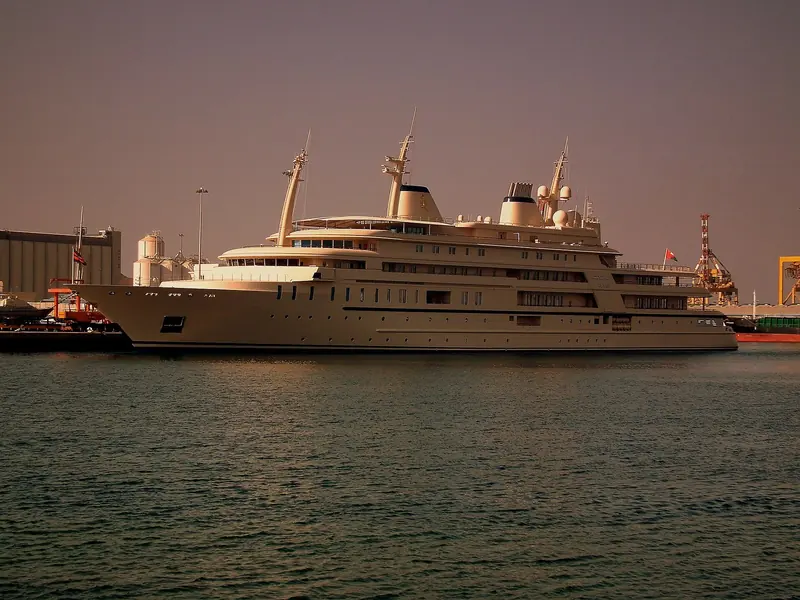
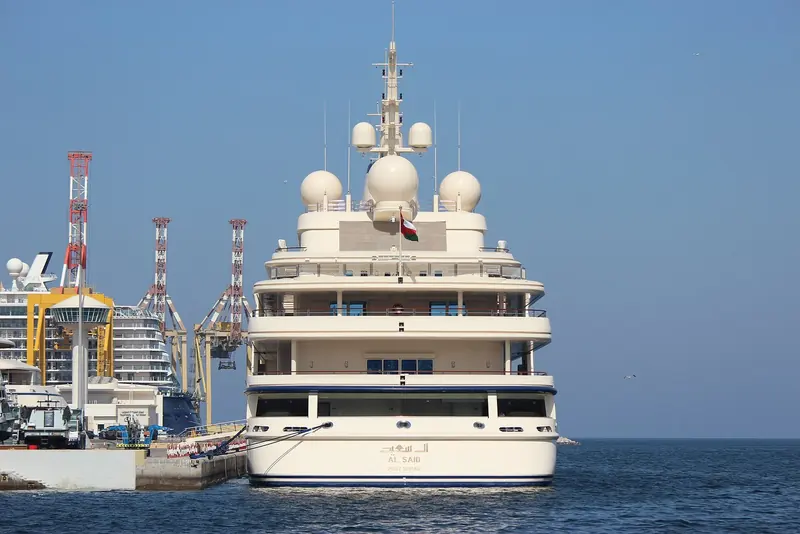
Le 73 mètres Ilona, construit par Amels, a établi le studio dans le monde du superyacht et lui a ouvert la porte de projets plus grands. À l'autre extrême, le 155 mètres Al Said est le plus grand yacht du portefeuille de RWD. Entre ces deux pôles se rangent des yachts comme Vava II, Twizzle et Como, qui montrent l'amplitude du studio. Le cabinet a mené à bien un grand nombre de yachts sur cet intervalle. La montée vers les tailles de superyacht s'est faite par étapes plutôt que d'un seul bond.
Les travaux plus récents comprennent Faith et d'autres yachts à moteur importants livrés par de grands chantiers. Le studio a façonné environ soixante-quinze yachts allant de près de 35 mètres à 155 mètres. Ce volume en fait l'un des cabinets les plus expérimentés de Grande-Bretagne. L'ampleur de cette flotte est au centre de sa réputation. Livrer à ce rythme pendant trois décennies suppose une équipe profonde et stable derrière les fondateurs.
Un cabinet collaboratif
RWD travaille étroitement avec les propriétaires et les chantiers de toute l'Europe, en adaptant son processus à chaque projet. Le studio est à l'aise pour mener un design complet ou pour se concentrer sur le seul extérieur ou le seul intérieur. Sa longue expérience lui permet de guider aussi bien un premier propriétaire qu'un habitué. Cette souplesse aide à expliquer le flux régulier de commandes. Le studio adapte son rôle au propriétaire plutôt que d'imposer un processus fixe à chaque projet.
Le cabinet a bâti des relations avec plusieurs grands constructeurs par le travail répété. Livrer des yachts jusqu'à 155 mètres impose une coordination serrée avec les ingénieurs du chantier, et le studio a l'habitude de cette discipline. Il garde un rôle de terrain pendant la construction pour protéger l'intention du dessin. Ce soin apporté à la livraison explique en partie pourquoi les propriétaires reviennent. Les clients qui reviennent sont un signe fort que le yacht fini correspondait aux premiers dessins.
Parmi les plus prolifiques de Grande-Bretagne
Avec environ soixante-quinze yachts à son nom, RWD compte parmi les maisons de design les plus productives de Grande-Bretagne. Son travail ne crie pas, ce qui l'a parfois laissé plus discret dans la presse que des rivaux plus tapageurs. Au sein de l'industrie, en revanche, son parcours impose le respect. La réputation du studio repose sur un corpus d'oeuvres construites, profond et constant. C'est cette constance discrète, plus qu'un yacht vedette, qui définit le cabinet.
RWD a prouvé qu'il pouvait opérer à toutes les tailles, du croiseur de milieu de gamme au vaisseau amiral d'échelle nationale. Cette polyvalence est rare et précieuse. Le cabinet continue de remporter des commandes en haut du marché. Son mélange de retenue et d'amplitude le maintient solidement installé. Peu de studios britanniques peuvent égaler cette combinaison de production régulière et d'étendue de tailles.
The Dutch and German order book
Feadship has been the closest relationship. Sophia, 96.55 metres, was delivered in 2017 under the name Faith with exterior and interior by the studio, and the 73.55 metre Sherpa followed in 2018. Destiny, at 101.2 metres, is listed for 2026. Vava II, 96 metres from the British yard Devonport in 2012, was drawn by RWD with the interior credited to Remi Tessier.
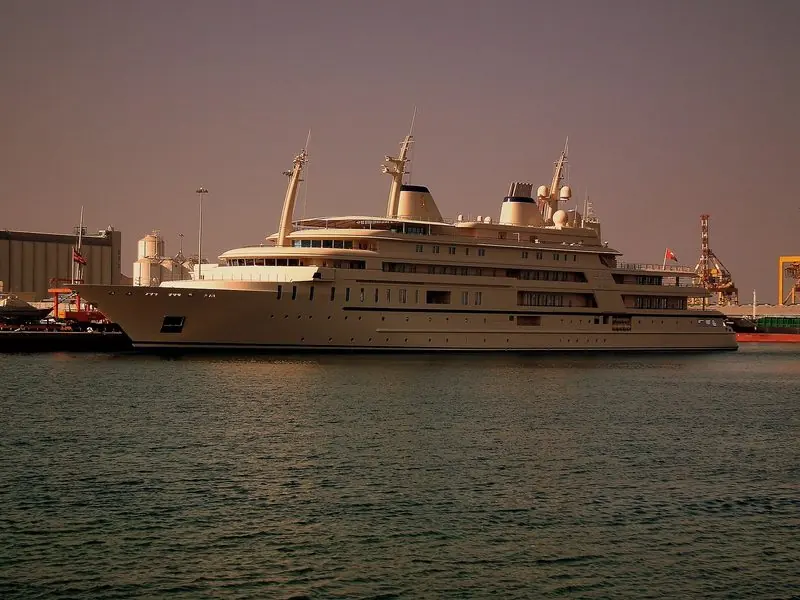
At Lurssen the studio has Al Said behind it, the 102.4 metre Nixie listed for 2026 and the 122.5 metre Project Omega with a delivery date well into the future. Benetti built the 108 metre I.J.E. in 2019. That spread across the three or four yards capable of building above 100 metres matters when an owner has already picked a builder, because it means the studio arrives knowing how that yard prices a change and how long its engineering department really needs.
The Benetti series, for owners who will not commission from nothing
RWD drew Benetti's B.Now range at 50, 60, 67 and 72 metres, and the smaller Oasis range at 34 and 40 metres. These are semi-custom platforms. The hull, the engineering and the general arrangement are largely settled before a buyer appears, and the yard builds them speculatively or against early orders.
What the buyer gives up is authorship of the profile, which will be shared with every other hull in the series. What he gets is a delivery measured in a year or two, a price fixed at contract and a boat with an established resale market, because brokers know exactly what a B.Now is worth. The Oasis range in particular put the studio's habit of opening the hull into production form, with fold-down beach club terraces as a standard feature.
How a commission runs, and what it costs
A project starts with conversations about how the owner and his family actually use a boat, because the studio's leverage is on layout and volume before it is on styling. Concept sketches and a general arrangement follow, then exterior and interior develop in parallel because one office holds both. The fee is staged against those deliverables and paid before the yard is contracted. What an owner buys at concept stage, for the smallest tranche of the total, is a package a yard can price, and the right to walk away holding drawings he has licensed. The commitment is the yacht building agreement, and the practical commitment is the day the yard starts engineering to these drawings.
There is no published fee scale. The market band for a designer, from the SuperYachtReview guide updated March 2026, is 1 to 5 per cent of build cost, with project management a separate 2 to 4 per cent, neither of them inside the yard's number. Exterior and interior together sit high in that band, and the studio's construction-phase involvement is normally an additional charge rather than part of the design fee, which is how the profession bills supervision. That charge is the one an owner should not negotiate away. Drawings get value-engineered on the shop floor, and the difference between a design that survives and one that quietly degrades is whether the designer is still in the room when the yard proposes a cheaper detail.
Recognition, and who it does not suit
RWD does not shout, and it has historically been quieter in the consumer press than more flamboyant houses. Within the industry the record speaks for itself, and the studio's work has been recognised repeatedly at the design awards. Awards are worth a narrow and real amount to an owner, because they confirm a finish standard and they help a broker at resale. They say nothing about behaviour under pressure.
This studio does not suit an owner who wants a profile nobody has seen before, because the work is deliberately calm and will disappoint anyone chasing spectacle. It does not do naval architecture, so an owner who wants hull form and styling from one firm needs a different structure. It is not the obvious choice for a sailing yacht today, whatever the studio's origins, and it is not set up for boats below about 30 metres outside the Benetti ranges.
Understatement is a resale strategy, whether or not it was meant as one
A yacht carrying this studio's name sells better than average, and the reason is the thing that disappoints owners looking for spectacle. Calm work does not date, so a buyer in 2035 is not looking at a boat that announces the year it was drawn. The second reason is structural. Benetti's B.Now and Oceans ranges put dozens of hulls to RWD lines into the brokerage market, and comparables are what valuations are made of. Ocean Independence, on 11 May 2026, ranks builder pedigree and specification above cosmetic detail in what holds value, and this studio's work is almost always attached to a Dutch, German or top Italian yard.
The honest deduction is that an owner is not paying a premium for a name the market rewards. He is paying for a hull that opens up, and the resale benefit is a consequence of restraint rather than of the signature. The one place it costs him is at the point of sale to a buyer who wants drama, and there are such buyers. A boat that photographs quietly gets fewer enquiries and better ones. Given a median 277 days on market across the 470 yachts of 24 metres and over sold in 2025, fewer and better is the right trade.
Informations pratiques
| Design fee | not published; market band is 1 to 5 per cent of build cost plus 2 to 4 per cent project management, both outside the yard price (SuperYachtReview 2026 price guide, updated March 2026) |
|---|---|
| What the studio covers | exterior design, interior design and interior architecture; naval architecture belongs to the yard or a specialist office |
| Studio size and base | around 60 people, including the interior studio POD Interior Style, working from a converted power station on the Beaulieu River, Hampshire |
| Series routes to a faster, cheaper commission | Benetti's B.Now (50, 60, 67, 72 m) and Oasis (34, 40 m) semi-custom ranges, where the hull, engineering and general arrangement are largely settled before a buyer appears |
| The largest project by length | the interior of Al Said, 155 m, Lurssen 2008, a state yacht for Oman with a concert hall sized for a fifty-piece orchestra - RWD interior over an Espen Oeino exterior |
Ce que rapportent propriétaires et équipages
No independently attributable owner testimony found
search returned the partners' own description of their approach (Justin Redman on hand-drawing and collaboration, Tony Dixon calling large yachts 24-hour hotels) and a Feadship build captain's comment on Breakthrough's owner reducing his global footprint, but no on-the-record quote from a private owner or a named captain assessing RWD's design work specifically; RWD's client base skews toward owners who stay out of the consumer press, which the studio's own quiet public profile reflects
Yotters research desk
Les points forts et les points de vigilance
Points forts
- One office for both exterior and interiora styling change and a layout change get argued by the same team against the same general arrangement, rather than negotiated between two studios; Breakthrough and Sophia (delivered as Faith) both carried exterior and interior from RWD
- Proven at the largest and most technically demanding end of the marketthe 118.8 metre Breakthrough is the largest superyacht ever launched in the Netherlands and the first hydrogen fuel-cell superyacht, at 7,247 GT, with fourteen balconies and seven unfolding platforms, the most apertures Feadship has ever built into one hull
- A slow, real succession planToby Ecuyer joined in 2004, became creative director in 2006 and made partner after a decade in the studio; several of the best-known single-name practices in this directory have no succession plan at all
- Series work gives an owner real resale comparablesBenetti's B.Now range at 50, 60, 67 and 72 metres and the Oasis range at 34 and 40 metres put dozens of RWD-drawn hulls into the brokerage market, which is unusual for a studio that also does full bespoke work at 150 metres plus
Points de vigilance
- No naval architecturehull engineering sits with the yard or a specialist office - De Voogt on the Feadships - so an owner is buying how the boat looks and lives, not how it is engineered to move
- No published fee scalethe only public figures are the market-wide SuperYachtReview band of 1 to 5 per cent of build cost plus 2 to 4 per cent project management, and construction-phase attendance is normally billed on top of the design fee rather than included in it
- A quiet public profile cuts both waysthe studio has historically stayed out of the consumer press compared with more flamboyant houses, which suits owners who want discretion but leaves a buyer with less independent commentary to check the work against before commissioning
- Key-person risk across three named partners rather than onethe practice trades on the Redman Whiteley Dixon name; a step-in or replacement clause covering any of the three partners becoming unavailable mid-build has to be negotiated into the contract, not assumed
Pour qui: Les propriétaires qui tiennent à un design discret et bien proportionné, qui paraîtra encore juste des décennies après le lancement.