Winch Design
| Fondateurs | Andrew Winch et Jane Winch |
|---|---|
| Fondé | 1986 sous le nom Andrew Winch Designs, rebaptisé Winch Design en 2015 |
| Base | Londres (Putney, depuis 2024) |
| Équipe | plus de 150 personnes |
| Disciplines | intérieurs et extérieurs de yachts, jets privés, architecture |
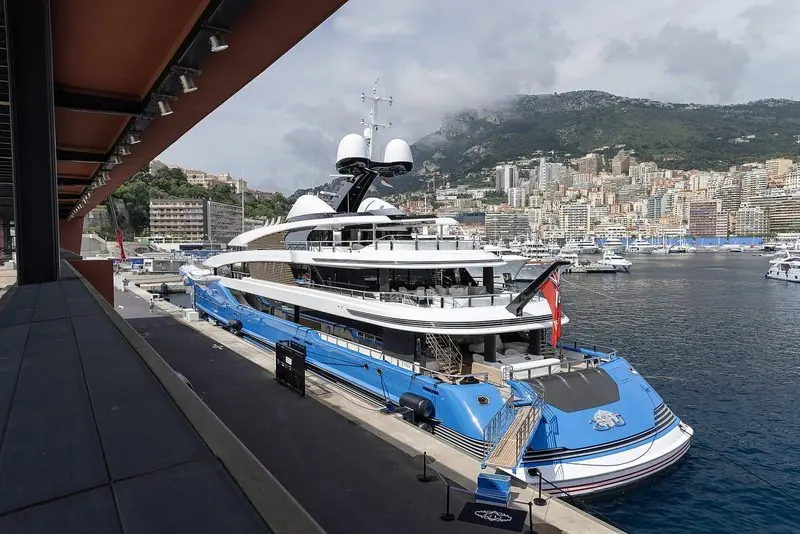
| Yachts signatures | Madame Gu, Al Mirqab, Sea Owl |
| Héritage | Andrew Winch s'est formé auprès de Jon Bannenberg |
| Departments | yacht, aviation (from 2002), architecture (from 2007), visualisation and procurement |
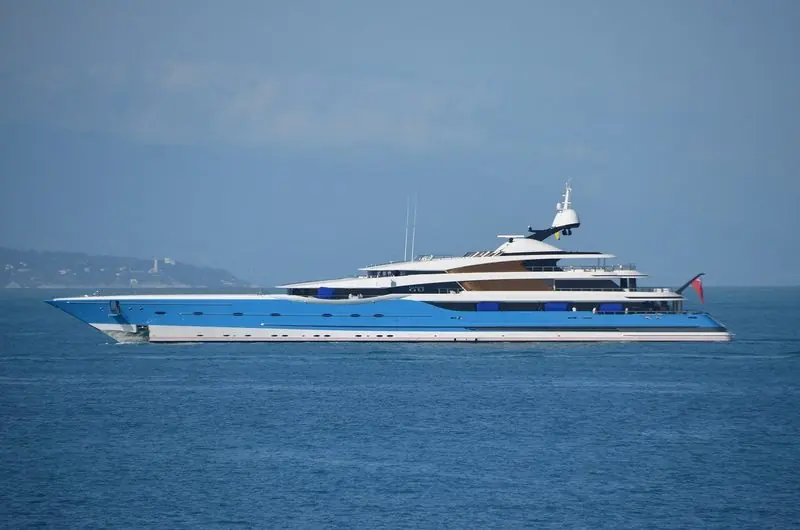
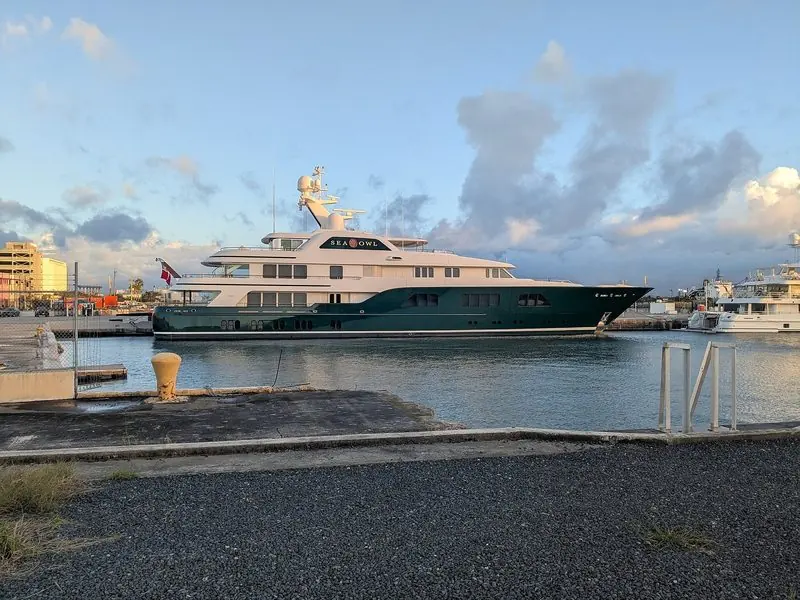
| Feadship work | Madame Gu (99 m, 2013) and Sea Owl (62 m, 2013), both exterior and interior |
| Largest interior | Dilbar (156 m, Lurssen, 2016), the greatest interior volume ever delivered in a yacht |
| Workload | 33 projects in build in 2024, 15 of them yachts, by the studio's own count |
| Recognition | Andrew Winch took the Lifetime Achievement Award at the BOAT Design and Innovation Awards on 1 February 2026 |
| Design fee | not published by the studio. Market band is 1 to 5 per cent of build cost for the designer and 2 to 4 per cent for project management, both outside a yard's quoted price (SuperYachtReview 2026 price guide, updated March 2026) |
| A single mandate covering exterior, interior, procurement and art sits at the upper end of that band, because it replaces three or four separate appointments | |
| Copyright normally stays with the studio and the owner licenses one hull. A second hull to the same design attracts a royalty of about 1 to 1.5 per cent of its price under published naval architecture practice (Marsh Design and Sponberg Yacht Design fee terms, read 28 July 2026) | |
Une maison londonienne aux racines profondes
Andrew Winch s'est formé auprès de Jon Bannenberg, le designer souvent appelé le père du superyacht moderne, avant de s'établir à son compte. Il a fondé Andrew Winch Designs en 1986 avec sa femme Jane, en commençant par l'intérieur et l'extérieur d'un petit voilier Swan. Le cabinet a été rebaptisé Winch Design en 2015, à mesure que son champ s'élargissait. Il est passé d'un départ à deux à un studio de plus de 150 personnes. Ce départ en couple a donné au studio une culture personnelle qu'il a conservée en grandissant.
Pendant trois décennies, le bureau a travaillé depuis l'ancienne caserne de pompiers de Barnes, au bord de la Tamise, et il a déménagé en 2024 vers un siège plus grand à Putney. L'équipe couvre aujourd'hui les yachts, les jets privés et l'architecture terrestre depuis le même bâtiment. Cette amplitude est rare et permet au studio de porter un langage unique sur des objets très différents. Au fond, la maison reste une maison de yachts, et la mer irrigue une grande partie de sa pensée. Jane Winch aide à diriger l'entreprise aux côtés de son mari depuis le tout premier jour.
Artisanat, récit et détail
Winch est connu pour des intérieurs bâtis autour d'une histoire, où chaque matériau et chaque finition servent un thème choisi par le propriétaire. Le studio investit lourdement dans l'artisanat et dans le détail fin de l'ébénisterie, de la ferronnerie et du tissu. Ses extérieurs penchent vers l'élégance et l'équilibre plutôt que vers l'agressivité, sur un voilier comme sur un grand yacht à moteur. Le résultat paraît réfléchi et personnel plutôt que démonstratif. Un projet part souvent d'une couleur, d'un lieu ou d'une époque, et l'intérieur pousse à partir de cette seule idée.
Le bureau traite chaque commande comme une page blanche et se refuse à répéter une formule maison. Les voiliers restent au portefeuille, ce qui garde le studio à l'aise avec la discipline des structures légères et du gréement. Cet ancrage dans la voile nourrit une légèreté de main qui se retrouve sur les yachts à moteur. On vient chez Winch pour un intérieur riche et taillé sur mesure, avec une idée cohérente derrière. Cette méthode narrative est devenue au fil des ans étroitement liée au nom du studio.
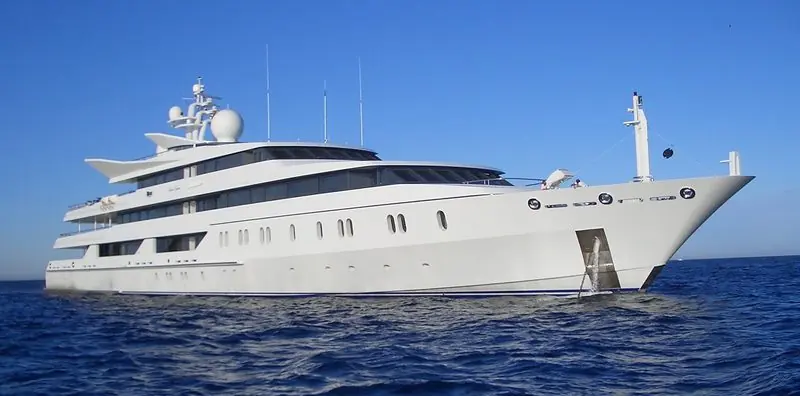
Un seul langage de design pour un yacht, un jet et la maison à terre.
Des yachts primés
Le 99 mètres Madame Gu, construit par Lurssen, compte parmi les projets les plus célébrés du studio, un yacht à moteur audacieux et sculptural. Al Mirqab, un yacht de 133 mètres, a remporté un World Superyacht Award et a montré le studio à l'oeuvre à la plus grande échelle. Sea Owl, un Feadship de 62 mètres, est un autre lauréat et un favori pour son intérieur détaillé et plein de caractère. Ces projets côtoient une longue liste de voiliers et de yachts à moteur récompensés. Travailler à la plus grande échelle sur Al Mirqab a confirmé que le studio savait accorder son goût à la taille.
Le bureau a collaboré avec des architectes navals et des stylistes extérieurs respectés, parmi lesquels Tim Heywood, Philippe Briand et De Voogt Naval Architects. Cette disposition à partager le crédit reflète un studio tourné vers l'expérience finie plutôt que vers la paternité exclusive. Son palmarès compte des World Superyacht Awards et des ShowBoats awards sur de nombreux lancements. L'ampleur de ce travail reconnu est l'une des plus fortes du design de yacht britannique. Une reconnaissance soutenue sur autant de lancements est rare pour une seule maison de design.
Comment travaille le studio
Winch se présente comme une maison à service complet, capable de prendre en charge l'intérieur, l'extérieur et jusqu'à la maison et l'avion du propriétaire. Ce point de contact unique séduit les acheteurs qui veulent une esthétique commune à tout leur univers. Le studio s'associe à de grands chantiers aux Pays-Bas, en Allemagne et ailleurs selon le projet. Il est à l'aise pour mener un intérieur pendant qu'un autre cabinet traite l'architecture navale. Un seul interlocuteur pour le yacht, le jet et la maison est un vrai argument pour des propriétaires très occupés.
Le processus de design s'appuie sur un dialogue long et serré avec le propriétaire pour faire émerger l'histoire qui portera le projet. De grandes équipes internes pour les matériaux, l'éclairage et le détail soutiennent cette conversation. Cette profondeur permet au studio de livrer des intérieurs d'une vraie complexité sans perdre l'idée de départ. C'est une façon de travailler qui convient aux propriétaires qui aiment être impliqués dans la fabrication. Beaucoup de clients reviennent pour un deuxième ou un troisième projet, ce qui en dit long sur cette relation.
Un pilier du design britannique
Winch Design figure parmi la poignée de studios qui définissent le design de superyacht britannique, aux côtés de l'héritage du mentor de son fondateur. Sa taille, ses récompenses et son extension vers les jets et l'architecture le distinguent des ateliers plus petits. La maison est devenue une école dont d'anciens collaborateurs peuplent toute l'industrie. Cette influence va bien au-delà des yachts qu'elle signe. Son rayonnement sur les yachts, les jets et les bâtiments est rare pour une maison de design, quelle qu'elle soit.
Le passage à l'aviation et à l'immobilier a élargi l'activité sans diluer son coeur marin. Les propriétaires viennent toujours d'abord pour des yachts, et le studio continue de lancer des constructions neuves importantes. Andrew Winch reste la figure qui guide le nom. La maison semble partie pour rester près du centre du marché. Andrew Winch reste la figure qui guide, et son oeil façonne encore la production du studio.
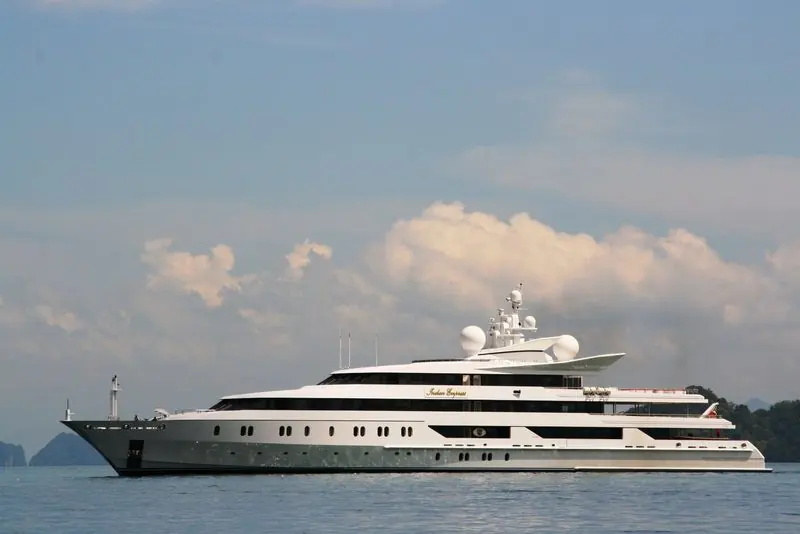
Sail, which the studio never left
The office began on a sailing yacht and has kept the discipline. Winch drew the original interior for Hetairos, the 42.8 metre mahogany ketch built by Abeking and Rasmussen in 1993 to a Bruce King design and now sailing as Asgard. She is the longest mahogany yacht in the world and took 662 working days to build. Her interior was later reworked in a 2014 refit by Rhoades Young Design, whose principal had been the Winch project manager on the original build.
The studio is still taking sail seriously. Sky, revealed with Royal Huisman in November 2025, is an 81 metre sloop with naval architecture and exterior by Malcolm McKeon Yacht Design and the interior by Winch, an aluminium hull with a lift keel and a carbon Rondal rig standing around 93 metres. It would be the tallest sloop rig in the world. It is a design ready to build and had not been commissioned when it was announced, with a delivery estimate of 2030 for whoever orders it.
One hand across yacht, jet and house
The aviation studio has been running since 2002 and has produced cabin work for narrow-body and wide-body private conversions, including a Boeing 787 concept developed with Lufthansa Technik. The architecture studio, from 2007, does houses and estates. An owner who is fitting out an aircraft, building a house and commissioning a yacht within the same five years can run all three through one office.
The value in that is real but narrow. It gets an owner a consistent result without briefing three sets of strangers on his taste, his family and his security requirements, which is a conversation most people at this level would rather have once. It does not make any individual discipline cheaper. Owners who want the best available yacht studio and the best available aviation studio, and do not mind that they will not match, should appoint separately.
How a commission runs, and what it actually costs
The method leans on a long opening conversation to find the story the scheme will hang on. That sounds soft and is not. A theme fixed early gives every later decision a test to pass, and it is the mechanism by which a studio of 150 people produces work that still feels like one person made it. Commercially it runs in stages: concept, then design development, then detailing, procurement and site support, each with its own fee and each a place where an owner can stop. The concept stage is the cheap one and it is the one that decides everything, which is the wrong way round for most people's instincts about where to spend attention.
Nobody in this trade publishes a percentage, so the useful number comes from the market guides. SuperYachtReview, updated March 2026, puts the designer's fee at 1 to 5 per cent of build cost and project management at 2 to 4 per cent, both outside the yard's price. A full mandate of this kind, exterior and interior from one office with in-house materials, lighting, art and procurement, sits at the top of that band rather than the bottom, because it is four disciplines under one fee. On a EUR 150 million build the arithmetic is EUR 1.5 million to EUR 7.5 million. Against that, the larger exposure is changes, because every owner revision after the yard has begun engineering is paid for twice, once in drawings and once in yard time.
Recognition, and who it does not suit
Andrew Winch received the Lifetime Achievement Award at the BOAT Design and Innovation Awards in Kitzbuhel on 1 February 2026, and the studio's yachts have taken World Superyacht Awards across three decades, including for Al Mirqab, Madame Gu and Sea Owl. Awards are a useful filter for a buyer and a modest help at resale. They confirm a boat was finished to a standard specialists would defend in public. They say nothing about how a studio behaves in month thirty of a build.
This studio does not suit an owner who wants a small office where the founder does every drawing himself. It is not the obvious choice for a stripped-back minimalist interior, because the work runs richer and more detailed than that. Owners buying a semi-custom hull with a fixed layout will find much of what the studio is good at unavailable to them. Anyone whose main concern is a fast delivery should note that this kind of interior is slow by construction.
Does a Winch interior sell the boat, or the next owner's refit
Both, and it matters which part. The name on the listing helps. It tells a buyer the boat was finished to a standard specialists would defend, and brokers use it. The interior itself is the problem. A narrative-led scheme is authored for one family, and the more successfully it is authored the more specifically it fits them. The second owner inherits a theme he did not choose, executed in materials that are expensive to alter and were never meant to be neutral. Ocean Independence noted on 11 May 2026 that the market does not usually give back the full cost of refit spending, which is the cold way of saying the first owner pays for the interior twice, once to build it and once in the discount when it is sold.
This is not an argument against commissioning one. It is an argument for knowing which decisions are reversible. Joinery, stone and lighting can be replaced. Deck heights, window lines, the position of a lift shaft and the volume given to a beach club cannot, and those are the parts of a Winch scheme that will still be earning their keep for the third owner. An owner who expects to sell inside ten years should push the studio hard on layout and keep the surfaces calmer than the mood boards want. An owner who intends to keep the boat should ignore that advice entirely, because a strongly authored interior is worth more to the person living in it than the discount will ever cost him.
Informations pratiques
| Design fee | not published; market band is 1 to 5 per cent of build cost plus 2 to 4 per cent project management, both outside the yard price. A single mandate covering exterior, interior, procurement and art sits at the upper end of that band (SuperYachtReview 2026 price guide, updated March 2026) |
|---|---|
| What the studio covers | yacht exterior and interior, plus aviation (from 2002), architecture (from 2007), visualisation and procurement departments, so a single appointment can span the boat, the jet and the house |
| Studio size and structure | more than 150 people, employee-owned since July 2021, based at Parklife House on Deodar Road, Putney since 2024 |
| Copyright | normally stays with the studio; the owner licenses one hull. A second hull to the same design attracts a royalty of roughly 1 to 1.5 per cent of its price under published naval architecture practice (Marsh Design and Sponberg Yacht Design fee terms, read 28 July 2026) |
| Where the work has gone | Feadship (Madame Gu, Sea Owl), Lurssen (Dilbar), and a current workload of 33 projects in 2024 by the studio's own count, 15 of them yachts |
Ce que rapportent propriétaires et équipages
No independently attributable owner testimony found
search turned up Andrew Winch's own account of client briefs (for example that the owner's car collection shaped the interior of Excellence) and a string of award citations, but no on-the-record quote from a private owner or a named captain assessing the studio's work; clients on yachts of this size (Dilbar, Al-Mirqab, Phoenix2) are almost never named or quoted in the trade press
Yotters research desk
Les points forts et les points de vigilance
Points forts
- The largest interior volume ever delivered in a yachtDilbar, 156 m for Lurssen in 2016, is a scale credential no rival studio in this directory can match, and it sits alongside Madame Gu and Sea Owl for Feadship as evidence the studio performs across very different yards
- Employee-owned since July 2021unlike most of this directory's single-founder practices, the studio does not carry all its key-person risk in one name; Andrew Winch sits on the trustee board rather than owning the firm outright, which is a real answer to the succession question an owner should ask any design house
- One mandate for exterior, interior, procurement and even the yacht's aviation and land propertiesan owner who wants the boat, the jet and the house to feel like one project can put all of it through Winch's yacht, aviation and architecture departments rather than coordinating separate firms
- Genuine current capacity33 projects in build in 2024 by the studio's own count, more than 150 staff and a February 2026 Lifetime Achievement Award for Andrew Winch, all pointing to a studio still winning major commissions rather than living on a past reputation
Points de vigilance
- Scale cuts against intimacyat 150-plus people and 33 live projects, an owner is not getting the founder's undivided attention the way a client of a fifteen-person studio like Terence Disdale Design does; ask who the actual project lead will be before signing
- A single-mandate fee sits at the top of the market bandthe studio's own key facts put a combined exterior, interior, procurement and art appointment at the upper end of the 1 to 5 per cent SuperYachtReview band, because it is replacing three or four separate contracts an owner would otherwise let
- No naval architecturehull engineering is not a discipline the studio lists; it has to be appointed and coordinated separately, the same constraint as most of the interior-and-exterior houses in this directory
- No independent owner commentary to check the work againstbecause clients at this end of the market are rarely named or quoted, a prospective owner has to rely on awards and repeat business rather than a first-hand account of what it is like to work with the studio
Pour qui: Les propriétaires qui veulent un intérieur richement détaillé, porté par un récit, et une seule main de design sur le yacht, le jet et la maison.