The Balearics (Ibiza & Mallorca)
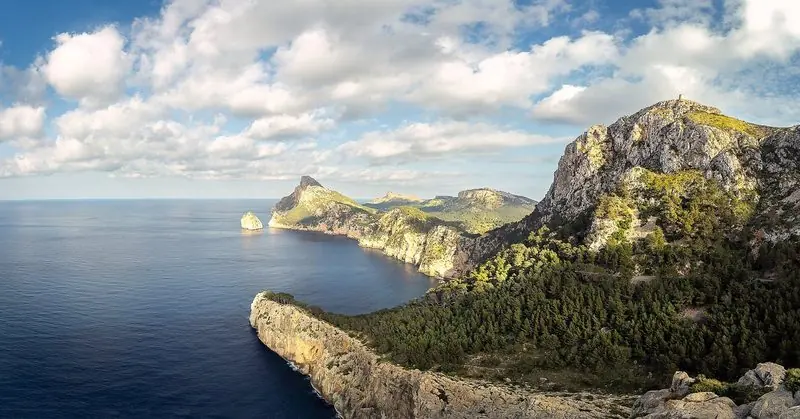
| Région | Méditerranée occidentale, au large de l'est de l'Espagne |
|---|---|
| Meilleure saison | de juin à septembre |
| Ports clés | Palma de Majorque, Puerto Portals, Port Adriano, Marina Ibiza |
| Mouillage signature | Formentera (Illetes et près d'Espalmador) |
| Pôle de refit et de soutien | Palma, avec le chantier STP |
| Règle clé | mouiller uniquement sur sable, herbier (Posidonie) strictement protégé |
| Juridiction | Espagne (Union européenne et Schengen) |
| À surveiller | de lourdes amendes pour mouillage sur la Posidonie et les brises d'après-midi |
| Enforcement 2025 | 18 patrol boats, over 181,000 inspections, illegal anchoring found in 6.4 per cent of vessels checked |
| Cabrera national park | free navigation permit renewed annually, buoys to a maximum 35 m, booked separately |
| Fixed weeks in 2026 | Superyacht Cup Palma 24 to 27 June, Copa del Rey MAPFRE 1 to 8 August |
| Tax | Spain's 12 per cent matriculation tax, with exemption available for yachts used exclusively for commercial charter |
| No Balearic marina published a superyacht berthing tariff in July 2026, and all quote on application | |
| Best-sourced outside figure | about EUR 2,800 to EUR 3,025 a day for a yacht up to 60 m at Ibiza Magna in July and August, on trade reporting dated 2024 and 2025 |
| Matriculation tax | 12 per cent of the value of a vessel over 8 m, so about EUR 3.6 million on a EUR 30 million yacht |
| The matriculation exemption is prospective only, and chartering before it is granted exposes the owner to the full tax plus interest and penalty | |
| Charter VAT | 21 per cent on the hire for a charter starting in Spain, with a charter licence issued by the autonomous community |
| Non-EU flag | chartering from the Balearics has been possible since the 2013 amendment to the matriculation tax law, with additional permits and outside temporary admission |
| Temporary admission | up to 18 months, administered by Spanish customs as a temporary import permit, private use only |
| Cabotage with paying guests between two Spanish ports is reserved to EU flags under Regulation 3577/92 | |
| Anchoring penalties | the Balearic sanctioning range runs from EUR 100 to EUR 450,000, with the national coastal regime reaching EUR 2 million |
Deux îles, deux humeurs
Les Baléares réunissent plusieurs zones de navigation distinctes à courte traversée les unes des autres. Majorque en est le coeur pratique, avec Palma qui compte parmi les grandes villes du yachting méditerranéen et un centre de refit et de soutien. Ibiza apporte les nuits et les beach clubs qui remplissent ses baies tout l'été. Formentera, juste au sud d'Ibiza, offre l'eau claire et peu profonde et le sable blanc que l'on voit sur toutes les brochures. Minorque, au nord, est plus calme et plus traditionnelle.
L'attrait tient à la variété. Un yacht peut passer une matinée au mouillage au large de Formentera, un après-midi dans les boutiques et les marinas de Palma et une soirée dans un beach club d'Ibiza sans longue navigation entre les deux. Palma en particulier a de la profondeur, avec des chantiers, des maisons de brokerage, des avitailleurs et des agences d'équipage installés dans la ville et autour. Ce mélange d'îles de villégiature et de port de travail est rare et explique en partie pourquoi tant de yachts se basent ici pour la saison.
La saison
L'été est la saison baléare, de juin à septembre, juillet et août étant les plus chargés. Le temps est chaud et sec de façon fiable, et les îles sont assez au sud pour garder leur chaleur jusqu'à l'automne. Le printemps peut être agréable mais l'eau est plus fraîche et beaucoup d'établissements n'ont pas encore ouvert pleinement. Septembre offre une mer chaude et des baies un peu plus calmes une fois le pic passé.
Le régime d'été dominant est stable, même si des brises thermiques montent la plupart des après-midi et peuvent rendre les mouillages exposés inconfortables. Le canal entre Ibiza et Formentera concentre le vent et le trafic, si bien que le moment de la traversée compte. Les propriétaires qui organisent leur séjour autour des grands clubs d'Ibiza noteront que le calendrier social culmine en juillet et en août. Palma reste animée dès le printemps, quand son salon nautique ouvre la saison méditerranéenne.
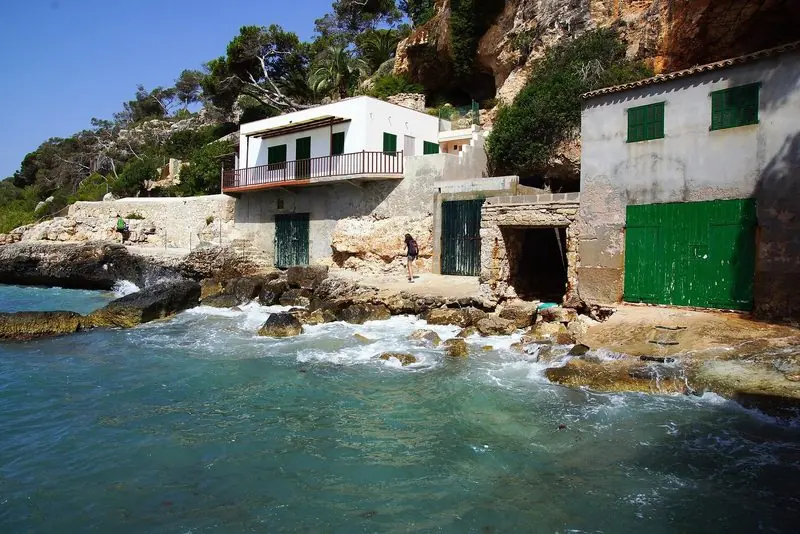
Une base de refit de premier ordre et une île de fête célèbre à une heure de navigation.
Ports et mouillages
Palma structure la scène des marinas, avec le Club de Mar, la Marina Port de Mallorca et le chantier STP parmi les installations les plus connues. Puerto Portals et Port Adriano offrent des places soignées un peu plus loin sur la côte, la seconde avec une marina dessinée par Philippe Starck. À Ibiza, Marina Ibiza et Marina Botafoch placent les yachts à distance de tender de la vieille ville et des clubs. La place est serrée partout en haute saison.
Pour mouiller, les eaux autour de Formentera sont le prix à gagner, avec Illetes et les bancs de sable près d'Espalmador comme spots classiques. Cala Salada et les criques du nord d'Ibiza abritent des brises d'été. Au large de Majorque, les baies du nord autour de Pollensa et d'Alcudia et la côte sud près de l'archipel de Cabrera récompensent l'exploration. Partout la règle est la même : trouver du sable et rester à l'écart des herbiers.
À terre et à flot
Ibiza donne le ton du temps passé à terre, avec des beach clubs le jour et des lieux célèbres la nuit qui attirent en été un public venu de toute l'Europe. Formentera est plus calme, connue pour ses longs déjeuners dans de simples restaurants de plage et la baignade depuis le bateau. Palma équilibre la vie nocturne et un vrai versant culturel, de sa cathédrale à une vieille ville animée de bars et de restaurants. Minorque offre un rythme plus lent aux propriétaires qui veulent une semaine plus tranquille.
Sur l'eau, les Baléares tiennent à la baignade et aux courts sauts entre les baies. Les bancs peu profonds au large de Formentera donnent cette eau claire et lumineuse qui définit la région. Les jouets nautiques et les tenders servent beaucoup, et les sorties d'île en île sont faciles par temps stable. Comme les meilleurs mouillages sont prisés, arriver tôt pour sécuriser un carré de sable est payant. Mouiller avec soin est ici une courtoisie autant qu'une obligation légale.
Notes pratiques
La question pratique dominante est la protection de la Posidonie, l'herbier qui tapisse une grande part des fonds. Le mouillage n'est autorisé que sur du sable, à l'écart des herbiers, des champs de bouées sont installés dans les zones réglementées, et les amendes en cas d'erreur peuvent être lourdes. Les autorités patrouillent les baies les plus fréquentées et surveillent la navigation, et les Baléares passent pour avoir le régime de mouillage le plus strict de Méditerranée. Les cartes et applications qui montrent la couverture d'herbier sont largement utilisées et méritent d'être consultées avant de mouiller.
Palma est l'un des ports les mieux fournis de la région pour le refit, les pièces et l'avitaillement, ce qui est une raison majeure pour laquelle les yachts s'y basent. L'Espagne est dans l'Union européenne et dans l'espace Schengen, si bien que la TVA sur le charter et les formalités d'équipage suivent le schéma européen habituel et se traitent au mieux localement. Les places dans les meilleures marinas se réservent tôt pour juillet et août. Les opérations de tender sont courantes, mais les commandants doivent confirmer les règles locales dans chaque baie protégée.
Regatta weeks and the Ibiza clock
Palma's season starts before anybody else's because the yards empty in spring, and the Palma International Boat Show at the end of April brings the first crowd. The Superyacht Cup Palma, the oldest superyacht regatta in Europe, runs its thirtieth edition from 24 to 27 June 2026 out of Club de Mar-Mallorca. The Copa del Rey MAPFRE takes over the Bay of Palma from 1 to 8 August 2026 in its forty-fourth edition, and that week the bay is a racecourse and the marinas are full.
Ibiza runs on a different clock. The clubs open in late May, the season builds through June, and July and August are the peak, with closing parties in the first half of October. Formentera's beach restaurants follow the same pattern and are unbookable in August without a name at the door. For an owner who does not want any of that, the last week of September and the first two of October are the best of the year, with warm water, open berths and half the traffic.
Airports, ferries and guest changes
Palma and Ibiza are both served by large international airports with dense scheduled traffic from every European capital, which makes guest changes cheaper and easier here than anywhere else in the Mediterranean. Both are slot-pressured in July and August, and general aviation handling at Palma gets congested at weekends. Son Bonet takes lighter aircraft near Palma.
On the ground the islands are small and the roads are good, so a transfer from Palma airport to Port Adriano or Portals is half an hour outside the worst traffic. The Ibiza to Formentera link is the one to think about. There is no airport on Formentera and the ferry runs constantly from Ibiza town, so guests joining a boat that is anchored off Illetes arrive by ferry and tender or by helicopter. Owners rotating guests weekly generally do it in Palma or Ibiza town and reposition afterwards.
Nightlife, beach clubs and the quieter side
Ibiza is the loudest offering in the Mediterranean and it is not subtle. The beach clubs run all afternoon, the large venues run all night, and the summer is organised around residencies that sell out months ahead. Formentera is the corrective, with Juan y Andrea and Beso Beach on the sand, long lunches and no clubs. Palma has become a genuinely good food city, with a working old town, a Gothic cathedral worth an hour and a restaurant scene that operates year round instead of for eleven weeks.
The quieter side takes some finding but it exists. Deia and Valldemossa in the Tramuntana are a proper day inland, the Soller valley has the old wooden tram and the citrus estates, and Menorca has almost nothing at all in the way of nightlife. The food across the islands leans on sobrassada, ensaimada and simple grilled fish, with the Mallorcan wine regions of Binissalem and Pla i Llevant improving quickly.
Matriculation tax, and the honest downside
Spain is in the EU and Schengen, so crew and guest movement is straightforward, and the structural tax question is the 12 per cent matriculation tax. Yachts used exclusively for commercial charter can be exempted, but the exemption has to be in place before charter operations begin and private use by Spanish residents can undo it, so this is specialist advice and not a decision to make on board. A charter licence is required for commercial operations in the Balearics.
The downside is congestion and the shrinking margin for error at anchor. Formentera in August has more boats than legal sandy spots, and the good positions are taken by nine in the morning. Enforcement means a captain will refuse an anchorage the owner can see other boats using, which is a conversation to have before the charter starts. Ibiza's noise, prices and crowds are not to everyone's taste and there is no way to see the island in August without them. Menorca and the Mallorcan north coast are the antidote and most visiting yachts never go there.
The number that decides a Balearic season is not the berth
No Balearic marina publishes a superyacht rate card. Marina Ibiza, Ibiza Magna, Club de Mar-Mallorca, Port Adriano and Puerto Portals all quote on application, and none of them had a public tariff online in July 2026. The public-concession marinas under Ports de les Illes Balears do publish maximum tariffs, but they are issued as scanned tables and the bands stop well below superyacht scale. The best-sourced outside figure for the Ibiza basins puts a berth for a yacht up to 60 m at Ibiza Magna at roughly EUR 2,800 to EUR 3,025 a day in July and August, on trade reporting dated 2024 and 2025, and it should be read as an order of magnitude and not as a quotation. For comparison against marinas that do publish, Porto Cervo charges EUR 5,437 a day from 1 to 20 August 2026 for a hull to 55 m, Capri EUR 3,580 a day at its peak, and Monaco EUR 1,258.80 a day for the 50 m to 55 m band.
The cost that actually settles whether the Balearics work for an owner is the matriculation tax. Spain charges 12 per cent on the value of a vessel over 8 m that is registered in Spain or used in Spain by a Spanish resident or a Spanish-established entity, so on a EUR 30 million yacht the exposure is EUR 3.6 million, which is more than thirty Augusts at the Ibiza figure above and is payable once rather than annually. It can be exempted where the yacht is used exclusively for commercial charter, and the mechanics of that exemption are the whole game. Set against it, the technical side is the strongest in the Mediterranean and part of the reason to accept the rest. STP Shipyard Palma publishes its rate card only as a scanned document and no per-metre lift price could be quoted here, but the yard's 1,000 tonne lift is the only one of its size in Europe and it takes hulls to 120 m, which is why a fault found off Ibiza on a Friday is a Monday problem rather than a delivery passage to Italy.
Whether a foreign flag may charter in Spanish waters
A non-EU flagged yacht may cruise the Balearics privately under temporary admission, which Spanish customs administers as a temporary import permit and which runs for up to 18 months, the same clock as everywhere else in the EU under Article 217(e) of Commission Delegated Regulation (EU) 2015/2446. The eligibility test is the ordinary one: a non-EU flag, an owner established outside the EU, and no definitive importation into free circulation. What temporary admission does not do is authorise charter. A yacht chartering in Spain needs a charter licence issued by the autonomous community, which in the Balearics is handled through a responsible declaration, and charter VAT is 21 per cent on the hire for a charter that starts in Spain. Since the 2013 amendment to the matriculation tax law a non-EU flagged yacht can be licensed to charter from the Balearics, which was previously not available, but it requires additional permits and it is not compatible with sitting in temporary admission at the same time.
The failure mode in Spain is one of sequence. The matriculation exemption operates prospectively, so a yacht that runs a charter before the exemption is in place is exposed to the full 12 per cent plus interest and penalty, and private use by a Spanish resident during a period claimed as exclusively commercial can undo it retrospectively. That is why the decision belongs with a Spanish adviser months before the season and not with the captain in June. Cabotage with paying guests between two Spanish ports is reserved to EU flags under Regulation 3577/92. On the water, the enforcement an owner will actually meet is the anchoring regime, where the Balearic sanctioning framework runs from EUR 100 up to EUR 450,000 and the national coastal regime reaches EUR 2 million for the gravest cases. The 2025 inspection figures the government published, 18 patrol boats and more than 181,000 vessel checks with illegal anchoring found in 6.4 per cent of them, are the reason a captain will refuse a spot the owner can see other boats using.
À terre, accès et réservation
| Getting a berth | No Balearic marina publishes a superyacht rate card - Marina Ibiza, Ibiza Magna, Club de Mar-Mallorca, Port Adriano and Puerto Portals all quote on application only. Formentera has no marina at all; everything there is at anchor or on a regulated buoy. |
|---|---|
| What it costs to sit in Ibiza in August | The best-sourced outside figure puts a berth to 60 m at Ibiza Magna at roughly EUR 2,800 to EUR 3,025 a day in July and August (trade reporting, 2024-2025) - treat it as an order of magnitude, not a quotation, since nothing is published. |
| The number that actually decides the season | Spain's 12 per cent matriculation tax on a vessel over 8 m registered or used in Spain by a Spanish resident, which is EUR 3.6 million on a EUR 30 million yacht - payable once, and more than thirty Augusts of Ibiza Magna's daily rate. Commercial-charter exemption is available but must be secured before chartering begins. |
| Booking an anchorage | Regulated buoy fields (nine of them, including Espalmador and Es Calo de s'Oli) run 1 June to 30 September and must be booked at balearslifeposidonia.eu at least nine hours ahead. Cabrera National Park needs its own free annual navigation permit plus a separately booked buoy, capped at 35 m. |
| What to check before anchoring anywhere else | Posidonia red and yellow zones are mapped and enforced with 18 patrol boats and over 181,000 inspections in 2025; illegal anchoring was found in 6.4 per cent of vessels checked and offending yachts are named publicly. Fines run from EUR 100 to EUR 450,000 under the Balearic regime and up to EUR 2 million under the national coastal law. |
| Refit and repair | STP Shipyard Palma is the strongest technical base in the Mediterranean: 130,000 sq m, six travel lifts including the only 1,000 tonne lift in Europe, and vessels to 120 m. Its own rate card is published only as a scanned document, so no per-metre lift price can be quoted here. |
| What is not published | No marina publishes a superyacht tariff and STP publishes no per-metre refit price. Both have to be requested directly, which is worth doing before assuming a season's cost from public sources alone. |
Ce que rapportent propriétaires et équipages
A repeat customer's account of what the Palma yard actually delivers
On Ilona's third refit visit to STP Shipyard Palma, her captain praised the yard's professionalism and the ease of a self-managed refit, and pointed to Palma's flight connections as a practical security: any technician or part the yard's specialist contractors need can be in Palma within hours rather than days.
Captain Jason Chambers, M/Y Ilona, via STP Shipyard Palma
Les points forts et les points de vigilance
Points forts
- The best refit and support base in the MediterraneanSTP Shipyard Palma's 1,000 tonne lift is the only one of its size in Europe, and the concentration of crew agencies, paint teams and surveyors around it means a fault found off Ibiza on Friday is a Monday problem, not a delivery passage to Italy.
- Guest logistics are the easiest in the MediterraneanPalma and Ibiza both carry dense scheduled airline traffic from every European capital, which makes weekly guest rotation cheaper and simpler here than almost anywhere else on this coast.
- Four distinct islands in one cruising groundA genuine party island, a quiet corrective in Menorca, and the varied Mallorcan coast under the Tramuntana all sit within a long day's run of each other.
Points de vigilance
- The strictest anchoring regime in the MediterraneanPosidonia red and yellow zones are mapped, patrolled and enforced with published inspection statistics, and a captain will refuse a spot the owner can see other boats using. Planning here is mostly about where the anchor is allowed to land.
- The matriculation tax is a structural decision, not a formalityThe 12 per cent charge is prospective-only when exempted through commercial charter, and private use during a period claimed as exclusively commercial can undo the exemption retrospectively - this has to be settled with a Spanish adviser months ahead, not by the captain in June.
- Nothing is publishedNo marina quotes a superyacht rate publicly and the leading refit yard's price list is a scanned document - an owner has to ask for every number that matters.
- August is genuinely overcrowdedFormentera has more boats than legal sandy anchoring spots by nine in the morning in August, and Ibiza's noise and prices are not to every owner's taste with no way around them in high season.
Pour qui: Les propriétaires qui veulent la vie nocturne, des mouillages lumineux et une base de soutien de premier ordre à courte navigation.