ACI Marina Split
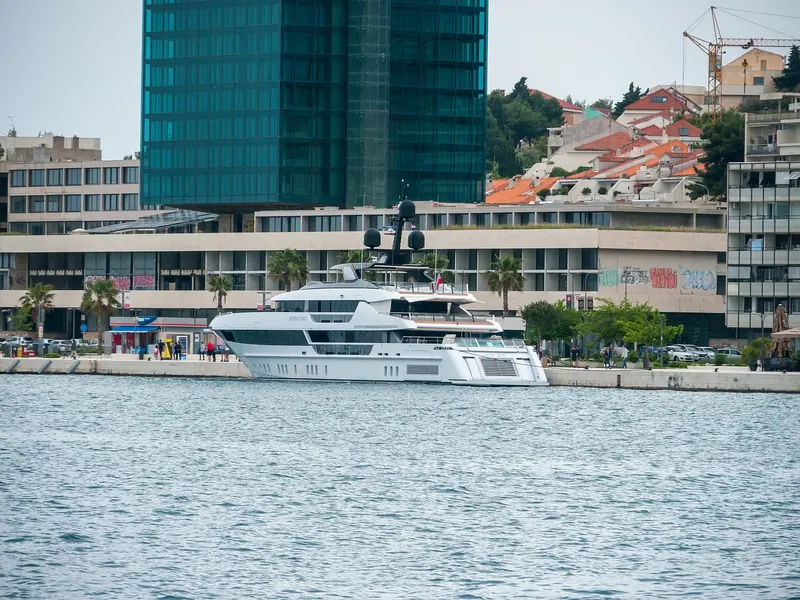
| Ubicazione | Uvala Baluni 8, 21000 Split, Croazia, sul lato ovest del porto cittadino a nord della penisola di Sustipan |
|---|---|
| Posizione | 43 30 08.6 N, 016 25 46.3 E, secondo Dockwalk |
| Gestore | ACI d.d. (Adriatic Croatia International Club), fondata nel 1983, quotata alla Borsa di Zagabria dal 1997, per circa il 79 per cento in mano alla Repubblica di Croazia |
| Catena | ventidue marine ACI e un ancoraggio da Umag a Dubrovnik, diciotto delle quali aperte tutto l'anno, secondo il listino ACI 2026 |
| Posti barca | 318 in acqua e 15 a terra secondo ACI; le fonti di terzi vanno da 318 a 364 in acqua e da 15 a 60 a terra |
| Dimensioni ammesse | fino a 90 m fuori tutto per l'ormeggio giornaliero. Il limite annuale è contraddetto da ACI stessa: la pagina web della marina dice 26 m, il listino ACI 2026 riporta tariffe annuali fino a 50 m |
| Pescaggio massimo | 5 m secondo Dockwalk; ACI non pubblica alcun dato di fondale e altre fonti danno da 3 m a 9.5 m |
| Ormeggio | all'andana su trappe predisposte, posto assegnato da un marinero all'arrivo |
| VHF | canale 17 per la marina, canali 10 e 16 per la capitaneria di Spalato |
| Compresi nel prezzo dell'ormeggio | energia elettrica e acqua per il normale uso di bordo e raccolta dei rifiuti. Spalato non è fra le marine ACI dotate di contatori a consumo |
| Carburante | nessun pontile carburante dentro la marina. Il distributore è circa 0.05 miglia nautiche a nord davanti all'Hotel Marjan, e in Croazia non esiste carburante esente da dazi |
| Cantiere | 15 posti a terra e una gru dichiarata da 10 tonnellate; le tariffe di posto a terra e di gru si fermano a 14 m |
| Apertura | tutto l'anno. Reception dalle 07:00 alle 22:00 a luglio e agosto, dalle 08:00 alle 21:00 nei mesi di spalla, dalle 08:00 alle 18:00 d'inverno |
| Riconoscimenti | Blue Flag e il premio Naturally Yours del ministero croato per il turismo sostenibile |
| Aeroporto | Spalato, circa 19 km a ovest del centro città e circa 26 km su strada dalla marina, 3.88 milioni di passeggeri nel 2025, secondo della Croazia, una rotta stagionale a lungo raggio |
| Accanto | il porto di Spalato, il maggiore porto passeggeri della Croazia e il terzo del Mediterraneo, con otto linee di traghetti per le isole e altre nove linee passeggeri |
Dove si trova davvero l'ormeggio
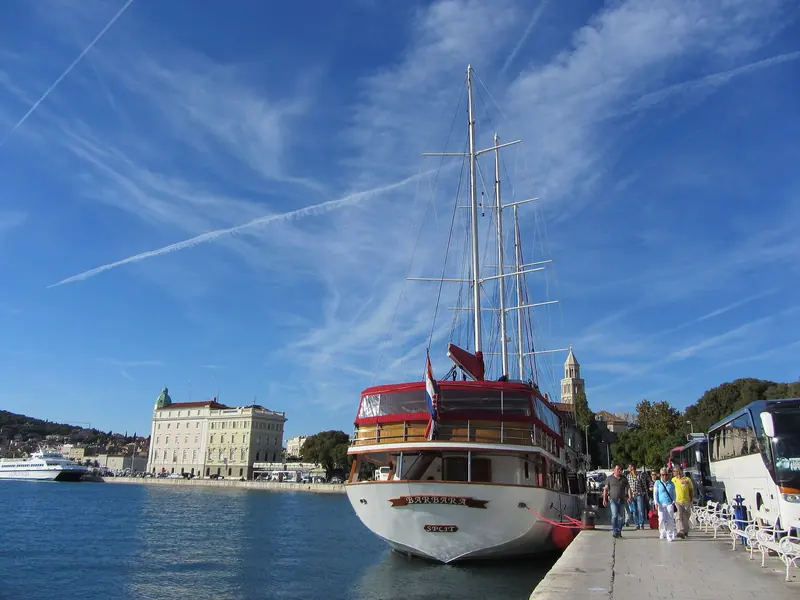
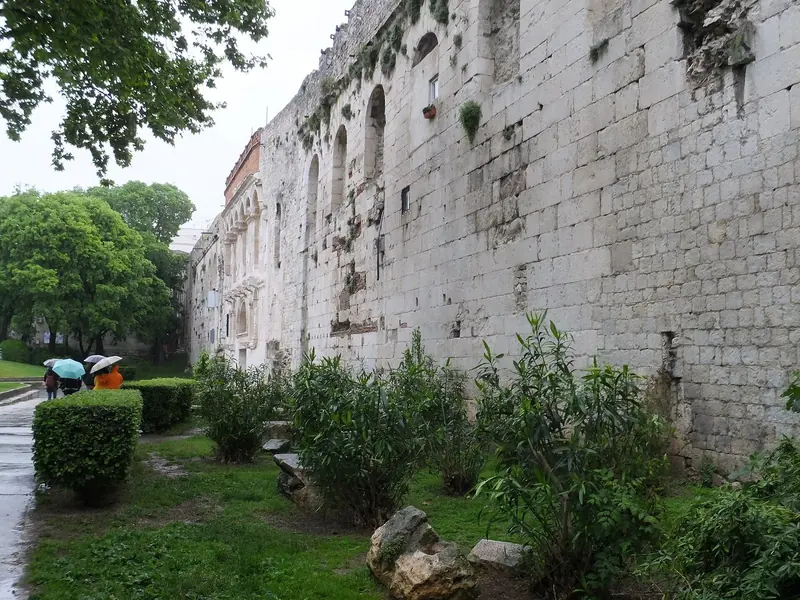
ACI marina Split si trova a Uvala Baluni, sul lato occidentale del porto cittadino di Spalato, subito a nord della penisola boscosa di Sustipan. Dockwalk indica la posizione a 43 gradi 30 primi 08.6 secondi nord e 016 gradi 25 primi 46.3 secondi est. È un ormeggio urbano in senso letterale. Il Palazzo di Diocleziano, il nucleo tardoromano da cui è cresciuta l'intera città e patrimonio mondiale dell'UNESCO, dista una ventina di minuti a piedi lungo la riva oppure pochi minuti di taxi acqueo. Il Lungomare di Spalato, la passeggiata a mare che corre verso ovest sotto la collina di Marjan, comincia al cancello della marina. ACI descrive il proprio bacino come protetto dai venti meridionali e dal mare grosso da una solida diga foranea in roccia, con accanto i porti di due circoli velici.
L'altra metà di questa posizione è un nodo di trasporti in piena attività. Spalato è il maggiore porto passeggeri della Croazia ed è comunemente descritto come il terzo porto passeggeri del Mediterraneo, con un movimento dell'ordine di sei milioni di passeggeri l'anno, otto linee di traghetti per le isole e altre nove linee passeggeri che partono dalle banchine cittadine poche centinaia di metri a est della marina. Le conseguenze sono permanenti, non occasionali. Le navi in uscita hanno la precedenza nelle manovre e ACI raccomanda in termini espliciti di non ostacolarle. Dare fondo in qualunque punto del porto è vietato salvo emergenza. In un pomeriggio di luglio il bacino incassa una processione continua di onda di traghetti e di catamarani veloci. Si ormeggia dentro il traffico, non accanto al traffico, e non c'è diga foranea al mondo che lo fermi.
La catena in cui si entra davvero
ACI sta per Adriatic Croatia International Club, fondata nel 1983, e il suo listino 2026 descrive una rete di ventidue marine e un ancoraggio che va da Umag in Istria fino a Dubrovnik. Diciotto di queste marine sono aperte tutto l'anno, Spalato compresa; le quattro marine stagionali e l'ancoraggio di Zut aprono dal 1 aprile al 31 ottobre. La società è quotata alla Borsa di Zagabria dal 1997 e circa il 79 per cento del capitale è in mano alla Repubblica di Croazia attraverso il ministero competente per il patrimonio dello Stato. Quell'assetto proprietario conta per un acquirente per una ragione poco affascinante: una società quotata a controllo statale pubblica il proprio tariffario. Dove una marina privata per superyacht risponde a una richiesta di prezzo con una proposta, ACI stampa un numero per ogni fascia di metratura, per ogni stagione e per ogni marina della catena, e mette il documento sul proprio sito.
In pratica si entra in un sistema, non si affitta un posto. I contratti di ormeggio sono di cinque categorie: giornaliero, mensile, semestrale invernale, semestrale estivo e annuale, tutti subordinati alla disponibilità. Un ormeggio annuale si prenota versando in anticipo il 30 per cento della tariffa annua; la prenotazione vale un anno e, se si cambia idea o non ci si presenta, ACI dichiara senza giri di parole che l'anticipo non viene restituito. Chi ha un contratto annuale diventa automaticamente socio ACI e riceve la ACI Card, che dà diritto a un posto auto in marina dove lo spazio lo consente, a sconti su tutta la catena e a premi fedeltà a dieci, quindici, venti, venticinque, trenta, trentacinque e quarant'anni di ormeggio annuale ininterrotto. Spostare un contratto annuale su un'altra marina ACI durante la sua durata richiede l'approvazione scritta del consiglio di amministrazione di ACI e una maggiorazione se la nuova marina rientra in una categoria di prezzo superiore, senza alcun rimborso se rientra in una inferiore.
La pagina web di ACI fissa a 26 m il limite dell'ormeggio annuale. Il listino della stessa ACI riporta una tariffa annuale a 50 m. Stessa società, stesso anno, due risposte pubblicate.
Quanto costa un ormeggio, metro per metro
Le cifre che seguono provengono dal listino 2026 della stessa ACI per la marina di Spalato, in vigore dal 1 aprile 2026, espresse in EUR e comprensive del 25 per cento di IVA croata. Ormeggio in acqua giornaliero in alta stagione, dal 1 luglio al 31 agosto: EUR 138 per 10 m, EUR 168 per 12 m, EUR 204 per 15 m, EUR 298 per 20 m, EUR 568 per 24 m, EUR 858 per 30 m, EUR 1,280 per 40 m, EUR 1,670 per 50 m, EUR 2,088 per 60 m ed EUR 3,308 per 90 m, che è il vertice della tabella. La media stagione, dal 1 aprile al 30 giugno e dal 1 settembre al 31 ottobre, costa un po' meno: EUR 160 per 12 m, EUR 284 per 20 m, EUR 816 per 30 m. L'inverno, dal 1 gennaio al 31 marzo e dal 1 novembre al 31 dicembre, costa ancora meno, EUR 142 per 12 m ed EUR 260 per 20 m. Una moto d'acqua paga EUR 62 al giorno in alta stagione.
Due maggiorazioni cambiano quelle cifre in modo sostanziale. A luglio e agosto la tariffa giornaliera sale del 10 per cento il venerdì, il sabato e la domenica, cioè esattamente quando un equipaggio da charter ha bisogno del posto. E a Spalato catamarani e trimarani pagano il 100 per cento in più, su ogni categoria di ormeggio, in acqua e a terra, tutto l'anno. È il livello massimo della scala multiscafo di ACI, condiviso con altre otto marine della catena, e porta un catamarano da 12 m in un sabato di luglio a oltre EUR 360 a notte. I contratti lunghi convengono di più. L'ormeggio mensile in acqua per il 2026 costa EUR 3,800 per 12 m ed EUR 6,750 per 20 m fra il 1 aprile e il 15 ottobre, e scende a EUR 2,508 ed EUR 4,456 dal 16 ottobre al 31 marzo. L'ormeggio annuale in acqua costa EUR 9,592 per 12 m, EUR 12,850 per 15 m, EUR 21,178 per 20 m ed EUR 29,388 a 26 m. I contratti semestrali estivi valgono circa tre quarti della cifra annuale e quelli semestrali invernali circa tre quinti.
La soglia dei 26 metri che il listino della stessa ACI smentisce
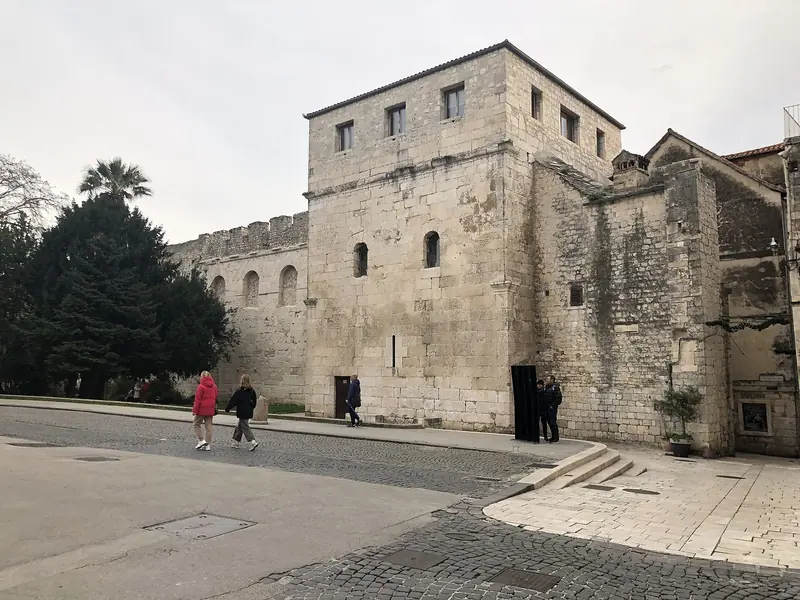
Il fatto strutturale più importante di questa marina è che ACI risponde in due modi inconciliabili alla domanda su quanto possa essere grande una barca che qui metta sotto contratto una stagione. La pagina web dell'ACI marina Split indica una lunghezza massima di 90 m per l'ormeggio giornaliero e di 26 m per quello annuale, e i portali di terzi ripetono la cifra dei 26 m. Il listino 2026 della stessa ACI dice altro: la tabella degli ormeggi in acqua intitolata YEARLY elenca ogni metro da 8 m a 50 m, a EUR 36,304 l'anno per 30 m, EUR 59,356 per 40 m, EUR 72,326 per 45 m ed EUR 85,294 per 50 m, con accanto a ciascuna riga una tariffa semestrale estiva e una invernale. La tabella mensile della pagina precedente arriva a 90 m, non a 26 m. Yotters non intende fare la media fra queste due risposte né indovinare quale delle due sia l'errore di redazione, perché nessuno può ormeggiare su una media; fatevi mettere per iscritto dall'ufficio quale documento la marina applicherà, prima di programmare una stagione. Quello che non è in discussione è ciò che sta dietro agli ormeggi: quindici posti a terra, una gru dichiarata da 10 tonnellate e tariffe di posto a terra e di gru che si fermano di netto a 14 m. Qualunque sia il numero che vince, qui non esiste né refit né invernaggio a terra per nulla di consistente, e la marina si legge come un posto dove fermarsi tre giorni in mezzo a una crociera dalmata, cambiare ospiti, sdoganare e regalare una città a un equipaggio.
Gli operatori charter pagano il privilegio di stare qui. Le condizioni 2026 di ACI aggiungono il 20 per cento alla tariffa di ormeggio mensile, semestrale e annuale per le unità impiegate commercialmente a Spalato, Trogir, Slano e Dubrovnik, contro il 15 per cento nella maggior parte delle altre marine ACI e nulla a Umag e a Cres. Due regole minori vanno conosciute prima di programmare un arrivo. Gli ormeggi di mezza giornata, tariffati al 50 per cento della giornaliera, sono offerti su tutta la catena ma esplicitamente non a Spalato, Umag, Supetarska Draga e Trogir, quindi una sosta pranzo qui costa una giornata intera. E a Spalato energia elettrica, acqua e raccolta dei rifiuti per il normale uso di bordo sono comprese nel prezzo dell'ormeggio; le eccezioni a consumo nel sistema ACI sono Rovinj, Slano e Dubrovnik per l'energia e Rovinj e Dubrovnik per l'acqua. Per una barca che passa l'inverno attaccata alla corrente di banchina quell'inclusione vale soldi veri, ed è facile non vederla quando si confronta un tariffario croato con uno italiano.
L'avvicinamento, i fanali e l'angolo che nessuno ha rilevato
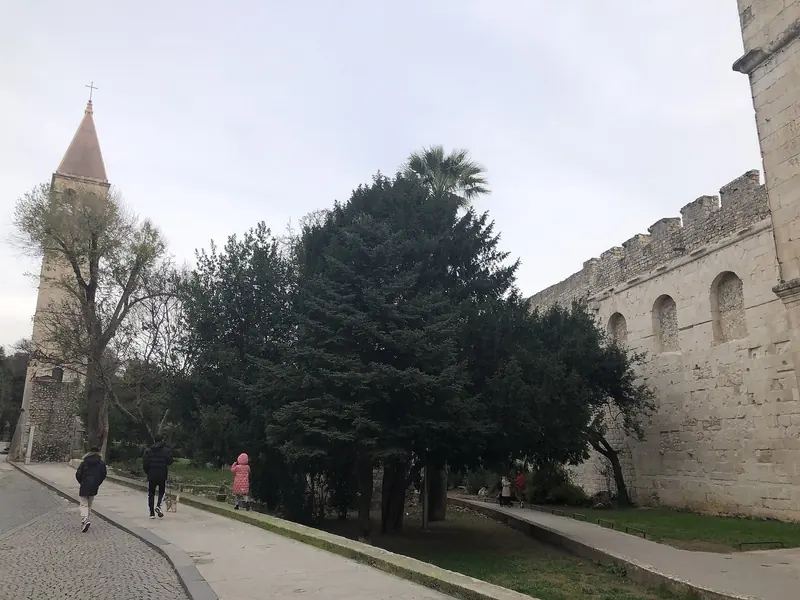
Le note di avvicinamento pubblicate da ACI sono insolitamente dettagliate e vale la pena leggerle prima di entrare. L'imboccatura del porto è ampia ed è segnalata da fanali e da segnali diurni. I punti cospicui sono il campanile della cattedrale di San Doimo, capo Sustipan e il monumento ai naviganti, un obelisco di pietra illuminato con caratteristica Fl(2) W 20s 54m 10M. A sinistra, il roccioso capo Sustipan porta una torre rossa, Fl R 6s 9m 5M. A dritta, la testata della diga foranea principale porta un vistoso faro verde, Fl G 6s 11m 10M, con segnale da nebbia e una tromba da trenta secondi. La diga interna all'ingresso orientale della marina è segnalata da una torre rossa con colonna, galleria e fanale, Fl R 2s 6m 3M. ACI raccomanda le carte dell'Istituto idrografico croato 101, 300-33, INT3412, 100-21, 100-26, MK-16, MK-18 e il Piano 47. Il canale VHF di lavoro è il 17; la capitaneria di Spalato è sul 10 e sul 16.
Poi le trappole, che ACI pubblica e che la maggior parte delle guide tace. La riva occidentale di nuova costruzione non è mai stata rilevata idrograficamente, per cui ormeggiarvi è vietato salvo quando ci si accosta al distributore di carburante. La marina e i piccoli porti a ovest si avvicinano passando vicino alla testata della diga interna. Il distributore non è dentro la marina: si trova circa 0.05 miglia nautiche a nord, davanti all'Hotel Marjan, e una fonte per naviganti da diporto segnala scogli non segnalati sotto il pelo dell'acqua sulla congiungente diretta fra l'ingresso della marina e l'ormeggio del carburante. Gli orari della reception si spostano con la stagione, dalle 07:00 alle 22:00 a luglio e agosto, dalle 08:00 alle 21:00 nei mesi di spalla e dalle 08:00 alle 18:00 per tutto l'inverno. Il fondale è l'unico dato su cui nessuno concorda, e sulla pagina di ACI non compare affatto.
Sdoganare in Croazia, la vignetta e la tassa di soggiorno
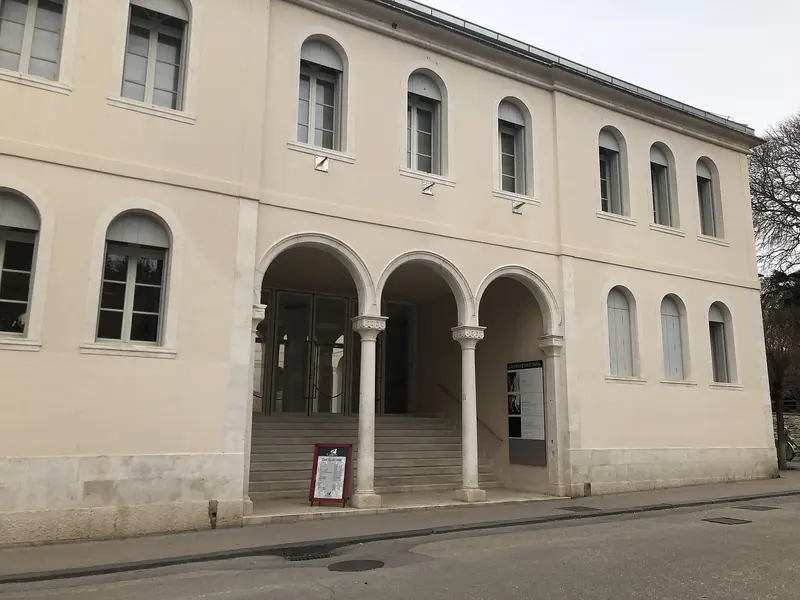
Un'unità straniera che entra in acque croate notifica il proprio arrivo attraverso il servizio eNautika del ministero e segue la rotta più breve verso un porto aperto al traffico internazionale; Spalato, con i suoi collegamenti internazionali di traghetto, è uno di questi, e ACI elenca la dogana fra i servizi accanto alla marina. Quella che i croati continuano a chiamare vignetta è formalmente la tassa per la sicurezza della navigazione e la protezione del mare dall'inquinamento, più i diritti di faro, ed è commisurata alla lunghezza fuori tutto e alla potenza del motore. Due aspetti colgono di sorpresa. Non si può acquistare per un periodo breve: quando la si paga, vale comunque solo fino al 31 dicembre di quell'anno, quindi uno yacht che arriva in ottobre paga quanto uno che arriva in aprile. E la tariffa non è pubblicata da nessuna parte come una tabella semplice che un armatore possa leggere. Gli esempi di calcolo di un agente croato indicano EUR 43.40 per una barca a vela di 9.5 m con 20 kW, EUR 108.10 per uno yacht a vela di 14.5 m con 81 kW ed EUR 390.54 per un motoryacht di 16.5 m con 1,100 kW; un altro agente pubblica una formula che produce cifre parecchie volte superiori, quindi calcolatela dal conteggio ufficiale e non dalla tabella di qualcuno.
A parte questo, l'elenco di equipaggio e passeggeri va vidimato alla capitaneria di porto o presso una delle sue sezioni, e gli operatori charter registrano gli equipaggi attraverso il sistema eCrew prima di ogni noleggio. La tassa di soggiorno nautica è un terzo pagamento, distinto, che si effettua attraverso il portale nautika.evisitor.hr dell'Ente nazionale croato per il turismo. Si può pagare per lunghezza dell'unità oppure, per una sosta breve, a persona e a notte a EUR 1.33, a seconda di quale sia più conveniente. Per lunghezza, una barca da 12 a 15 m paga EUR 27.87 per tre giorni, EUR 111.49 per quindici giorni, EUR 185.81 per trenta giorni ed EUR 557.44 per un anno intero; una barca oltre i 20 m paga EUR 796.34 all'anno. Le barche sotto i 7 m sono esenti. Quelle tariffe sono in vigore dal 1 gennaio 2022 ed erano ancora quelle pubblicate sul portale nell'agosto 2026, una stabilità insolita per gli standard mediterranei.
IVA sul charter, cabotaggio e quello che la Croazia non concede
La Croazia applica al corrispettivo del noleggio un'IVA ridotta al 13 per cento contro un'aliquota ordinaria del 25 per cento, ed è la ragione singola più importante per cui la flotta charter dell'Adriatico orientale ha le dimensioni che ha. L'aliquota ridotta vale per i noleggi che partono dalla Croazia e per i giorni trascorsi in acque croate quando un noleggio parte fuori dall'Unione europea. Copre il noleggio dello yacht e del suo equipaggio e nient'altro. I servizi accessori e gli acquisti di bordo ne restano fuori, e il denaro speso dall'anticipo spese durante un noleggio, per carburante, cibo e servizi agli ospiti, non può essere fatturato a fronte di una partita IVA croata, quindi su quello non c'è alcun recupero. Mettete a budget l'APA al lordo.
Qui la bandiera pesa più che in quasi tutto il resto del Mediterraneo. Uno yacht battente bandiera UE ha bisogno della registrazione IVA a nome della società armatrice e della registrazione eCrew, e gli ospiti possono imbarcarsi e sbarcare liberamente. Uno yacht battente bandiera extra UE ha bisogno di tutto questo più una licenza di cabotaggio, valida un anno e rilasciata in ordine di arrivo, con una registrazione che richiede circa un mese. Per qualunque yacht oltre i 45 m, UE o no, la nomina di un raccomandatario croato è obbligatoria. L'entrata e l'uscita si sdoganano in un porto aperto al traffico internazionale, e le autorità sorvegliano l'AIS e sanzionano gli yacht che si attardano dopo lo sdoganamento in uscita. E quello che la Croazia non offre affatto: non esiste carburante esente da dazi, né provviste o servizi in esenzione. Uno yacht appena risalito da Tivat, dove il carburante si vende a IVA zero e accisa zero, sente la differenza al primo rifornimento.
Jugo, bora e quello che una diga foranea non ferma
Tre venti governano la stagione qui. Il maestrale è quello amichevole, un termico da nordovest che in una normale giornata di luglio soffia sui 10 o 15 nodi, comincia a montare a tarda mattina, culmina fra le 14:00 e le 16:00 e cade al tramonto, ed è per questo che i pomeriggi sono più mossi delle mattine e che il consiglio locale è di muovere la barca presto. La bora è quello violento, un catabatico freddo da nordest che arriva a raffiche e non come vento costante. È un fenomeno invernale, ma si presenta anche d'estate, di solito per un giorno o due, e una previsione di 25 nodi può portare raffiche a 40. Costruisce un mare corto e ripido nei canali, compreso lo specchio d'acqua fra Spalato e Solta che ogni partenza da questa marina deve attraversare, e lo fa con tempo limpido e bello, che è esattamente ciò che inganna la gente.
Lo jugo è quello che conta per un ormeggio più che per una traversata. È uno scirocco caldo e umido da sudest che monta lentamente nell'arco di un giorno o due dietro pressione in calo e nuvolosità, e lascia un'onda lunga che continua a lavorare a lungo dopo che il vento è calato. ACI dichiara che la marina è protetta dai venti meridionali dalla sua diga in roccia e, quanto a sicurezza, è vero: uno yacht qui con lo jugo non corre pericolo. Il comfort è un'altra faccenda, e le relazioni di bordo concordano nel dire che i venti da sud e da sudovest mettono onda nella zona, e che gli ormeggi esterni verso il terminal traghetti sono quelli che la sentono di più. Trattate la diga come una garanzia contro i danni e non come una garanzia di notte tranquilla, e se è prevista una settimana di jugo chiedete un posto in fondo al bacino invece che su un pontile esterno.
Che cosa non va
La lamentela che ricorre negli anni e nelle diverse lingue riguarda lo stato dei servizi a terra rispetto a quanto costa l'ormeggio. I recensori di mySea, che scrivono nel 2021, nel 2022, nel 2023 e nel 2025, descrivono il blocco servizi come sporco, vecchio, piccolo e maleodorante, con acqua calda non regolabile, code nei fine settimana, troppo pochi posti auto nonostante la prenotazione pagata e marineros sbrigativi su tutto questo. Una recensione l'ha definita la peggiore marina che chi scriveva avesse usato in Croazia e ha sottolineato quanto siano stretti i corridoi per le barche grandi. I recensori di Tripadvisor ci aggiungono il rumore, con concerti e musica dei ristoranti che arrivano fino alle prime ore del mattino, e segnalano pellicola di olio e rifiuti nel bacino portuale. Una parte di tutto questo è una marina in centro città che fa la marina in centro città. Un'altra parte è una catena che pubblica un tariffario eccellente e poi investe poco dietro il banco della reception.
Il resto delle obiezioni oneste è strutturale. Questa è una delle maggiori basi charter della Dalmazia e il sabato, con riconsegna alle 09:00 e consegna alle 17:00, il bacino, il pontile del carburante, le docce e il parcheggio saturano tutti insieme: uno yacht in visita farebbe bene a programmare intorno a quel giorno. Capacità di refit di fatto non ce n'è: quindici posti a terra, una gru da 10 tonnellate e tariffe che si fermano a 14 m significano che tutto ciò che è consistente va altrove. I fondali pubblicati non esistono, e le cifre di terzi che esistono vanno da 3 m a 9.5 m con un pescaggio massimo indicato in 5 m, quindi uno yacht di pescaggio profondo deve chiedere alla marina per iscritto. E il conteggio dei posti barca è a sua volta incerto: ACI dice 318 in acqua e 15 a terra, una base charter dice 318 e 30, il testo di mySea dice 355 e 30 mentre il suo pannello dati dice 330, e un altro operatore charter sostiene 364. Quando una catena così trasparente sul prezzo è così vaga sulla capacità, conviene prenotare presto e farsi confermare l'ormeggio con il numero.
A terra, accessi e prenotazioni
| Getting there | Split airport at Kastela is about 19 km west of the city centre and roughly 26 km by road from Uvala Baluni, which is 25 to 40 minutes in normal traffic and considerably longer on a July Saturday. It handled 3.88 million passengers in 2025 and is the second busiest airport in Croatia, but it is a short-haul and low-cost airport in character: the runway is 2,550 m and the only long-haul service is a seasonal United flight to Newark, so intercontinental guests connect through Zagreb, Frankfurt, Munich or Vienna. Fixed-price private transfers from the airport to the marina are quoted from EUR 45 per vehicle by more than one operator. The city bus and the airport shuttle both stop in central Split, from where it is a fifteen to twenty minute walk or a short water taxi ride. Split is also the end of the A1 motorway and has direct road links up the coast to Trogir and Sibenik. |
|---|---|
| Arriving by sea | Call the marina on VHF channel 17; if no marinero appears at the berth, ask for one on 17. The Split harbourmaster works channels 10 and 16. Approach on the landmarks ACI publishes: the bell tower of the Cathedral of St Domnius, Cape Sustipan, and the seafarers' monument obelisk, Fl(2) W 20s 54m 10M. The red tower on Cape Sustipan is Fl R 6s 9m 5M to port and the green lighthouse on the main breakwater head is Fl G 6s 11m 10M to starboard, with a fog signal and a thirty second horn. The marina's own inside breakwater carries Fl R 2s 6m 3M. Give way to departing ferries, which have right of way in the port, and do not anchor anywhere in the harbour except in an emergency. Berthing along the new western waterfront is forbidden because it has not been hydrographically surveyed, and there are reports of unmarked rocks below the waterline on the direct line between the marina entrance and the fuel berth. ACI recommends Croatian Hydrographic Institute charts 101, 300-33, INT3412, 100-21, 100-26, MK-16, MK-18 and Plan 47. |
| Clearing in and the annual paperwork | Notify your arrival through the ministry's eNautika service and clear at a port open to international traffic; Split qualifies and customs sits beside the marina. The vignette, formally the fee for the safety of navigation and protection of the sea from pollution plus lighthouse dues, is charged on LOA and engine power and always runs to 31 December of the year it is issued, whatever month you buy it. Certify the crew and passenger list at the harbourmaster's office. Charter vessels file through the eCrew system for every charter. The nautical sojourn tax is separate and is paid online at nautika.evisitor.hr, either by boat length or per person per night at EUR 1.33 for a short stay. On departure, clear out with the harbourmaster and leave by the shortest route; AIS is monitored and yachts that linger after clearance are penalised. Any yacht over 45 m, EU-flagged or not, must appoint a Croatian ship agent. |
| How you actually reserve a berth | Daily berths are booked and paid in advance through the ACI mobile app or the ACI Online Booking system on aci-marinas.com, and the reservation is valid only for the day you have paid for. Anything longer goes through the marina office at [email protected], on +385 21 398 548, or through ACI's central berth enquiry form. Contract categories are monthly, semi-annual winter, semi-annual summer and annual, all subject to availability and all paid in advance. An annual berth is reserved with a 30 per cent advance payment; the booking is then valid for a year and the advance is forfeited if you do not take the berth up. Two timing rules from ACI's 2026 terms decide what a night actually buys. A boat entering between 07:00 and midnight holds the berth until 14:00 the following day; a boat entering between midnight and 07:00 holds it only until 14:00 the same day, which catches night arrivals and costs them a second daily fee. Staying past expiry is permitted until 18:00 subject to availability and charged at 50 per cent of the daily rate. Book high-season nights well ahead and avoid arriving on a Saturday, which is charter turnaround day across the whole base. |
| What a berth costs | All figures from ACI's 2026 price list for marina Split, effective 1 April 2026, in EUR and including 25 per cent VAT. Daily wet berth, high season 1 July to 31 August: 10 m EUR 138, 12 m EUR 168, 15 m EUR 204, 20 m EUR 298, 24 m EUR 568, 30 m EUR 858, 40 m EUR 1,280, 50 m EUR 1,670, 60 m EUR 2,088, 90 m EUR 3,308. Shoulder, 1 April to 30 June and 1 September to 31 October: 12 m EUR 160, 20 m EUR 284, 40 m EUR 1,216. Winter, 1 January to 31 March and 1 November to 31 December: 12 m EUR 142, 20 m EUR 260. Add 10 per cent on Fridays, Saturdays and Sundays in July and August. Catamarans and trimarans pay 100 per cent more on every category, all year. Monthly, 1 April to 15 October: 12 m EUR 3,800, 20 m EUR 6,750, 45 m EUR 33,300; from 16 October to 31 March, 12 m EUR 2,508 and 20 m EUR 4,456. Annual: 12 m EUR 9,592, 15 m EUR 12,850, 20 m EUR 21,178, 26 m EUR 29,388, 30 m EUR 36,304, 40 m EUR 59,356 and 50 m EUR 85,294, which is where the annual table ends. Note that ACI's Split web page caps the annual berth at 26 m while this same-year price list quotes annual and six-month rates to 50 m; the two cannot both be right and only the marina office can say which it will apply. Commercially chartered boats add 20 per cent to monthly, semi-annual and annual rates here. |
| Fuel, water, power and what is extra | Electricity and water for normal boat use are included in the berth price at Split in every contract category, and so is waste collection; Split is not one of the three ACI marinas that meter power or the two that meter water, so there is no consumption bill to argue about at the end of a winter. Water for washing the boat is charged separately by length under the marina's internal price list. Fuel is not in the marina: the station is about 0.05 nautical miles north in front of the Hotel Marjan, it queues badly on charter turnaround days, and Croatia offers no duty-free fuel, supplies or services to any yacht, which is a direct and expensive contrast with Montenegro a day's steaming south. Dry storage and lifting are small-boat scale: 15 dry berths, a crane quoted at 10 tonnes, and a single crane operation, which the table defines as one movement and so one lift or one launch rather than both, costing EUR 164 at 8 m, EUR 338 at 12 m and EUR 468 at 14 m in 2026, with nothing published above 14 m. Half-day berths are offered at most ACI marinas but not at this one. A tender or chase boat lying alongside the mother vessel is not charged, but on a berth of its own it needs its own contract and costs 50 per cent of the commercial berth price. |
| Where to eat, and after dark | Zrno Soli is on the first floor of the marina building itself, a seafood room with a panoramic terrace looking across the basin to the old town, and it is listed in the Michelin Guide. There is a grocery store, a chandlery, an ATM and a laundry on site, which covers a turnaround without leaving the gate. Beyond that you walk: fifteen to twenty minutes east along the waterfront brings you into Diocletian's Palace and the full range of the old town, from konobas to pizzerias to the fish market west of the historic centre and the fruit and vegetable market on its eastern side, or you take a water taxi across the harbour. After dark the marina itself is the problem rather than the solution. Reviewers report live music from the marina's own venues and neighbouring restaurants running loudly into the early hours in season, so a light sleeper wants a berth away from the reception end of the basin. |
| The fixed dates that fill it | The date that matters most is weekly, not annual. Split is one of the largest charter home ports in Dalmatia and the fleet turns over on Saturdays, with check-out at 09:00 and check-in at 17:00, so the berths, the fuel station, the showers and the car park are all at capacity from Friday evening to Saturday night through the season. The single biggest calendar event is Ultra Europe, which returns to Split on 10 to 12 July 2026 with a Destination Ultra week running to 15 July, filling the city and the island ferries with tens of thousands of visitors. The Croatian regatta calendar puts a scatter of events in the Split channel and around Brac, Hvar and Solta through the summer, but published dates for the local classics move from year to year and Yotters could not verify them from two independent sources, so confirm any regatta week with the marina before booking around it. |
| What is NOT published | Depth. ACI's Split page gives a berth count and a maximum length but no depth at the entrance or alongside, and the third-party numbers contradict each other flatly: Dockwalk lists a maximum draught of 5 m, mySea gives 9.5 m, a cruising wiki says the berths lie in depths of up to 3 m and a charter operator quotes 9 m. Get it in writing from the office before committing a deep hull. The berth count is not settled either, running from 318 to 364 wet berths and 15 to 60 dry depending on who is counting. There is no published tariff for a superyacht above 90 m, no published ISPS status, no published per-kWh or per-cubic-metre rate because consumption is bundled, and no waiting-list information for annual contracts. The vignette is also effectively unpublished: it is set by regulation on length and engine power, and the two agents' figures Yotters could find differ by a factor of several, so calculate it officially rather than from anybody's table. |
Cosa riferiscono armatori ed equipaggi
The shore facilities are the recurring complaint, not the berth
Reviews posted across 2021, 2022, 2023 and 2025 describe the sanitary block as dirty, old, undersized and smelly, with hot water that could not be regulated and shortages of water at times, queues at weekends, and marineros described as unfriendly. One reviewer called it the worst marina he had used in Croatia and singled out how tight the space is for larger boats and how bad the parking situation is; another reported paying in advance for a guaranteed week's parking and finding no space on return, and being told that was his problem.
mySeaNoise and basin cleanliness draw specific criticism
Visitor reviews report concerts at venues inside the marina and at neighbouring restaurants running extremely loud until the early morning, and describe oil film and floating rubbish in the harbour basin. The marina nonetheless holds a Blue Flag and the Croatian ministry's Naturally Yours sustainability award, which is a gap between accreditation and reported experience that a buyer should weigh for himself.
TripadvisorIt is run first and foremost as a charter base
Multiple charter operators list Split as a home base with their fleets on named piers, and publish the same turnaround: check out Saturday 09:00, check in Saturday 17:00. One base describes berths across piers A, B and E. The practical reading for a private yacht is that Friday evening to Saturday night is the worst possible window to arrive, and that the marina's staffing and services are sized around fleet handovers rather than around individual visitors.
Angelina and Split Yacht CharterThe eating is better than the plumbing
Zrno Soli sits on the first floor of the ACI marina building with a panoramic terrace over the basin and the old town, and is listed in the Michelin Guide. It is one of the few cases in the Adriatic where the marina's own restaurant is a reason to take the berth rather than a fallback.
Michelin GuideThe paperwork burden scales sharply with flag and size
A non-EU-flagged yacht chartering in Croatia needs a cabotage licence on top of VAT and eCrew registration, issued for one year on a first come, first served basis and taking around a month to obtain. Appointing a Croatian ship agent is mandatory for any yacht over 45 m regardless of flag. Yachts must clear at a port open to international traffic and leave by the shortest route after clearing out, with AIS monitored and penalties applied for delay.
Praxis Yacht Services
Cosa convince e cosa va valutato
Punti di forza
- A published price for every metre from 8 to 90ACI prints a full tariff by length, season and contract type for every marina in the chain, updated 1 April 2026 and inclusive of 25 per cent VAT. Almost no marina at this end of the market does, and it means you can budget a Croatian season to the euro before you leave home.
- Power, water and waste are in the berth priceSplit is not one of the ACI marinas with consumption meters, so electricity and water for normal boat use and waste collection are bundled into every category, daily through annual. For a boat wintering on shore power that is a material saving and it removes the usual end-of-season argument.
- You berth inside a UNESCO city, not outside oneDiocletian's Palace is twenty minutes on foot or a short water taxi away, the Lungomare promenade starts at the gate, and the airport, the ferries and a full provisioning market are all within half an hour. Very few Adriatic marinas put a real city that close to the passerelle.
- Open all year, in a chain that works as one systemOne of eighteen ACI marinas open year round, with a single contract, a single card, app booking, loyalty awards at ten to forty years and the option to move around twenty-two marinas from Umag to Dubrovnik.
- Real transparency about its own hazardsACI publishes the light characteristics, the recommended charts, the ferry right-of-way rule, the anchoring ban and the fact that the western waterfront is unsurveyed and must not be used. That is more honest approach information than most marinas give.
Da valutare
- ACI does not agree with itself on how big an annual berth it sellsThe marina web page caps the annual contract at 26 m. ACI's own 2026 price list prints annual and six-month wet berth rates for Split every metre to 50 m, and monthly rates to 90 m. Both are current, both are ACI's, and a buyer at 40 m cannot tell from either whether a season here is on offer. Behind them sit 15 dry berths and a 10 tonne crane whose tariffs stop at 14 m, so whichever answer holds there is no refit proposition at this marina for anything substantial.
- The shore facilities do not match the priceReviewers across four years describe the sanitary block as dirty, old, undersized and smelly, with weekend queues, too little parking and curt staff, at a marina charging EUR 168 a night for 12 m in July, and EUR 184.80 on the July Fridays, Saturdays and Sundays when a charter crew is actually there.
- Ferry traffic, wash and noise are permanentYou are berthed inside the third busiest passenger port in the Mediterranean, moving around six million passengers a year. Departing ships have right of way, anchoring is banned throughout the harbour, and reviewers report live music from the marina and neighbouring restaurants running into the early hours.
- The jugo puts swell in despite the breakwaterACI's rock breakwater is stated to protect against southerlies and it does keep the boat safe, but southerly and southwesterly weather is consistently reported to put swell into the area, and the jugo's rolling sea persists after the wind eases. The outer berths toward the ferry terminal feel it most.
- Charter churn owns the weekend, and multihulls pay doubleSaturday check-out at 09:00 and check-in at 17:00 saturate the berths, the fuel station and the car park across the whole base. Catamarans and trimarans pay a 100 per cent surcharge at Split on every category, and commercially chartered boats add a further 20 per cent to monthly and longer contracts.
- Depths and capacity are not publishedACI gives no depth at the entrance or alongside and third-party figures range from 3 m to 9.5 m with a 5 m maximum draught quoted elsewhere. The berth count varies from 318 to 364 across sources. A deep or large yacht has to get both confirmed in writing.
A chi si rivolge: Un armatore o un noleggiatore in crociera in Dalmazia che voglia scendere dalla passerella dentro una città romana e accetti onda dei traghetti, folla nel fine settimana e un blocco docce stanco pur di averla, piuttosto che l'armatore di qualcosa ben oltre i 26 m in cerca di una base stagionale, almeno finché ACI non concilierà una pagina web che fissa a 26 m il limite dell'ormeggio annuale con un listino che riporta tariffe annuali fino a 50 m.